Floating Shelves: Complete Guide to Types, Sizing, Installation & Styling
Staring at a blank wall and wondering what to do with it? You're not alone. Floating shelves are one of the simplest ways to transform dead wall space into something functional and beautiful. They free up floor space, give you a place to display the things you actually care about, and - when done right - look like they grew out of the wall.
This guide covers everything: what types exist, which materials are worth your money, how to pick the right size for every room, what the installation actually involves, styling ideas by room, and options if you rent and can't drill a single hole. Let's get into it.

What Are Floating Shelves - And Why They Work
A floating shelf is a wall-mounted shelf with no visible brackets or supports. The hardware hides inside the shelf body or behind a hidden rail, creating that clean "floating" effect.
Why do they work so well? Three reasons:
They save floor space. No legs, no base, nothing touching the ground. That makes them ideal for small bathrooms, narrow entryways, and rooms where every square foot counts.
They're both storage and decor. You can load them with books and kitchen essentials or style them with a mix of plants, frames, and objects that tell your story. They do both jobs without complaining.
They adapt to any style. Minimalist white oak for a modern space, thick live edge teak for something rustic, black metal for industrial - the form stays the same, the character changes with the material.
That last point matters because material choice affects not just looks but durability, weight capacity, and price. We'll get into that in a moment. For a deep dive into what separates real rustic wood shelves from faux-distressed MDF, see our rustic floating shelf guide.
Types of Floating Shelves
Not all floating shelves are created equal. The shape, mounting style, and edge treatment change what they're good for - and where they belong in your home.
Standard Rectangular Floating Shelves
The workhorse. Clean lines, consistent depth, mounts flush against any flat wall. Best for kitchens, living rooms, and anywhere you need predictable, usable surface area. Most Ashdeco floating shelves fall into this category, available in teak root, mango wood, and live edge options.
Corner Floating Shelves
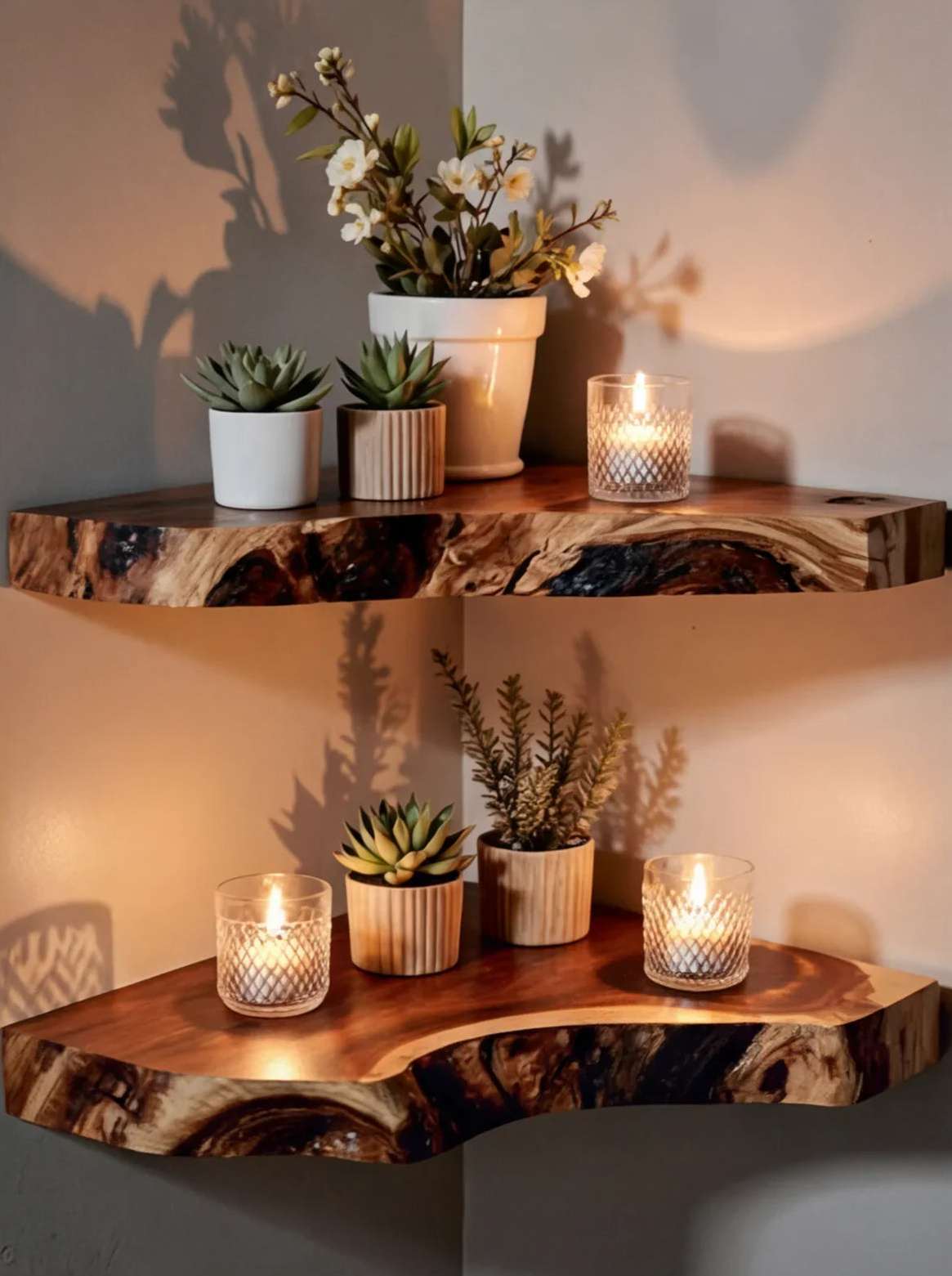
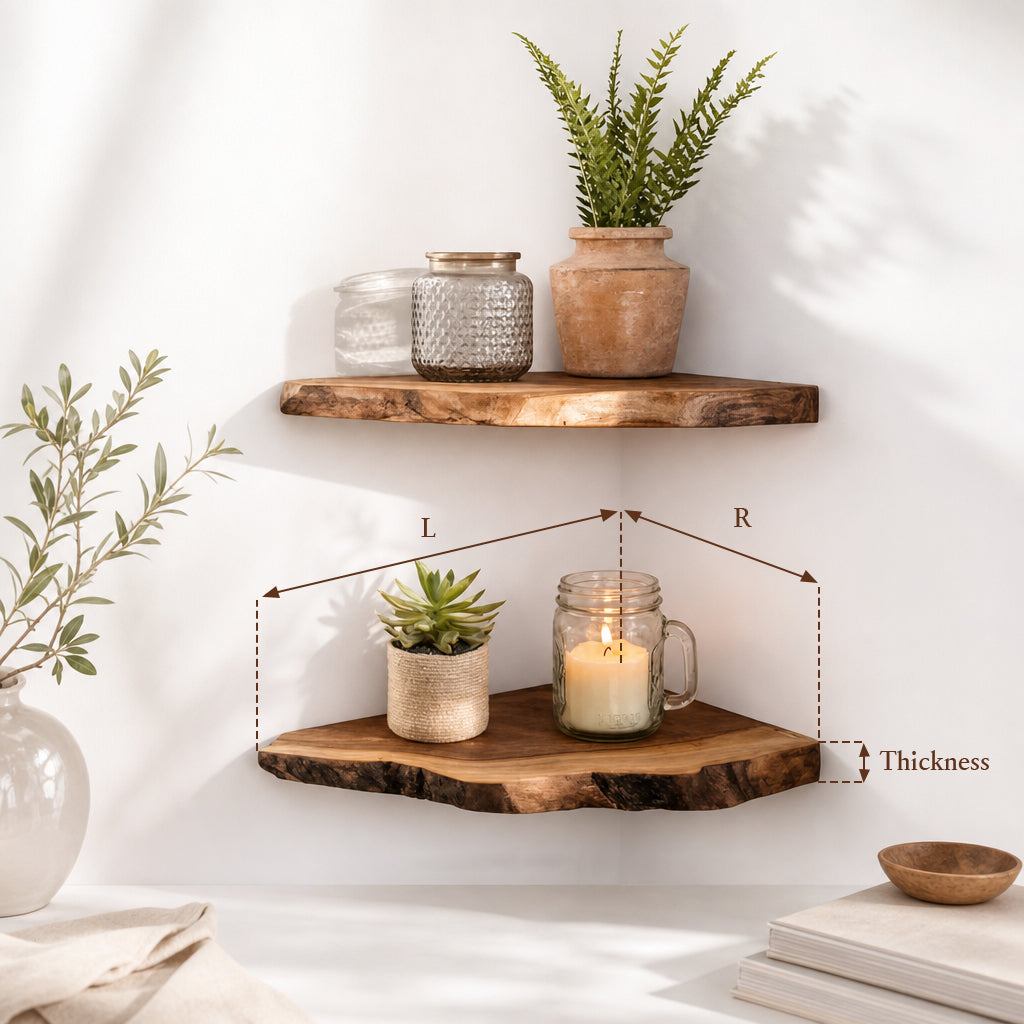
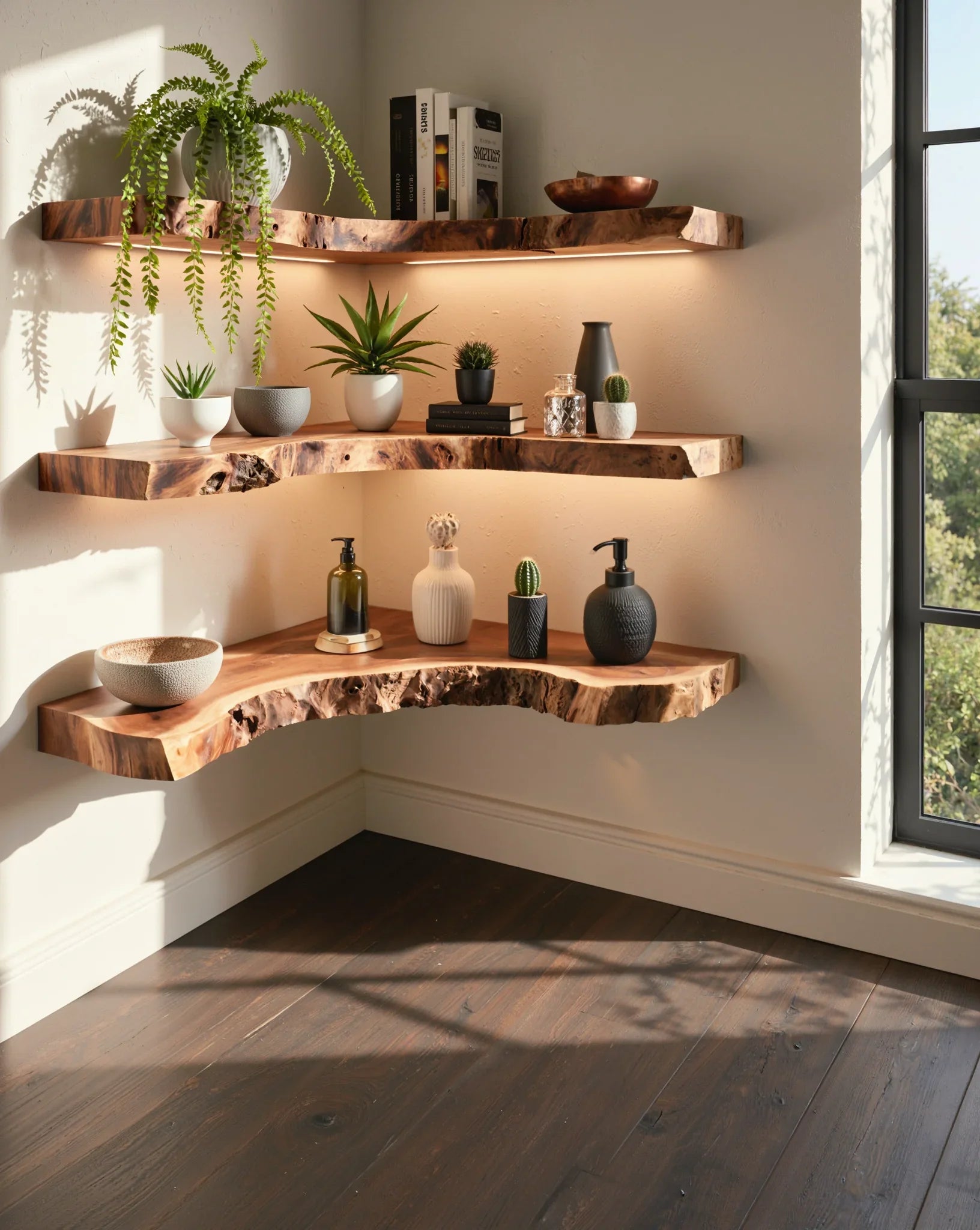
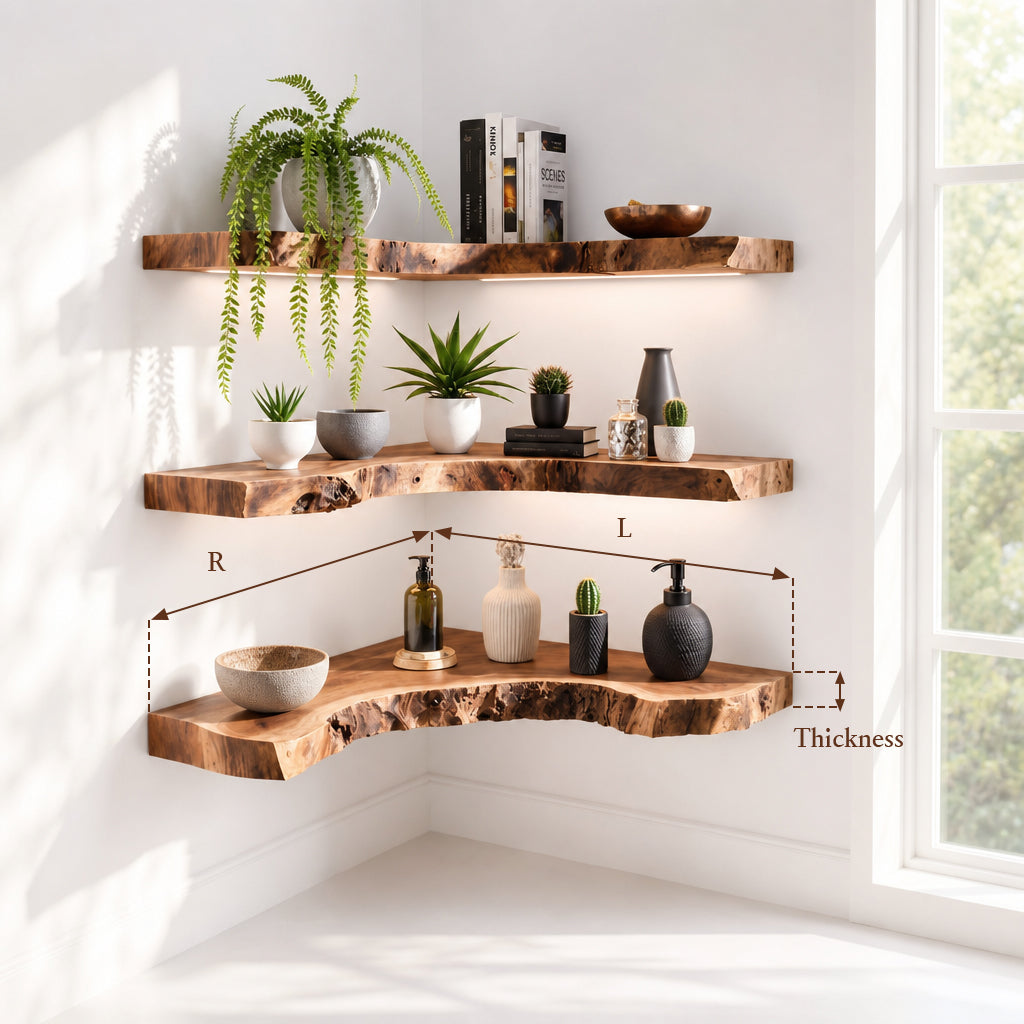
Designed for the most underused real estate in any room - the corner. These shelves typically come in L-shaped or triangular profiles to fit snugly into 90-degree angles. They're narrower than standard shelves but perfect for small plants, a reading light, or a small stack of books. For installation patterns and styling ideas, check out our corner floating shelf ideas.

Staggered / Asymmetrical Floating Shelves
Multiple shelves mounted at different heights and horizontal positions, creating a dynamic, gallery-like arrangement on the wall. The trick is balance - you want it to feel intentional, not random. We have a full staggered floating shelf layout guide that walks through the math of making it look right.
Live Edge Floating Shelves
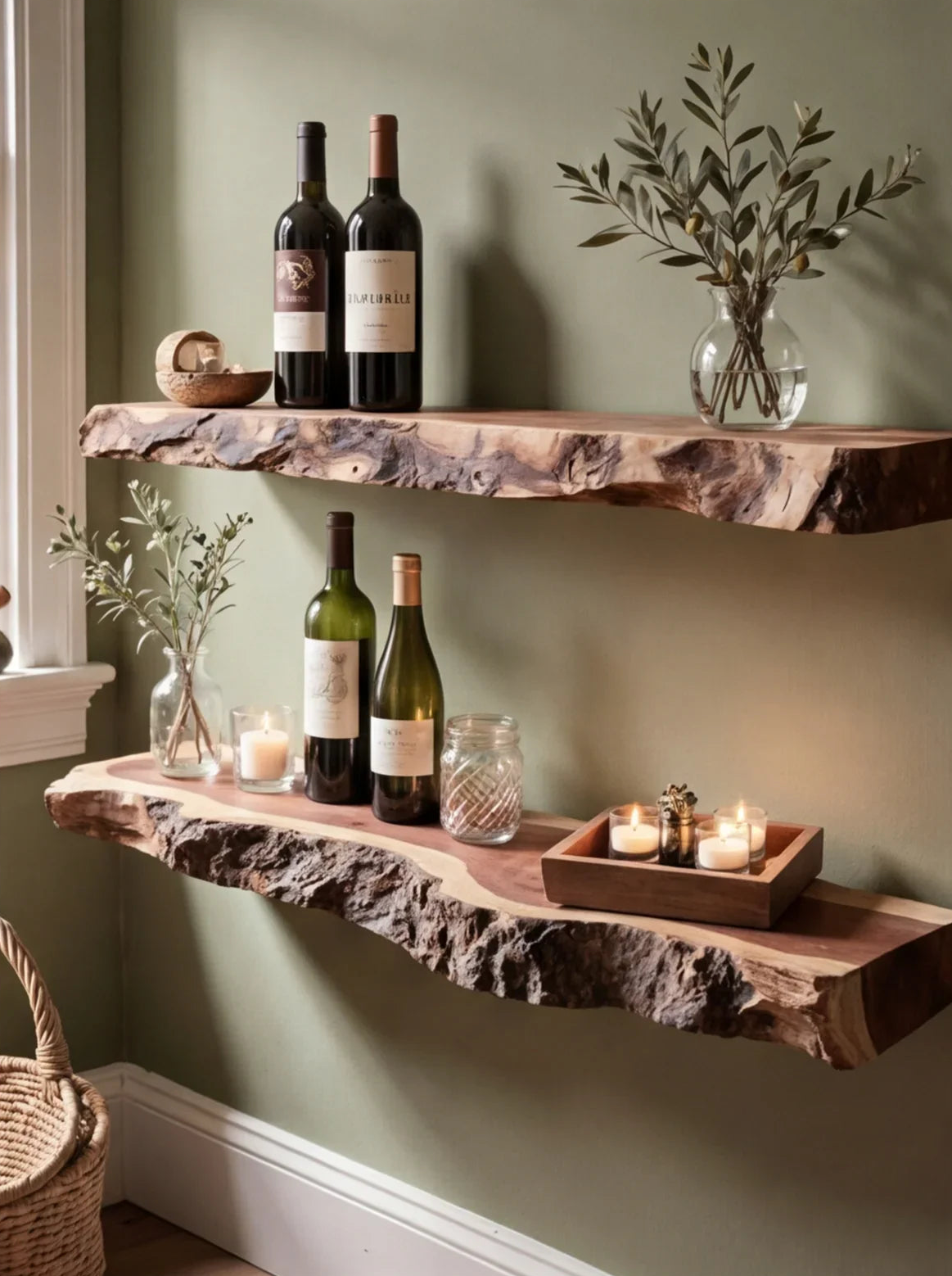
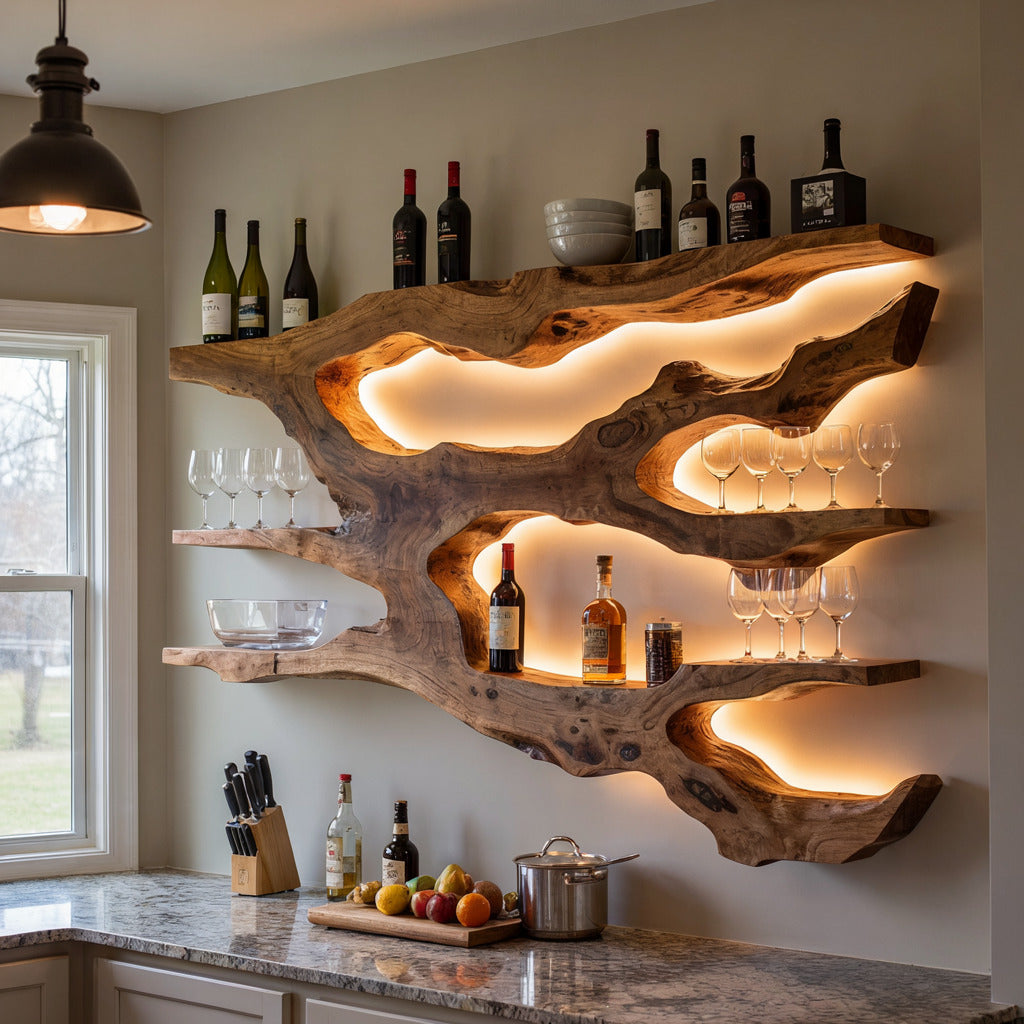
These keep the natural, irregular edge of the wood slab no straight cuts, no uniform lines. Every piece is unique because no two trees grow the same way. Live edge shelves bring instant organic character to a room. Ashdeco's Live Edge Teak Root Floating Shelf (from $189, available 10"–47" wide) is a great example.

Mushroom / Shaped Floating Shelves
Decorative floating shelves cut into shapes - mushrooms, clouds, geometric patterns. They blur the line between shelf and wall art. Great for nurseries, playful living spaces, or as accent pieces. See our mushroom wall shelf guide for details.

Floating Desk with Integrated Shelves
A step up from a shelf - this combines a work surface with floating storage above or beside it. Ideal for small home offices where a full desk won't fit. We cover this in our floating desk workspace guide.
Floating Shelf Materials - What's Actually Inside
This is where most people get burned. The product photo looks gorgeous, the price is right, and three months later the edge wrap is peeling or the shelf is bowing under a dozen paperbacks. Here's what's actually on the market.
Solid Wood
Real wood - teak, mango, walnut, oak, pine. It's heavier, costs more, and lasts decades. Grain variation, knots, and natural color differences aren't defects; they're the point. Solid wood shelves hold more weight because the material is consistent through the entire thickness.
Best for: Living rooms, kitchens, entryways, anywhere you want the shelf to be a feature.
MDF / Manufactured Board
Medium-density fiberboard - wood fibers compressed with resin, usually wrapped in a laminate or veneer. It's cheap, lightweight, and uniform. The downside: it doesn't hold screws as well (stripped anchors are common), it swells in humidity, and that printed-on wood grain peels at the edges within a year or two.
Best for: Temporary setups, low-humidity rooms, tight budgets.
Metal
Steel or aluminum floating shelves usually with a hidden bracket system. Sleek, modern, low visual weight. But they're loud (literally - things clink on metal) and have lower weight capacity than you'd expect for the price.
Best for: Industrial-style spaces, lightweight display.
Quick Material Comparison
| Material | Price Range | Weight Capacity | Best Use | Lifespan |
|---|---|---|---|---|
| Solid hardwood (teak, walnut) | $150–500+ | 30–60 lbs per shelf | Living room, kitchen display | Decades |
| Solid softwood (pine) | $80–200 | 20–40 lbs per shelf | Bedroom, entryway | 5–15 years |
| MDF with laminate | $20–60 | 10–20 lbs per shelf | Temporary, dry rooms | 1–3 years |
| Metal | $40–150 | 15–30 lbs per shelf | Modern/industrial spaces | 10+ years |
Price Tiers - What to Expect
- Budget ($20–60): MDF or particle board. Fine for lightweight decor in dry rooms. Don't use in bathrooms or above your bed.
- Mid-range ($80–200): Solid softwood (pine) or engineered wood with real wood veneer. Good balance of price and durability.
- Premium ($200–500+): Solid hardwood - teak, walnut, live edge. These are investment pieces that last and appreciate in character over time. Browse Ashdeco's full floating shelf collection.
The material you choose also affects installation - heavier solid wood shelves need stronger anchors and ideally direct stud mounting. More on that below.

Floating Shelf Sizes - How to Choose
Pick the wrong size and your shelf either disappears on the wall or dominates it like it's compensating for something. Here's how to get it right.
Sizing by Room
| Room / Use | Recommended Length | Recommended Depth | Thickness |
|---|---|---|---|
| Bathroom (above sink) | 18"–24" | 4"–6" | 1.5" |
| Kitchen (spices, plates) | 24"–36" | 8"–10" | 1.5"–2" |
| Living room (display) | 36"–48" | 8"–10" | 2" |
| Entryway (keys, mail) | 24"–36" | 6"–8" | 1.5"–2" |
| Above desk | 36"–60" | 8"–10" | 2" |
| Bedroom (above bed) | 36"–72" | 6"–8" | 1.5"–2" |
Depth Rules
Deeper isn't always better. A 10-inch shelf in a narrow hallway will constantly catch elbows. A 4-inch shelf in a living room won't hold anything but the thinnest picture frames. Match depth to both the room width and what you plan to display.
Quick rule: In high-traffic areas (hallways, entryways), cap depth at 8 inches. In display-focused spaces (living room walls, above desks), go 8–10 inches.
Thickness Matters
Thickness is a visual choice as much as a structural one. A 1.5-inch shelf reads light and modern. A 3-inch slab reads substantial and rustic. For most homes, 2 inches hits the sweet spot - substantial enough to feel quality, slim enough to not overwhelm.
Spacing & Layout - How Many Shelves, How Far Apart
Once you've picked your size, the next question is layout. How many shelves? How far apart? What pattern?
Standard Spacing: 12–16 Inches
The sweet spot between shelves is 12–16 inches from top to bottom. This gives you room to place and remove items without bumping the shelf above, while keeping the arrangement visually connected.
- 12 inches: Tight, compact look. Good for small items - candles, small frames, spice jars.
- 14 inches: All-purpose sweet spot. Books, medium plants, standard decor.
- 16 inches: Breathing room for taller items - vases, large plants, art objects.
For a full breakdown by room type, item height, and shelf length, see our shelf spacing guide.
Layout Patterns
Single statement shelf: One longer shelf (48"+) as a focal point. Works well above a sofa, desk, or entryway console.
Grouped cluster: 3–5 shelves of similar length, evenly spaced. Clean, organized, easy to style.
Staggered arrangement: Shelves of varying lengths at different heights and horizontal positions. Creates visual movement - but requires planning to not look messy. See our layout patterns guide.
Wall Stud Considerations
Before you commit to a layout, you need to know where the studs are. If your planned shelf positions don't align with studs, you'll need heavy-duty drywall anchors (toggle bolts or snap toggles) - and even those have weight limits. We cover this in detail in our shelf weight limit guide.

Installation - What You Need to Know
Floating shelf installation isn't hard, but getting it wrong means a hole-filled wall and a shelf on the floor. Here's the overview - and where to find the step-by-step.
Tools You'll Need
- Stud finder
- Level (24-inch or laser)
- Tape measure and pencil
- Power drill with appropriate bits
- Drywall anchors (toggle bolts for most floating shelves)
- Screws (usually included with the shelf)
Wall Type Matters
Drywall: Most common. Needs toggle bolts or snap toggles where there's no stud. Weight capacity per anchor: 30–50 lbs for toggle bolts.
Plaster: Older homes. Harder to drill, prone to cracking. Use a masonry bit and go slow.
Brick/Concrete: Needs masonry anchors and a hammer drill. Heaviest-duty option - can support significant weight once installed correctly.
Weight Capacity Quick Reference
- Direct into wood stud: 50–100+ lbs per shelf
- Toggle bolts in drywall: 30–50 lbs per anchor (use 2+ anchors)
- Plastic expansion anchors: 10–20 lbs - avoid for floating shelves
- Command strips: Not recommended for anything beyond very small, very light shelves
Step-by-Step Guide
For a complete walkthrough - from finding studs to driving the last screw - see our how to mount floating shelves guide. It covers every wall type, anchor choice, and common mistake.
If you're the DIY type and want to build your own shelf from scratch, we also have a DIY floating shelf tutorial.

Styling Floating Shelves by Room
A floating shelf is only as good as what's on it. Here's how to style them by room - with links to room-specific guides if you want more detail.
Kitchen
Open shelving in the kitchen is both functional and aesthetic. Use floating shelves for everyday dishes, spice jars, cookbooks, and small plants. Keep frequently used items at eye level and decorative pieces higher up. For durability considerations in a humid, high-use environment, see our kitchen floating shelves guide.
Living Room
The living room shelf is your personality display. Mix books (horizontal and vertical stacks), framed photos, small sculptures, trailing plants. Use the rule of three - group items in odd numbers for a more natural look. See our living room floating shelf guide for specific styling examples.
Bathroom
Towels, toiletries, a small candle, maybe a succulent. Bathroom shelves need to handle humidity - solid wood with a proper finish (polyurethane or marine-grade varnish) holds up far better than MDF. Check our bathroom floating shelf guide for moisture-resistant options.
Entryway
Keys, mail tray, small decor piece. An entryway shelf replaces a console table in tight spaces. Keep it shallow (6–8 inches deep) so it doesn't catch coats. For more entryway shelf ideas including freestanding alternatives, see our entryway shelf guide.
Bedroom
Above the bed, floating shelves replace nightstands in small bedrooms. Keep depth to 6–8 inches so nothing falls on your face while you sleep. For specific above-bed styling ideas, see our floating shelf above bed guide.
Home Office
Above your desk for reference books, plants, and items that make the space feel less sterile. Consider a floating desk with integrated shelves if you need both surface and storage in a compact footprint.
Buying Checklist
When shopping for floating shelves, here's a quick decision framework:
- Budget ($20–60): MDF shelves for lightweight, dry-room decor. Fine for renters who move frequently.
- Mid-range ($80–200): Solid pine or veneered engineered wood. Good for most rooms, most uses.
- Premium ($200–500+): Solid hardwood - teak, walnut, live edge. For rooms where the shelf is a feature, not just function.
- Renter or can't drill? See the next section.

Renter-Friendly Floating Shelf Options - No Drilling Required
If you rent, your lease probably says no holes in the walls. That doesn't mean you're stuck with bare walls - it just means you need to think differently about "floating."
What Doesn't Work (Save Your Money)
Command strips for shelves: 3M's own website says their largest strips max out at 16 lbs. That's the rated capacity - real-world performance drops fast with temperature changes, humidity, and time. A shelf loaded with books will pull those strips off within weeks. They work great for hanging lightweight frames. They are not shelf hardware.
What Actually Works
Freestanding ladder shelves. Lean against the wall, no drilling needed. They give you the same tiered display as staggered floating shelves but with zero wall contact. Many solid wood options available that look just as good as wall-mounted versions.
Tension-mounted shelves. Originally designed for bathrooms, tension pole systems now come in living-room-friendly designs. They press between floor and ceiling - no holes, no damage, fully removable.
Over-the-door shelving. Narrow shelves that hook over standard doors. Great for bathrooms and small entryways where wall space is limited.
Console table as shelf alternative. A narrow console table against the wall gives you the same display surface with zero mounting. Add a mirror above it and you've got the floating shelf vibe without a single hole. See our rustic console table ideas for this approach.
Existing furniture integration. Place items on top of bookcases, dressers, or sideboards at shelf height. It's not "floating" but it achieves the same visual layering.
The Honest Assessment
No-drill options will never match the clean, bracket-free look of a properly installed floating shelf. But they solve the core problem - turning blank wall space into display space - without risking your security deposit. When you move, you take everything with you.

Safety: Floating Shelves with Kids and Pets
Nobody talks about this, but it matters: a shelf full of heavy objects mounted above a couch where kids climb or a cat jumps is a potential hazard. Here's what to keep in mind.
Weight + Height = Risk
The higher the shelf and the heavier the items, the more dangerous a failure becomes. A 40-lb shelf crashing down from 6 feet can cause real injury. This isn't just about the shelf falling - it's about what's on it.
Placement Rules for Families
- Avoid mounting heavy shelves directly above seating areas where kids climb or pets jump (sofas, chairs, window benches). If you must, keep items on them lightweight.
- Use heavier-duty anchors than the minimum. If the instructions say one toggle bolt, use two. Over-engineer it.
- Keep fragile/heavy items on the top shelf only if it's out of reach. Small kids can't climb - until they can, and they will without warning.
- Round-edged shelves are safer than sharp corners at child height. Live edge shelves naturally have softer profiles.
- Don't place climbable furniture near shelves. A small stool or toy box under a shelf becomes a ladder in about 30 seconds.
If You Have a Cat
Cats will jump on your shelves. This is not a maybe - it's a when. Make sure each shelf is rated for at least 2x the cat's weight, and don't place breakable items on any shelf within jumping distance. Solid wood shelves with direct stud mounting handle cat landings without issue; MDF with plastic anchors may not.
Common Mistakes to Avoid
You've picked your shelf, found your spot, drilled your holes. Don't ruin it with these common errors.
- Overcrowding. A shelf packed edge-to-edge looks like a storage unit, not a display. Leave 30–40% empty space. Breathing room makes everything on the shelf look more intentional.
- Ignoring wall type. Drywall anchors have weight limits. If your shelf + contents exceed that limit, no amount of careful installation will save it. Check our installation guide before drilling.
- Wrong depth for the space. A 10-inch shelf in a 3-foot-wide hallway is an elbow magnet. Match depth to room width and traffic flow.
- All items at the same height. A row of identically tall objects looks flat and lifeless. Vary heights - tall vase, short stack of books, medium plant - for visual rhythm.
- Not checking anchors periodically. Even well-installed anchors can loosen over months. Every 6 months, give each shelf a firm tug. If it moves, reinforce it.
- Using MDF in humid rooms. Bathrooms and kitchens will warp MDF within a year. Use solid wood with proper finish, or accept that you'll replace it.
- Forgetting about kids and pets. See the safety section above. A shelf that looks great in the showroom might not be safe in your actual home.
- Renters: don't risk drilling anyway. If your lease says no holes, use freestanding or tension options instead. The deposit you lose won't cover the shelf you wanted.
Floating Shelves vs Alternatives
When is a floating shelf actually the right choice versus other wall-mounted or freestanding options?
| Feature | Floating Shelf | Bookshelf | Bracket Shelf | Picture Ledge |
|---|---|---|---|---|
| Visible hardware | None | None (freestanding) | Yes | Minimal |
| Floor space used | None | Yes - full footprint | None | None |
| Weight capacity | Medium–High | High | Medium | Low |
| Best for | Display, light storage | Heavy storage, books | Budget install | Photos, small items |
| Installation | Moderate (drilling) | None (place it) | Easy | Easy |
| Cost | $50–500+ | $100–800+ | $20–150 | $15–60 |
When to choose floating shelves: Clean aesthetic matters, floor space is limited, you want display + light storage.
When to choose a bookshelf: You have a lot of books or heavy items and don't mind the floor footprint.
When to choose bracket shelves: You want an easier install with visible hardware as part of the look.
When to choose a picture ledge: You only need to display photos or small objects, not books or plants.

Ready to upgrade your walls?
Explore Ashdeco's handcrafted solid wood floating shelves - from live edge teak to sleek minimal designs. Each piece is unique, because real wood doesn't do identical.
Shop Floating Shelves →From $189 · Solid wood · Handcrafted · Ships worldwide
Frequently Asked Questions
How much weight can floating shelves hold?
It depends on three factors: the shelf material, the mounting hardware, and the wall type. A solid wood shelf mounted directly into wood studs can hold 50–100+ lbs. The same shelf on toggle bolts in drywall holds 30–50 lbs. An MDF shelf with plastic anchors maxes out around 10–20 lbs. Always check the manufacturer's rating and the anchor specifications - and when in doubt, over-engineer.
Do floating shelves need to go into studs?
Not always, but it's the safest option. If your shelf and its contents weigh under 30 lbs, heavy-duty toggle bolts in drywall will work fine. Above 30 lbs, or anywhere the shelf is above a seating area, direct stud mounting is strongly recommended. See our full mounting guide.
What's the best material for kitchen floating shelves?
Solid wood with a food-safe finish (polyurethane or mineral oil for cutting-board-grade wood). Kitchen shelves face humidity, heat, and frequent touching - MDF will swell and the laminate will peel. Solid hardwood like teak or mango handles the environment and looks better with age.
How far apart should floating shelves be?
The standard is 12–16 inches from top to bottom. 14 inches works for most situations. Use 12 inches for small items (spices, candles) and 16 inches for taller displays (vases, plants, large books). For a detailed breakdown, see our spacing guide.
Can renters install floating shelves without drilling?
True floating shelves require wall mounting - there's no no-drill alternative that achieves the same look. But renters have options: freestanding ladder shelves, tension pole systems, over-the-door shelving, or a narrow console table against the wall. These give you the same display function without any wall damage. See the renter-friendly section above for details.
Are floating shelves safe in homes with children?
Yes, if installed correctly and placed thoughtfully. Avoid mounting heavy shelves directly above seating or climbing areas. Use heavier-duty anchors than the minimum, keep heavy/fragile items on higher shelves out of reach, and don't place climbable furniture near shelf walls. Solid wood shelves with direct stud mounting are the safest option.
Final Thoughts
Floating shelf is one of those upgrades that look harder than they are. Pick the right material for your room, size it to the wall, mount it properly, and style it with some breathing room - and you've got a feature that works for years.
The biggest mistake people make is rushing the material choice because the MDF option looks identical in the product photo. It won't look identical once it's on your wall, loaded with your stuff, three months into humidity season. Invest in solid wood where it matters, save the budget options for low-stakes rooms, and always, always check your anchors.
Want more ideas? Browse our floating shelves ideas by room for specific styling inspiration, or dive into our rustic floating shelf guide if natural wood character is your thing.