




















Quick view
- Rustic Floating Shelves: Why Solid Wood Beats Fake Distressed Every Time
- What Makes a Shelf Truly "Rustic"?
- Solid Wood Rustic Shelves vs. Fake Distressed: A Side-by-Side Comparison
- How to Spot Fake Distressing: 7 Red Flags
- Why Solid Wood Rustic Shelves Cost More. And Why It's Worth It
- The Handcrafted Difference: Artisan vs. Factory
- Best Wood Species for Rustic Floating Shelves
- How to Style Rustic Floating Shelves
- Care and Maintenance for Solid Wood Rustic Shelves
- Where to Buy Genuine Rustic Floating Shelves
- Frequently Asked Questions
- The Bottom Line
Shop this guide
Handcrafted Floating Shelves, made to order in solid wood.
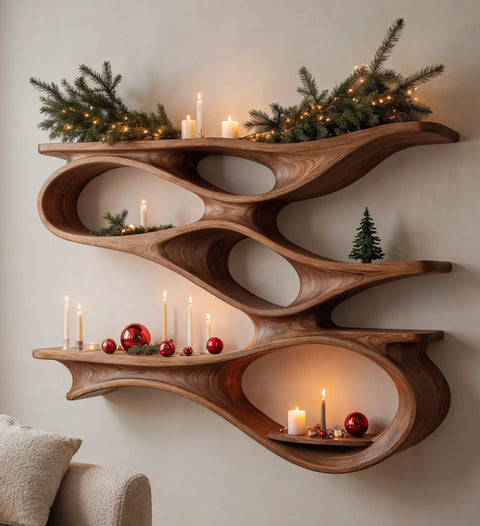
 Sculptural Overlapping Circular Solid Wood Wall Shelf with Multi Tier Display
From $1,354.00
Sculptural Overlapping Circular Solid Wood Wall Shelf with Multi Tier Display
From $1,354.00
 Mountain Landscape Relief Solid Wood Floating Shelf Live Edge Display Ledge
From $1,154.00
Mountain Landscape Relief Solid Wood Floating Shelf Live Edge Display Ledge
From $1,154.00
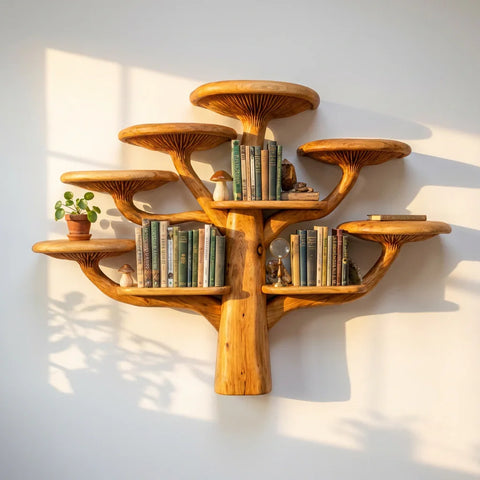
 Enchanted Forest Circular Wall Shelf - Round Carved Timber Mushroom Portal
From $1,023.00
Enchanted Forest Circular Wall Shelf - Round Carved Timber Mushroom Portal
From $1,023.00
 Cottagecore Arched Wood Wall Niche - Hand-Carved Fairy Mushroom Alcove Shelf
From $1,356.00
Cottagecore Arched Wood Wall Niche - Hand-Carved Fairy Mushroom Alcove Shelf
From $1,356.00
 Sculptural Hand-Carved Mushroom Solid Wood Corner Floating Shelf & Biomorphic Wall Display Ledge
From $345.00
Sculptural Hand-Carved Mushroom Solid Wood Corner Floating Shelf & Biomorphic Wall Display Ledge
From $345.00
 Sculptural Hand-Carved Mushroom Solid Wood Floating Shelves & Biomorphic Wall Display Ledges
From $345.00
Sculptural Hand-Carved Mushroom Solid Wood Floating Shelves & Biomorphic Wall Display Ledges
From $345.00
Rustic Floating Shelves: Why Solid Wood Beats Fake Distressed Every Time
Walk into any home decor store and you'll find shelves labeled "rustic." Peel back the marketing, though, and you'll discover that most of those shelves are particleboard wrapped in a printed veneer designed to look like aged wood. The distress marks are stamped by machine. The grain pattern repeats every 24 inches. And within two years, the laminate peels at the edges.
Real rustic floating shelves start with solid wood that develops character over decades-not minutes on a factory line. This guide breaks down the differences between genuine solid-wood rustic shelves and their mass-produced imitators so you can make a purchase you won't regret.
What Makes a Shelf Truly "Rustic"?
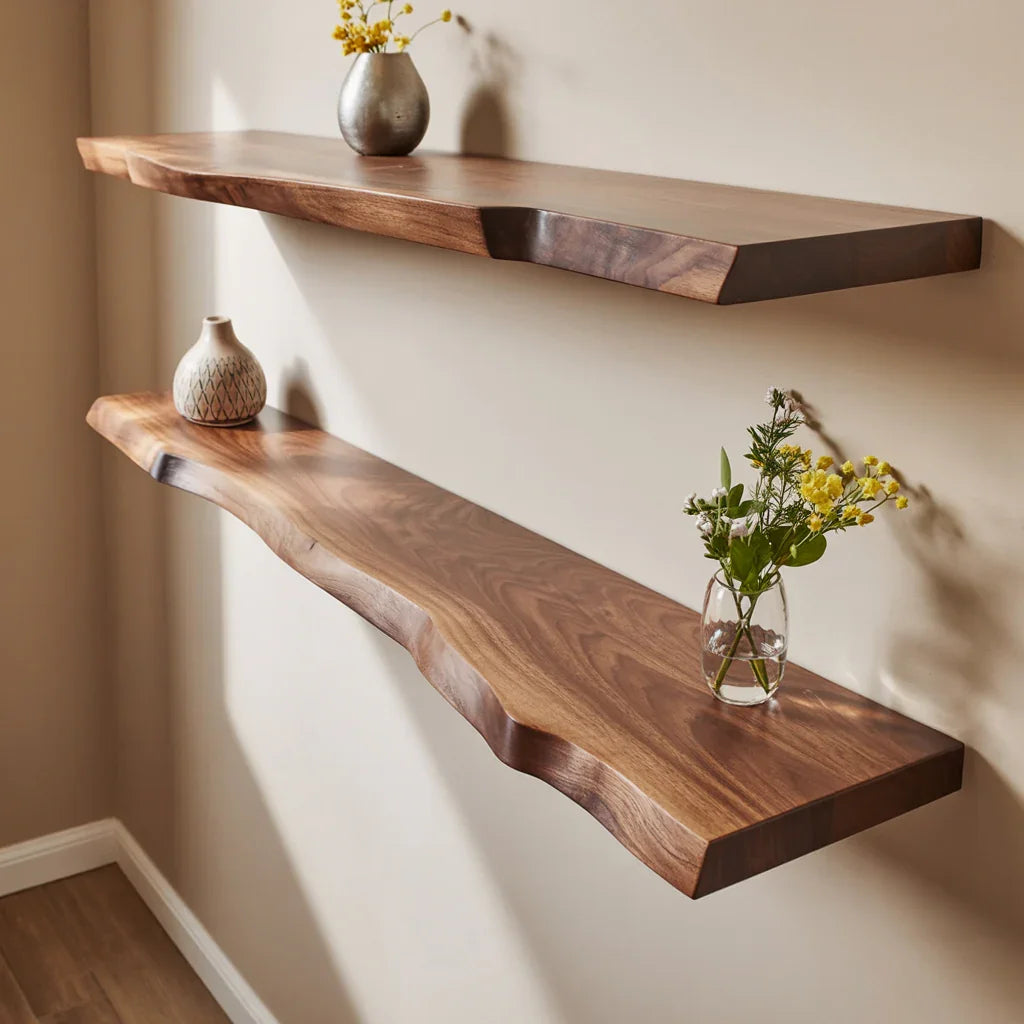
The word "rustic" comes from the Latin rusticus, meaning "of the country." In furniture and decor, it refers to pieces that show the natural character of their materials-knots, grain variation, slight color differences, and the kind of imperfections that come from handwork rather than precision machinery.
A genuinely rustic floating shelf should have:
- Visible wood grain - not a printed pattern, but actual fibers you can feel under your fingers
- Natural knots and mineral streaks - these are unique to each piece and impossible to replicate exactly
- Slight dimensional variation , because solid wood isn't milled to the same tolerances as MDF
- A finish that lets the wood breathe , oils and waxes rather than thick polyurethane coats
- Hand-finished edges , softened or live-edge profiles that aren't perfectly uniform
If a shelf looks "rustic" but feels plasticky, weighs almost nothing, or has edges sealed with a strip of tape, it's not rustic. It's a costume.



Solid Wood Rustic Shelves vs. Fake Distressed: A Side-by-Side Comparison
Here's how the two categories stack up across the factors that actually matter for long-term satisfaction:
Material and Construction
Solid wood shelves are cut from a single plank or assembled from edge-glued boards of the same species. Common choices include walnut, oak, pine, ash, and acacia. The wood is kiln-dried to a stable moisture content, then shaped and finished. Because they're solid, they can be sanded and refinished multiple times over their lifetime.
Fake distressed shelves typically use MDF (medium-density fiberboard) or particleboard as a core, covered with a melamine or vinyl wrap printed with a wood-grain image. The "distress marks" are either printed onto the wrap or stamped into a thin veneer before application. Some mid-range versions use a thin layer of real wood veneer over engineered wood, which is better, but still not solid.
Weight and Feel
Solid wood has heft. A 36-inch walnut floating shelf might weigh 8-12 pounds depending on thickness. You can knock on it and hear a solid, resonant thud. Fake distressed shelves of the same dimensions often weigh half as much. Knock on them and you'll hear a hollow, papery sound, because that's essentially what they are.
Durability
This is where the gap becomes a canyon. Solid wood develops a patina over time. Scratches blend into the character. A ding in solid walnut becomes part of the shelf's story. But a scratch on laminate exposes the brown or gray substrate underneath, and there's no fixing that without replacing the piece.
Moisture is another divider. Solid wood handles humidity fluctuations (when properly finished). MDF and particleboard swell, warp, and crumble when exposed to moisture. That's why you never see fake-distressed shelves recommended for kitchens or bathrooms.
Aging
This is the irony of fake rustic shelves: they're designed to look old, but they age terribly. Real wood ages gracefully. Cherry darkens over the years. Oak develops a honey tone. Pine mellows from bright yellow to a warm amber. These changes are beautiful and valued by homeowners.
Laminate, on the other hand, fades in sunlight, yellows unevenly, and peels at stress points. The "rustic" character is frozen in time at the factory, and then degrades from there.
How to Spot Fake Distressing: 7 Red Flags
You shouldn't need a lab to tell real from fake. Here are seven things to check before you buy:
- Check the edges. Real wood has consistent material all the way through. Fake shelves show a different color or texture at cut edges, often covered with edge banding tape.
- Look for repeating patterns. Real wood grain never repeats. If you see the same knot pattern twice on the same shelf, or on two shelves from the same set, it's printed.
- Feel the surface. Real distress marks have depth you can feel. Machine-stamped marks tend to be shallow and uniform. Printed marks are completely flat.
- Check the weight. If a 36-inch shelf feels like you could toss it across the room with one hand, it's probably hollow or made from lightweight composite.
- Look at the bottom. Manufacturers often leave the underside less finished. If the bottom looks completely different from the top, different color, different texture, that's a sign of a wrap or veneer.
- Scratch test (gently). In an inconspicuous spot, run your fingernail across the surface. Real wood leaves a slight mark in the wood. Laminate either resists completely or chips to reveal a different material underneath.
- Read the listing carefully. Phrases like "wood-look," "wood-effect," "engineered wood," or "wood composite" all mean "not solid wood." Genuine solid wood shelves will say exactly that.
Don't miss
These pieces qualify for 10% off orders over $2,000. Applied automatically at checkout.
Why Solid Wood Rustic Shelves Cost More. And Why It's Worth It
A solid wood rustic floating shelf from a quality maker costs $50-$150 depending on species, length, and finish. A fake-distressed shelf from a big-box store might run $20-$40. That price gap scares people.
But consider the math over time:
- A solid wood shelf lasts 20+ years and can be refinished
- A laminate shelf lasts 3-5 years before it peels, swells, or looks shabby
- Over 20 years, one solid wood shelf at $80 costs $4 per year
- Over 20 years, replacing a $30 laminate shelf four times costs $120 total, or $6 per year
Solid wood is the cheaper option over time. And it looks better every single year it's on your wall.
The Handcrafted Difference: Artisan vs. Factory
Within the solid-wood category, there's another distinction worth understanding: handcrafted shelves versus factory-made solid wood shelves.
Factory-made solid wood shelves are cut, sanded, and finished by machines. They're consistent and reliable, but they lack the small details that come from human hands.
Handcrafted solid wood shelves, like those made by Ashdeco's artisan workshop in Vietnam, are shaped, sanded, and finished by skilled woodworkers who've spent years developing their craft. The result is subtle but meaningful: edges that have been hand-rounded feel different from machine-routed edges. Finishes applied by hand have depth and variation that spray-line finishes lack.
When Vietnamese artisans at Ashdeco work a piece of acacia or walnut, they make decisions about each individual board, how to orient the grain, where to place the bracket holes to avoid weak spots, how to bring out the natural color of the wood. A machine can't do that.
Best Wood Species for Rustic Floating Shelves
Not all woods suit the rustic aesthetic equally. Here are the top choices: Find more rustic decor inspiration at Better Homes & Gardens.
Pine
The classic rustic wood. Pine has prominent grain, takes stain beautifully, and develops a warm honey patina over time. It's also the most affordable solid wood option. The downside: pine is soft, so it dents and scratches more easily. For decorative shelves that won't hold heavy items, pine is perfect.
Oak
Strong, durable, and full of character. Oak's open grain pattern is naturally rustic, and it handles heavy loads well. White oak resists moisture better than red oak, making it suitable for kitchens. Oak costs more than pine but less than walnut.
Walnut
The premium choice. Walnut's rich, dark color and tight grain create a sophisticated rustic look. It's hard enough to resist dents, heavy enough to feel substantial, and beautiful enough to be a room's focal point. Expect to pay a premium, but walnut shelves are heirloom pieces.
Acacia
An underrated option with striking grain variation. Acacia ranges from golden to deep brown, often within the same board. It's naturally water-resistant (it grows in tropical climates) and extremely hard. Acacia gives you walnut-level beauty at a friendlier price point.
Reclaimed Wood
Barn wood, old-growth lumber salvaged from demolition sites, or repurposed beams offer authenticity that no new wood can match. The character marks are real because they come from decades of actual use. Reclaimed wood shelves are the ultimate rustic choice, but sourcing is inconsistent and prices vary wildly. Explore different wood grain patterns and species at The Wood Database.
How to Style Rustic Floating Shelves
Rustic shelves work in more settings than you might expect:
- Farmhouse kitchens: Open shelving with white dishes and mason jars on natural pine or oak
- Industrial lofts: Dark-stained wood paired with black metal brackets and Edison bulbs
- Modern minimalist rooms: A single thick walnut shelf with one or two carefully chosen objects
- Boho bedrooms: Lighter woods displaying plants, crystals, and eclectic art
- Cabin or lodge style: Thick pine or reclaimed wood with heavy loads of books and decor
The versatility of real wood is another advantage over fake. Laminate shelves look out of place the moment the surrounding decor doesn't match their specific "look." Solid wood adapts because it's a natural material, it coordinates with other natural materials instinctively.

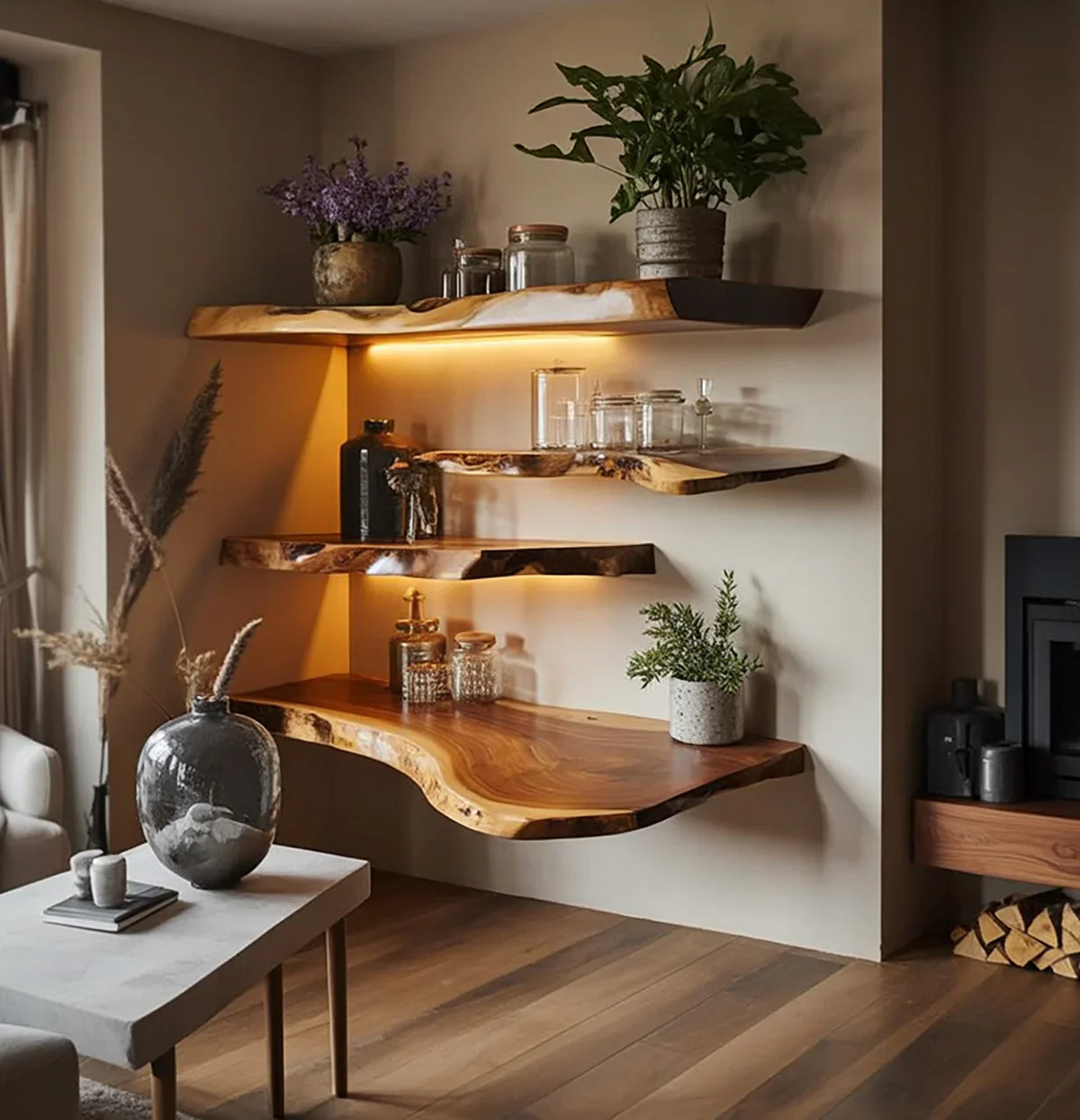
Handmade Live Edge Floating Shelf - Rustic Solid Wood Wall Shelf for Farmhouse Decor
Care and Maintenance for Solid Wood Rustic Shelves
Keeping real wood shelves looking their best is simpler than most people think:
- Dust weekly with a soft, dry cloth. Microfiber works best.
- Avoid harsh cleaners. A damp cloth with mild soap handles most spots. Never use ammonia-based sprays on wood.
- Reapply oil or wax every 6-12 months, depending on exposure. Rubbing a coat of food-safe mineral oil into a kitchen shelf takes five minutes and keeps the wood hydrated.
- Address scratches promptly. Minor scratches can be rubbed out with fine steel wool (#0000) and a drop of oil. Deeper marks can be sanded lightly and refinished.
- Control humidity if possible. Wood is happiest between 35-55% relative humidity. Extreme dryness causes cracking; excessive moisture causes swelling.
Where to Buy Genuine Rustic Floating Shelves
Skip the big-box stores for this purchase. Their supply chains are built for volume, not character. Instead, look for:
- Small-batch woodworking shops that list the specific wood species and show real photos of their products
- Direct-from-artisan sellers like Ashdeco, where shelves are handcrafted from solid wood by skilled Vietnamese artisans and shipped directly to you
- Local woodworkers who can build custom sizes and finishes
- Reclaimed wood specialists if you want truly aged character
When shopping online, always check the material description carefully. "Solid wood" should mean exactly that, not "wood composite" or "wood-grain finish."
Frequently Asked Questions
How can I tell if a rustic shelf is real wood or fake?
Check the edges for consistent material, look for repeating grain patterns (a sign of printing), feel for surface texture in distress marks, and assess the weight. Real wood is heavier and has unique, non-repeating grain patterns. Also check the product description, genuine sellers specify the exact wood species.
Do rustic floating shelves work in modern interiors?
Absolutely. A single thick walnut or oak shelf against a white wall creates a striking modern-rustic contrast. The key is restraint: one or two shelves with minimal objects, rather than a full wall of cluttered shelving. The warmth of natural wood actually softens modern spaces in a way that most homeowners love.
How long do solid wood floating shelves last?
With proper care, 20-50+ years. Solid wood can be sanded and refinished multiple times, so even shelves that show wear after a decade can be restored to like-new condition. Compare this to laminate shelves, which typically need replacement every 3-5 years.
Are rustic floating shelves hard to install?
No harder than any other floating shelf. Most use a hidden bracket or French cleat system. The main consideration with solid wood is weight, they're heavier, so you need to mount into wall studs or use appropriate anchors. Most quality shelves include mounting hardware and instructions.
What finish is best for rustic floating shelves?
For a natural look, hard wax oil or Danish oil penetrates the wood and protects from within without creating a glossy film. For kitchen or bathroom use, a satin polyurethane or marine-grade oil provides more moisture protection while still looking natural. Avoid high-gloss finishes, they fight the rustic aesthetic.
Can I refinish rustic floating shelves without removing them from the wall?
For light maintenance like re-oiling, yes, you can apply oil or wax right on the wall. For deeper refinishing that involves sanding, it's better to remove the shelf first. Most floating shelf mounting systems are designed for easy removal and reinstallation.
The Bottom Line
Fake distressed shelves are a shortcut that costs more in the long run and delivers less satisfaction every year you own them. Solid wood rustic floating shelves are an investment in a piece that gets better with time, developing real character instead of losing a manufactured one.
If you're looking for shelves that combine authentic rustic character with skilled craftsmanship, explore Ashdeco's handcrafted floating shelf collection. Each piece is made from solid wood by artisans who understand that real rustic beauty can't be faked, it has to be built.