Floating shelves in kitchens can look clean and useful in one home, then feel messy and high-maintenance in another. That is why generic "pros and cons" advice often falls flat. The better question is simpler. Do open shelves actually match how you cook, store, and clean, or are they going to turn into visible clutter within two weeks?
This guide focuses on that decision so buyers can tell when kitchen floating shelves are a smart move and when closed storage is the safer call.
When floating shelves work well in a kitchen
Floating shelves work best in kitchens where the items stored on them are used often, easy to keep tidy, and visually calm. Think everyday plates, glassware, mugs, or a short list of pantry jars you reach for constantly. In that setup, the shelves reduce cabinet bulk and keep the room feeling lighter without sacrificing function.
They also work better when the homeowner already has a habit of keeping surfaces clear. Open shelving rewards discipline. It does not create it.
When floating shelves become clutter fast
Floating shelves usually become clutter when buyers try to store too many mixed-use items on them. Random spice bottles, packaging, rarely used appliances, and visual noise build up quickly in a kitchen because everything is exposed all the time. If your kitchen already feels busy, open shelves rarely fix that. They often amplify it.
This is why the right comparison is not shelves versus cabinets in theory. It is whether your real storage habits support visible storage.
Best kitchens for open shelving
The kitchens that benefit most from floating shelves tend to share a few traits. They are either short on upper cabinet space, trying to lighten one wall visually, or using shelving for a focused zone like coffee supplies, dishware, or decorative everyday items. In these kitchens, shelves solve a specific layout problem instead of trying to replace all cabinetry.
| Kitchen situation | Are floating shelves a good fit? | Why |
|---|---|---|
| Small kitchen with heavy upper cabinets | Often yes | They open the wall visually |
| Highly organized home cook setup | Yes | Frequently used items stay accessible |
| Busy family kitchen with mixed storage habits | Often no | Visible clutter builds quickly |
| Decor-first kitchen with light daily use | Usually yes | Display and function can balance well |
What buyers usually underestimate
The biggest thing buyers underestimate is visual maintenance. Kitchen shelves are not just storage. They are part of the room's visible design every day. Dust, grease, mismatched packaging, and overstuffed stacks show up immediately, especially near cooking zones.
The second thing people miss is weight planning. Plates, bowls, and pantry jars add up fast. Shelves that look decorative in a staged kitchen need real structural confidence in a lived-in one.
How handcrafted solid wood shelves change the result
Material matters more in kitchens than people think. Thin factory shelving can look temporary, especially once it starts carrying real weight. Handcrafted solid wood shelves feel more grounded and hold the visual center better, which matters when the shelf is replacing part of a cabinet run.
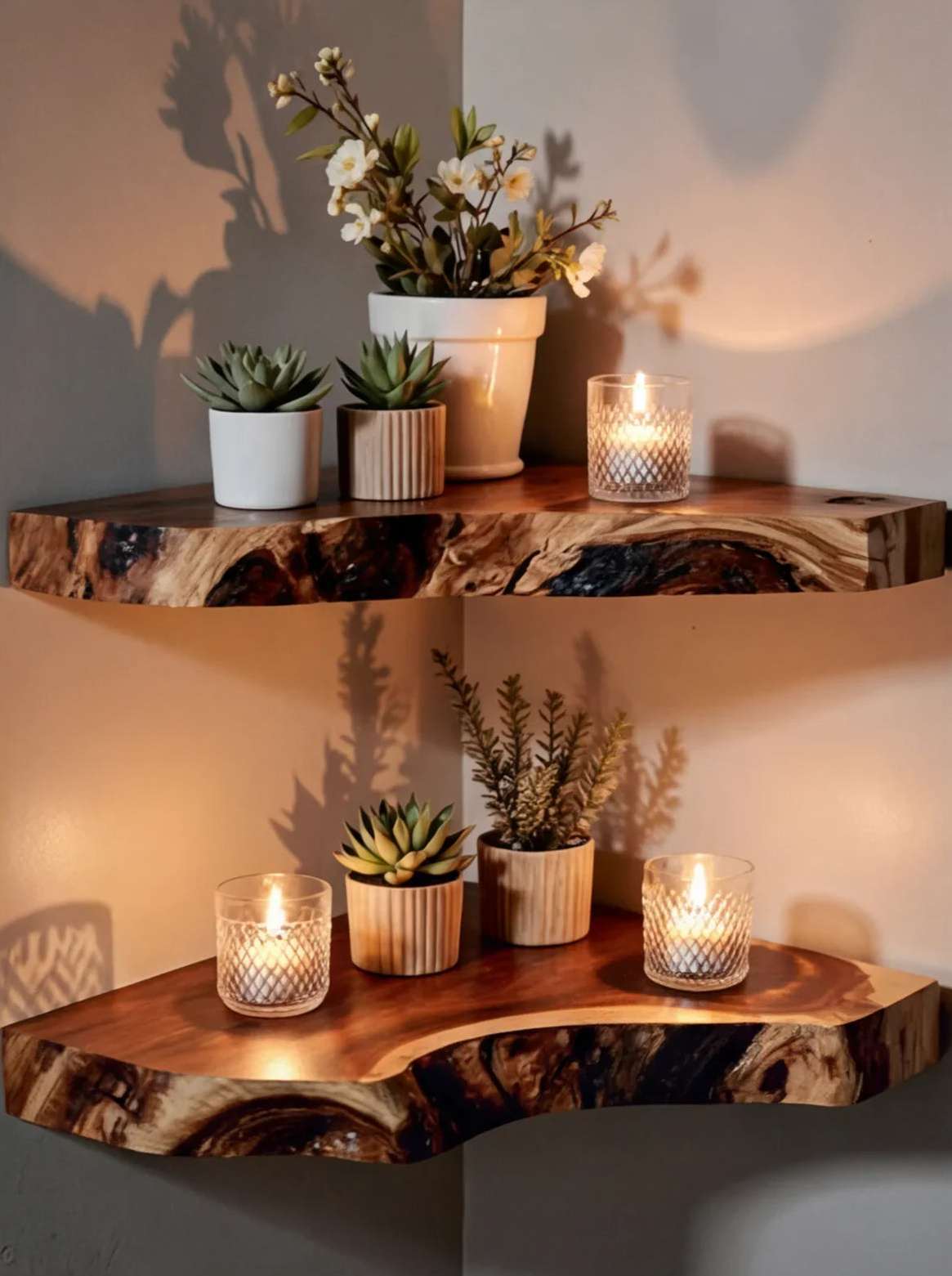
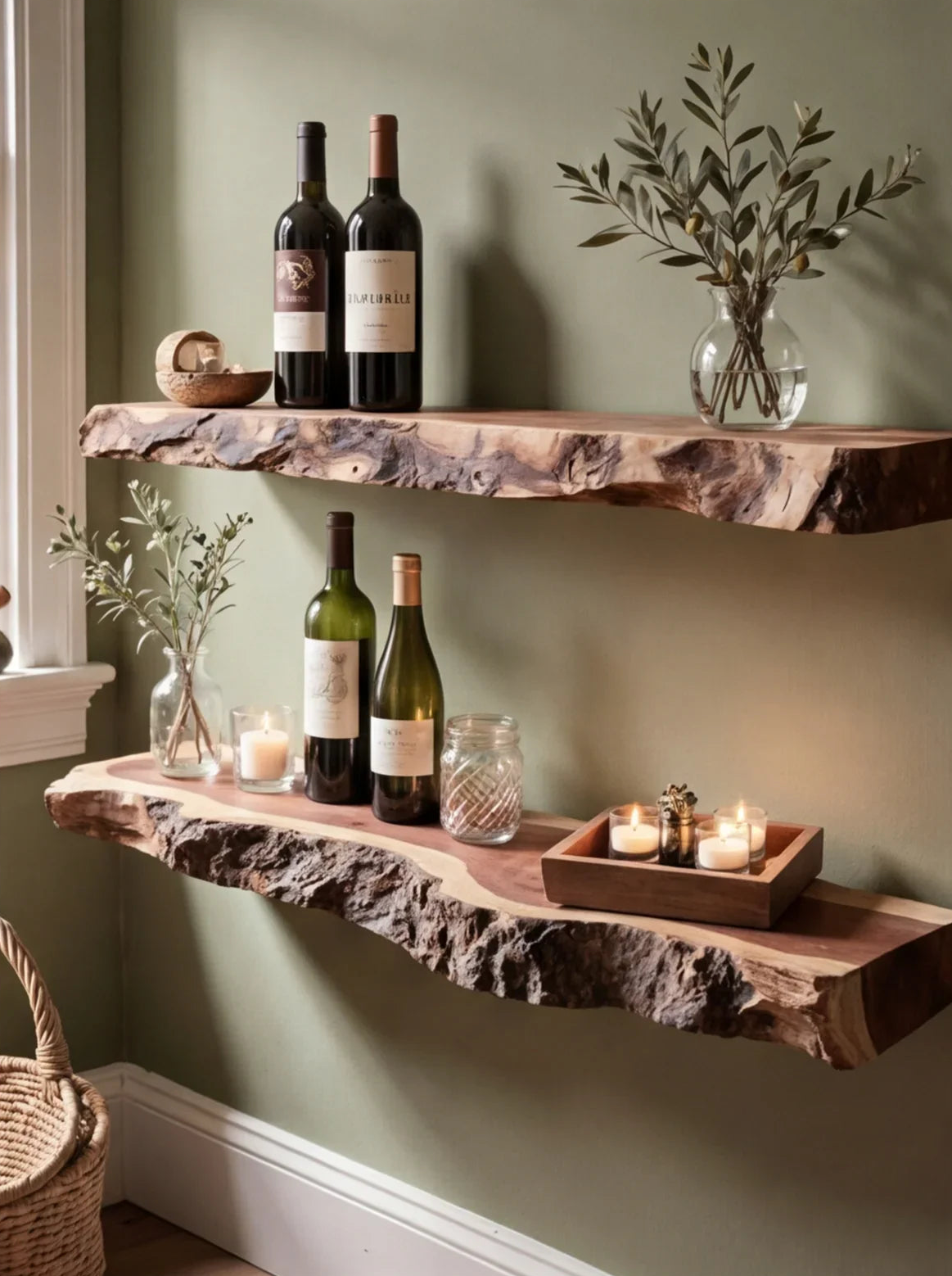
Ashdeco's shelves are handcrafted by Vietnamese artisans, so the grain, edges, and overall shape read more like furniture than hardware-store shelving. That works best when the shelves are carrying a defined set of items instead of acting as overflow for everything.
If you are exploring options, the broader floating shelves collection is the right place to compare scale and style.
What should actually go on kitchen floating shelves
The best items for kitchen floating shelves are the ones you use often and do not mind seeing every day. Plates, bowls, drinking glasses, mugs, and a limited set of containers are usually safe. Decorative objects can work too, but only in moderation. The more the shelf becomes a catch-all, the faster it fails.
If you need all-purpose storage, use drawers or cabinets for the messy categories and let shelves handle the clean, repeat-use items.
Example of when this category makes sense
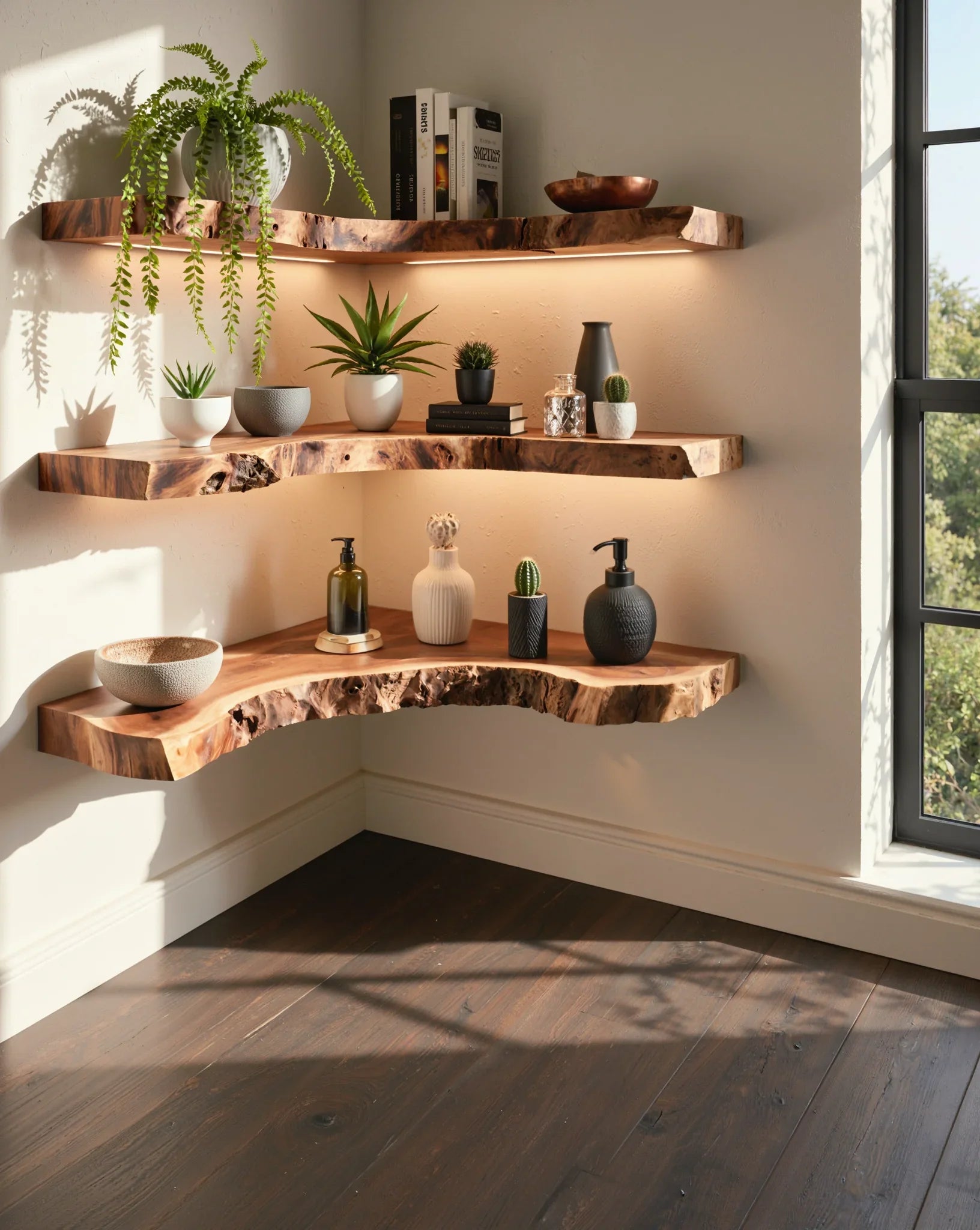
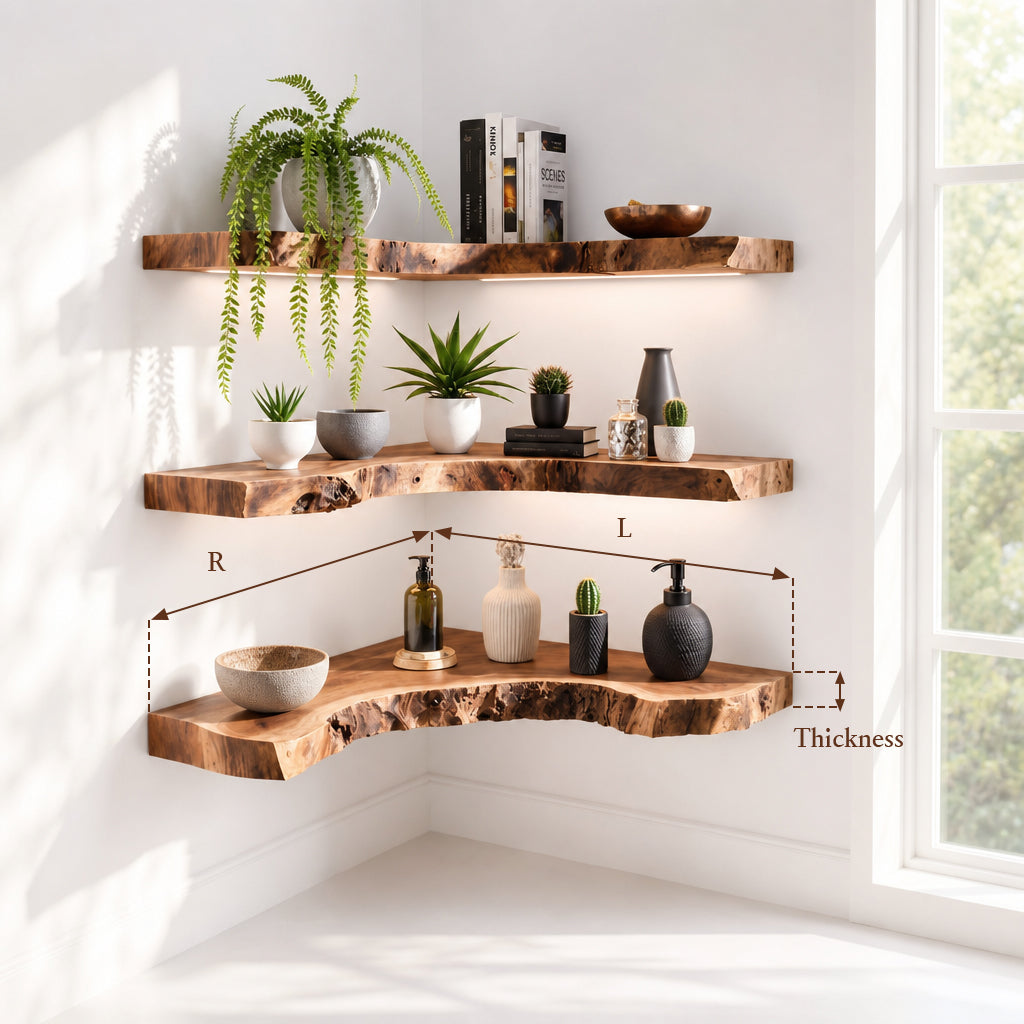
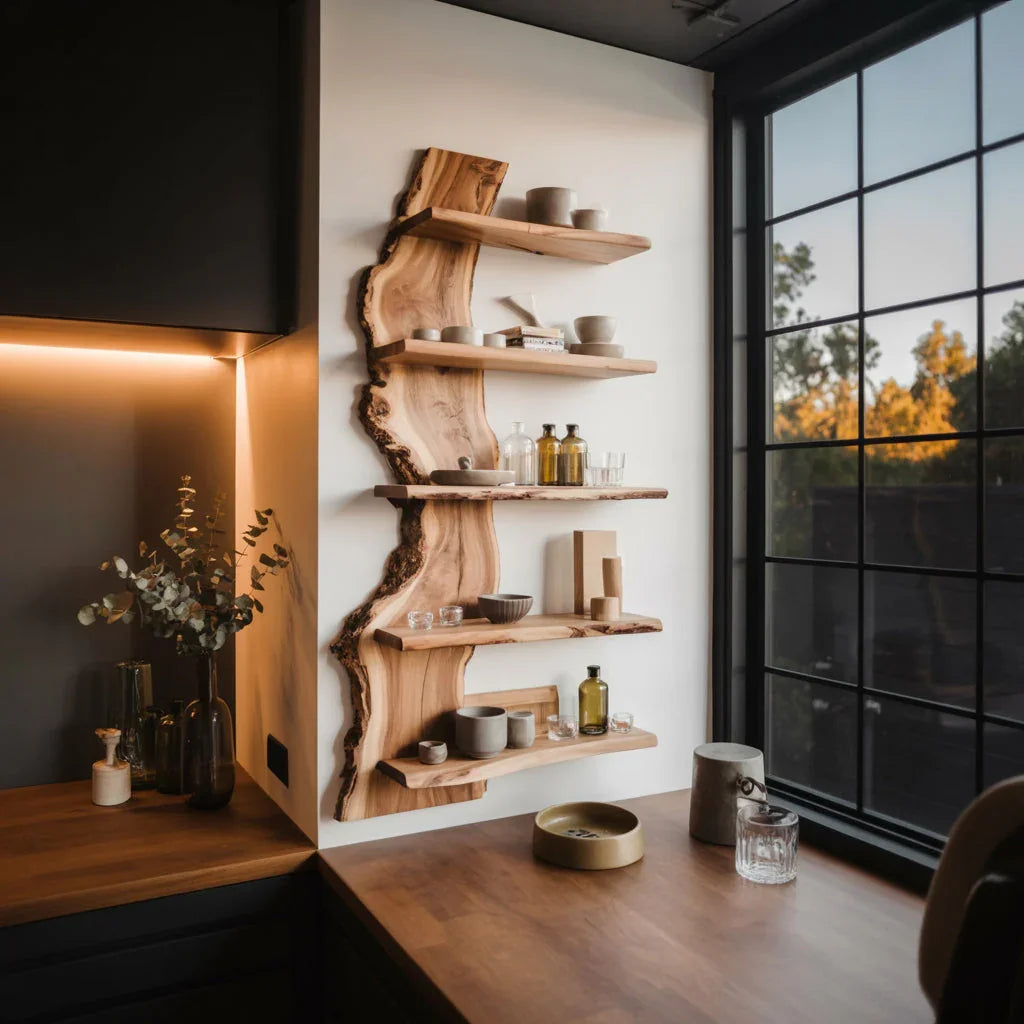
The Natural Handcrafted Floating Shelves can work well in a kitchen when you want open access to everyday items and a warmer wall treatment than upper cabinets. The key is to use them as a focused storage zone, not as an excuse to remove too much hidden storage.

Natural Handcrafted Floating Shelves | $429-$1,039
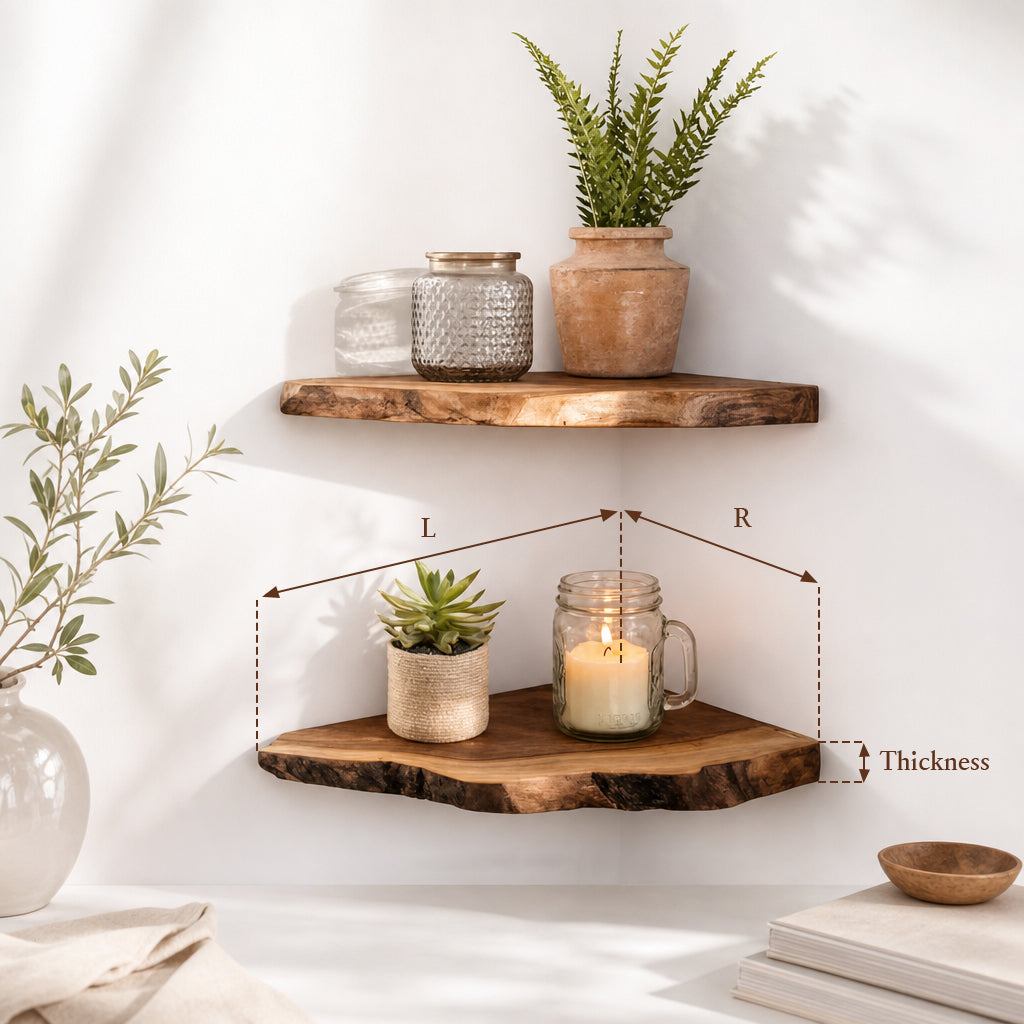
If your kitchen has an awkward corner or niche, it may also help to compare with corner floating shelves rather than forcing a straight shelf into the wrong wall section.
When cabinets are still the better choice
Cabinets are the better choice when you need to hide packaging, keep dust off less-used items, or reduce visual noise in a busy kitchen. They are also better if the household simply does not maintain open storage well. There is nothing wrong with admitting that. In fact, it is usually the most useful design decision you can make.
Open shelves are not automatically more modern or better designed. They are just more exposed. That exposure works only when the storage behavior supports it.
Honest downsides
Kitchen floating shelves require more visual discipline than upper cabinets. They can also demand more frequent wiping, especially in kitchens with active cooking and airborne grease. Buyers who want a calm look without ongoing maintenance often end up happier with at least some closed storage.
There is also a functional limit. Shelves are great for certain categories, but they are not the best answer for every kitchen item, especially bulky or visually messy supplies.
My recommendation
If you want floating shelves in a kitchen, use them for one clear purpose. Everyday dishes, a coffee zone, or a short wall that needs to feel lighter. If you want them because they looked good in photos but your real kitchen is already overloaded, stop there. You probably need better hidden storage instead.
That is the real dividing line. Not trend. Not style. Storage behavior.
FAQ
Are floating shelves practical in a kitchen?
Yes, when they hold items you use often and can keep organized. They become less practical when they are asked to carry every category that should have stayed behind closed doors.
Do kitchen floating shelves get dirty fast?
They can, especially near cooking zones. Dust and grease are more visible on open shelving than inside cabinets, so maintenance matters more.
What should I put on open kitchen shelves?
Everyday dishes, mugs, glasses, and a limited number of containers are the safest choices. The goal is repeat-use storage, not random overflow.
Are floating shelves better than upper cabinets?
Only in the right situation. They are better for openness and display. Cabinets are better for hiding visual mess and protecting less-used items.
Do solid wood shelves make a difference?
Yes. In a kitchen, shelves are doing visible work. Solid wood gives more visual stability and feels more intentional than thin, temporary-looking shelving.