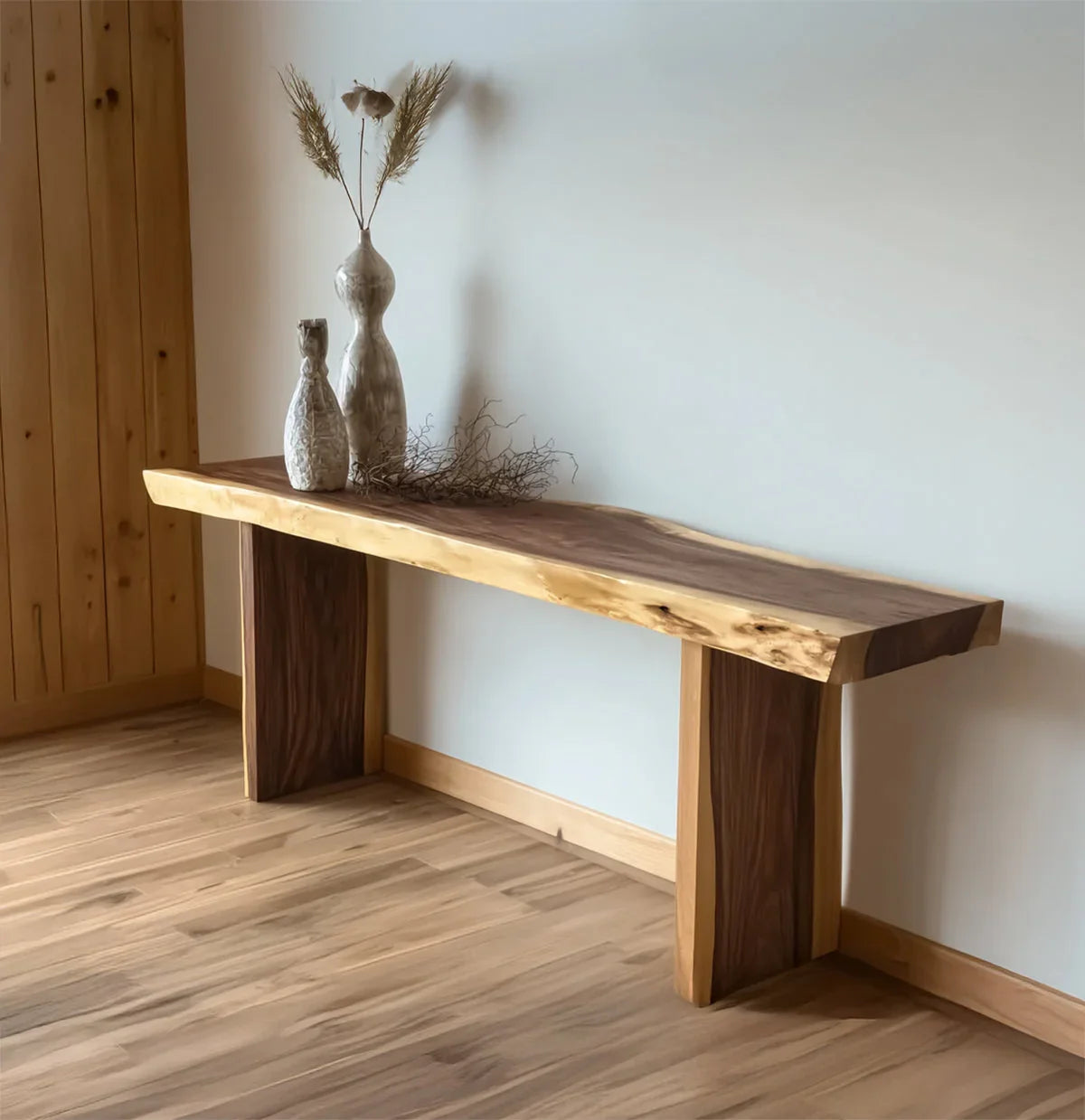
An entryway table with storage sounds simple until you try to fit one into a narrow hallway that already feels tight. In small spaces, the wrong console table does more than waste room. It blocks movement, collects clutter, and turns the entry into a bottleneck instead of a landing zone.
This guide focuses on what to choose based on storage type, hallway constraints, and the real mess you are trying to control.
What an entryway table in a small space actually needs to do
An entryway table for a small space has to do two jobs at once. It needs to hold the everyday items that otherwise pile up near the door, and it needs to do that without making the hallway feel narrower. That is why size alone is not enough. The storage format matters just as much as the footprint.
Drawers, open shelves, baskets, and lower benches all solve different problems. Buyers usually get in trouble when they choose for looks first and entryway behavior second.
Which storage type fits your mess best
The right storage type depends on what usually lands near your door. If the problem is visual clutter like keys, wallets, dog leashes, and unopened mail, drawers help most. If the issue is shoes, baskets or lower shelves matter more. If you need a surface plus a small drop zone, an open shelf can be enough without adding unnecessary bulk.
| Storage type | Best for | Main tradeoff |
|---|---|---|
| Drawers | Hiding small daily clutter | Can add visual weight |
| Open shelf | Baskets, shoes, display storage | Mess stays visible |
| Baskets underneath | Flexible family storage | Needs consistent sorting |
| Minimal table only | Tightest spaces with light daily use | Limited containment |
Why many entryway tables fail in small hallways
The most common failure is not bad style. It is bad depth. Buyers see a table that looks slim in a photo, then place it in a hallway that already has door swings, shoes, bags, and people moving through it. Suddenly the entryway feels crowded all day.
The second failure is choosing a table with storage that does not match the clutter. A beautiful open shelf does not help much if what you really need is hidden containment for keys, chargers, and daily paper mess.
When a console table works better than bulkier storage furniture
In many small entryways, a console table works better than a full cabinet because it keeps the space visually lighter. That matters when the front door opens directly into the living area or when the hallway already feels narrow. A small table with the right storage detail often beats a larger piece that tries to solve every problem and ends up dominating the entrance.
If you need more linear options, compare styles in the console table collection and keep your eye on storage type before decoration.
How handcrafted solid wood changes the result
Solid wood matters in entryways because this is one of the most touched zones in the house. Bags get dropped. Keys slide. People lean on surfaces. A thin, lightweight table may look fine online and still feel temporary the moment real life starts happening around it.
Ashdeco's pieces are handcrafted by Vietnamese artisans, which gives the table more visual presence and sturdier character than flat-pack entryway furniture. That matters most when the table has to feel intentional in a small space rather than like a stopgap fix.
What to pair with an entryway table
An entryway table works best when it is part of a simple system. If shoes are the bigger problem, pair the table idea with a look at shoe benches. If coats and bags are what keep overflowing, then the better companion category is coat racks and hangers.
This is where buyers make better decisions fast. They stop asking for one miracle furniture piece and start asking what the hallway actually needs.
Example of when this category makes sense
An entryway table with modest storage makes sense when the main problem is everyday drop-zone clutter, not major household overflow. Keys, sunglasses, wallet, incoming mail, and a small basket for loose items. That is the lane. Once the furniture is expected to handle shoes, heavy bags, outerwear, and random family clutter all at once, a table alone starts losing.
That is also why small-space entryways benefit from cleaner furniture lines. You want enough storage to calm the entrance, not so much mass that the furniture becomes the new problem.
When this is the wrong category
This is the wrong category when the real issue is volume. If the entryway is drowning in shoes, backpacks, and winter gear, then a slim table will only solve the prettiest part of the mess. It may still be useful, but it should not be the main answer.
It is also the wrong fit if the hallway is too narrow to tolerate even a shallow surface. In that case, wall-mounted storage or a different room layout strategy may be smarter.
Honest downsides
Entryway tables with storage can look more useful than they really are. In small spaces, storage capacity stays limited because the piece cannot grow too deep without hurting circulation. That means you still need discipline about what belongs there.
There is also a temptation to overdecorate the top. Candles, trays, bowls, frames, and baskets add up quickly. A table meant to reduce clutter can become another clutter surface if the styling gets too busy.
My recommendation
If your small entryway needs better control, start by identifying the mess type. Hidden clutter means drawers. Loose family items mean baskets. Shoes mean a bench or lower shelf strategy. Then choose the smallest piece that solves that exact problem.
That is the cleanest way to buy an entryway table for a small space. Not the most decorative option. The most honest one.
FAQ
What kind of entryway table is best for a small hallway?
A narrow table with storage that matches your actual clutter is usually best. The key is keeping the footprint light while still giving daily items a designated place.
Are drawers or shelves better in a small entryway?
Drawers are better for hiding visual clutter. Shelves are better for baskets, shoes, or items you grab often. The better choice depends on what usually piles up near the door.
Can an entryway table replace a shoe bench?
Sometimes, but not if shoes are the main problem. A table can help with drop-zone clutter, while a shoe bench handles larger, lower storage better.
Do solid wood entryway tables make sense in small spaces?
Yes, especially when the entryway gets heavy daily use. Solid wood feels more grounded and durable than lightweight pieces that shift or wear down fast.
What is the biggest mistake with entryway storage furniture?
Choosing by appearance without matching the furniture to the actual clutter pattern. A beautiful table that stores the wrong things still leaves the entryway messy.