Rustic floating shelves look simple. A slab of wood on a wall with no visible brackets. But buying the right ones? That gets complicated fast. Size, wood type, weight capacity, mounting hardware, finish. Get any of these wrong and you'll end up with shelves that sag, warp, or just don't look right in your space.
I've seen people buy "rustic" shelves online only to receive laminate boards with a printed wood grain pattern. That's not rustic. That's a photograph of wood glued to particleboard.
So here's a practical breakdown of what to look for when you're actually shopping.
Solid Wood vs. Everything Else
The single biggest decision is material. "Rustic" gets slapped on everything from $20 MDF shelves at big box stores to $500 hand-carved solid wood pieces. The difference matters more than most people realize.
Solid wood (oak, walnut, acacia, teak, reclaimed timber) develops character over time. The grain darkens, minor scratches blend in, and the shelf actually looks better after a few years. It can hold real weight. And it won't delaminate when humidity changes. Engineered wood with veneer is a middle ground. A thin layer of real wood over plywood or MDF. Looks decent initially but the veneer can chip at the edges, and once moisture gets underneath, it bubbles. Laminate/particleboard with "rustic" print is the cheapest option. It photographs well for online listings. In person, you can see and feel the difference immediately. Run your finger along the edge. If it's perfectly smooth and uniform, it's not real wood.
If you're spending money on shelves you'll look at every day for years, solid wood is worth the premium.
Wood Types: What Each One Actually Looks and Feels Like
Not all wood is interchangeable for rustic shelves. Here's what you need to know.
| Wood Type | Grain Character | Hardness | Best For | Price Range |
|---|---|---|---|---|
| Pine | Knotty, light, informal | Soft (dents easily) | Budget rustic, farmhouse | $ |
| Oak | Prominent grain, classic | Hard | High-traffic areas, heavy items | $$ |
| Walnut | Dark, rich, smooth | Medium-hard | Living rooms, bedrooms | $$$ |
| Acacia | Wild grain, lots of variation | Hard | Statement pieces, bathrooms | $$ |
| Teak | Tight grain, naturally oily | Very hard | Bathrooms, outdoor-adjacent | $$$ |
| Reclaimed wood | Unpredictable, full of history | Varies | Character pieces, vintage style | $-$$$$ |
Pine is fine for a bedroom or low-traffic area. But in a kitchen where things get bumped and splashed, you want something harder. Oak and acacia handle abuse well.

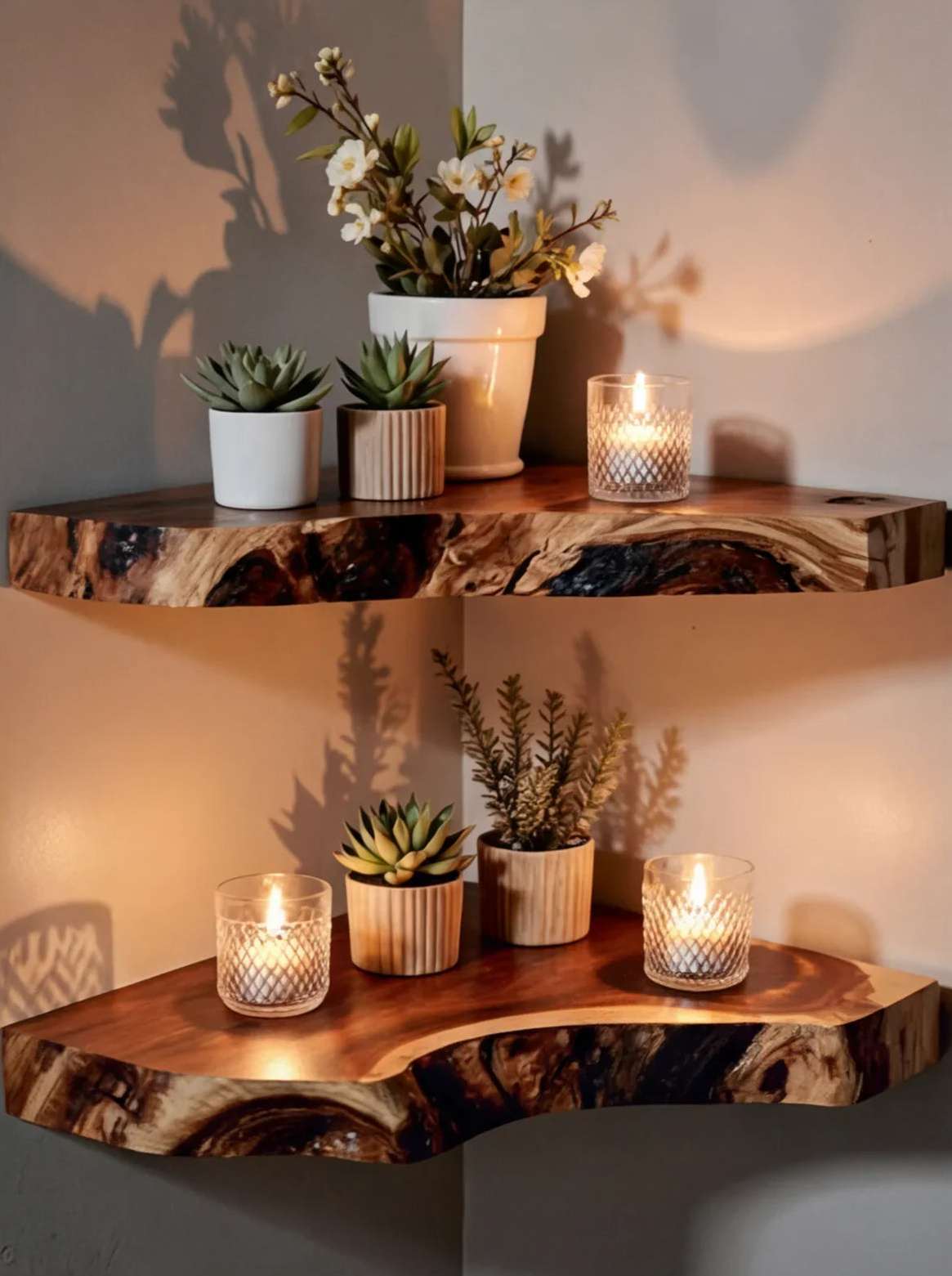
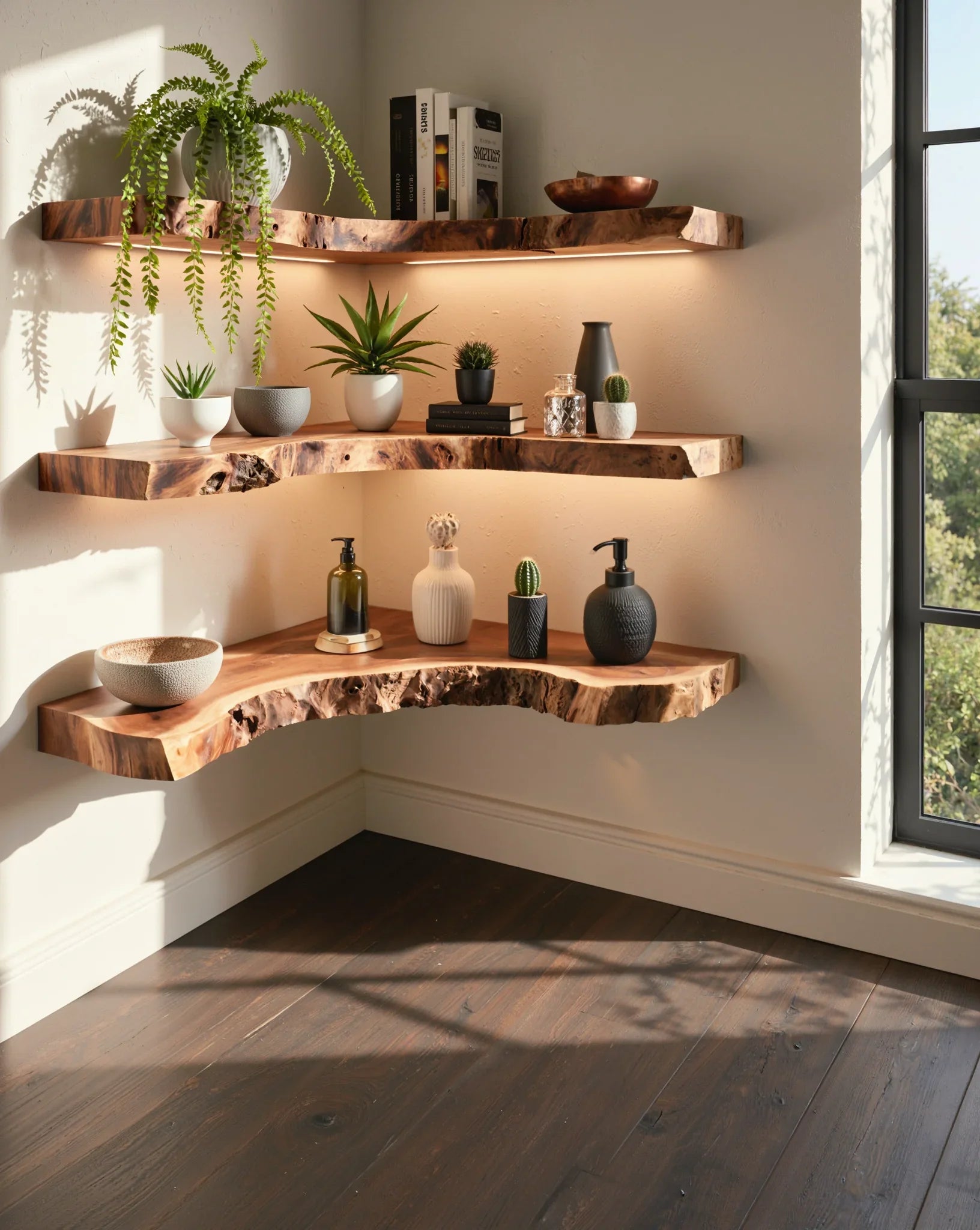
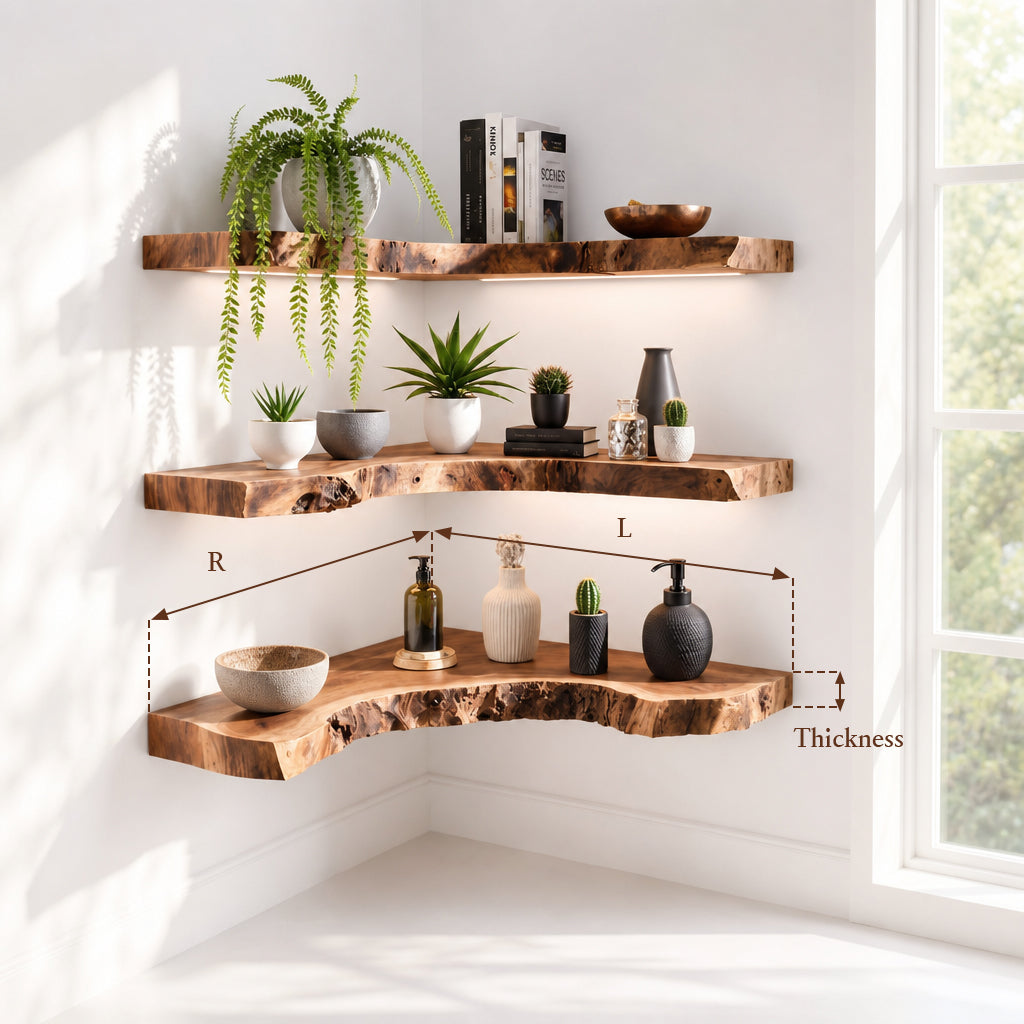
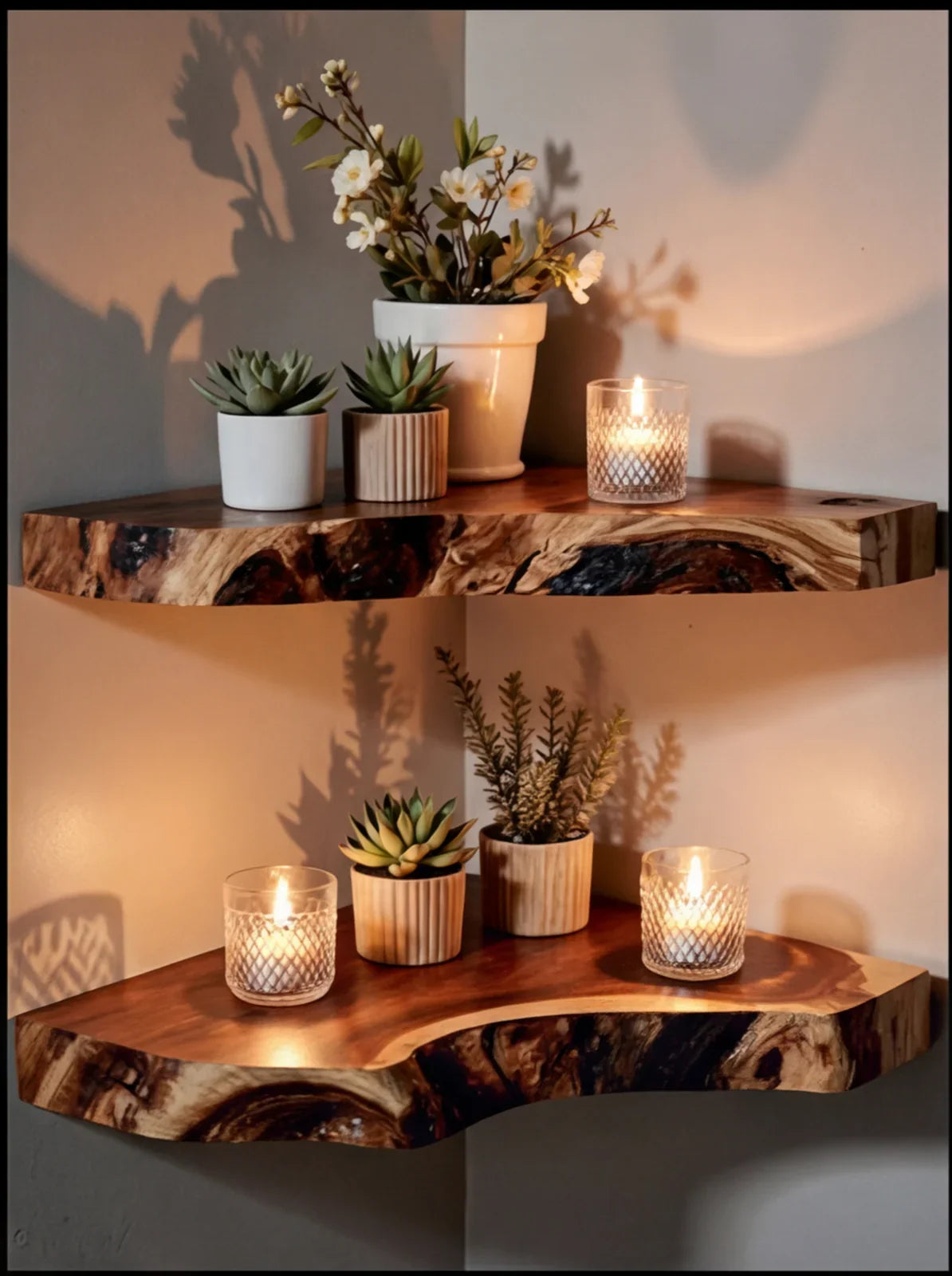
Rustic Corner Wall Shelves - Natural Live Edge ($88 - $987)
Size: The Three Numbers That Matter
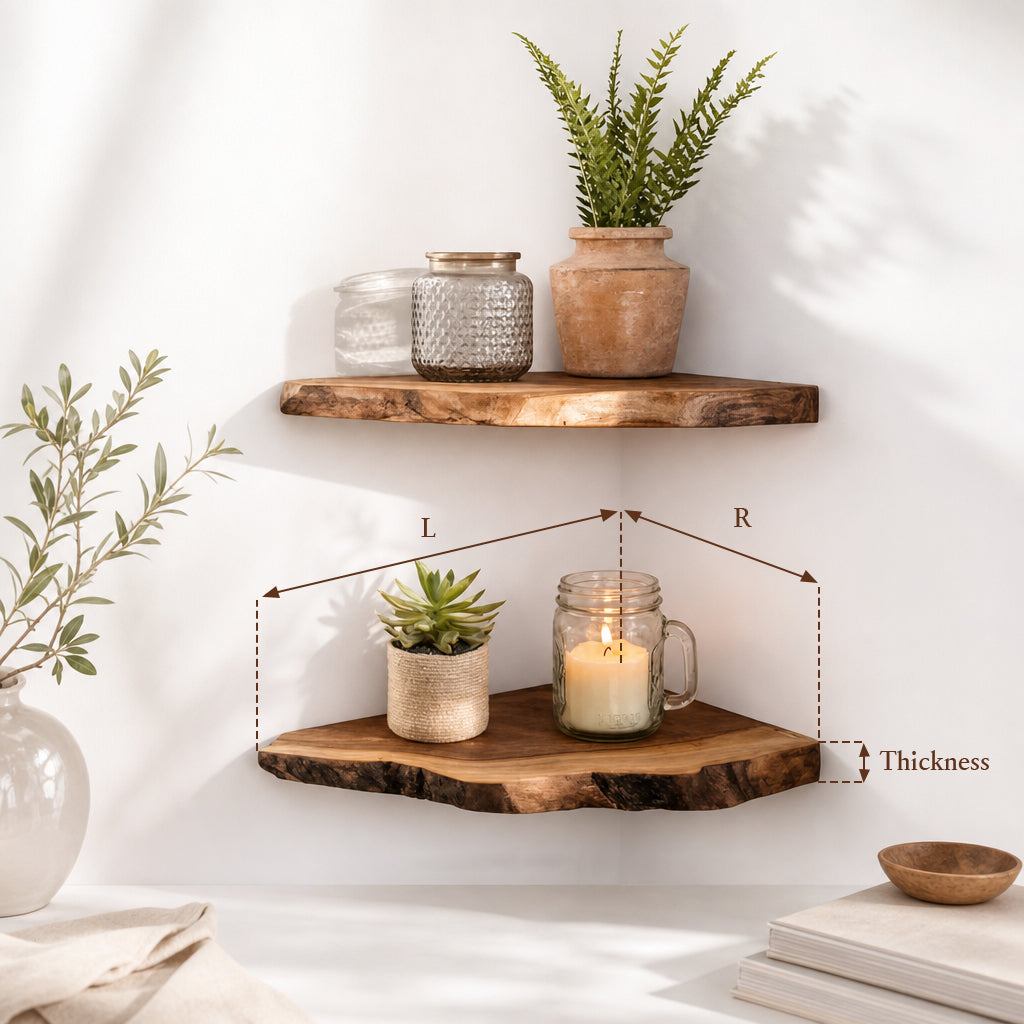
Length depends on your wall space and what you're putting on the shelf. Common sizes run 12 to 48 inches. Measure the wall, subtract at least 4 inches on each side so the shelf doesn't look crammed into the corner. Depth is where people make mistakes. Standard floating shelves are 6-8 inches deep. Go deeper than 10 inches and you'll start bumping your head or shoulder walking past, especially in hallways. But too shallow (under 5 inches) and books fall off the back. Thickness affects both the look and the strength. Thin shelves (1 inch or under) look sleek but max out at about 15-20 pounds depending on mounting. Thick shelves (2-3 inches) can handle 30-50+ pounds and give that chunky farmhouse feel that actually reads as "rustic."
For most rooms, 24-36 inches long, 6-8 inches deep, and 1.5-2 inches thick hits the sweet spot between practical and good-looking.
Weight Capacity: The Number Nobody Checks (Until It's Too Late)
Every floating shelf has a weight limit. Most sellers list it somewhere in the fine print. Ignore it at your own risk.
The weight capacity depends on two things: the shelf material and the mounting system.
The shelf itself. Solid hardwood can handle more than pine, which can handle more than MDF. A 24-inch solid oak shelf 2 inches thick will hold 40-50 pounds easily. The same dimensions in MDF? Maybe 20 pounds before it bows. The mounting. This is the bigger factor. Floating shelf brackets that go into wall studs can support serious weight. Brackets into drywall anchors? Much less. If you're mounting into studs, you're typically fine with 30-50 pounds per shelf. Drywall anchors, keep it under 15-20 pounds.
A shelf full of hardcover books weighs more than you think. A standard hardcover is about 1.5 pounds. Twenty books on a shelf = 30 pounds. Add a plant in a ceramic pot and you're at 35-40. Plan accordingly.
Live Edge vs. Straight Cut
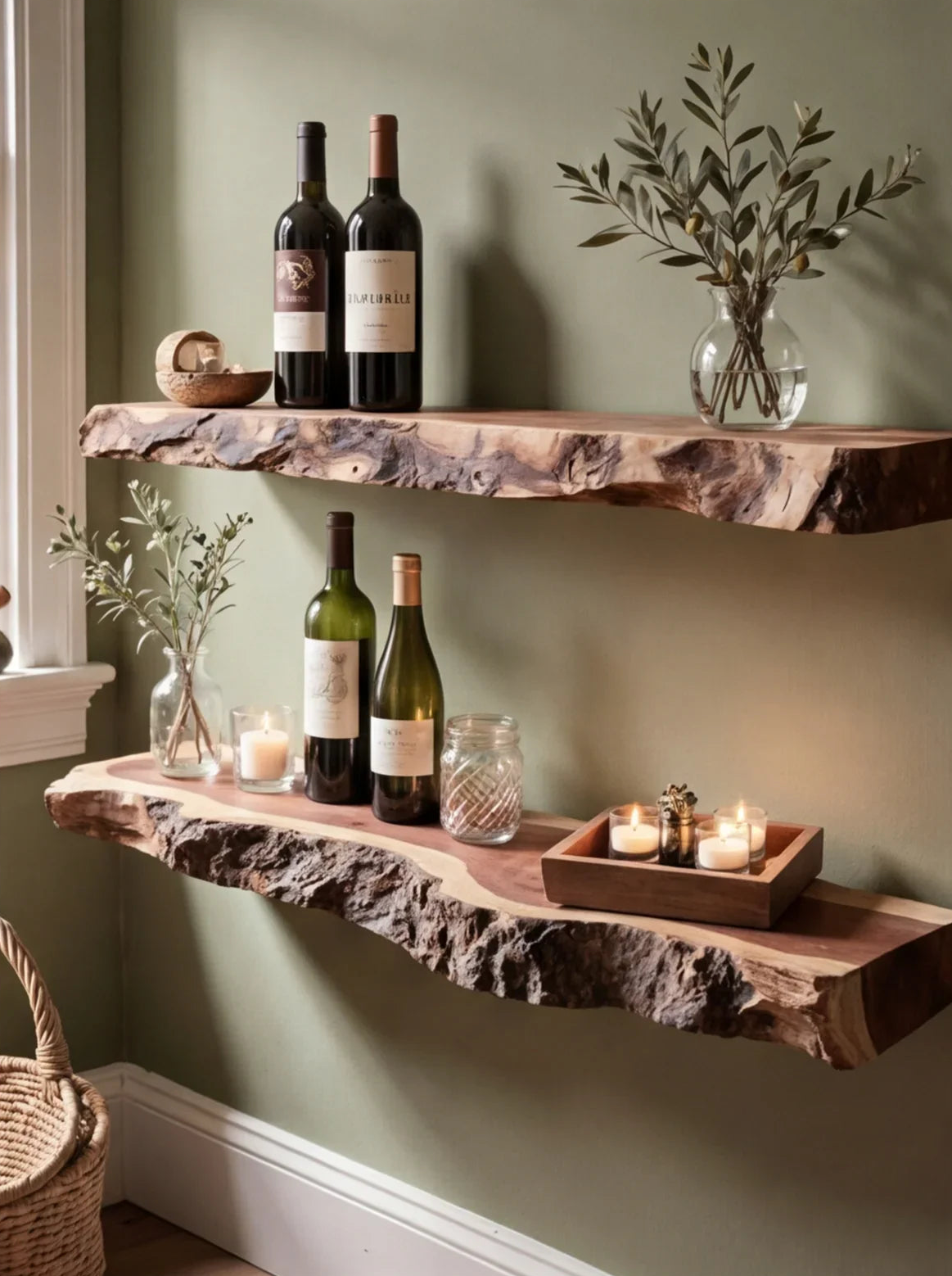
Live edge means one or both edges of the shelf follow the natural edge of the tree, bark and all. It's popular right now and it photographs incredibly well. But it comes with trade-offs.
Live edge pros: Completely unique (no two pieces are identical), strong visual presence, works as a statement piece even without anything on it. Live edge cons: The irregular shape means items can roll or lean on uneven surfaces. Bark can shed over time if not properly sealed. More expensive than straight-cut shelves. Straight cut pros: Easier to arrange items on a flat surface. More predictable sizing. Generally less expensive.
For a display shelf where you're placing candles and small decor items, live edge works beautifully. If you're looking specifically at corners, Ashdeco's corner floating shelves are all live edge with natural bark edges. For a utility shelf in a kitchen or bathroom where you need a flat surface for bottles and containers, straight cut is more practical.

Handmade Live Edge Wooden Floating Shelves ($167 - $839)
Finish and Sealing: What to Look For
The finish on a rustic shelf determines how it ages, how it handles moisture, and how much maintenance it needs.
Natural/unfinished. Shows the raw wood perfectly. But it stains easily, absorbs moisture, and can crack in dry climates. Only works in low-humidity, low-traffic areas. Oil finish (tung oil, linseed oil, Danish oil). Soaks into the wood rather than sitting on top. Keeps the natural look and feel. Needs reapplication every 1-2 years. Good middle ground. Polyurethane/lacquer. Creates a hard protective layer on top. More durable. Easier to wipe clean. But it can look shiny, which kills the rustic vibe unless you get a matte finish. Wax finish. Soft, warm look. Low protection. Needs redoing every few months. Nice on display shelves you won't touch much.
For bathrooms and kitchens, go with polyurethane (matte) or oil finish. For living rooms and bedrooms, oil or wax gives the most authentic rustic feel.
Price: What You Should Expect to Pay
Pricing varies wildly, and that's partly because "rustic floating shelf" covers everything from a $15 pine board to a $500 handcrafted live edge piece.
| Category | Material | Typical Price | What You Get |
|---|---|---|---|
| Budget | Pine or MDF with veneer | $15-$50 | Basic look, limited durability |
| Mid-range | Solid wood (pine, acacia) | $80-$200 | Real wood, decent hardware |
| Premium | Hardwood (walnut, oak, teak) | $200-$600 | Better grain, heavier, longer lasting |
| Handcrafted/Custom | Solid hardwood, hand-finished | $400-$1,000+ | One-of-a-kind, artisan quality |
Ashdeco's floating shelves collection runs from $84 for smaller corner shelves up to $1,456 for large nursery display sets. Each piece is hand-carved from solid wood, so grain patterns and edges are never identical between pieces.
Mounting: Don't Skip This Part
Even the best shelf is only as good as how it's attached to the wall. Floating shelves use concealed brackets, which is what gives them the "floating" look.
What you need to check before buying:
- Does the shelf come with hardware? (Not all do.)
- What type of mounting: rod-style, French cleat, or concealed bracket?
- What wall type: drywall over studs, plaster, concrete, brick?
Rod-style mounts (metal rods that slide into drilled holes in the shelf) are the most common for floating shelves. They look cleanest but require hitting studs.
French cleat systems are stronger and more adjustable, but slightly thicker mounting profile.
If your wall is plaster or brick, you'll need masonry anchors and possibly a hammer drill. Budget an extra $10-20 for the right fasteners.
The Honest Downsides
Dust shelf. Rustic shelves, especially textured or live edge ones, collect dust in every groove and crack. You'll need a soft brush, not just a quick wipe with a cloth. Warping risk. Cheap solid wood shelves that haven't been properly dried can warp over time, especially in humid rooms. Look for kiln-dried wood or ask the seller about moisture content. Mounting difficulty. Floating shelves are harder to install than bracket shelves. If you're not comfortable with a drill and a level, budget for a handyman ($50-100 for a couple of shelves). Color variation. "Rustic" wood varies significantly in color even within the same order. If you're buying a set of matching shelves, confirm they're cut from the same slab or be prepared for variation.
FAQ
What size rustic floating shelf should I get for a living room?
For above a sofa or TV, 36-48 inches long works well. For a side wall or reading nook, 24-36 inches. Depth of 6-8 inches fits most decor items without sticking out too far.
Can rustic floating shelves hold heavy items like books?
Yes, if they're solid hardwood mounted into studs. A 24-inch solid oak shelf on stud-mounted brackets can handle 40+ pounds. Avoid loading up shelves on drywall anchors alone.
How do I tell if a shelf is real wood from an online listing?
Look at the edges and grain in photos. Real wood grain has natural inconsistencies. If every shelf in the listing looks identical, it's likely veneer or laminate. Check if the listing mentions the specific wood species. "Wood-look" or "wood finish" means it's not solid wood.
Do rustic floating shelves work in modern interiors?
Very well, actually. A single rustic wood shelf on a clean white wall creates contrast that reads as intentional and warm. The mix of raw and polished is a popular design approach right now.
How do I maintain rustic floating shelves?
Dust weekly with a soft cloth or brush. For oil-finished shelves, reapply oil once a year (takes about 10 minutes per shelf). Wipe up spills immediately on any wood surface. Avoid placing hot items directly on the wood.