




















Quick view
- Floating Shelves for Bathroom: How to Choose Moisture-Proof Wood That Lasts
- Why Wood in the Bathroom? The Case for Natural Materials
- Best Wood Species for Bathroom Floating Shelves
- How to Seal and Protect Wood Shelves for Bathroom Use
- What to Store on Bathroom Floating Shelves
- Best Locations for Bathroom Floating Shelves
- Installation Tips for Bathroom Floating Shelves
- Maintenance Schedule for Bathroom Wood Shelves
- Frequently Asked Questions
- Making It Work
Shop this guide
Handcrafted Floating Shelves, made to order in solid wood.
 Sculptural Overlapping Circular Solid Wood Wall Shelf with Multi Tier Display
From $1,354.00
Sculptural Overlapping Circular Solid Wood Wall Shelf with Multi Tier Display
From $1,354.00
 Mountain Landscape Relief Solid Wood Floating Shelf Live Edge Display Ledge
From $1,154.00
Mountain Landscape Relief Solid Wood Floating Shelf Live Edge Display Ledge
From $1,154.00
 Enchanted Forest Circular Wall Shelf - Round Carved Timber Mushroom Portal
From $1,023.00
Enchanted Forest Circular Wall Shelf - Round Carved Timber Mushroom Portal
From $1,023.00
 Cottagecore Arched Wood Wall Niche - Hand-Carved Fairy Mushroom Alcove Shelf
From $1,356.00
Cottagecore Arched Wood Wall Niche - Hand-Carved Fairy Mushroom Alcove Shelf
From $1,356.00
 Sculptural Hand-Carved Mushroom Solid Wood Corner Floating Shelf & Biomorphic Wall Display Ledge
From $345.00
Sculptural Hand-Carved Mushroom Solid Wood Corner Floating Shelf & Biomorphic Wall Display Ledge
From $345.00
 Sculptural Hand-Carved Mushroom Solid Wood Floating Shelves & Biomorphic Wall Display Ledges
From $345.00
Sculptural Hand-Carved Mushroom Solid Wood Floating Shelves & Biomorphic Wall Display Ledges
From $345.00
Floating Shelves for Bathroom: How to Choose Moisture-Proof Wood That Lasts
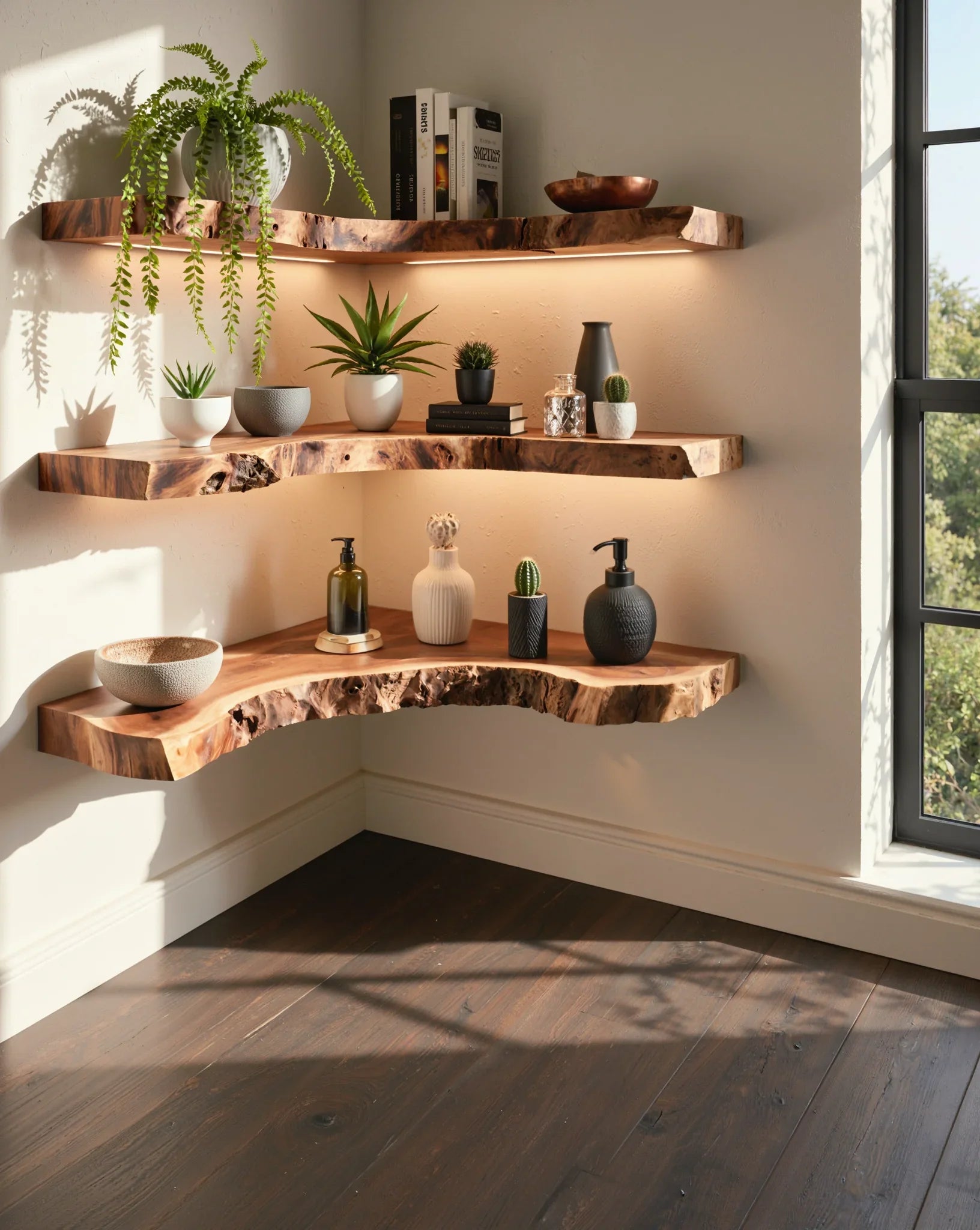
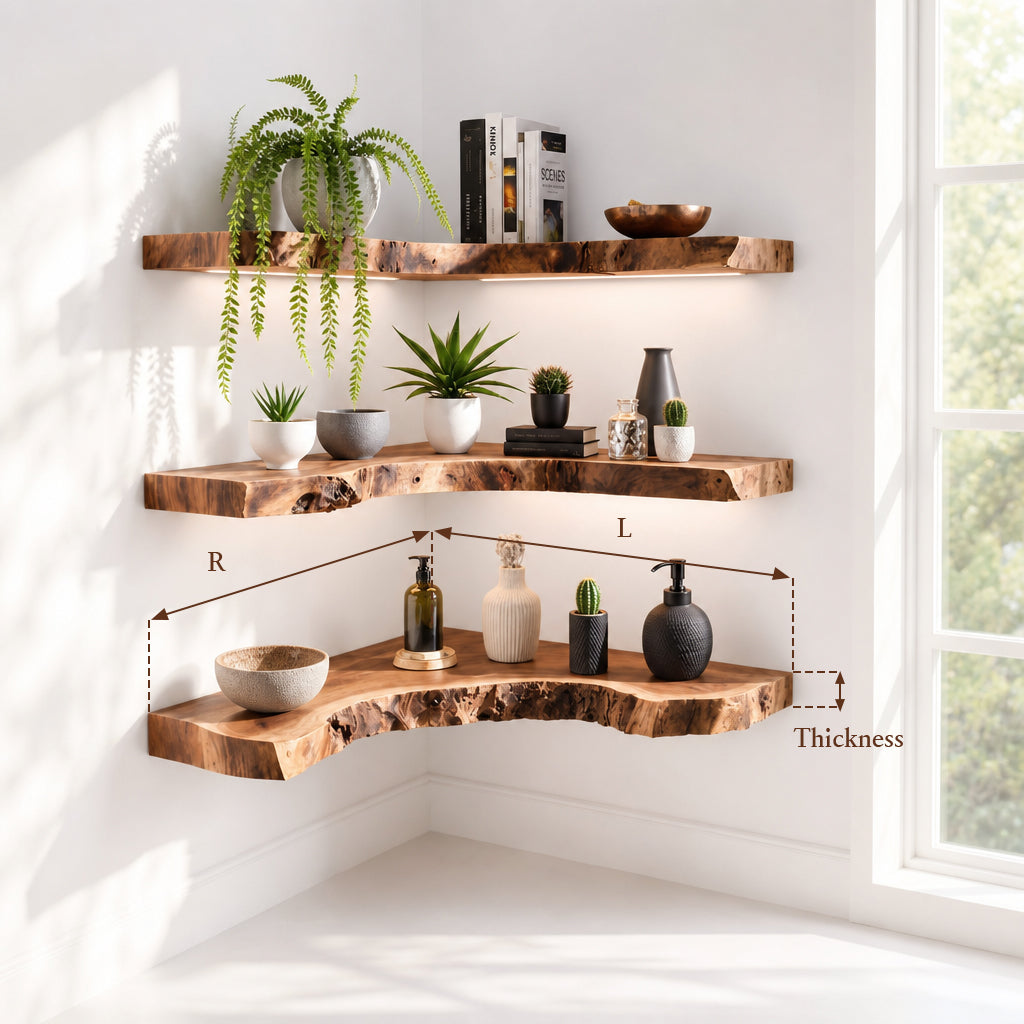
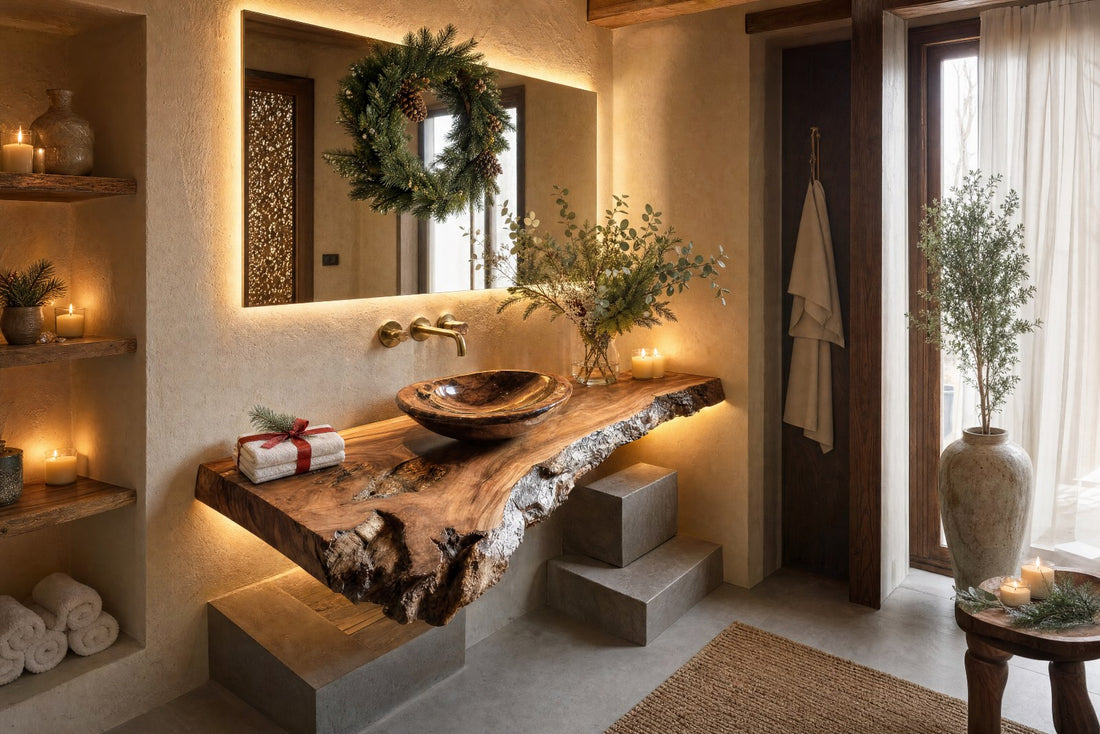
The bathroom is the hardest room in the house for wood. Steam from hot showers, splashes from the sink, humidity that spikes and drops multiple times a day-it's an environment that would destroy most furniture within a year. This Old House recommends sealing bathroom shelves to protect against moisture damage.
And yet, wooden floating shelves in the bathroom look incredible. They break up the cold monotony of tile, glass, and porcelain. They add warmth to a space that desperately needs it. And when chosen and finished correctly, they hold up far longer than most people expect.
This guide covers which wood species handle bathroom moisture, how to seal and protect them, and what to actually store on bathroom floating shelves-because that matters more than you'd think.

Why Wood in the Bathroom? The Case for Natural Materials
Bathrooms are dominated by hard, cold, reflective surfaces: ceramic tile, porcelain fixtures, glass shower doors, chrome hardware. Everything bounces light and echoes sound. The result is a room that functions well but feels clinical.
Wood does three things that no other material can:
- Adds warmth - both visual warmth (the color and grain) and textural warmth (wood doesn't feel cold to the touch like metal or glass)
- Absorbs sound - even a small wooden shelf softens bathroom acoustics slightly, making the room feel less reverberant
- Creates contrast , the organic irregularity of wood grain against the geometric precision of tile creates visual tension that makes both materials look better
The concern about moisture is valid, but solvable. People have been using wood in boats for thousands of years. The technology for moisture-proofing wood is well-established. The question isn't whether wood can survive in a bathroom; it's which wood and which finish to choose.
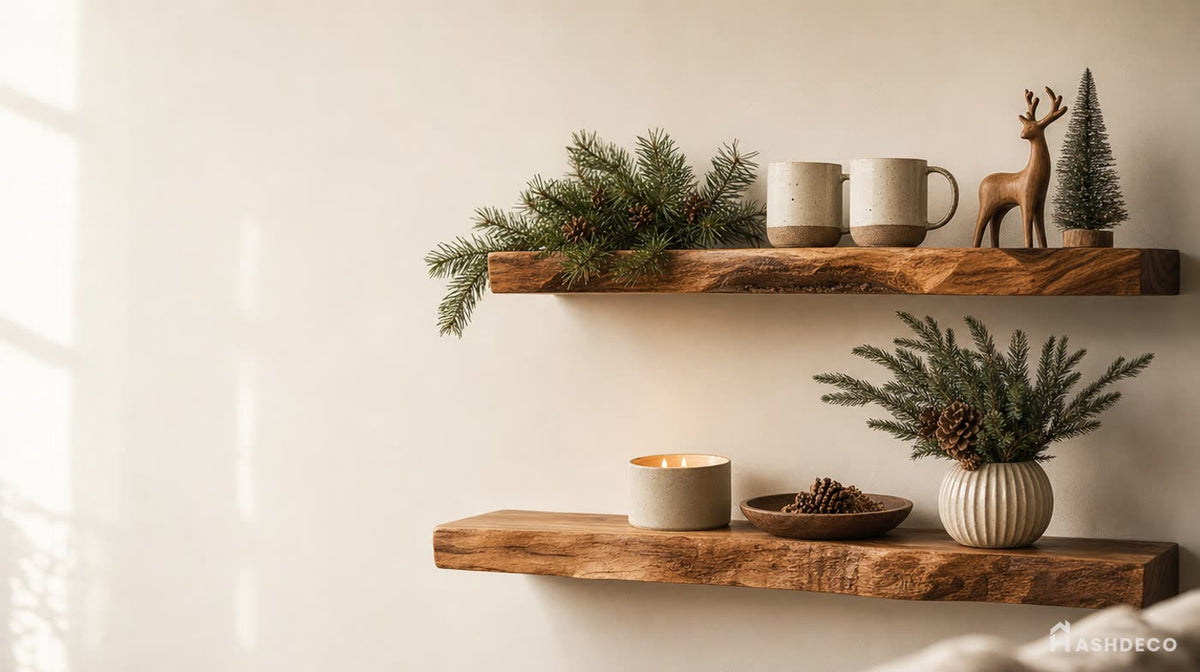


Best Wood Species for Bathroom Floating Shelves
Not all woods are created equal when it comes to moisture resistance. Here are the species that handle bathroom conditions best, ranked from most to least water-resistant:
1. Teak
The gold standard for wet environments. Teak contains natural oils that repel water, resist rot, and prevent mildew, without any finish at all. It's why teak has been used for boat decks and outdoor furniture for centuries. In a bathroom, teak floating shelves will shrug off steam and splashes with zero issues.
Downsides: Teak is expensive, often 3-5 times the cost of other hardwoods. Genuine teak (not plantation teak, which is less dense) is increasingly hard to source. If budget allows, teak is the no-compromise choice.
2. Acacia
The best value for bathroom use. Acacia grows in tropical and subtropical climates, which means it evolved to handle moisture. Its dense grain structure and natural oils give it water resistance that approaches teak at a fraction of the cost. The grain patterns are striking, swirling, varied, and unique to each board.
Downsides: Acacia needs more finishing than teak for optimal moisture protection, but responds beautifully to oil or sealant treatment. An excellent middle ground between performance and price.
3. White Oak
White oak has a cellular structure called tyloses, tiny bubble-like growths that plug the wood's pores and prevent water from penetrating deeply. This is why white oak is used for whiskey barrels and boat hulls. In a bathroom, white oak resists moisture naturally and looks elegant with its straight, prominent grain.
Downsides: White oak is heavy, which is a mounting consideration but also contributes to its substantial feel. It's moderately expensive but widely available.
4. Cedar
Naturally resistant to rot, decay, and insects. Cedar contains thujaplicins, chemicals that act as natural preservatives. It's lighter than oak and has a distinctive reddish-warm color and pleasant scent. Cedar is commonly used for saunas and closets, which speaks to its moisture tolerance.
Downsides: Cedar is soft (it dents and scratches easily) and has a strong smell that some people find overwhelming in a small bathroom. Better for decorative shelves that hold light items rather than heavy toiletries.
5. Walnut
Walnut isn't naturally moisture-resistant, but it responds exceptionally well to sealant treatments. When properly finished with polyurethane or marine-grade oil, walnut performs well in bathrooms. Its dark, rich color adds sophistication to any bathroom style.
Downsides: Requires diligent finishing and reapplication of sealant every 12-18 months. Not a set-it-and-forget-it choice for the bathroom.
Species to Avoid in Bathrooms
- Pine: Too soft, too porous, swells significantly with moisture changes
- Maple: Despite its hardness, maple is highly susceptible to moisture damage and warping
- MDF/Particle board: Will swell, warp, and disintegrate with repeated moisture exposure, regardless of finish
- Bamboo (unless marine-grade): Most bamboo products use adhesives that fail in high humidity

How to Seal and Protect Wood Shelves for Bathroom Use
Even moisture-resistant species benefit from proper sealing. The finish is your primary defense against bathroom conditions. Here are the options, from most to least protective:
Marine-Grade Polyurethane
The most protective option. Marine-grade (or spar) polyurethane is formulated for boat surfaces that face constant water exposure. It creates a thick, flexible, waterproof barrier that expands and contracts with the wood as humidity changes. Apply 3-4 coats with light sanding between coats for maximum protection.
Appearance: Available in satin, semi-gloss, and high gloss. Satin gives the most natural look while still providing full protection. Adds a slight amber warmth to the wood's color.
Epoxy Resin
Creates a completely waterproof, glass-like surface. Epoxy is the most durable option but changes the look and feel of the wood significantly, it looks and feels like a coated surface rather than natural wood. Best for modern bathrooms where a sleek, sealed look is appropriate.
Hard Wax Oil
Penetrates the wood rather than coating it, providing water resistance while maintaining the natural look and feel. Popular brands include Rubio Monocoat and Osmo. Not as waterproof as polyurethane, but more natural-looking and easier to reapply.
Best for: Bathroom shelves that don't get directly splashed. If your shelf is across the room from the shower and sink, hard wax oil provides adequate protection with a superior aesthetic.
Tung Oil
A natural, food-safe oil that provides moderate water resistance. Pure tung oil takes weeks to fully cure but creates a durable, water-resistant finish. Works well on naturally moisture-resistant species like teak and acacia where the wood itself does most of the heavy lifting.
Application Tips
- Seal ALL surfaces , top, bottom, sides, and especially the back. Moisture that enters from the back (where the shelf meets the wall) causes just as much damage as moisture on the visible surfaces.
- Sand between coats , use 220-grit sandpaper between finish coats to create mechanical adhesion. Don't skip this step.
- Pay attention to end grain , the cut ends of wood absorb moisture fastest. Apply extra coats of finish to the ends.
- Let it cure fully , polyurethane needs 48-72 hours to cure before exposure to moisture. Don't rush the installation into a steamy bathroom.
- Reapply on schedule , most finishes need refreshing every 12-24 months in bathroom environments. Set a calendar reminder.
Don't miss
These pieces qualify for 10% off orders over $2,000. Applied automatically at checkout.
What to Store on Bathroom Floating Shelves
Bathroom storage is a balance between accessibility and aesthetics. Here's what works on open floating shelves and what doesn't:
Put These on Your Shelves
- Rolled towels , hand towels and washcloths rolled and stacked look spa-like. Use a consistent color for the best visual effect.
- Nice-looking containers , cotton balls, Q-tips, and bath salts in clear glass or ceramic jars look intentional and attractive.
- Plants that thrive in humidity , pothos, ferns, air plants, and orchids love bathroom conditions. A trailing pothos on a high shelf adds life to the room.
- Candles , a candle on a bathroom shelf is both decorative and functional (aromatherapy after a long bath).
- Curated toiletries , nice-looking soap dispensers, premium lotion bottles, and attractive perfume bottles deserve display. Transfer everyday products into matching dispensers.
- A small piece of art or a photo , in a frame with glass, art survives bathroom humidity. It personalizes a space that often feels generic.
Keep These Off Your Shelves
- Medications , heat and humidity degrade medications faster. Store them in a cool, dry closet instead.
- Cheap plastic containers , they look trashy on beautiful wood shelves and undermine the whole aesthetic.
- Overflowing toiletry collections , open shelving in the bathroom works only when curated. Your daily routine products should be out; everything else goes in the vanity or a closed cabinet.
- Electronics , hair dryers, electric razors, and other electronics are damaged by humidity and look messy on open shelves.
- Paper products in bulk , a few neatly stacked toilet paper rolls can look fine; a mega-pack from Costco cannot.
Best Locations for Bathroom Floating Shelves
Above the Toilet
The most popular spot, and for good reason. The space above the toilet is usually empty, and a shelf here provides storage exactly where you need it. Mount the shelf at least 12 inches above the toilet tank lid for clearance. One or two shelves work perfectly: towels on the lower shelf, a plant and candle on the upper shelf.
Beside the Vanity Mirror
A small floating shelf on one or both sides of the mirror provides a spot for toothbrush holders, a small plant, or daily-use items. This keeps the vanity countertop clearer while keeping essentials within arm's reach.
Opposite the Shower
A shelf on the wall facing the shower catches the least direct moisture while remaining visually connected to the wettest area. This is the best spot for items that look great but aren't fully waterproof, framed art, decorative objects, and candles.
In the Shower Niche (Specialized)
Some homeowners install teak floating shelves inside the shower itself, replacing tile niches. This is advanced, only teak or properly sealed marine-grade wood should be used, but the result is striking. The wood adds warmth to the shower's cold tile surfaces and provides a natural, spa-like feel.

Installation Tips for Bathroom Floating Shelves
- Use stainless steel or coated hardware. Standard steel screws and brackets will rust in bathroom humidity. Stainless steel, zinc-plated, or epoxy-coated hardware resists corrosion.
- Apply silicone caulk at the wall junction. Where the shelf meets the wall, moisture can collect and seep behind the shelf. A thin bead of clear silicone caulk seals this gap and prevents moisture infiltration.
- Mount into studs when possible. Bathroom walls often have cement board behind tile, which holds screws differently than drywall. If you can't hit a stud, use toggle bolts rated for the wall type.
- Leave space for airflow. Don't push the shelf into a tight corner with no air circulation. Airflow helps moisture evaporate from the shelf's surfaces and prevents mildew.
- Check for plumbing. Bathroom walls are full of water supply lines and drain pipes. Use a stud finder that detects pipes before drilling.
Maintenance Schedule for Bathroom Wood Shelves
Bathroom shelves need more attention than shelves in dry rooms. Here's a practical maintenance schedule: Find bathroom floating shelf inspiration on Houzz.
- Weekly: Wipe down the shelf surface with a dry cloth after showers to remove moisture. This takes 30 seconds and prevents water spots.
- Monthly: Inspect for any signs of discoloration, soft spots, or peeling finish. Address issues immediately.
- Every 6 months: Deep clean with a mild soap solution, dry thoroughly, and inspect the finish coat. Apply a maintenance coat of oil or wax if using penetrating finishes.
- Annually: Reapply polyurethane or your chosen sealant to any areas showing wear. Pay special attention to the top surface and any edges that get splashed.
This might sound like a lot, but most of these steps take under five minutes. The weekly wipe-down is the most important habit to build, it's the single biggest factor in wood shelf longevity in bathrooms.
Frequently Asked Questions
Can wood floating shelves survive in a bathroom?
Yes, with the right species and finish. Moisture-resistant woods (teak, acacia, white oak, cedar) sealed with marine-grade polyurethane or hard wax oil perform well in bathrooms for years. The key is choosing appropriate materials and maintaining the finish. Avoid softwoods like pine and engineered materials like MDF.
How do I prevent mold on bathroom wood shelves?
Three factors: seal the wood properly (no raw wood in the bathroom), ensure air circulation around the shelf, and wipe down surfaces regularly after showers. A well-sealed, well-ventilated shelf in a bathroom with a functional exhaust fan won't develop mold. If your bathroom has poor ventilation, fix that before installing wood shelves.
Are floating shelves better than over-toilet cabinets?
They serve different needs. Floating shelves are more visually appealing and make the bathroom feel larger. Over-toilet cabinets hold more stuff and hide it from view. In small bathrooms where storage is critical, a cabinet may be more practical. In bathrooms where aesthetics matter more than maximum storage, floating shelves are the better choice.
What's the best finish for bathroom floating shelves?
Marine-grade polyurethane in satin finish. It provides maximum moisture protection while looking natural enough to show the wood's character. Apply 3-4 coats with sanding between coats. For a more natural feel, hard wax oil works well on naturally moisture-resistant species but requires more frequent reapplication.
How much weight can bathroom floating shelves hold?
A solid wood floating shelf mounted into studs typically holds 20-40 lbs depending on size and bracket system. Bathroom items tend to be lighter than kitchen items, rolled towels, bottles, and small jars rarely exceed 10-15 lbs total per shelf. Weight capacity is rarely the limiting factor in bathrooms.
Should I seal the shelf before or after installation?
Before. Seal all six surfaces (top, bottom, front, back, and both ends) before mounting. Once mounted, the back surface against the wall is inaccessible. If that surface is unsealed, moisture will enter from behind and damage the wood from the inside out.
Making It Work
Wood floating shelves in the bathroom are a calculated risk that pays off when you choose the right materials and commit to basic maintenance. The warmth and character they add to an otherwise sterile space is worth the extra attention.
Start with a single shelf above the toilet, it's the easiest installation and the most visually impactful. Choose a moisture-resistant species, seal it thoroughly, and stock it with items that look as good as they function.
If you want bathroom-ready floating shelves crafted from solid, naturally moisture-resistant wood, Ashdeco's handcrafted collection offers pieces made by Vietnamese artisans who understand how to select, finish, and prepare wood for real-world environments, including the humid ones.