




























Quick view
- Why Console Table Depth Matters More Than You Think
- Standard Console Table Depths: A Quick Breakdown
- How Wide Does Your Hallway Need to Be?
- Console Table vs. Entry Table: What's the Difference?
- Material Matters: Why Solid Wood Holds Up in High-Traffic Areas
- 5 Styling Tips for Narrow Hallway Console Tables
- Common Mistakes When Choosing Console Table Depth
- When to Choose a Floating Shelf Instead
- Frequently Asked Questions
- Finding the Right Fit
Shop this guide
Handcrafted Console Table, made to order in solid wood.
 Botanical Live-Edge Timber Console Table - Hand-Carved Tree Trunk & Canopy Feature
From $1,720.00
Botanical Live-Edge Timber Console Table - Hand-Carved Tree Trunk & Canopy Feature
From $1,720.00
 Solid Wood Sculptural Console Table with Hidden Storage
From $2,330.0010% off at checkout
Solid Wood Sculptural Console Table with Hidden Storage
From $2,330.0010% off at checkout
 Sculptural Solid Wood Console Table – Hand-Carved Twist Entryway Table
From $2,330.0010% off at checkout
Sculptural Solid Wood Console Table – Hand-Carved Twist Entryway Table
From $2,330.0010% off at checkout
 Hand-Carved Solid Wood Ring Console Table - Modern Sculptural Entryway & Hallway Table
From $2,330.0010% off at checkout
Hand-Carved Solid Wood Ring Console Table - Modern Sculptural Entryway & Hallway Table
From $2,330.0010% off at checkout
 Organic Sphere & Curve Solid Wood Console
From $2,330.0010% off at checkout
Organic Sphere & Curve Solid Wood Console
From $2,330.0010% off at checkout
 Twisted Pedestal Solid Wood Console Table For Living Room
From $2,330.0010% off at checkout
Twisted Pedestal Solid Wood Console Table For Living Room
From $2,330.0010% off at checkout
Why Console Table Depth Matters More Than You Think
You found the perfect console table online. The wood grain is gorgeous, the proportions look right, and it fits your budget. Then it arrives, and your hallway becomes an obstacle course. Sound familiar? Architectural Digest recommends specific console table dimensions for different hallway widths. Check wood hardness and durability ratings at The Wood Database before choosing your console table material.
Console table depth is the single most overlooked measurement in furniture shopping, and in narrow hallways, it can make or break the functionality of your space. Most standard console tables run 12 to 18 inches deep, but hallways often demand something closer to 8 to 14 inches. Getting this right means the difference between a hallway that flows and one that frustrates everyone who walks through it.
This guide covers exact measurements, ADA clearance requirements, and how to match the right console depth to your specific hallway width.

Rustic Farmhouse Console Table - Handmade Solid Wood Entryway Table with Natural Finish
Standard Console Table Depths: A Quick Breakdown
Console tables generally fall into three depth categories, and knowing where each fits saves you from costly returns:
- Ultra-slim (8-10 inches): Built specifically for tight spaces. These work in hallways as narrow as 36 inches wide. The trade-off is limited surface area, so they're best for keys, a small lamp, and maybe a framed photo.
- Slim (10-12 inches): The sweet spot for most hallways. Enough surface for a vase, small stack of mail, and decorative objects without eating into your walking path.
- Standard (12-14 inches): Works in hallways 42 inches or wider. Gives you room for larger table lamps, a row of books, or a collection of objects with varying heights.
Anything deeper than 14 inches starts crossing into regular table territory and typically won't work in a hallway setting unless your corridor is unusually wide.


How Wide Does Your Hallway Need to Be?
Here's the rule most interior designers use: after placing the console table, you need at least 30 inches of clear walking space. The ADA minimum for accessible passageways is 36 inches, which is worth keeping in mind even in residential settings.
So the math is straightforward:
- 36-inch hallway: Maximum table depth of 6 inches (basically a shelf). Consider a floating shelf instead.
- 42-inch hallway: Up to 12 inches of table depth works comfortably.
- 48-inch hallway: You can go up to 14-16 inches and still have generous clearance.
- 54+ inch hallway: Standard 16-18 inch console tables fit without issue.
Measure your hallway at its narrowest point, not the widest. Doorways, light switches, and radiators all reduce usable width.
Console Table vs. Entry Table: What's the Difference?
These terms get used interchangeably, but there's a functional distinction worth understanding:
Console tables are designed to sit against a wall. They're typically narrow, long, and have a finished front face but may have an unfinished back. Their proportions prioritize length over depth, making them natural fits for hallways, behind sofas, and along entryway walls.
Entry tables (or entryway tables) are a broader category that includes console tables but also encompasses round tables, drop-leaf tables, and wider pieces meant for foyers. Entry tables tend to be deeper and more substantial because entryways are usually wider than hallways.
For narrow hallways specifically, you want a console table, not a generic entry table. The shallower depth profile is engineered for exactly this application.
Don't miss
These pieces qualify for 10% off orders over $2,000. Applied automatically at checkout.
10% off
Solid Wood Sculptural Console Table with Hidden Storage
From $2,330.00
10% off at checkout
10% off
Sculptural Solid Wood Console Table – Hand-Carved Twist Entryway Table
From $2,330.00
10% off at checkout
10% off
Hand-Carved Solid Wood Ring Console Table - Modern Sculptural Entryway & Hallway Table
From $2,330.00
10% off at checkout
10% off
Organic Sphere & Curve Solid Wood Console
From $2,330.00
10% off at checkout
Material Matters: Why Solid Wood Holds Up in High-Traffic Areas
Hallways are high-traffic zones. Every person in the household passes through multiple times a day, often carrying bags, bumping elbows, and brushing past furniture. This makes material choice critical.
Particleboard and MDF console tables might look fine initially, but edges chip, veneer peels, and joints loosen within a year or two in a busy hallway. Solid wood holds up to the abuse. A well-built hardwood console table develops character over time rather than falling apart.
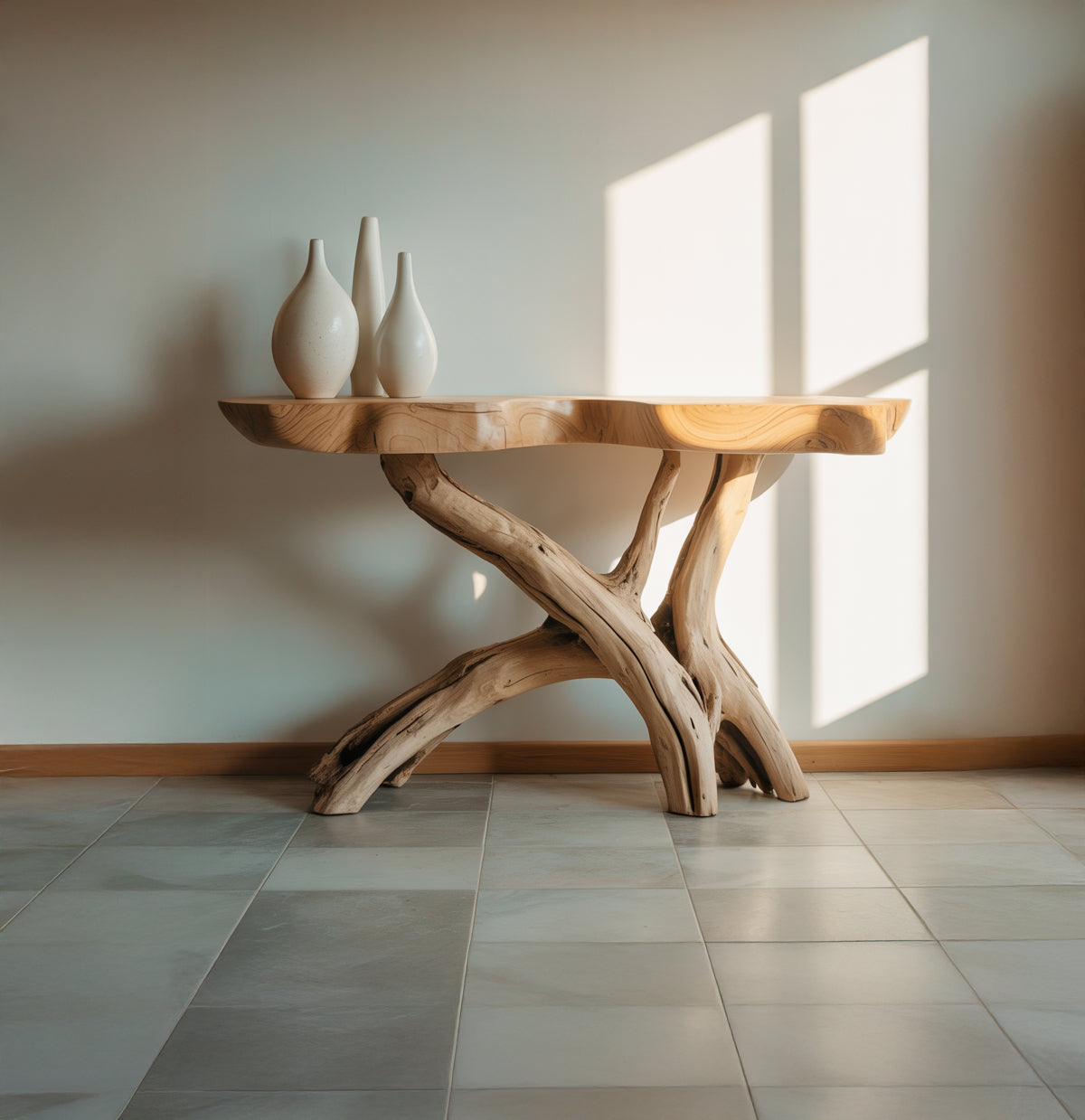
At Ashdeco, our console tables are handcrafted by Vietnamese artisans from solid wood. Each piece has its own grain pattern and character marks, which means no two tables are identical. For a hallway piece that's going to be seen and used every single day, that kind of quality makes a noticeable difference.
5 Styling Tips for Narrow Hallway Console Tables
Working with limited depth doesn't mean sacrificing style. Here's how to make a slim console table look intentional rather than cramped:
- Go vertical. When you can't spread out horizontally, build height. A tall, narrow lamp or a leaning piece of art draws the eye up and makes the hallway feel taller.
- Use a mirror above. This is the oldest trick for narrow spaces, and it works. A mirror reflects light and creates the illusion of width. Hang it 6-8 inches above the table surface.
- Odd numbers, small objects. A grouping of three small items (a candle, a small plant, a decorative bowl) looks curated without overcrowding a slim surface.
- Skip the table runner. On a narrow console, a runner just adds visual clutter and hangs awkwardly off the sides. Let the wood grain speak for itself.
- Anchor with one statement piece. Instead of spreading five small items across the surface, choose one substantial object, like a sculptural vase or a stack of oversized books, and let it anchor the whole setup.

Console Table Handmade - Natural Solid Wood Live Edge Entry Table Furniture
Common Mistakes When Choosing Console Table Depth
After helping hundreds of customers find the right fit, these are the mistakes we see most often:
Measuring only once. Hallways aren't always perfectly straight. Measure at multiple points along the wall where you plan to place the table, and use the narrowest measurement for your calculation.
Forgetting about doors. If your hallway has doors that open into it, the table needs to clear the door swing entirely. This often reduces your available depth by several inches.
Ignoring leg placement. Some console tables have legs that splay outward at the base, adding 1-2 inches to the effective depth. Always check the footprint at floor level, the top dimensions.
Choosing too short. Height matters alongside depth. A console table that's too low in a narrow hallway looks like an afterthought. Standard console height is 28-32 inches, and going slightly taller (30-34 inches) can actually make a narrow hallway feel more proportional.
When to Choose a Floating Shelf Instead
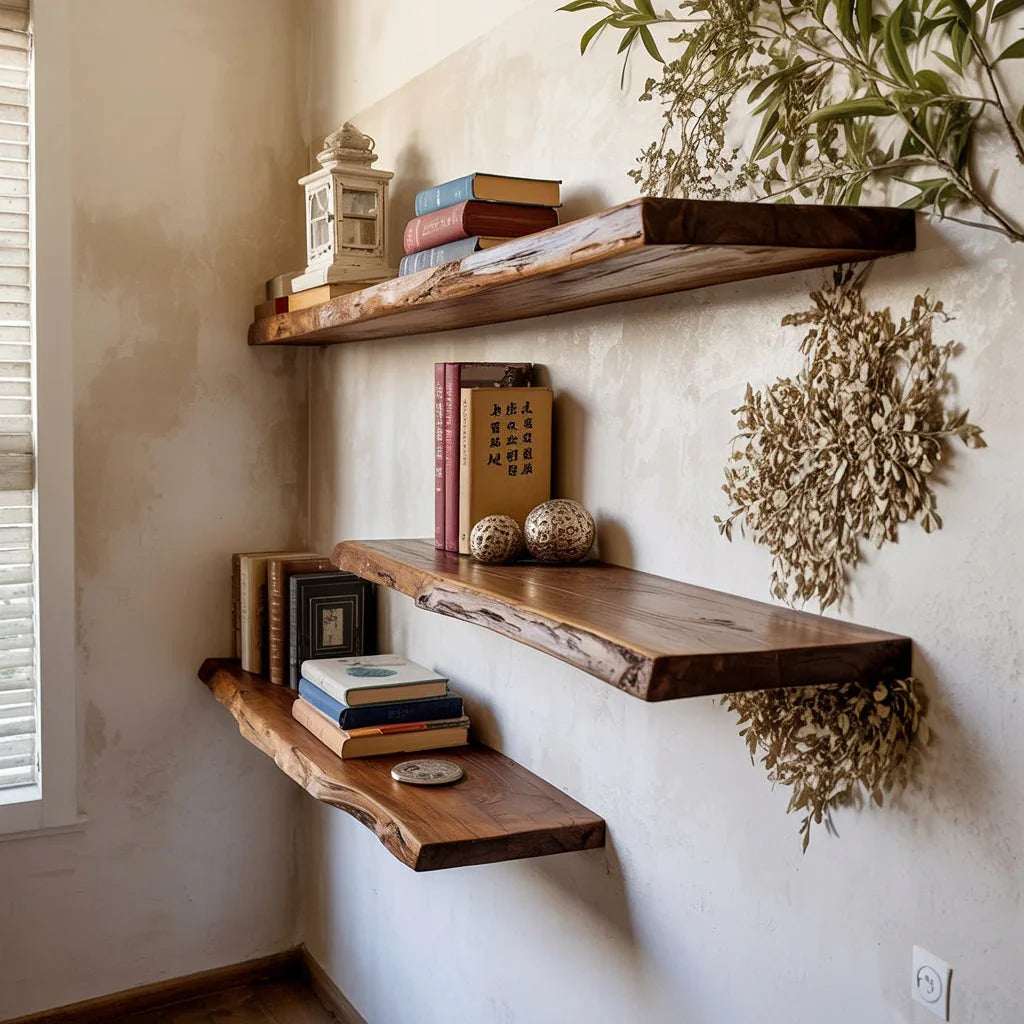
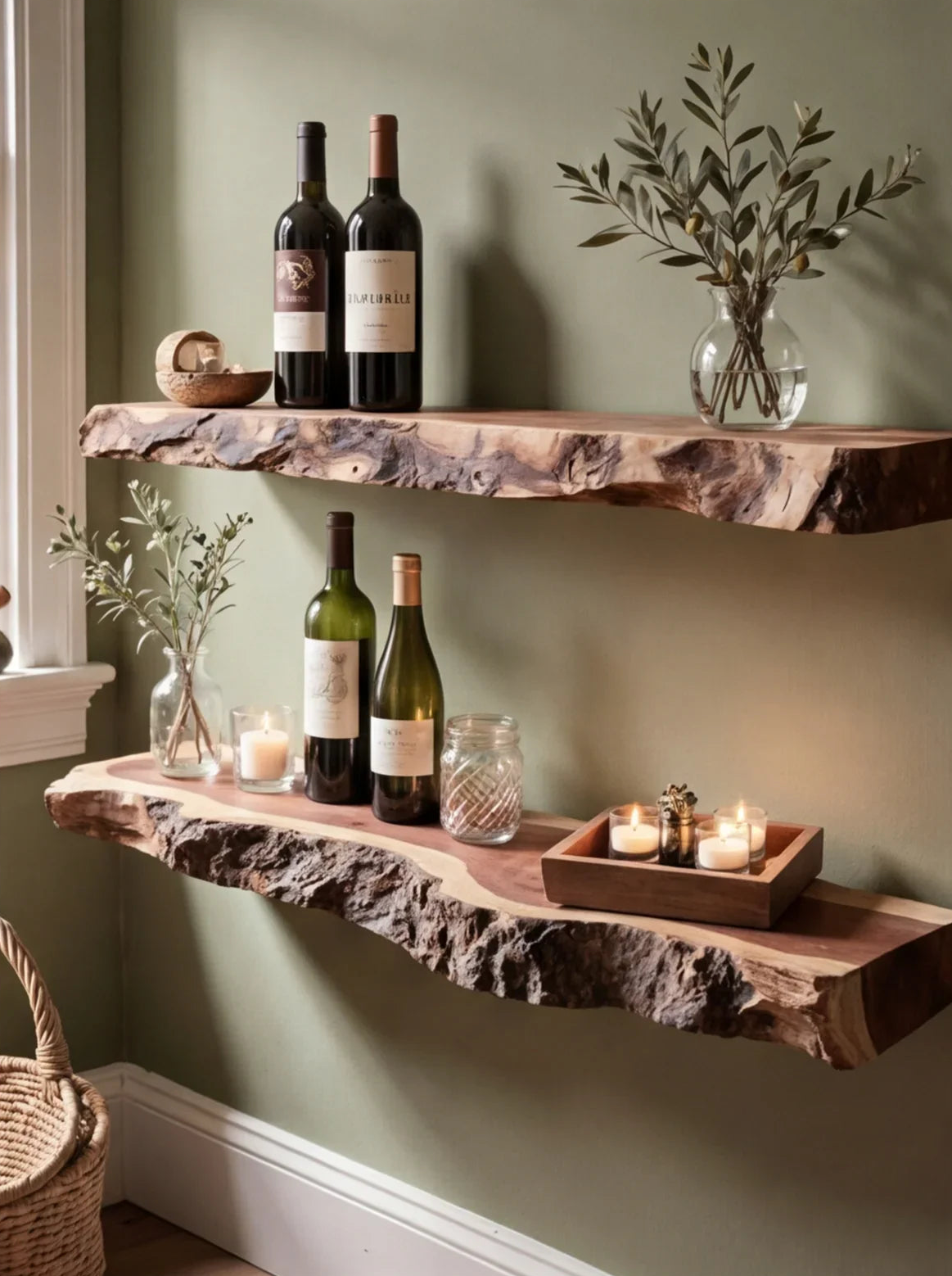
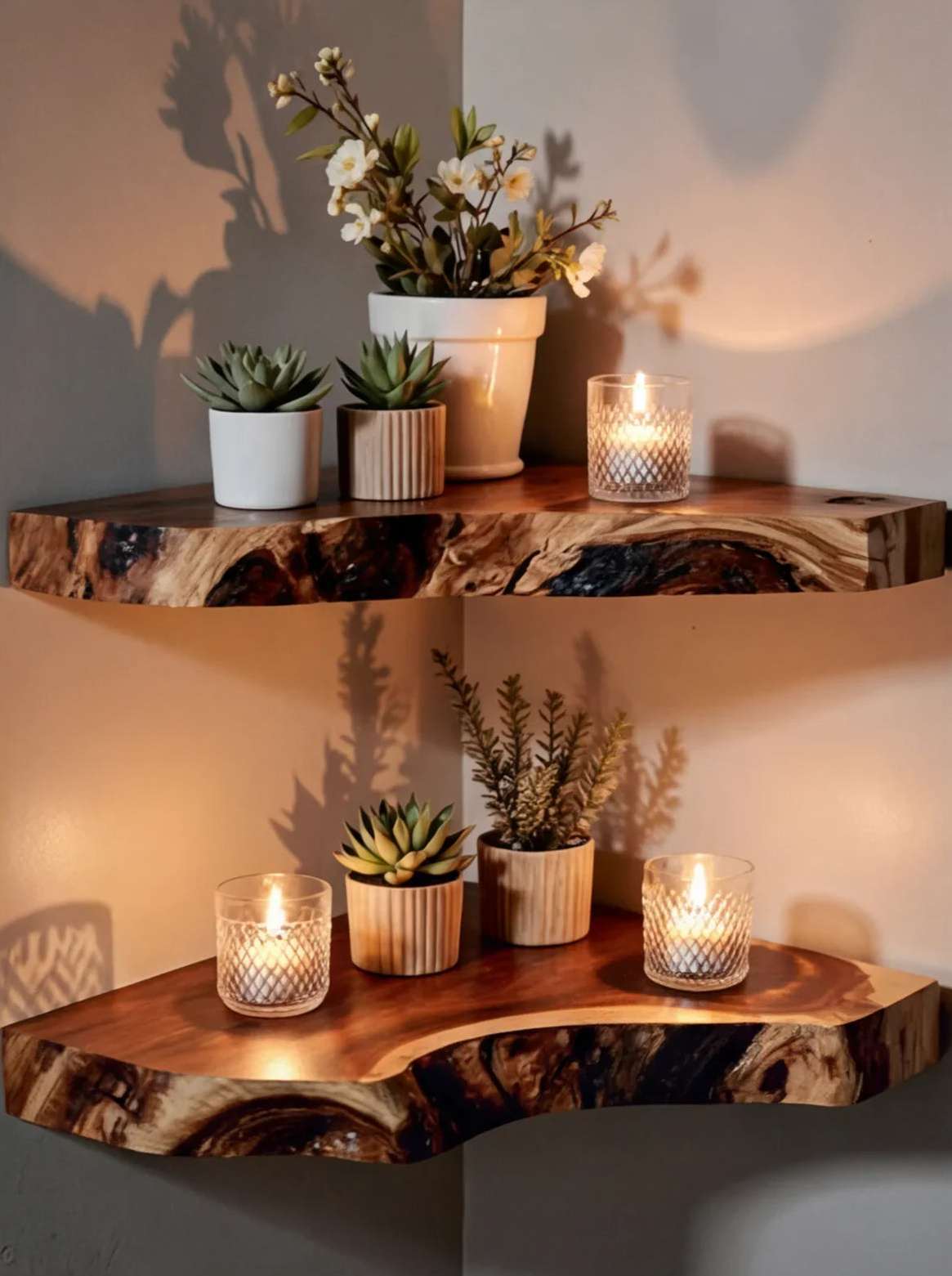
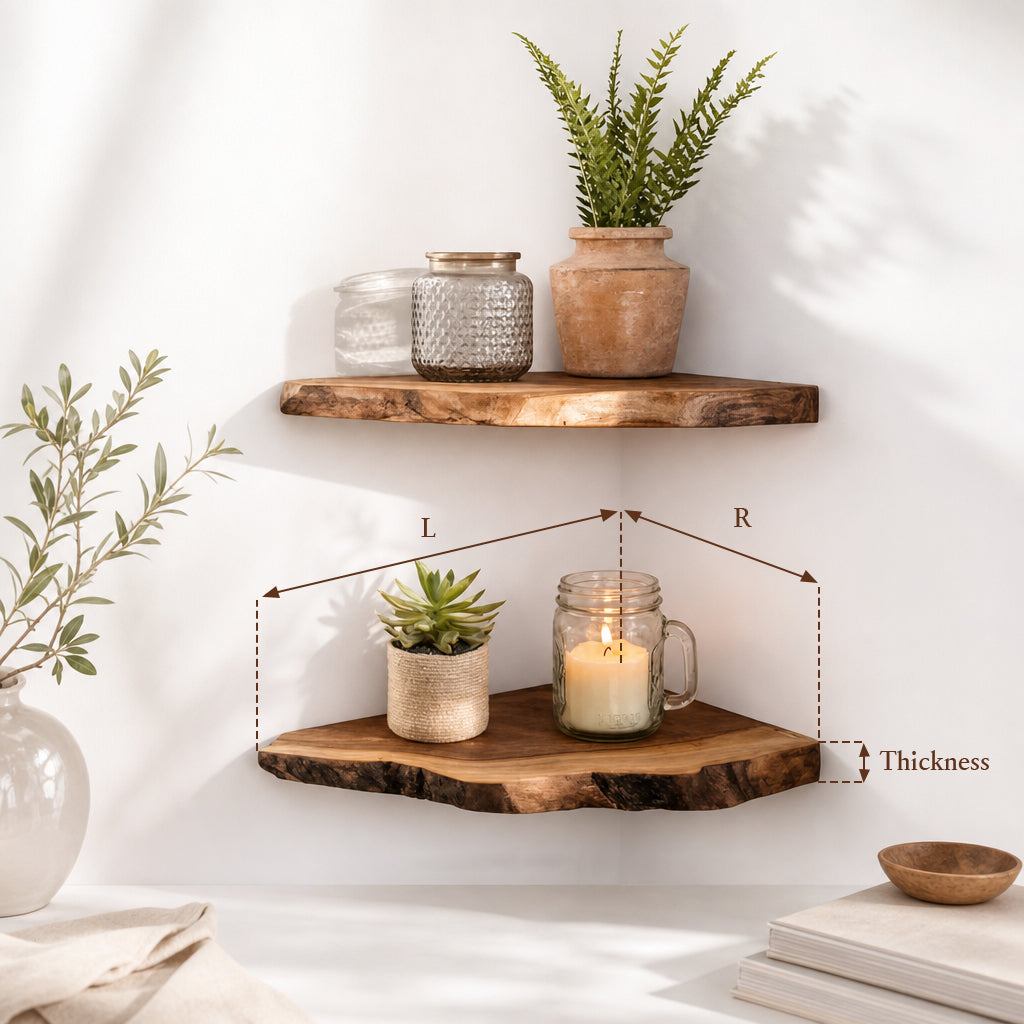
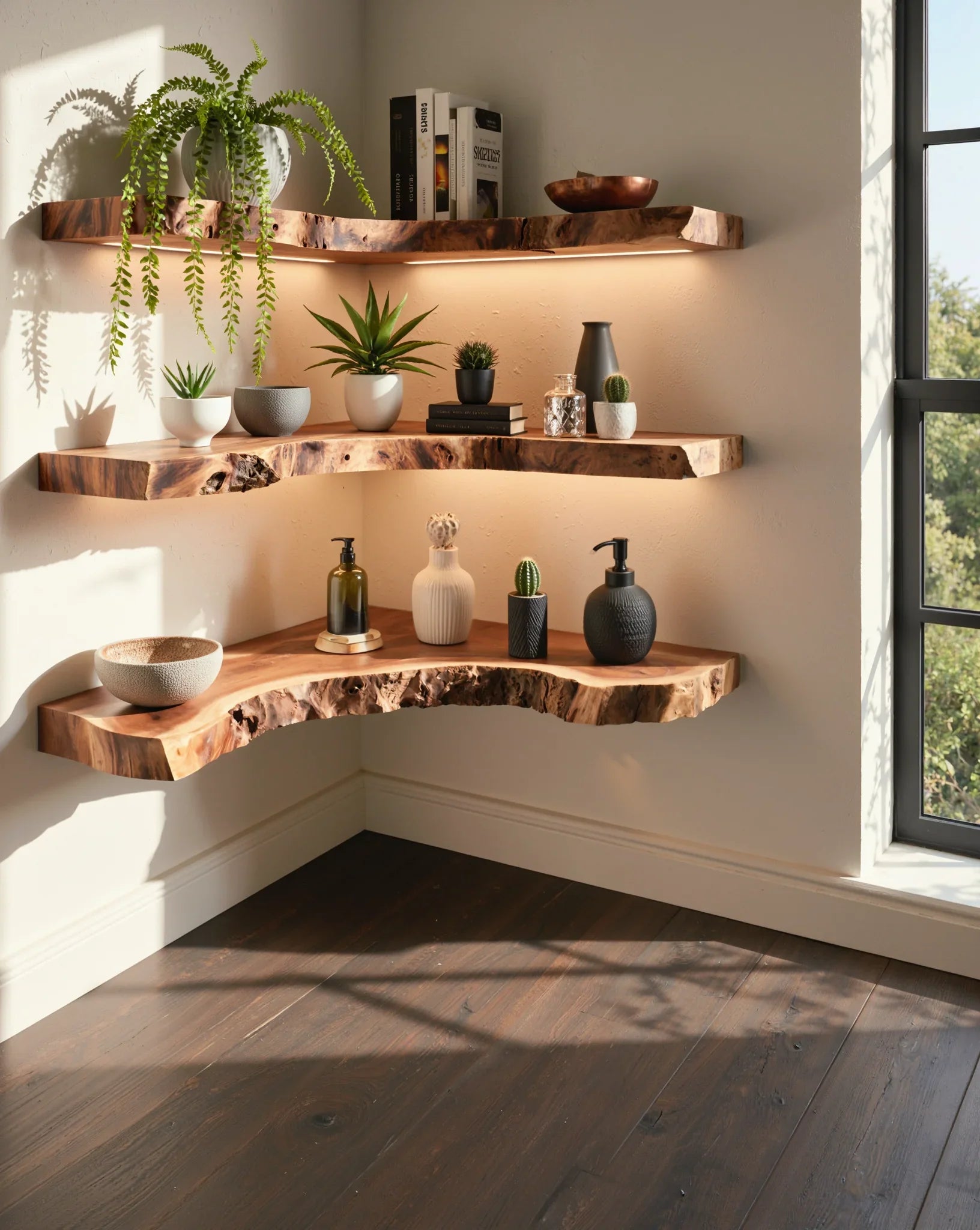
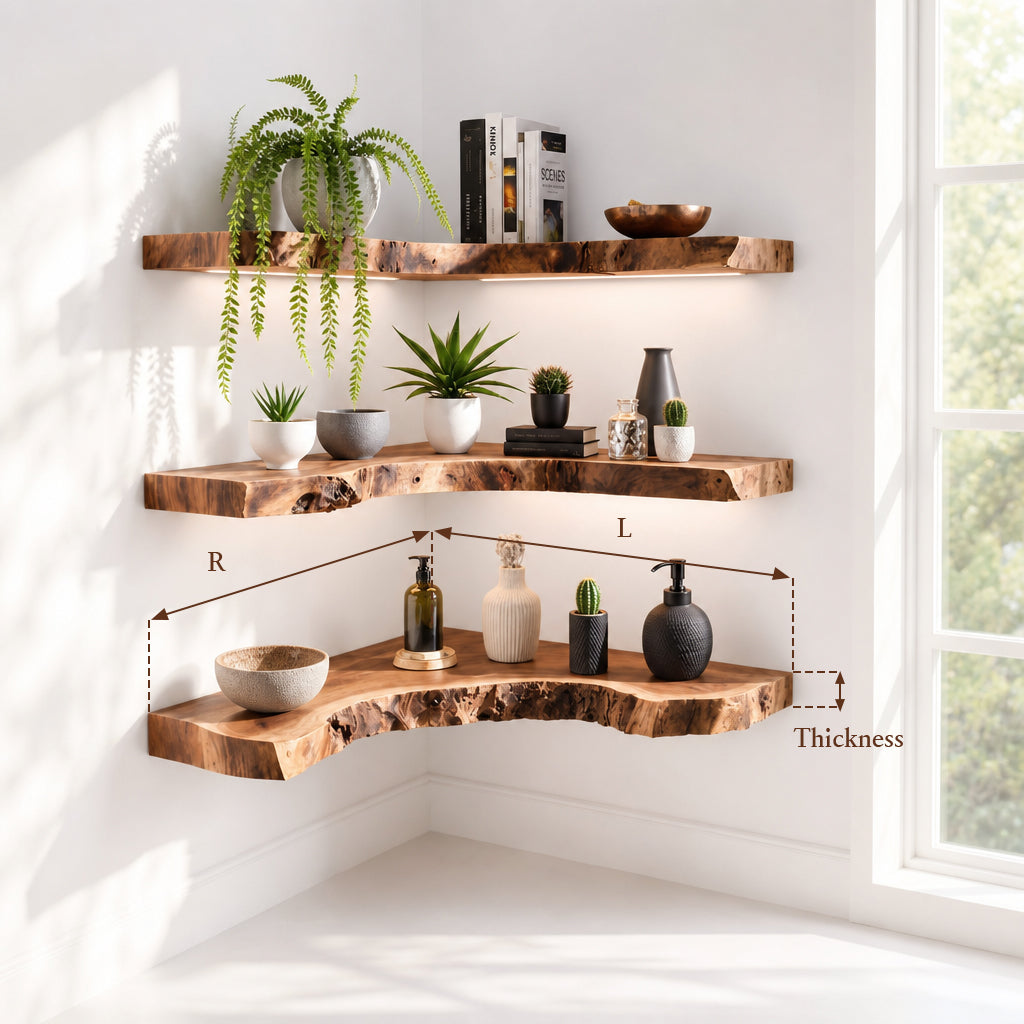
If your hallway is under 36 inches wide, a console table, even an ultra-slim one, might not work. In that case, a wall-mounted floating shelf gives you a landing spot for keys and mail without any floor footprint at all.
Ashdeco's console table collection includes options starting at just 10 inches deep, but we also offer wall-mounted solutions for spaces where every inch counts. The advantage of solid wood floating shelves is that they support real weight without the flimsy flex you get from hollow-core alternatives.
Frequently Asked Questions
What is the ideal console table depth for a narrow hallway?
For most narrow hallways (42-48 inches wide), a console table depth of 10-12 inches works best. This leaves at least 30 inches of clear walking space while still providing a functional surface for everyday items.
Can I put a console table in a 36-inch wide hallway?
It's tight but possible with an ultra-slim model (8-10 inches deep). You'll want to ensure the walking clearance doesn't drop below 26-28 inches at minimum, though 30 inches is recommended for comfort.
How tall should a hallway console table be?
Standard console table height is 28-32 inches. For narrow hallways, going slightly taller (30-34 inches) can improve proportions and make the space feel less cramped.
Is solid wood better than MDF for a hallway console table?
Yes, especially in high-traffic areas. Solid wood withstands daily bumps and impacts much better than MDF or particleboard, which tends to chip and delaminate at the edges over time.
What's the difference between a console table and a sofa table?
A sofa table sits behind a sofa and is typically 28-30 inches tall (matching sofa back height). A console table is meant for walls, entryways, and hallways, and tends to be slightly taller at 30-34 inches. Depth is similar for both.
Should I choose legs or a solid base for a narrow hallway?
Legs are generally better for narrow spaces because they create visual openness at floor level, making the hallway feel wider. A solid base can look heavy and block sightlines. Just make sure the legs don't splay outward and add to the effective depth.
Finding the Right Fit
The console table depth that works for your hallway comes down to simple arithmetic: hallway width minus 30 inches of walking clearance equals your maximum table depth. Start there, then factor in door swings, leg placement, and how you actually use the space.
If you're looking for solid wood console tables built specifically for tight spaces, browse Ashdeco's console table collection. Every piece is handcrafted from real hardwood by skilled Vietnamese artisans, so you're getting furniture that holds up to daily hallway traffic for years to come. No veneer peeling, no wobbly joints, just honest woodwork built to last.