
Mid-Century Modern Cat Tree: How to Spot Solid Wood From MDF Knockoffs
Mid-century modern furniture has clean lines, tapered legs, organic curves, and a warmth that comes from real materials. Cat trees have carpet tubes, beige fleece, and the aesthetic appeal of a parking garage. Somewhere between these two worlds, a few brands figured out that cats don't actually need ugly furniture to be happy. The ASPCA recommends providing cats with vertical climbing spaces to support their natural instincts.
A mid-century cat tree takes the design principles of the 1950s and 60s - functional minimalism, natural materials, beautiful proportions - and applies them to structures that cats will actually climb, scratch, and sleep on. The result is furniture you won't hide when guests come over.
This guide covers what makes a mid-century cat tree work, why cats genuinely prefer wood over carpet-wrapped tubes, and how to find one that satisfies both your design standards and your cat's instincts. If mid-century isn't quite your style, our modern cat tree design guide covers Scandinavian, industrial, and other contemporary looks.
What Makes a Cat Tree "Mid-Century Modern"?
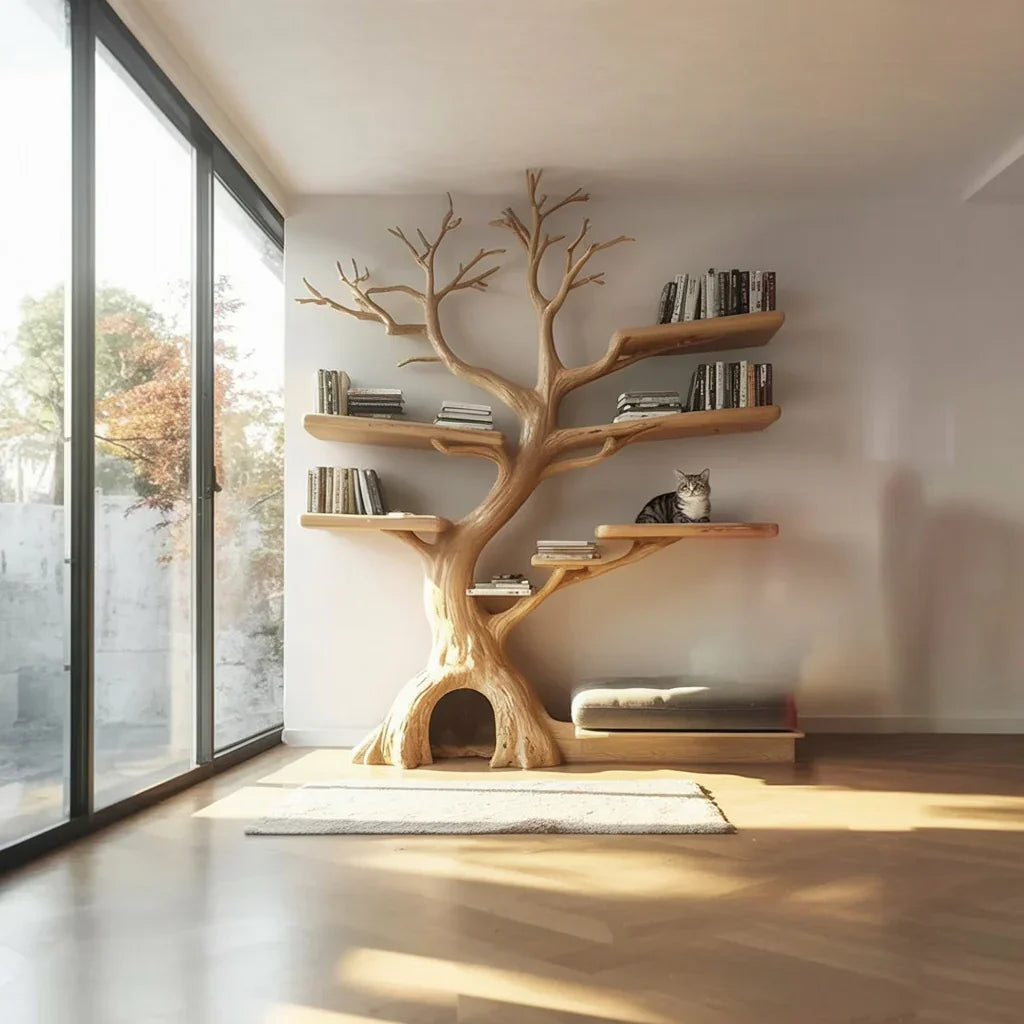
Slapping the phrase "mid-century" onto a product listing doesn't make it mid-century. The design language has specific characteristics that translate well to cat furniture when done correctly:
- Tapered legs and angled supports. Instead of thick, straight carpet-wrapped posts, mid-century cat trees use angled wood supports that create visual lightness. The structure looks like it's lifting off the ground rather than squatting on it.
- Natural wood as the primary material. Not wood-grain laminate, not veneer over particleboard - actual solid wood. The grain and finish are features, not things to cover up.
- Organic shapes. Curved platforms, rounded edges, and flowing lines replace the boxy, stacked-square look of conventional cat trees.
- Minimal color palette. Warm wood tones, white, and neutral fabrics. No neon, no leopard print, no Easter-egg pastels.
- Form follows function. Every element has a purpose. Platforms are sized for cats to actually lie on. Scratching surfaces are positioned where cats naturally want to scratch. Nothing is added just to fill space.
Why Cats Actually Prefer Wood Over Carpet
This isn't just a design argument. There are legitimate behavioral and physiological reasons why many cats prefer wood and natural materials over the carpet-covered tubes that dominate the market.
Temperature regulation. Wood breathes. It stays cooler in summer and doesn't trap body heat the way synthetic carpet does. Cats, who are notoriously picky about sleeping surface temperature, often gravitate toward wood platforms during warmer months.
Claw health. Scratching on wood provides different resistance than carpet. Wood allows cats to fully extend their claws and get a deep, satisfying scratch that helps maintain claw health. Carpet tends to snag individual claw tips rather than providing even resistance.
Scent marking. Cats scratch to mark territory with scent glands in their paw pads. Wood absorbs and retains these scent marks better than synthetic materials, which gives cats a stronger sense of ownership over the structure.
Stability. Solid wood cat trees are heavier than their carpet-and-cardboard counterparts. This weight translates to stability when a cat launches itself onto a platform or scratches vigorously. Cats notice when a structure wobbles, and many avoid unstable trees entirely.
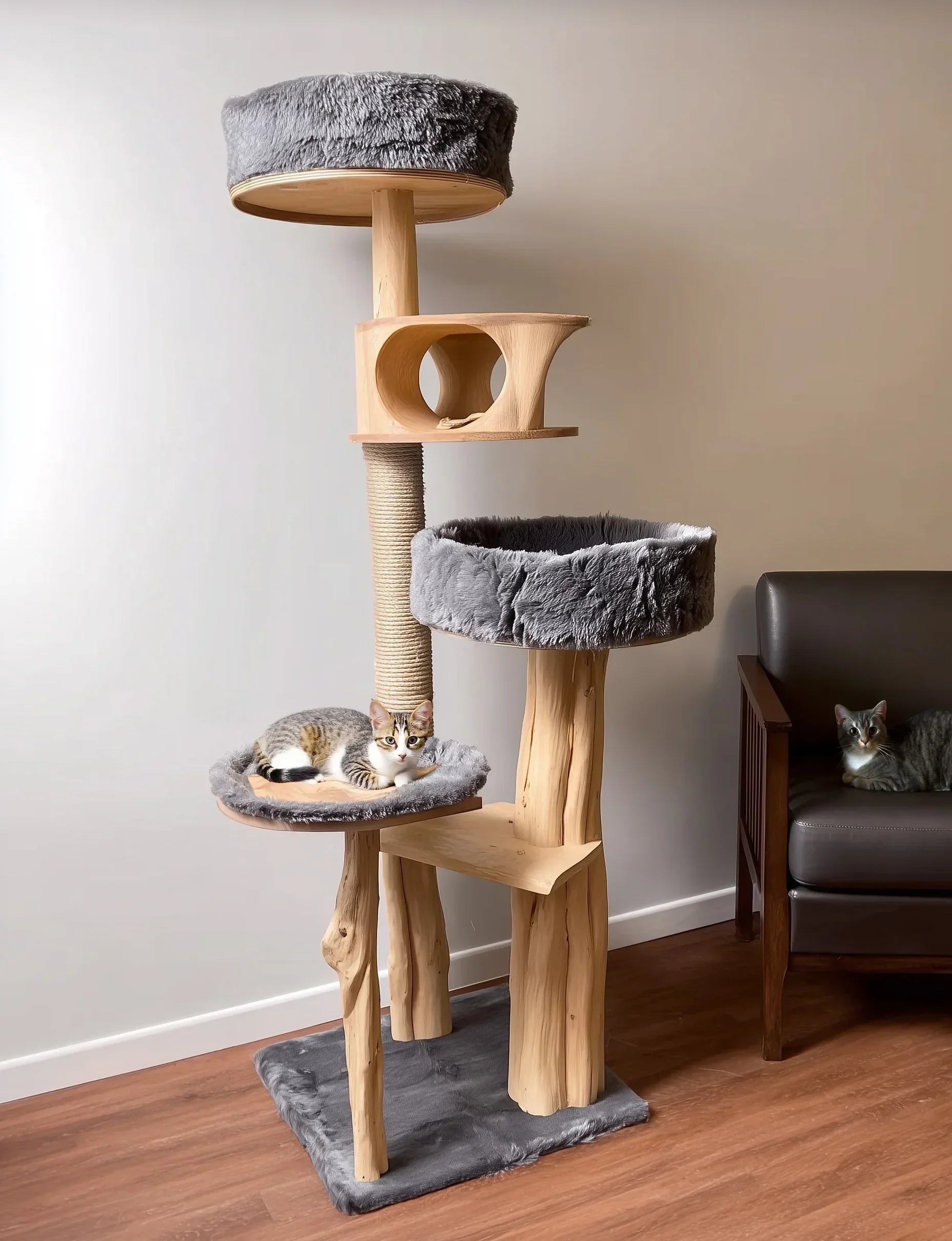
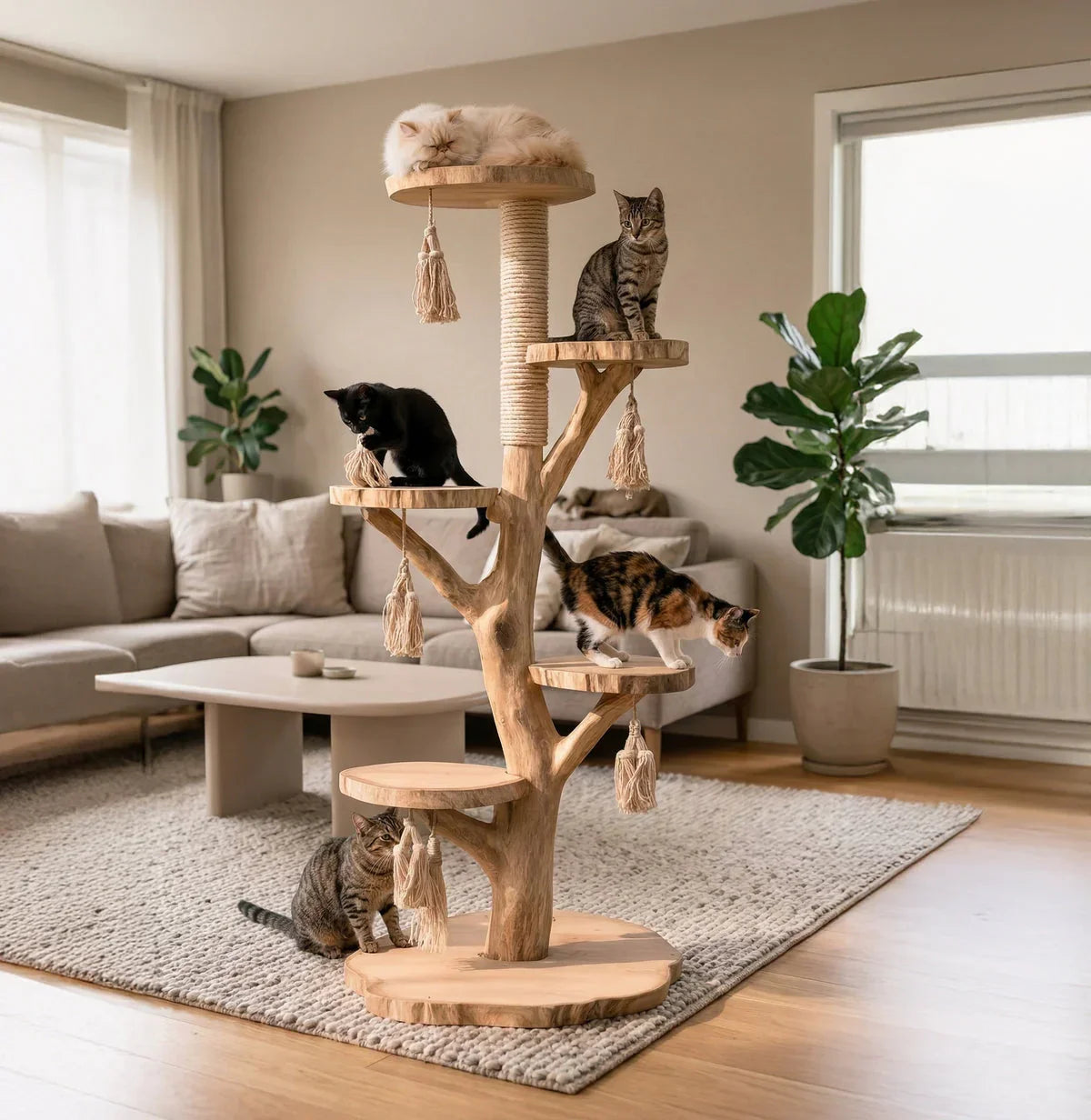
Rustic Wooden Cat Tree - Handmade Wall-Mount Climbing Tower Shelf, Unique Natural Cat Furniture
Aesthetic vs. Function: Do You Have to Choose?
The knock against designer cat trees has always been that they prioritize looks over usability. Fair criticism for some products, but not a universal truth. A well-designed mid-century cat tree should deliver on both fronts.
Features that matter to cats:
- Multiple levels at varying heights (cats want options and vertical territory)
- At least one enclosed or semi-enclosed space for hiding and sleeping
- Scratching surfaces at multiple angles (vertical and angled)
- Platforms large enough for the cat to fully stretch out
- A top perch that allows a view of the room
Features that matter to you:
- Materials and finish that match your existing furniture
- A footprint that doesn't dominate the room
- Construction quality that justifies the price
- Easy cleaning and maintenance
- A design you're genuinely proud to have in your living room
The brands getting this right are the ones that start with cat behavior research and then apply design principles, rather than starting with an aesthetic and hoping cats will tolerate it. International Cat Care provides science-based guidelines for creating enriching indoor environments.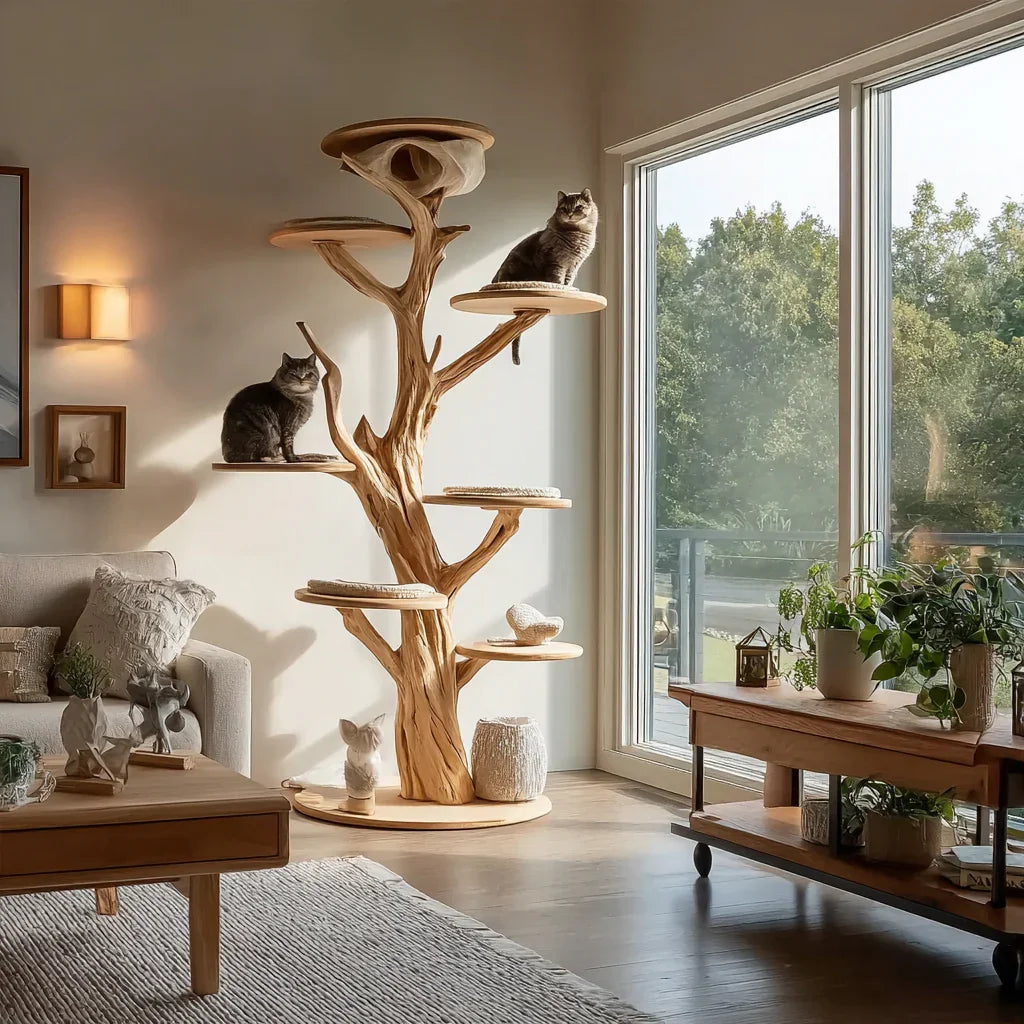
What to Look for When Shopping
Mid-century cat trees range from $150 knockoffs to $800+ handcrafted pieces. Here's how to tell the difference:
Check the wood. Real solid wood versus MDF with wood-grain laminate. Knock on it. Solid wood resonates differently. Look at edges and joints - real wood shows grain continuity at corners, while laminate shows a visible seam line.
Examine the joinery. Dowels, mortise-and-tenon, or bolted connections indicate quality construction. If everything relies on cam-lock fittings (those plastic cylinders you turn with an Allen key), the piece is mass-produced and won't hold up to repeated cat impacts.
Test the stability. Push the top of the tree sideways. If it sways more than half an inch, it's not stable enough. For the physics behind why base weight matters more than height, see our cat tree weight & stability guide. Cats need to trust the structure, and a wobbly tree gets ignored.
If your cat is on the larger side (15+ lbs), platform size and weight capacity matter even more than style - see our full sizing guide for large-cat cat trees for height and weight benchmarks.
Measure the platforms. A platform needs to be at least 14 x 14 inches for an average cat to comfortably lie on it. Smaller platforms are stepping stones, not resting spots. Make sure at least two platforms are large enough for lounging.
Look for replaceable parts. Sisal scratching rope wears out. Good mid-century cat trees make it easy to re-wrap or replace scratching components without replacing the whole unit.

Placement Tips for Mid-Century Cat Trees
Placement matters as much as the piece itself - near a window, in the main living space rather than a spare room, and positioned the way you'd place any real furniture. Our modern cat tree living room guide goes deeper on sight lines, corner placement, and coordinating with existing furniture.
The Ashdeco Approach to Cat Trees
At Ashdeco, our cat tree towers are handcrafted by Vietnamese artisans from solid wood. This isn't a marketing line , it's the reason the furniture looks and performs the way it does.
Each tree is built with real joinery, not snap-together plastic connectors. The wood is hand-finished with cat-safe treatments, and no two pieces have identical grain patterns. The mid-century aesthetic isn't applied as a veneer , it's built into the structure from the ground up.
The result is cat furniture that you actually want visible in your home. Furniture that earns its place in the room instead of hiding in a corner behind the couch. And because it's solid wood, it stays stable even when your largest cat launches off the top platform.
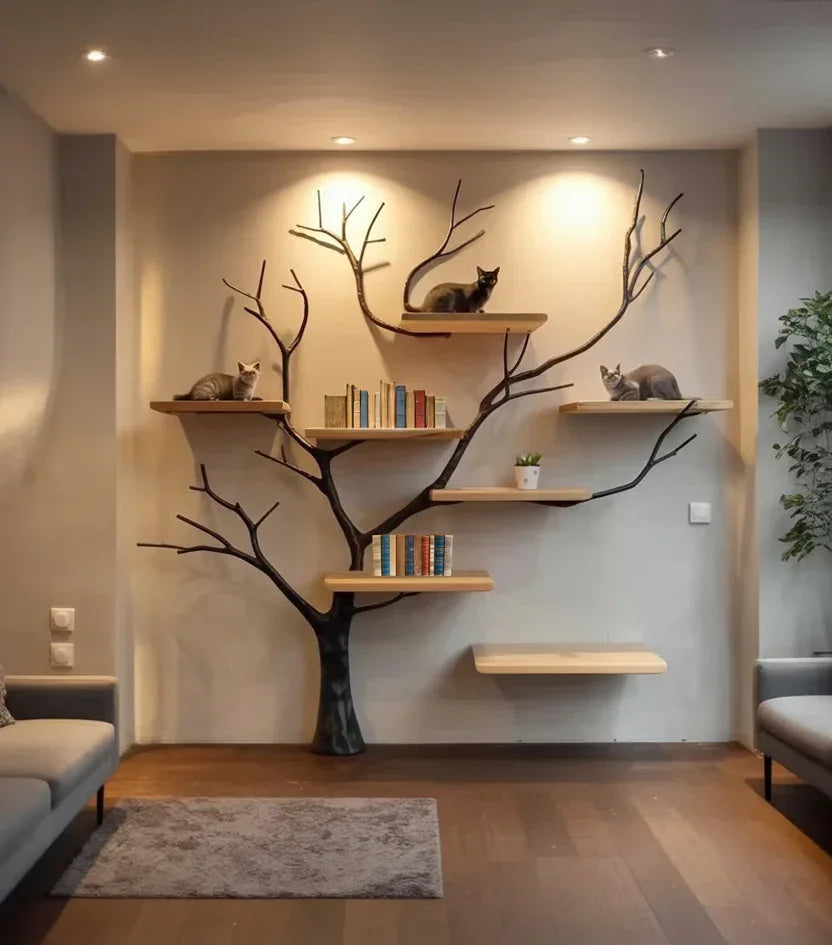
Rustic Solid Wood Cat Tree - Handmade Large Cat Tower Stand, Natural Cat Furniture for Play & Decor
Frequently Asked Questions
Are mid-century cat trees sturdy enough for active cats?
The good ones are. Solid wood mid-century cat trees are actually sturdier than most carpet-covered alternatives because they're heavier and use proper joinery. Look for trees that weigh at least 25-30 pounds , that mass translates directly to stability.
Do cats really use modern cat trees, or do they prefer carpet ones?
Cats care about structure, height, and stability more than surface material. Many cats actually prefer wood platforms over carpet, especially in warmer climates. The key is proper platform sizing and having at least one soft lounging surface included in the design.
How do I get my cat to use a new cat tree?
Place it near a window or in a room where your cat already spends time. Rub catnip on the platforms and scratching surfaces. Don't force your cat onto it. Most cats explore new furniture within 2-3 days if it's positioned well and left alone.
Are solid wood cat trees safe for cats?
Yes, as long as the finish is non-toxic and there are no sharp edges or exposed hardware. Quality manufacturers use pet-safe finishes and round all edges. Check product descriptions for finish details before purchasing.
What's the best wood for a cat tree?
Hardwoods like oak, walnut, and rubberwood offer the best combination of durability, weight (for stability), and aesthetics. Softwoods like pine scratch and dent more easily. Plywood can work for platforms if it's furniture-grade, but solid wood provides superior longevity.
How much should I spend on a mid-century cat tree?
Mass-market mid-century-style cat trees range $150-$400, but these typically use MDF or laminate, not solid wood. Genuine handcrafted solid-wood mid-century cat trees - like the kind built by skilled artisans with real joinery - usually start around $1,000 and can run $2,000-$3,000+ depending on size and complexity. The higher price reflects materials and labor, not just brand markup
Worth the Investment
A mid-century cat tree isn't just a cat accessory. It's a piece of furniture that happens to serve your cat's climbing, scratching, and lounging needs. When done right, it improves the look of your room while keeping your cat active, happy, and off your other furniture.
If you're ready to retire the beige carpet tower, explore Ashdeco's collection of handcrafted wood cat tree towers. Each one is built by Vietnamese artisans from solid hardwood, designed to look as good in your living room as it performs for your cat. Real wood, real craftsmanship, real mid-century design.