Cat Trees That Look Like Actual Furniture
Walk into most pet stores and the cat tree section looks the same as it did in 2005: beige carpet, particle board platforms, wobbly pressed-wood columns. These things work, technically. Cats climb them. But they also make your living room look like you've surrendered any claim to interior design. According to International Cat Care, multi-level cat trees help reduce stress and behavioral issues in indoor cats.
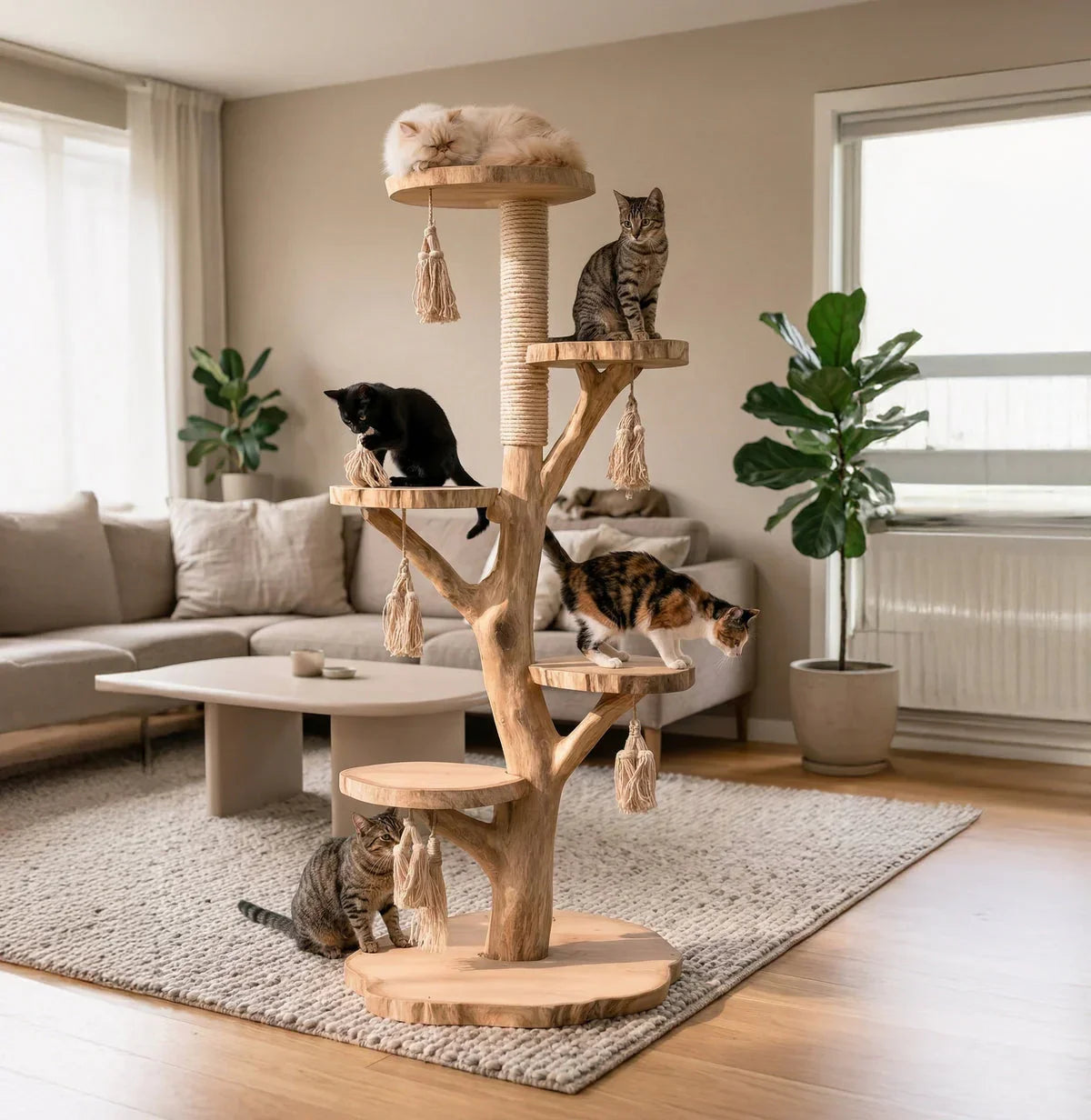
Modern cat trees exist because enough people finally asked: why does cat furniture have to be ugly? The answer, it turns out, is that it doesn't. You can get a cat tree that your cat loves and that you'd actually choose to put in your living room. It just requires rethinking materials, proportions, and what a cat tree is supposed to look like.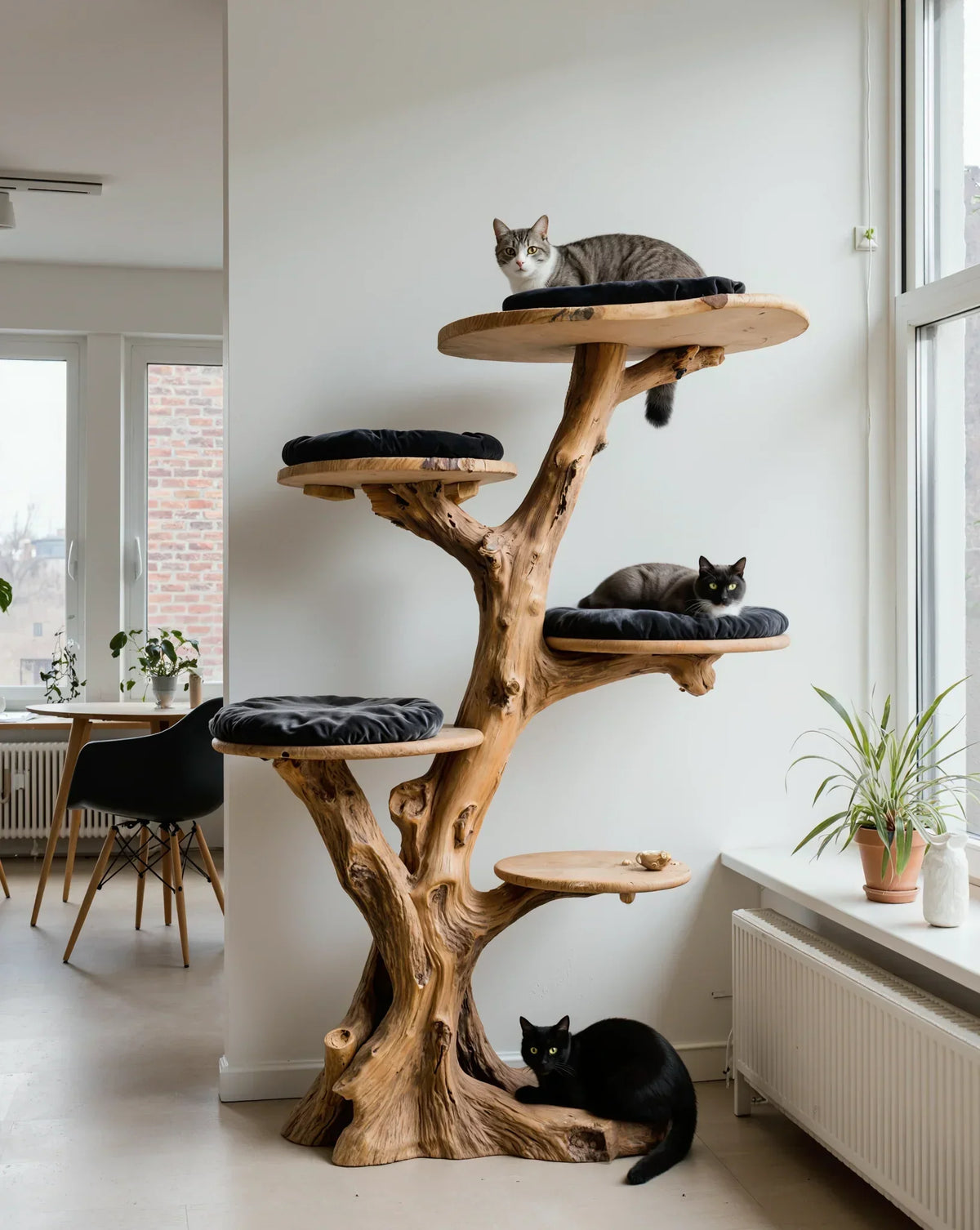
What Makes a Cat Tree "Modern"?
Modern cat tree design borrows from contemporary furniture principles. The differences from traditional cat trees are structural, cosmetic:
Materials: Solid wood, plywood with real wood veneer, metal accents, sisal rope, and natural fabrics replace carpet, faux fur, and pressed cardboard. The materials age gracefully instead of deteriorating.
Proportions: Modern cat trees tend to be taller and slimmer than traditional ones. They build vertically rather than sprawling horizontally, which means they take up less floor space while still providing multiple climbing levels.
Color palette: Neutral wood tones, white, black, and grey dominate. Some brands offer walnut or oak finishes that match specific furniture lines. The goal is integration, not camouflage.
Clean lines: No unnecessary frills, dangling toys on elastic strings, or decorative trim. Every element serves a functional purpose for the cat or an aesthetic purpose for the room. Usually both.
How to Choose a Cat Tree That Actually Matches Your Decor
The question isn't just "which cat tree is pretty?" It's "which cat tree belongs in my specific room?" Here's how to approach the match:
Match the Wood Tone
This is the single most impactful decision. If your furniture runs warm (walnut, oak, teak), choose a cat tree in similar warm tones. If your space is cooler (white oak, ash, painted furniture), look for lighter wood or white-finished options. Matching the wood tone makes the cat tree look like it was purchased as part of the furniture set, not bolted on as an afterthought.
Consider the Silhouette
Stand back and look at your room's furniture profile. Are pieces low and horizontal (mid-century sofas, low media consoles)? Or are they tall and vertical (bookshelves, armoires)? Your cat tree should echo the dominant direction. A tall, narrow tree works in rooms with vertical elements. A wider, more horizontal tree fits rooms with low-slung furniture.
Account for the Footprint
Measure the floor space you're willing to give up. Modern cat trees typically need a 20x20 inch to 30x30 inch footprint, depending on their height and configuration. Choose a spot before you shop, and bring those measurements with you.

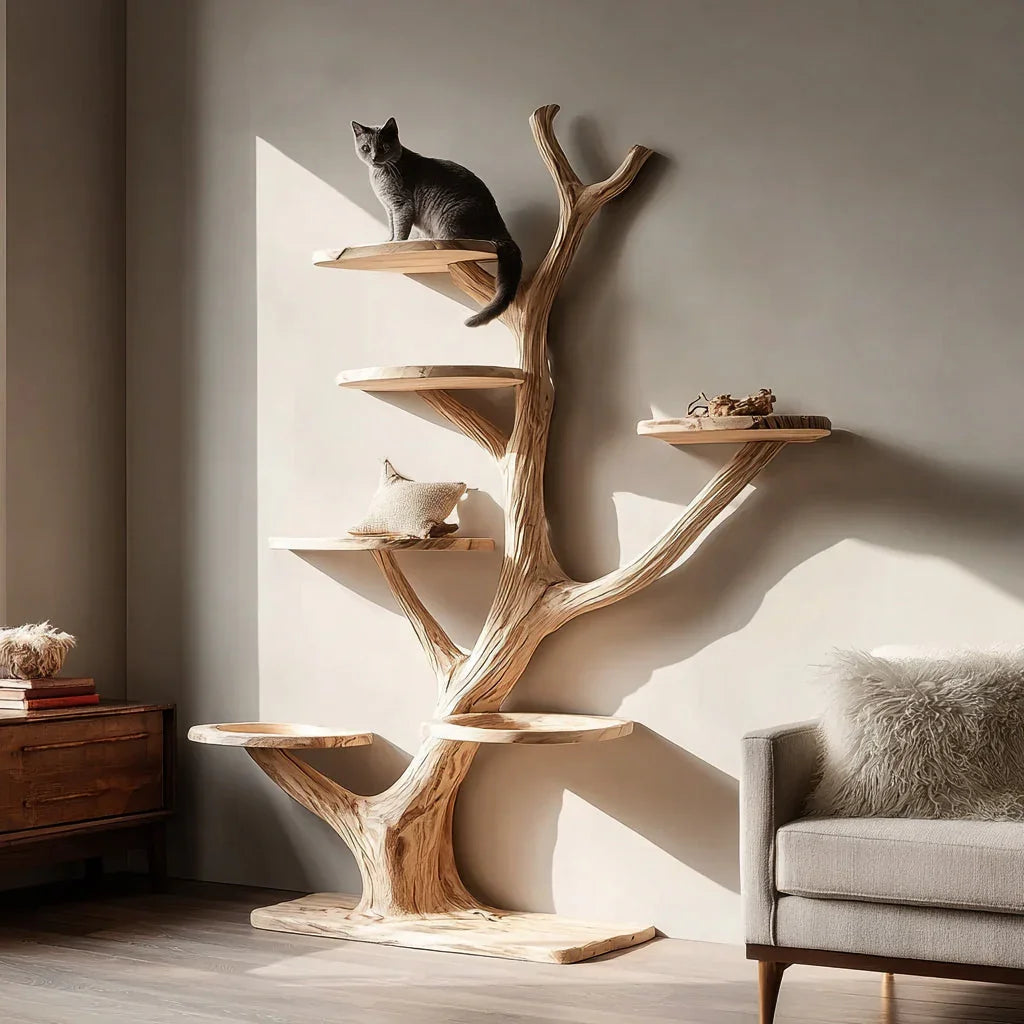
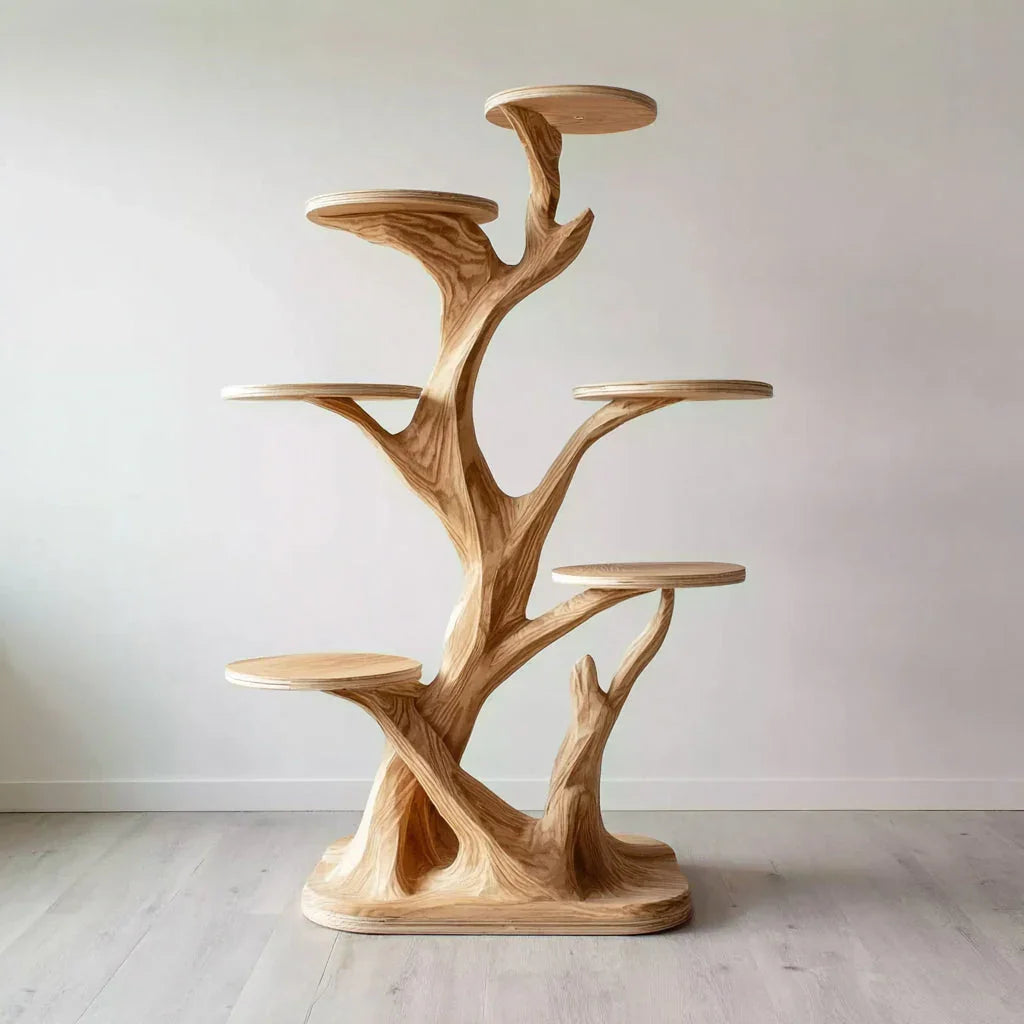
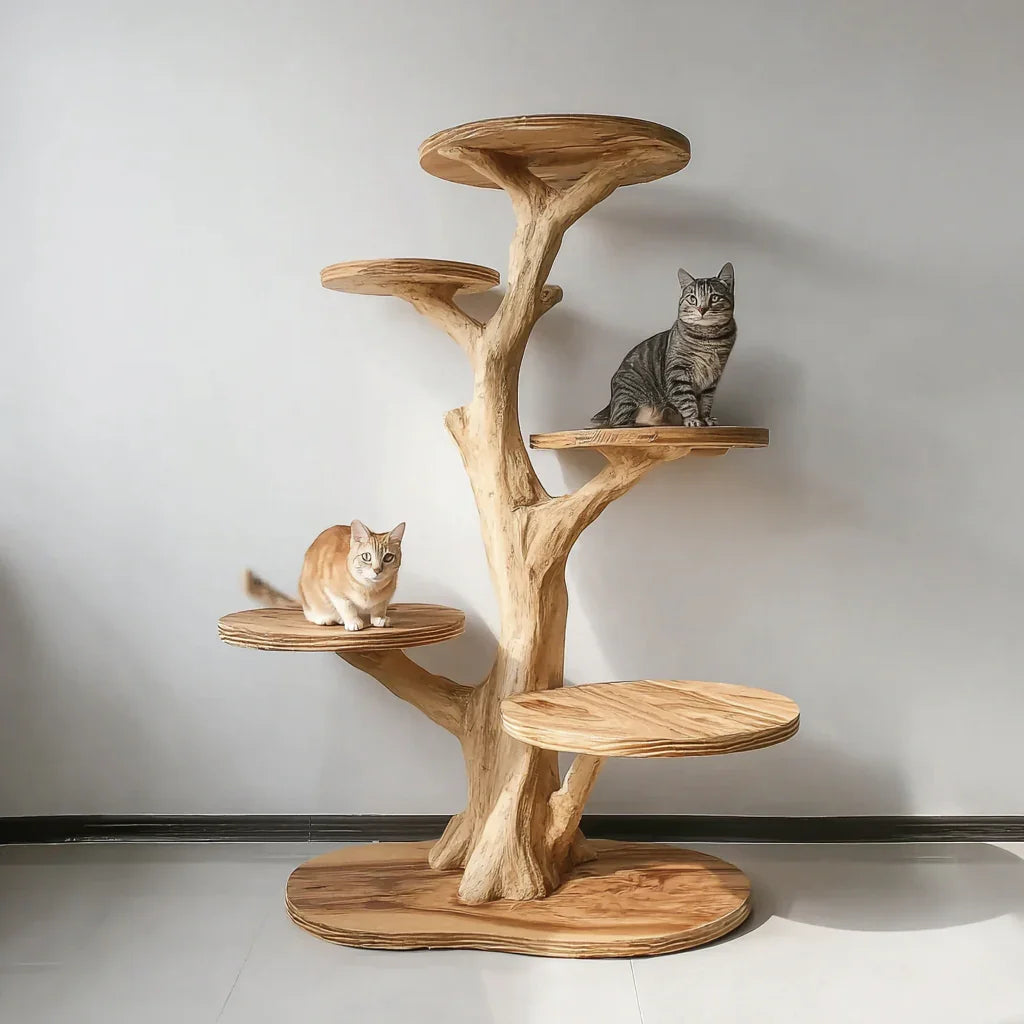
Custom Wooden Tree Shaped Cat Tree - Handmade Unique Branches, Natural Design Indoor Cat Tree Shelf
Material Deep Dive: What Works and What Doesn't
The material choice in a cat tree determines everything: durability, appearance, safety, and how well your cat takes to it. Check the ASPCA guidelines to ensure all materials used are pet-safe and non-toxic.
Solid Wood
The gold standard. Solid wood provides unmatched stability, natural beauty, and longevity. It's heavier than alternatives, which means better stability when cats jump on and off. The surface develops a natural patina over time rather than degrading. Hardwoods like rubberwood, oak, and walnut are the best choices for cat trees because they resist scratching and denting better than softwoods.
The one consideration: solid wood cat trees cost more. But when you factor in the lifespan difference - a solid wood tree lasts 10-15 years versus 2-3 for carpet-covered particle board - the per-year cost often works out lower.
Plywood and Engineered Wood
Good plywood (birch ply, furniture-grade) makes an acceptable alternative to solid wood for platforms and enclosed spaces. It's lighter, less expensive, and can be finished to look nearly identical to solid wood. The weakness is at edges and joints, where plywood can delaminate under stress or moisture exposure.
Sisal and Natural Rope
For scratching surfaces, sisal rope remains the best option. It provides the right resistance for claw maintenance, it's replaceable when worn, and it looks clean and natural on a modern cat tree. Some trees use sisal fabric instead of rope, which provides a different scratching texture that some cats prefer.
Fabric Cushions
Removable, washable fabric cushions on platforms give cats a comfortable lounging surface without the problems of wall-to-wall carpet. Look for cushions with zippered, machine-washable covers. Avoid glued-on carpet that can't be cleaned or replaced.
Features Your Cat Cares About (Even If You Don't)
Design matters to you. Function matters to your cat. A modern cat tree needs to deliver on both. Here's what your cat is evaluating when they decide whether to use the tree or ignore it for the cardboard box it came in:
Height. Cats feel safest when they're elevated. A cat tree under 4 feet tall is basically furniture for you, not for them. Aim for at least 5 feet, with the top platform providing a clear view of the room.
Multiple escape routes. Cats don't like being cornered. Each level of the tree should have at least two ways to exit - up or down, left or right. Trees with a single climbing path create traffic jams in multi-cat homes and anxiety in single-cat homes.
Scratching surfaces at multiple angles. Cats have preferences. Some scratch vertically, some at an angle, some horizontally. Including at least two different scratching orientations doubles the chances your cat uses the tree instead of your couch.
A hiding spot. At least one enclosed or semi-enclosed space gives nervous cats a retreat and confident cats a napping cave. This is the element most often sacrificed in modern cat tree design for aesthetic reasons, and it's a mistake.
Stability. Already mentioned, but it bears repeating. If the tree wobbles when your cat jumps onto it, the cat will stop using it. Period. Weight is your friend here - a 30-pound solid wood tree stays put when a 15-pound cat launches itself from the floor.
Modern Cat Tree Styles to Consider
The modern cat tree market has diversified considerably. Here are the main style categories:
Tower style. Vertical structures with stacked platforms at different heights. These have the smallest footprint and work best in corners or against walls. Most mid-century-inspired trees fall into this category.
Wall-mounted modular. Individual shelves, perches, and bridges that mount to the wall, creating a climbing path along a wall surface. Great for maximizing vertical space with zero floor footprint. Requires wall anchoring into studs.
Furniture hybrid. Cat trees disguised as or integrated into functional furniture , bookshelves with cat cubbies, end tables with built-in perches, media consoles with cat tunnels. These sacrifice some climbing height for stealth.
Sculptural. Art-piece cat trees that serve as room focal points. Organic shapes, unusual materials, and statement designs. These are the ones that start conversations and typically carry the highest price tags.
Why Handcrafted Beats Mass-Produced for Cat Trees
Mass-produced cat trees optimize for cost and shipping weight. This means particle board, carpet covering, and snap-together construction. They're designed to survive shipping and look decent in photos, not to last for years of daily cat use.
Handcrafted cat trees, like Ashdeco's solid wood cat tree towers, optimize for durability, aesthetics, and actual cat behavior. Vietnamese artisans build each tree with real joinery, hand-finished wood, and proportions that reflect how cats actually move and rest. The weight of solid wood provides stability that no amount of engineering can replicate in lightweight materials.
The price difference is real. But so is the quality gap, and so is the difference in how long the product stays functional and attractive in your home.
Frequently Asked Questions
Do cats actually use modern cat trees?
Yes. Cats care about height, stability, and scratching surfaces, not aesthetics. A well-designed modern cat tree with proper platform sizing, multiple levels, and sturdy construction gets used just as much as , or more than , a traditional carpet tree.
What's the best material for a modern cat tree?
Solid hardwood for the structure and sisal rope or fabric for scratching surfaces. This combination provides stability, durability, and the resistance cats need for healthy scratching. Add removable washable cushions on platforms for comfort.
How do I protect my modern cat tree from scratching damage?
You don't , you redirect the scratching to designated surfaces. A well-designed tree includes sisal-wrapped posts or boards specifically for scratching. Cats generally won't scratch smooth, finished wood if they have appropriate scratching alternatives nearby.
Are modern cat trees stable enough for large cats?
Solid wood modern cat trees are typically more stable than traditional carpet trees for large cats because they're heavier. Look for trees that weigh at least 30 pounds and have a wide base. Wall anchoring adds extra security for very active or heavy cats.
How much floor space does a modern cat tree need?
Most tower-style modern cat trees need a 20x20 to 24x24 inch footprint. Wall-mounted systems need zero floor space but require 4-8 feet of wall length. Plan for an additional 12 inches of clearance around the tree for cat landing zones.
Can I put a modern cat tree in the living room?
That's exactly where it should go. Cats are social animals and prefer being in the main living space. A modern cat tree is designed specifically to look appropriate in living rooms, dining areas, and other visible spaces.
The Upgrade Your Cat (and Your Room) Deserves
A modern cat tree isn't about being precious with your decor. It's about refusing to accept that cat furniture has to be ugly. Your cat needs vertical space, scratching surfaces, and resting platforms. You need furniture that doesn't make you cringe. Both requirements can be met by the same piece.
Explore Ashdeco's collection of modern cat tree towers, handcrafted from solid wood by Vietnamese artisans. Each piece is built to be both functional cat furniture and a genuine addition to your home's interior. No carpet, no particle board, no compromise.