






















Quick view
- When Your Cat Outgrows the Standard Cat Condo
- Weight Capacity: The Number That Matters Most
- Platform Size: Bigger Than You Think
- Stability: Why Your Cat Condo Keeps Tipping
- Solid Wood vs. Carpet Towers: The Honest Comparison
- What Large Cat Breeds Need from a Cat Condo
- Heavy-Duty Features to Look For
- Why Ashdeco Builds for Big Cats
- Frequently Asked Questions
- Built for the Cats That Need It Most
Shop this guide
Handcrafted Cat Tree Tower, made to order in solid wood.
 Sculptural Spiral Solid Wood Cat Tree Tiered Modern Feline Lounger
From $2,217.0010% off at checkout
Sculptural Spiral Solid Wood Cat Tree Tiered Modern Feline Lounger
From $2,217.0010% off at checkout
 Nature Inspired Branch Solid Wood Corner Cat Tree Tower Condo
From $1,854.00
Nature Inspired Branch Solid Wood Corner Cat Tree Tower Condo
From $1,854.00
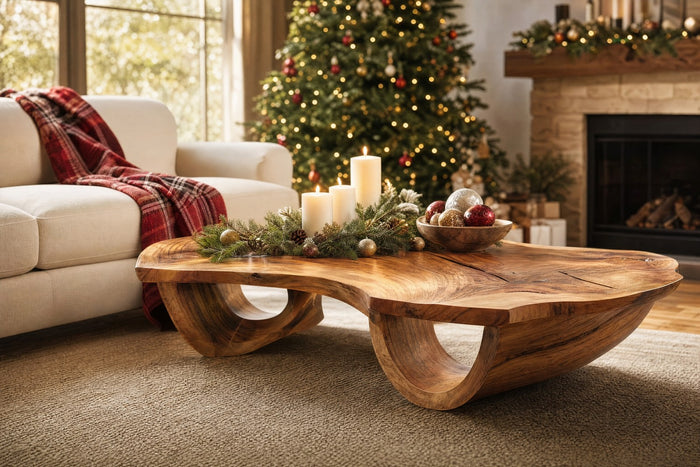
 Live Edge Slice Tiered Solid Wood Cat Tree Freestanding Multi Level Perch
From $1,732.00
Live Edge Slice Tiered Solid Wood Cat Tree Freestanding Multi Level Perch
From $1,732.00
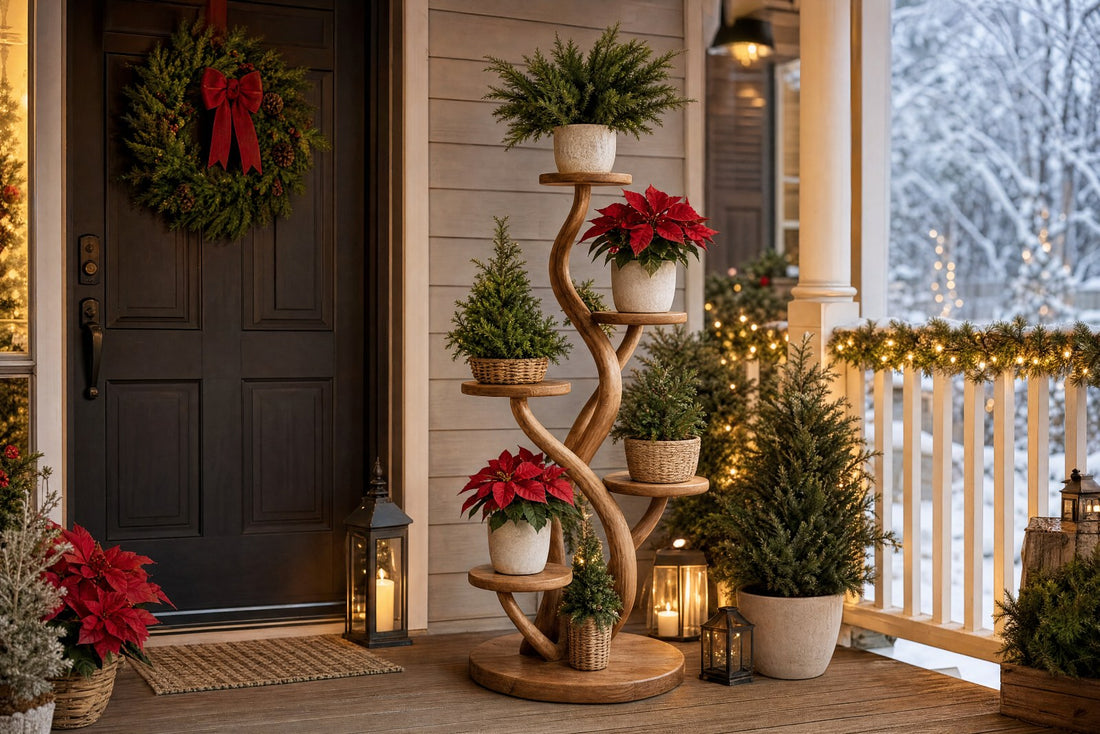
 Artisanal Solid Wood Sculptural Tree Cat Tower & Multi-Tier Botanical Display Perch Stand
From $2,076.0010% off at checkout
Artisanal Solid Wood Sculptural Tree Cat Tower & Multi-Tier Botanical Display Perch Stand
From $2,076.0010% off at checkout
 Sculptural Hand-Carved Tree Solid Wood Wall-Mounted Cat Climbing Tower with Dual House Condos & Display Shelves
$3,012.0010% off at checkout
Sculptural Hand-Carved Tree Solid Wood Wall-Mounted Cat Climbing Tower with Dual House Condos & Display Shelves
$3,012.0010% off at checkout
 Sculptural Hand-Carved Tree Solid Wood Cat Tower & Multi-Tier Luxury Feline Climbing Tree with Tunnel Condo Base
From $2,654.0010% off at checkout
Sculptural Hand-Carved Tree Solid Wood Cat Tower & Multi-Tier Luxury Feline Climbing Tree with Tunnel Condo Base
From $2,654.0010% off at checkout
When Your Cat Outgrows the Standard Cat Condo
Large cats break things. Not out of malice, but because most cat condos are built for the average 8-10 pound cat, and your Maine Coon, Ragdoll, or big domestic shorthair weighs twice that. Platforms crack, posts wobble, and the whole structure develops a concerning lean within six months. International Cat Care emphasizes the importance of choosing appropriately sized furniture for larger cat breeds.
A cat condo for large cats needs to be engineered differently from the ground up. Heavier materials, wider platforms, reinforced joints, and a lower center of gravity. This isn't about luxury - it's about basic physics and making sure the structure stays upright when 20 pounds of cat lands on the top perch at full speed.
Here's what to look for, what to avoid, and why the material choice matters more than anything else when shopping for heavy-duty cat condos.
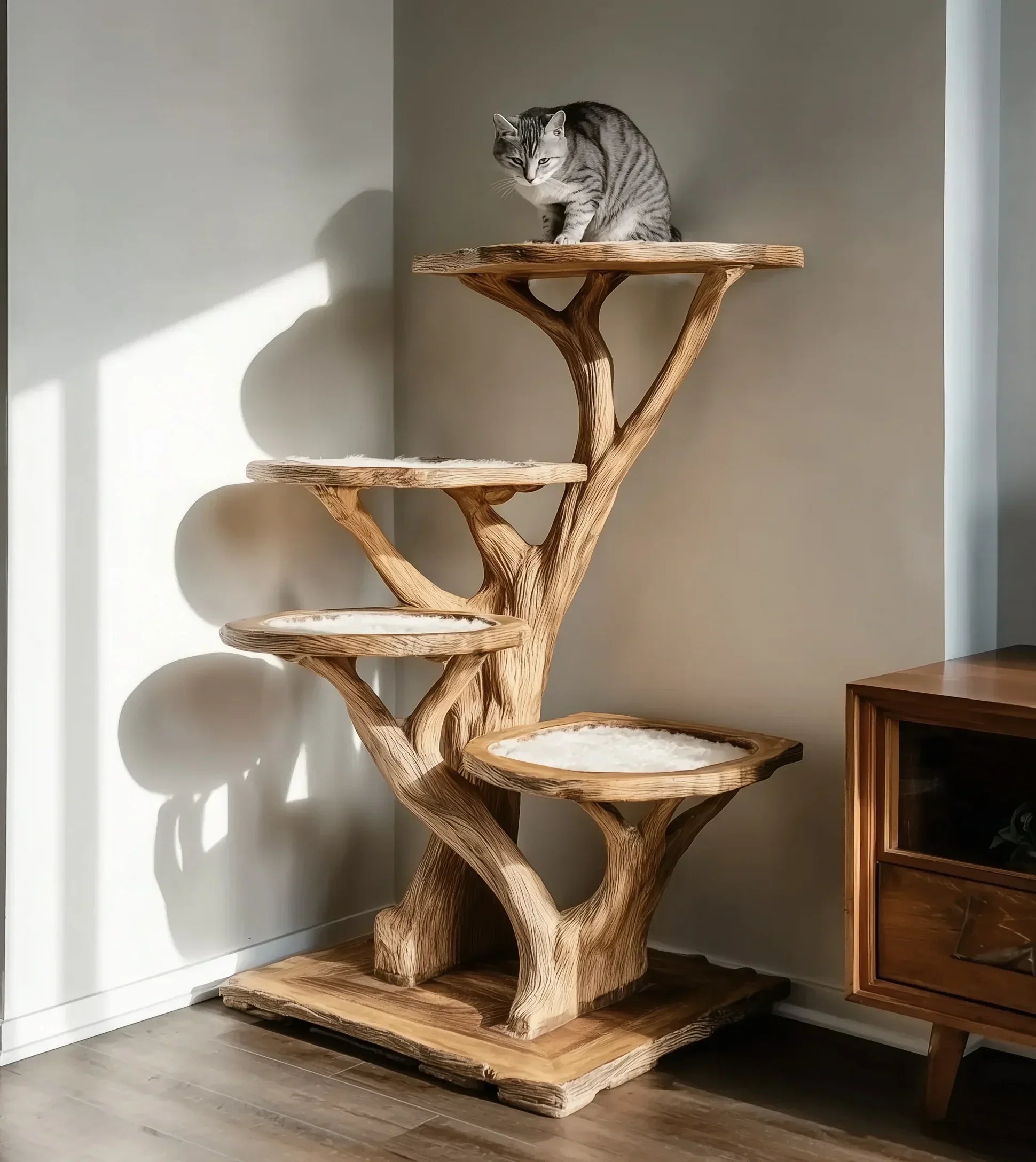
Natural Wood Cat Tree Tower – Modern Handmade Large Cat Tree House with Shelves
Weight Capacity: The Number That Matters Most
Most cat condos don't list a weight capacity. That's a red flag. If the manufacturer doesn't tell you how much weight each platform supports, they either don't know or don't want you to know.
For large cats, here's what you need:
- Individual platform capacity: At least 25 pounds per platform. This accounts for a large cat plus the dynamic force of jumping or landing.
- Total structure capacity: At least 50 pounds for a multi-cat household. Two large cats on the same tree is common, and the structure needs to handle the combined weight plus the force of one cat jumping while the other is perched.
- Base stability: The base should be weighted or wide enough that the tree doesn't tip when all the weight is on the top platform. A 60/40 rule works well - the base should be at least 60% as wide as the tree is tall.
Dynamic load matters more than static load. A 15-pound cat jumping from 3 feet creates an impact force of roughly 45 pounds on landing. Your cat condo needs to absorb that repeatedly without degrading.


Platform Size: Bigger Than You Think
Standard cat condo platforms measure about 12x12 inches. For a 10-pound tabby, that's fine. For a Maine Coon with a 40-inch nose-to-tail length, it's laughably small. The cat can balance on it, but can't rest comfortably, which means it won't use the platform for lounging.
Minimum platform sizes for large cats:
- Resting platforms: At least 16x16 inches, ideally 18x18 or larger. The cat should be able to lie down fully without any body part hanging off the edge.
- Enclosed condos/cubbies: At least 16 inches wide, 14 inches deep, and 14 inches tall internally. Large cats need to be able to turn around inside without getting stuck.
- Top perch: The largest platform on the tree. At least 18x18 inches. This is where your cat will spend the most time, and it needs to accommodate full-body stretching.
If the product listing only gives you outside dimensions, subtract 1-2 inches for wall thickness to estimate internal space. What looks like a 16-inch cubby might only offer 13 inches of usable interior.
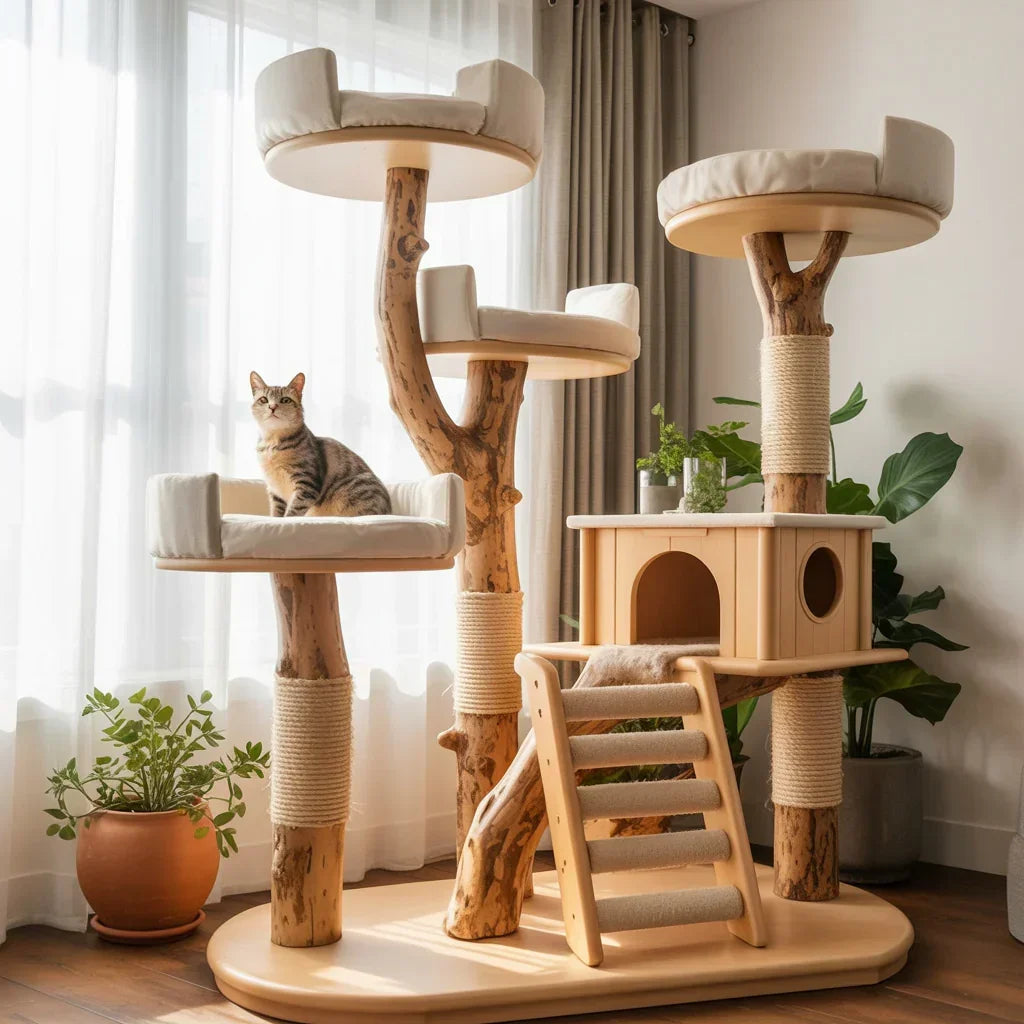
Cat Tree Made from Real Branches and Wicker – Perfect for Minimalist Homes
Stability: Why Your Cat Condo Keeps Tipping
The most common complaint about cat condos used by large cats is tipping and wobbling. This almost always comes down to three factors:
Insufficient base weight. Lightweight particle board bases don't provide enough counterweight when a heavy cat is on top. Solid wood bases solve this through sheer mass. A base that weighs 8-10 pounds provides dramatically better stability than a 3-pound particle board base.
Narrow footprint relative to height. Tall, narrow cat condos have a high center of gravity that becomes dangerous with heavy cats. For a 5-foot tall tree, the base should be at least 24x24 inches. For a 6-foot tree, go wider or wall-mount it.
Loose joints. Every cat condo joint is a potential failure point. Screwed and bolted connections loosen over time as cats jump on and off. The vibration gradually backs out fasteners. Glued dowel or mortise-and-tenon joints actually tighten over time as the wood settles, making them superior for heavy-use applications.
The simplest stability test: push the top of the tree with about 15 pounds of force (roughly the weight of a gallon of milk). If it moves more than an inch at the top, it's not stable enough for a large cat.
Don't miss
These pieces qualify for 10% off orders over $2,000. Applied automatically at checkout.
10% off
Sculptural Spiral Solid Wood Cat Tree Tiered Modern Feline Lounger
From $2,217.00
10% off at checkout
10% off
Artisanal Solid Wood Sculptural Tree Cat Tower & Multi-Tier Botanical Display Perch Stand
From $2,076.00
10% off at checkout
10% off
Sculptural Hand-Carved Tree Solid Wood Wall-Mounted Cat Climbing Tower with Dual House Condos & Display Shelves
$3,012.00
10% off at checkout
10% off
Sculptural Hand-Carved Tree Solid Wood Cat Tower & Multi-Tier Luxury Feline Climbing Tree with Tunnel Condo Base
From $2,654.00
10% off at checkout
Solid Wood vs. Carpet Towers: The Honest Comparison
Let's break down the two dominant construction approaches for large cat condos:
Carpet-Covered Particle Board (The Standard)
Pros:
- Lower upfront cost ($80-$200)
- Cats can scratch the carpet surfaces directly
- Available everywhere in dozens of configurations
- Soft surfaces for sleeping
Cons for large cats:
- Particle board platforms crack under repeated heavy landings
- Carpet glue fails, leaving loose fabric that's a choking hazard
- Posts wobble as cam-lock joints loosen from vibration
- Lightweight construction tips when large cats shift their weight to one side
- Carpet absorbs odors, hairballs, and tracked litter that can't be fully cleaned
- Average lifespan with a large cat: 1-2 years
Solid Wood Construction
Pros:
- Dramatically more stable due to weight (25-50 pounds vs. 10-20)
- Real joinery gets tighter over time, not looser
- Platforms support 3-5x more weight than particle board
- Non-porous wood surface cleans easily and doesn't harbor odors
- Looks like furniture, not like a pet store display
- Average lifespan: 10-15 years
Cons:
- Higher upfront cost ($300-$700)
- Heavier and harder to move
- Fewer configurations available
- Requires separate scratching surfaces (sisal-wrapped posts)
For large cats specifically, solid wood wins on safety and durability. The weight that makes it harder to move is exactly what makes it stay put when your 18-pound cat vaults onto the top perch. The ASPCA advises anchoring tall cat furniture to prevent tipping, especially for large or active cats.
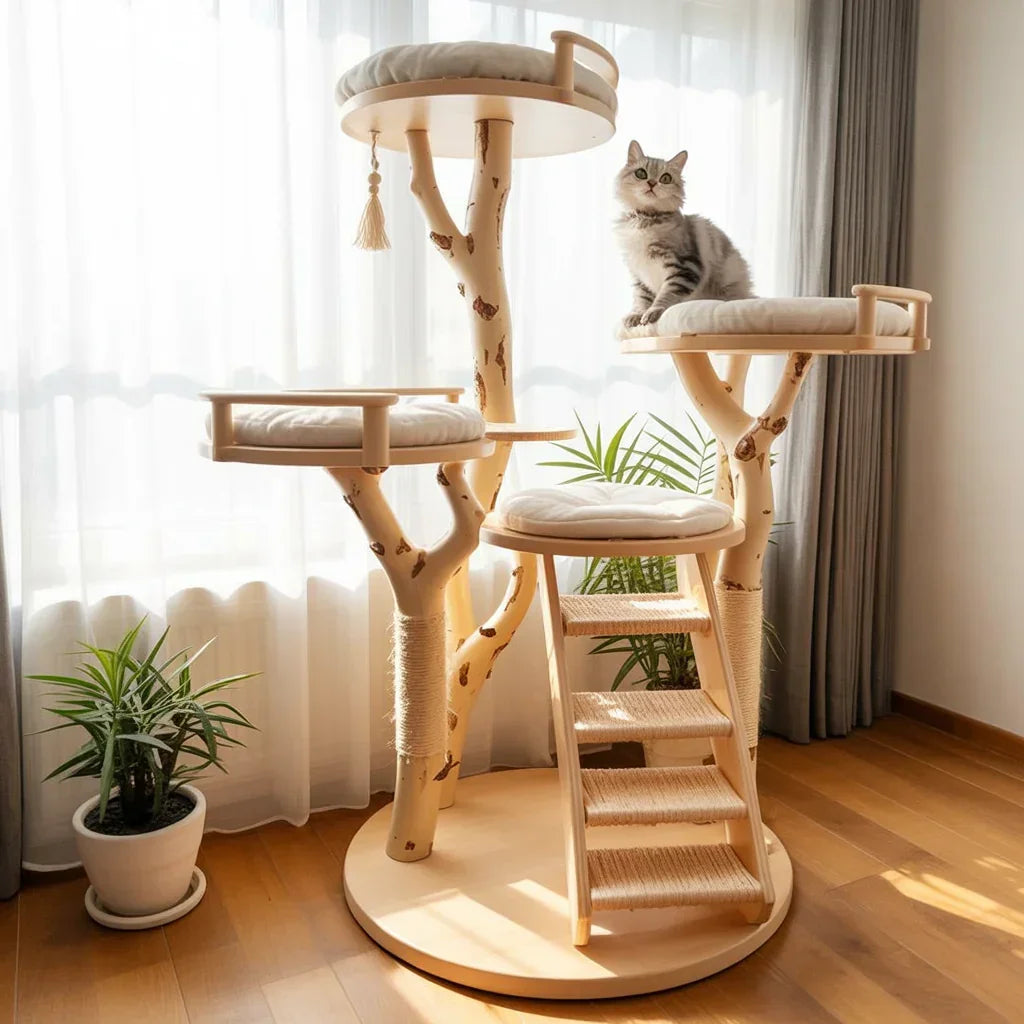
Rustic Solid Wood Cat Tree – Handmade Natural Wood Cat Tower Stand, Large Play Structure
What Large Cat Breeds Need from a Cat Condo
Different large breeds have different preferences and physical requirements:
Maine Coons (15-25 lbs): The longest domestic cats. They need oversized platforms (18+ inches) and extra-wide cubby entrances. Maine Coons tend to be laid-back climbers who prefer ramps or gentle angles to vertical jumps.
Ragdolls (15-20 lbs): Heavy and relaxed. They prefer lower perches and wide, cushioned platforms for flopping. Don't need extreme height but do need stability because they often sprawl with limbs hanging over edges.
Norwegian Forest Cats (12-16 lbs): Excellent climbers with strong jumping ability. They use all levels of a cat tree and benefit from tall structures with multiple vertical routes. Scratching surfaces are especially important for this breed.
British Shorthairs (12-17 lbs): Stocky and not particularly athletic. They prefer sturdy, low-to-mid-height condos with enclosed spaces. Wide openings are essential because of their broad chest.
Large domestic shorthairs/longhairs (12-20 lbs): The catch-all category. Weight varies widely. The safest approach is to buy for the cat's current weight plus 2-3 pounds, not for the breed average.
Heavy-Duty Features to Look For
When shopping specifically for large-cat-friendly condos, prioritize these features:
- Thick posts (4+ inch diameter). Standard 3-inch posts flex under heavy cats. Thicker posts or solid wood columns provide rigidity that prevents swaying.
- Reinforced platform attachment. Platforms should be bolted or screwed from multiple angles, dropped onto a post with a single connection point.
- Wide base plate. The base should extend at least 2 inches beyond the footprint of the platforms above it in all directions.
- Wall anchor option. Any cat condo over 4 feet tall for large cats should include a wall-mounting bracket or L-bracket for additional security.
- Rounded entrance openings. Large cats can't squeeze through small holes the way kittens can. Cubby entrances should be at least 8 inches in diameter, ideally 10.
Why Ashdeco Builds for Big Cats
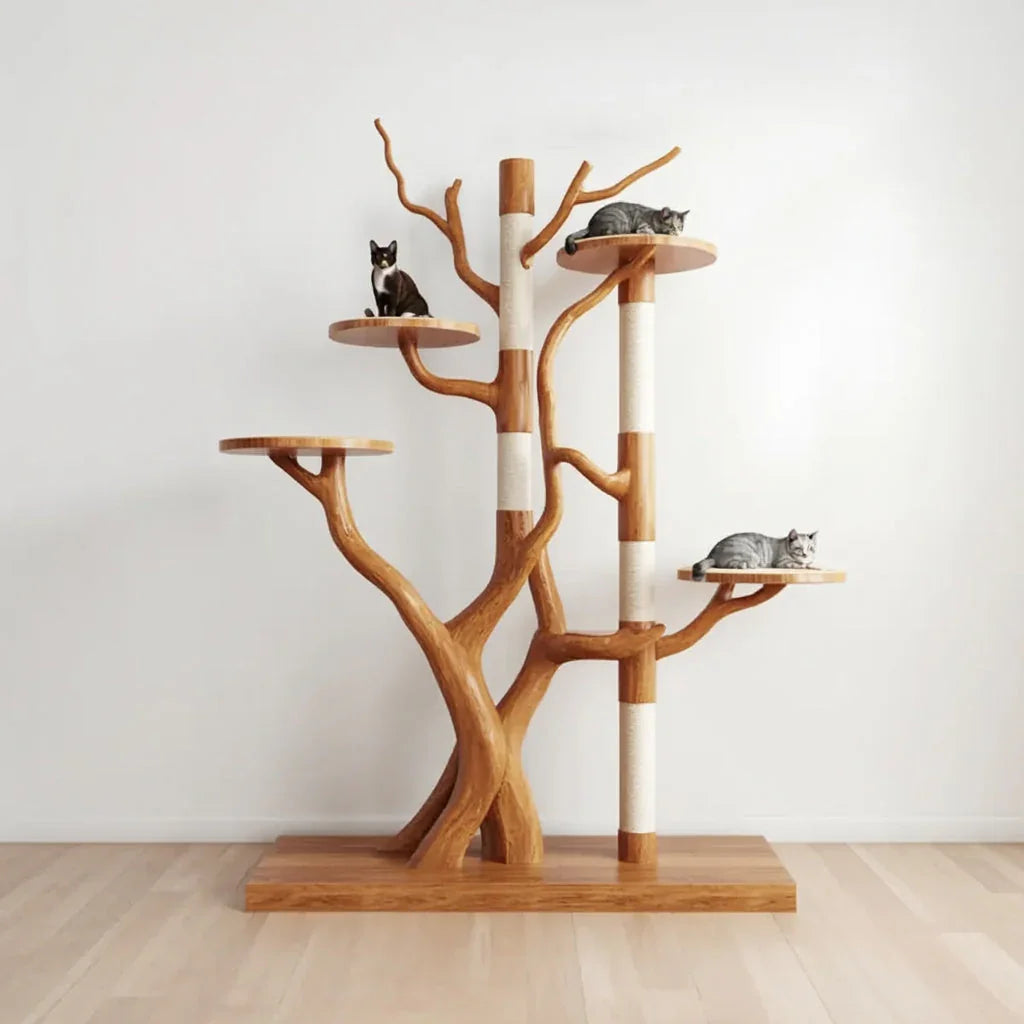
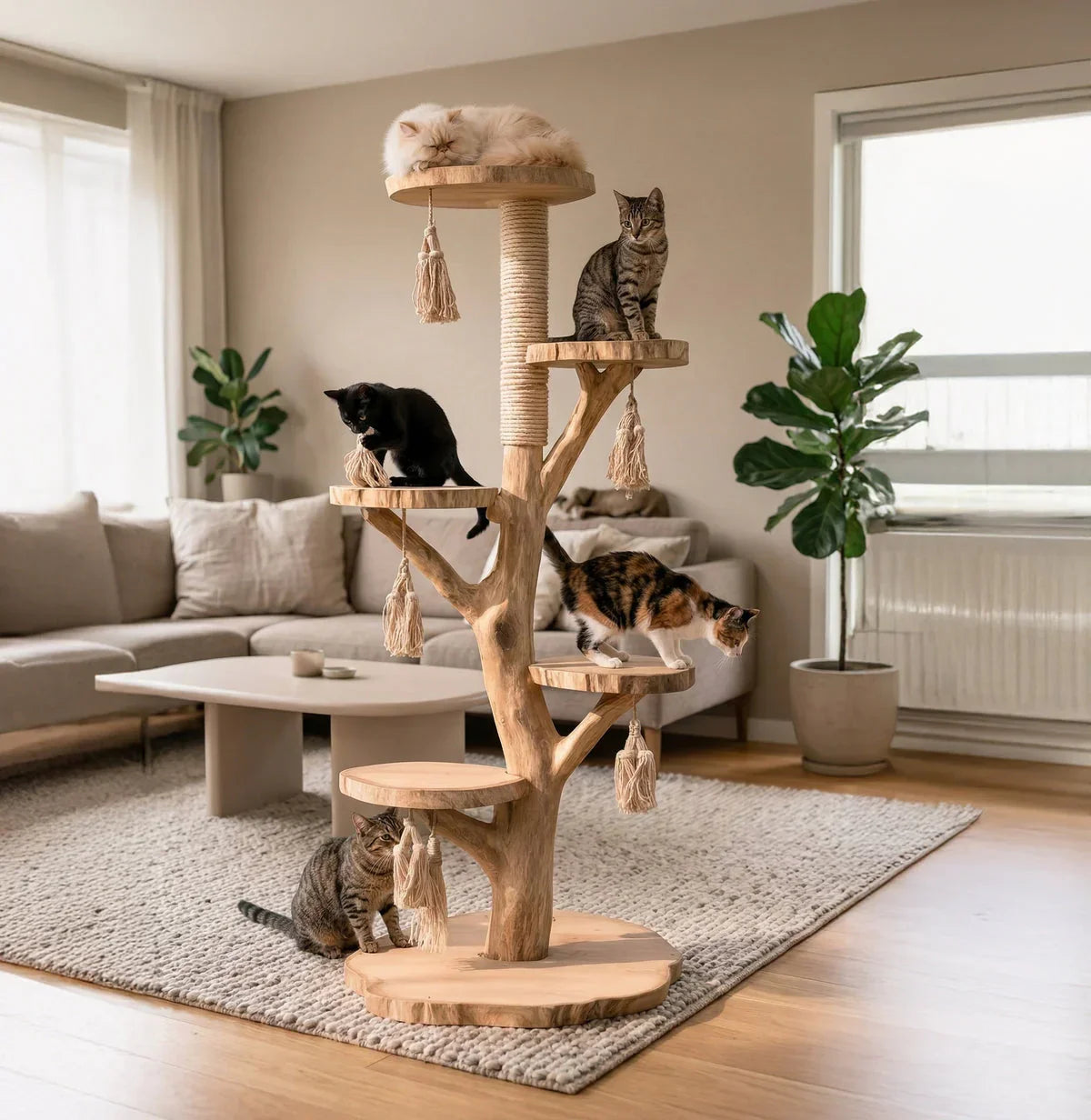
Ashdeco's cat tree towers are built from solid hardwood by Vietnamese artisans who understand that real cat furniture needs to handle real cats. The heavy-duty construction isn't just a selling point - it's a structural necessity when 20 pounds of Maine Coon decides the top platform is the only acceptable sleeping spot.
Each tree uses traditional wood joinery that holds firm under repeated dynamic loads. The platforms are generously sized for large breeds, and the overall weight of the solid wood construction provides natural stability that lightweight alternatives simply can't match. No wobble, no tipping, no platform cracks.
Frequently Asked Questions
What weight can a solid wood cat condo support?
Quality solid wood cat condos can support 40-60 pounds of total weight across all platforms. Individual platforms in solid hardwood construction typically handle 25-30 pounds each, including dynamic load from jumping.
How do I know if a cat condo is sturdy enough for my large cat?
Push the top of the tree with about 15 pounds of force. If it shifts more than an inch or feels wobbly, it's not stable enough. Also check that all platforms can be pressed down firmly without flexing. If you can flex a platform with hand pressure, it won't hold up to a cat landing on it.
Should I wall-mount a cat condo for a large cat?
Yes, especially for trees over 4 feet tall. Even a heavy, well-built tree benefits from a simple L-bracket wall anchor. It's cheap insurance against tipping, particularly in multi-cat households where two large cats might be on the tree simultaneously.
How often should I replace a cat condo for large cats?
Carpet-covered particle board condos need replacement every 1-2 years with heavy use from large cats. Solid wood condos last 10-15 years. Sisal scratching rope may need re-wrapping every 2-3 years regardless of construction type.
Are enclosed condos (cubbies) or open platforms better for large cats?
Both. Large cats need at least one enclosed space that fits them comfortably (16+ inches on each side) and multiple open platforms for lounging. The enclosed space provides security and warmth; the open platforms provide visibility and airflow.
Can two large cats share one cat condo?
Yes, if the condo is rated for the combined weight and has enough platforms for each cat to have a designated spot. Separate top and bottom perches reduce territorial conflict. Ensure the total weight capacity handles both cats plus dynamic forces from jumping.
Built for the Cats That Need It Most
Large cats deserve furniture that doesn't wobble, crack, or collapse. The standard carpet-covered cat condos weren't designed for them, and it shows within months of use. Solid wood construction, generous platform sizing, and proper joinery make the difference between a cat condo that lasts two years and one that lasts a decade.
Browse Ashdeco's heavy-duty cat tree towers for options built specifically to handle big cats. Handcrafted from solid hardwood by Vietnamese artisans, every tree is designed with the weight, stability, and platform size that large breeds actually require. Real wood. Real craftsmanship. Real durability.