
Quick view
- The Material Question No One's Asking
- Wood Cat Trees: What You're Actually Getting
- Carpet Cat Trees: What You're Living With
- Durability: How Long Each Type Actually Lasts
- Cleaning: The Difference Gets Gross
- Which Material Do Cats Actually Prefer?
- The 2026 Market: What's Changed
- Making the Right Choice for Your Large Cat
- Frequently Asked Questions
- The Bottom Line for 2026
Shop this guide
Handcrafted Cat Tree Tower, made to order in solid wood.
 Hollow Tunnel Cave Sisal Scratching Cat Tree Tower in Sculpted Solid Wood
From $1,532.00
Hollow Tunnel Cave Sisal Scratching Cat Tree Tower in Sculpted Solid Wood
From $1,532.00
 Multi Tier Sculpted Botanical Canopy Cat Tree Tower in Matte Finished Solid Wood
From $1,765.00
Multi Tier Sculpted Botanical Canopy Cat Tree Tower in Matte Finished Solid Wood
From $1,765.00
 Sculptural Spiral Solid Wood Cat Tree Tiered Modern Feline Lounger
From $2,217.0010% off at checkout
Sculptural Spiral Solid Wood Cat Tree Tiered Modern Feline Lounger
From $2,217.0010% off at checkout
 Nature Inspired Branch Solid Wood Corner Cat Tree Tower Condo
From $1,854.00
Nature Inspired Branch Solid Wood Corner Cat Tree Tower Condo
From $1,854.00
 Live Edge Slice Tiered Solid Wood Cat Tree Freestanding Multi Level Perch
From $1,732.00
Live Edge Slice Tiered Solid Wood Cat Tree Freestanding Multi Level Perch
From $1,732.00
 Artisanal Solid Wood Sculptural Tree Cat Tower & Multi-Tier Botanical Display Perch Stand
From $2,076.0010% off at checkout
Artisanal Solid Wood Sculptural Tree Cat Tower & Multi-Tier Botanical Display Perch Stand
From $2,076.0010% off at checkout
The Material Question No One's Asking
When people search for the best cat tree for large cats, they compare heights, platforms, and price tags. Almost nobody compares materials. And materials are the single biggest factor in whether a cat tree survives life with a 15-to-25 pound cat or falls apart within a year. The ASPCA recommends cat trees with wide platforms and reinforced bases for larger breeds.
The cat tree market in 2026 is still dominated by carpet-covered MDF. It's cheap, it ships flat, and it photographs well enough for a product listing. But for large cats - the Maine Coons, Ragdolls, Norwegian Forest Cats, and oversized domestic breeds - carpet-wrapped particle board is a temporary solution at best.
This guide puts wood and carpet cat trees side by side across every metric that matters: durability, cleaning, stability, cat preference, and long-term cost. If you're buying a cat tree for a big cat in 2026, this is the comparison you need.
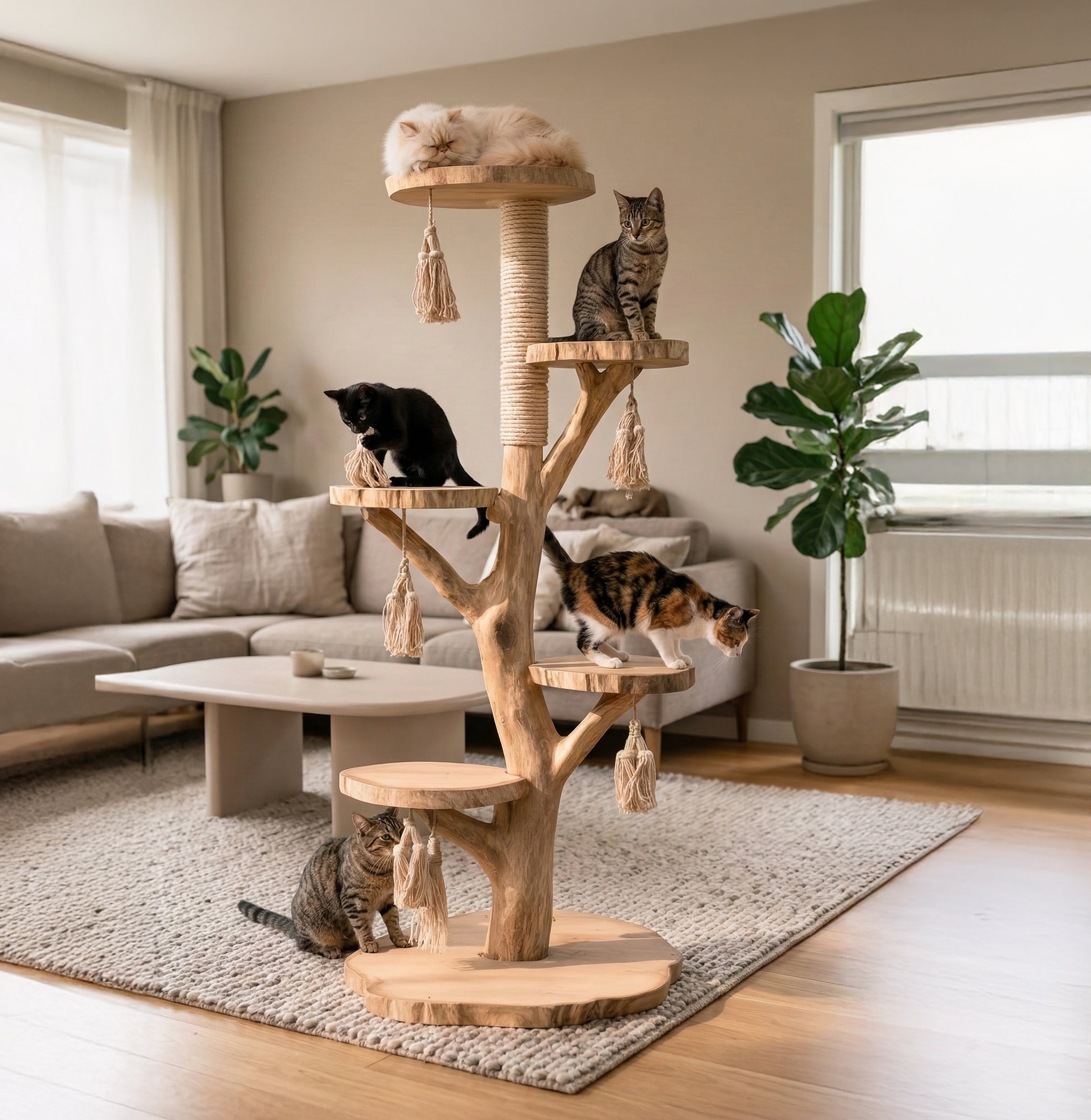
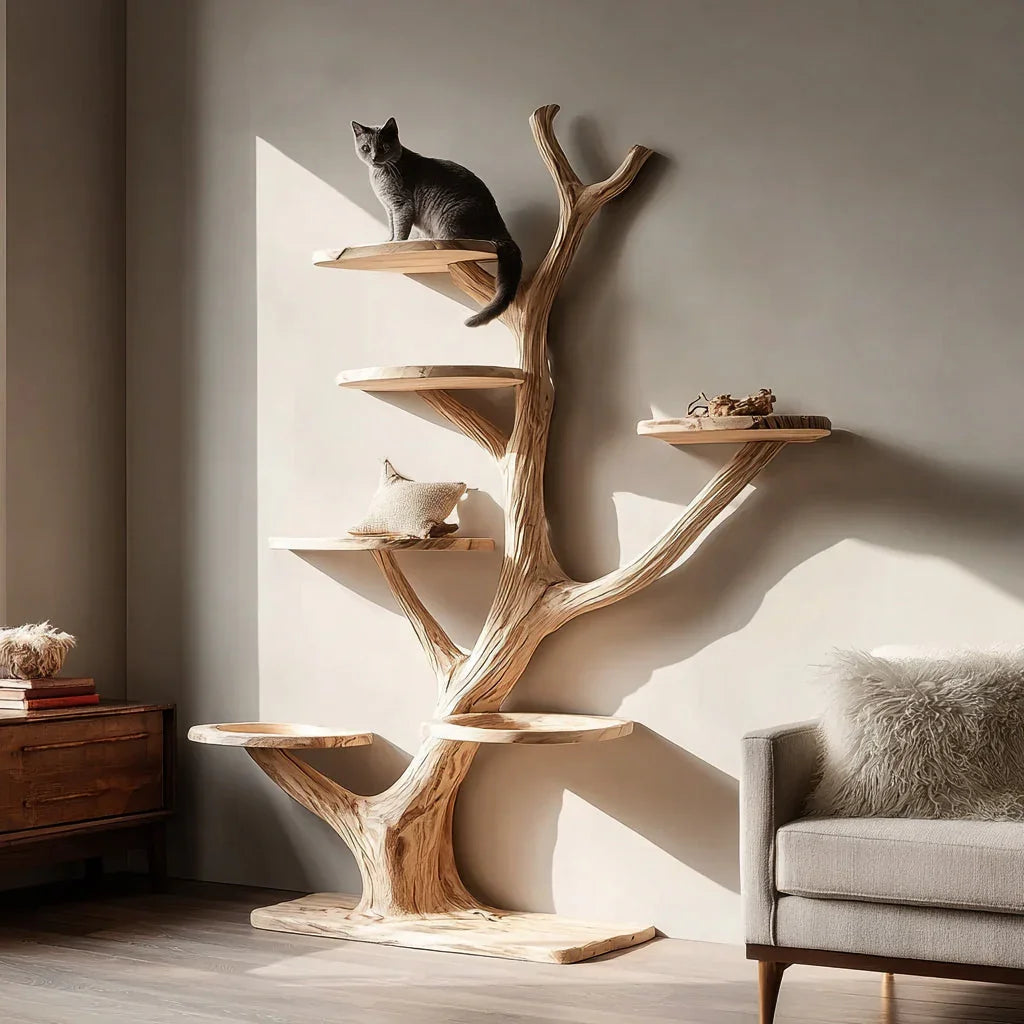
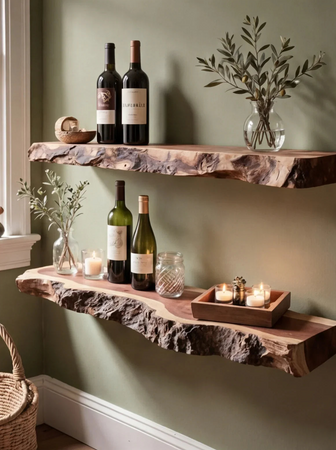
Solid Wood Sculptural Cat Climbing Condo for Living Room Decor
Wood Cat Trees: What You're Actually Getting
A "wood" cat tree can mean several things. Here's the hierarchy from best to adequate:
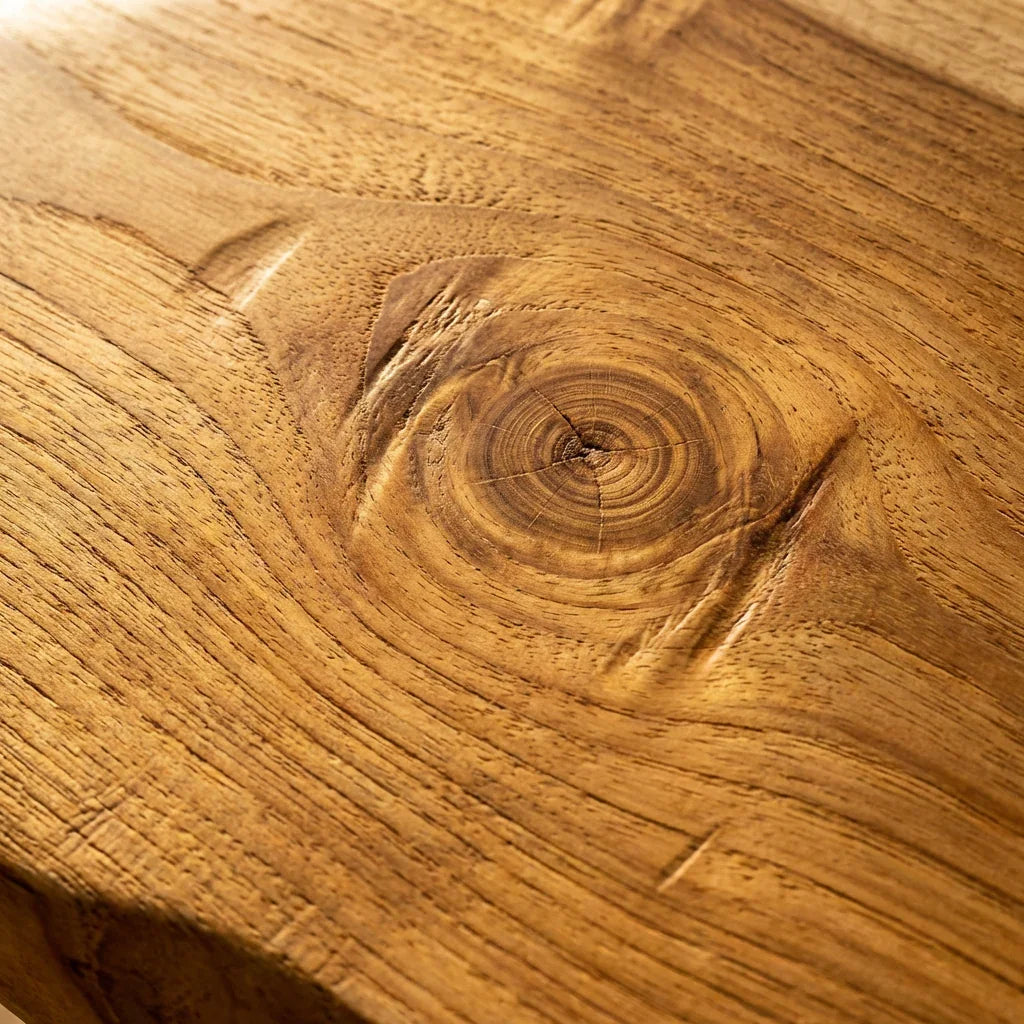
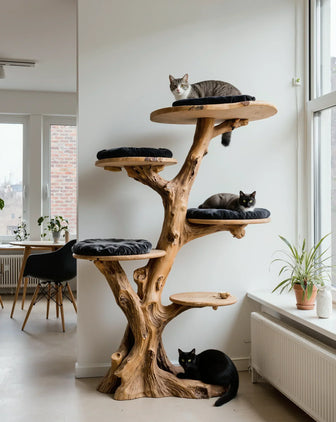
Solid hardwood (rubberwood, oak, walnut, beech): The structural gold standard. Heavy, stable, durable, and attractive. Solid hardwood platforms don't flex, crack, or delaminate. The grain and finish are genuine, not printed. These trees weigh 25-50 pounds, which provides inherent stability.
Solid softwood (pine, spruce): Lighter and less expensive than hardwood. Perfectly functional, but softwood scratches and dents more easily. Acceptable for the frame structure, but hardwood is preferable for platforms that take direct impact from jumping.
Furniture-grade plywood (birch ply, hardwood veneer core): A legitimate alternative for platforms and enclosed spaces. Good plywood is strong, warp-resistant, and lighter than solid wood. The key is "furniture-grade" - cheap plywood with voids and filler will fail at stress points.
MDF with wood veneer: This is where "wood" gets misleading. MDF (medium-density fiberboard) is pressed sawdust and resin. It looks like wood with a veneer on top, but it has none of solid wood's structural integrity. It swells when exposed to moisture (including cat saliva and cleaning products), and screws pull out easily under repeated stress.


Carpet Cat Trees: What You're Living With
The traditional carpet cat tree construction looks like this: compressed wood or particle board forms the structural platforms and base. Pressed cardboard tubes form the posts. Everything is wrapped in industrial carpet, which is stapled and glued in place. Some components may include faux fur or fleece in sleeping areas.
What works about this:
- Cats can scratch the carpet directly (it's a full-body scratching surface)
- Soft sleeping surfaces on every platform
- Low cost ($60-$200 for most models)
- Widely available in dozens of configurations
What fails for large cats:
- Particle board platforms crack under heavy repeated landings
- Carpet glue degrades, leaving loose fabric (choking risk for cats who chew)
- Cardboard tubes compress and splinter when large cats grip them for climbing
- Carpet fibers trap bacteria, tracked litter, hair, and odor
- The lightweight construction (8-15 pounds) provides insufficient counterweight for cats over 12 pounds
- Cam-lock and peg joints loosen progressively with each jump impact

Durability: How Long Each Type Actually Lasts
This is where the numbers tell the real story:
Carpet cat tree with a 15+ pound cat: 12-24 months before significant structural issues appear. Posts start leaning, platforms develop visible flex, carpet peels at high-use areas, and base wobbles. Most owners replace rather than repair because the materials don't support repair.
Solid wood cat tree with a 15+ pound cat: 8-15 years of structural integrity. Wood joinery actually tightens as the wood settles and seasons. Sisal scratching rope needs replacement every 2-3 years, but the structure itself remains sound. Surface scratches on wood add character rather than degradation.
The cost-per-year math:
- Carpet tree: $150 average × replacement every 18 months = $100/year
- Wood tree: $500 average ÷ 10 years = $50/year
The "expensive" option costs half as much over time. And that's before factoring in the hassle of disassembling, disposing of, and replacing a carpet tree every year and a half.
Don't miss
These pieces qualify for 10% off orders over $2,000. Applied automatically at checkout.
10% off
Sculptural Spiral Solid Wood Cat Tree Tiered Modern Feline Lounger
From $2,217.00
10% off at checkout
10% off
Artisanal Solid Wood Sculptural Tree Cat Tower & Multi-Tier Botanical Display Perch Stand
From $2,076.00
10% off at checkout
 10% off
Sculptural Hand-Carved Tree Solid Wood Wall-Mounted Cat Climbing Tower with Dual House Condos & Display Shelves
$3,012.00
10% off at checkout
10% off
Sculptural Hand-Carved Tree Solid Wood Wall-Mounted Cat Climbing Tower with Dual House Condos & Display Shelves
$3,012.00
10% off at checkout
 10% off
Sculptural Hand-Carved Tree Solid Wood Cat Tower & Multi-Tier Luxury Feline Climbing Tree with Tunnel Condo Base
From $2,654.00
10% off at checkout
10% off
Sculptural Hand-Carved Tree Solid Wood Cat Tower & Multi-Tier Luxury Feline Climbing Tree with Tunnel Condo Base
From $2,654.00
10% off at checkout
Cleaning: The Difference Gets Gross
Cats shed. They track litter. They occasionally vomit. And they mark territory with scent glands in their paws. All of this ends up on your cat tree.
Cleaning a carpet cat tree:
- Vacuum regularly (carpet traps hair deep in the fibers)
- Spot clean with enzyme cleaner for vomit or accidents
- Can't fully sanitize - carpet retains odor and bacteria in the fiber backing
- Carpet can't be removed for washing (it's stapled and glued)
- Over time, the tree develops a permanent "pet smell" that no amount of cleaning eliminates
Cleaning a solid wood cat tree:
- Wipe down with a damp cloth
- Deep clean with mild soap and water
- Non-porous surface doesn't absorb odors or bacteria
- Removable cushion covers go in the washing machine
- Even years-old wood cat trees can be cleaned to like-new hygiene
In multi-cat households or homes with large cats (who produce proportionally more hair and dander), the cleaning advantage of wood isn't a nice-to-have. It's a genuine quality-of-life difference for both you and your cats.
Which Material Do Cats Actually Prefer?
This is the question that surprises most cat owners. Conventional wisdom says cats prefer carpet because they can scratch it. Research and behavioral observation tell a more nuanced story.
For scratching: Cats prefer sisal rope or sisal fabric over carpet for dedicated scratching. The resistance is more consistent and satisfying. Carpet shreds unevenly and catches claws in loops, which cats find frustrating.
For sleeping and lounging: Preferences vary by temperature. In cooler environments, cats prefer soft surfaces (cushions, fleece). In warmer environments, cats actively seek out smooth, cool surfaces like wood and tile. A wood cat tree with removable cushions gives cats both options.
For climbing: Wood provides better grip than carpet for climbing because cats can use their full claw on a solid surface. Carpet fibers snag individual claws, which can cause nail damage in heavy cats who put significant force on each grip.
For overall use: Studies on cat environmental enrichment consistently show that cats prioritize height, stability, and location over surface material. A well-placed, stable wood cat tree gets more use than a poorly placed carpet tree every time. Learn about feline environmental enrichment at International Cat Care to keep your large cat healthy and active.
The 2026 Market: What's Changed
The cat furniture market has shifted noticeably in the past few years:
- More solid wood options. Small manufacturers and artisan shops now offer wood cat trees that were essentially unavailable five years ago. The selection has gone from niche to competitive.
- Modular systems. Wall-mounted, configurable cat tree systems let you build a custom climbing wall from interchangeable wood components. Great for large cats who need extra-wide platforms.
- Hybrid designs. Some manufacturers combine solid wood structure with strategic carpet or sisal in scratching zones, giving you the durability of wood with the full-surface scratching cats enjoy.
- Sustainability awareness. More buyers are considering the environmental cost of replacing cheap furniture annually versus investing in long-lasting solid wood.
Making the Right Choice for Your Large Cat
Here's a straightforward decision framework:
Choose carpet if:
- Your cat is under 12 pounds and not growing
- Budget is a hard constraint and you're comfortable replacing it annually
- You want a specific configuration that isn't available in wood yet
Choose solid wood if:
- Your cat weighs over 12 pounds
- You have multiple cats using the same tree
- You want the tree in a visible room (living room, bedroom)
- Cleaning and hygiene are priorities
- You prefer to buy once and be done
- Stability and safety for heavy cats is non-negotiable
For large cats specifically, solid wood is the clear recommendation. The stability, durability, and cleaning advantages aren't marginal , they're transformational compared to standard carpet trees.
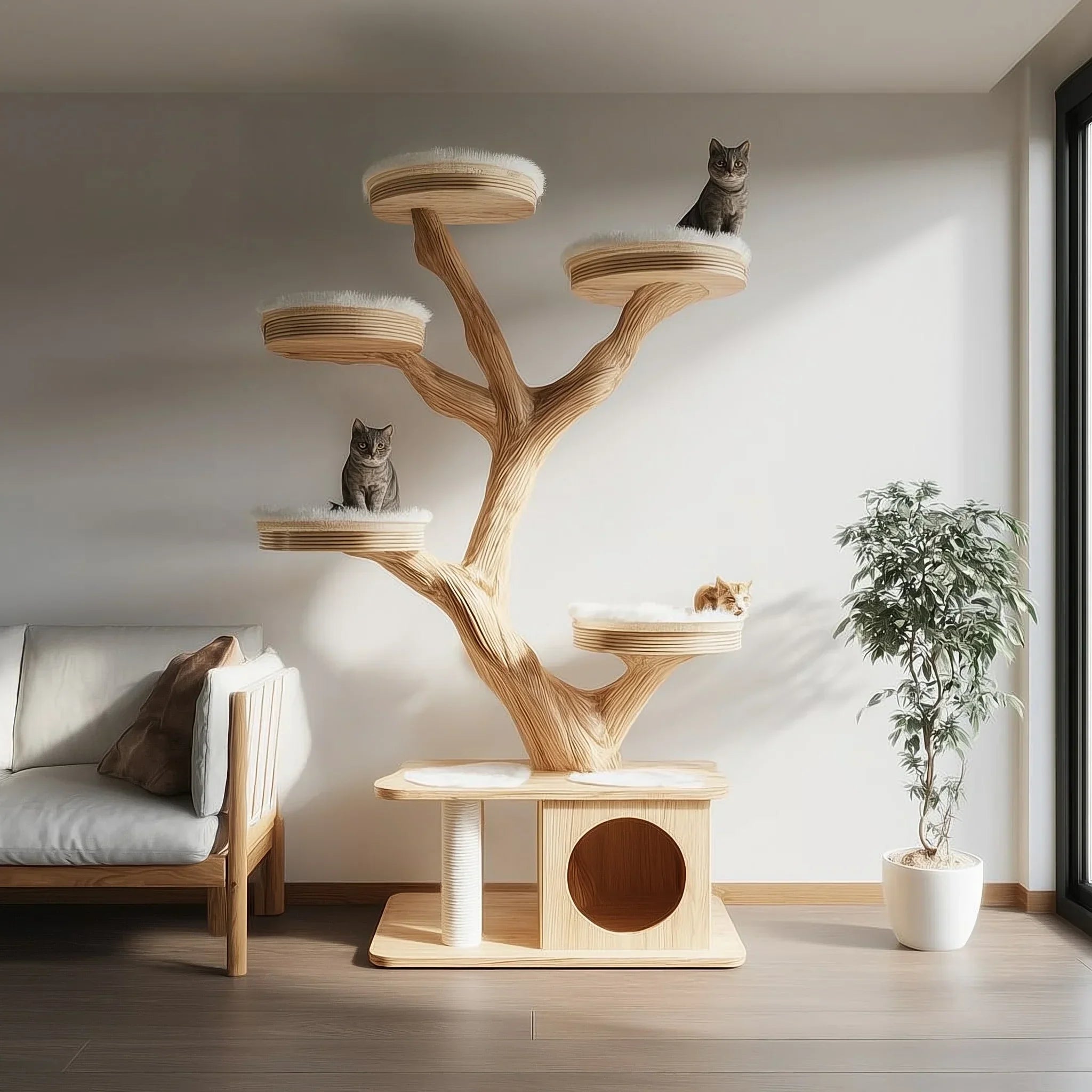
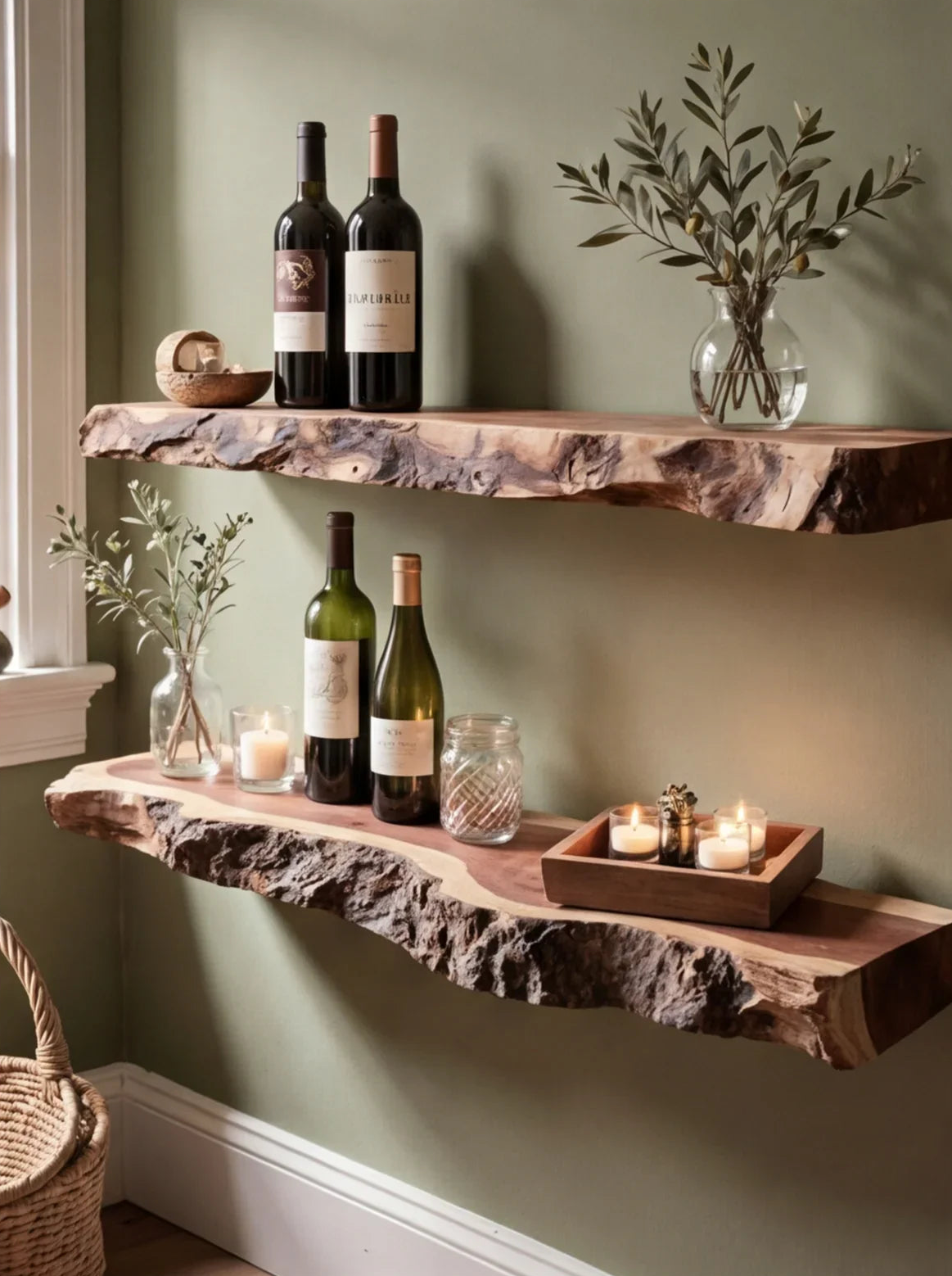
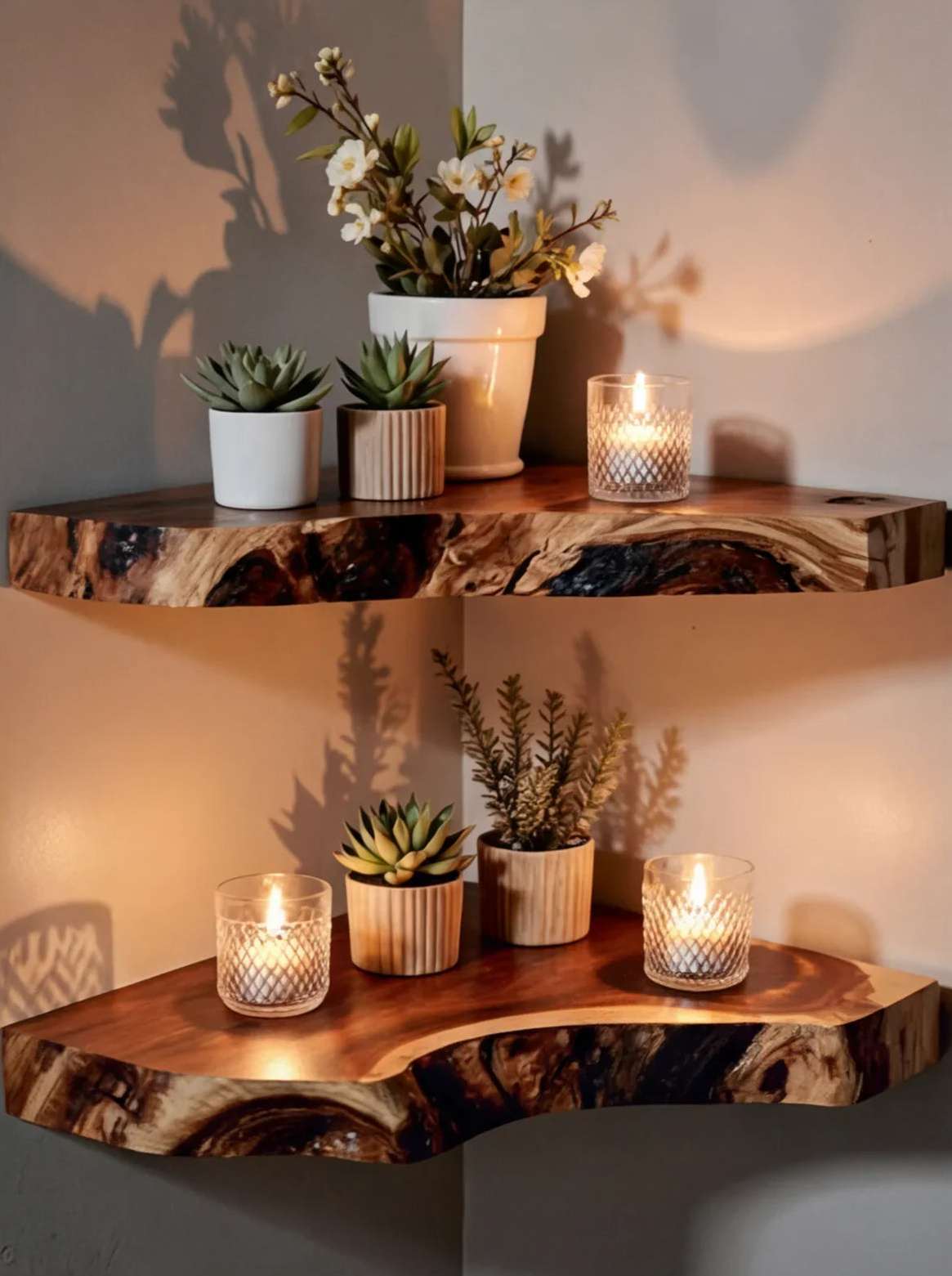
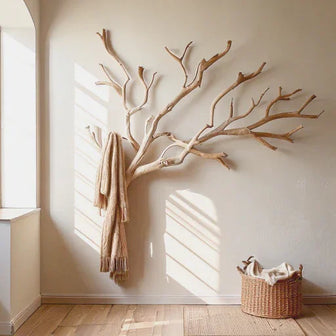
Rustic Wooden Cat Tree – Handmade Wall-Mount Climbing Tower Shelf, Unique Natural Cat Furniture
Frequently Asked Questions
Is a wood or carpet cat tree better for large cats?
Wood is better for large cats in almost every category: stability, durability, platform strength, cleaning, and long-term cost. The only advantage carpet holds is the full-surface scratching ability, which solid wood trees address with dedicated sisal scratching posts.
How heavy should a cat tree be for a 20-pound cat?
At least 30 pounds for the base structure alone. The tree should weigh at least 1.5 times your cat's weight to remain stable during jumping and climbing. Solid wood trees naturally meet this threshold; carpet trees usually don't.
Do cats scratch solid wood cat trees?
Cats generally don't scratch smooth, finished wood surfaces when sisal scratching posts are available. The finish on quality wood cat trees provides insufficient resistance for satisfying scratching, so cats naturally redirect to the sisal-wrapped posts or boards included in the design.
How do I transition my cat from a carpet tree to a wood tree?
Place the new wood tree near the old carpet tree for a week. Rub catnip on the platforms and scratching posts. Most cats start exploring the new tree within 2-3 days. Once they're using it regularly, remove the old tree. Don't force the transition , let curiosity do the work.
Are solid wood cat trees worth the price for one cat?
Yes. A single large cat puts the same stress on a tree as multiple smaller cats. The durability and stability benefits apply regardless of how many cats use the tree. The cost-per-year calculation ($50/year for wood vs. $100/year for carpet) holds for single-cat households too.
What's the best wood species for a large cat tree?
Rubberwood, oak, and beech offer the best balance of hardness, weight, and cost. Walnut is premium but not structurally necessary. Avoid pine for platforms , it's too soft and dents under heavy cat landings. For posts and frame structures, any hardwood performs well.
The Bottom Line for 2026
If you have a large cat, stop buying disposable cat trees. The carpet-covered particle board model doesn't work for heavy cats and never has. It wobbles, it breaks, it smells, and you replace it every year.
Solid wood cat trees cost more today and cost less over time. They're stable, cleanable, attractive, and they give your large cat the confident, secure climbing experience they deserve.
Explore Ashdeco's solid wood cat tree towers, handcrafted by Vietnamese artisans for cats that need serious furniture. Every tree is built from real hardwood with traditional joinery, designed to handle large breeds without wobble, flex, or early failure. Your cat's next tree should be their last tree. Make it count.