# How to Arrange Floating Shelves: Spacing, Layout & Staggered Ideas
You bought your floating shelves. They're leaning against the wall. And now you're standing there with a tape measure, a pencil, a stud finder, and no idea how far apart they should go.
This is the part most people wing. They eyeball it, drill the holes, step back, squint, and realize the whole arrangement looks off. Too close. Too high. One shelf weirdly lower than the others.
This guide gives you the actual numbers. How many inches between floating shelves, how to arrange them in staggered or straight layouts, and what works for groups of 2, 4, 5, or more. No guessing required.
The Spacing Rule Everyone Needs to Know
The standard spacing between floating shelves is 8 to 12 inches from the top of one shelf to the bottom of the shelf above it. That's not shelf-to-shelf center. That's usable vertical space between them.
Here's the breakdown:
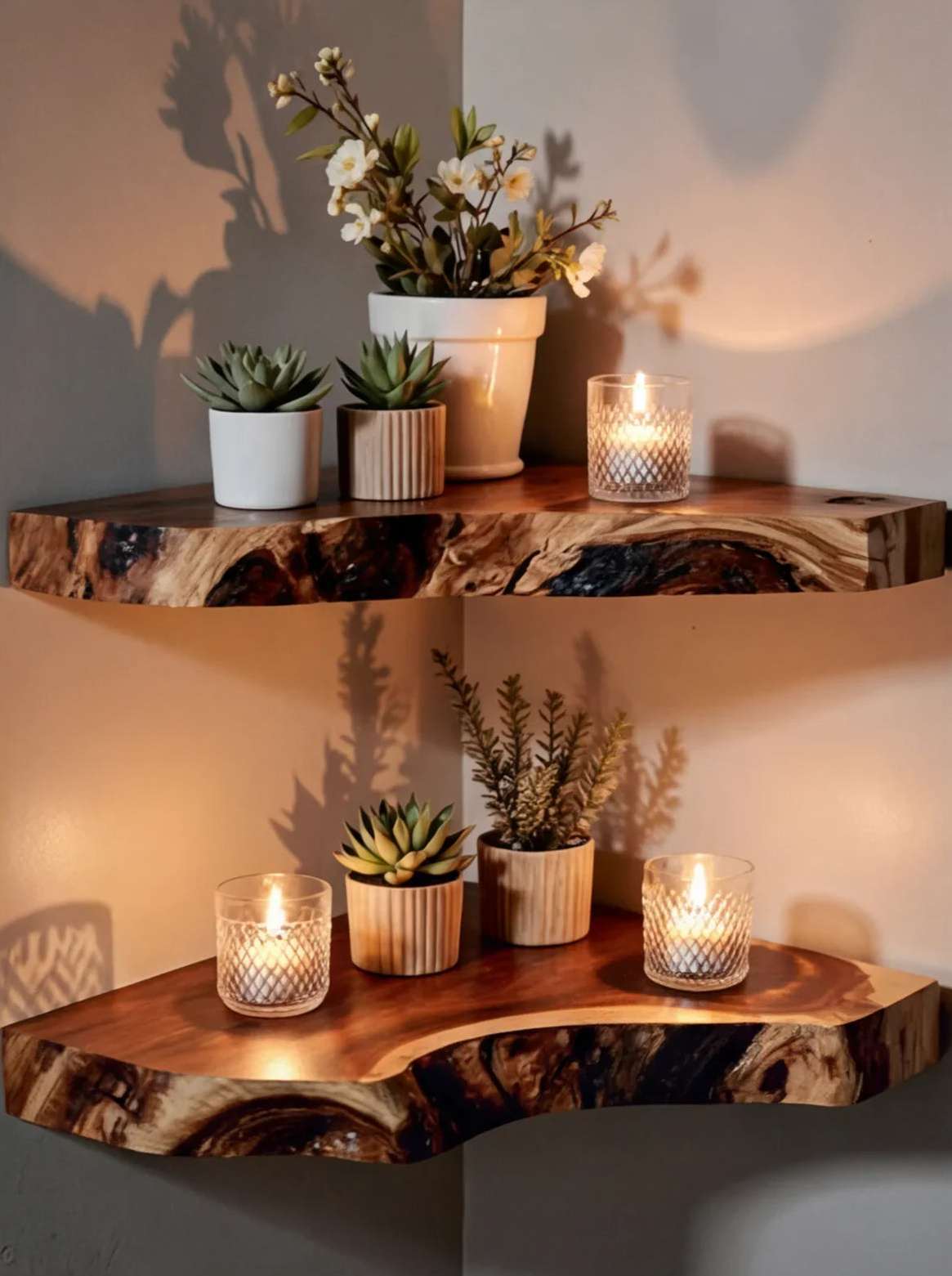
8 inches works for shelves that hold small items. Candles, small succulents, picture frames, spice jars. Anything under about 7 inches tall fits comfortably with room to grab it.
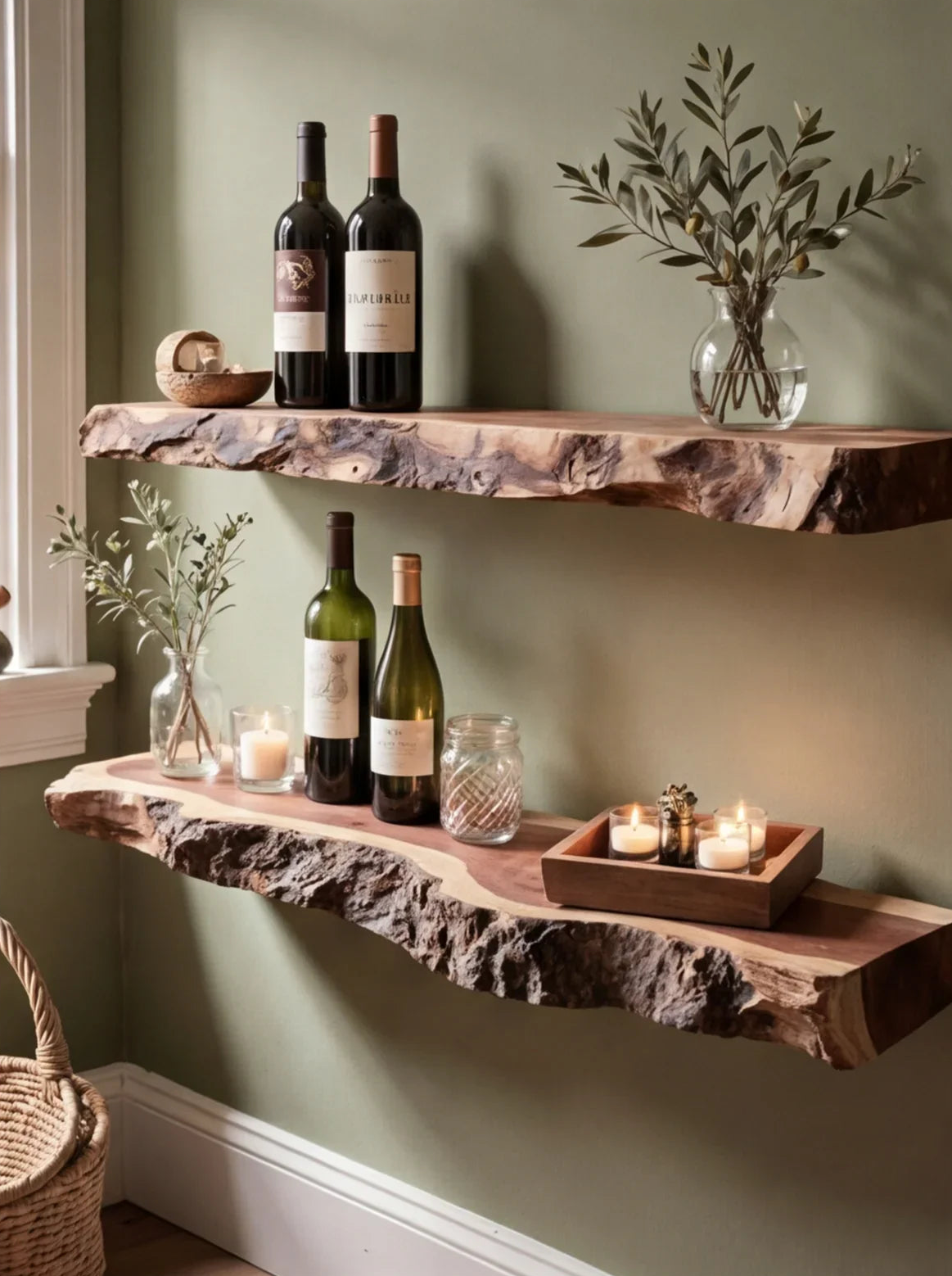
10 to 12 inches works for shelves that hold taller items. Vases, stacked books, bottles, tall plants. This spacing gives you enough clearance to place and remove items without scraping the shelf above.
If you're mixing shelf purposes (some display, some storage), go with 10 inches as your default. It handles most items and still looks proportional.
How Many Inches Between Floating Shelves for Specific Rooms
| Room | Recommended Spacing | Why |
|---|---|---|
| Kitchen (above counter) | 10-12 inches | Mugs, plates, bottles need clearance |
| Bathroom | 8-10 inches | Toiletries, candles, soap are short |
| Living room | 10-12 inches | Books, vases, larger decor |
| Nursery | 12+ inches | Taller items, stuffed animals, reach clearance for kids |
| Home office | 10 inches | Books, reference materials, small electronics |
In a dining room, floating shelves are usually mounted above a buffet, sideboard, or console rather than a counter - measure from that surface the same way you would from a desk or sofa back. If you're furnishing the room from scratch and still need to size the table itself, our dining table size guide covers standard dimensions by seat count and room size, so the table and the shelving above the sideboard end up proportional to each other.
Staggered Floating Shelves vs. Straight: Which Layout to Choose
This is the biggest visual decision. Staggered floating shelves create movement on the wall. Straight shelves create structure. Both work. The right choice depends on your wall and what's going on around the shelves.
Straight (Aligned) Layout
All shelves mounted at the same horizontal position, stacked vertically with even spacing. The left edges (or center points) line up.
When straight works best:
- Above a sofa or bed where you want symmetry
- In a kitchen where function matters more than visual flair
- Narrow walls where staggering would look forced
- When you're using matching shelves of the same length
Staggered Layout
Shelves mounted at different horizontal positions, creating an asymmetric step pattern. Usually alternating left-right, with varying distances from center.
When staggered works best:
- On large blank walls that need visual interest
- In living rooms where the shelves are the main wall feature
- When your shelves are different lengths
- When you want a more casual, collected-over-time look
For a deep dive on staggered arrangements with photo examples, check out our guide to staggered floating shelf ideas.
The Hybrid Approach
Two shelves aligned, one offset. Or four shelves in a 2+2 pattern, with each pair aligned but the pairs offset from each other. This gives you some structure without the rigidity of a fully straight layout.
How to Arrange Floating Shelves by Quantity
2 Floating Shelves (Staggered or Stacked)
Two shelves is the minimum for an arrangement. You have two options:
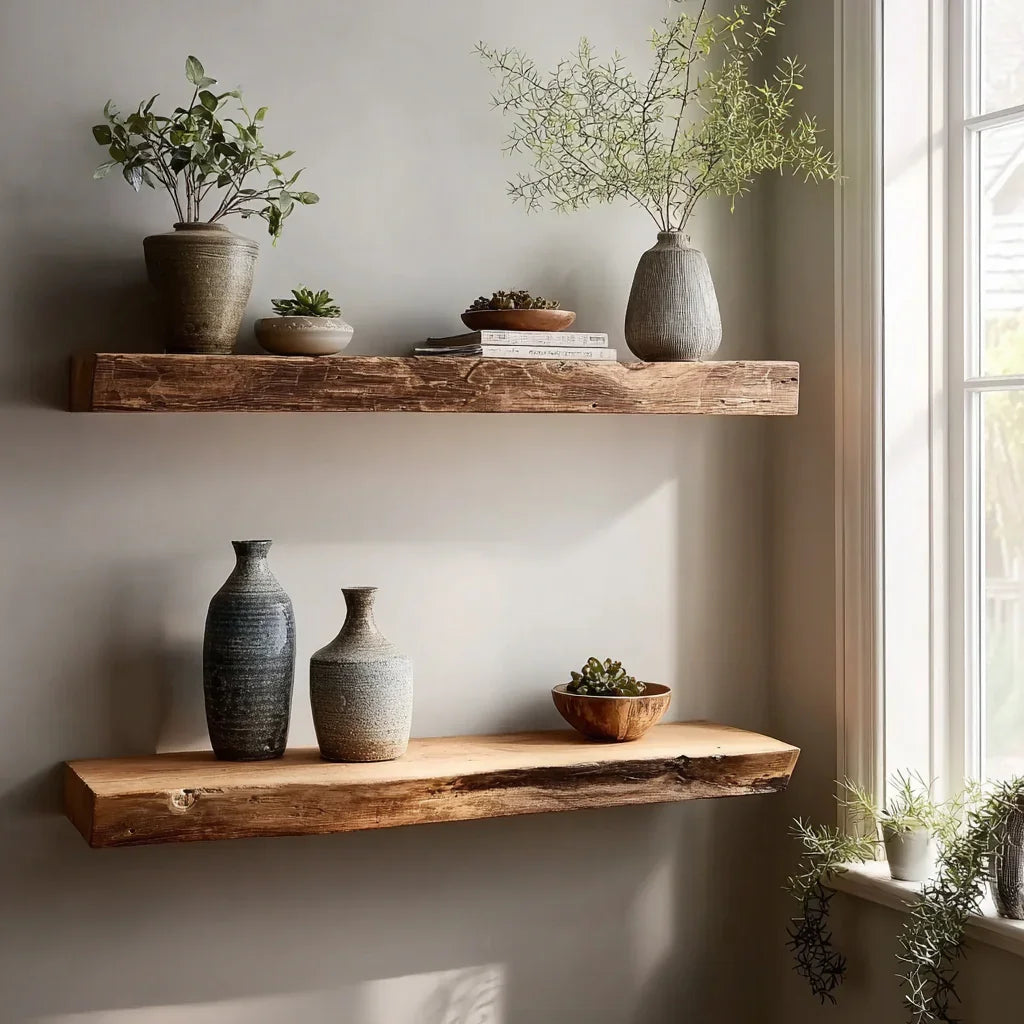
Stacked (vertically aligned): Both shelves on the same vertical line, 10 to 12 inches apart. Simple, clean, works above a toilet, beside a mirror, in a hallway, or flanking a window.
2 staggered floating shelves: One higher and to the left, one lower and to the right (or vice versa). Offset them 6 to 10 inches horizontally and 8 to 14 inches vertically. The diagonal creates movement on the wall even with just two pieces.

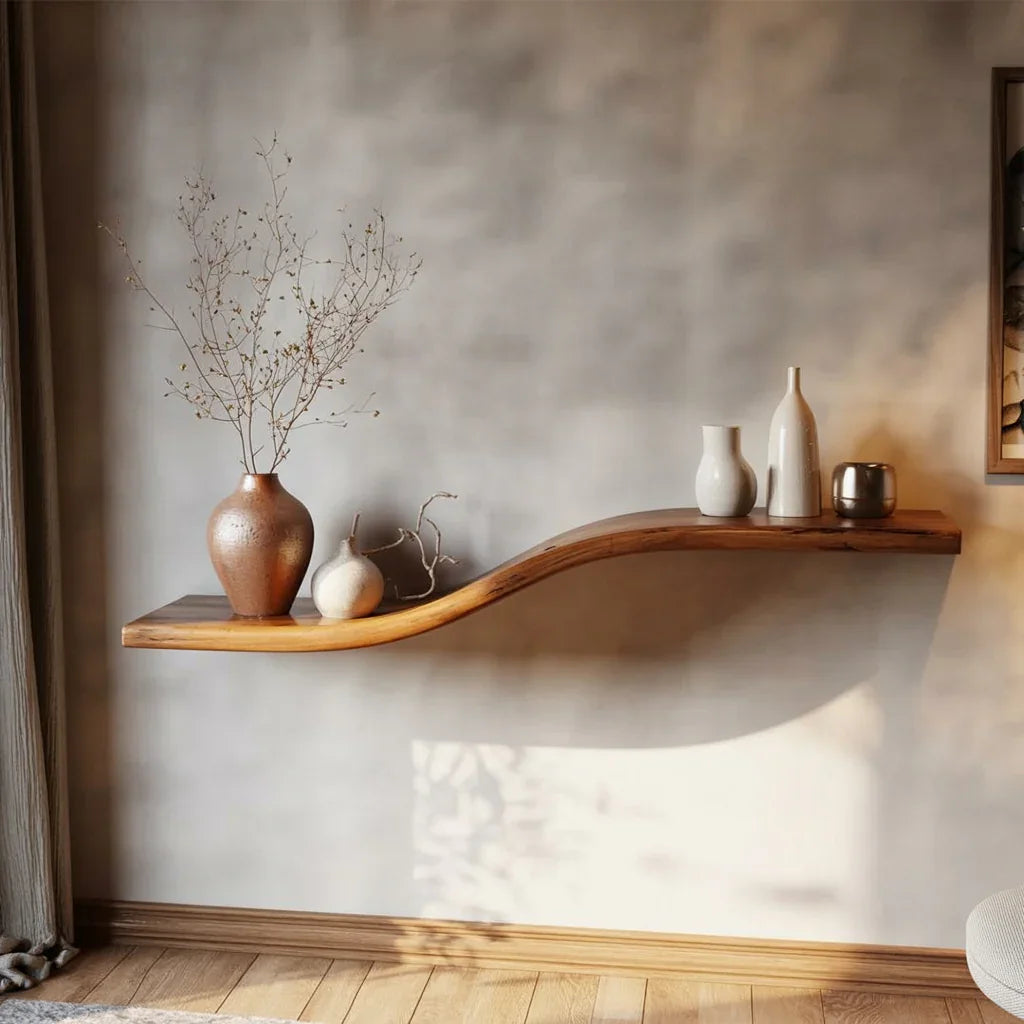
A pair of Wave Wall Shelves ($372 to $1416 each, 5 variants) work well for two-shelf arrangements. Each one is hand-carved from solid wood by Vietnamese artisans, so the wave shape has genuine organic variation that adds visual interest even in a simple stacked layout.
3 Floating Shelves (Most Popular Layout)
If you're figuring out how to arrange 3 shelves on a wall, you're in good company. Three is the most common quantity people buy.
Straight vertical stack: All three aligned, 10 to 12 inches apart. Clean and classic. Works above a desk or a couch.
3 floating shelves staggered: Position the middle shelf offset to one side, with the top and bottom shelves on the opposite side. Keep horizontal offsets between 4 to 8 inches and vertical spacing at 10 inches. The result is a subtle zigzag.
Descending diagonal: Each shelf steps down and to the right (or left), creating a staircase effect. This works on walls next to a staircase or above a sloped piece of furniture.
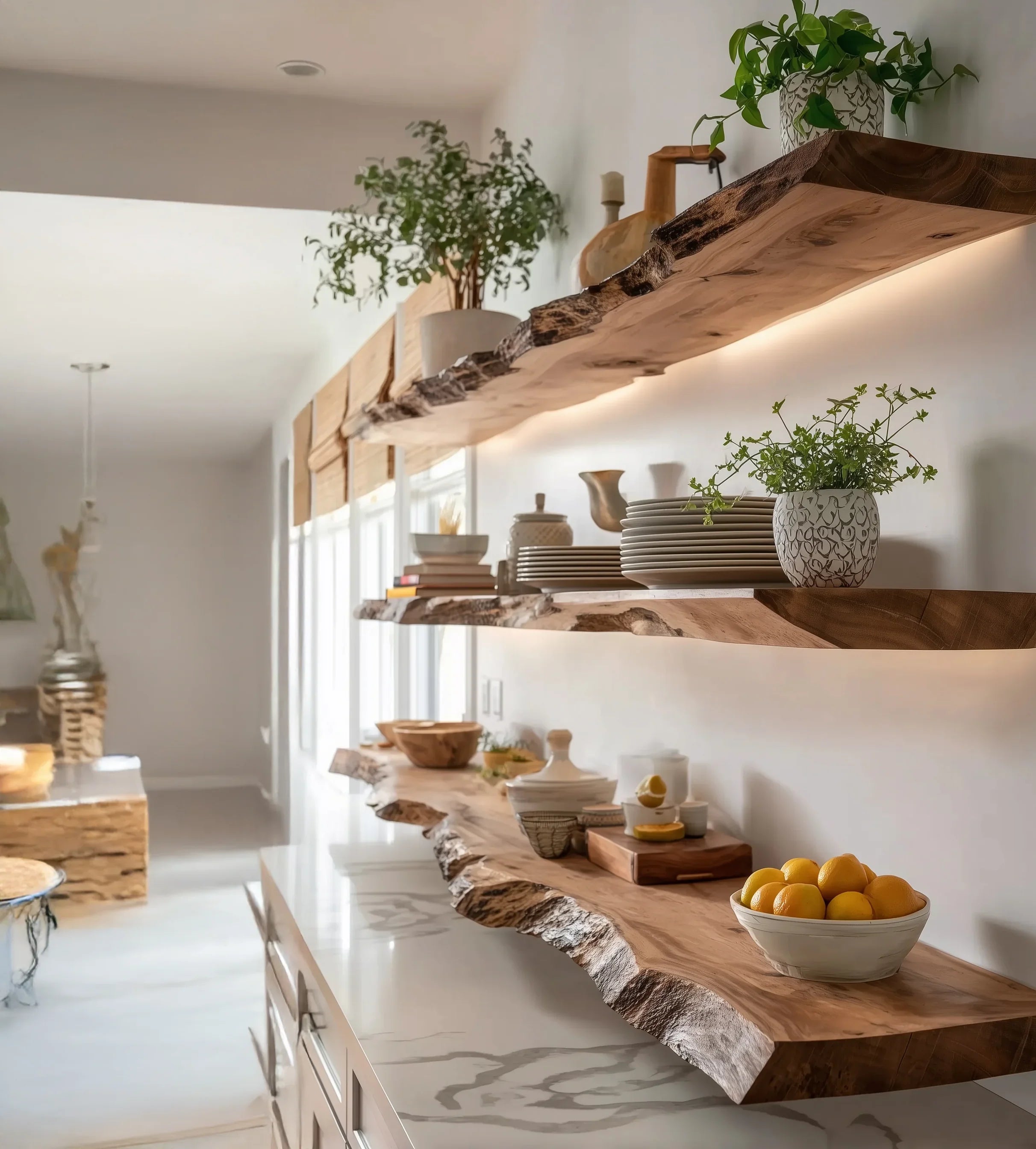
The Rustic Live Edge Floating Shelf ($400 to $1,110 with 9 size variants) is popular for 3-shelf layouts because you can order different lengths for the same finish, giving the arrangement variety without mismatching wood tones.
4 Floating Shelves
Four gives you the most flexibility. Common layouts:
2x2 grid: Two columns of two, spaced 18 to 24 inches apart horizontally and 10 to 12 inches vertically. Structured but not boring.
Descending stagger: All four shelves at different heights, stepping down left to right (or right to left). Space them 6 to 8 inches apart vertically and 8 to 12 inches horizontally. This creates a strong diagonal line.
Asymmetric cluster: No strict pattern. Place the first shelf by eye, then position each additional shelf relative to the one before it. Keep minimum 8-inch vertical gaps. This works best with shelves of different lengths or styles.
Live Edge Floating Shelf – Handcrafted Solid Wood Wall Decor
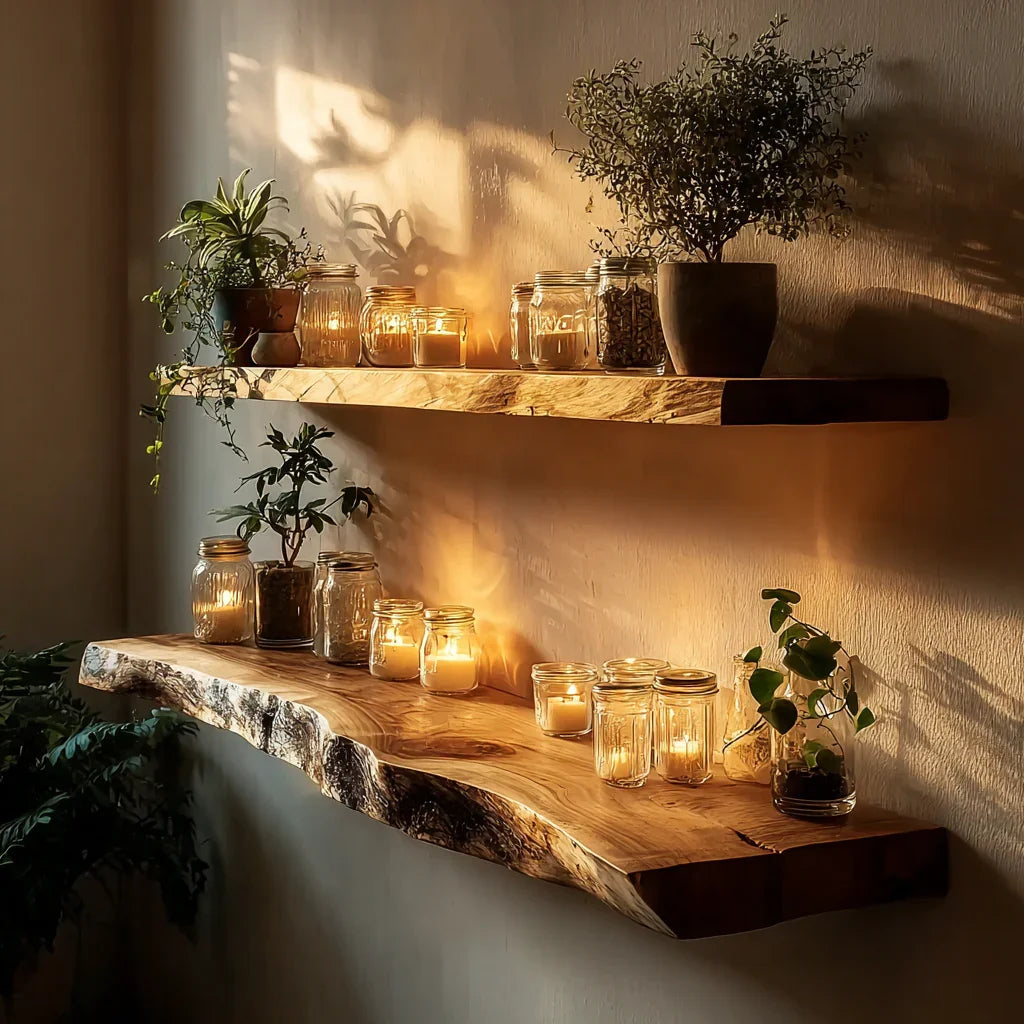
Deep Floating Shelves – Solid Wood Floating Shelf for Bathroom & Kitchen
For a 4-shelf layout, mixing shelf depths adds dimension. Pair standard Live Edge Floating Shelves ($492 to $900) with Deep Floating Shelves ($429 to $839) so the arrangement has both visual rhythm and functional variety.
5 Floating Shelves
Five is where it starts to feel like a real gallery wall. The key: don't make them evenly spaced in a straight line. Five identical shelves in a column looks like a ladder.
Best 5-shelf layout: Cluster them in an organic pattern. One up top offset left. Two in the middle at similar heights but different horizontal positions. Two lower ones staggered. Keep 8 to 12 inches of vertical space between each shelf and its nearest neighbor.
Alternate approach: A 3+2 split. Three shelves on one side of the wall in a tight vertical stack (8-inch spacing), and two shelves on the other side, staggered higher and lower. This breaks the monotony while keeping things balanced.
How to Space Floating Shelves from the Ceiling and Floor
Vertical spacing between shelves gets the most attention, but your distance from the ceiling and floor matters just as much.
From ceiling: Leave at least 6 to 8 inches between the ceiling and the top of your highest shelf. Less than 6 inches makes the arrangement feel cramped, like it's being pushed against the ceiling.
From floor (if above furniture): The bottom shelf should sit 8 to 12 inches above whatever's below it. If that's a couch backrest, measure from the top of the backrest. If that's a desk, measure from the desk surface. If it's nothing (the shelf is on an open wall), aim for 48 to 54 inches from floor to the bottom shelf. That puts items at comfortable eye level for most adults, consistent with the ADA accessibility guidelines on reach ranges.
Above a toilet: Bottom shelf should be 12 to 18 inches above the toilet tank lid. Anything closer and you'll hit the shelf when you open the tank, or it'll feel like it's sitting on top of the toilet.
Corner Floating Shelves: Special Spacing Considerations
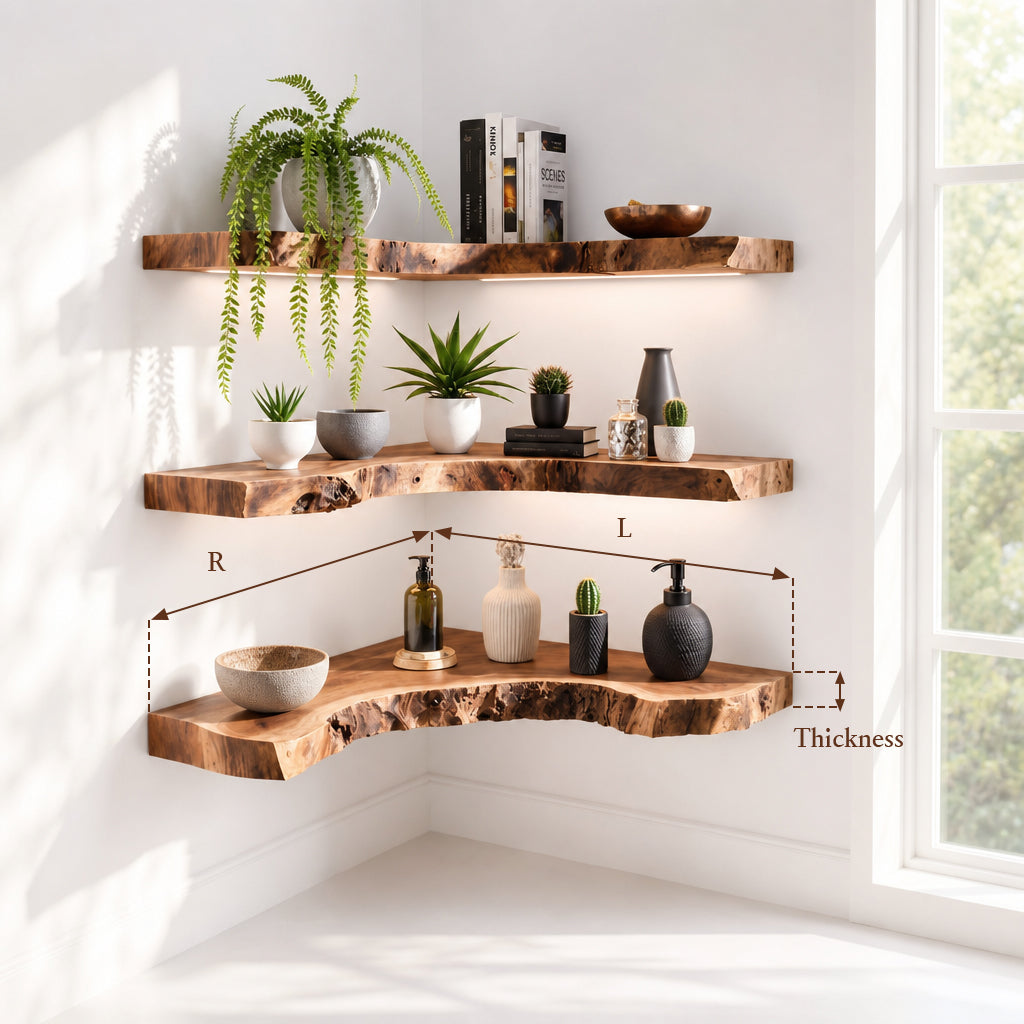
If you're working with a corner wall, the rules change slightly. Corner floating shelves wrap around the 90-degree angle, and you need to think about depth on both wall faces.
Standard corner shelf spacing is the same 8 to 12 inches vertically. But because corner shelves often have two visible edges meeting at the wall joint, staggering them looks odd. Stick with a straight vertical stack in corners.
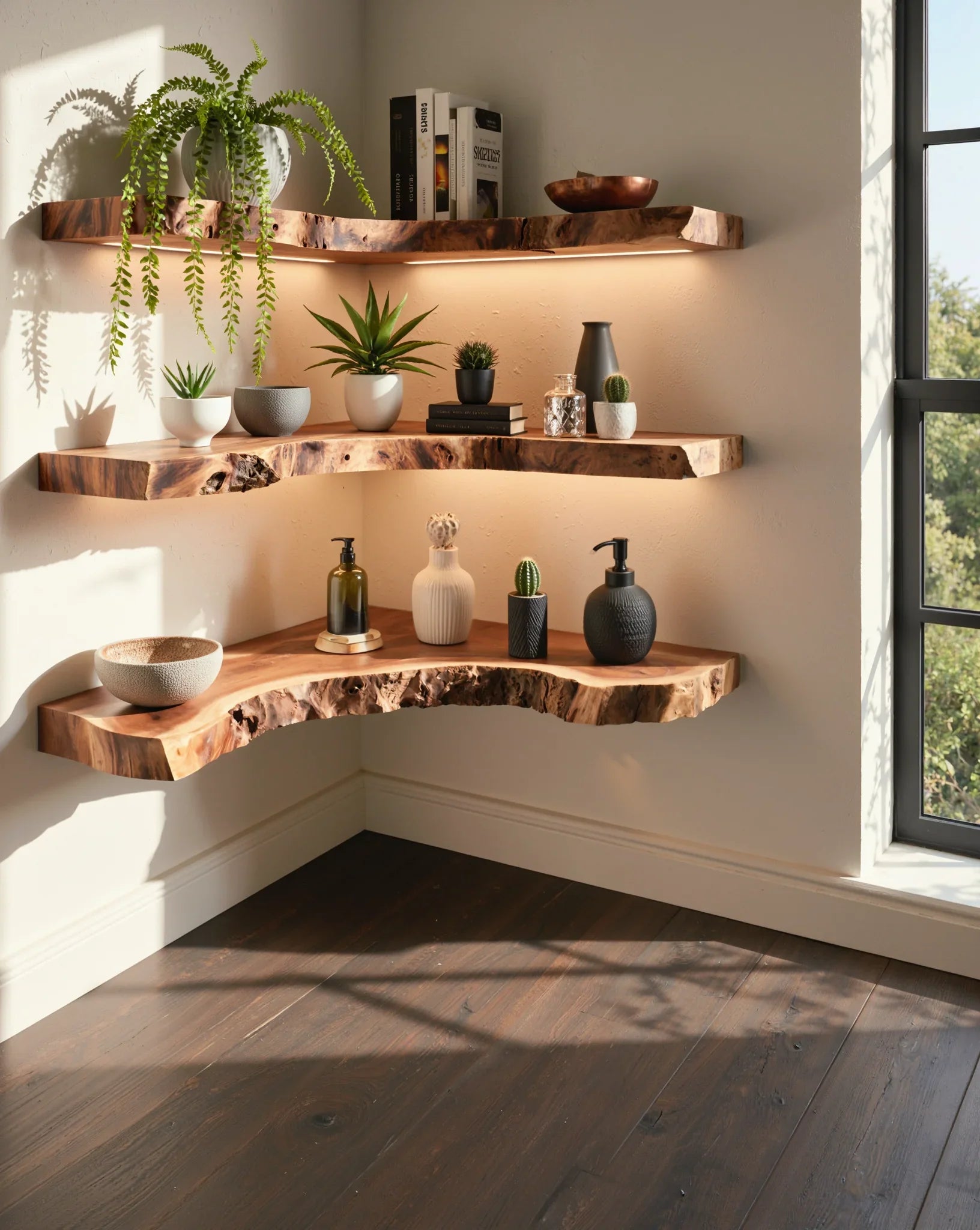
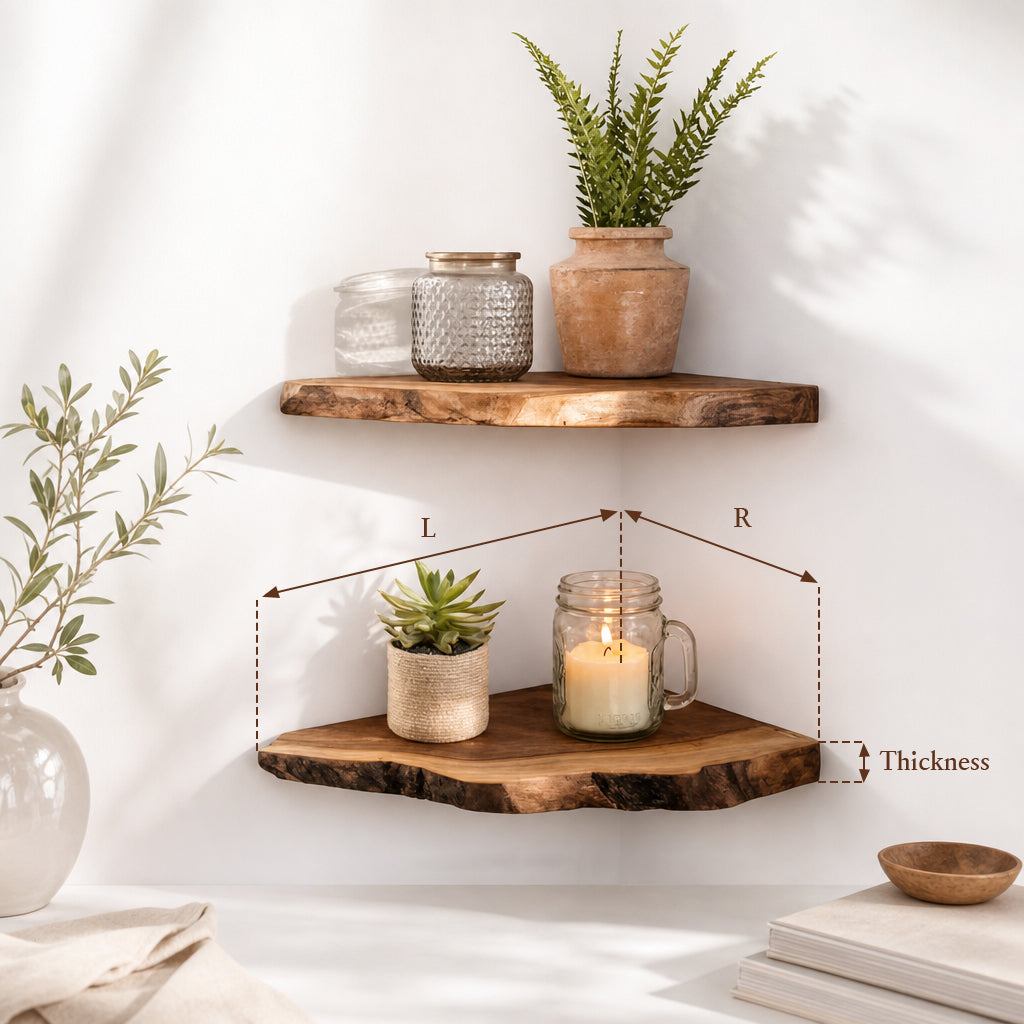
Live Edge Corner Floating Shelves – Handcrafted Solid Wood Wall Shelf
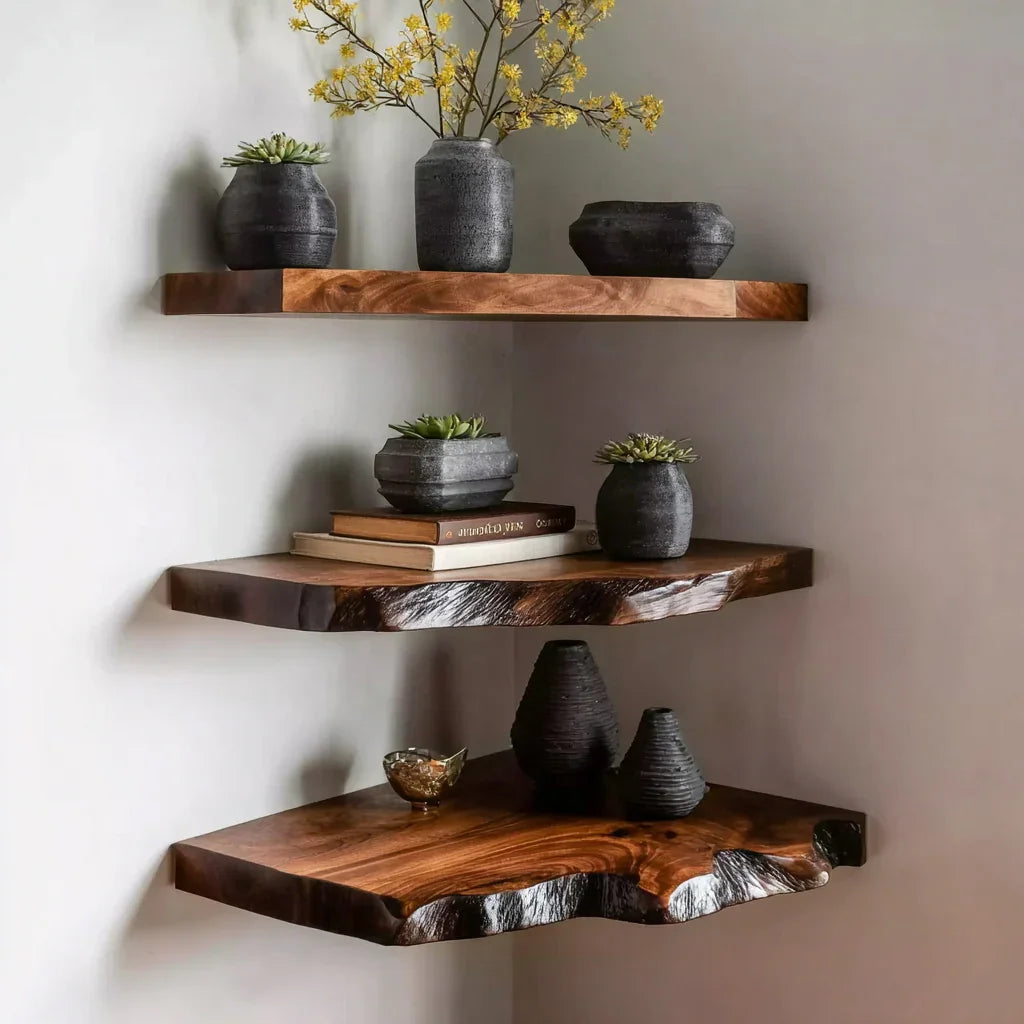
Solid Wood Corner Floating Shelf – Rustic Live Edge Wall Decor
Ashdeco's Live Edge Solid Wood Corner Floating Shelf ($140 to $540 across 5 variants) fits standard corner applications. For a more sculptural option, the Solid Wood Floating Corner Shelf ($180to $587) has a wider profile that fills bigger corners.
Browse the full corner floating shelves collection for all available sizes.
Common Spacing Mistakes to Avoid
Spacing too tight (under 7 inches). Your shelves will look stacked on top of each other. Items won't fit, or they'll touch the shelf above. It reads as cluttered even when the shelves are empty.
Spacing too wide (over 16 inches). Each shelf looks isolated. The arrangement stops reading as a group and starts looking like individual shelves that happen to be on the same wall.
Ignoring the wall proportions. A tall narrow wall wants vertical stacking. A wide short wall wants horizontal staggering. Don't force a wide staggered layout onto a wall that's only 3 feet across.
Not accounting for shelf thickness. When people say "12 inches between shelves," they mean usable space. If your shelf is 2 inches thick, the center-to-center distance is 14 inches. Measure from the top surface of the lower shelf to the bottom surface of the upper shelf.
Quick Reference: Floating Shelf Spacing Cheat Sheet
| Situation | Spacing |
|---|---|
| Between shelves (small items) | 8-10 inches |
| Between shelves (tall items) | 10-12 inches |
| Top shelf to ceiling | 6-8 inches |
| Bottom shelf above furniture | 8-12 inches |
| Bottom shelf on open wall (to floor) | 48-54 inches |
| Above toilet tank | 12-18 inches |
| Horizontal offset for stagger | 4-12 inches |
Every shelf linked in this guide is hand-carved by Vietnamese artisans from solid wood, so no two are identical in edge profile or contour. Measure your actual shelf once it arrives rather than relying on product photo dimensions for final placement.
Browse the full rustic floating shelves collection to find shelves in the size and finish that fits your layout plan.