



















Quick view
- What Are Staggered Floating Shelves?
- How to Stagger Floating Shelves: The Basic Rules
- 3 Staggered Floating Shelves: The Most Popular Layout
- Staggered Floating Shelves by Room
- 2 Staggered Floating Shelves: When Less Is More
- 5 Staggered Floating Shelves: Making a Statement
- How to Style Staggered Floating Shelves
- Staggered vs Symmetrical Floating Shelves
- How to Hang Staggered Floating Shelves
- Frequently Asked Questions
- Conclusion
Shop this guide
Handcrafted Floating Shelves, made to order in solid wood.
 Sculptural Overlapping Circular Solid Wood Wall Shelf with Multi Tier Display
From $1,354.00
Sculptural Overlapping Circular Solid Wood Wall Shelf with Multi Tier Display
From $1,354.00
 Mountain Landscape Relief Solid Wood Floating Shelf Live Edge Display Ledge
From $1,154.00
Mountain Landscape Relief Solid Wood Floating Shelf Live Edge Display Ledge
From $1,154.00
 Enchanted Forest Circular Wall Shelf - Round Carved Timber Mushroom Portal
From $1,023.00
Enchanted Forest Circular Wall Shelf - Round Carved Timber Mushroom Portal
From $1,023.00
 Cottagecore Arched Wood Wall Niche - Hand-Carved Fairy Mushroom Alcove Shelf
From $1,356.00
Cottagecore Arched Wood Wall Niche - Hand-Carved Fairy Mushroom Alcove Shelf
From $1,356.00
 Sculptural Hand-Carved Mushroom Solid Wood Corner Floating Shelf & Biomorphic Wall Display Ledge
From $345.00
Sculptural Hand-Carved Mushroom Solid Wood Corner Floating Shelf & Biomorphic Wall Display Ledge
From $345.00
 Sculptural Hand-Carved Mushroom Solid Wood Floating Shelves & Biomorphic Wall Display Ledges
From $345.00
Sculptural Hand-Carved Mushroom Solid Wood Floating Shelves & Biomorphic Wall Display Ledges
From $345.00
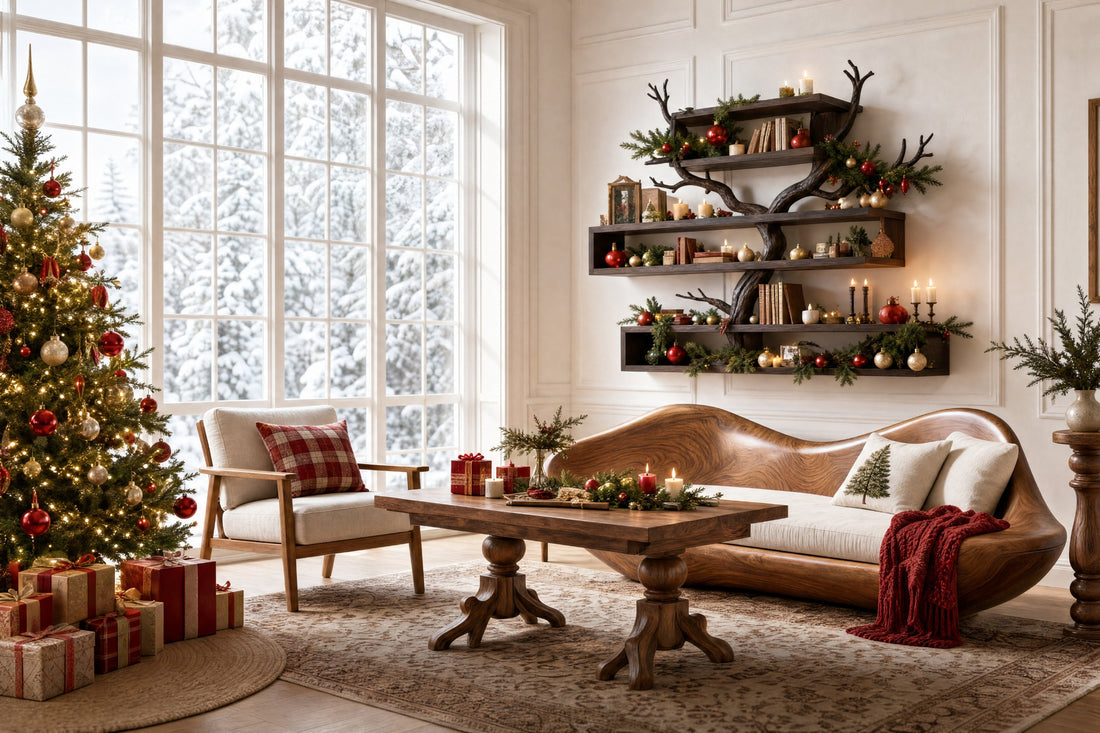
Staggered floating shelves are one of the easiest ways to turn a blank wall into a design feature. Instead of mounting shelves in a straight, even line, you offset them at different heights - creating visual rhythm and making any room feel more intentional. If you're still deciding on shelf type, material, or size before diving into layout, our complete floating shelves guide covers everything from types to installation. This article focuses specifically on one popular layout style: staggering. For the hands-on installation steps once you've picked your layout see our how to mount floating shelves — step-by-step guide guide.
Here's how to plan, arrange, and style staggered floating shelves for every room in your home.
What Are Staggered Floating Shelves?
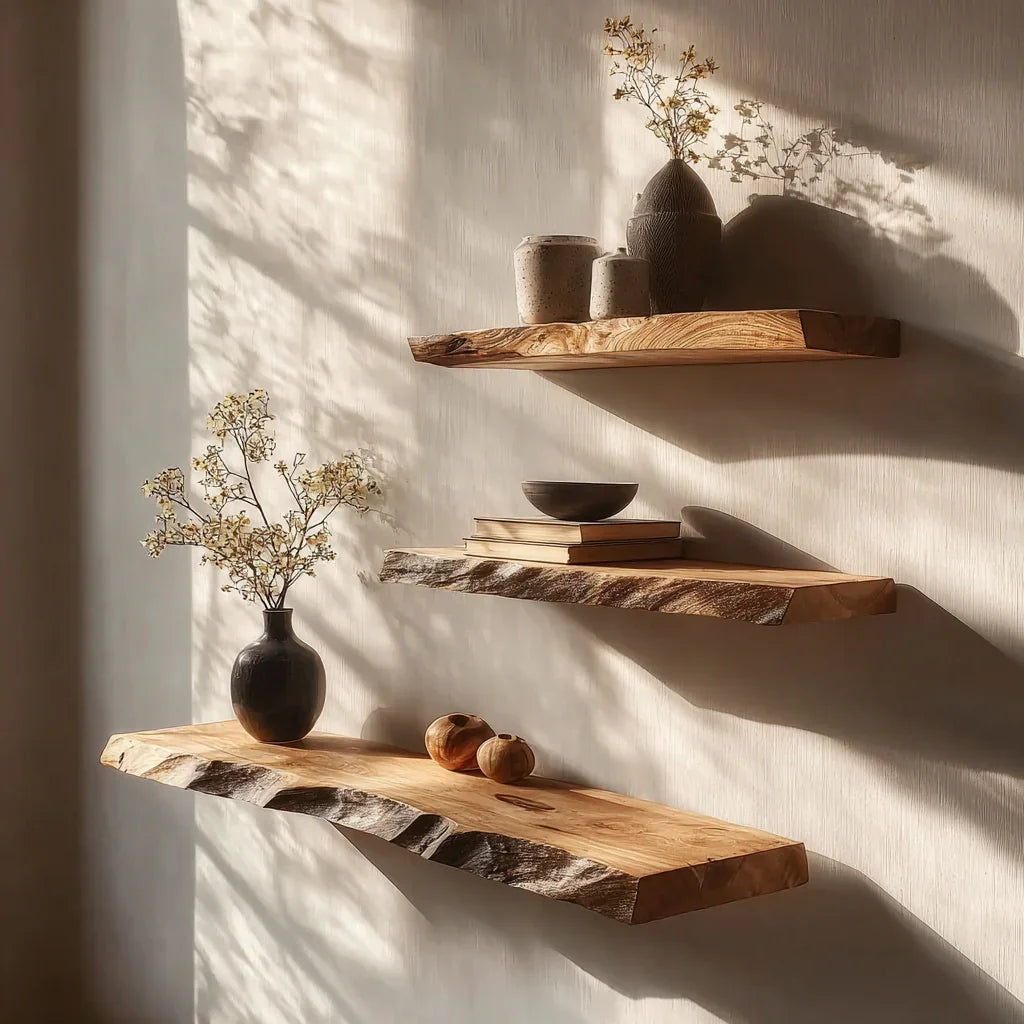
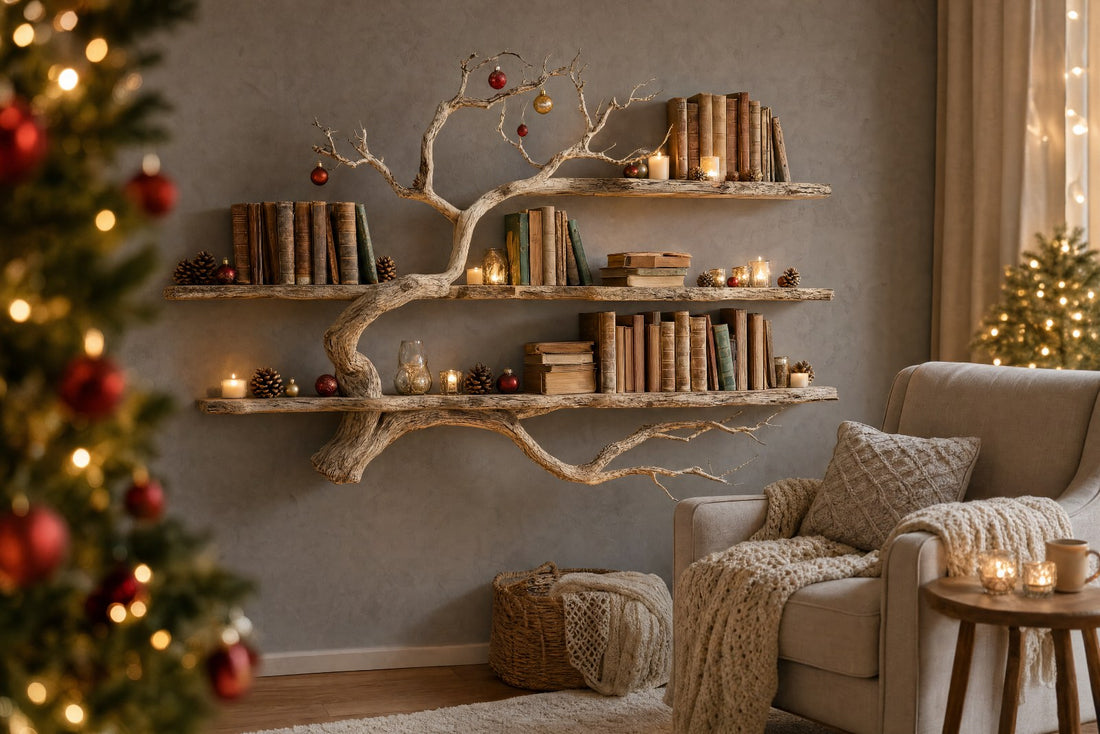
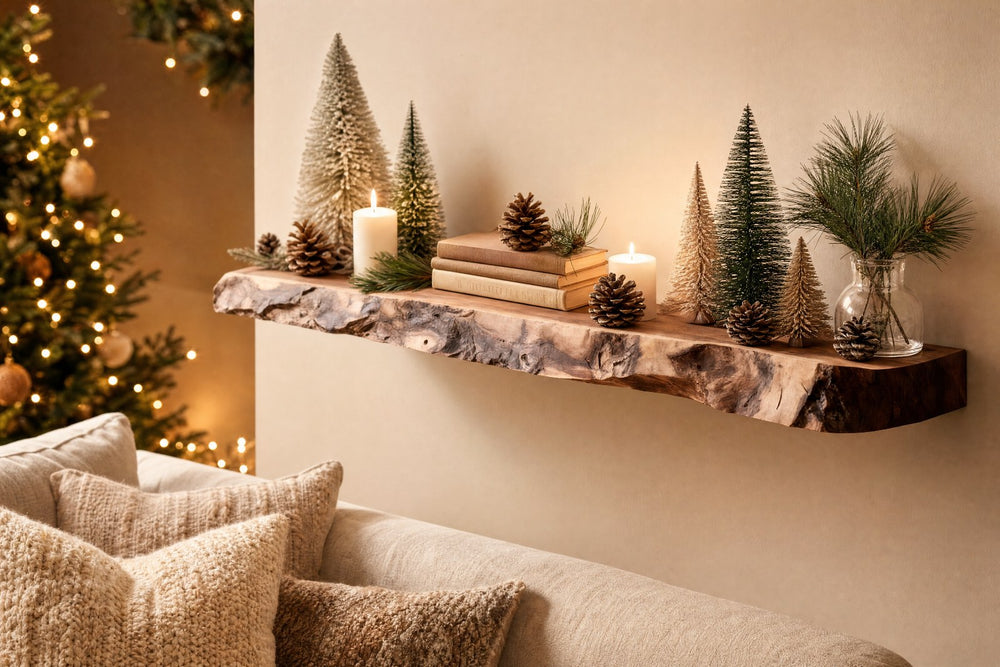
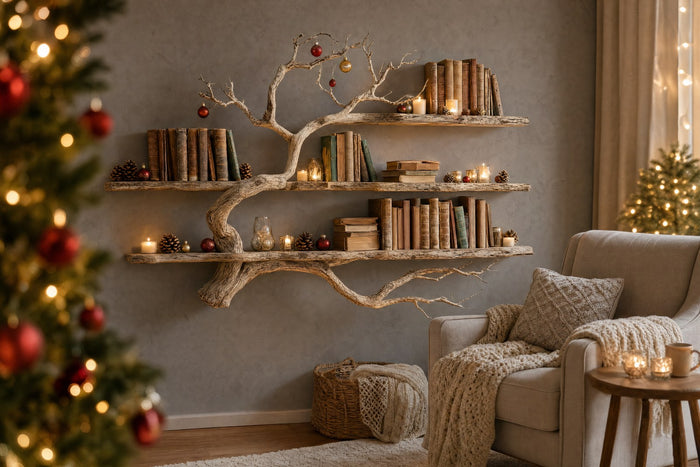
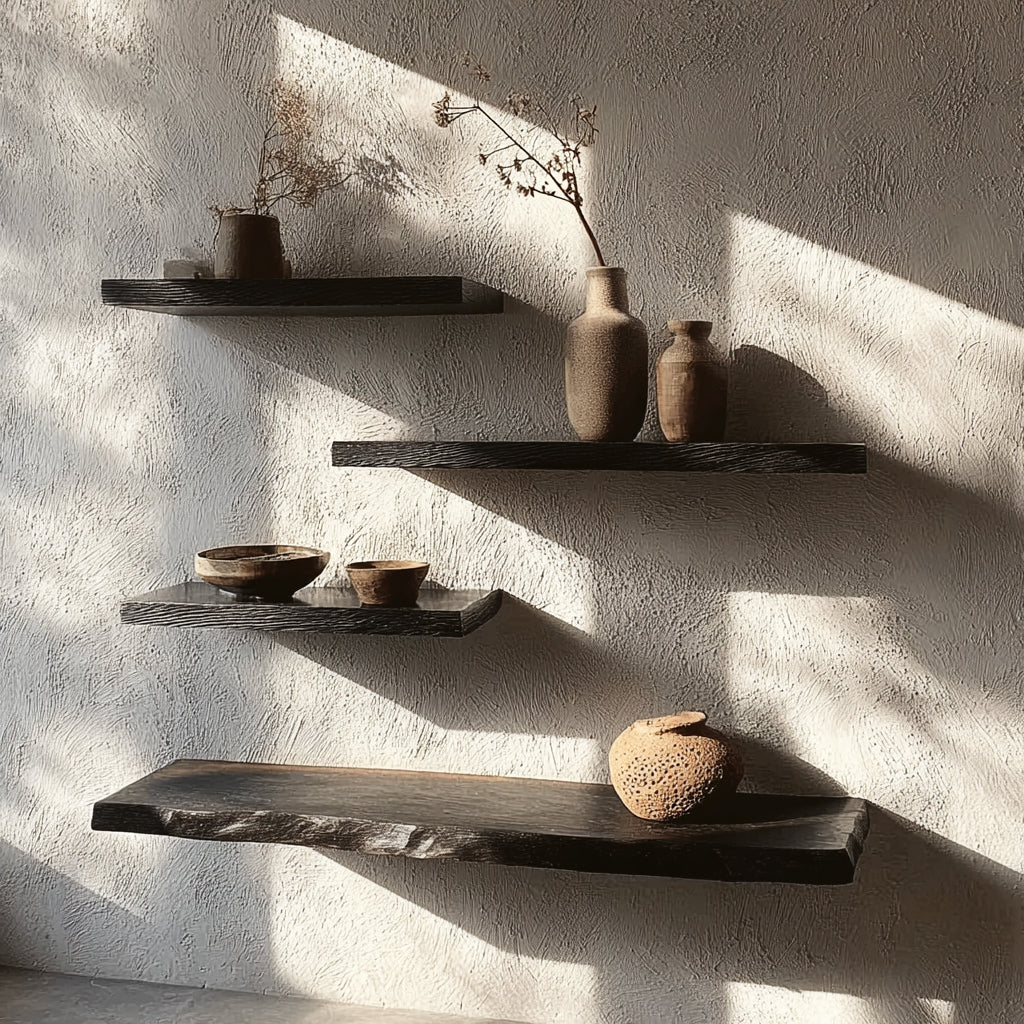
Staggered floating shelves are wall-mounted shelves installed at alternating heights rather than in a uniform row. The "stagger" creates a zigzag or cascading effect that adds depth and visual interest to your wall.
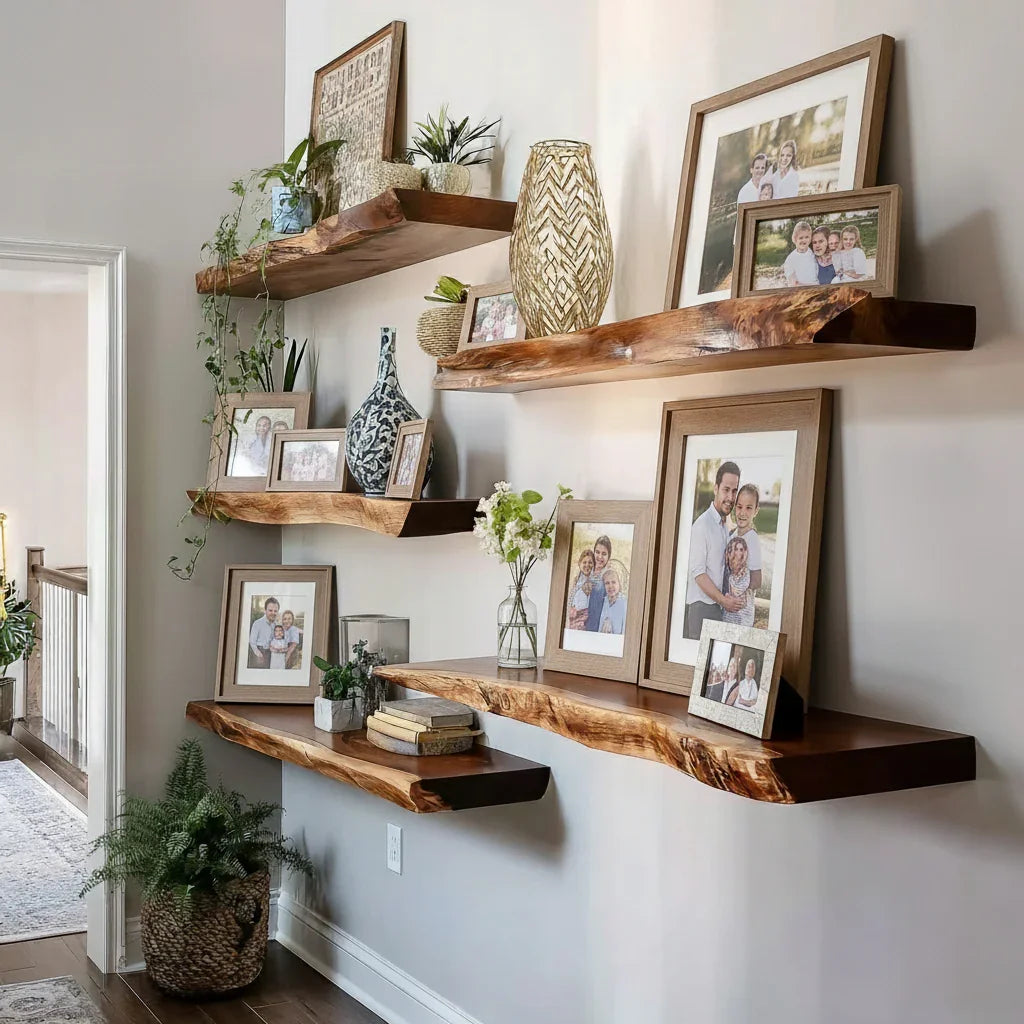
Unlike symmetrical layouts, staggered shelves feel more organic and relaxed - they work especially well with natural wood floating shelves where each piece has its own character.
How to Stagger Floating Shelves: The Basic Rules
There's no single "right" way to stagger shelves, but these guidelines keep your layout balanced:
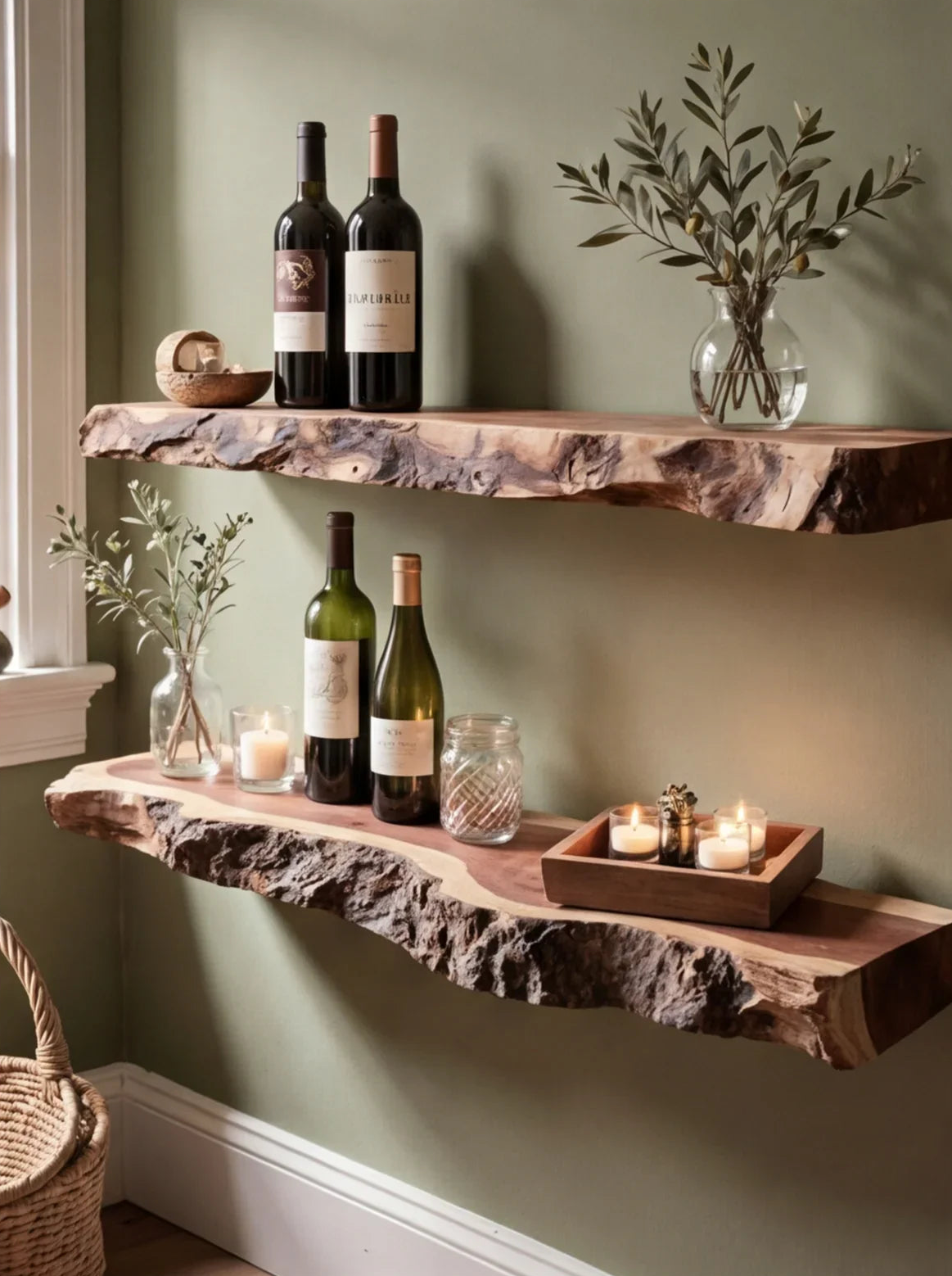
- Vertical spacing: Keep 8-12 inches between shelf levels. Less than 8 feels cramped; more than 12 looks disconnected.
- Horizontal offset: Overlap shelves by 25-50% of their length. Full offset (no overlap) looks intentional; slight overlap feels more cohesive.
- Odd numbers: Groups of 3 or 5 shelves look more natural than 2 or 4. Three staggered shelves is the most popular layout.
- Eye-level anchor: Place the middle shelf at eye level (57-60 inches from floor). Arrange others above and below.


3 Staggered Floating Shelves: The Most Popular Layout
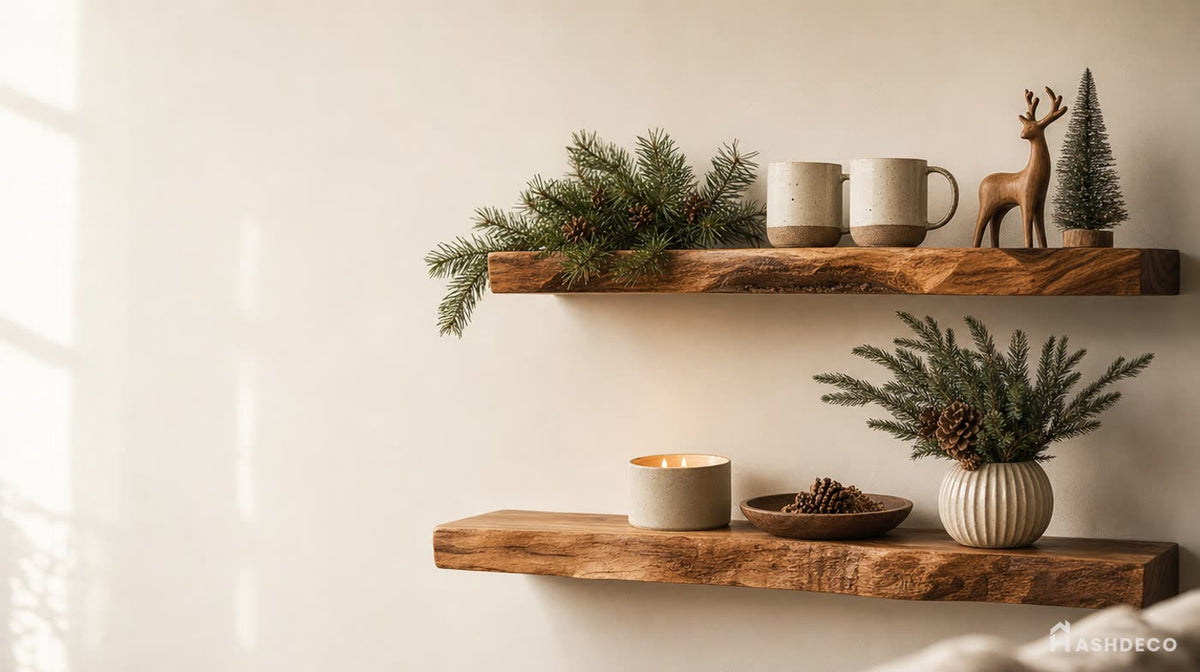
Three shelves is the sweet spot - enough to create visual impact without overwhelming the wall. Here are three proven arrangements:
Layout 1: Classic Zigzag
Mount the middle shelf centered, top shelf offset left, bottom shelf offset right (or vice versa). This creates a clean diagonal line that guides the eye.
- Best for: Living rooms, hallways, above sofas
- Spacing: 10 inches vertical, 6-8 inches horizontal offset
- Shelf size: All same length (24 inches works well)
Layout 2: Ascending Steps
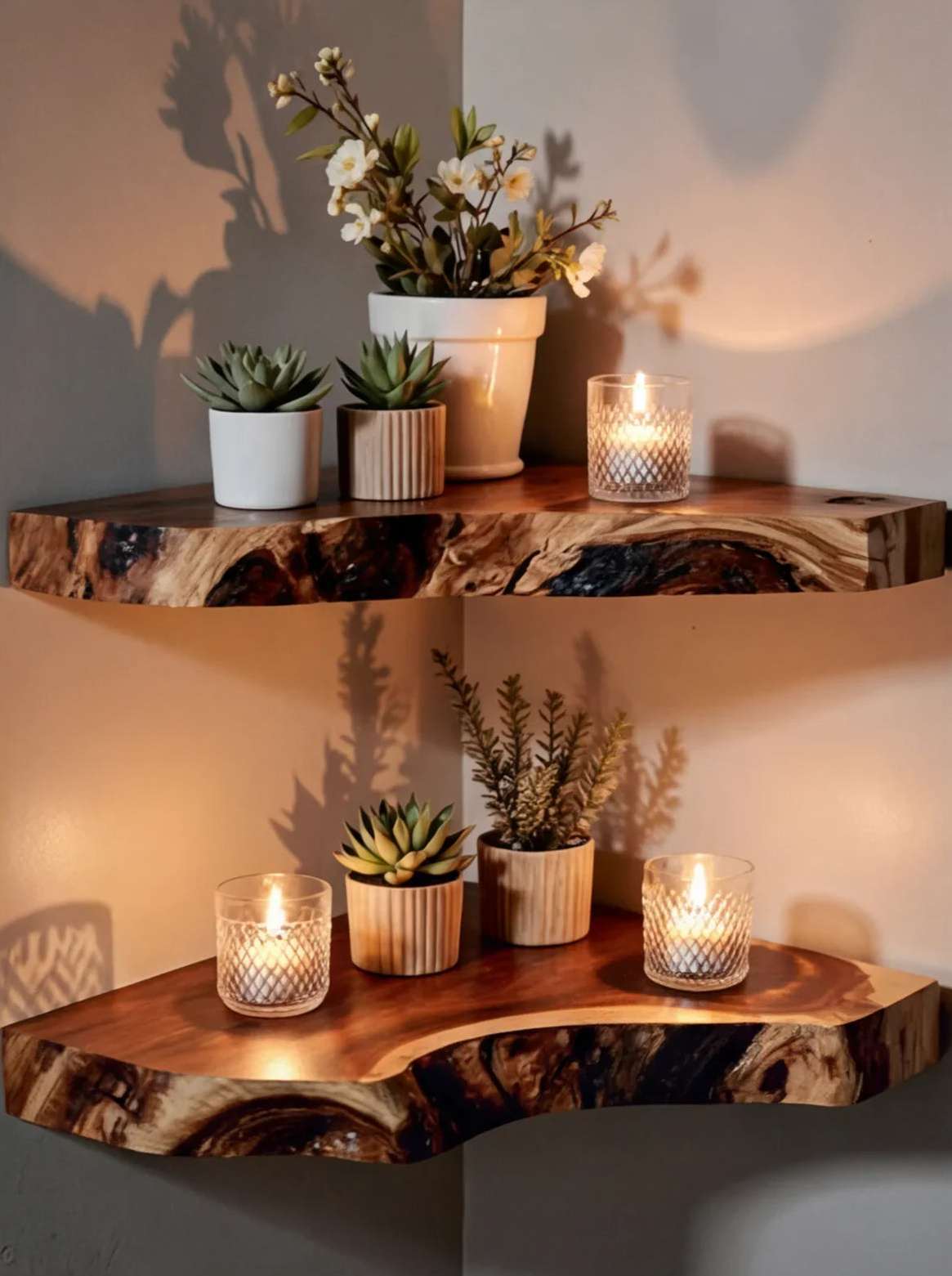
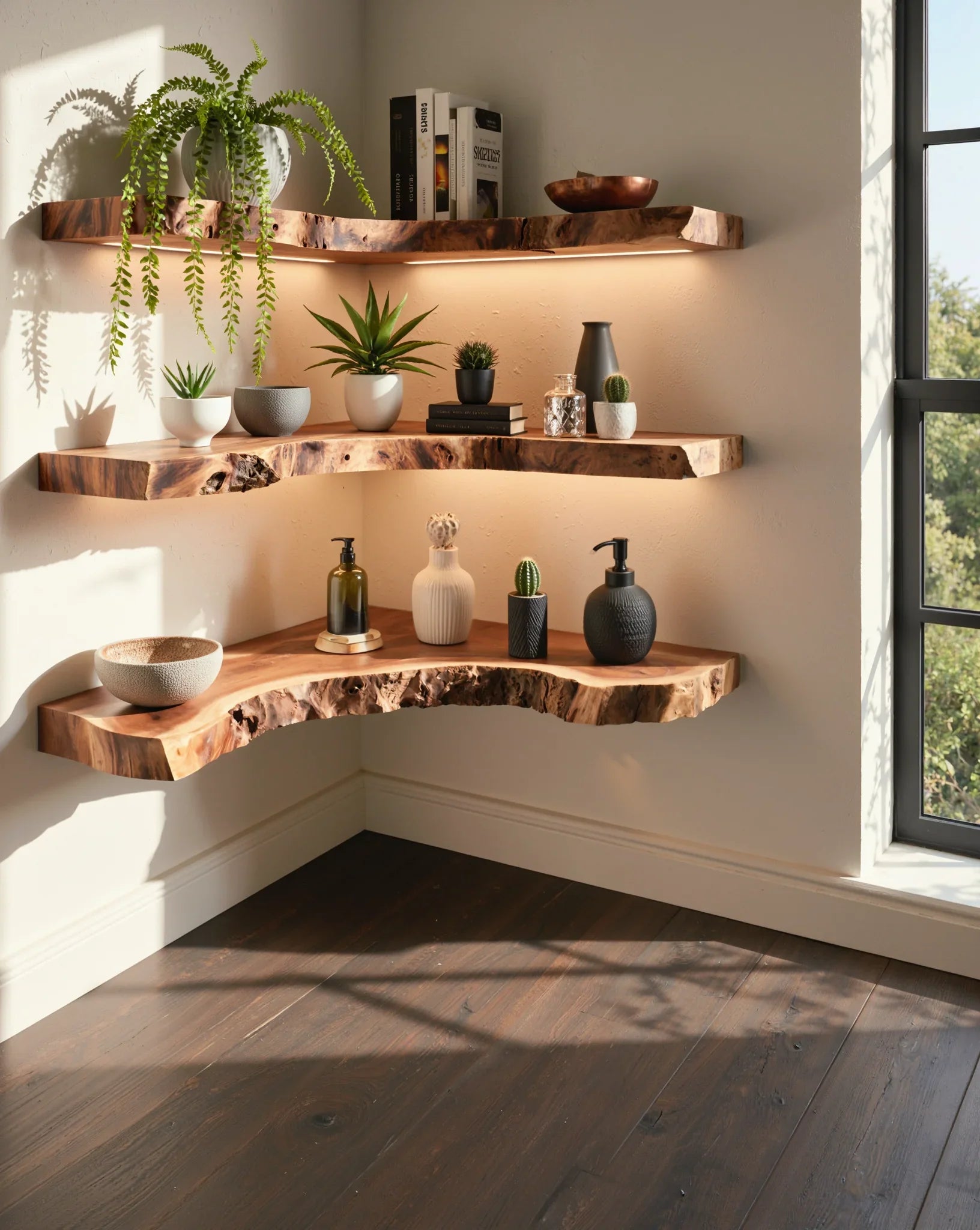
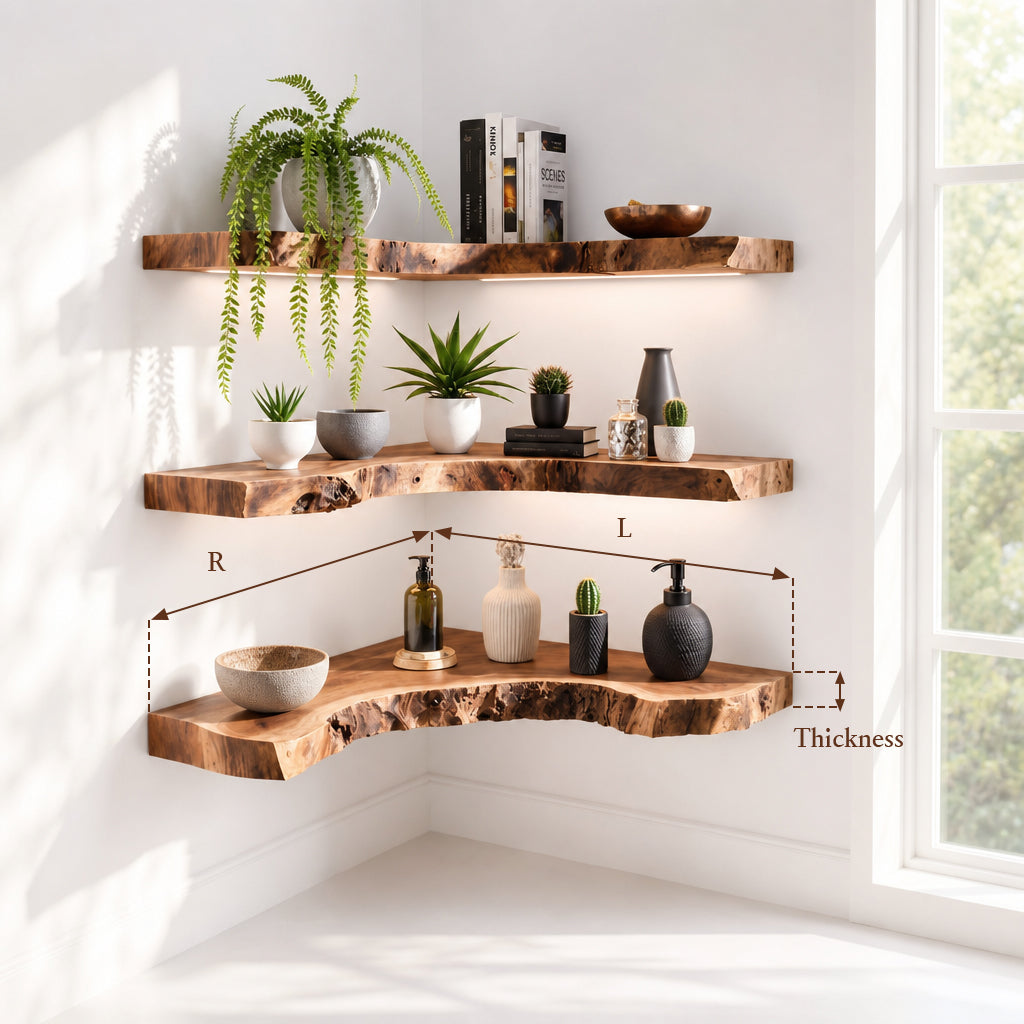
Mount shelves like a staircase - each one higher and further to the right. This works beautifully in corners or along staircases.
- Best for: Staircase walls, corners, narrow spaces
- Spacing: 8-10 inches vertical, 4-6 inches horizontal
- Shelf size: Can vary - longest at bottom, shortest at top for a tapered effect
Layout 3: Clustered Asymmetry
Group two shelves close together on one side, with the third shelf offset on the opposite side at a different height. This creates a modern, gallery-like feel.
- Best for: Bedrooms, home offices, modern interiors
- Spacing: 6 inches between the pair, 12+ inches to the third
- Shelf size: Mix lengths - one long (36 inch) and two short (18-24 inch)
Staggered Floating Shelves by Room
Living Room
Above the sofa is the most common spot for staggered shelves. Keep the bottom shelf at least 12 inches above the sofa back to avoid hitting your head.
- Use 3-5 shelves in a zigzag pattern
- Mix books, plants, and small frames
- Stick to a consistent wood tone that matches your furniture
- Our solid wood floating shelves come in natural teak and walnut finishes that pair well with most living room styles
Bedroom
Staggered shelves above the bed replace the need for a headboard or large wall art. Mount the lowest shelf at least 18 inches above your pillows. If you're weighing your options, our guide on floating shelf above bed: ideas & height guide breaks it down further.
- Use 2-3 shelves to keep it minimal and calming
- Display books you're reading, a small plant, and a candle
- Avoid heavy items directly above where you sleep
- Secure all shelves with stud-mounted brackets for safety
Bathroom
Staggered floating shelves in the bathroom solve the eternal storage problem - towels, toiletries, and plants all have a home without taking up floor space.
- Use 2-3 narrow shelves (8-12 inch depth)
- Mount above the toilet or beside the vanity
- Choose moisture-resistant wood with natural oil finish
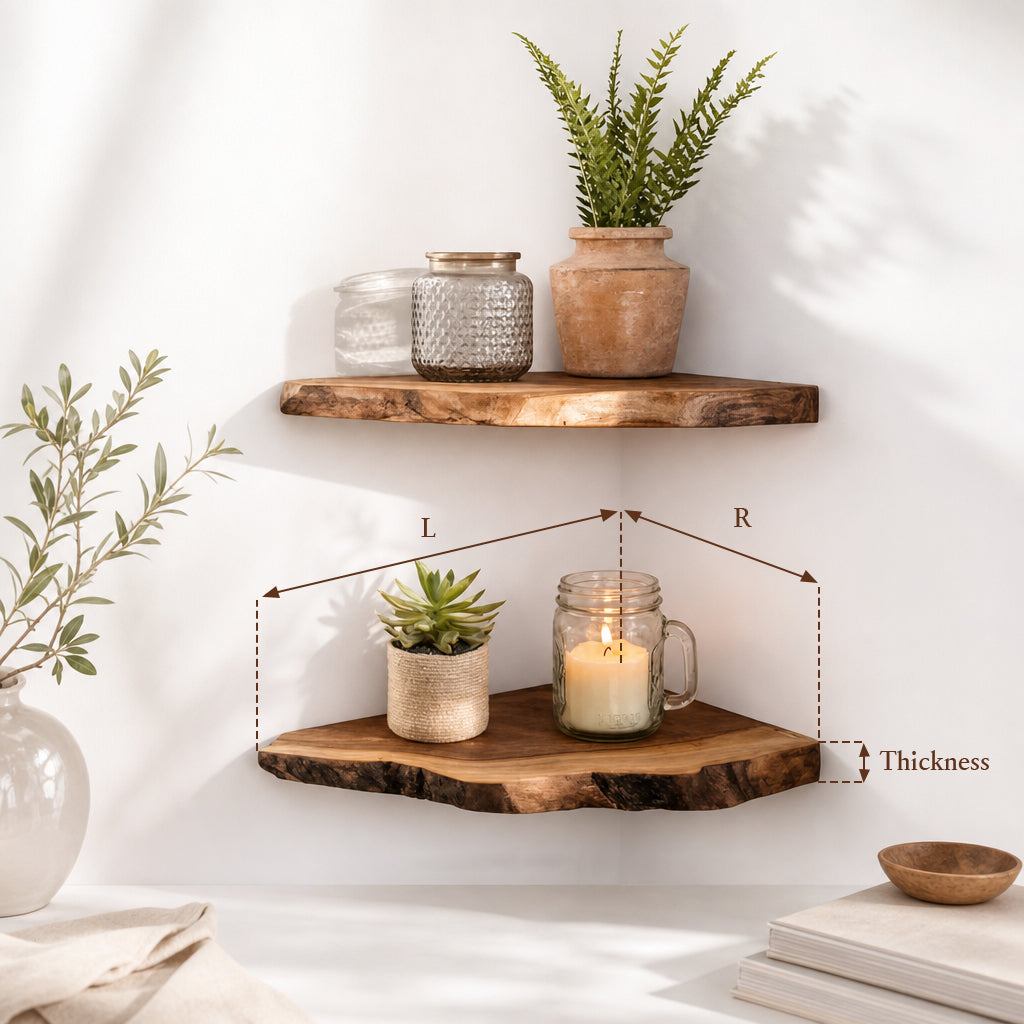
- Our corner floating shelves work especially well in tight bathroom corners
Kitchen
Staggered open shelves are replacing upper cabinets in modern kitchens. They make the kitchen feel larger and give you quick access to everyday dishes.
- Use 2-4 shelves beside or above the counter
- Keep frequently used items on the lowest shelf
- Style with matching containers, cookbooks, and a few plants
- Minimum 18 inches above the countertop for the bottom shelf
If your kitchen opens directly onto a dining area, it's worth sizing both spaces together rather than one at a time - our dining table size guide covers standard dining table dimensions by room size and seat count, so the shelving and the table end up in proportion with each other instead of competing for the same wall.
Don't miss
These pieces qualify for 10% off orders over $2,000. Applied automatically at checkout.
2 Staggered Floating Shelves: When Less Is More
Two staggered shelves work best in small spaces or as a subtle accent. Mount them 8-10 inches apart vertically with a 4-6 inch horizontal offset. This creates just enough visual interest without dominating the wall.
Best spots for 2 shelves:
- Beside a bathroom mirror
- In a small entryway
- Flanking a window
- Above a nightstand
5 Staggered Floating Shelves: Making a Statement
Five shelves creates a full gallery wall effect. The key is consistency - use the same shelf style and width throughout, and let the stagger pattern do the visual work.
- Alternate left-right-left-right-left for a balanced zigzag
- Or create a cascading waterfall effect (each shelf lower and further to one side)
- Keep 8-10 inches between each level
- Use a level and measuring tape - with 5 shelves, even small errors become noticeable
How to Style Staggered Floating Shelves
The arrangement matters, but what you PUT on the shelves matters just as much. Follow the 3-object rule:
- Something tall - a plant, vase, or framed photo
- Something short - a candle, small figurine, or stack of 2-3 books
- Something textured - a woven basket, ceramic pot, or natural wood object
Other styling tips:
- Don't overcrowd - leave 30-40% of shelf space empty
- Vary heights within each shelf for micro-staggering
- Use a consistent color palette (neutrals + one accent color)
- Lean frames against the wall instead of hanging them - it looks more casual
- Add a small trailing plant (pothos or string of pearls) for organic movement
Staggered vs Symmetrical Floating Shelves
| Feature | Staggered | Symmetrical |
|---|---|---|
| Look | Relaxed, organic, modern | Formal, balanced, traditional |
| Best for | Living rooms, bedrooms, creative spaces | Offices, kitchens, libraries |
| Skill level | Moderate - needs planning | Easy - just level and even spacing |
| Visual impact | High - draws the eye | Moderate - blends in |
| Flexibility | Easy to add or remove shelves | Gaps are more noticeable |
How to Hang Staggered Floating Shelves
- Plan on paper first. Cut paper templates the size of your shelves and tape them to the wall. Step back and adjust before drilling.
- Find your studs. Use a stud finder and mark locations. Floating shelves hold more weight when anchored into studs.
- Start with the middle shelf. Mount it at eye level (57-60 inches), then work outward.
- Use a level for every shelf. Even 1-2 degrees off looks noticeably crooked.
- Check spacing with a measuring tape between each shelf before drilling the next one.
Frequently Asked Questions
How far apart should staggered floating shelves be?
Keep 8-12 inches of vertical space between staggered floating shelves. For the horizontal offset, overlap shelves by 25-50% of their length. This creates a balanced zigzag without looking random or disconnected. For a deeper dive, see our article on corner floating shelf ideas that actually look good.
How do you arrange 3 floating shelves on a wall?
The most popular arrangement is a zigzag: middle shelf centered at eye level, top shelf offset to one side, bottom shelf offset to the other. Keep 10 inches of vertical space and 6-8 inches of horizontal offset between each shelf.
Can you stagger floating shelves of different sizes?
Yes - mixing shelf lengths adds visual interest. A common approach is to use the longest shelf in the middle or bottom position, with shorter shelves above. Just keep the depth consistent so items don't stick out unevenly.
How many staggered floating shelves should I use?
Three is the most versatile number - it works in almost any room and creates a clear visual pattern. Use 2 for small spaces, 5 for a bold statement wall. Odd numbers generally look more natural than even.
Do staggered floating shelves need to go into studs?
For best results, yes. Shelves mounted into studs hold significantly more weight (50-75 lbs per shelf) than drywall anchors alone (15-25 lbs). If you can't hit studs, use heavy-duty toggle bolts and keep shelf loads light - see our guide to mounting corner floating shelves on drywall for the exact hardware and steps.
Conclusion
Staggered floating shelves turn any blank wall into a functional display that feels designed, not cluttered. Start with 3 shelves in a zigzag, style with the 3-object rule, and anchor into studs for safety.
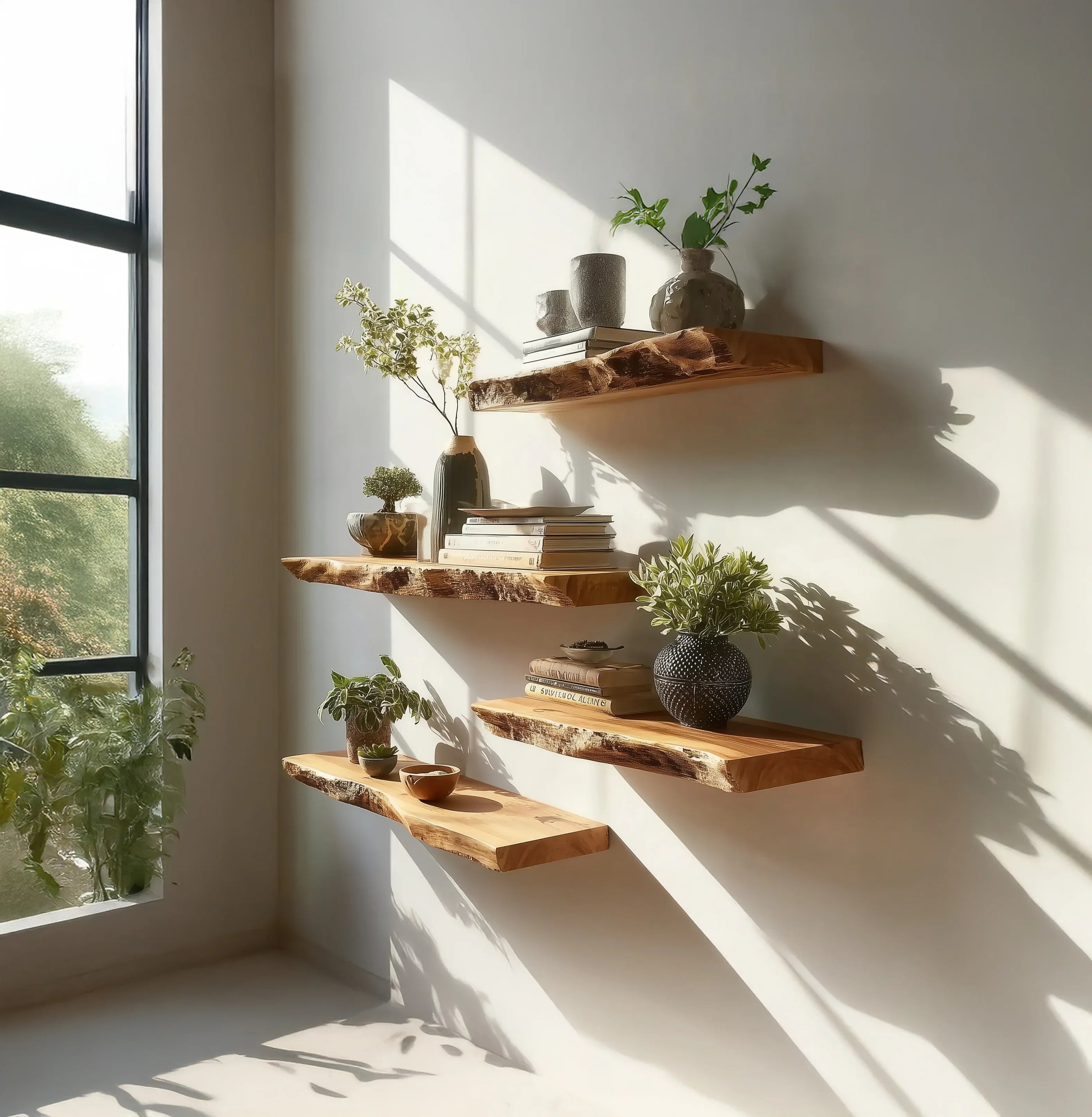
Looking for shelves with character? Our handcrafted solid wood floating shelves are carved from natural teak and walnut by Vietnamese artisans - each piece is unique. Free shipping and 30-day returns.