




















Quick view
- 1. Wall-Mounted Vinyl Record Storage Shelves
- 2. Compact Record Player Stands Under 30 Inches Wide
- 3. Vertical Record Crates and Bins
- 4. Floating Turntable Shelf with Record Display Below
- 5. Under-Bed Record Storage
- Small footprint. Full-size storage.
- 6. Ladder Shelving for Records
- 7. Corner Record Player Setup
- 8. Multi-Purpose Furniture with Hidden Record Storage
- 9. Pegboard Record Display Wall
- 10. Stacked Cube Modular Systems
- Frequently Asked Questions
Shop this guide
Handcrafted Floating Shelves, made to order in solid wood.
 Sculptural Overlapping Circular Solid Wood Wall Shelf with Multi Tier Display
From $1,354.00
Sculptural Overlapping Circular Solid Wood Wall Shelf with Multi Tier Display
From $1,354.00
 Mountain Landscape Relief Solid Wood Floating Shelf Live Edge Display Ledge
From $1,154.00
Mountain Landscape Relief Solid Wood Floating Shelf Live Edge Display Ledge
From $1,154.00
 Enchanted Forest Circular Wall Shelf - Round Carved Timber Mushroom Portal
From $1,023.00
Enchanted Forest Circular Wall Shelf - Round Carved Timber Mushroom Portal
From $1,023.00
 Cottagecore Arched Wood Wall Niche - Hand-Carved Fairy Mushroom Alcove Shelf
From $1,356.00
Cottagecore Arched Wood Wall Niche - Hand-Carved Fairy Mushroom Alcove Shelf
From $1,356.00
 Sculptural Hand-Carved Mushroom Solid Wood Corner Floating Shelf & Biomorphic Wall Display Ledge
From $345.00
Sculptural Hand-Carved Mushroom Solid Wood Corner Floating Shelf & Biomorphic Wall Display Ledge
From $345.00
 Sculptural Hand-Carved Mushroom Solid Wood Floating Shelves & Biomorphic Wall Display Ledges
From $345.00
Sculptural Hand-Carved Mushroom Solid Wood Floating Shelves & Biomorphic Wall Display Ledges
From $345.00
Living in a small apartment doesn't mean giving up your vinyl habit. Smart vinyl record storage is about using vertical space, choosing furniture that multitasks, and thinking beyond the standard shelf. Whether you have 50 LPs or 500, there's a solution that fits your square footage without sacrificing style or accessibility. If you want the short version first, our record deck stand buying guide covers the essentials.

We've curated 10 proven vinyl record storage ideas specifically for tight spaces - from wall-mounted displays to compact record player stands that pack serious capacity into a small footprint. Each idea includes real dimensions so you can measure before you commit. We cover this in more detail in our best record player stands for vinyl lovers (2026 guide) guide.
1. Wall-Mounted Vinyl Record Storage Shelves
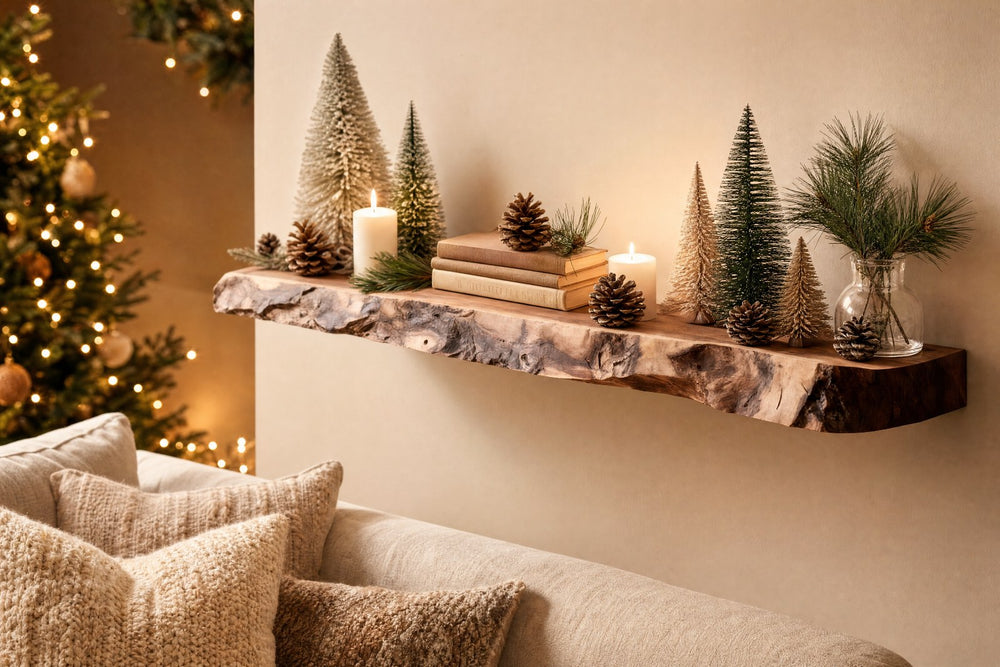
Need help with the install? Our floating shelf mounting guide covers stud-finding, weight limits, and step-by-step instructions. Wall-mounted shelves are the single best vinyl record storage idea for small spaces because they use zero floor space. A vinyl record storage shelf mounted 40-48 inches from the floor puts your collection at perfect browsing height while leaving the entire floor free for furniture.
Standard wall-mounted record shelves measure 24-36 inches wide and 6-8 inches deep. Most hold 30-80 LPs per shelf, depending on length. Mount two or three in a vertical stack and you've stored 100-240 records using only 2 square feet of wall.
The key is stud-mounting. Each shelf of records can weigh 15-40 pounds, and drywall anchors alone aren't rated for sustained loads. Use #10 or #12 lag screws into at least one stud per shelf. Ashdeco's floating shelves are designed with concealed steel mounting brackets that distribute weight evenly across two studs.
Wall-mounted vinyl record storage shelves use zero floor space and hold 30-80 LPs per shelf. Mount them 40-48 inches from the floor for comfortable browsing. Always secure shelves into wall studs with lag screws - each loaded shelf can weigh 15-40 pounds, exceeding drywall anchor ratings.
2. Compact Record Player Stands Under 30 Inches Wide
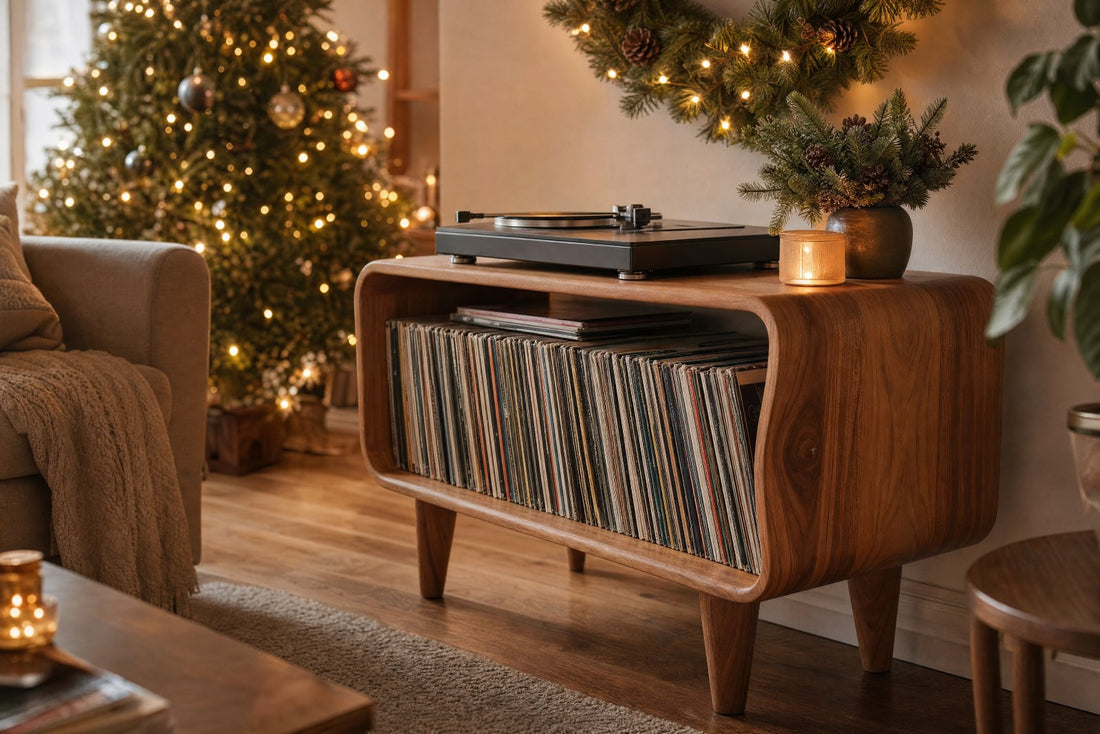
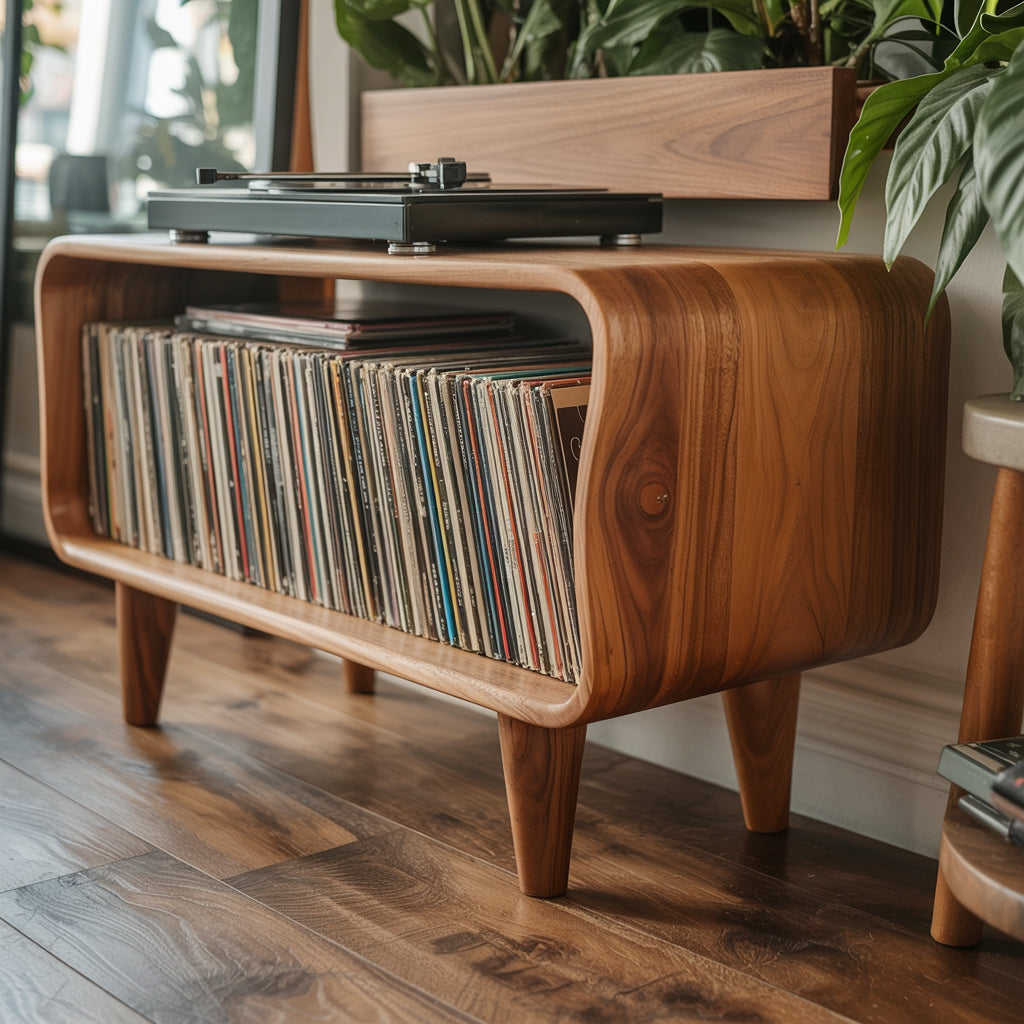
We reviewed the top options in our best record player stands for 2026 guide. A compact record player stand gives you both a turntable platform and storage in under 30 inches of width - roughly the same as a nightstand. These space-efficient designs typically stand 26-30 inches tall and hold 80-150 LPs across two or three shelves. For a deeper dive, see our article on vintage record player cabinet - complete style guide, or if a period-specific look is more your speed, our retro 90s-style record player cabinet guide.

Look for stands with a minimum depth of 14 inches (to fit sleeved LPs) and a top surface at least 18 × 14 inches (to accommodate most turntables). Ashdeco's handcrafted record player stands include compact models designed specifically for apartment living, built from solid wood by Vietnamese artisans for maximum durability in a small footprint. We've written a full breakdown in our DIY record player stand vs handcrafted: worth the splurge? post.
Compact record player stands under 30 inches wide fit into apartment spaces while holding 80-150 LPs across two or three shelves. Choose models at least 14 inches deep for sleeved records and 18 × 14 inches on top for your turntable. Solid wood construction ensures stability despite the smaller size.


3. Vertical Record Crates and Bins
Vertical storage bins let you flip through records like in a record store - front to back, spines facing up. These bins sit on the floor, on a shelf, or on top of a credenza, and each one holds 40-70 LPs in roughly 14 × 14 × 14 inches of space.
The best crates use solid wood or heavy-gauge wire to handle the 20-35 pounds of vinyl they'll contain. Avoid lightweight pine crates - they split at the joints within a year under the weight. Hardwood crates made from walnut, oak, or acacia hold up indefinitely. Our wood turntable stand guide covers which species and joinery hold up best under sustained load.
Stack two or three crates vertically against a wall and you've created a 14-inch-wide storage column holding 120-210 records. That's serious capacity in a footprint smaller than a dinner plate.
Vertical record crates and bins hold 40-70 LPs each in roughly 14 × 14 × 14 inches. Stack them vertically against a wall for a storage column only 14 inches wide. Use solid hardwood or heavy-gauge wire crates - lightweight pine splits under the 20-35 pounds of records within a year.
4. Floating Turntable Shelf with Record Display Below
This is the Instagram-worthy setup: a floating shelf for your turntable mounted at waist height, with two to three floating shelves below displaying your favorite album covers face-out. It's part listening station, part art gallery. If you're planning the full setup rather than just the shelf, our guide to building a vinyl listening station at home covers speaker placement and seating distance too.
The turntable shelf needs to be at least 18 inches deep and rated for 30+ pounds. Display shelves below can be shallower - 4 to 5 inches deep - since they're holding records face-forward for visual display, not storage. Each display shelf shows 5-8 album covers.
This setup stores fewer records (15-25 on display shelves) but creates a stunning focal point. Pair it with a floor-level storage crate or compact stand for the rest of your collection.
A floating turntable shelf with record display shelves below creates a wall-mounted listening station and art gallery. The turntable shelf needs 18+ inches of depth and 30+ pound capacity. Display shelves below are 4-5 inches deep, showing 5-8 album covers face-out for a visual focal point.
Don't miss
These pieces qualify for 10% off orders over $2,000. Applied automatically at checkout.
5. Under-Bed Record Storage
Under-bed storage is the hidden champion of small-space vinyl solutions. Standard bed frames offer 6-8 inches of clearance - enough for 12-inch LPs lying on their sides in low-profile bins. A single under-bed bin measuring 30 × 14 × 6 inches holds approximately 70 records.
The drawback is access. Under-bed records are out of sight and out of rotation. Use this space for records you don't play often - seasonal albums, duplicates, or sentimental collections you're not ready to sell. Keep your active rotation on a shelf or stand where you can browse.
Use bins with wheels or sliding trays for easier access. Line bins with acid-free tissue to prevent moisture buildup between the records and the bin floor.
Under-bed storage works for vinyl collections using the 6-8 inches of clearance under standard bed frames. A bin measuring 30 × 14 × 6 inches holds approximately 70 records. Reserve under-bed space for inactive records - seasonal albums or duplicates - and keep your active rotation in accessible shelf storage.
6. Ladder Shelving for Records
A-frame ladder shelves lean against the wall and taper from wide at the bottom to narrow at the top, creating an attractive pyramid shape. The wider bottom shelves hold records perfectly - a 24-inch-wide bottom tier stores 60-80 LPs.
Ladder shelves typically occupy 24-30 inches of floor width and 12-16 inches of depth, making them ideal for narrow walls, hallways, and corners. The upper tiers (too narrow for records) hold your turntable, amplifier, or decorative items.
Choose a ladder shelf with a depth of at least 13 inches on the bottom two tiers. According to Wikipedia's article on phonograph records, the standard 12-inch LP format has been the dominant vinyl format since the 1950s - so virtually any record you own will fit these dimensions.
Ladder shelves lean against the wall and use only 24-30 inches of floor width and 12-16 inches of depth. The wider bottom shelves hold 60-80 LPs, while upper tiers hold your turntable or amplifier. Choose models with at least 13 inches of depth on the bottom tiers to accommodate standard 12-inch LPs.
7. Corner Record Player Setup
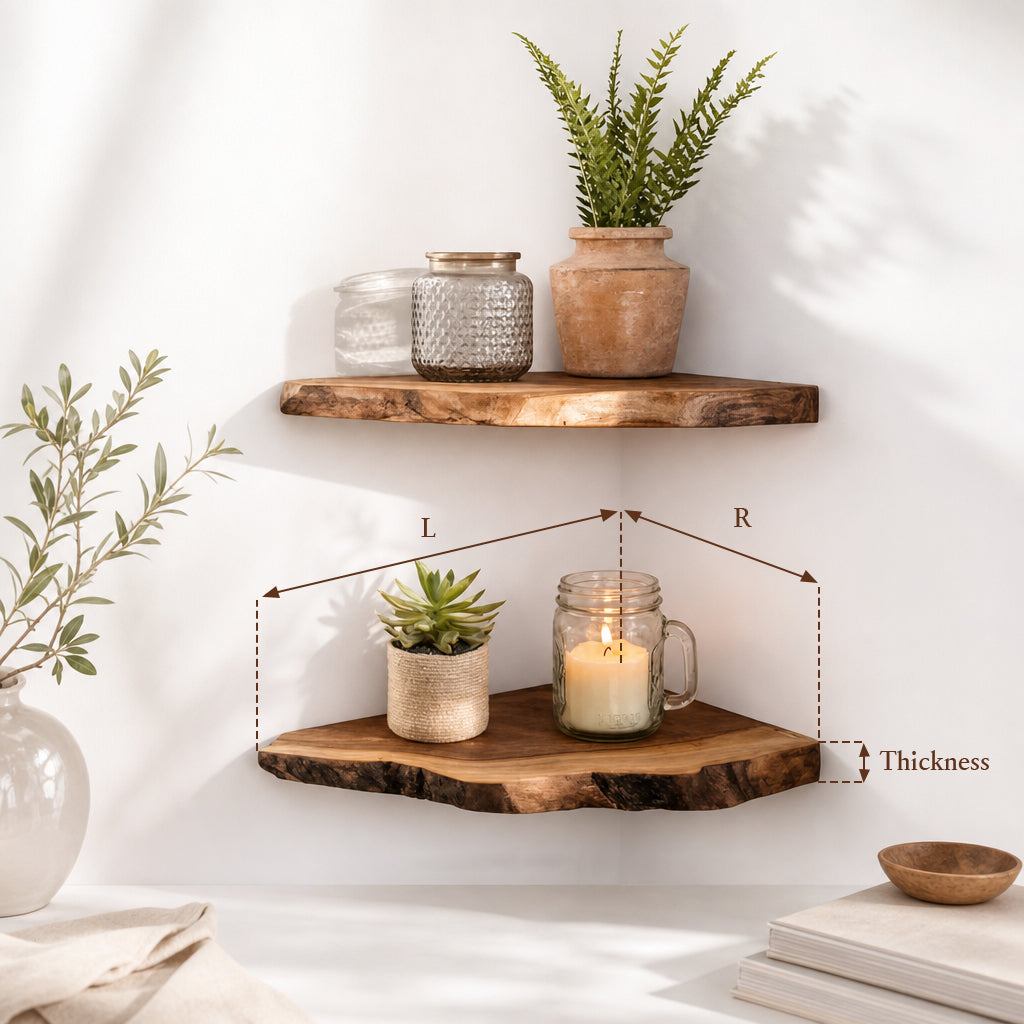
Corners are the most underutilized space in any room. A corner-mounted shelf or triangular stand turns dead space into a dedicated listening station. Corner turntable platforms measure roughly 20 × 20 inches - enough for any standard turntable - and tuck into a 90-degree angle without protruding into the room.

Place a compact record player stand diagonally across a corner for a similar effect. A 24-inch-wide stand positioned at 45 degrees projects only 17 inches from each wall - far less intrusive than placing it flat against one wall. For clean, minimal corner setups specifically, see our modern record player stand ideas guide.
Corner setups turn dead space into listening stations. A turntable platform measuring 20 × 20 inches fits perfectly in a 90-degree corner. Alternatively, position a 24-inch-wide record player stand diagonally across a corner - it projects only 17 inches from each wall, minimizing room intrusion.
8. Multi-Purpose Furniture with Hidden Record Storage
Some furniture pieces pull double duty. Record storage ottomans, lift-top coffee tables, and bench seats with internal compartments hide 50-100 LPs inside everyday furniture. You'd never know the records were there until you lift the lid. If you're deciding between this kind of enclosed piece and an open shelf setup, our wood cabinet vs open stand comparison breaks down the trade-offs.
The best dual-purpose pieces use a felt or padded lining to protect record jackets from scratching against the interior. Check that internal dimensions accommodate 12.5-inch records without forcing them in at an angle. A minimum internal width of 13 inches is essential.
This approach works brilliantly in studio apartments where every piece of furniture needs to justify its floor space.
Multi-purpose furniture like storage ottomans, lift-top coffee tables, and bench seats hide 50-100 vinyl records inside everyday furniture. Check that internal dimensions are at least 13 inches to fit 12-inch LPs. Felt or padded lining protects record jackets from interior scratching.
9. Pegboard Record Display Wall
Pegboard mounted to a wall creates a customizable grid system for displaying records face-out. Standard ¼-inch pegboard accepts hooks and small shelf brackets that hold individual records at any position on the grid.
A 4 × 4-foot pegboard panel displays 12-16 records face-out in a gallery arrangement. The records themselves are only 0.14 inches thick, so the entire display projects less than 1 inch from the wall. Swap records whenever you want to refresh the display.
This isn't bulk storage - it's curated display. Use it for your all-time favorites or current heavy rotation while keeping the rest of your collection in a tree bookshelf or compact stand nearby.
Pegboard display walls use a 4 × 4-foot panel to show 12-16 records face-out in a gallery arrangement. The display projects less than 1 inch from the wall. Use standard ¼-inch pegboard with hooks or small shelf brackets, and swap records to refresh the display whenever you like.
10. Stacked Cube Modular Systems
Modular cube systems let you build exactly the storage you need and expand later. Each cube - typically 13 × 13 × 13 inches - holds 35-40 LPs. Stack two cubes vertically for a nightstand-sized unit holding 70-80 records. Add cubes as your collection grows. Not sure how much total capacity you'll actually need? Our guide to sizing your storage to your collection walks through the math.
The advantage over fixed shelving is flexibility. Moving to a bigger place? Add more cubes. Downsizing? Remove a row. The modular approach means your storage grows with your collection instead of forcing you to replace the entire unit.
Choose cubes made from solid wood or thick (¾-inch minimum) MDF. Thinner materials sag at the center when loaded with records. Secure stacked cubes to each other with connector hardware and to the wall with anti-tip straps - a fully loaded 2×4 cube unit weighs over 200 pounds.
Modular cube systems use 13 × 13 × 13-inch cubes, each holding 35-40 LPs. Stack and configure them to fit any space, then add cubes as your collection grows. Use solid wood or ¾-inch minimum MDF to prevent shelf sag, and secure stacked units to the wall with anti-tip straps.
Frequently Asked Questions
What is the best way to store vinyl records in a small apartment?
Wall-mounted shelves and compact record player stands are the best options for small apartments. Wall-mounted solutions use zero floor space, while compact stands under 30 inches wide combine turntable support and storage in a nightstand-sized footprint. Vertical crate stacking also maximizes capacity in minimal floor space. Our record player stand with storage - buyer's guide article walks through the specifics.
How many vinyl records fit on a floating shelf?
A standard floating shelf measuring 24 inches wide holds approximately 40-50 vinyl records when stored vertically. A 36-inch shelf holds 60-75 records. Each 12-inch LP measures about 0.14 inches thick in its jacket. Ensure the shelf is at least 13 inches deep and rated for the combined weight.
Can I store vinyl records vertically without damage?
Yes - vertical storage is the recommended method for vinyl records. Vertical positioning distributes weight evenly and prevents warping. Use dividers every 20-30 records to prevent lean, and keep shelves fully packed or use bookends. Never store records at an angle, which causes gradual warping over time.
What's the most space-efficient vinyl record storage solution?
Wall-mounted shelves are the most space-efficient option, using zero floor space. Three stacked wall shelves measuring 36 inches wide can hold 180-225 LPs using only about 3 square feet of wall. Under-bed bins are the second most efficient, hiding records in otherwise unused space beneath your bed frame. Our record player stand and vinyl storage guide compares space efficiency across every configuration in more detail.
How do I prevent vinyl records from warping in storage?
Store records vertically, never flat. Keep them away from heat sources and direct sunlight - vinyl warps above 140°F. Maintain room temperature below 75°F and humidity between 45-50%. Use dividers to prevent lean, and never overpack shelves to the point where records are compressed against each other.