Quick view
Shop this guide
Handcrafted End Tables, made to order in solid wood.
 Blooming Magnolia Branch Silhouette Accent Side Table in Handcrafted Solid Wood
From $1,298.00
Blooming Magnolia Branch Silhouette Accent Side Table in Handcrafted Solid Wood
From $1,298.00
 Hand-Carved 3-Tier Flower Petal End Table | Tree Trunk Base
From $1,246.00
Hand-Carved 3-Tier Flower Petal End Table | Tree Trunk Base
From $1,246.00
 Magnolia Flower Branch End Table - Hand-Carved Solid Wood Sculptural Accent Table
From $1,876.00
Magnolia Flower Branch End Table - Hand-Carved Solid Wood Sculptural Accent Table
From $1,876.00
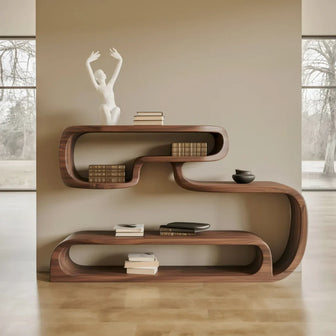
 Sculptural S-Shaped Solid Wood End Table & Multi-Tier Accent Shelf
From $1,356.00
Sculptural S-Shaped Solid Wood End Table & Multi-Tier Accent Shelf
From $1,356.00
 Sculptural Hand-Carved Solid Wood Spiral End Table & Side Table
From $1,856.00
Sculptural Hand-Carved Solid Wood Spiral End Table & Side Table
From $1,856.00
 Christmas edit
Hand-Carved Solid Wood Sphere End Table
From $1,245.00
Christmas edit
Hand-Carved Solid Wood Sphere End Table
From $1,245.00
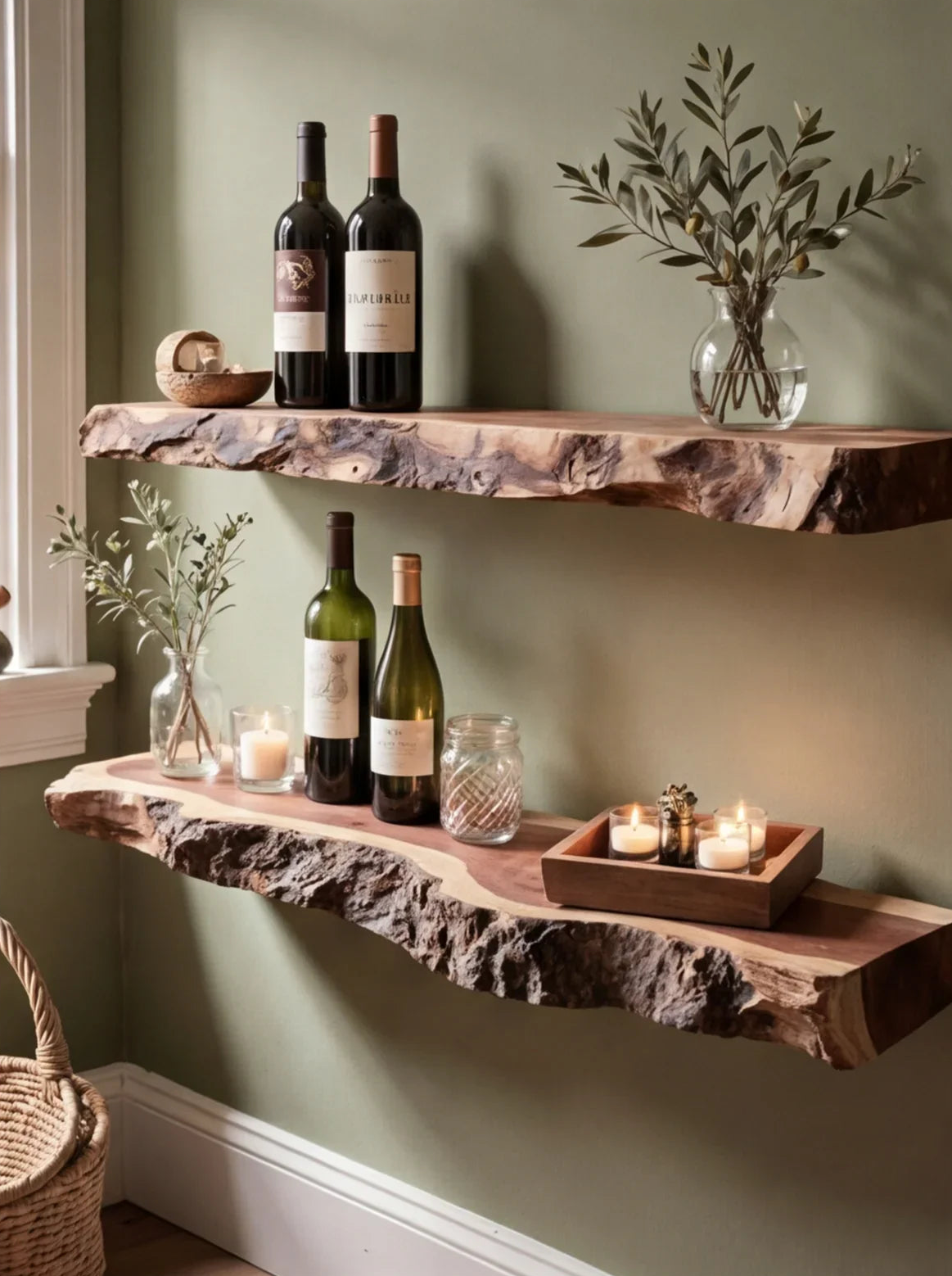
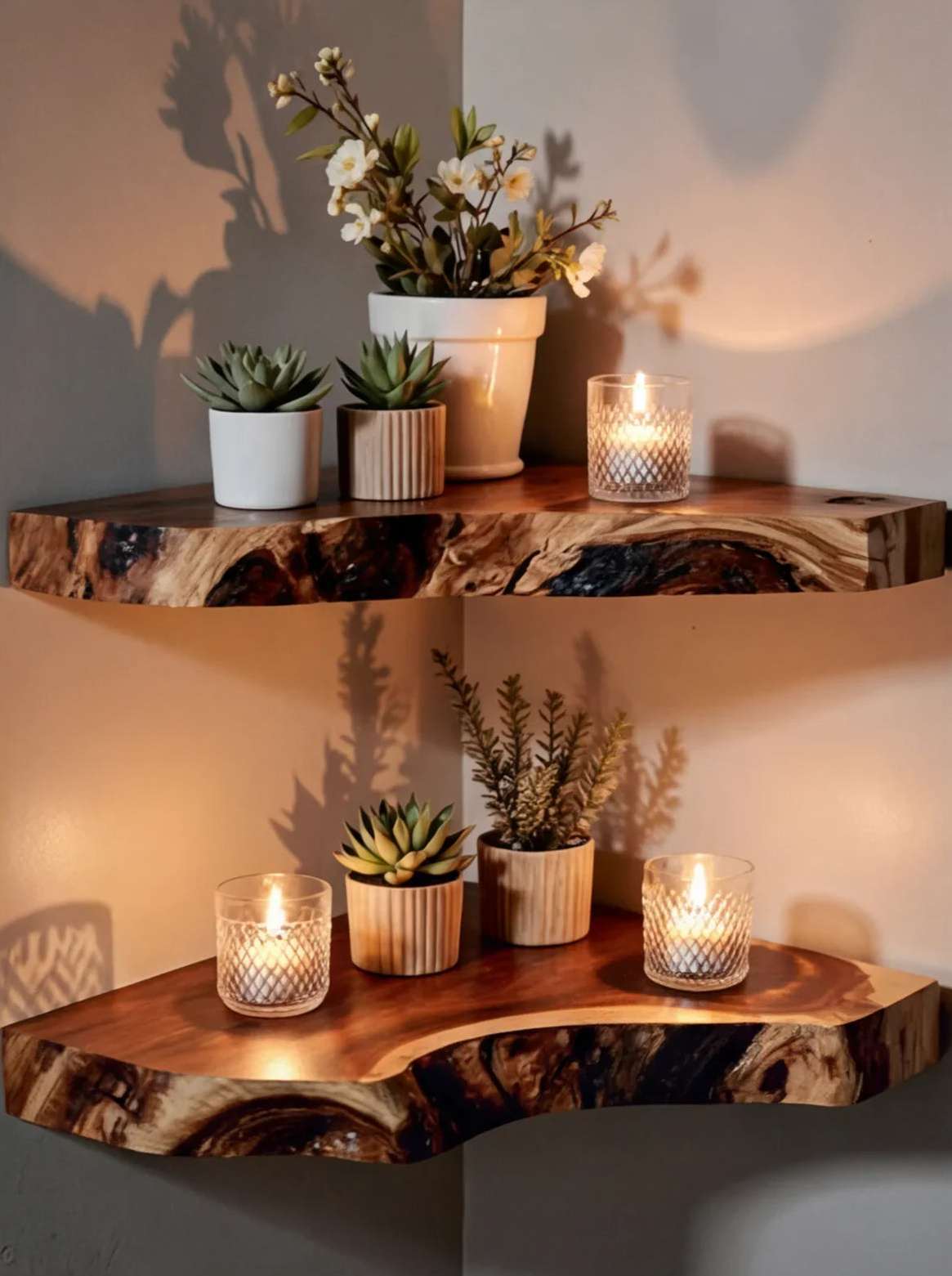
A live edge end table does something no other small furniture piece can - it brings an entire tree's story into a 20-inch surface. On a large dining table, the live edge is one detail among many. On an end table, it's the whole point. The smaller the piece, the more each inch of grain, bark, and natural contour commands attention. That's why our artisans get more excited about carving a live edge end table than almost any other piece in our workshop.
The wood end table you set beside your sofa is the piece guests touch first, notice most, and ask about every time. Here's why live edge is the right choice for it - and how to select the best wood for a small piece.
Why Small Surfaces Show More Grain
On a large surface - a 72-inch dining table or a 60-inch desk - the grain pattern repeats and flows across feet of continuous wood. Your eye scans without stopping. On a live edge end table measuring 14-20 inches across, every detail is concentrated into a space your eye can absorb in a single glance.
A walnut end table at 16 inches wide might show a single dramatic cathedral grain - the pointed, flame-like pattern that forms where a branch once met the trunk. That same cathedral pattern on a 72-inch table is one element among dozens. On the end table, it's the centerpiece.
The natural edge amplifies this effect. On a small piece, the live edge curves across 30-50% of the perimeter. On a large table, it might represent 15-20% of the edge. That ratio means the live edge end table is proportionally more "wild" and organic than its larger counterparts. The wood's natural character dominates.

Our artisans select slabs for end tables differently than for larger pieces. Instead of looking for long, consistent grain, they look for concentrated character - a dramatic knot, a vivid sapwood-to-heartwood transition, or a bark edge with unusual texture. These features that would be one detail on a big table become the defining feature on a small one.
The Conversation-Starter Effect
A live edge end table sits at arm's reach. When guests sit on your sofa, it's within 24 inches of their hand. They see the bark. They notice the irregular edge. They touch it - almost involuntarily. And then they ask about it.
This happens because live edge breaks expectations. Every other surface in most living rooms is manufactured smooth - the couch is upholstered, the TV cabinet is flat, the coffee table is geometric. A natural edge with visible bark and an organic curve is a tactile anomaly. It invites interaction in a way that a rectangular wood end table simply doesn't. If you're weighing your options, our guide on live edge coffee table buyers guide breaks it down further.
Our customers report this consistently: the live edge end table gets more comments than pieces that cost five times as much. A $200 end table generates more conversation than a $1,000 sofa because people expect sofas to exist. They don't expect a piece of the forest beside it.

For maximum effect, pair a live edge end table with our coffee tables in a matching wood species. The shared material creates cohesion while each piece's unique live edge ensures no two are alike.


Wood Selection for Small Pieces: What the Workshop Knows
Choosing wood for a live edge end table is different from choosing wood for a desk or dining table. Smaller pieces amplify every characteristic - good and bad. Here's what our artisans consider when selecting a slab for end table dimensions.
Grain Density Matters More
On a 16-inch surface, tight grain (many visible growth rings per inch) creates visual richness. Loose, open grain can make a small piece look empty. Species comparison:
- Walnut: 4-7 rings per inch in most boards. Rich, varied color. The dark-to-light transitions within each ring are visible on end tables, creating natural banding that adds depth.
- Ash: 3-6 rings per inch. Bold, open grain with strong contrast between early and late wood. Creates a dramatic "zebra" effect on small surfaces that some love and others find busy.
- Cherry: 5-10 rings per inch. Fine, subtle grain that creates a smooth, warm visual. Cherry is the quietest option - ideal if you want the live edge to be the star and the surface to be the calm backdrop.
- Maple: 6-12 rings per inch. Very fine grain. On a small end table, maple reads as almost solid color with occasional figure (curl or bird's eye) appearing as surprise highlights.
Edge Character Selection
For end tables, our woodworkers look for edges with specific characteristics:
Tight bark attachment: On a small piece, you can preserve more bark because there's less edge to maintain. A 16-inch end table might have 30 inches of perimeter edge; keeping bark on 20 inches of that is manageable. The smaller scale makes bark-on practical where it wouldn't be on a 72-inch dining table.
Dramatic contour: The best live edge end tables have a noticeable curve or asymmetry in the edge - an inward scoop, an outward bulge, or an S-curve. On a small piece, these contours define the silhouette from across the room. A subtle edge variation that's lost on a large table becomes a defining shape on an end table.
Sapwood contrast band: A 1-2 inch band of light sapwood along the live edge of a dark walnut end table creates a natural border - like a frame built into the wood itself. On an end table, this band is visible from every angle because the entire surface is within your sight line.
Thickness Considerations
End tables benefit from thicker slabs proportionally. A 1.5-inch thick slab on a 60-inch desk looks substantial. The same 1.5 inches on a 16-inch end table can look thin. For end tables, 2-2.5 inches of thickness creates visual weight that grounds the piece.
A 16 × 16-inch walnut end table top at 2 inches thick weighs approximately 4-5 lbs - light enough to move easily, heavy enough to feel like real furniture and not a coaster.
Three Ways to Use a Live Edge End Table
Classic sofa-side: The standard placement. A live edge end table at sofa arm height (22-28 inches tall depending on your sofa) holds drinks, lamps, and phones. Position the live edge facing outward - toward the room, not toward the sofa - so the natural contour is visible. We've written a full breakdown in our end table height guide post.
Between two chairs: Place a live edge end table between two accent chairs to create a conversation area. The organic shape mediates between the two structured forms. This works especially well with mid-century modern chairs, where the clean lines contrast with the natural edge.
Bedside table: A unique end table as a nightstand brings warmth to a bedroom. The live edge faces outward toward the room, and the straight or semi-straight edge sits against the wall. At 14-18 inches wide, a live edge end table fits beside even a queen bed in a small bedroom.

For complementary pieces, explore our desk collection - the same wood species and live edge approach scaled to workspace dimensions.
Care and Longevity
Solid wood end tables require minimal care and last decades. Here's the specific routine for live edge pieces.
Weekly: Dust with a dry or slightly damp cloth. Pay attention to the bark edge - a soft brush removes dust from bark crevices more effectively than a cloth.
Monthly: Check for any bark loosening (if bark-on). Loose bark sections can be re-glued with CA adhesive - apply with a toothpick, press for 30 seconds. This takes 2 minutes.
Annually: Apply a thin coat of maintenance oil (tung or Danish oil) to the entire surface including the live edge. For lacquer or poly finishes, a coat of paste wax instead. This preserves the finish and deepens the grain color over time.
Long-term: After 5-10 years, solid wood end tables can be sanded and completely refinished to look brand new - or left to develop the patina that makes each piece uniquely yours.
FAQ
What makes a live edge end table different from a regular end table? A live edge end table preserves the natural outer contour of the tree slab along one or more edges, showing the organic bark line and irregular shape rather than a factory-cut straight edge. Each piece is unique because no two trees produce the same edge profile. Regular end tables have uniform, machine-cut dimensions.
How heavy is a live edge end table? A typical 16 × 16-inch live edge walnut end table top weighs 4-5 lbs at 2-inch thickness. With legs or a base, total weight is 10-18 lbs depending on the base style. This is slightly heavier than a comparable particle board end table (8-12 lbs) but significantly lighter than stone or metal alternatives.
Can I request a specific wood grain pattern for a live edge end table? Yes, when ordering from a small workshop. Our artisans can select for specific characteristics: prominent cathedral grain, minimal sapwood, maximum bark retention, or a particular edge contour. This is standard for handmade pieces and impossible with mass-produced furniture.
What's the best wood species for a live edge end table? Walnut is the most popular for its dark color and dramatic sapwood contrast. Cherry is ideal for warmer, quieter aesthetics - it deepens beautifully over years. Ash provides the boldest grain pattern with a lighter color palette. All three are dense enough (Janka hardness 950-1,320 lbf) for daily end table use.
Do live edge end tables need coasters? For oil-finished surfaces, yes - condensation from cold glasses can leave temporary rings that darken the wood. For lacquer or polyurethane finishes, coasters are less critical but still recommended for hot beverages (heat can cloud some poly finishes). The live edge itself is not a coaster concern since drinks are placed on the flat interior surface.