






















Quick view
- Why Your Record Player Stand Actually Matters
- Types of Record Player Stands: A Complete Comparison
- Open Shelf Record Player Stands
- Cabinet-Style Record Player Stands
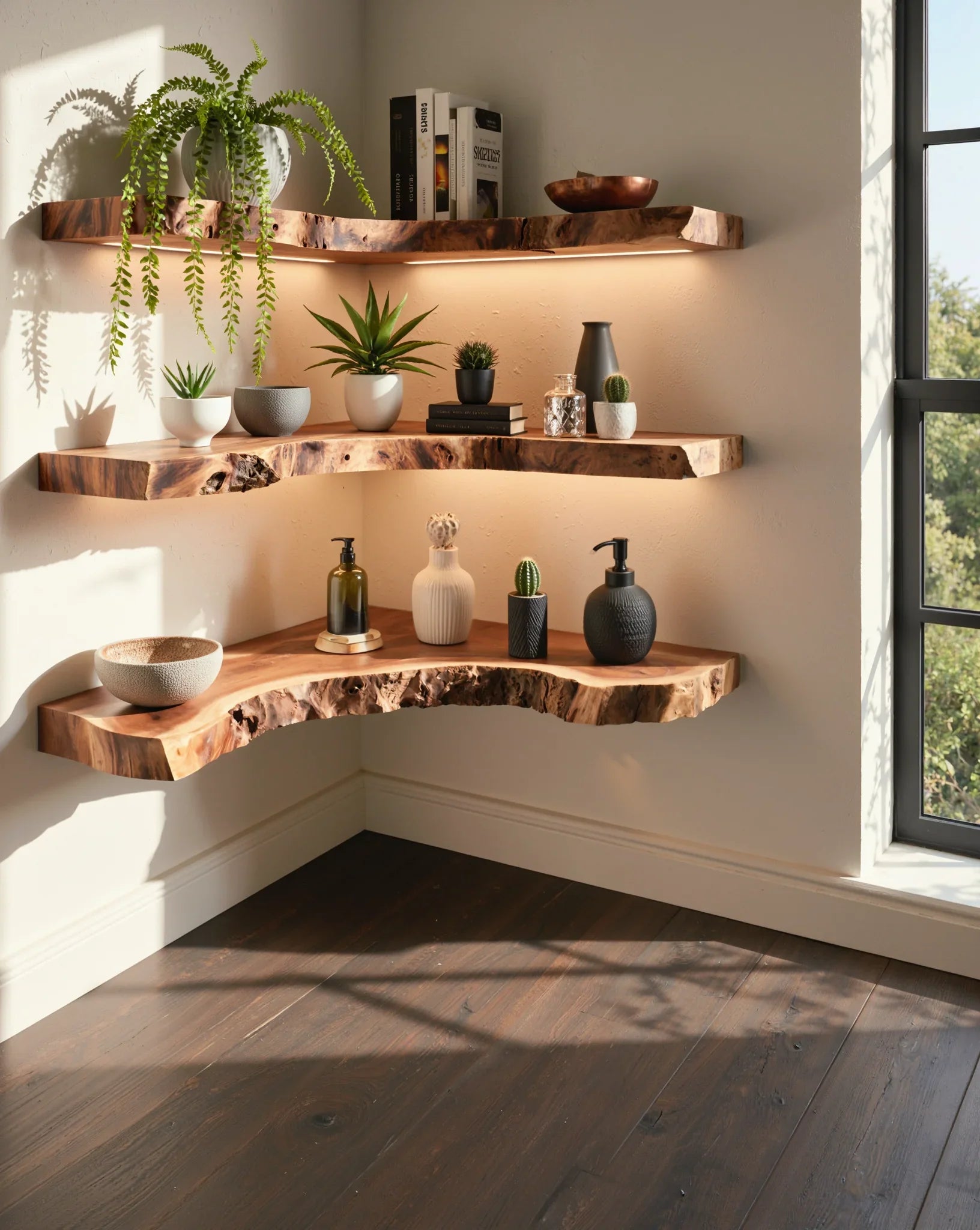
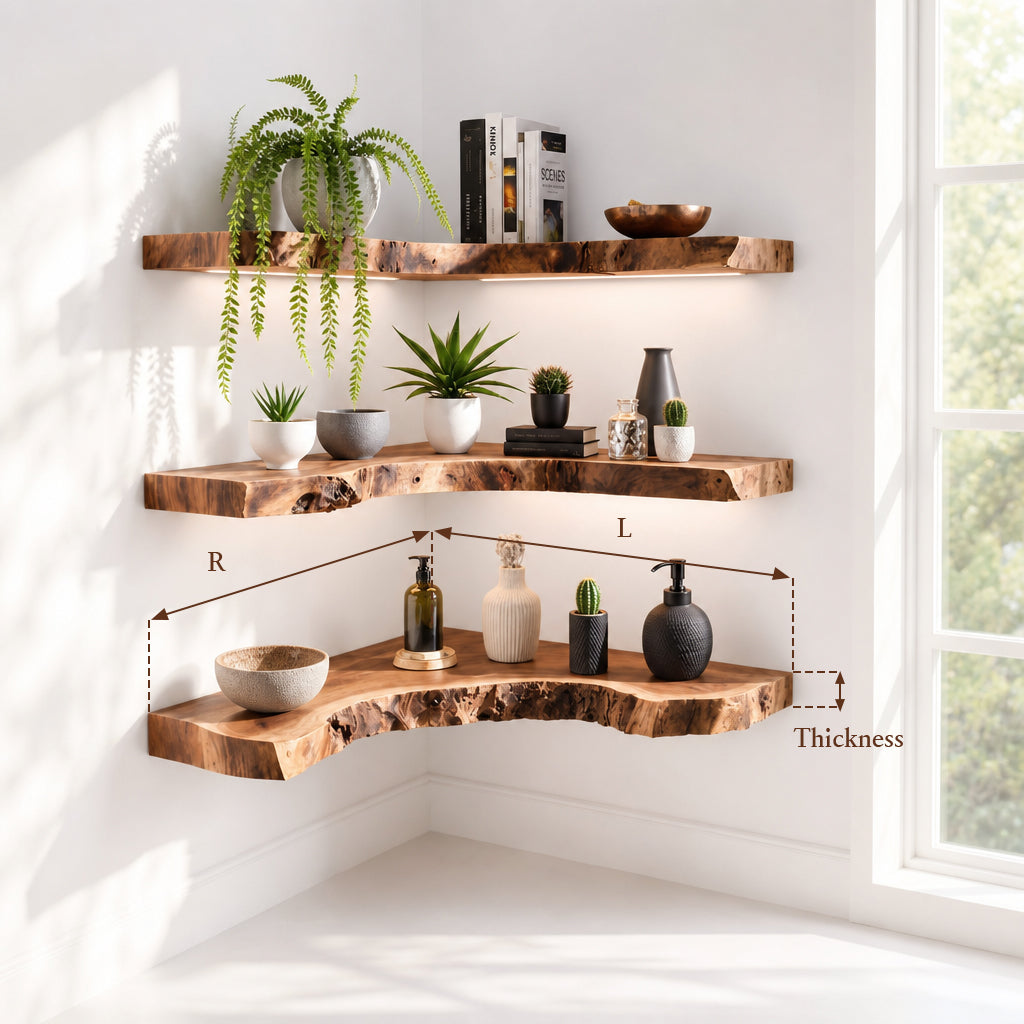
- Wall-Mounted Turntable Stands
- Mid-Century Modern Record Player Tables
- What Material Should Your Stand Be Made Of?
- Key Features to Look For in 2026
- How to Set Up Your Record Player Stand for Best Sound
- Best Record Player Stands by Budget
- Frequently Asked Questions
Shop this guide
Handcrafted Record Player Stand, made to order in solid wood.
 Mid Century Stepped Solid Wood Record Player Stand with Vinyl Storage and Drawers
From $2,318.0010% off at checkout
Mid Century Stepped Solid Wood Record Player Stand with Vinyl Storage and Drawers
From $2,318.0010% off at checkout
 Sculptural Wavy Solid Wood Record Player Stand with Vinyl Storage and Drawers
From $1,536.00
Sculptural Wavy Solid Wood Record Player Stand with Vinyl Storage and Drawers
From $1,536.00
 Biophilic Sculptural Solid Wood Vinyl Record Credenza - Handcrafted Turntable Console & Media Sideboard
From $2,743.0010% off at checkout
Biophilic Sculptural Solid Wood Vinyl Record Credenza - Handcrafted Turntable Console & Media Sideboard
From $2,743.0010% off at checkout
 Sculptural Handcrafted Solid Wood Vinyl Record Storage Console with Circular Tunnel Base
From $2,217.0010% off at checkout
Sculptural Handcrafted Solid Wood Vinyl Record Storage Console with Circular Tunnel Base
From $2,217.0010% off at checkout
 Sculptural Handcrafted Z-Shape Solid Wood Turntable Stand & 2-Tier Vinyl Record Storage Rack
From $1,564.00
Sculptural Handcrafted Z-Shape Solid Wood Turntable Stand & 2-Tier Vinyl Record Storage Rack
From $1,564.00
 Sculptural Handcrafted Wave Solid Wood Turntable Stand & Low-Profile Audio Console
From $1,543.00
Sculptural Handcrafted Wave Solid Wood Turntable Stand & Low-Profile Audio Console
From $1,543.00
If you're serious about vinyl, the record player stand you choose matters more than you think. A great turntable deserves more than a wobbly shelf or a repurposed nightstand. The right stand isolates vibrations, stores your growing collection, and anchors the entire room's aesthetic.

Whether you call it a record player table, a turntable stand, or a hi-fi console, this guide breaks down every type, material, and feature worth considering in 2026. We've spent years designing handcrafted solid wood record player stands at Ashdeco, so we know what separates a piece of furniture from a piece worth keeping forever. For a deeper dive, see our article on DIY record player stand vs handcrafted: worth the splurge?.
Why Your Record Player Stand Actually Matters
A quality record player stand serves three critical functions: vibration isolation, storage, and style. Turntable cartridges are extraordinarily sensitive - even footsteps across a hardwood floor can cause a stylus to skip. A poorly built stand amplifies those micro-vibrations directly into your music, muddying bass response and introducing distortion you might not even realize is there. We go deeper into the physics of this in our wood turntable stand guide - the short version is that the stand is part of your signal chain, not just furniture.
According to the Audio Engineering Society, mechanical isolation is one of the most overlooked factors in analog playback quality. A dedicated turntable stand with proper mass and dampening characteristics can measurably reduce unwanted resonance. Beyond acoustics, your stand determines how many records you can store within arm's reach and whether the whole setup looks intentional or improvised.
A record player stand matters because turntable cartridges are highly sensitive to vibration. A dedicated stand with proper mass and dampening reduces resonance, protects sound quality, organizes your vinyl collection, and creates a deliberate, stylish listening station in your home.
Types of Record Player Stands: A Complete Comparison
Not all stands are built the same. Here's a breakdown of the four most popular types on the market in 2026. If you're already torn between an open design and something enclosed, our wood record player cabinet vs open stand comparison scores each option on dust, airflow, vibration, and access.
| Stand Type | Best For | Storage Capacity | Vibration Control | Price Range |
|---|---|---|---|---|
| Open Shelf | Quick access, minimalist style | 100-300 LPs | Moderate | $80-$400 |
| Cabinet (Enclosed) | Dust protection, mid-century look | 150-500 LPs | Good | $200-$800 |
| Wall-Mounted | Small spaces, modern aesthetic | 0-50 LPs | Excellent (isolated) | $60-$300 |
| Mid-Century Console | All-in-one listening station | 200-600 LPs | Very Good | $300-$1,200+ |
Each type suits a different lifestyle and listening habit. Let's dig into what makes each one work - and where each falls short.
The four main types of record player stands are open shelf, enclosed cabinet, wall-mounted, and mid-century console. Open shelves offer quick access, cabinets protect from dust, wall-mounted units save floor space, and consoles provide all-in-one listening stations with the most storage.


Open Shelf Record Player Stands
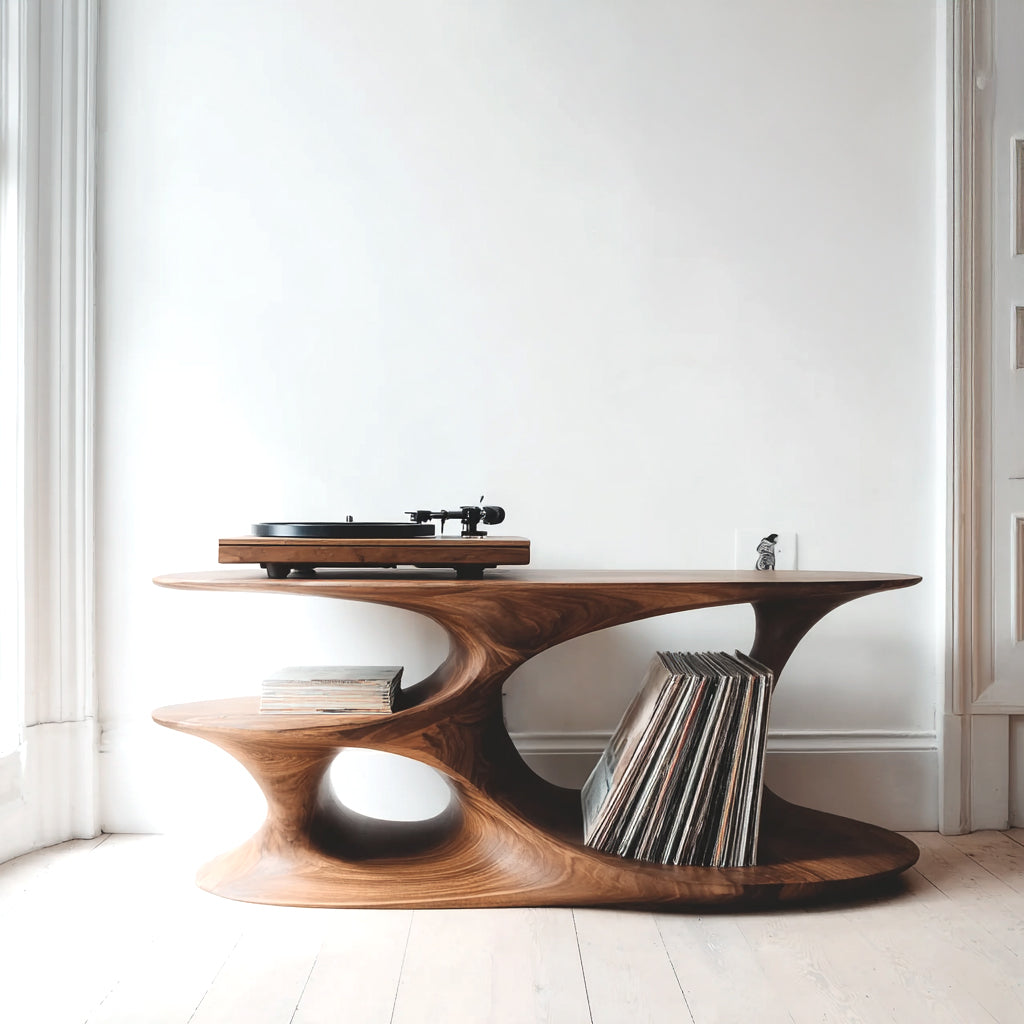
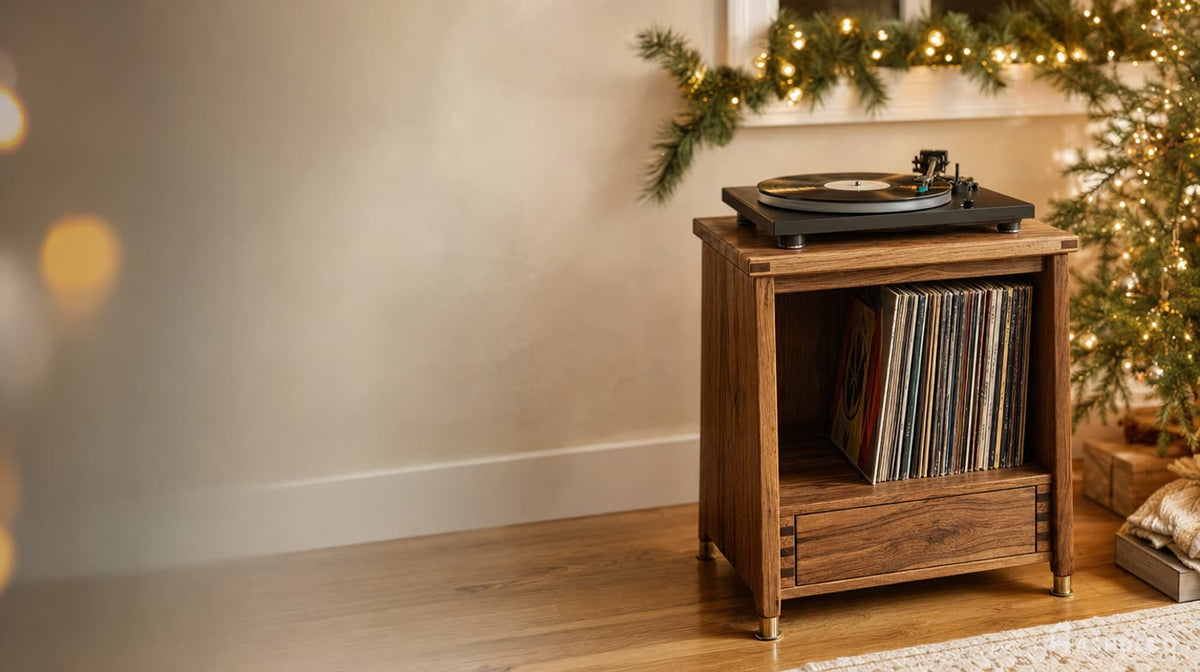
Open shelf designs are the most popular record player table style for a reason: they're simple, affordable, and give you instant access to your collection. Most feature two to four tiers with the turntable on top and vinyl stored vertically below.
The trade-off is dust. Without doors or panels, your records and equipment collect particulates faster. If you live in a dry climate or have pets, plan on sleeving every LP and wiping down your stylus more often.

Look for shelves with a minimum depth of 14 inches - standard 12-inch LPs need about 12.5 inches when sleeved, and you want breathing room. Solid wood open shelves from Ashdeco's record player stand collection are built at 15 inches deep specifically for this reason.
Open shelf record player stands offer simple, affordable access to your vinyl collection. They typically hold 100-300 LPs across two to four tiers. The main drawback is dust exposure - records collect particulates faster without enclosed storage. Look for shelves at least 14 inches deep to fit sleeved LPs comfortably. Our vinyl record storage ideas for small spaces article walks through the specifics.
Cabinet-Style Record Player Stands
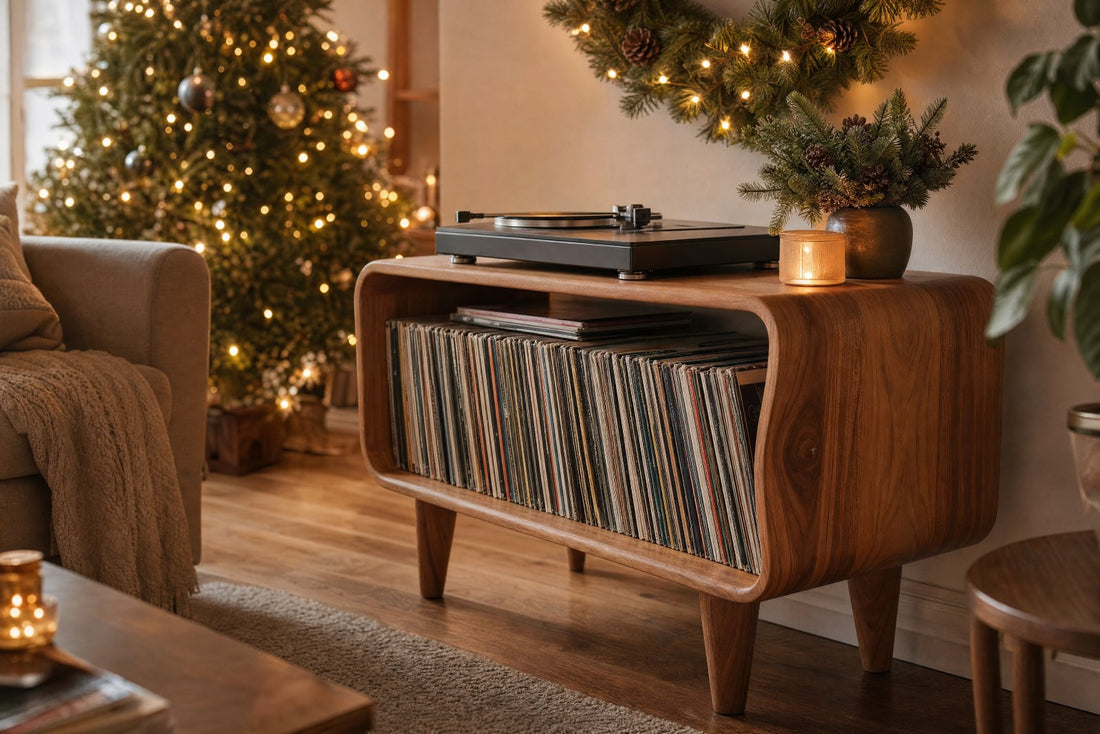
For a deep dive into authentic period styles, see our vintage record player cabinet style guide. Cabinet stands enclose your records behind doors - hinged, sliding, or lift-top. This protects vinyl from dust, sunlight, and curious pets. Mid-century modern cabinets with tapered legs and walnut veneer remain the most sought-after style in 2026. If chunky, warm-toned cabinets appeal to you more than tapered mid-century legs, our retro cabinet record player guide covers that 90s-inspired direction specifically.
A quality record player cabinet typically weighs between 45 and 80 pounds. That mass is a feature, not a bug - heavier furniture dampens vibration more effectively than lightweight alternatives. The best cabinets use solid wood frames (not particleboard with veneer) because solid wood resonates predictably and can be tuned during construction.
At Ashdeco, our Vietnamese artisans hand-select each plank for grain consistency and density before building. The result is a cabinet that looks like a one-of-a-kind heirloom because it genuinely is one.
Cabinet-style record player stands protect vinyl from dust, sunlight, and pets behind enclosed doors. They typically weigh 45-80 pounds, and that mass helps dampen turntable vibration. The best cabinets use solid wood frames rather than particleboard, offering superior resonance control and long-term durability. If you're weighing your options, our guide on vintage record player cabinet — complete style guide breaks it down further.
Don't miss
These pieces qualify for 10% off orders over $2,000. Applied automatically at checkout.
10% off
Mid Century Stepped Solid Wood Record Player Stand with Vinyl Storage and Drawers
From $2,318.00
10% off at checkout
10% off
Biophilic Sculptural Solid Wood Vinyl Record Credenza - Handcrafted Turntable Console & Media Sideboard
From $2,743.00
10% off at checkout
10% off
Sculptural Handcrafted Solid Wood Vinyl Record Storage Console with Circular Tunnel Base
From $2,217.00
10% off at checkout
 10% off
Sculptural Handcrafted Live Edge Tree Trunk Solid Wood Vinyl Record Player Stand & Media Console
From $2,178.00
10% off at checkout
10% off
Sculptural Handcrafted Live Edge Tree Trunk Solid Wood Vinyl Record Player Stand & Media Console
From $2,178.00
10% off at checkout
Wall-Mounted Turntable Stands
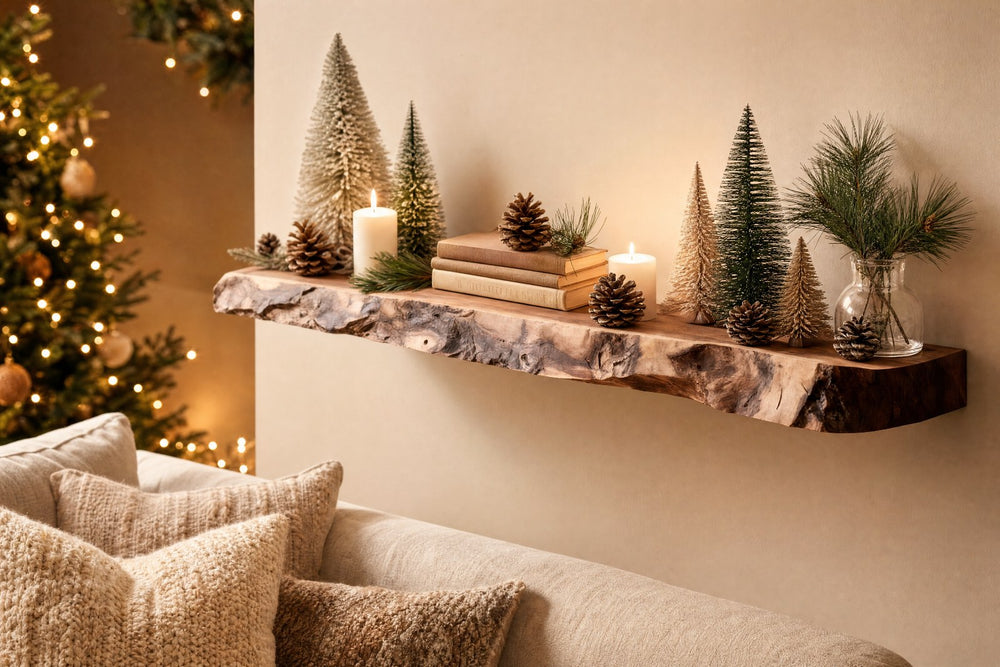
Wall-mounted turntable stands bolt directly to wall studs, completely decoupling your turntable from floor vibrations. This makes them the best option for apartments with bouncy floors or homes where heavy foot traffic shakes the room.
Most wall-mounted stands support 20 to 35 pounds - enough for virtually any consumer turntable, including heavy direct-drive models like the Technics SL-1200 (26 lbs). You'll need to hit at least one wall stud with a lag bolt; toggle anchors alone won't cut it for a loaded shelf.
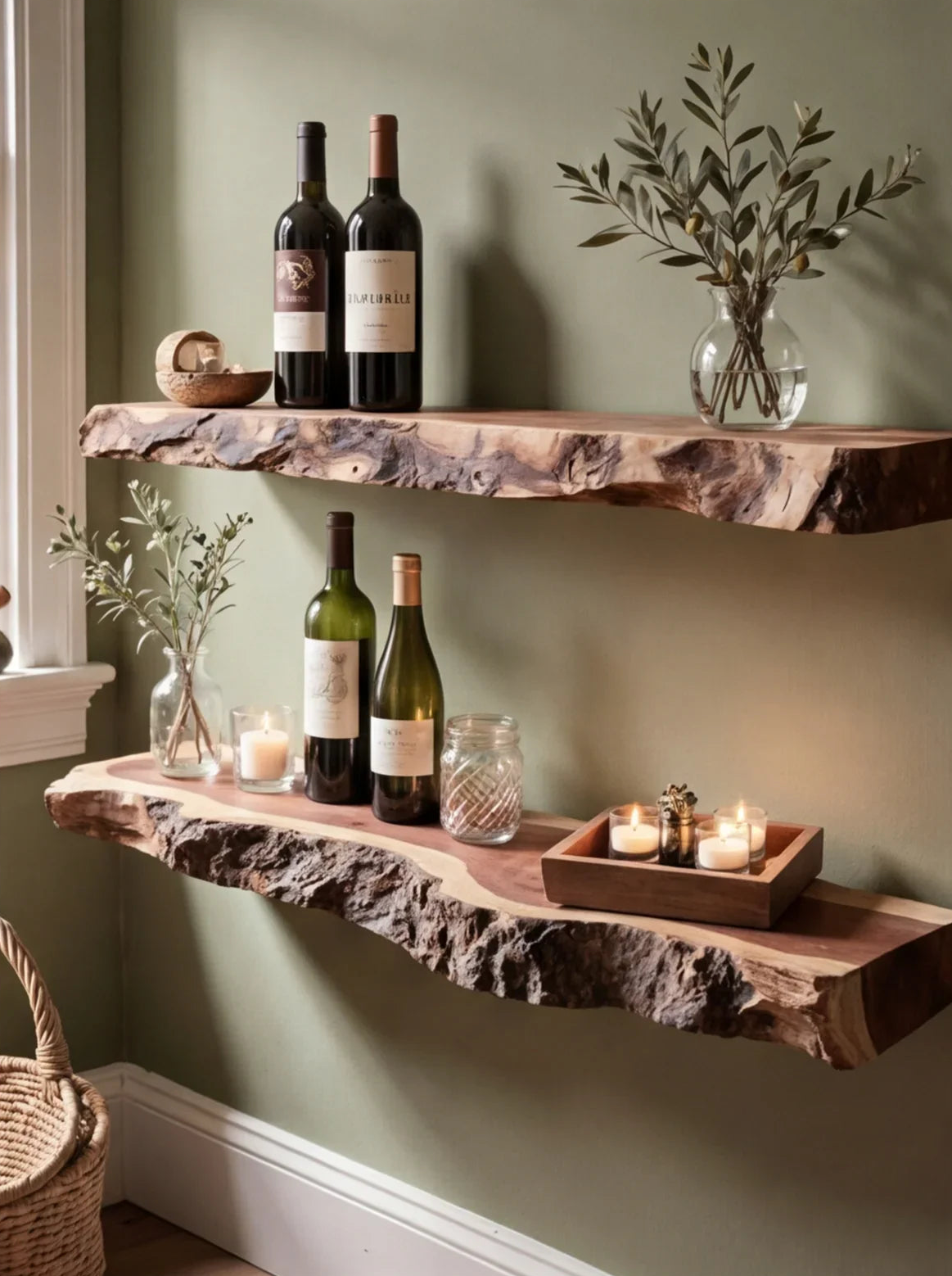
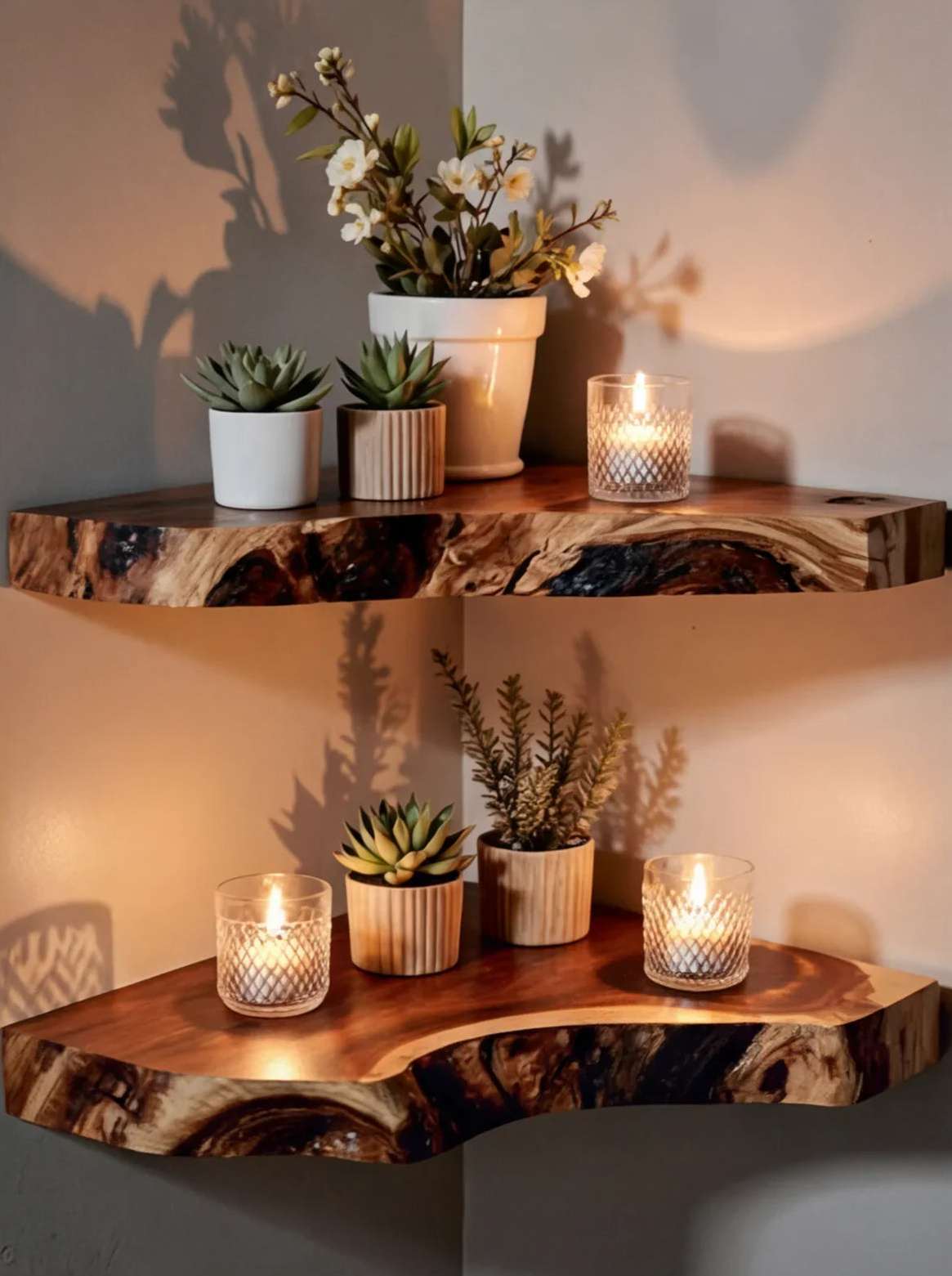
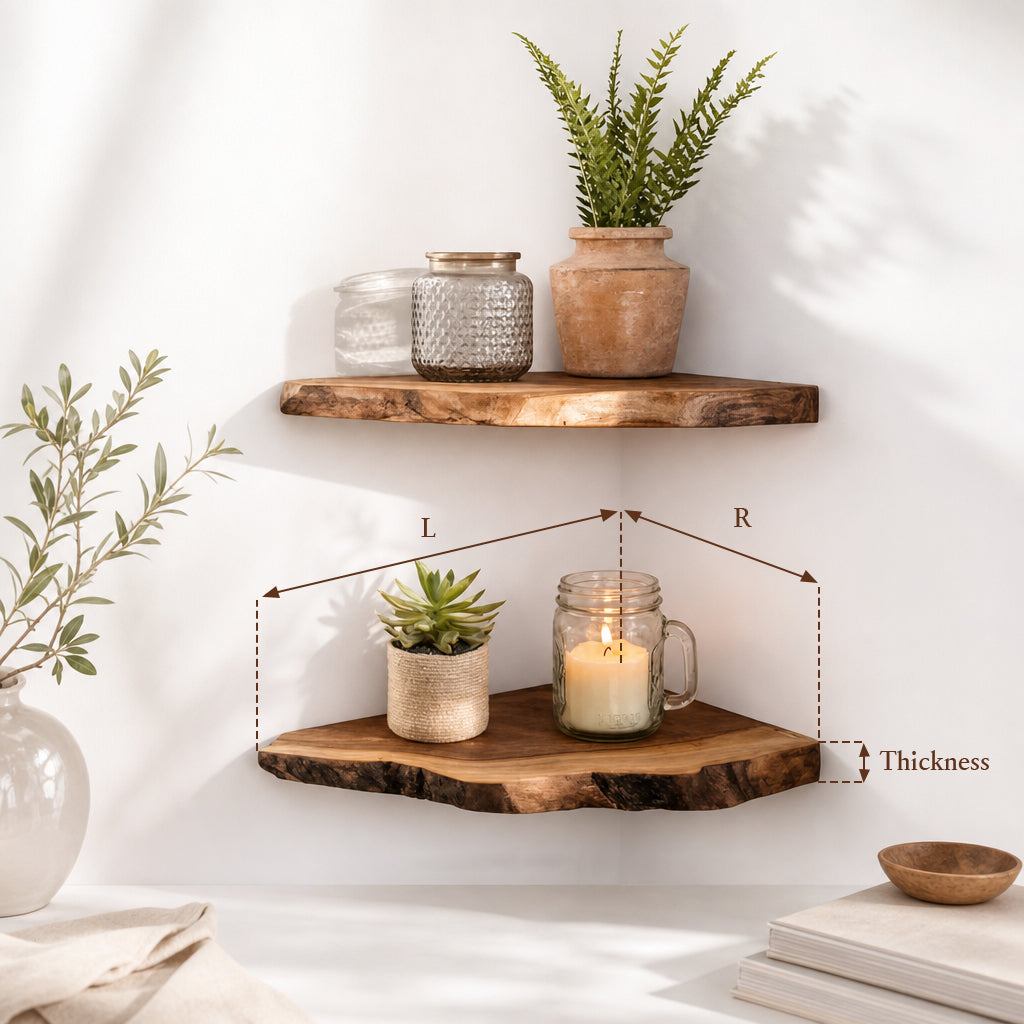
The limitation is storage. Wall-mounted units typically hold zero to 50 records, so you'll need a separate storage solution for the bulk of your collection. Pair one with Ashdeco's floating shelves for a clean, cohesive wall-mounted listening setup.
Wall-mounted turntable stands isolate your turntable from floor vibrations by bolting directly to wall studs. They support 20-35 pounds and are ideal for apartments with bouncy floors. The trade-off is limited record storage - most hold 50 LPs or fewer, requiring a separate storage solution for larger collections.
Mid-Century Modern Record Player Tables
The mid-century modern aesthetic - tapered legs, clean lines, warm wood tones - dominates the record player table market for good reason. These designs originated in the 1950s and 60s alongside the golden age of hi-fi stereo, so the pairing feels historically authentic. For more on styling this look in a real room rather than just a showroom photo, see our modern record player stand ideas guide.
According to Architectural Digest, mid-century furniture remains one of the most enduring design movements in American homes. A well-executed mid-century turntable stand features legs angled at 12-18 degrees, a low profile (typically 24-30 inches tall), and minimal ornamentation.
Beware of cheap reproductions that use MDF with printed wood-grain film. These fall apart at joints within two to three years and offer zero vibration dampening. Solid hardwood - walnut, oak, or acacia - is the benchmark material for mid-century stands that actually last.
Mid-century modern record player tables feature tapered legs, clean lines, and warm wood tones inspired by 1950s-60s hi-fi culture. Authentic designs use solid hardwood like walnut or oak and stand 24-30 inches tall. Avoid cheap MDF reproductions - they lack vibration dampening and deteriorate at joints within a few years.
What Material Should Your Stand Be Made Of?
Material choice affects sound, durability, and aesthetics. Here's what you need to know about the three most common options.
Solid Wood
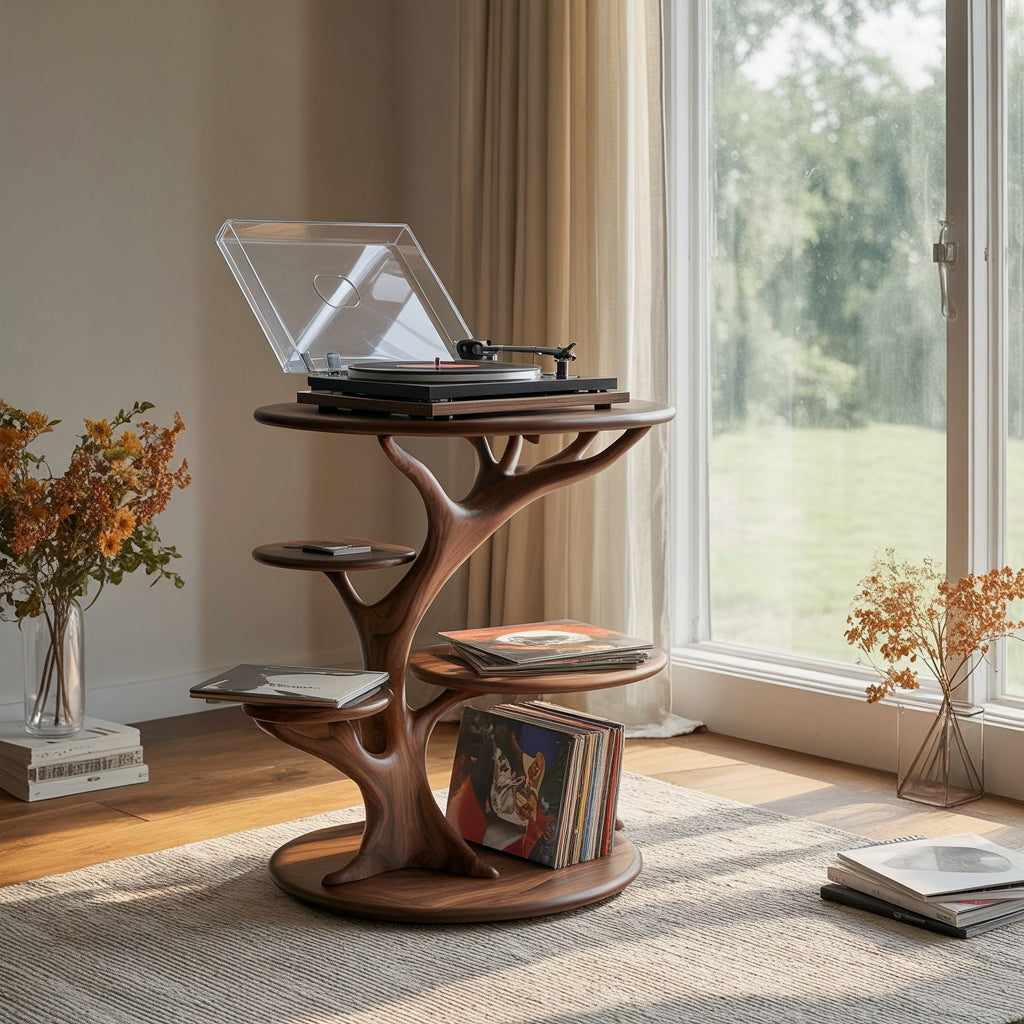
The gold standard. Hardwoods like walnut, white oak, and acacia absorb and dissipate vibration naturally. A solid wood stand will last decades and develop a richer patina over time. Weight typically ranges from 30 to 70 pounds depending on size. Our handcrafted record player stands at Ashdeco use kiln-dried solid wood selected by Vietnamese artisans for optimal grain and density.
MDF / Particleboard
Medium-density fiberboard is cheap and uniform, which makes it easy to mass-produce. But it swells when exposed to moisture, chips at edges, and transmits vibration poorly compared to solid wood. Most budget stands under $150 use MDF with a laminate or veneer finish.
Metal
Steel and aluminum frames offer industrial aesthetics and excellent rigidity. However, metal resonates at specific frequencies that can color your turntable's output. Metal stands work best when paired with an isolation platform or rubber dampening feet.
Solid wood is the best material for record player stands - it naturally absorbs vibration, lasts decades, and develops character over time. MDF is affordable but swells with moisture and chips easily. Metal offers rigidity and industrial style but can resonate at specific frequencies without proper dampening.
Skip the MDF. Go straight to solid wood.
Every Ashdeco record player stand is handcrafted from kiln-dried solid hardwood by Vietnamese artisans - heavy enough to dampen vibration, deep enough for a real vinyl collection, and built to outlast the turntable sitting on top of it.
Shop Record Player StandsKey Features to Look For in 2026
Not sure how much storage you need? Our record player stand with storage guide breaks down capacity by design type. Not every feature matters equally. Prioritize these when shopping:
- Stability and weight: Heavier stands (40+ lbs) dampen vibration better. Look for a low center of gravity.
- Vibration dampening: Rubber or cork feet, solid wood construction, and proper shelf thickness (¾ inch minimum) all contribute.
- Storage capacity: Count your records and buy for the collection you'll have in two years, not today. The average vinyl collector adds 25-50 LPs per year.
- Dimensions: Your turntable needs a platform at least 18 × 14 inches. The Rega Planar 3 needs 17.7 × 12.2 inches; the Audio-Technica LP120 needs 17.8 × 13.9 inches. Our wooden record player stand size guide covers gear, room, and shelf-depth math in full if you want to get this exactly right before ordering.
- Cable management: Look for rear cutouts or channels. Tangled RCA cables pick up electromagnetic interference.
- Adjustable feet: Leveling your turntable is non-negotiable. Adjustable feet on the stand make this easy on uneven floors.
When choosing a record player stand in 2026, prioritize weight (40+ lbs for vibration dampening), shelf thickness (¾ inch minimum), storage for future collection growth, a turntable platform of at least 18 × 14 inches, rear cable management cutouts, and adjustable leveling feet for uneven floors. We cover this in more detail in our record player stand with storage — buyer's guide guide.
How to Set Up Your Record Player Stand for Best Sound
Placement matters as much as the stand itself. Follow these steps:
- Level the stand using a bubble level on the turntable platform. Even a 1-degree tilt affects tracking force and causes uneven record wear.
- Place the stand away from speakers - at least 18 inches - to prevent acoustic feedback loops. Subwoofers are the biggest culprit.
- Avoid placing near heat sources or direct sunlight. Solid wood expands and contracts with temperature swings, and vinyl warps above 140°F.
- Use the stand's weight to your advantage. Don't leave shelves empty - filled record shelves add mass and further dampen vibrations.
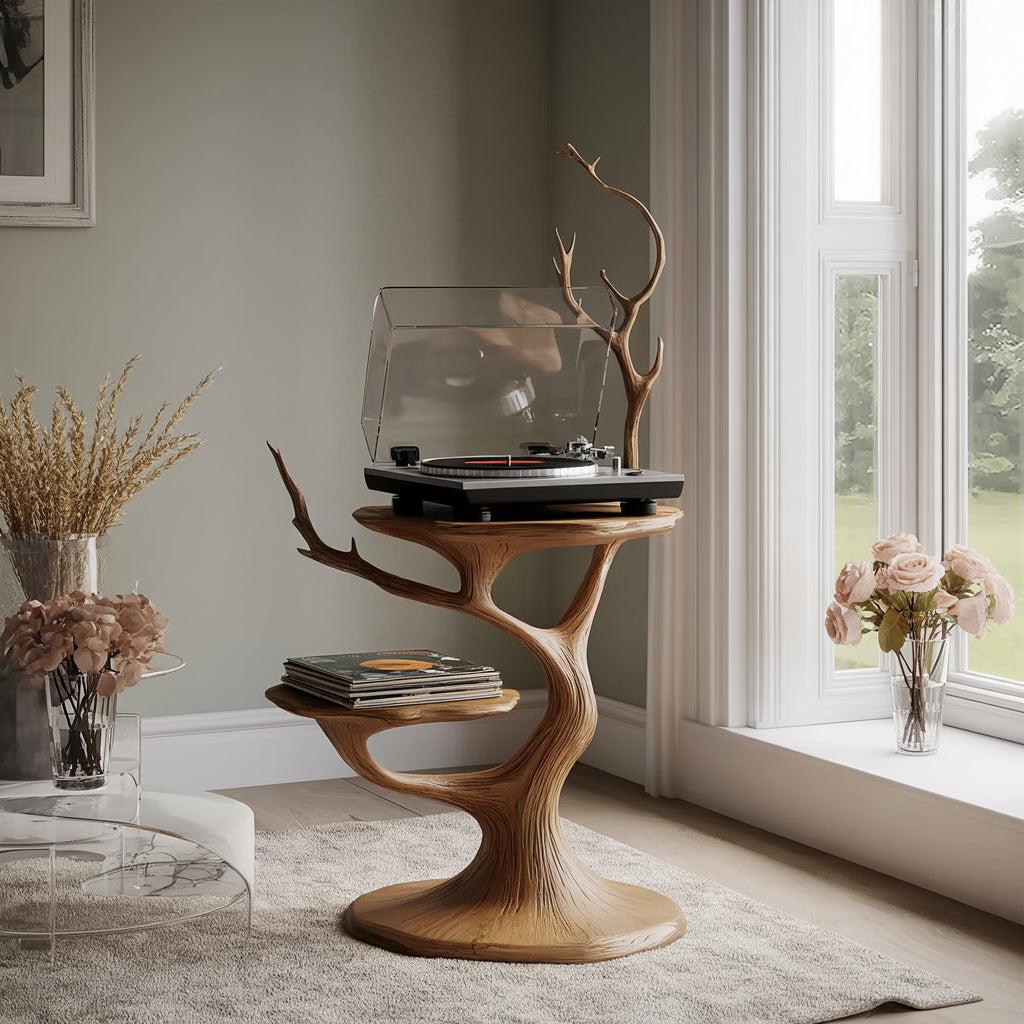
A tree-shaped bookshelf placed nearby creates a beautiful visual complement while giving your overflow records a stylish home.
For optimal sound, level your record player stand precisely, place it at least 18 inches from speakers to prevent acoustic feedback, keep it away from heat sources and direct sunlight, and fill storage shelves with records to add mass and improve vibration dampening.
Best Record Player Stands by Budget
Under $150: Expect MDF construction, basic open-shelf designs, and capacity for 50-100 LPs. Functional but not built to last more than 3-5 years.
$150-$400: This range gets you solid wood options with better craftsmanship, 150-300 LP capacity, and more intentional design. Many mid-century reproductions fall here.
$400-$800: Premium territory. Handcrafted solid wood stands, dovetail joinery, and heirloom quality. Ashdeco's record player stands sit in this range - each piece handmade by Vietnamese artisans using traditional woodworking techniques.
$800+: Custom commissions, rare wood species, integrated amplifier compartments, and bespoke dimensions.
Record player stands under $150 offer basic MDF construction lasting 3-5 years. The $150-$400 range provides solid wood with better craftsmanship. Between $400-$800, expect handcrafted heirloom quality with dovetail joinery. Above $800, custom commissions feature rare woods and integrated amplifier compartments.
Frequently Asked Questions
What is the best height for a record player stand?
The ideal height for a record player stand is 24-30 inches, placing your turntable at roughly seated elbow height. This makes cueing records comfortable and reduces the risk of accidental bumps. Taller stands (32+ inches) work for standing listening stations but increase vibration sensitivity.
Can I use a regular table as a record player stand?
You can, but it's not ideal. Regular tables lack vibration dampening, proper depth for vinyl storage, and cable management features. Dining tables and desks transmit footstep vibrations directly to the stylus. A purpose-built turntable stand delivers noticeably better sound quality and protects your equipment.
How many records can a typical record player stand hold?
Most record player stands hold between 100 and 400 LPs depending on design. Open shelf models average 100-300 records. Cabinet-style stands hold 150-500. For reference, 100 standard 12-inch LPs take up approximately 14 linear inches of shelf space when sleeved in outer jackets.
Does the material of a turntable stand affect sound quality?
Yes. Solid wood absorbs vibration naturally and provides warm, neutral dampening. MDF can resonate unpredictably at certain frequencies. Metal frames transmit and amplify specific resonance points. Heavier, denser materials generally produce better acoustic isolation for turntable playback.
Are wall-mounted turntable shelves safe for heavy record players?
Wall-mounted shelves are safe when properly installed into wall studs using lag bolts rated for the load. Most support 20-35 pounds, which covers nearly all consumer turntables. Always verify your turntable's weight including the platter, and never rely solely on drywall anchors for a loaded shelf.