Quick view
- Floating Shelves for Living Room: 15 Styling Ideas That Actually Look Good
- Idea 1: The Book Ledge
- Idea 2: The Gallery Shelf
- Idea 3: The Three-Shelf Stack
- Idea 4: The Asymmetric Pair
- Idea 5: The Plant Shelf
- Idea 6: The Record Display
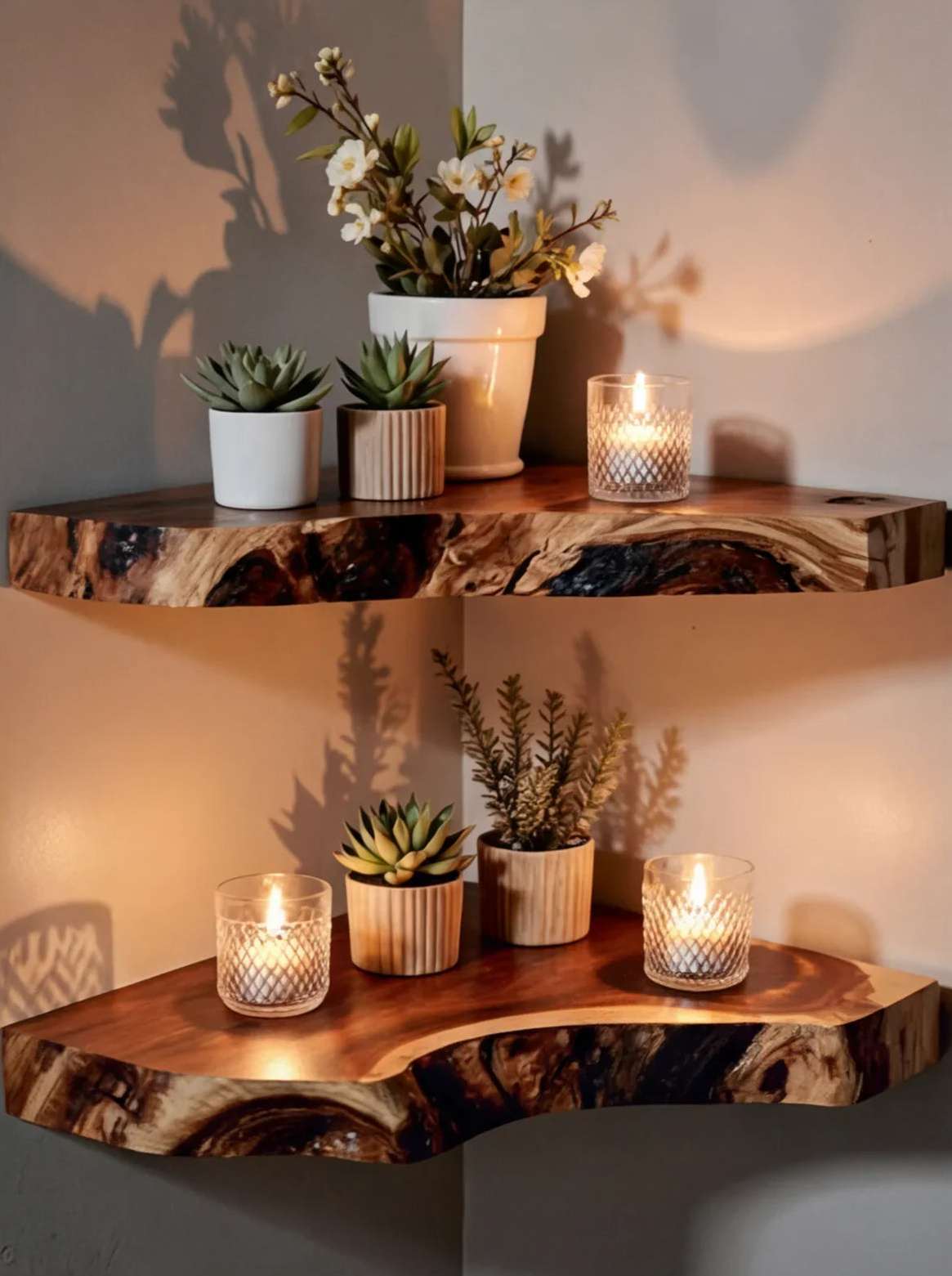
- Idea 7: The Corner Float
- Idea 8: The TV Companion
- Idea 9: The Travel Collection
- Idea 10: The Minimalist Statement
- Idea 11: The Reading Nook Shelf
- Idea 12: The Over-Sofa Gallery
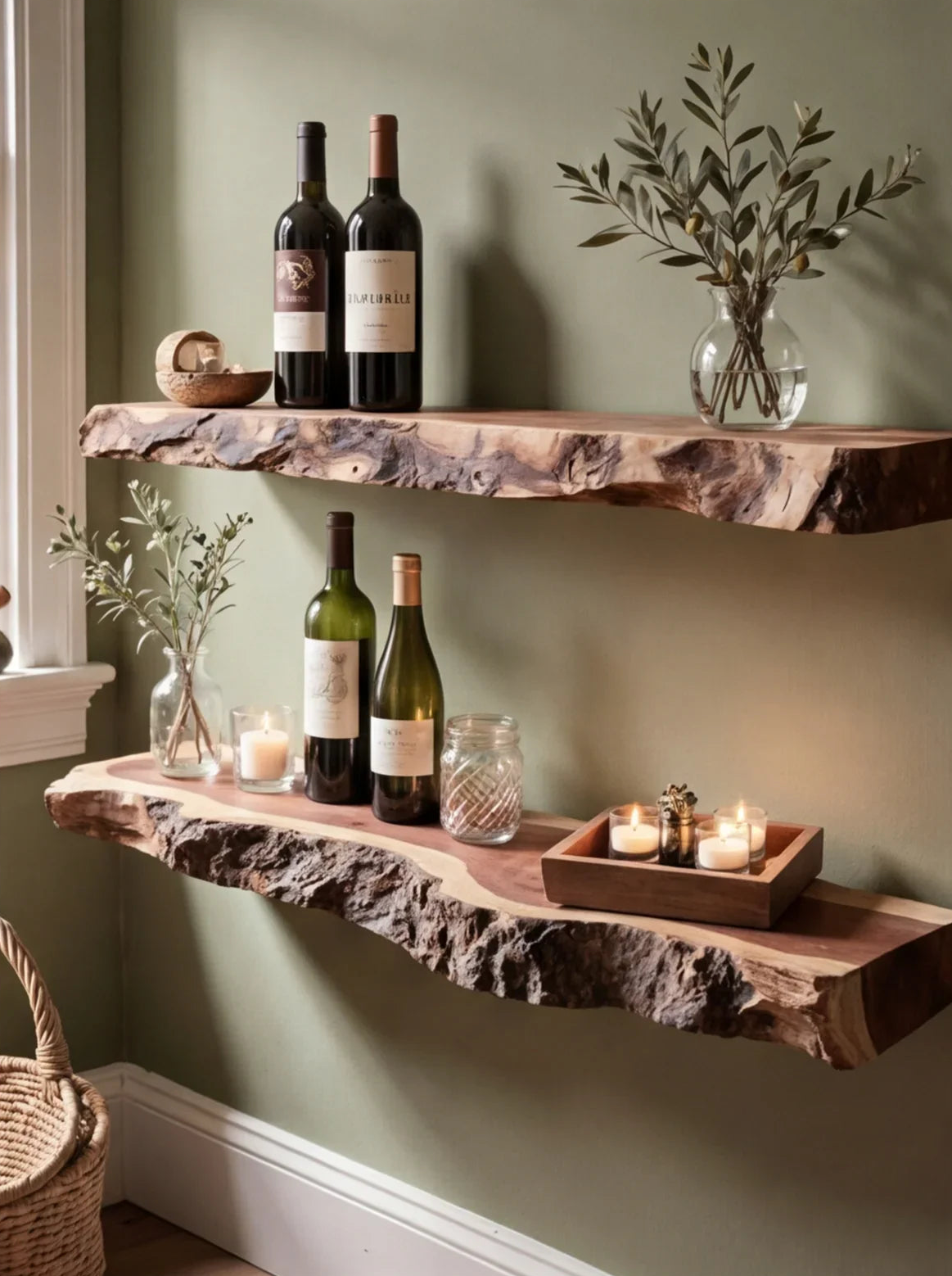
- Idea 13: The Bar Shelf
- Idea 14: The Seasonal Rotation
- Idea 15: The Family Timeline
- Placement Guide: Where to Mount Living Room Floating Shelves
- Choosing the Right Floating Shelves for Your Living Room
- Frequently Asked Questions
- Start With One
Shop this guide
Handcrafted Floating Shelves, made to order in solid wood.
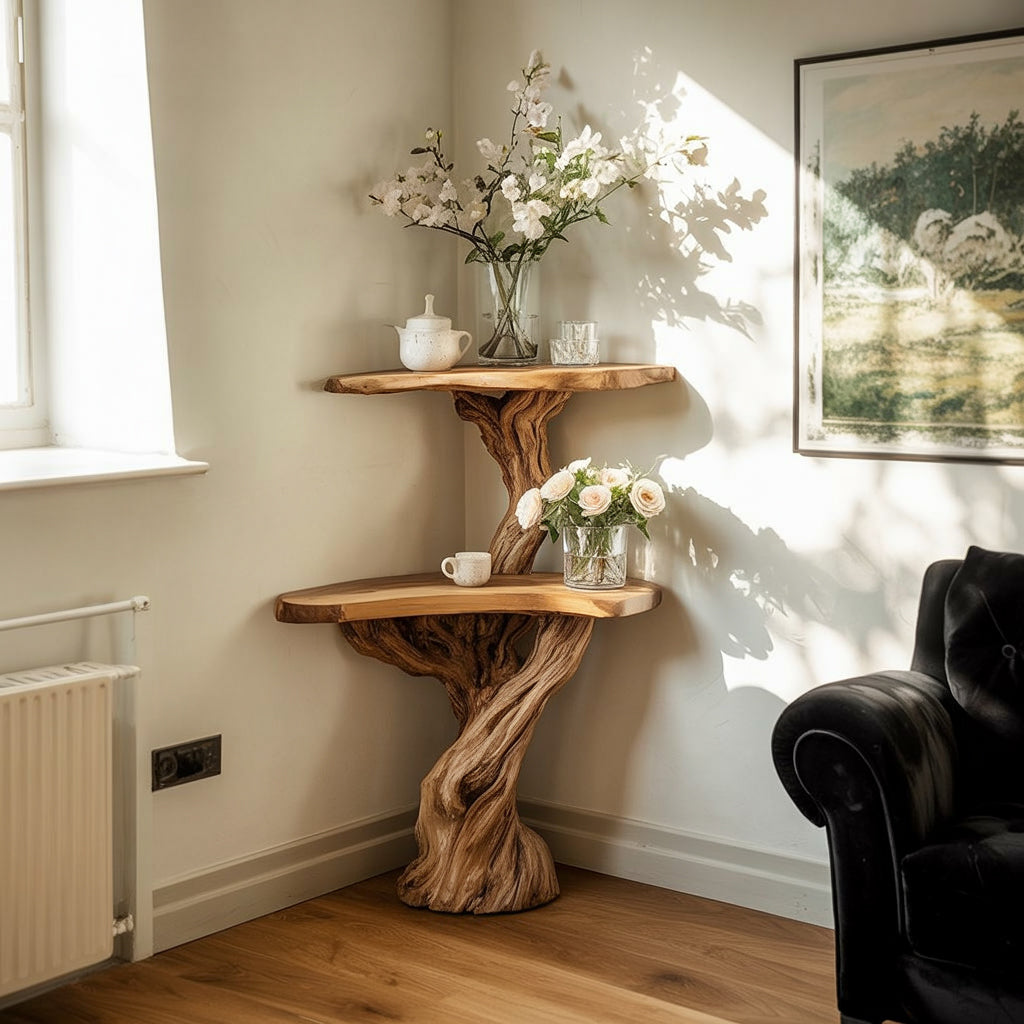
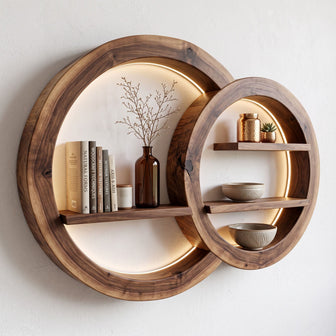
 Sculptural Overlapping Circular Solid Wood Wall Shelf with Multi Tier Display
From $1,354.00
Sculptural Overlapping Circular Solid Wood Wall Shelf with Multi Tier Display
From $1,354.00
 Mountain Landscape Relief Solid Wood Floating Shelf Live Edge Display Ledge
From $1,154.00
Mountain Landscape Relief Solid Wood Floating Shelf Live Edge Display Ledge
From $1,154.00
 Enchanted Forest Circular Wall Shelf - Round Carved Timber Mushroom Portal
From $1,023.00
Enchanted Forest Circular Wall Shelf - Round Carved Timber Mushroom Portal
From $1,023.00
 Cottagecore Arched Wood Wall Niche - Hand-Carved Fairy Mushroom Alcove Shelf
From $1,356.00
Cottagecore Arched Wood Wall Niche - Hand-Carved Fairy Mushroom Alcove Shelf
From $1,356.00
 Sculptural Hand-Carved Mushroom Solid Wood Corner Floating Shelf & Biomorphic Wall Display Ledge
From $345.00
Sculptural Hand-Carved Mushroom Solid Wood Corner Floating Shelf & Biomorphic Wall Display Ledge
From $345.00
 Sculptural Hand-Carved Mushroom Solid Wood Floating Shelves & Biomorphic Wall Display Ledges
From $345.00
Sculptural Hand-Carved Mushroom Solid Wood Floating Shelves & Biomorphic Wall Display Ledges
From $345.00
Floating Shelves for Living Room: 15 Styling Ideas That Actually Look Good
A floating shelf in the living room has one job: make the room feel more like yours. Not like a furniture showroom. Not like a Pinterest board you can't touch. Like a space where real people live, with things they actually care about on display. Explore curated living room shelf arrangements at Architectural Digest.
The problem isn't finding floating shelves-they're everywhere. The problem is knowing what to do with them once they're on the wall. Most styling advice boils down to "add plants and candles," which is fine but gets repetitive fast.
Here are 15 specific styling ideas for living room floating shelves, each with enough detail to actually execute. Pick the ones that match your space and personality.

Solid Wood Live Edge Floating Shelf - Rustic Wall Decor for Living Room & Kitchen
Idea 1: The Book Ledge
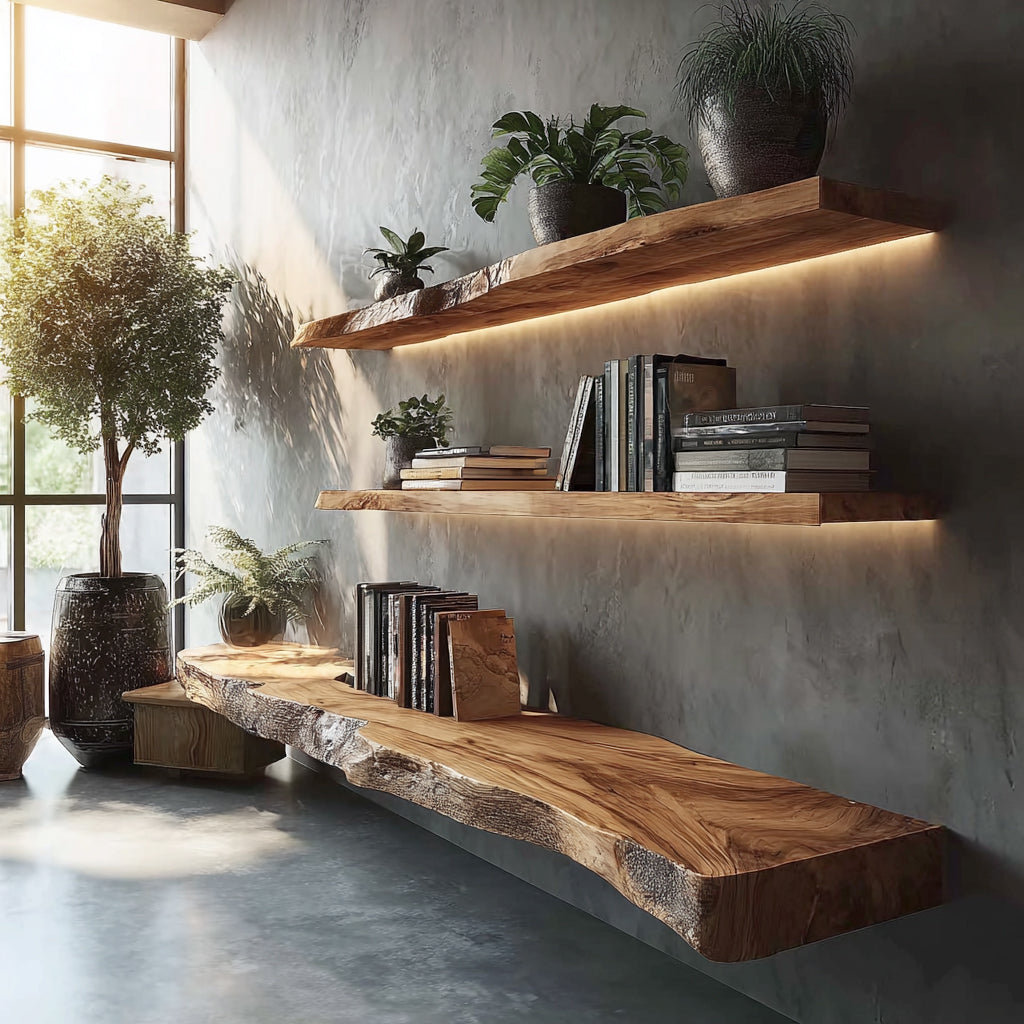
Mount a single long floating shelf (48-60 inches) at eye level. Lean 5-8 books face-out along its length, overlapping slightly like records in a shop. Choose books with interesting covers-art books, photography collections, travel guides. Slip a small framed print or a postcard between two books for variety. Need help with installation? Family Handyman has full floating shelf mounting guides.
This works because it treats books as visual objects rather than just reading material. The spine-out bookcase is practical; the face-out ledge is beautiful. Rotate books monthly to keep the display fresh.


Idea 2: The Gallery Shelf
Use a floating shelf as a gallery ledge for framed artwork and photographs. Lean frames against the wall in varying sizes-one large piece anchoring the composition, two or three smaller pieces overlapping in front. Add a small object (a brass candle holder, a tiny sculpture) at one end to break the frame-frame-frame rhythm.
The advantage over nailing frames directly to the wall: you can rearrange whenever you want without making new holes. It's a commitment-free gallery wall.
Idea 3: The Three-Shelf Stack
Three floating shelves of the same length, vertically aligned with 12-16 inches between them. Treat each shelf as its own vignette:
- Top: a single trailing plant in a ceramic pot
- Middle: two or three small framed photos plus a candle
- Bottom: a stack of books with a decorative object on top
This creates a column of interest that draws the eye vertically-useful in rooms with high ceilings that feel disconnected from the furniture below.
Don't miss
These pieces qualify for 10% off orders over $2,000. Applied automatically at checkout.
Idea 4: The Asymmetric Pair
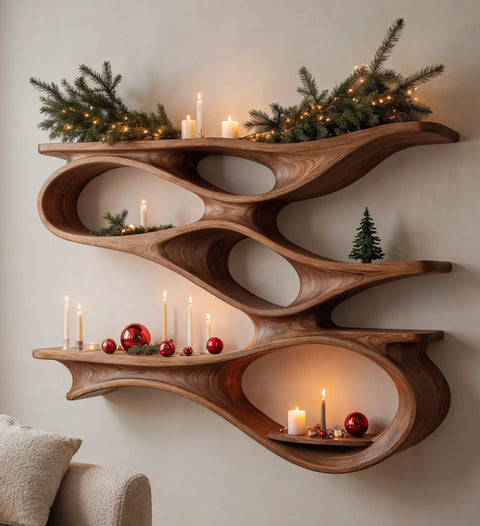
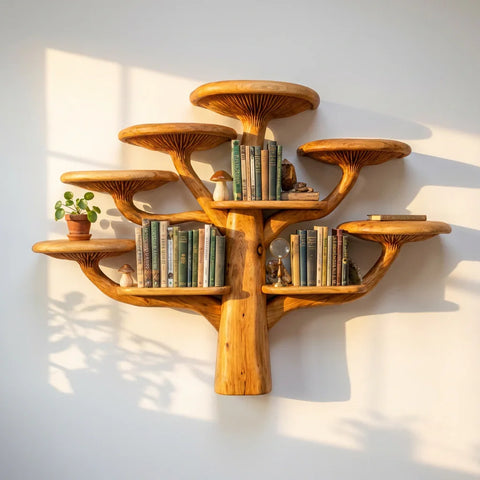
Two floating shelves of different lengths, mounted at different heights on the same wall. A 36-inch shelf high on the left, a 24-inch shelf lower on the right (or vice versa). The staggered arrangement creates visual movement and avoids the rigidity of perfectly aligned shelves.
Style the longer shelf with more items (3-4 objects) and the shorter one with fewer (1-2 objects) to maintain proportional balance.

Rustic Floating Corner Wall Shelf - Live Edge Wooden Shelf for Home & Aquarium Decor
Idea 5: The Plant Shelf
Dedicate one or more floating shelves entirely to plants. A 48-inch shelf can hold 4-6 plants in varying sizes, one larger plant (8-inch pot) on one end, smaller plants graduating toward the other end. Mix textures: a spiky snake plant next to a leafy pothos next to a compact succulent.
This turns a blank wall into an indoor garden and works particularly well near windows where the plants get natural light. The shelf itself should be a neutral tone (natural wood, white) to let the greenery be the star.
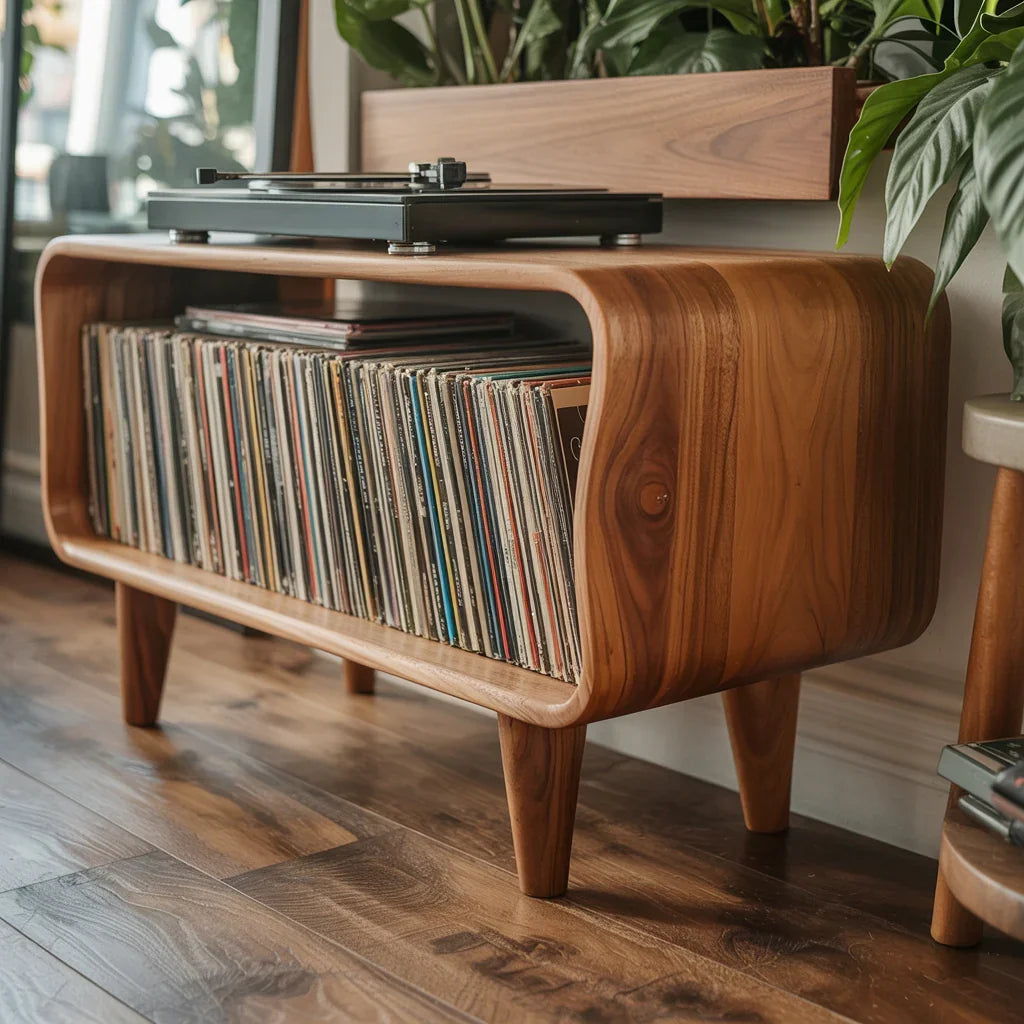
Idea 6: The Record Display
For vinyl collectors: mount a floating shelf with a small front lip and display 3-5 album covers face-out. Rotate them based on what you're listening to. This is the music-lover's equivalent of the book ledge, functional art that changes with your mood.
Even if you don't play records, framed album art from your favorite musicians creates the same effect and makes the living room feel personal in a way generic decor can't.
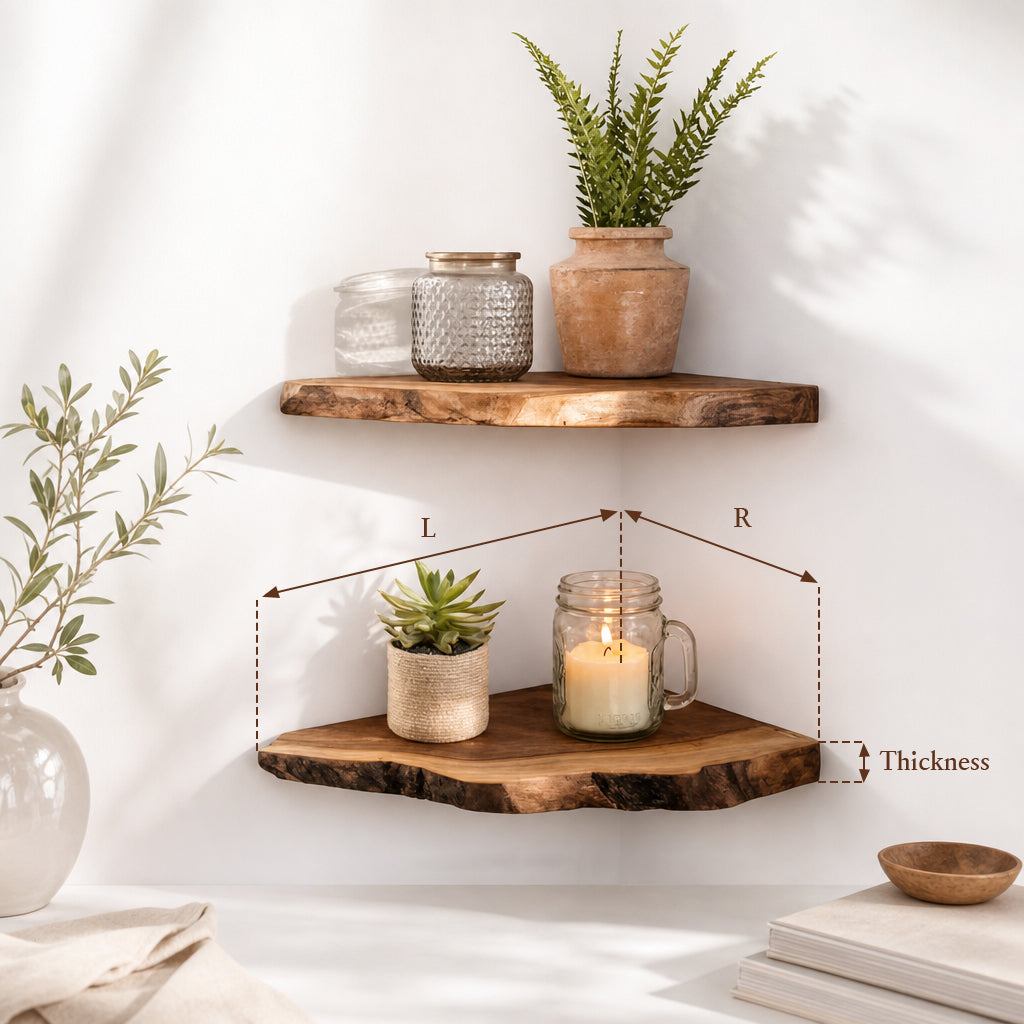
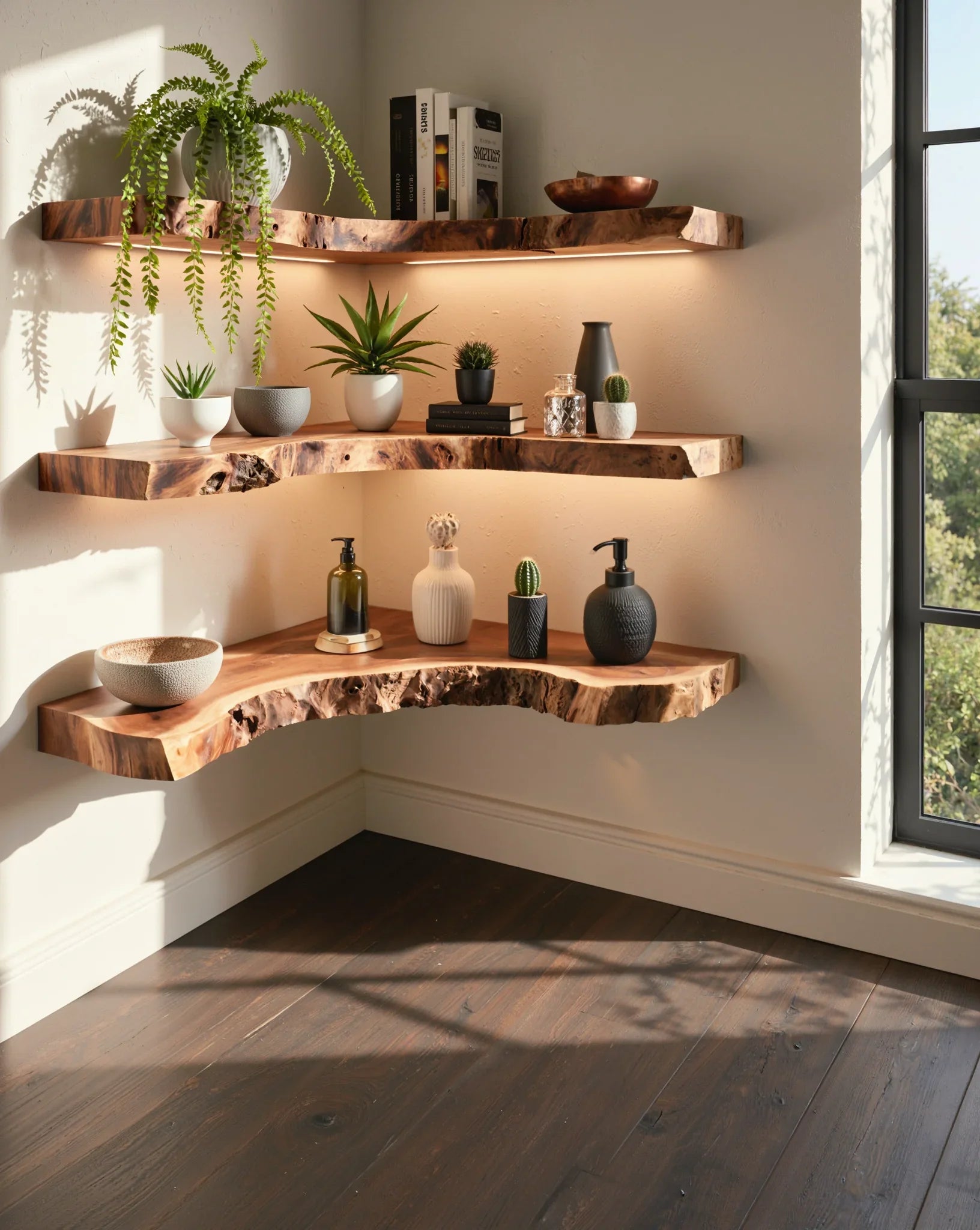
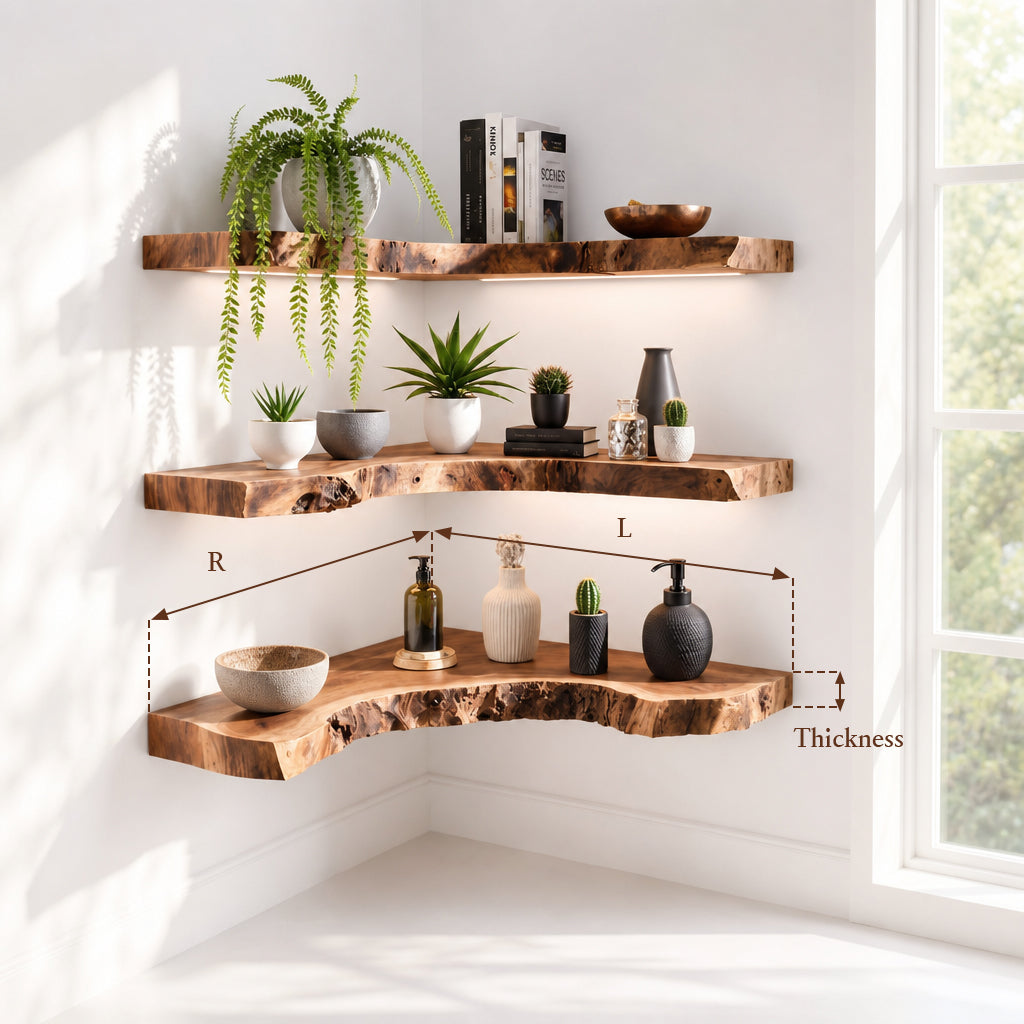
Idea 7: The Corner Float
Use corner floating shelves to activate dead corner space that's usually wasted. A pair of corner shelves stacked vertically turns an empty corner into a display nook. Style with items that have dimension, a small sculpture, a round vase, a candle on a tray, rather than flat items that get lost in the 90-degree angle.
Corner shelves work especially well beside windows, where the adjacent natural light highlights whatever you display.

Idea 8: The TV Companion
Mount a floating shelf 8-12 inches above the television. This replaces the sterile look of a TV mounted alone on a blank wall. On the shelf: a plant on one side, a few books or a small piece of art on the other. The shelf frames the TV and makes the entire wall feel intentional rather than empty.
Alternatively, mount shelves on either side of the TV at the same height as the screen's top edge to create a flanking effect.
Idea 9: The Travel Collection
Dedicate a shelf to items collected from trips: a small ceramic from Portugal, a woven basket from Morocco, a framed photo from Japan. Limit it to one item per destination and keep the total under 7 objects. This tells a story without becoming a cluttered souvenir display.
The key is curation. Not everything you brought back deserves shelf space. Pick the items that look best together as a group, not the items with the most sentimental value individually.
Idea 10: The Minimalist Statement
One floating shelf. One object. That's it.
A single thick walnut or oak shelf, 24-36 inches long, with a single item, a sculptural vase, a framed photograph, or a unique ceramic, creates a focal point through restraint. This works in modern and Japandi interiors where negative space is a design element.
The shelf itself becomes part of the art. This is where material quality matters most, a chunky handcrafted solid wood shelf from Ashdeco has the grain character and presence to stand on its own.
Idea 11: The Reading Nook Shelf
If your living room has a reading chair or chaise, mount a small floating shelf within arm's reach. It replaces or supplements a side table, holding your current book, a reading light (a small rechargeable one), and a coaster for your drink. It's functional furniture disguised as decor.
Idea 12: The Over-Sofa Gallery
Two or three floating shelves centered above the sofa, spanning roughly two-thirds of the sofa's width. This replaces the traditional "one big piece of art above the couch" with something more dynamic. Mix framed art, leaned photographs, small plants, and a few objects across the shelves.
The bottom shelf should be at least 8-10 inches above the tallest person's head when seated. This prevents anyone from bumping it and keeps the display visible from across the room.
Idea 13: The Bar Shelf
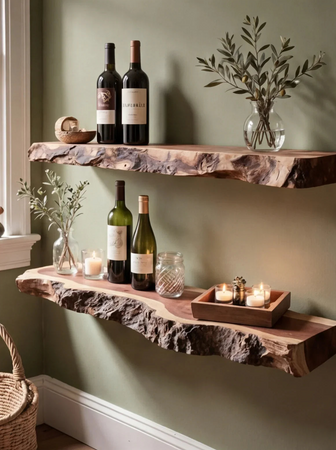
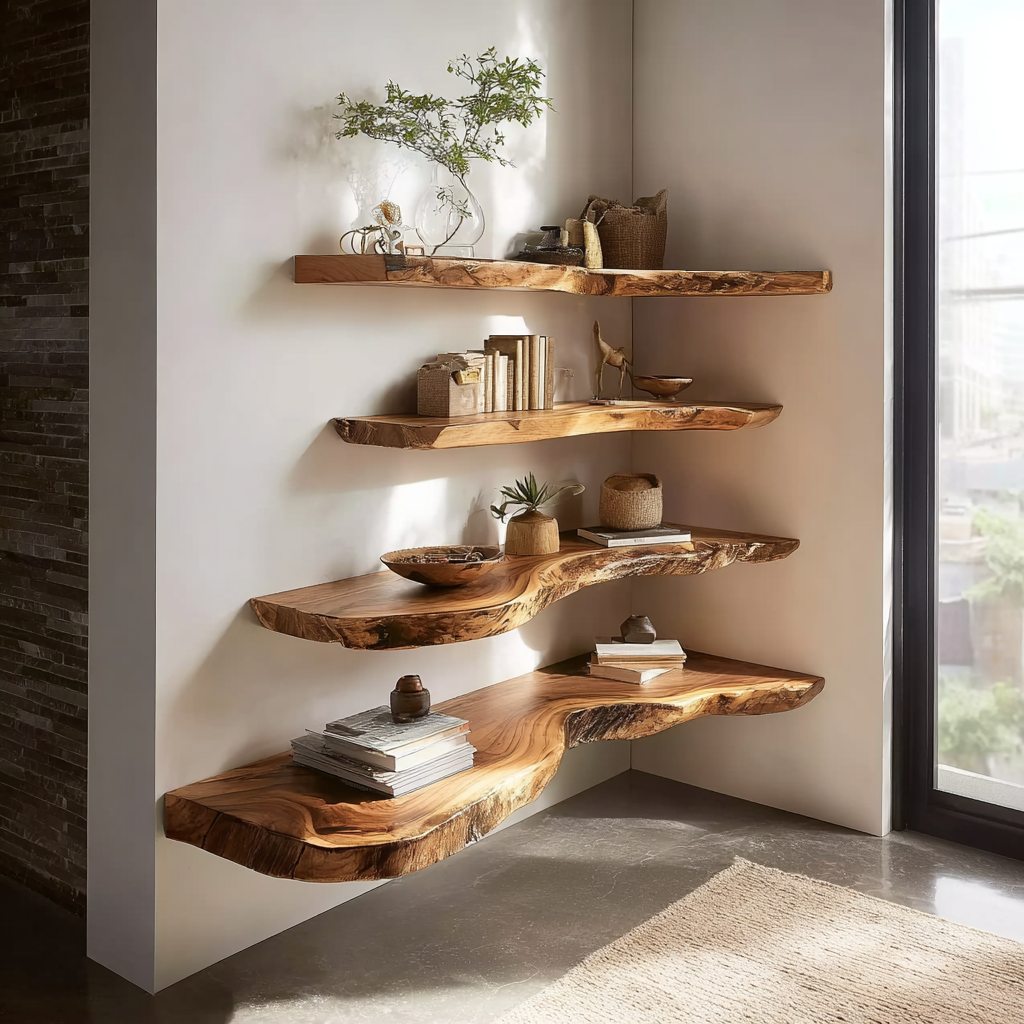
A floating shelf in the living room can double as a minibar. Display a few nice bottles, two or three types of glassware, and a small tray with bar tools. This works best with a thick, sturdy shelf that can handle the weight (bottles are heavy) and looks premium enough for the purpose.
Mount it at standing height (about 42 inches from the floor) near where you tend to entertain. Add a second shelf below for additional bottles or a small ice bucket on evenings when you have guests.
Idea 14: The Seasonal Rotation
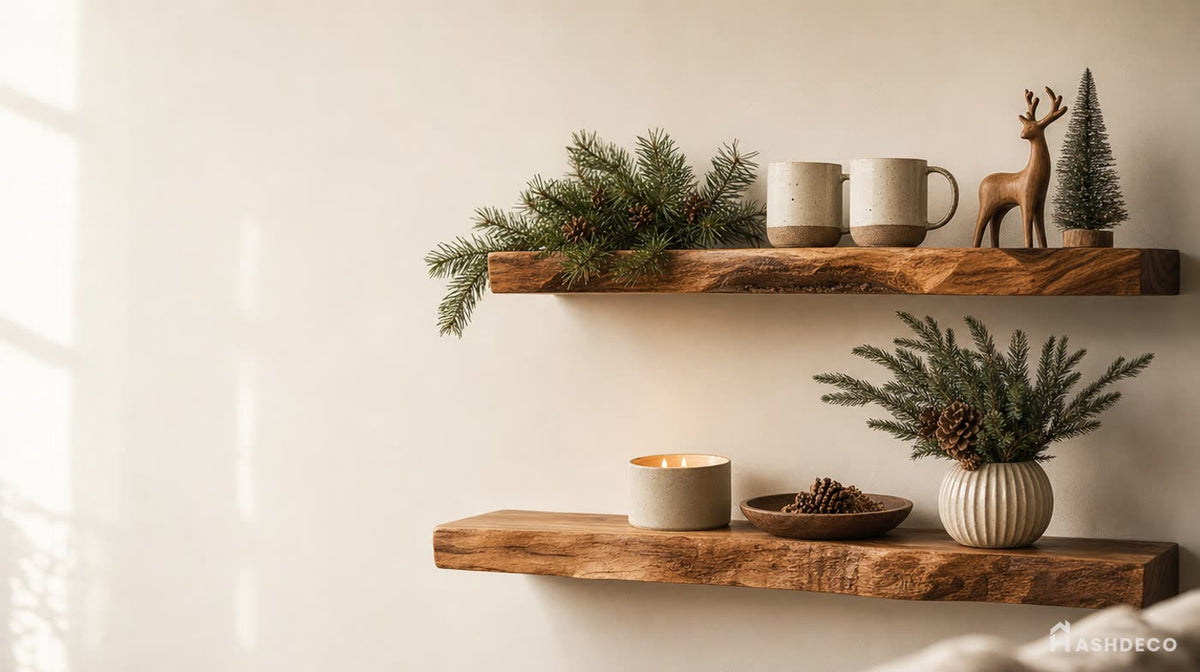
Keep a floating shelf as your "seasonal display" spot. In spring: fresh flowers in a vase with a few light-colored books. In summer: shells, a candle, and a tropical plant. In fall: amber glass, dried flowers, and warm-toned ceramics. In winter: evergreen clippings, a candle, and a cozy framed print.
This keeps the living room feeling alive and responsive to the time of year. It also gives you a scheduled excuse to refresh the room's look four times a year.
Idea 15: The Family Timeline
A long floating shelf displaying a chronological row of family photographs in matching frames. Start from the left with the oldest photo, progress to the right with the most recent. Add a new frame each year. Over time, this becomes a living timeline of your family's story, more meaningful than any gallery wall because the sequence tells a narrative.
Use frames of the same color and style but varying sizes. The uniformity of the frames creates cohesion; the size variation adds visual interest.

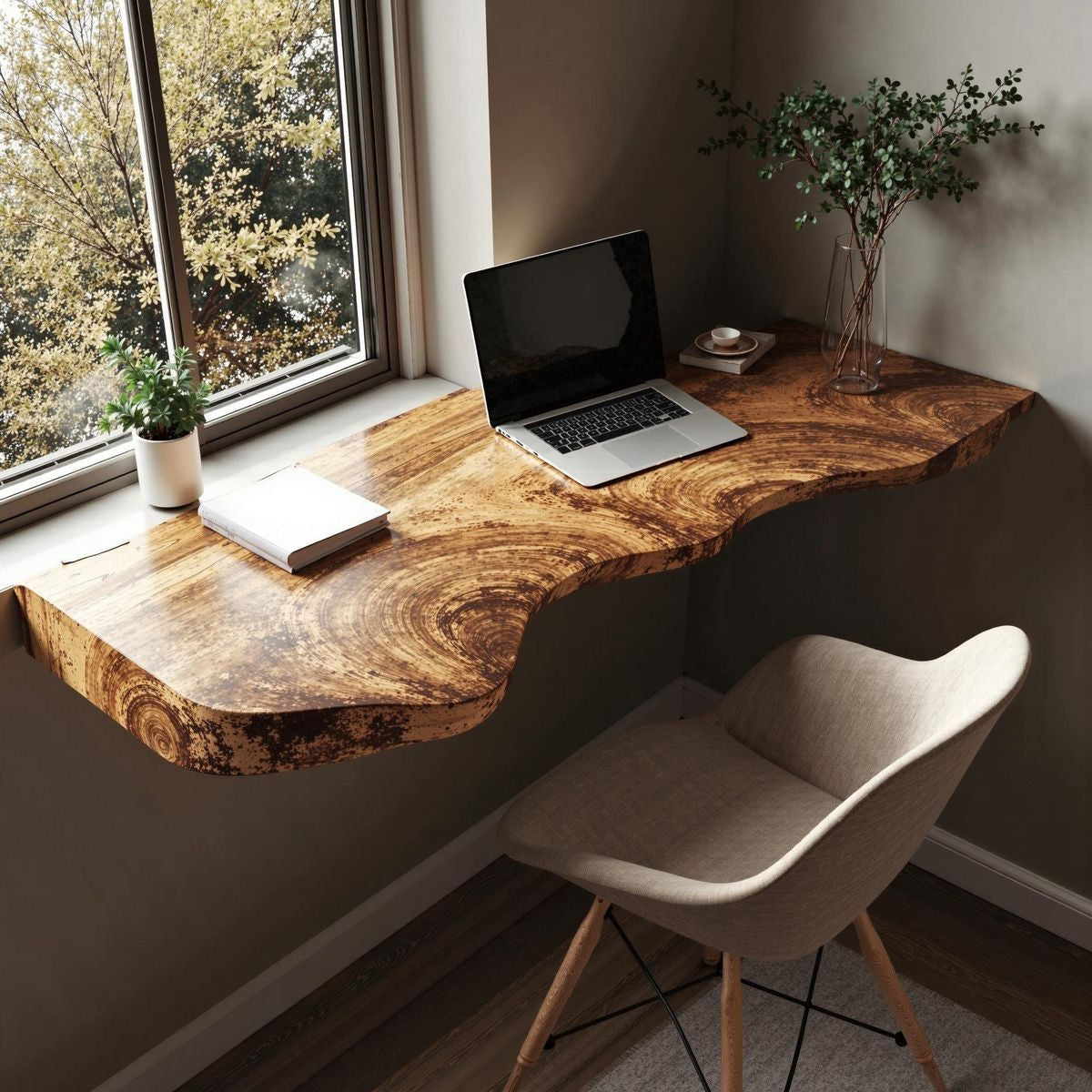
Live Edge Wood Floating Shelf - Handmade Wavy Carved Wall Shelf for Rustic Modern Decor
Placement Guide: Where to Mount Living Room Floating Shelves
Best Locations
- Above the sofa , the most common and effective spot. Fills the large blank wall and creates a focal point.
- Flanking a window , shelves on either side of a window frame the view and use otherwise dead wall space.
- In a corner , corner shelves turn wasted space into a feature.
- Beside or above the TV , breaks up the "black rectangle on white wall" look.
- In an alcove or niche , built-in niches with floating shelves create a built-in-bookcase effect at a fraction of the cost.
- Along a hallway wall , the transition from entryway to living room benefits from a shelf with a few welcoming objects.
Mounting Heights
- Eye level (56-62 inches from floor): Best for single decorative shelves you want people to notice immediately
- Above furniture (8-12 inches above the sofa/console): Creates connection between the shelf and the furniture below
- High display (72+ inches): Works for plants and items that look good from below. Keeps items out of reach of children and pets.
How Many Shelves?
For most living rooms: 1-3 floating shelves is the sweet spot. One creates a focal point. Two or three create a composition. More than three risks turning the wall into a storage system rather than a design element. If you need five or more shelves' worth of display space, consider a dedicated bookshelf or built-in system instead.
Choosing the Right Floating Shelves for Your Living Room
Material and proportion matter more in the living room than in any other space because the shelves are on constant display.
- Solid wood is the top choice for warmth and character. Handcrafted floating shelves made from walnut, oak, or acacia have grain variation and depth that improve the room.
- Thickness: 1.5-2 inches creates a substantial, high-end look. Thin shelves (under 1 inch) look flimsy in living rooms where they're a focal point.
- Length: Match the shelf to the furniture below it. Above a sofa, the shelf should span 50-75% of the sofa's width. A shelf that's too short looks like an afterthought.
- Finish: Match the shelf's tone to the room's palette. Dark walnut against white walls creates drama. Natural oak on warm-toned walls creates harmony. Both work, just be intentional.
Frequently Asked Questions
How high should floating shelves be above a sofa?
8-12 inches above the top of the sofa back. This creates a visual connection between the shelf and the seating area without crowding. For tall-backed sofas, 8 inches works. For lower-profile couches, 10-12 inches provides better proportion.
How do I style floating shelves without them looking cluttered?
Follow the rule of thirds: one-third books or frames, one-third decorative objects, one-third empty space. Group items in odd numbers (1, 3, or 5). Vary heights within each grouping. Step back after placing each item and remove anything that doesn't improve the overall composition.
Can floating shelves hold heavy items like books?
Yes, solid wood floating shelves mounted into studs can hold 25-50 lbs depending on length and construction. A foot of stacked books weighs roughly 10-15 lbs. Choose shelves rated for the load you plan to put on them and distribute weight evenly.
Do floating shelves damage walls?
Installation requires drilling holes for brackets or mounting hardware, which leaves holes when removed. However, these are small and easily patched with spackle and a touch of paint. The visual benefit of floating shelves far outweighs the minor wall repair needed if you ever remove them.
What's the best floating shelf material for a living room?
Solid wood, specifically walnut, oak, or acacia for their grain character, durability, and warmth. In the living room, the shelf is a design element as much as a functional one, so material quality is visible and impactful. Handcrafted wood shelves from artisan makers offer grain variation and finishing quality that mass-produced alternatives can't match.
Start With One
The best advice for living room floating shelves: start with a single shelf, style it well, and live with it for a few weeks before adding more. You'll learn what works in your space, the right height, the right objects, the right amount of empty space, through experience rather than theory.
Choose a shelf that's worth looking at on its own. Solid wood with visible grain, a thickness that feels substantial, and a finish that catches the light. When the shelf itself is beautiful, styling it becomes easier, everything you place on it has a worthy stage.