



















Quick view
Shop this guide
Handcrafted Floating Shelves, made to order in solid wood.
 Sculptural Overlapping Circular Solid Wood Wall Shelf with Multi Tier Display
From $1,354.00
Sculptural Overlapping Circular Solid Wood Wall Shelf with Multi Tier Display
From $1,354.00
 Mountain Landscape Relief Solid Wood Floating Shelf Live Edge Display Ledge
From $1,154.00
Mountain Landscape Relief Solid Wood Floating Shelf Live Edge Display Ledge
From $1,154.00
 Enchanted Forest Circular Wall Shelf - Round Carved Timber Mushroom Portal
From $1,023.00
Enchanted Forest Circular Wall Shelf - Round Carved Timber Mushroom Portal
From $1,023.00
 Cottagecore Arched Wood Wall Niche - Hand-Carved Fairy Mushroom Alcove Shelf
From $1,356.00
Cottagecore Arched Wood Wall Niche - Hand-Carved Fairy Mushroom Alcove Shelf
From $1,356.00
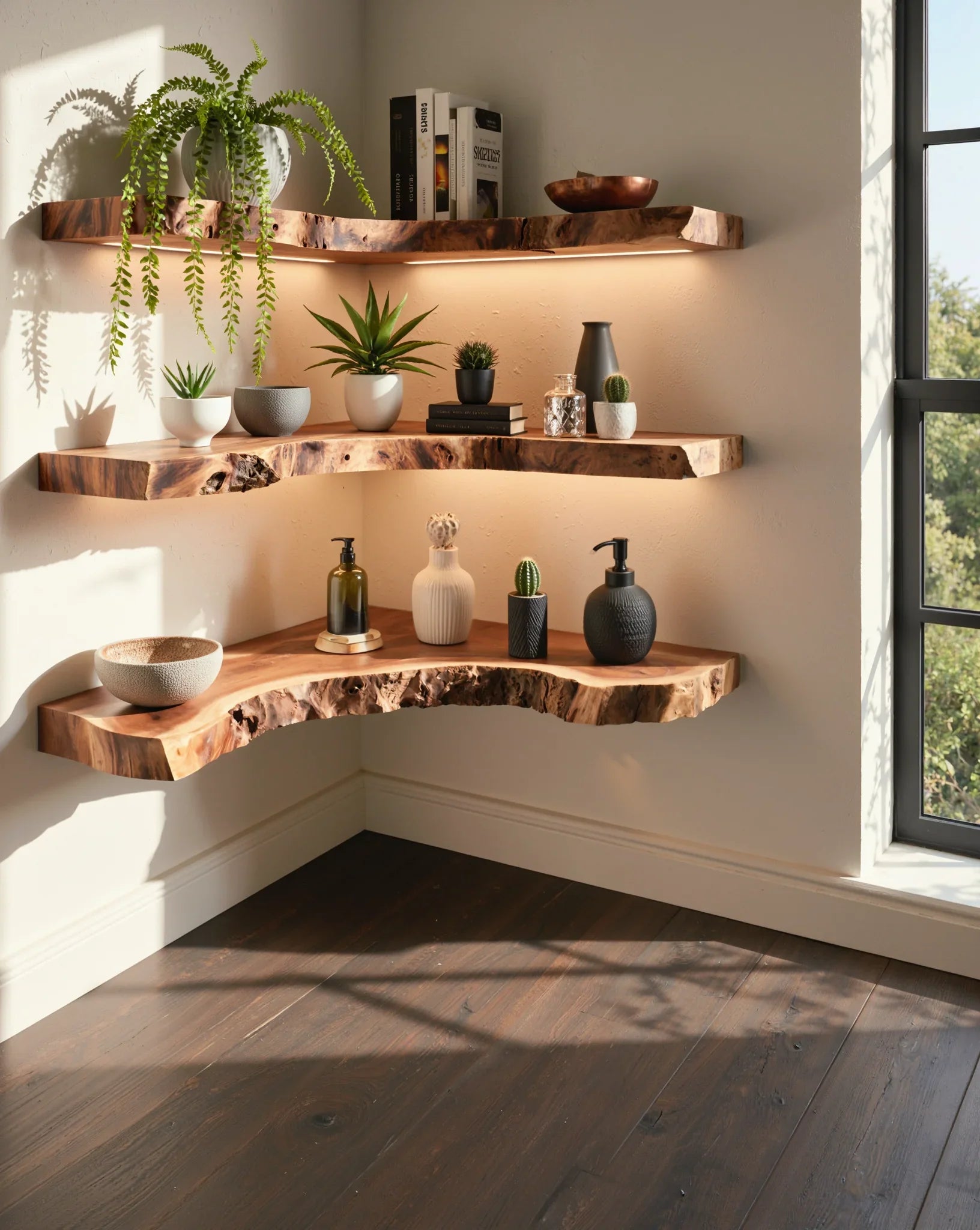
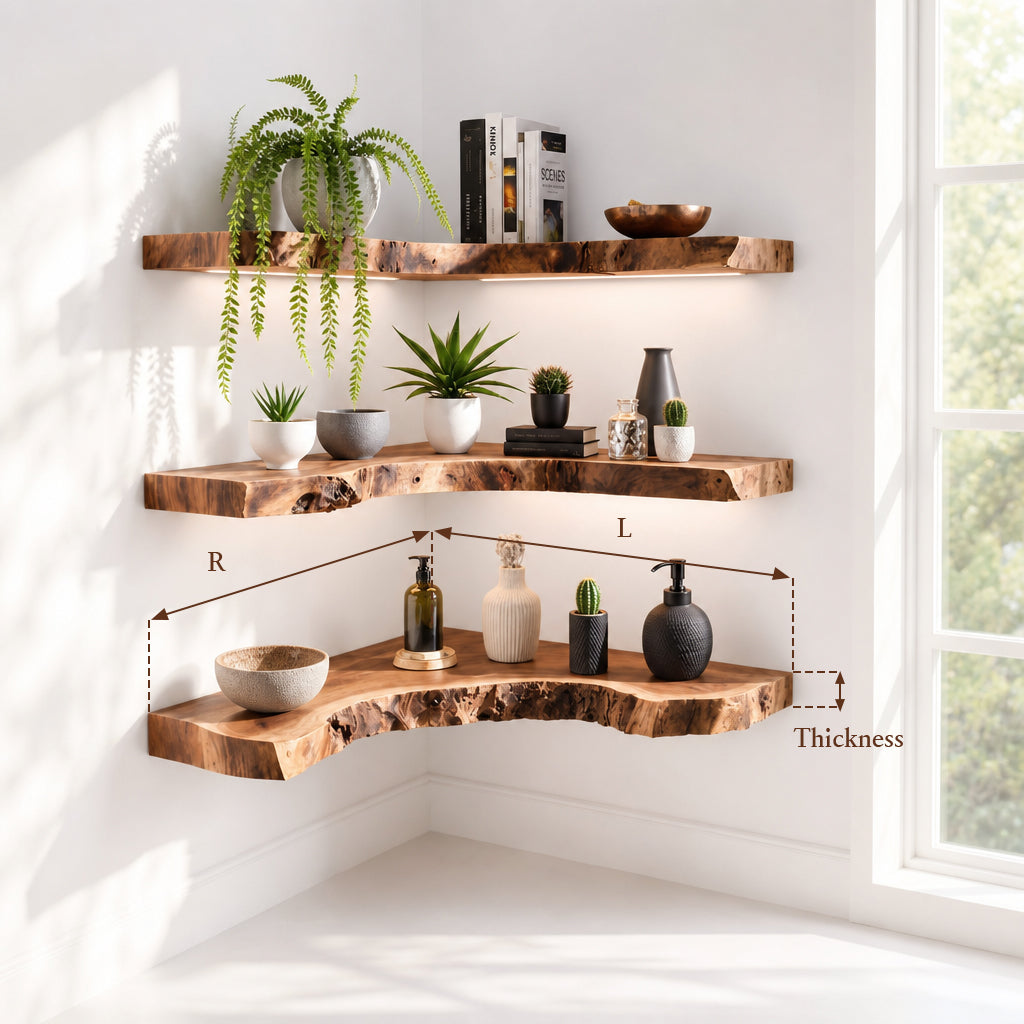
 Sculptural Hand-Carved Mushroom Solid Wood Corner Floating Shelf & Biomorphic Wall Display Ledge
From $345.00
Sculptural Hand-Carved Mushroom Solid Wood Corner Floating Shelf & Biomorphic Wall Display Ledge
From $345.00
 Sculptural Hand-Carved Mushroom Solid Wood Floating Shelves & Biomorphic Wall Display Ledges
From $345.00
Sculptural Hand-Carved Mushroom Solid Wood Floating Shelves & Biomorphic Wall Display Ledges
From $345.00
The standard kitchen shelf height is 18 inches above the countertop, with 12–14 inches of vertical spacing between additional shelves above it. These kitchen shelf height measurements work for most kitchens, but specific measurements change depending on your counter depth, ceiling height, appliance sizes, and proximity to the stove. This guide covers every measurement you need before drilling a single hole.

Getting these numbers right is the difference between floating shelves that function beautifully and shelves that block your backsplash, interfere with appliances, or sit too high to reach comfortably.
How High Should Kitchen Shelves Be Above the Counter?
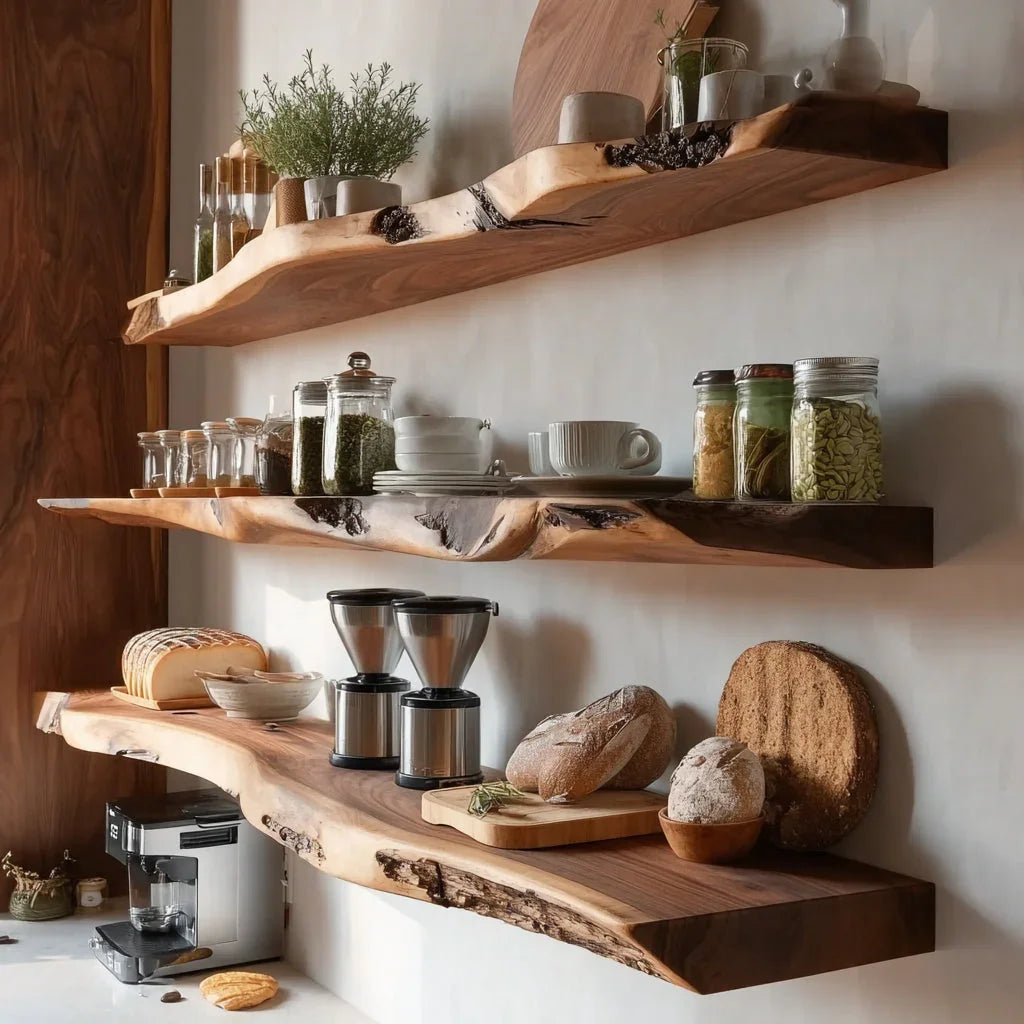
The bottom of your lowest kitchen floating shelf should sit 18 inches above the countertop surface. This kitchen floating shelf height standard ensures proper clearance and usability in most kitchen layouts.
Why 18 inches works: A standard kitchen countertop is 36 inches from the floor. Add 18 inches to clear the backsplash zone, and your first shelf bottom sits at 54 inches from the floor. The shelf surface (with a 1.5-inch thick shelf) is at 55.5 inches - reachable without stretching for anyone 5'3" and taller.
When to go lower (15-16 inches above counter):
- No tall appliances on the counter below
- Shelves are purely decorative (holding small items under 6 inches tall)
- Primary users are under 5'4"
- The wall section is away from the main prep area
When to go higher (20-22 inches above counter):
- A stand mixer (14-16 inches tall with bowl) or large coffee maker sits below
- The backsplash is decorative tile you want to display
- Shelves are near the stove and need extra heat clearance
- Primary users are 5'10" and taller
Maximum practical height: The top shelf should not exceed 72 inches from the floor for daily-use items. Above 72 inches, only 10% of the US adult population can comfortably reach without a step stool, per CDC anthropometric data.
Spacing Between Kitchen Shelves: The 12–14 Inch Rule
Vertical spacing between kitchen floating shelves determines what you can store on each shelf. The standard 12-14 inches between the top of one shelf and the bottom of the shelf above it works for most kitchen items. We cover this in more detail in our how to mount floating shelves guide.
12-inch spacing fits: standard dinner plates stacked (10.5 inches), water glasses (6-7 inches), spice jars (4-5 inches), small plants (4-6 inches), coffee mugs (4-5 inches).
14-inch spacing fits: everything above plus tall water bottles (10-12 inches), wine glasses (8-9 inches), oil/vinegar bottles (10-12 inches), small cutting boards leaned against the wall (12-14 inches).

16-inch spacing (use sparingly): tall vases, mixers, cereal boxes (12-13 inches), and large pitchers. This wider spacing looks proportional only if you have 9-foot or higher ceilings. In standard 8-foot ceiling kitchens, 16-inch spacing between three shelves means your top shelf is too high to reach. Our open kitchen shelving review article walks through the specifics.
How many shelves fit? Here's the math for a standard kitchen with 36-inch counters and 96-inch (8-foot) ceilings:
- Counter to ceiling: 60 inches of wall space
- First shelf at 18 inches above counter: leaves 42 inches
- Shelf thickness (1.5 inches): leaves 40.5 inches
- Second shelf at 12 inches above first shelf surface: leaves 27 inches (after shelf thickness)
- Third shelf at 12 inches above second: leaves 13.5 inches to ceiling
Three shelves is the practical maximum in a standard kitchen. Two shelves with 14-inch spacing is the most common and most comfortable configuration.
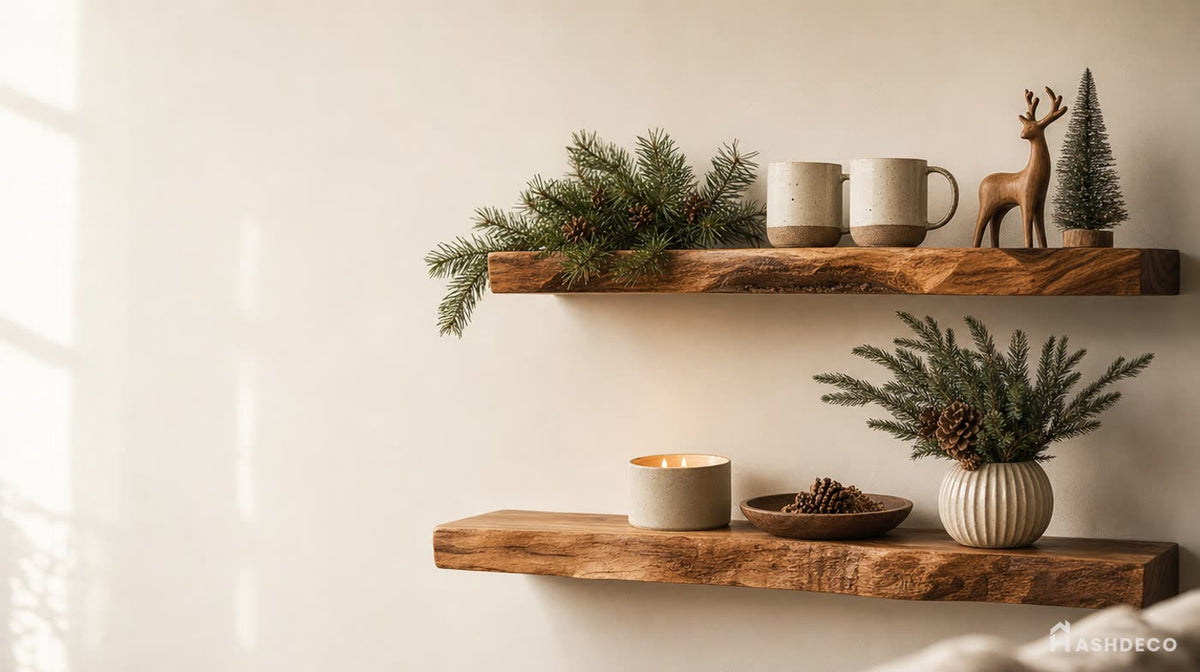


Pantry Shelf Spacing & Height: Measurements by Item Type
Pantry shelves follow different rules than open kitchen shelves. The goal isn't aesthetics — it's maximizing storage capacity while keeping everything accessible. Spacing too tight means items don't fit. Spacing too generous wastes vertical space you can't get back.
Standard pantry shelf spacing by item category:
| Item Type | Item Height | Recommended Shelf Spacing |
|---|---|---|
| Spices & small jars | 4–6 inches | 7–8 inches |
| Canned goods | 4–5 inches | 7 inches |
| Cereal boxes | 11–13 inches | 14–15 inches |
| Wine bottles (horizontal) | 3.5 inches diameter | 5–6 inches |
| Oil & vinegar bottles | 10–13 inches | 14–15 inches |
| Small appliances | 12–16 inches | 18–20 inches |
| Baking sheets & trays | 1–2 inches | 3–4 inches (vertical dividers work better) |
| Mixing bowls (stacked) | 8–12 inches | 13–14 inches |
Bottom shelf height from floor: 6–8 inches minimum. This keeps items off the floor, allows a broom or vacuum to reach underneath, and stays above the moisture zone near baseboards. For heavy items like stand mixers or bulk bags, 12 inches from the floor gives easier access without bending too low.
Top shelf height: 72 inches maximum for regularly accessed items — same rule as kitchen shelves. Above 72 inches, reserve for seasonal or rarely used items only (holiday baking supplies, bulk overflow). A step stool stored in the pantry makes this zone practical without being inconvenient.
How many shelves fit in a standard pantry? A pantry with 84-inch (7-foot) interior height and a 6-inch clearance from floor to first shelf has 78 inches of usable wall height. With 14-inch average spacing and 1.5-inch shelf thickness:
- 78 inches ÷ 15.5 inches per shelf = 5 shelves maximum
- Practical recommendation: 4–5 adjustable shelves for mixed storage
- Fixed shelving: plan one shelf at 7 inches (spices), one at 14 inches (cans/bottles), one at 15 inches (cereal/tall items), one at 20 inches (appliances)
Adjustable vs fixed shelving: Adjustable shelves are worth the extra cost in a pantry. Your storage needs change — a bulk Costco run means temporarily needing more vertical space for oversized items. Fixed shelves lock you into one configuration permanently. If you're building or retrofitting a pantry, pin-hole shelf systems allow 1-inch increment adjustments without tools.
Appliance Clearance: Specific Measurements by Device
Your shelf height depends on what sits below it. Here are the exact heights for common countertop appliances:
| Appliance | Height | Minimum Shelf Clearance Above It |
|---|---|---|
| Coffee maker (drip) | 12-14 inches | 2-3 inches (for opening lid/carafe removal) |
| Keurig/pod brewer | 12-13 inches | 3-4 inches (for pod loading) |
| Stand mixer (KitchenAid Artisan) | 14 inches | 3-4 inches (for attaching bowl, pouring) |
| Toaster oven | 10-12 inches | 4-6 inches (heat clearance, manufacturer required) |
| Microwave (countertop) | 12-14 inches | Not recommended below floating shelves - too heavy to place on shelf, blocks too much space below |
| Knife block | 13-16 inches | 2 inches (for pulling knives straight up) |
| Paper towel holder (upright) | 13-14 inches | 2 inches |
| Blender (Vitamix) | 17-18 inches | 3 inches (for removing lid) |
The clearance rule: Measure the appliance's operating height (with lid open, bowl attached, or top loaded), then add 2-3 inches for hand clearance. That total is your minimum distance from counter to shelf bottom.
Don't miss
These pieces qualify for 10% off orders over $2,000. Applied automatically at checkout.
Distance From Stove: The Heat-Safe Zone
This is the measurement most installation guides skip entirely, and it's the one that prevents material damage and discoloration.
Directly above the stove: No floating shelves. Period. The space above a stove is reserved for a range hood or microwave hood. Heat directly above a gas burner exceeds 200°F, which damages most shelf materials and creates a fire risk per building codes. Standard NFPA fire code requires 24-30 inches of clearance between a cooktop and combustible materials directly above.
Horizontally beside the stove (same wall): Maintain at least 12 inches of lateral distance from the nearest burner edge to the nearest shelf edge. This keeps shelves outside the primary steam and grease plume. At 12 inches lateral distance, air temperature during cooking drops from 150-200°F (directly above) to 100-120°F - safe for sealed wood and metal.
Adjacent wall (perpendicular to stove): Shelves on a wall perpendicular to the stove wall can be placed as close as 6 inches from the corner, provided they're 18+ inches above the counter. The perpendicular angle deflects direct heat, and grease accumulation is 60-70% less than shelves on the same wall.
Opposite wall (facing the stove): No heat restrictions. Standard spacing rules apply. Grease accumulation is minimal at 6+ feet from the stove.
How to Mark and Measure Before Installation
Follow this sequence to get precise measurements without guesswork.
Step 1: Clear the counter below your shelf location. Place the tallest appliance that will live on that counter section.
Step 2: Measure from the top of the appliance (in its tallest operating position) to the point on the wall where you want the shelf bottom. This must be at least 2 inches. Mark this point with painter's tape.
Step 3: Use a 48-inch level to draw a horizontal line at the marked height. This is your first shelf bottom line.
Step 4: From this line, measure up the shelf thickness (typically 1.5-2 inches for solid wood from our kitchen floating shelf collection). Mark the shelf top line.
Step 5: From the shelf top line, measure up 12-14 inches for the next shelf bottom. Repeat for additional shelves.
Step 6: Confirm the top shelf is at or below 72 inches from the floor. If it exceeds 72 inches, reduce spacing between shelves by 1 inch each or eliminate the top shelf.
Step 7: Use a stud finder to locate studs within your marked shelf lines. Each shelf needs at least two stud connections for kitchen loads (15-30 lbs per shelf). Mark stud centers on the shelf bottom lines.
FAQ
How high should floating shelves be above a kitchen counter? The standard is 18 inches from counter surface to the bottom of the shelf. Adjust down to 15-16 inches if no tall appliances sit below, or up to 20-22 inches if a stand mixer or tall coffee maker needs clearance. Never exceed 72 inches from the floor for the top shelf in daily-use configurations. For a deeper dive, see our article on kitchen floating shelves durability guide.
What is the best spacing between kitchen floating shelves? 12-14 inches between the top surface of one shelf and the bottom of the shelf above. Use 12 inches for plates, mugs, and spice jars. Use 14 inches if you need room for wine glasses, bottles, or cutting boards. Avoid spacing wider than 16 inches - it wastes vertical space and looks disproportionate in standard-height kitchens.
How many floating shelves should I put in my kitchen? Two shelves is the standard for most kitchen wall sections. Three shelves fit under 8-foot ceilings with 12-inch spacing, but the top shelf sits above 66 inches - a stretch for many users. One shelf works well as a dedicated display for frequently used items. More than three shelves creates a cluttered look and makes the bottom shelves hard to access.
Can I put floating shelves above a stove? No. Building codes require 24-30 inches of clearance above a cooktop for combustible materials, and that zone should be occupied by a range hood. Place floating shelves at least 12 inches to the side of the stove on the same wall. On a perpendicular wall, 6 inches from the corner is acceptable at standard height.
Do I need to hit studs for kitchen floating shelves? Yes. Kitchen shelves carry 15-30 lbs of dishes, glasses, and pantry items. Drywall anchors alone are rated for static loads, but the daily act of placing and removing heavy dishes creates dynamic forces that can loosen anchors over months. Hit at least two studs per shelf. If studs don't align with your desired shelf position, use a French cleat - it spans multiple stud bays and distributes the load.