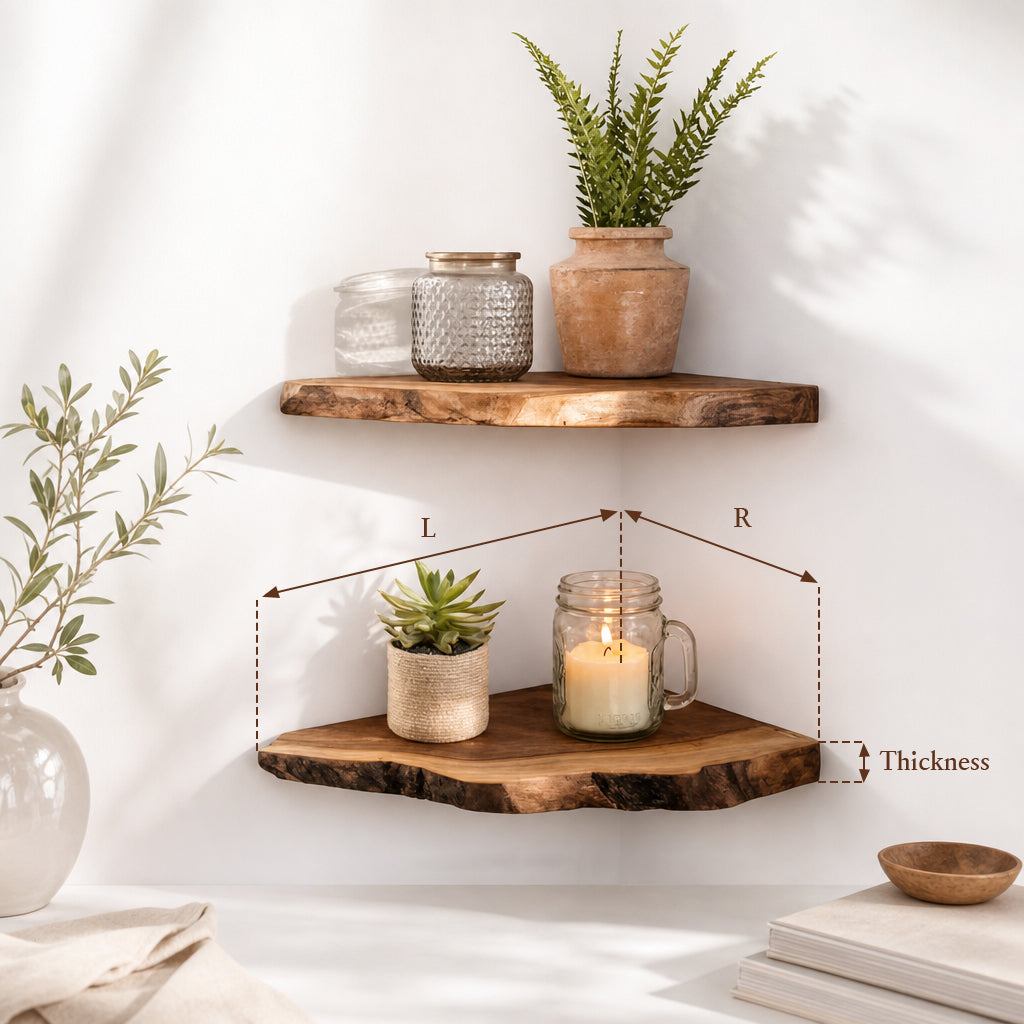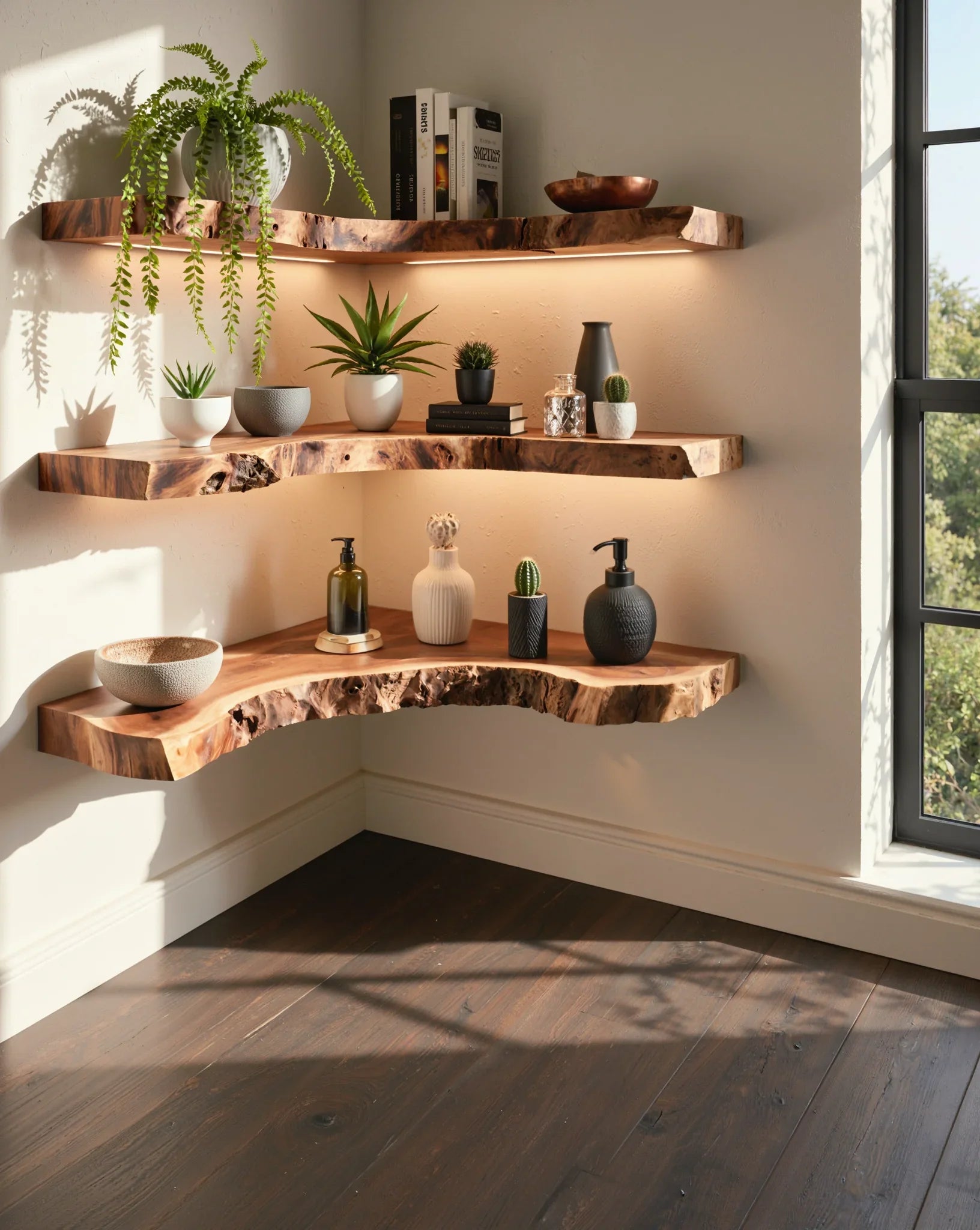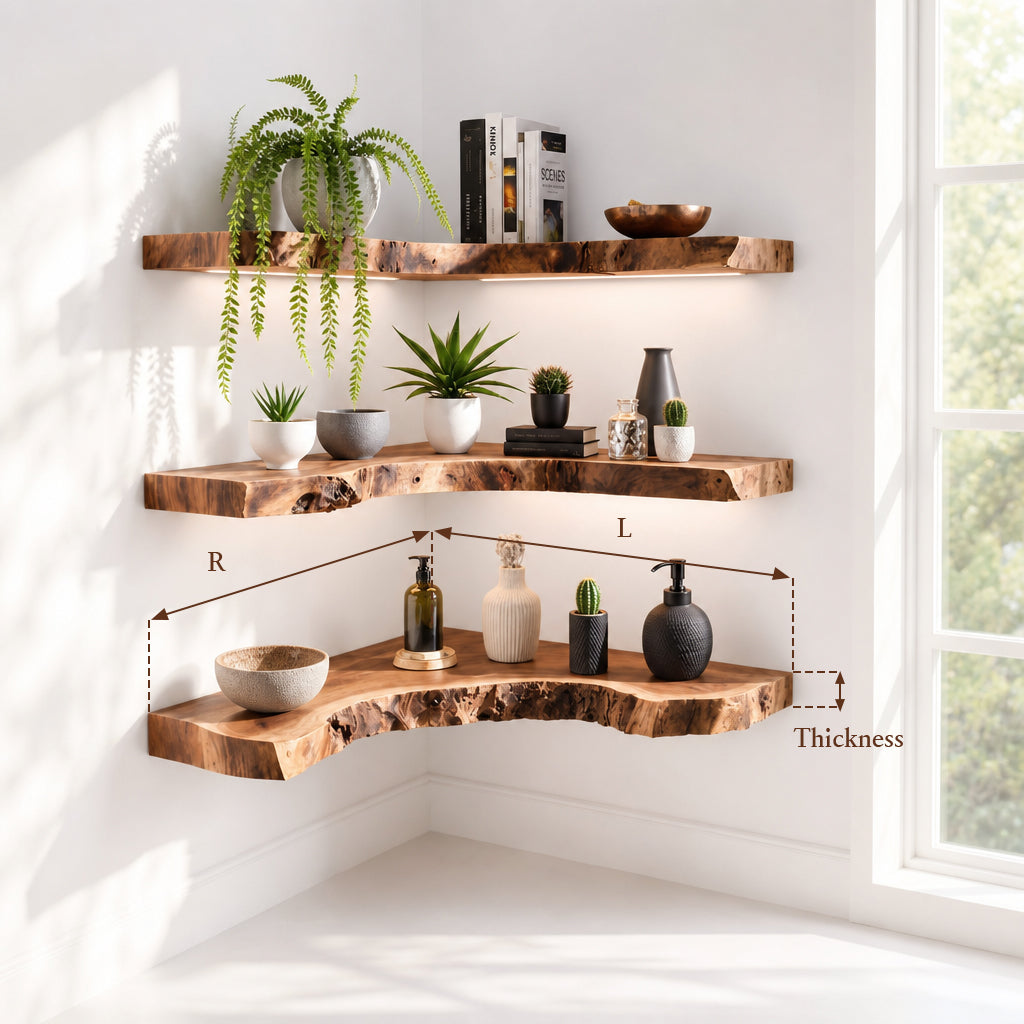
Open kitchen shelving looks beautiful in magazine photos. But what happens after 2 years of daily cooking, seasonal humidity, and actual life? This isn't a design pitch - it's an honest accounting of what works, what doesn't, and what nobody tells you about floating shelves in a kitchen before you commit to removing your cabinet doors.

We make kitchen floating shelves for a living, and we still believe it's important to tell you exactly what you're signing up for. Our 387 customers (4.9★ average rating) have been generous with their feedback - the good, the frustrating, and the surprisingly great.
The Honest Pros: What Actually Improves After Going Open
Open kitchen shelving genuinely improves several aspects of kitchen functionality when done right. These benefits are consistent across our customer base and validated by 2+ years of real-world use. The improvements aren't just visual - they change how you interact with your kitchen daily.
You actually use your good dishes
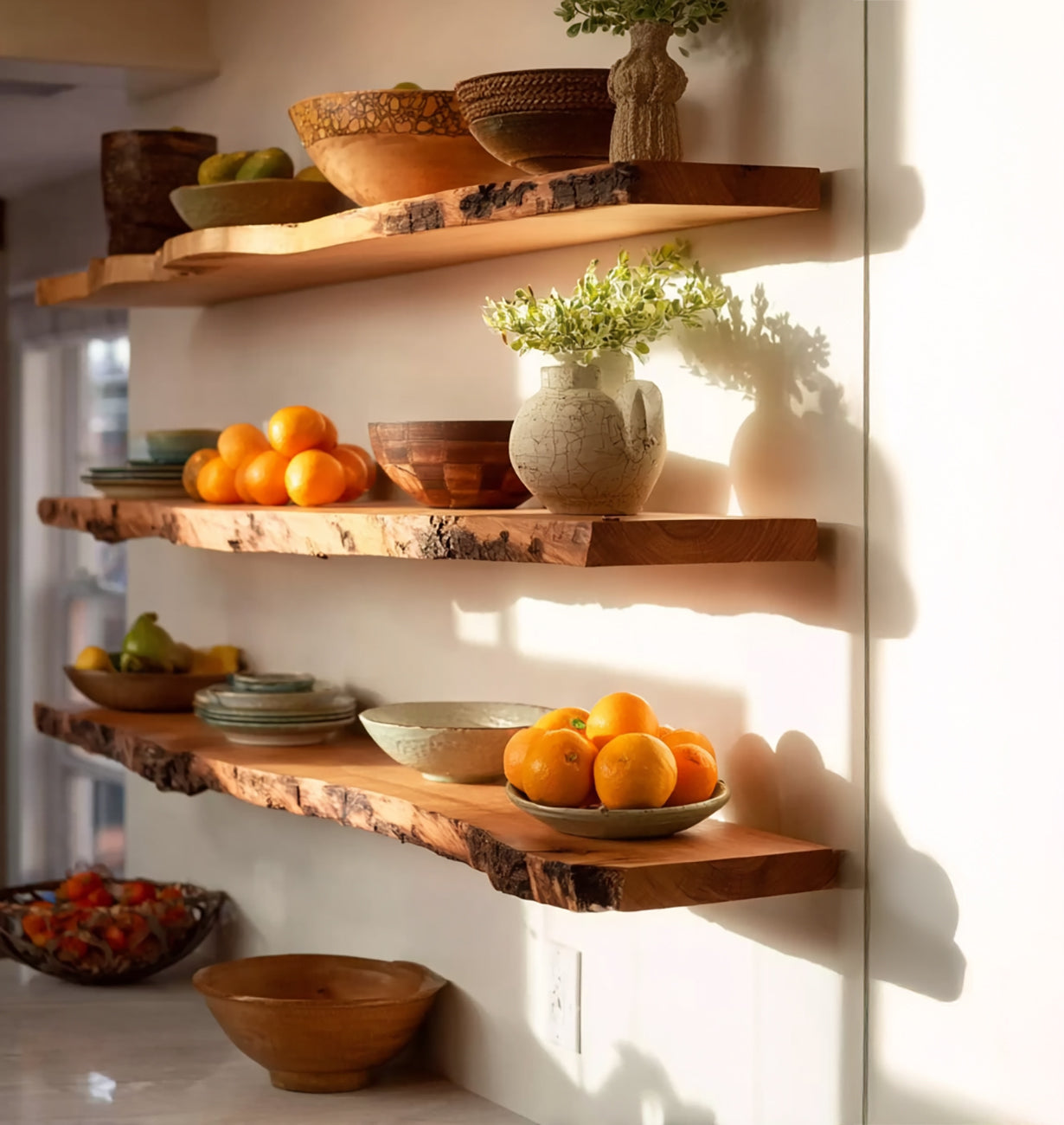
This is the number-one unexpected benefit customers report. Behind cabinet doors, the nice ceramic bowls and handmade mugs stay hidden. On open shelves, you reach for them daily because they're visible and accessible. One customer told us: "I stopped using the ugly plastic containers because they'd look terrible on display. Everything in my kitchen got an upgrade by default."
The psychology is simple: open shelves create gentle accountability. You curate what goes on them, and that curation raises the baseline quality of everything in reach.
Cooking gets faster
Grabbing a spice, a plate, or a mixing bowl from an open shelf takes 2-3 seconds. Opening a cabinet, locating the item, pulling it out, and closing the cabinet takes 6-10 seconds. Multiply by 30-50 retrievals during a full cooking session. Over a week, the time savings are measurable - roughly 10-15 minutes of cumulative cabinet-door interactions eliminated.
This matters more than it sounds. Professional kitchens use open shelving universally because speed depends on visibility. Commercial kitchens don't hide their tools behind doors, and there's a functional reason for that.
Your kitchen feels larger

Open shelves create visual depth where upper cabinets create visual walls. Replacing even one section of upper cabinets with floating shelves in a standard 10 × 12-foot kitchen makes the room feel approximately 15-20% more spacious, based on common interior design principles. The wall color above and between shelves adds depth that solid cabinet fronts eliminate. If you're weighing your options, our guide on kitchen floating shelves durability breaks it down further.
In kitchens under 100 square feet - which includes most apartments - this visual expansion is significant. Several customers with galley kitchens specifically mentioned that open shelves were the single biggest change in making the space feel livable.
The character factor
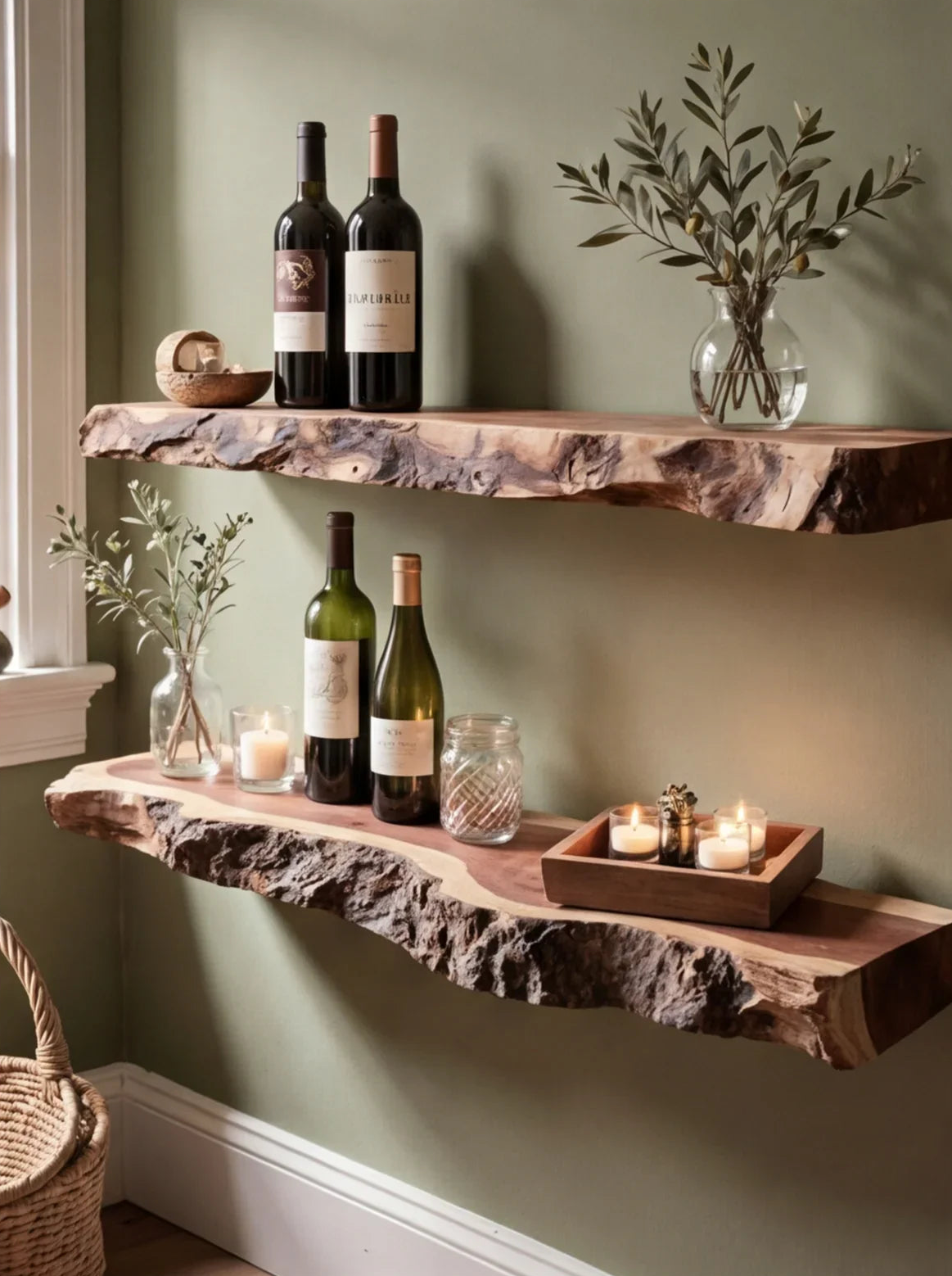
Solid wood floating shelves develop patina over time. At year two, a walnut shelf shows a deeper, richer tone than day one. The grain becomes more pronounced as natural oils in the wood migrate to the surface. Knife nicks and coffee ring shadows tell the story of a kitchen that's actually used. This isn't damage - it's character. We cover this in more detail in our kitchen shelf spacing guide guide.
MDF or laminate shelves don't offer this. They look identical at year two if undamaged, or worse if moisture has reached the core. Solid wood is the only kitchen shelf material that improves visually with age.
The Honest Cons: What Nobody Warns You About
Every article about open shelving mentions dust. That's the easy one. Here are the full-spectrum cons, ranked by how much they actually affect daily life.
Grease film is the real enemy (not dust)
Dust is manageable - a weekly wipe handles it. Grease is different. If you fry, sauté, or roast regularly, a fine oil mist settles on everything within 4-6 feet of the stove. On open shelves, this means your plates, bowls, and glasses develop a barely perceptible sticky film within 7-10 days.
The fix: run your range hood on medium during cooking (not just when smoke appears). A vented range hood removes 65-80% of airborne grease. A recirculating hood removes 40-50%. Without a hood, grease accumulates twice as fast.
Customers who cook 5+ times per week and don't use a range hood consistently report the most frustration with open shelving. Those with good ventilation barely mention it.
You need to keep it tidy (always)
Closed cabinets forgive chaos. Mismatched containers, half-empty bags of flour, and the novelty mug collection from 2015 all hide behind doors. Open shelves don't forgive.
This means: you either develop a system for keeping display-ready items on shelves (and storing everything else in lower cabinets or a pantry) or you live with a kitchen that looks cluttered. There's no middle ground.
The practical division most customers settle on: open shelves for dishes, mugs, glasses, and spice jars. Closed storage for food packaging, cleaning supplies, and anything in a plastic bag or box. This 70/30 split (70% daily-use items open, 30% utilitarian items closed) is the sweet spot.
Fragile items are exposed to bumping and earthquakes
Open shelves have no front barrier. A shoulder brush while reaching up, a child pulling on a shelf edge, or seismic activity in earthquake-prone zones can send dishes to the floor. In two years, most customers report 1-2 accidental drops (typically mugs). Nobody reports it as a dealbreaker, but it's worth knowing.
Practical prevention: don't stack items more than two high on open shelves. Keep heavier items on lower shelves. If you're in California or the Pacific Northwest, consider a small lip along the shelf front - our artisans can add a 1/4-inch raised edge that's nearly invisible but catches sliding plates. Use museum putty under lightweight items if you're in a high-seismic area.
Not everything looks good after 2 years of display
At year one, your curated shelf looks like a magazine cover. At year two, here's what still looks great and what doesn't:
Still looks great: Solid ceramic dishes (white or earth tones), glass jars with visible contents (pasta, rice, spices), wooden cutting boards leaned against the wall, plants.
Looks tired: Printed mugs (graphics fade from light exposure), plastic containers (yellowing), anything with paper labels (labels curl and discolor), cheap glasses (cloudiness from kitchen humidity).
Looks better than year one: Solid wood shelves (deeper patina), cast iron (better seasoning), handmade pottery (subtle crackle pattern develops in glaze).
The lesson: choose shelf items the way you'd choose furniture - for materials that age well, not just for how they look in the store.
What Our Customers Actually Say (From 387 Reviews)
We asked customers specifically about kitchen use in follow-up conversations. Patterns emerged:
Most common positive: "I love how easy it is to grab things" - mentioned in roughly 40% of kitchen-specific feedback. Accessibility consistently beats aesthetics as the primary benefit.
Most common concern: "I didn't expect how often I'd need to wipe them" - mentioned in about 25% of kitchen reviews. The frequency surprised people, though most adapted within the first month and now consider it routine.
Surprise positive: "My kitchen looks way bigger" - mentioned unprompted by about 30% of customers who replaced upper cabinets. The visual expansion effect was stronger than they anticipated.

Rare but honest: "I wouldn't recommend them above the stove" - from 3 customers who mounted shelves directly above their cooktop. The heat and grease concentration directly above burners is extreme. We agree: keep floating shelves at least 24 inches laterally from the nearest burner. For a deeper dive, see our article on how to mount floating shelves.
The Verdict: Who Should (and Shouldn't) Go Open
Open kitchen shelving works for you if: you cook with ventilation (range hood), you're willing to wipe shelves weekly, you prefer access and aesthetics over maximum hidden storage, and you'll curate what goes on display.
Open kitchen shelving is frustrating if: you fry daily without ventilation, you want to store everything out of sight, you have young children who climb, or you live in a high-dust area (near construction, major roads) without strong HVAC filtration.
The middle path - which most of our customers land on - is a mix. One or two walls with open floating shelves for kitchen use, and remaining storage in closed cabinets. You get the beauty and access where it matters, and the forgiveness of closed storage where you need it.
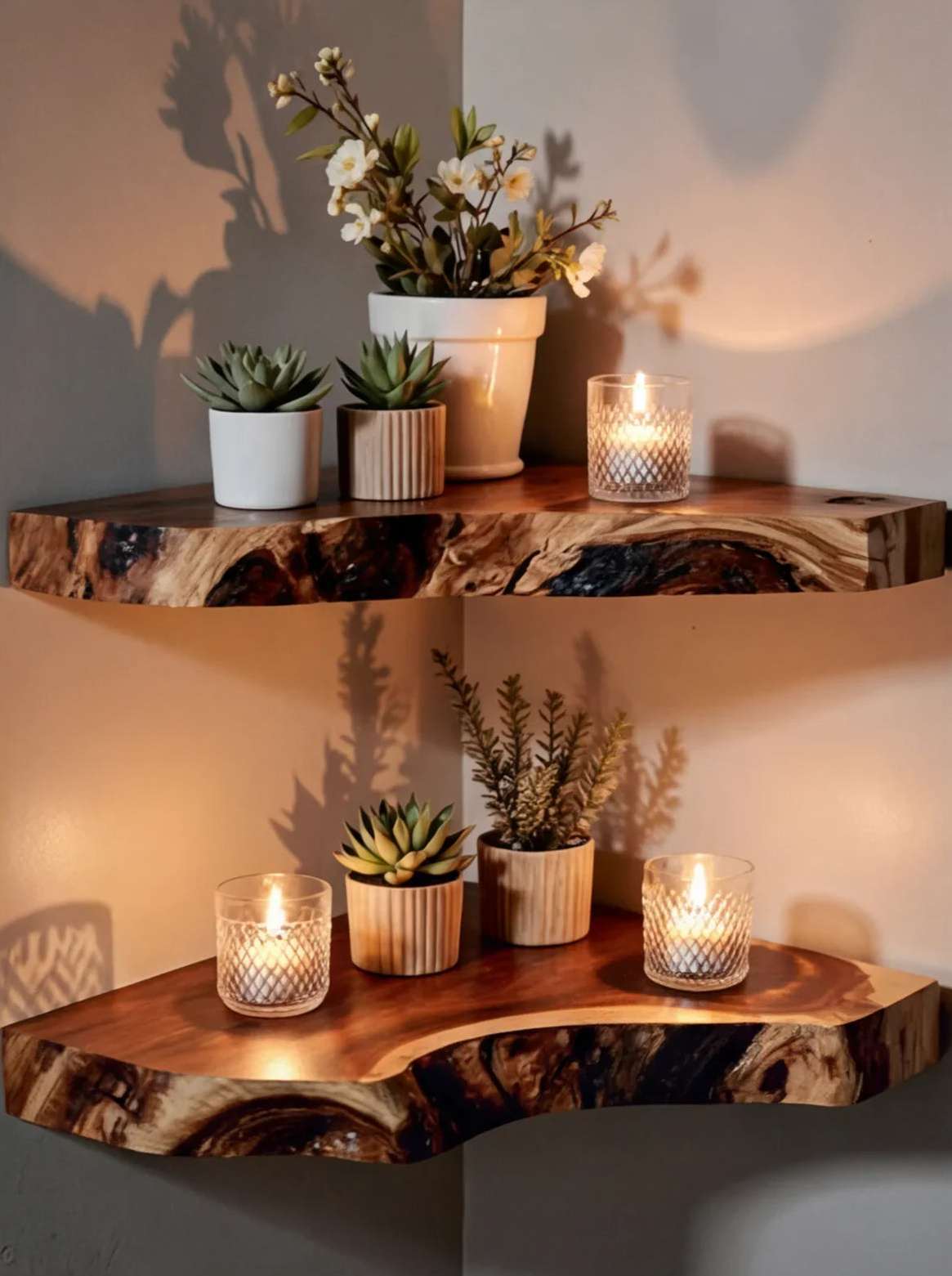
For an unexpected twist, some customers add mushroom floating shelves as accent pieces in kitchens - small enough for a single spice jar or herb pot, sculptural enough to break up the linear rhythm of standard shelves.
FAQ
Do open kitchen shelves collect a lot of dust? Yes, but less than you might fear. Shelves within 4 feet of the stove collect more grease than dust. Shelves farther away collect visible dust within 5-7 days. A weekly wipe with a damp cloth takes 3-5 minutes for a typical 3-shelf setup. Using a range hood during cooking significantly reduces both dust and grease accumulation.
Are open kitchen shelves going out of style? No. Open shelving has been a standard in professional and farmhouse kitchens for decades. The current trend simply brought it into modern and minimalist contexts. Functionally, the benefits (access, visual space, display) are permanent advantages that don't depend on style trends.
How do I transition from cabinets to open shelves without a full renovation? Start by removing the doors from one section of upper cabinets. Live with the open look for 2-4 weeks. If you like it, remove the cabinet box entirely and install floating shelves. If you don't, reattach the doors. This trial costs nothing and gives you genuine experience before committing.
Do open shelves work in rental kitchens? Yes, with one caveat: use floating shelf hardware that mounts into studs (not toggles or anchors alone). When you move out, you'll have 2-4 small holes per shelf to patch - a 10-minute drywall repair. Many landlords consider this normal wear, especially if the shelves improved the kitchen's appeal.
What should I NOT put on open kitchen shelves? Avoid: food in original packaging (boxes, bags - they look cluttered), lightweight plastics (they yellow and look cheap within months), anything you use less than once a month (it'll collect dust without earning its display space), and sentimental items that would devastate you if accidentally knocked off.