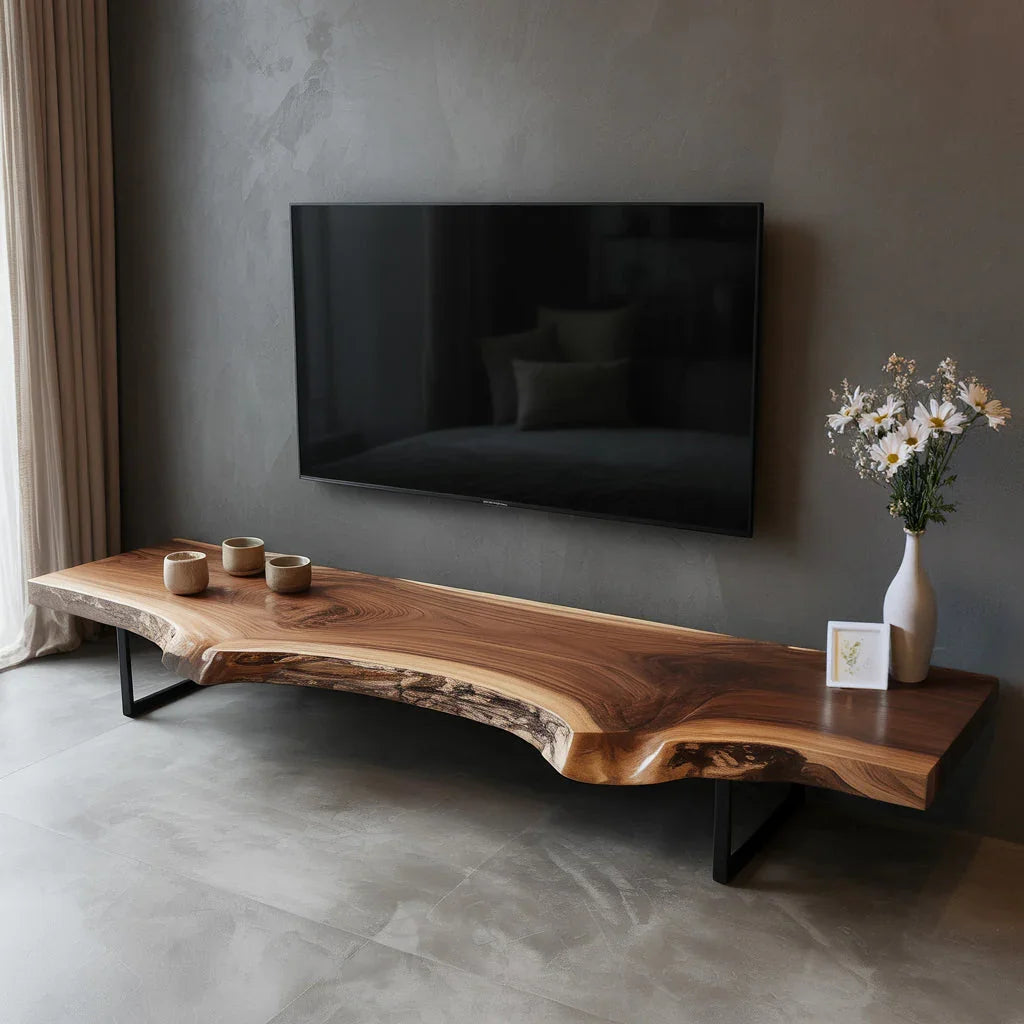
TV Cabinet Dimensions: Will Your TV Fit? Guide for 42–85 Inch TVs
Tv Cabinet dimensions should always be the first thing you check when planning a living room layout. If you are currently shopping for a setup, finding the right 45 inch entertainment center tv size can be tricky, leading many to ask: "what's the biggest tv I can get for a 45-inch entertainment center?"
"Can a 45 inch entertainment center fit a 50 inch tv?" is another question most homeowners wonder about, hoping to squeeze in a bigger screen. The short answer is no - a screen that large actually requires tv console dimensions of at least 50 inches wide to avoid overhang. For the best visual balance, your cabinet should always be wider than the screen, giving you 2-3 inches of breathing room on each side.

This guide maps every common screen size to the exact TV cabinet dimensions you need - width, depth, height, weight support, and cable management clearance. No guessing, no returns.
Once you've nailed down the right dimensions, size is just one piece of the decision. Our complete TV stand buying guide covers material choice, open vs. closed storage, cable management, and the 6 mistakes most buyers make.
Standard TV Cabinet Dimensions by Screen Size Chart
Every TV cabinet dimension below accounts for the actual TV width (which is wider than the advertised screen diagonal), the visual margin needed for balanced proportions, depth for stability, and weight support for the TV plus any components on the cabinet surface.
| TV Screen Size | Actual TV Width | Minimum Cabinet Width | Recommended Cabinet Width | Minimum Depth | Recommended Height | TV Weight Range |
|---|---|---|---|---|---|---|
| 42" | 37-38 inches | 38 inches | 42-48 inches | 14 inches | 18-24 inches | 15-22 lbs |
| 50" | 44-45 inches | 45 inches | 48-54 inches | 15 inches | 18-24 inches | 25-35 lbs |
| 55" | 48-49 inches | 49 inches | 54-60 inches | 15 inches | 18-26 inches | 30-45 lbs |
| 65" | 57-58 inches | 58 inches | 62-70 inches | 16 inches | 20-26 inches | 40-60 lbs |
| 75" | 66-67 inches | 67 inches | 70-78 inches | 16 inches | 20-26 inches | 55-75 lbs |
| 85" | 75-76 inches | 76 inches | 78-84 inches | 18 inches | 20-26 inches | 70-100 lbs |
Interactive tool
Find Your Exact Cabinet Size
Drag to your TV's screen size - the numbers below update to match, pulled from the same table above.
Actual TV width
57–58"
Minimum cabinet width
58"
Recommended cabinet width
62–70"
Minimum depth
16" min
Recommended height
20–26"
Est. TV weight
40–60 lbs
Figures are approximate — actual TV width varies a little by brand and bezel. Measure your specific model when possible.
Shop TV cabinets in this size range →How to read this table: "Actual TV Width" is the physical measurement edge-to-edge including the bezel - always wider than the screen diagonal suggests. "Minimum Cabinet Width" means the TV doesn't overhang the edges. "Recommended Cabinet Width" adds 4-6 inches total for visual balance - the TV should look like it belongs on the cabinet, not like it's about to fall off.
What's the Biggest TV I Can Get for a 45-Inch Entertainment Center?
Choosing Your TV Cabinet Size: The Proportional Width Rules
A TV that overhangs the cabinet by even 1 inch on each side creates a top-heavy visual that makes the room feel unstable. The design principle is called visual base - the cabinet should feel like a solid foundation beneath the screen.
The rule: Add at least 4 inches to your TV's actual width to get the minimum recommended cabinet width. For visual comfort, add 6-8 inches. A 65-inch TV (58 inches wide) looks best on a cabinet that's 64-66 inches wide, creating a 3-4 inch margin on each side.

Our hand-crafted TV cabinets are available in widths from 48 to 80+ inches, specifically sized around these proportional guidelines.
TV Cabinet Depth: Clearance for Stands and Cable Management
Cabinet depth determines whether your TV's base or stand fits securely and whether cables have room behind the screen. Many buyers focus on width and forget depth - then find their TV base hangs over the back edge.
TV stand depths by size:
- 42-50" TVs: most stands are 8-10 inches deep
- 55-65" TVs: stands range from 10-14 inches deep
- 75-85" TVs: stands range from 12-16 inches deep
Cable management clearance: Add 2-3 inches behind the TV stand for power cables, HDMI cables, and streaming device dongles. A Fire Stick or Roku adds 3-4 inches of depth behind the TV.
Total recommended cabinet depth: TV stand depth + 3 inches of cable clearance + 1 inch of front margin = total. For a 65-inch TV with a 12-inch stand: 12 + 3 + 1 = 16 inches minimum depth.
Most solid wood TV cabinets run 16-20 inches deep, which accommodates every TV size up to 85 inches. If your cabinet is deeper than your TV's footprint, the extra depth becomes display space for small decor items beside the TV base.
TV Cabinet Height: The Eye-Level Equation for Viewing Comfort
TV cabinet height directly affects viewing comfort. The center of your TV screen should sit at seated eye level - approximately 42 inches from the floor for most adults on a standard sofa. We cover this in more detail in our end table height guide guide.
The math: Seated eye level (42 inches) minus half the TV screen height equals the ideal cabinet surface height.
| TV Size | Screen Height | Half Height | Ideal Cabinet Height |
|---|---|---|---|
| 42" | 21 inches | 10.5 inches | 31-32 inches |
| 50" | 25 inches | 12.5 inches | 29-30 inches |
| 55" | 27 inches | 13.5 inches | 28-29 inches |
| 65" | 32 inches | 16 inches | 25-26 inches |
| 75" | 37 inches | 18.5 inches | 23-24 inches |
| 85" | 42 inches | 21 inches | 20-22 inches |
Notice the inverse relationship: larger TVs need shorter cabinets. An 85-inch TV on a 30-inch tall cabinet puts the screen center at 51 inches - 9 inches above ideal, causing neck strain over time. Research from the American Optometric Association confirms that screen center should be at or slightly below horizontal eye line for comfortable extended viewing.
Low-profile TV cabinets (20-24 inches tall) pair with today's larger screens. Our console tables also work as TV stands for wall-mounted setups where the cabinet stores components rather than supporting the TV directly.
Weight Capacity: How Much Your Cabinet Must Support
The TV's weight is only part of the total load. Add gaming consoles, soundbars, cable boxes, and decorative items to calculate the real demand on your cabinet's top surface.
Total weight calculation:
| Component | Typical Weight |
|---|---|
| 55" TV | 30-45 lbs |
| 65" TV | 40-60 lbs |
| 75" TV | 55-75 lbs |
| 85" TV | 70-100 lbs |
| Gaming console (PS5, Xbox Series X) | 9-10 lbs |
| Soundbar | 5-12 lbs |
| Cable box/streaming device | 1-3 lbs |
| Decorative items (books, plants) | 5-15 lbs |
Example for a 65" setup: 50 lbs (TV) + 10 lbs (console) + 8 lbs (soundbar) + 10 lbs (decor) = 78 lbs total.
A solid wood TV cabinet handles this without concern - a 60-inch walnut cabinet with a 1-inch thick top supports 200+ lbs across its surface. MDF and particle board cabinets typically max out at 100-150 lbs total and weaken over time, especially at hinge points and shelf pin holes. For maximum durability, choose solid wood construction. If you're weighing your options, our guide on solid wood vs particle board tv cabinet breaks it down further.

Handcrafted in Vietnam
Built to hold real weight, not just look good on paper
Every Ashdeco TV cabinet is solid wood construction, rated for 200+ lbs across the top surface-your TV, console, soundbar, and decor, all at once, with zero sag over time.
Shop solid wood TV cabinets →Cable Management: The Forgotten Dimension
Clean cable management requires specific clearances that most TV cabinet listings ignore.
Behind the cabinet: Leave 3-4 inches between the cabinet back and the wall. This accommodates power bricks, cable bends (HDMI cables need a 3-inch minimum bend radius), and ventilation for warm components like gaming consoles.
Cable pass-throughs: Look for cabinets with pre-cut holes or open backs. A solid-backed cabinet without cable routing forces you to run cables over the top or sides - visible, messy, and a trip hazard on the floor.
Internal clearance: If your TV cabinet has enclosed compartments for consoles or cable boxes, each compartment needs at least 4 inches of vertical clearance above the device for heat ventilation. A PS5 standing upright is 15.4 inches tall - the compartment needs to be at least 19 inches internally.
Power strip placement: Mount a surge protector to the inside back panel of the cabinet using the protector's mounting slots. This keeps all plugs accessible and cables short. A 6-outlet strip fits on most cabinet backs with room to spare.
Once you've got the clearances right, the next step is keeping everything tidy day-to-day. Our guide to organizing a TV stand with storage covers zoning your shelves by device and a step-by-step method for bundling cables.

Pair your TV cabinet with floating shelves flanking the TV for a gallery wall effect that adds display space without widening the cabinet footprint.
Choosing Between a TV Cabinet and Wall-Mounted TV
Wall mounting eliminates the cabinet's role as a TV support but doesn't eliminate the need for a cabinet entirely. You still need storage for remotes, consoles, cables, and media.
When to use a cabinet with the TV on top: Rental apartments (no wall drilling), TVs 65" and under (manageable weight on cabinet surface), and rooms where the TV needs to sit in front of a window (wall mount doesn't help here).
When to wall-mount with a low cabinet beneath: TVs 75" and larger (cabinet surface height gets impractically low for these sizes), rooms with brick or concrete walls (wall mount distributes weight more safely than a tall cabinet on uneven floors), and when you want the thinnest possible profile.
The hybrid approach: A 20-22 inch tall cabinet below a wall-mounted TV gives you all the storage with none of the height compromise. This is the most popular configuration for 75" and 85" setups.
FAQ
What size TV cabinet do I need for a 65-inch TV? A 65-inch TV is approximately 57-58 inches wide. You need a cabinet at least 58 inches wide (minimum), but 62-70 inches is recommended for balanced proportions. Depth should be at least 16 inches to accommodate the TV stand and cables. Height of 25-26 inches centers the screen at seated eye level.
How far should a TV cabinet be from the wall? Leave 3-4 inches between the cabinet back and the wall for cable management and ventilation. Gaming consoles and cable boxes generate heat - airflow behind the cabinet prevents overheating. If your cabinet has an open back, you can push it closer (1-2 inches from the wall).
How much weight can a TV cabinet hold? A solid wood TV cabinet supports 200+ lbs across its top surface. Particle board cabinets typically support 100-150 lbs when new, decreasing as internal adhesives weaken over years. For setups with a large TV (75-85"), a gaming console, and a soundbar, plan for a total load of 80-120 lbs.
Should my TV cabinet be wider than my TV? Yes, always. A cabinet narrower than the TV creates a visually top-heavy, unstable look and risks the TV base overhanging the edge. The recommended cabinet width is your TV's actual width (not screen diagonal) plus 4-8 inches. A 55-inch TV (49 inches wide) looks best on a 54-60 inch cabinet.
What's the ideal TV cabinet height for a 75-inch TV? For a 75-inch TV on a cabinet (not wall-mounted), a cabinet height of 23-24 inches centers the screen at the ideal 42-inch eye level for most seated adults. A 30-inch tall cabinet with a 75-inch TV puts the screen center too high, causing neck tilt during extended viewing.