






















Quick view
- What Is a TV Stand?
- TV Stand vs TV Cabinet vs TV Table: What's the Difference?
- Choosing the Right Size TV Stand
- TV Stand Materials: Solid Wood vs Engineered Wood
- Budget TV Stands: How to Get Sturdy and Storage Without Overspending
- Storage Needs: Open Shelves vs Closed Cabinets
- Cable Management: The Unsung Hero
- TV Stands for Gaming Setups: What to Look For
- Popular TV Stand Styles
- Common TV Stand Buying Mistakes to Avoid
- Skip the trial and error
- How to Match Your TV Stand to Your Room
- Frequently Asked Questions
- Conclusion: Finding Your Perfect TV Stand
Shop this guide
Handcrafted TV Cabinets, made to order in solid wood.
 Handcrafted Arched Solid Wood TV Stand & 2-Drawer Media Entertainment Console
From $2,314.0010% off at checkout
Handcrafted Arched Solid Wood TV Stand & 2-Drawer Media Entertainment Console
From $2,314.0010% off at checkout
 Mid-Century Handcrafted Curved Solid Wood TV Stand & Oval Media Entertainment Console
From $2,876.0010% off at checkout
Mid-Century Handcrafted Curved Solid Wood TV Stand & Oval Media Entertainment Console
From $2,876.0010% off at checkout
 Christmas edit
Sculptural Handcrafted Solid Wood Low-Profile TV Stand & 3-Drawer Media Console
From $3,145.0010% off at checkout
Christmas edit
Sculptural Handcrafted Solid Wood Low-Profile TV Stand & 3-Drawer Media Console
From $3,145.0010% off at checkout
 Sculptural Solid Wood Wave TV Stand & Low Media Console Table
From $2,829.0010% off at checkout
Sculptural Solid Wood Wave TV Stand & Low Media Console Table
From $2,829.0010% off at checkout
 Christmas edit
Modern Solid Wood TV Console For Christmas Entryway Living Room
From $2,660.0010% off at checkout
Christmas edit
Modern Solid Wood TV Console For Christmas Entryway Living Room
From $2,660.0010% off at checkout
 Christmas edit
Sculptural Christmas Solid Wood Live-Edge TV Stand
From $2,355.0010% off at checkout
Christmas edit
Sculptural Christmas Solid Wood Live-Edge TV Stand
From $2,355.0010% off at checkout
How to Choose a TV Stand (Without Making These 6 Mistakes)
Choosing the right TV stand means more than picking something that looks good - get the size, material, or cable setup wrong and you'll be shopping again within a year. This guide walks through everything that matters, plus the 6 mistakes that trip up most buyers before they even realize it.
What Is a TV Stand?
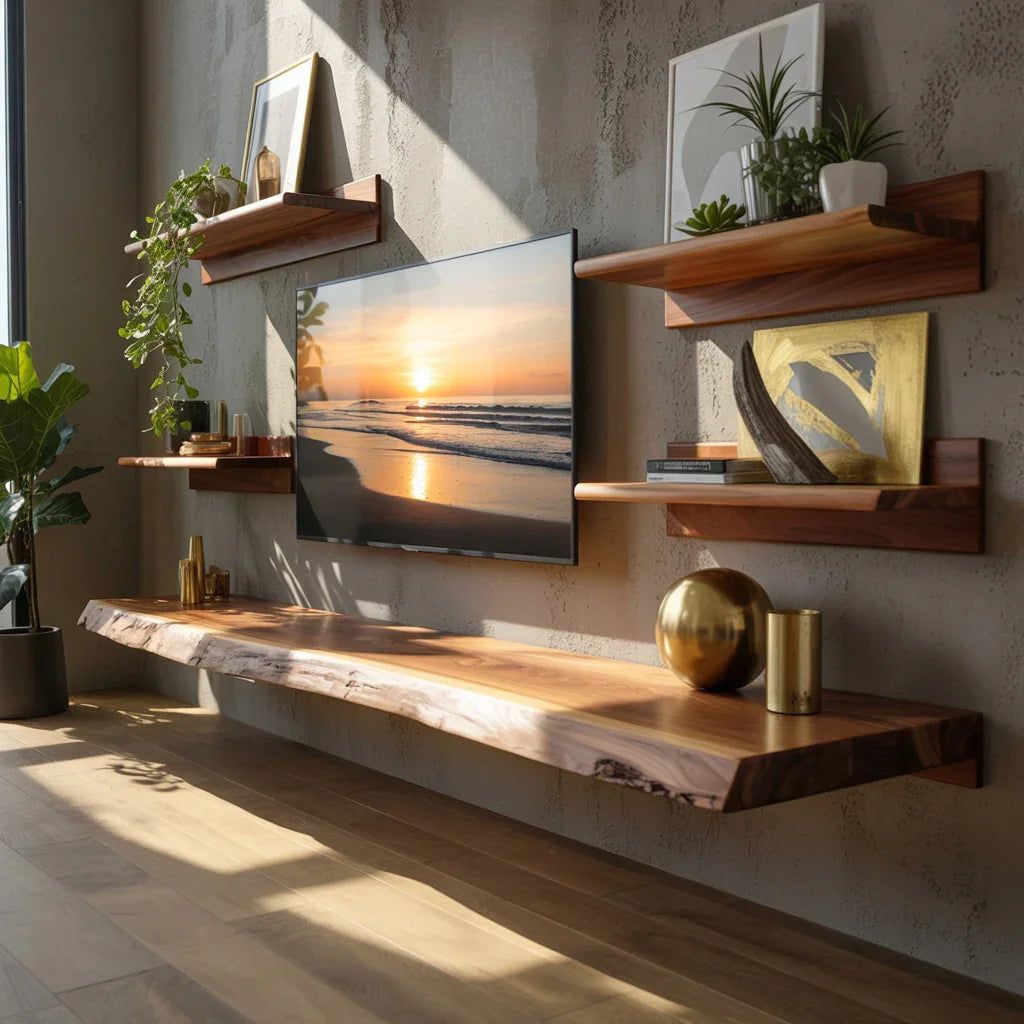
A TV stand is a piece of furniture designed to support your television and hold related equipment like gaming consoles, streaming devices, and sound systems. But modern TV stands do far more than just "hold the TV." They organize cables, provide storage for media accessories, and serve as a focal point in your room's decor.
Before diving into specifics, let's clarify the terminology, as these terms are often used interchangeably-but there are differences.
TV Stand vs TV Cabinet vs TV Table: What's the Difference?
Understanding the distinctions helps you narrow your search:
| Type | Description | Best For |
|---|---|---|
| TV Stand | Open or partially enclosed, typically wider than deep, designed for modern flat-screen TVs | Modern living rooms, minimalist spaces |
| TV Cabinet | Fully enclosed storage unit with doors, often taller | Traditional settings, those needing hidden storage |
| TV Table | Compact, low-profile table specifically sized for smaller TVs | Small apartments, bedrooms, offices |
| Media Console | Broader term encompassing all of the above with built-in cable management | Versatile use with multiple components |
Key Takeaway: If you want a clean, contemporary look with easy access to your devices, a TV stand or media console is ideal. If you prefer everything tucked away behind doors, a TV cabinet is the better choice.


Choosing the Right Size TV Stand
Getting the size right is the most critical decision. A stand that's too small looks awkward; one that's too large overwhelms the room.
TV Stand Width
Your TV stand should be at least as wide as your TV, but ideally 6–12 inches wider on each side. This creates visual balance and provides space for decorative items or additional speakers.
Need exact numbers for your specific screen size instead of a general range? Our TV cabinet dimensions guide breaks down width, depth, height, and weight support for every size from 42" to 85".
Quick Width Guide:
- For a 40–50" TV: Choose a stand 48–60" wide
- For a 55–65" TV: Choose a stand 60–72" wide
- For a 70"+ TV: Choose a stand 78–90" wide or larger
TV Stand Height
The ideal viewing height places your TV screen at eye level when seated. For most sofas, this means the center of your TV should be about 42–48 inches from the floor.
Height Considerations:
- Low-profile stands (16–20" tall): Ideal for wall-mounted TVs or sectional sofas
- Standard stands (24–28" tall): Works with most standard sofa heights
- Tall cabinets (30"+ tall): Great for rooms where you watch TV while standing or from bar-height seating
One More Thing About Fit: Most TV stands are "universal" in the sense that they simply support weight on top-there's no TV-specific mounting required for a stand-top setup. The only real constraints are the stand's width (your TV's base or feet need to sit within it) and its weight capacity. If you plan to wall-mount the TV instead and just use the stand for components, VESA compatibility depends on your mount, not the stand.
Depth Matters Too
Standard TV stands are 16–20 inches deep. Consider your equipment:
- Gaming consoles and receivers need at least 14–16" of depth
- Sound bars work better with open or shallow enclosed designs
- Cable boxes fit in most standard depths
TV Stand Materials: Solid Wood vs Engineered Wood
The material affects durability, aesthetics, and price.
Solid Wood TV Stands
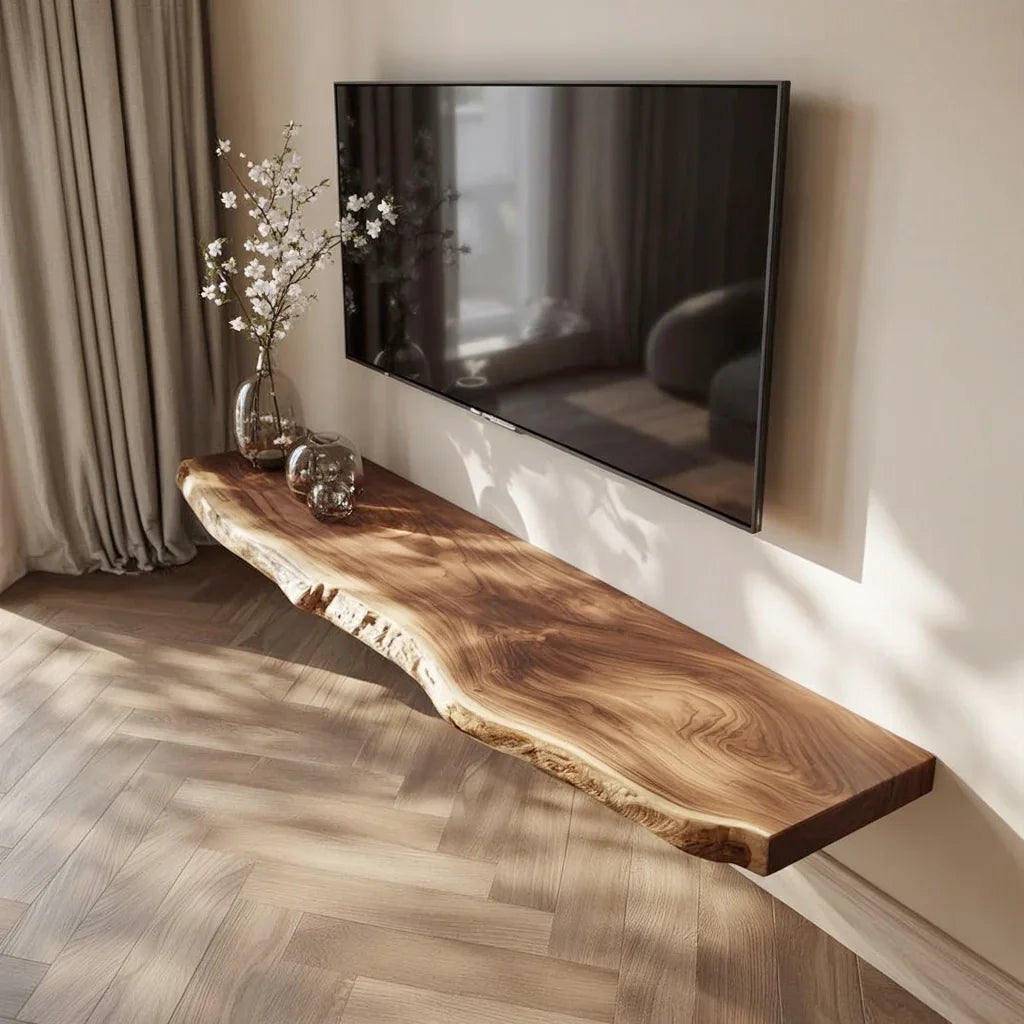
Solid wood offers natural beauty and longevity. Common options include:
- Oak: Durable with distinctive grain patterns, available in light and medium tones
- Walnut: Rich, dark tones with elegant grain
- Acacia: Unique patterns with good durability
- Reclaimed Wood: Eco-friendly with rustic character
Pros: Long-lasting, can be sanded and refinished, natural beauty
Cons: Higher price point, susceptible to humidity changes
Engineered Wood TV Stands
Manufactured wood products like MDF and plywood are budget-friendly options:
- MDF: Smooth surface, uniform texture, accepts paint well
- Plywood: Good strength-to-weight ratio
- Particleboard: Most affordable, but less durable
Pros: Affordable, consistent quality, often lighter weight
Cons: Cannot be refinished, may off-gas volatile organic compounds (VOCs), less long-term value
Which Material Is Actually Most Durable?
If you just want a straight answer, here's the ranking, from most to least durable:
- Solid hardwood (oak, walnut, acacia) - holds up for decades, resists dents and sagging, and can be refinished when it shows wear.
- Plywood - layered construction gives it good screw-holding strength and resistance to warping; a solid mid-range choice.
- MDF - dense and smooth, holds paint well, but swells if it gets wet and can't be repaired the way solid wood can.
- Particleboard - the least durable option; fine for light, short-term use but prone to sagging under heavy TVs or crowded shelves.
For a stand you expect to keep for 10+ years, solid wood is worth the extra cost. For a starter apartment or a spare room, plywood or MDF is a reasonable trade-off.
The Ashdeco Difference
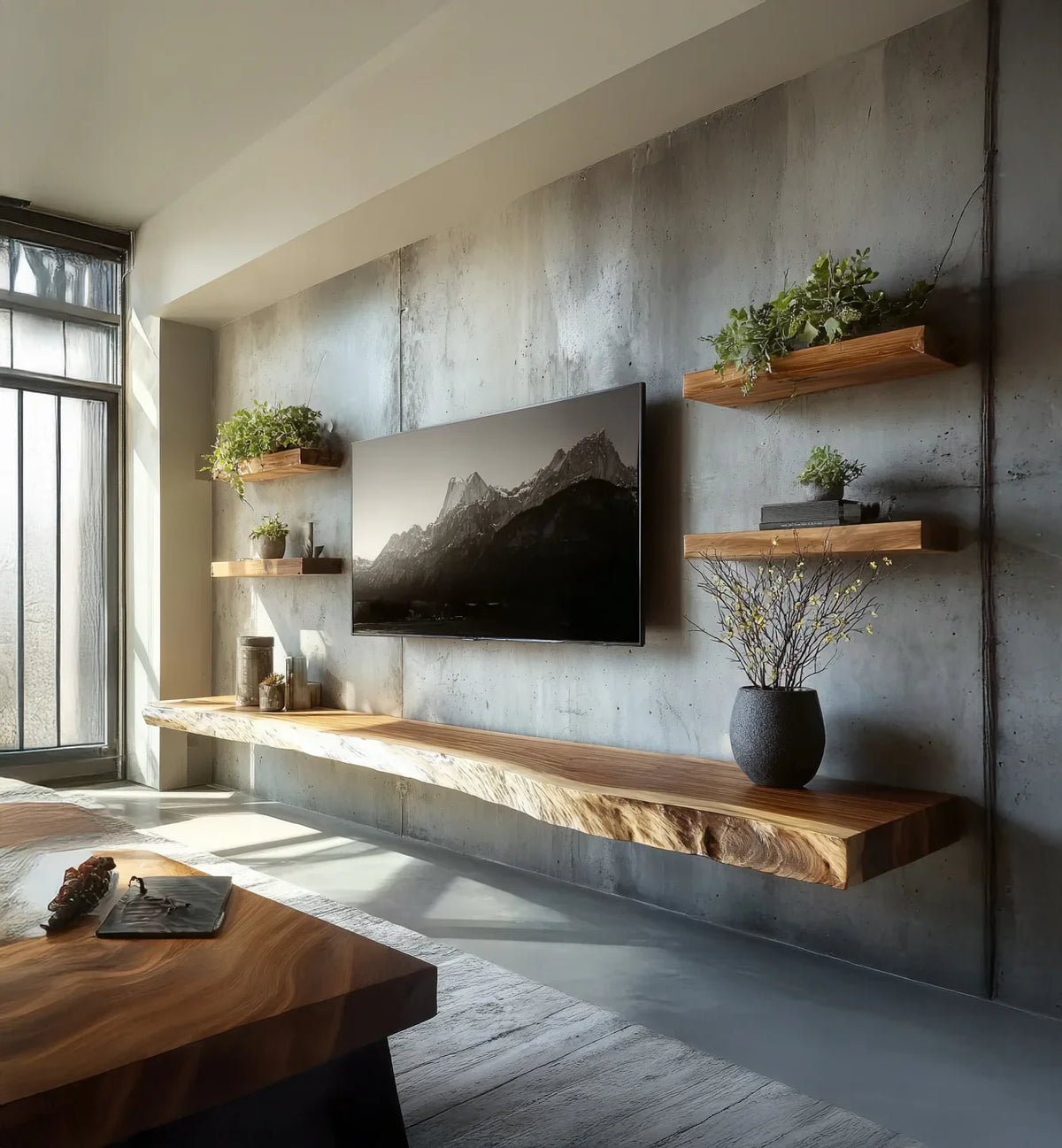
At Ashdeco, our live edge TV stands showcase the natural beauty of solid wood. Each piece features a genuine live edge-where the tree's natural border becomes part of your furniture. These handcrafted TV stands combine premium materials with artisan craftsmanship, creating a one-of-a-kind focal point for your home.
Looking for an eco-friendly option? Solid wood and reclaimed wood are the more sustainable choices over MDF and particleboard, which use synthetic resins and can off-gas VOCs. When shopping, look for wood sourced from responsibly managed forests, minimal use of laminates or veneers, and finishes that are low-VOC or water-based rather than heavy lacquers.
Don't miss
These pieces qualify for 10% off orders over $2,000. Applied automatically at checkout.
10% off
Handcrafted Arched Solid Wood TV Stand & 2-Drawer Media Entertainment Console
From $2,314.00
10% off at checkout
10% off
Mid-Century Handcrafted Curved Solid Wood TV Stand & Oval Media Entertainment Console
From $2,876.00
10% off at checkout
10% off
Sculptural Handcrafted Solid Wood Low-Profile TV Stand & 3-Drawer Media Console
From $3,145.00
10% off at checkout
10% off
Sculptural Solid Wood Wave TV Stand & Low Media Console Table
From $2,829.00
10% off at checkout
Budget TV Stands: How to Get Sturdy and Storage Without Overspending
"Cheap" and "flimsy" don't have to mean the same thing. If you're shopping on a budget, here's what actually matters for getting a stand that lasts:
- Prioritize plywood over particleboard. Plywood costs a bit more than particleboard but resists sagging far better under the weight of a TV and components-worth the small upgrade.
- Check the weight rating, not just the price. A budget stand with a clearly stated weight capacity (and drawer/shelf load limits) is a safer bet than one with no spec listed at all.
- Look for metal hardware on drawers and doors. Metal drawer slides and hinges outlast plastic ones by years, even on otherwise inexpensive pieces.
- Don't oversize your storage needs. A smaller stand with 2-3 well-built compartments will hold up better-and cost less-than a large stand stretched thin on materials.
- Factor in shipping and assembly. Budget stands are often flat-packed; a stand that's simple to assemble correctly is less likely to develop wobble over time than one with a complicated frame.
Bottom line: the sturdiest budget option is usually a plywood or solid-wood-veneer stand with metal hardware and a clearly stated weight capacity, sized to what you actually need to store-rather than the cheapest large particleboard unit you can find.

Storage Needs: Open Shelves vs Closed Cabinets
Consider what you need to store:
Open Shelving
- Perfect for frequently accessed items (gaming controllers, streaming devices)
- Creates a more airy, modern aesthetic
- Great for displaying decorative objects
- Easier heat circulation for electronics
Closed Cabinets
- Hides clutter and electronics you don't want visible
- Protects items from dust and pet hair
- Ideal for board games, blankets, and media storage
- Creates a cleaner, more traditional look
Hybrid Designs
Many of the best TV stands combine both:
- Open compartments for electronics and frequently-used items
- Closed cabinets for items you want hidden
Pro Tip: Measure your devices before buying. Gaming consoles, sound bars, and cable boxes all have different depth requirements.
Cable Management: The Unsung Hero
Nothing ruins a beautiful TV stand faster than a spaghetti mess of cables. Look for these cable management features:
- Built-in cable holes or grommets in the back panel
- Cable raceways to route wires neatly
- Rear access panels that allow easy routing
- Ventilation gaps to prevent electronics from overheating
Pro Tip: Measure twice-know where your outlets are located. A TV stand against an outlet-free wall becomes a cable management nightmare.
Already have your stand and just need to get the clutter under control? Our guide to organizing a TV stand with storage covers zoning your shelves by how often you use each device, plus a step-by-step cable bundling method.

TV Stands for Gaming Setups: What to Look For
If your TV stand needs to house a console (or two), a few extra details matter beyond general storage:
- Depth of at least 16": most current-gen consoles need 14-16" of clearance, plus a few inches for cables at the back.
- Open or vented compartments: consoles run hot during long play sessions-fully enclosed cabinets without airflow can cause overheating and throttling.
- Dedicated cable routing: with a console, HDMI cables, a power strip, and often a router or modem sharing the same space, a stand with a rear cable channel keeps things from turning into a tangle.
- Stable, level surface: discs and drives are sensitive to vibration-avoid thin, wobbly shelving for anything with moving parts.
- Room to add a second console or streaming box later: if you're likely to add a device down the line, leave at least one open shelf free rather than filling every compartment now.
An open-shelf or hybrid stand (open compartments for consoles, closed cabinets for accessories) generally works better for gaming setups than a fully enclosed cabinet.
Popular TV Stand Styles
Your TV stand should complement your existing decor:
Modern TV Stands
- Clean lines and minimalist design
- Often features glass, metal, or high-gloss finishes
- Neutral colors (black, white, grey)
- Handles-free designs with push-to-open mechanisms
Rustic TV Stands
- Warm wood tones and natural textures
- Distressed finishes and farmhouse aesthetics
- Live edge details work beautifully in rustic settings
- Often features barn door accents or X-frame details
Farmhouse TV Stands
- Classic country charm with shaker-style doors
- Neutral painted finishes (white, grey, navy)
- Turned legs or bracket feet
- Rustic hardware
Industrial TV Stands
- Metal and wood combinations
- Pipe accents and exposed hardware
- Darker finishes and edgy aesthetics
- Urban loft vibes
Scandinavian TV Stands
- Light woods (oak, ash)
- Simple, functional design
- Light colors and natural materials
- Tapered legs
Common TV Stand Buying Mistakes to Avoid
1. Ignoring Weight Capacity
TVs are heavy-large screens can weigh 80+ pounds. Check the stand's weight limit and ensure it distributes weight properly.
2. Not Measuring Your Space
Measure your wall space AND your doorways. A beautiful TV stand that won't fit through your door defeats the purpose.
3. Forgetting About Ventilation
Enclosed cabinets without ventilation can trap heat, damaging electronics over time. Look for stands with airflow design.
4. Choosing Style Over Function
A gorgeous stand that doesn't accommodate your devices is a mistake. Make a list of what you need to store before shopping.
5. Not Considering Future Needs
Got a gaming system on your list? Planning to add a sound bar? Buy a stand with more room than you currently need.
6. Overlooking the TV's Viewing Angle
The stand should position your TV at a comfortable viewing angle. If your sofa is particularly high or low, factor this into height decisions.
Handcrafted in Vietnam
Skip the trial and error
Ashdeco's live edge TV stands are handcrafted from solid wood — built for real weight capacity, real cable management, and a focal point that lasts.
Shop live edge TV stands →How to Match Your TV Stand to Your Room
Large Living Rooms
Go bigger with a wide TV cabinet or two-piece entertainment center. Add decorative items on the sides to create a built-in look.
Small Spaces
Choose a low-profile TV table or a corner TV stand. Avoid anything that overwhelms the space visually.
Open Floor Plans
Select a TV stand that anchors your viewing area without blocking sight lines. Consider pieces that can be viewed from multiple angles.
Traditional Spaces
A substantial TV cabinet with doors and traditional details anchors the room. Match wood tones to existing furniture.
Modern Spaces
Floating TV stands or units with clean lines work well. Glass accents and metal details enhance the contemporary feel.
Frequently Asked Questions
Are TV stands worth it?
Yes, for most homes. A TV stand protects your TV and components, keeps cables organized, and gives you a stable, appropriately-sized surface at the right viewing height. The main alternative-wall-mounting with no stand at all-only makes sense if you don't need to store any accessories nearby.
What are the cons of a TV stand?
The main downsides are the floor space it takes up, the risk of tip-over if it's not weight-rated properly for a heavy TV, and-with lower-quality engineered wood options-limited lifespan compared to solid wood. Choosing a stand with the right weight capacity and material for your needs avoids most of these issues.
Do universal TV stands work for all TVs?
Most TV stands work with any TV as long as the TV's base fits within the stand's width and the stand's weight capacity covers your TV's weight. There's no universal mounting standard for stand-top setups the way there is for wall mounts (VESA patterns), so width and weight are the only real fit factors to check.
Can I use a living room TV stand in a bedroom?
Yes-sizing works the same way. For bedrooms, a lower-profile stand (16-20" tall) usually looks more proportional against a bed-height sightline, and a closed cabinet can help keep the room feeling tidy if the stand doubles as dresser-adjacent storage.
What's the difference between a TV stand and a TV credenza?
They're largely the same type of furniture-"credenza" is simply a more traditional or formal term, often used for wider, cabinet-style pieces with doors, while "TV stand" is used more broadly for both open and closed designs.
Conclusion: Finding Your Perfect TV Stand
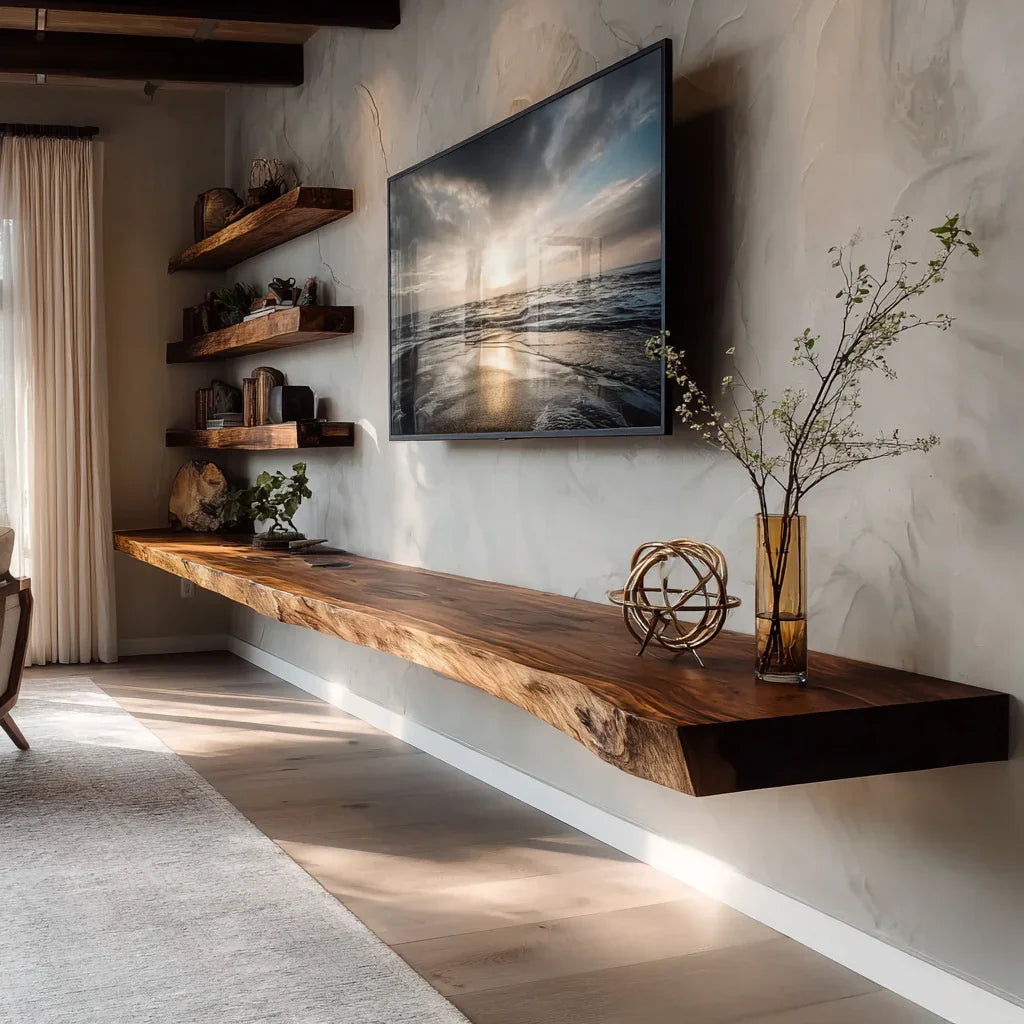
A great TV stand does more than hold your television-it ties your room together, organizes your equipment, and expresses your personal style. By considering size, material, storage needs, cable management, and aesthetic, you'll find the perfect piece for your home.
At Ashdeco, our handcrafted live edge TV stands bring nature's beauty into your living space. Each piece is made from sustainably sourced wood and built to last generations. Visit our collection to discover TV furniture that combines functionality with extraordinary craftsmanship.
Ready to find your perfect TV cabinet? Browse our collection of live edge TV stands and bring a touch of natural elegance to your home entertainment setup.
---
Ready to Shop?
Explore Ashdeco's curated selection of TV stands, TV cabinets, and media consoles designed for style and functionality.
Have questions about finding the right TV stand for your space? Our design team is here to help you make the perfect choice.