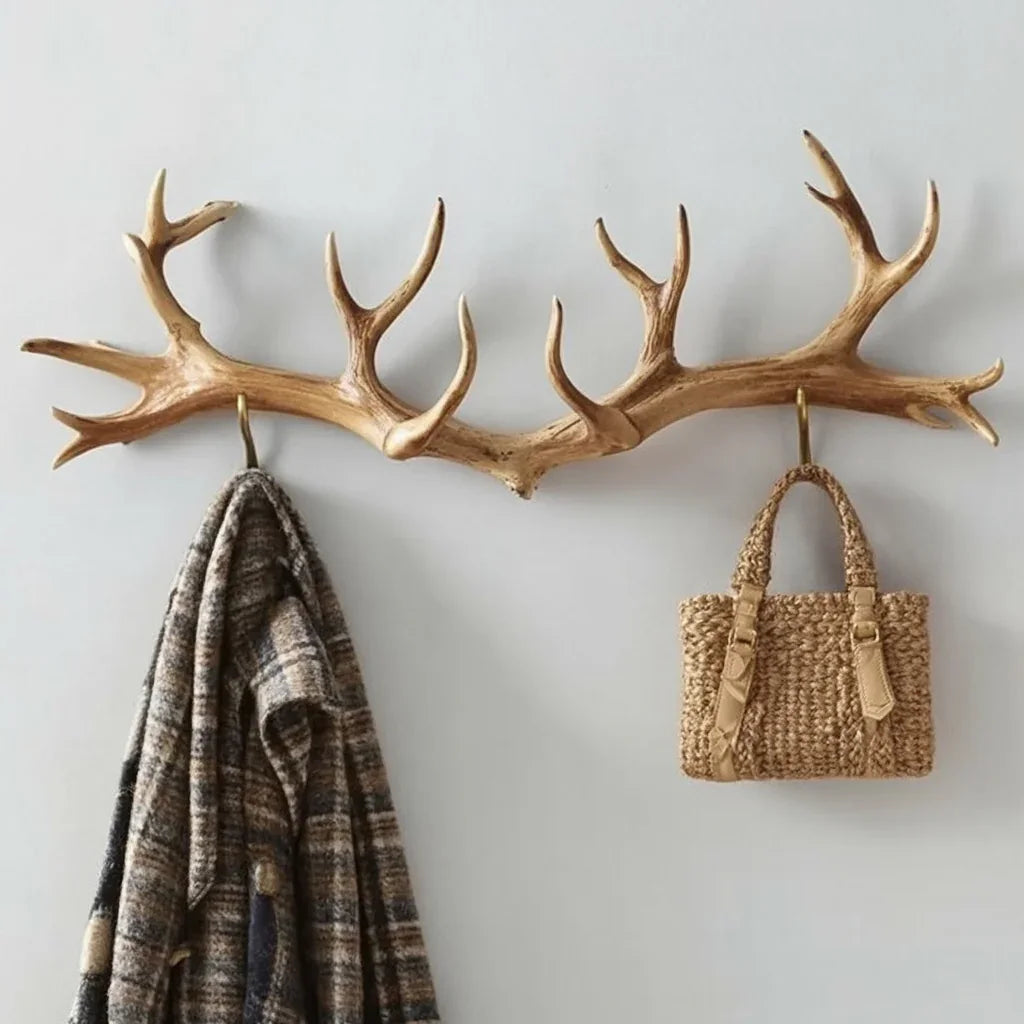
Coat Rack Buying Guide 2026: Types, Sizes, Cost & How to Choose
A coat rack might seem like a simple purchase, but walk into any home with the wrong one and you'll quickly see the problems: jackets bunched on doorknobs, bags on stair rails, and scarves draped over chairs. The right coat rack solves all of that - but "right" depends on your space, your household, and how you actually live.
This guide walks you through everything that matters when choosing a coat rack, from types and materials to sizing and installation. By the end, you'll know exactly what your space needs.

Why Your Coat Rack Choice Matters
A coat rack does more than hold coats. It's the first thing people see when they walk through your door, and it sets the tone for how organized your home feels. A well-chosen rack keeps outerwear off furniture, reduces clutter, and makes daily routines smoother.
But buy the wrong one - whether it's too small, poorly anchored, or just awkward for your layout - and it becomes another thing to work around.
Let's make sure that doesn't happen.
Types of Coat Racks: Finding Your Style
Every coat rack type has strengths. The trick is matching the type to your actual needs.
Standing Coat Racks
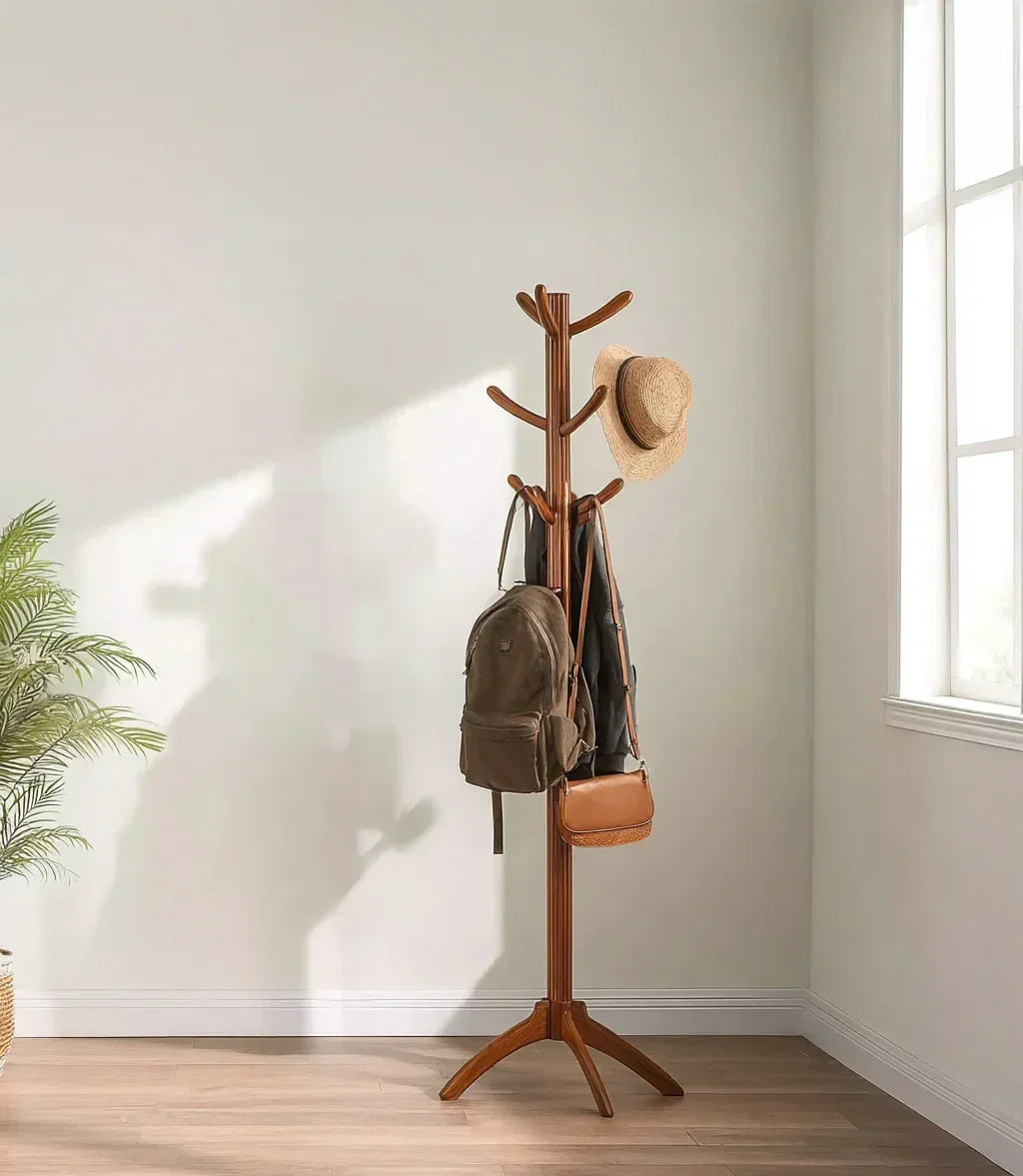
Standing coat racks are freestanding units that sit on the floor. They typically feature multiple hooks or a bar with arms and are ideal for open floor plans or larger entryways.
Best for:
- Entryways with floor space
- Studios or open-plan living areas
- Renting where wall damage isn't an option
Most standing racks range from 60–75 inches tall, placing hooks within easy reach while still fitting comfortably in most doorframe heights. Look for a wide base or tripod design if stability is a concern, especially in high-traffic areas.
Ashdeco offers a curated selection of standing coat racks crafted from solid wood and metal, designed to blend functionality with aesthetic appeal.
Wall-Mounted Coat Racks
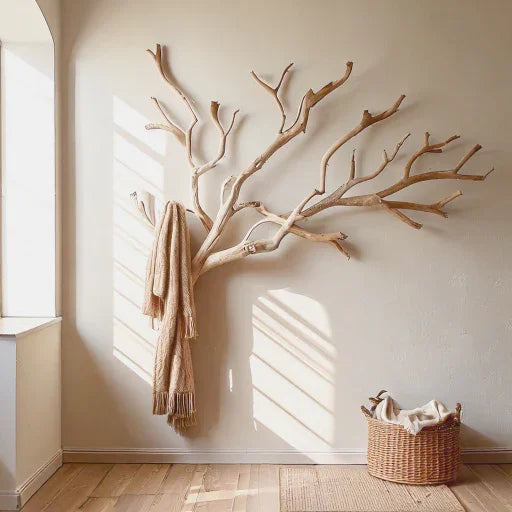
Wall-mounted racks attach directly to your wall, making them ideal for smaller spaces or minimalist setups. They take up zero floor space and can be installed at any height.
Best for:
- Narrow entryways
- Bedrooms or bathrooms
- Households with children (mount lower)
These range from simple row hooks to elaborate multi-hook panels. The key is proper installation - wall-mounted racks need appropriate wall anchors, especially if you're hanging heavy winter coats.
Tree Coat Racks

Tree coat racks branch out from a central trunk, offering multiple hooks at varying heights in a single, elegant unit. They're a popular choice for classic or transitional interiors.
Best for:
- Entryways with moderate floor space
- Formal living areas or mudrooms
- Households with varied heights (kids and adults)
The branching design distributes weight naturally and often looks more decorative than a standard standing rack. Many tree racks also include an umbrella stand or small storage base.
Hook Rails
Hook rails are slim, horizontal bars with multiple hook points. They're compact, versatile, and budget-friendly, making them a go-to for tight spaces.
Best for:
- Small apartments
- Closet interiors
- Behind doors
Hook rails work well in multiples - one in the entryway, one in the mudroom, one in the bedroom closet. They mount flush against the wall and can hold a surprising amount when properly installed.

Which Coat Rack Should You Choose?
| Coat Rack Type | Best Space | Max Weight Capacity | Installation | Ideal For |
|---|---|---|---|---|
| Standing | Entryways, open floor plans | 30–50 lbs total | None (freestanding) | Renters, flexible layouts |
| Wall-Mounted | Narrow entryways, bathrooms | 15–40 lbs per hook | Drilling + anchors | Small spaces, minimalist look |
| Tree | Foyers, mudrooms, formal areas | 40–60 lbs total | None (freestanding) | Families, multi-height users |
| Hook Rails | Closets, behind doors, hallways | 10–20 lbs per hook | Drilling + anchors | Tight spaces, budget setups |
Quick rule: If you have floor space and move often, choose a standing coat rack. If every inch counts, go with a wall-mounted coat rack. If you need the maximum number of hooks in one place, choose a tree coat rack. If you only need a few hooks for everyday essentials, a hook rail is usually the simplest option.

Materials: What Works in Your Space
The material affects both durability and style. Here are the main options:
| Material | Pros | Cons | Best For |
|---|---|---|---|
| Solid Wood | Warm aesthetic, sturdy, classic look | Heavier, can warp in humid spaces | Traditional, farmhouse, Scandinavian styles |
| Metal (Iron/Steel) | Extremely durable, modern aesthetic, holds weight well | Can rust if not coated, cold feel | Industrial, modern, minimalist spaces |
| Aluminum | Lightweight, rust-resistant | Less weight capacity than steel | Modern, coastal, outdoor-adjacent areas |
| Plastic/Resin | Affordable, lightweight, moisture-resistant | Less durable long-term, limited style options | Kids' rooms, temporary setups |
| Wood + Metal Combo | Best of both: warm wood with sturdy metal frame | Higher price point | Transitional, modern farmhouse |
For most entryways, solid wood or wood-metal combinations offer the best balance of durability and style. Metal-heavy racks tend to excel in modern or industrial interiors, while pure wood suits traditional and warm spaces.
Weight Capacity: Don't Guess, Know
This is where many buyers get caught out. Every coat rack has a weight limit - and winter coats, damp jackets, and heavy bags add up fast.
What affects weight capacity:
- Material strength - Metal and hardwood outperform softwoods and composites
- Mounting type - Wall-mounted racks depend entirely on wall anchors; standing racks depend on base design
- Hook design - Wide, angled hooks hold better than thin, straight ones
General guidelines:
- Light-duty hooks (bedroom): up to 10 lbs per hook
- Medium-duty (entryway): 15–25 lbs per hook
- Heavy-duty (mudroom): 30+ lbs per hook
Check the manufacturer's specifications before buying. If you're planning to hang heavy winter coats or multiple bags on a single hook, err toward higher capacity.

Sizing Guide: Getting the Dimensions Right
Before you buy, measure your space:
Entryway Sizing
- Width: Your rack should occupy no more than 60–70% of your entryway wall width to avoid a cluttered look
- Height: Standing racks work best with at least 12 inches of clearance above for visual breathing room
- Floor clearance: Leave at least 36 inches of path width in front of standing racks
Wall-Mounted Sizing
- Mounting height: 60–66 inches from the floor puts hooks at a comfortable reach for most adults; mount 48–54 inches if children will use it
- Length: Allow 3–4 inches per hook for comfortable spacing between items
Hook Count
| Household Size | Recommended Hooks |
|---|---|
| 1–2 people | 4–6 hooks |
| 3–4 people | 6–10 hooks |
| 5+ people | 10+ hooks or multiple racks |
More hooks is almost always better than fewer - you can always leave hooks empty, but you can't create space that isn't there.
Signs Your Coat Rack Is Too Small
Many people only realize their coat rack is undersized after the entryway starts feeling messy. If you notice any of these signs, it's probably time to size up.
- Coats end up on the floor. When every hook is occupied, jackets start slipping off or getting piled onto nearby furniture.
- You avoid hanging things up. If squeezing another coat onto the rack feels like work, people naturally begin leaving bags or jackets on chairs instead.
- The rack wobbles or leans. Overloading a coat rack designed for fewer items puts unnecessary stress on the frame and base.
- Multiple people compete for hooks. One hook per person rarely works once you include backpacks, scarves, hats, and umbrellas.
- Entryway clutter spreads. When the rack reaches capacity, overflow quickly moves onto benches, tables, or the floor, defeating the purpose of having a coat rack in the first place.
Rule of thumb: Plan for two hooks per person in your household, plus two to four extra hooks for guests and seasonal items.
Room-by-Room Recommendations
Entryway / Foyer
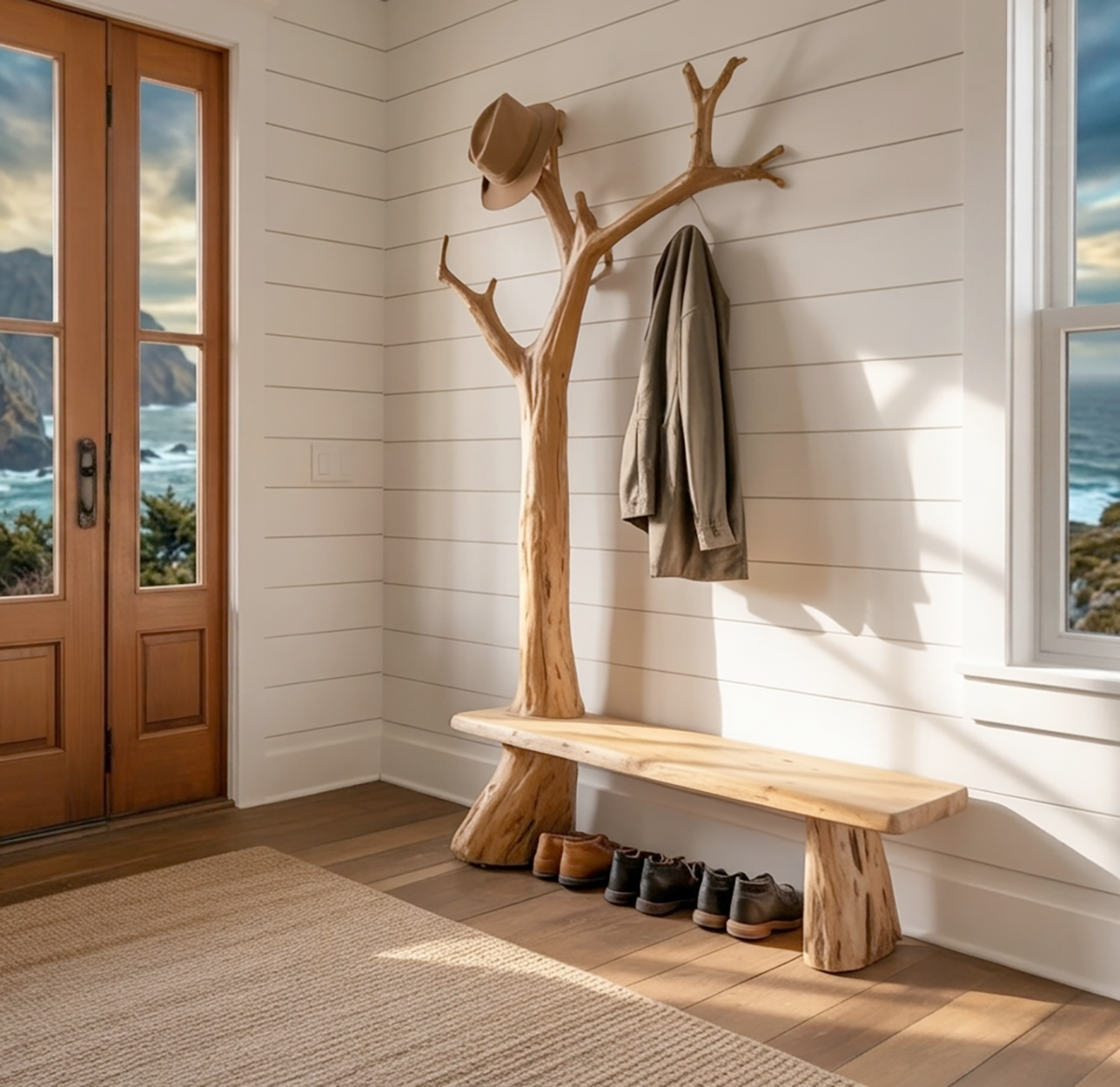
Your highest-traffic outerwear zone. Go standing or wall-mounted with a minimum of 6 hooks and 20+ lbs per hook capacity. Consider a combo rack with an umbrella stand if your climate calls for it.
Ashdeco recommendation: A standing wooden coat rack with a weighted base for stability.
Mudroom
Heavy use, dirty clothes, wet gear. Prioritize durability and easy cleaning - metal or sealed wood with water-resistant finishes work best. Hooks should be spaced widely enough for bulky jackets.
Tip: Install at multiple heights if your mudroom serves both adults and kids.
Bedroom
Lower traffic, more style-conscious. A wall-mounted hook rail or small standing rack near the closet works well. If you change outfits daily, consider an over-the-door rack as a supplement.
Kids' Room
Frequent use, lower weight. Go low with wall-mounted hooks (48–54 inches), choose rounded edges to avoid injury, and pick a colorful or playful design they'll actually use. Lower weight capacity is fine here.
Bathroom
Humidity is the enemy. Choose rust-resistant materials like aluminum, stainless steel, or sealed wood. Wall-mounted hooks near the towel bar or on the back of the door make the most sense.
Installation Tips
For Wall-Mounted Racks
- Find your wall studs - Use a stud finder. Anchors in drywall alone can fail under load.
- Use the right anchors - Toggle bolts for heavy loads; standard anchors for lighter use.
- Mark before you drill - Use painter's tape to mark positions, step back, and check alignment before committing.
- Check for pipes and wiring - In kitchens and bathrooms especially, know what's behind the wall.
For Standing Racks
- Weigh down the base - Many standing racks have a hollow base. Some models allow you to fill them with sand or weighted material for stability.
- Place on flat flooring - Carpet can cause wobbling; hardwood or tile is ideal.
- Secure if needed - Anti-tip straps are available for households with young children or pets.
Common Mistakes to Avoid
- Buying for your ideal rather than actual use - If you only have a narrow entryway, a wide standing rack will crowd the space
- Ignoring wall type - Drywall, plaster, and paneling all require different anchors
- Underestimating hook count - You will always need more hooks than you think
- Choosing style over function - A gorgeous rack that wobbles or can't hold weight isn't worth it
- Forgetting about depth - Some racks stick out quite far; measure your clearance
Coat Rack Cost - What Should You Actually Spend?
Price is one of the biggest factors in choosing a coat rack, and the range is wider than most people expect. Here's a realistic breakdown by type and quality tier.
Price by Type & Quality
| Type | Budget | Mid | Premium |
|---|---|---|---|
| Standing | $40–80 (metal/MDF) | $150–300 (solid wood) | $400–600+ (handcrafted) |
| Wall-Mounted | $15–40 (plastic hooks) | $50–120 (solid wood rail) | $150–300 (handcrafted driftwood) |
| Tree | $80–150 (factory-made) | $200–400 (quality solid wood) | $400–800+ (handcrafted/artisan) |
| Hook Rails | $10–30 (basic metal) | $30–80 (wood peg rail) | $100–200 (handcrafted wood) |
Cost-per-Year: Cheap vs. Quality
Let's run the actual math over a decade:
- $50 metal rack: Lasts 3–5 years before wobbling becomes unbearable. Cost per year: $10–17/year.
- $200 solid wood rack: Lasts 15–20 years with basic maintenance. Cost per year: $10–13/year.
- $500 handcrafted piece: Lasts 25+ years, ages better over time. Cost per year: $20/year - but appreciates visually.
The cheap rack doesn't actually save money over time - it just shifts the cost to replacement cycles. If you're staying in your home for more than 5 years, solid wood is the economical pick.
What to Expect at Each Budget Level
Under $50: Mass-produced metal or MDF. Functional but generic. Fine for light jackets in a low-traffic space like a bedroom closet.
$50–150: Better materials - possibly solid wood, better joinery, heavier base. Entry point for quality. Good for daily use in a household of 2–3 people. For picks in this range, see our Best Wooden Coat Racks 2026.
$150–400: Solid wood throughout, proper joinery, hand-sanded finish. This is where daily-use quality lives. See our Best Standing Coat Racks 2026 for tested picks.
$400+: Handcrafted, artisan-made, one-of-a-kind pieces. Driftwood, live edge, custom designs. Investments that last decades. Browse Ashdeco's handcrafted coat rack collection for current availability, or see our guide on custom coat racks if you want a piece built to your exact space.
Coat Rack Styles - Which Aesthetic Fits Your Home?
The material section above covers what the rack is made of. This section covers how it looks - and since your coat rack lives in the entryway (the first thing people see), the style decision matters more than most furniture choices.
Rustic / Farmhouse
Reclaimed wood, visible grain, natural edges, sometimes with bark still intact. Look for live edge slabs and natural branch hooks; avoid factory-made "distressed" finishes that read as cheap in person. See our rustic coat rack ideas for real examples, or eco-friendly coat racks for sustainable rustic picks.

Driftwood / Organic Modern
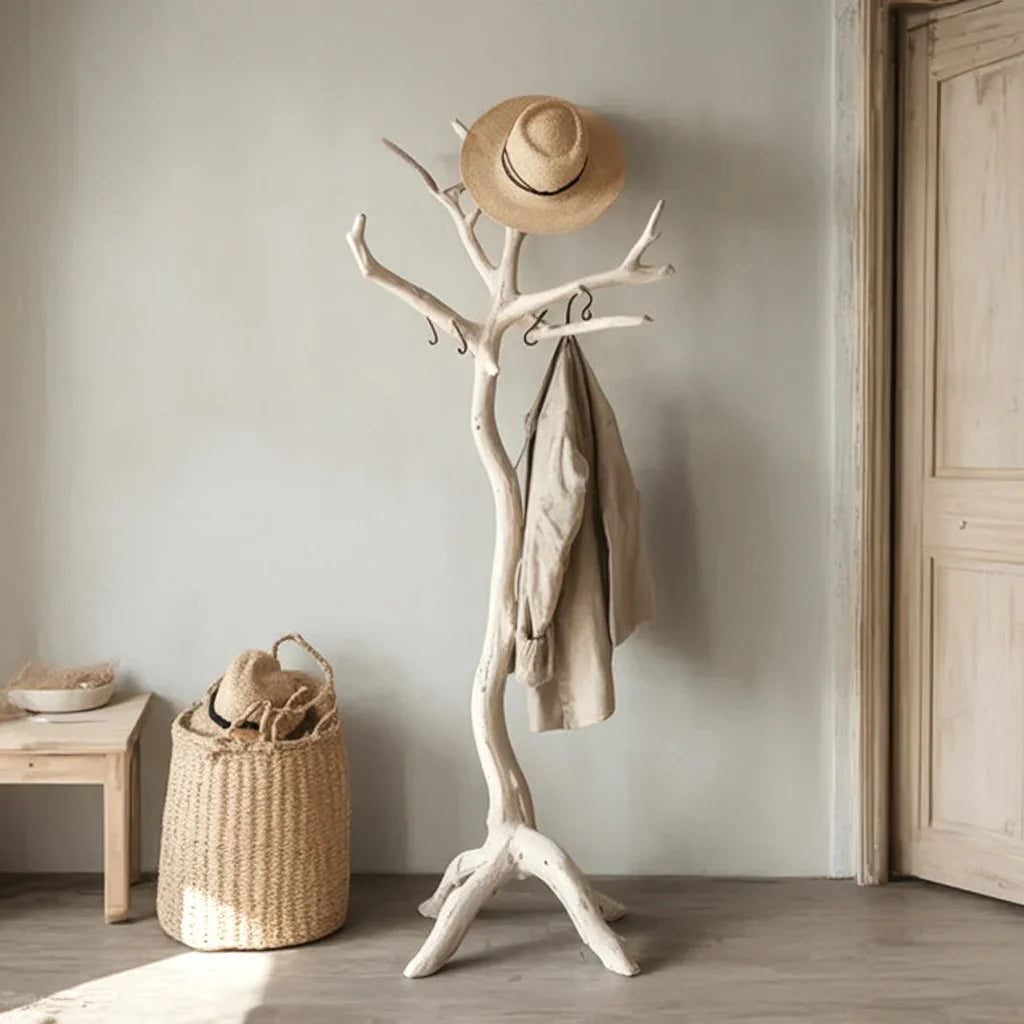
Driftwood coat racks use naturally weathered wood - each piece is unique because no two driftwood forms are alike. Look for solid driftwood construction (not driftwood-look paint on regular wood) and hook curves that actually grip coats, not just look good.

Mid-Century Modern
Clean lines, tapered legs, warm wood tones (walnut, teak), geometric forms - minimalist post designs or wall-mounted rails with simple peg hooks. Look for walnut or dark-stained wood with a slender profile; avoid overly ornate designs, since mid-century is about restraint.
Minimalist / Scandinavian
Light woods (oak, ash, birch), matte finishes, maximum simplicity - almost sculptural. Look for white oak or ash with hooks integrated into the design rather than bolted on as an afterthought.
Industrial
Mixed materials - wood plus black metal, pipe-inspired designs, raw finishes. Look for real wood (not MDF with a wood-look print) and solid metal pipes with clean weld quality.
Traditional / Classic
Darker woods (mahogany, cherry), turned wood details, ornate hook designs - furniture-like pieces that belong in formal entryways. Look for solid wood construction; traditional pieces often hide cheaper materials behind ornate styling, so check the weight before buying.
Tree-Style / Statement Pieces
Tree coat racks mimic a natural tree silhouette - a central trunk with branch-like hooks radiating outward. They're the most visually striking type and work in almost any design style because they reference nature, not a specific design movement. Wall-mounted versions of the same idea exist too, if floor space is tight - see our wall-mounted tree clothes hanger guide.

For a deep dive into tree coat rack designs and why they work as statement pieces, see our Tree Coat Rack Statement Piece guide, our full roundup of tree, driftwood & modern coat rack styles, or go behind the scenes with how a tree coat rack is made.
Frequently Asked Questions
How high should I mount wall coat rack hooks?
Standard is 60–66 inches from floor to hook center for adults. For children, mount at 48–54 inches. See our coat hook height guide for room-by-room mounting heights.
How many coat rack hooks do I need?
Plan for 2 hooks per household member, plus 2–4 extra for guests. A family of 4 needs 8–12 hooks minimum. See our Best Wooden Coat Racks 2026 for picks by hook count.
Can a coat rack hold heavy winter coats?
Yes - a well-built rack handles 10–15 lbs per hook. A winter coat plus bag and scarf typically weighs 8–12 lbs. For verified weight capacity data, see our Coat Rack Weight Test.
Is a hall tree or a coat rack better?
A hall tree is better if you need entryway storage (shoes, bags, mail) and a seating bench. A standalone coat rack is better if you only need hanging space and want to save floor area. See Hall Tree vs Coat Rack for the full comparison.
Can I use adhesive coat hooks in a rental?
Yes, but only for light jackets and accessories. Adhesive hooks hold 3–7 lbs max. For a full guide to renter-friendly no-drill options, see Coat Rack for Renters: No-Drill Entryway.
What's the best wood for a coat rack?
Oak, walnut, and beech for hardness and weight. Teak for moisture resistance. Driftwood for unique character. See Best Wooden Coat Racks 2026 for wood-by-wood breakdowns.
Hall tree or standing coat rack for a small entryway?
If your entryway is under 4 feet wide, skip the hall tree - it'll dominate the space. A slim standing rack or wall-mounted hooks work better. See our wall-mounted coat rack ideas for small spaces for layout-specific picks.
More Coat Rack Guides
Each article below goes deeper on a specific topic - this guide gives you the overview, these give you the details:
Commercial & Comparison
- Best Standing Coat Racks 2026 - tested picks, hands-on stability analysis
- Best Wooden Coat Racks 2026 - full comparison: standing, wall, and tree options
- Coat Rack Weight Test - real data on how much each type actually holds
- Eco Friendly Coat Racks - sustainable wood options
- Hall Tree vs Coat Rack - when you need storage, not just hooks
- Wall Mounted vs Standing Coat Rack - head-to-head comparison
- Tree Coat Rack Statement Piece - why tree designs work in any style
How-To & Room Ideas
- Coat Hook Height: Where to Mount for Every Room
- Tree Clothes Hanger, Wall Mounted - a floor-space-free take on the tree silhouette
- Wall Mounted Coat Rack Ideas for Small Spaces
- Coat Rack for Renters - no-drill entryway organization
Ideas & Inspiration
Behind the Craft
- How a Tree Coat Rack Is Made
- Custom Coat Racks, Handcrafted - bespoke options built to your space
- Tree Coat Rack Guide - a closer look at the most popular style
Browse Ashdeco's handcrafted solid wood coat racks - standing, tree-style, wall-mounted, driftwood, and custom designs. Solid oak, walnut, driftwood & teak. Each piece handcrafted to last decades. Shop the Coat Rack Collection →
How Ashdeco Can Help
Ashdeco stocks a range of coat racks designed for real homes - from sleek wall-mounted bars to sturdy standing racks in solid hardwood and metal finishes. Each piece is selected for both function and form, so you don't have to sacrifice one for the other.
Browse the full collection of coat racks at Ashdeco to find the right fit for your entryway, mudroom, or bedroom.
Final Checklist Before You Buy
Before making your decision, run through this quick checklist:
- [ ] Measured my available space (width, height, floor clearance)
- [ ] Chosen my rack type (standing, wall-mounted, tree, or hook rail)
- [ ] Selected my material (wood, metal, or combo)
- [ ] Verified weight capacity meets my needs
- [ ] Counted the hooks - do I have enough for household members?
- [ ] Confirmed wall mounting is feasible (or chosen freestanding)
- [ ] Matched the style to my room's existing decor
- [ ] Checked return policy / warranty
Take a moment with this checklist and you'll walk away with the right coat rack the first time - no second guesses, no clutter.
Ready to upgrade your entryway? Explore Ashdeco's coat rack collection and find a piece that works as good as it looks.
Have questions about choosing the right coat rack for your space? Ashdeco's team is happy to help with sizing, material questions, or installation advice.