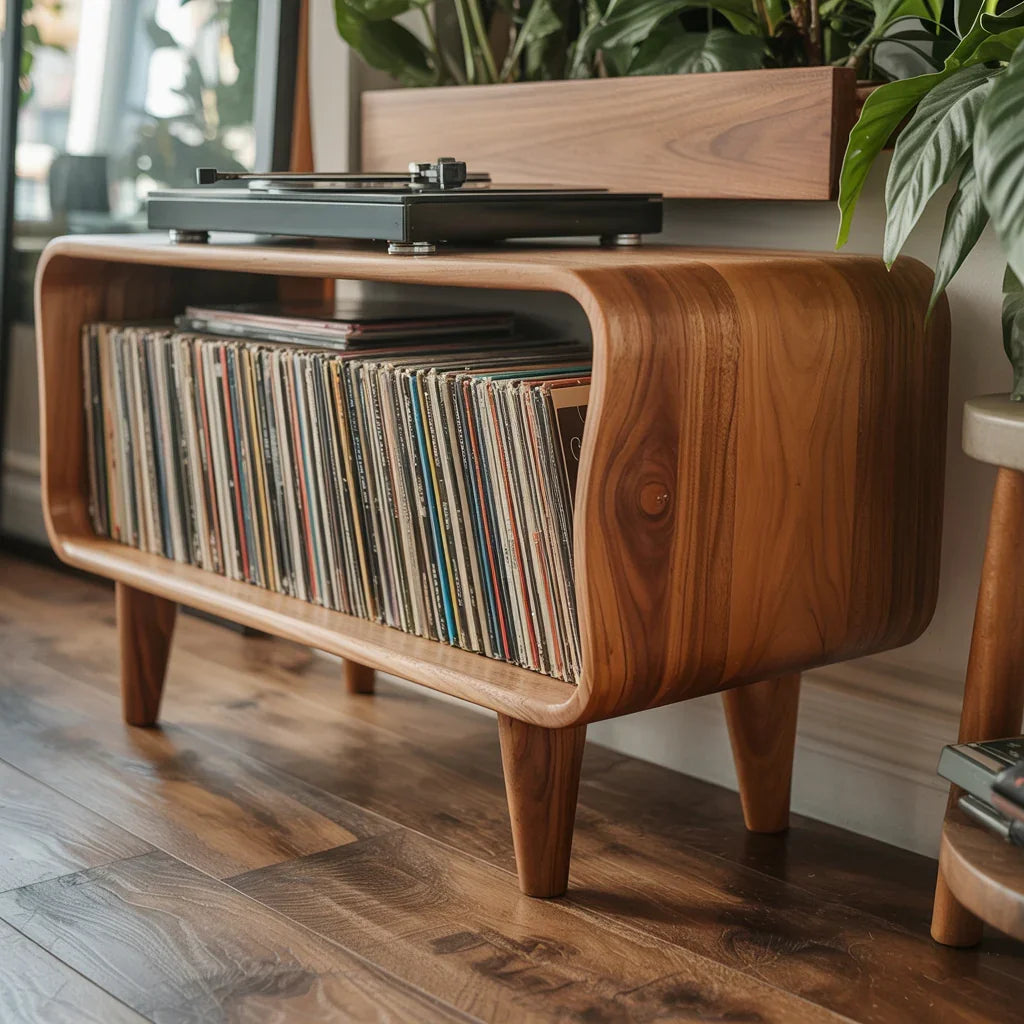
If you've started building a vinyl collection, you already know the frustration of a wobbly table, a shelf that can't handle the weight, or a setup where your records are scattered across three different pieces of furniture. The solution is a dedicated record deck stand - but choosing the right one means understanding a few key specifications that most buying guides skip over entirely. For a deeper dive into vibration isolation and why the stand is really part of your turntable's signal chain, our wood turntable stand guide covers the physics behind it.
This guide covers everything: terminology, measurements, materials, features, and the mistakes that even experienced vinyl collectors make. By the end, you'll know exactly what to look for.
---
What's in a Name? Record Deck Stand vs. Turntable Stand vs. Record Player Stand
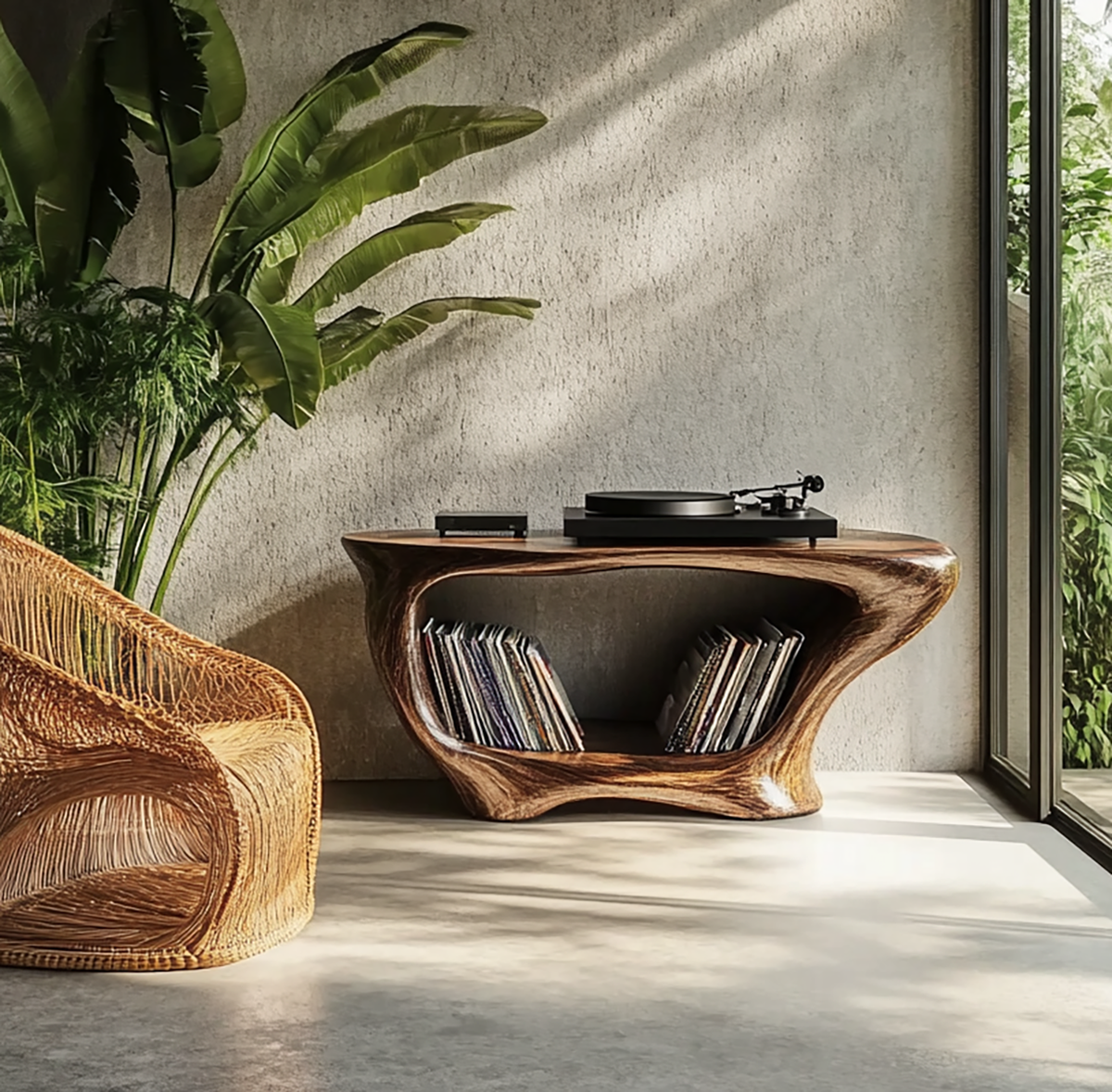
Here's something that trips up a lot of buyers: "record deck stand," "turntable stand," and "record player stand" are used interchangeably across the internet, but they describe the same piece of furniture. There is no industry standard distinguishing these terms.
What matters isn't the name - it's understanding what the stand is actually designed to support.
- Record deck stand - "Deck" is common UK/Australian terminology for the turntable unit itself. A record deck stand is simply a turntable stand. Same thing.
- Turntable stand - The most technically accurate term. Turntables are precision instruments with sensitive cartridges; the stand must account for vibration, weight distribution, and alignment height.
- Record player stand - Broader, more casual phrasing. These stands are designed for the consumer record player (like a Crosley or Victrola) rather than a audiophile turntable, though the terms overlap significantly.
The takeaway: when shopping, ignore the label and focus on the specs - height, weight capacity, and shelf dimensions.
---
Key Features to Evaluate Before You Buy
Height: Get This Wrong and Everything Feels Off
Turntable height matters more than most buyers realize. Your tonearm is calibrated to work at a specific platter height relative to the cartridge. If your stand sits too low or too high, you introduce tracking angle errors that wear out records faster and degrade sound quality. Our wooden record player stand size guide walks through matching stand height to your exact gear and listening position in more depth.
Standard turntable platform height is between 28 and 32 inches from the floor - which corresponds to a seated listening position at a standard dining chair or barstool height.
Before buying, consider:
- Will you sit or stand while listening? Seated setups work best at 28–30 inches. Standing setups (common in record shops) often sit at 36 inches or higher.
- Your listening chair height - Your turntable platform should align roughly with the armrest height of your listening chair. This keeps the tonearm level and reduces tracking force variance.
- The turntable's own feet - Some turntables have adjustable feet. Check your model's specs before settling on a stand height.
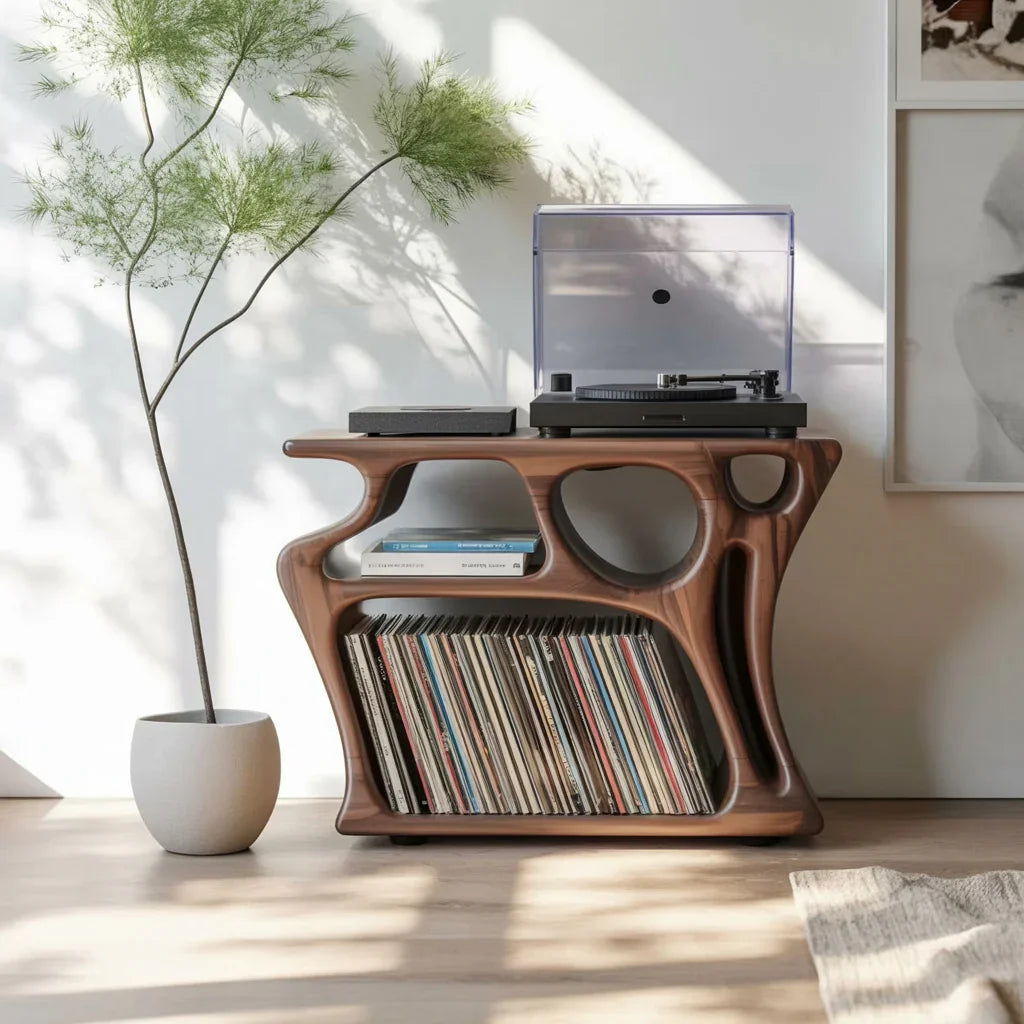
Ashdeco's handcrafted wood turntable stands are built at a standard 30-inch platform height, which works with most audiophile and consumer turntables in a seated listening setup.
---
Width and Depth: Don't Let Your Turntable Hang Off the Edge
Turntables vary in size, but most full-size models fall between 16 and 20 inches wide and 14 to 16 inches deep.
Minimum recommended stand dimensions:
| Turntable Size | Minimum Shelf Width | Minimum Shelf Depth |
|---|---|---|
| Compact (Crosley, suitcase players) | 16 inches | 12 inches |
| Standard (Rega, Pro-Ject, Audio-Technica) | 18 inches | 14 inches |
| Large (Thorens, Technics, VPI) | 20 inches | 15 inches |
Your turntable needs at least 2 inches of breathing room on each side. Never place a turntable flush with the edge of a shelf - vibration transfers differently at the edge, and you'll lose stability.
---
Weight Capacity: Where Buyers Consistently Fail
This is the most commonly ignored specification, and it causes real problems. A record deck stand must support:
- The turntable itself - Typically 15 to 35 pounds for a full-size unit
- The records stored on or in the stand - A collection of 100 LPs weighs approximately 50 pounds
- Any additional components - Phono preamp, receiver, speakers placed on the stand
Look for a stand rated for at least 75 pounds to account for storage additions over time. Many cheaper particle-board stands top out at 50 pounds - a serious liability as your collection grows. If you're unsure how much storage your own collection actually needs, our guide to how much vinyl storage you actually need breaks it down by collection size and room fit.
Solid wood furniture from Ashdeco is engineered to handle 80–120 pounds on the main platform, with reinforced lower shelves for vinyl storage.
---
Storage: How Many Records Do You Actually Need?
Vinyl collectors consistently underestimate how fast their collection grows. The average enthusiast adds 25 to 50 records per year, according to data from Discogs. Our record player stand with storage guide covers every configuration - open, drawer, hybrid - in more detail than we can fit here.
Storage configuration options:
- Open shelf - Records sit vertically in cube compartments. Fast browsing, but no dust protection. Best for daily listeners who want records visible.
- Enclosed cabinet - Doors protect records from dust and light. Slower to browse, but better for long-term preservation.
- Hybrid - Open cubes for your current rotation + enclosed cabinet section for long-term storage. The most versatile option.
| Configuration | Records Held (approx.) | Dust Protection | Best For |
|---|---|---|---|
| Open Shelf (2 cubes) | 80–120 LPs | Low | Daily listeners, small collections |
| Open Shelf (4 cubes) | 160–240 LPs | Low | Medium collections, display focus |
| Enclosed Cabinet | 150–400 LPs | High | Preservation, larger rooms |
| Hybrid Design | 200–500 LPs | Medium–High | Growing collections, all-purpose |
If your space is tight, our vinyl record storage ideas for small spaces guide covers ten space-saving configurations with real dimensions.
Materials: Wood vs. Metal - What Works Better?
Solid Wood
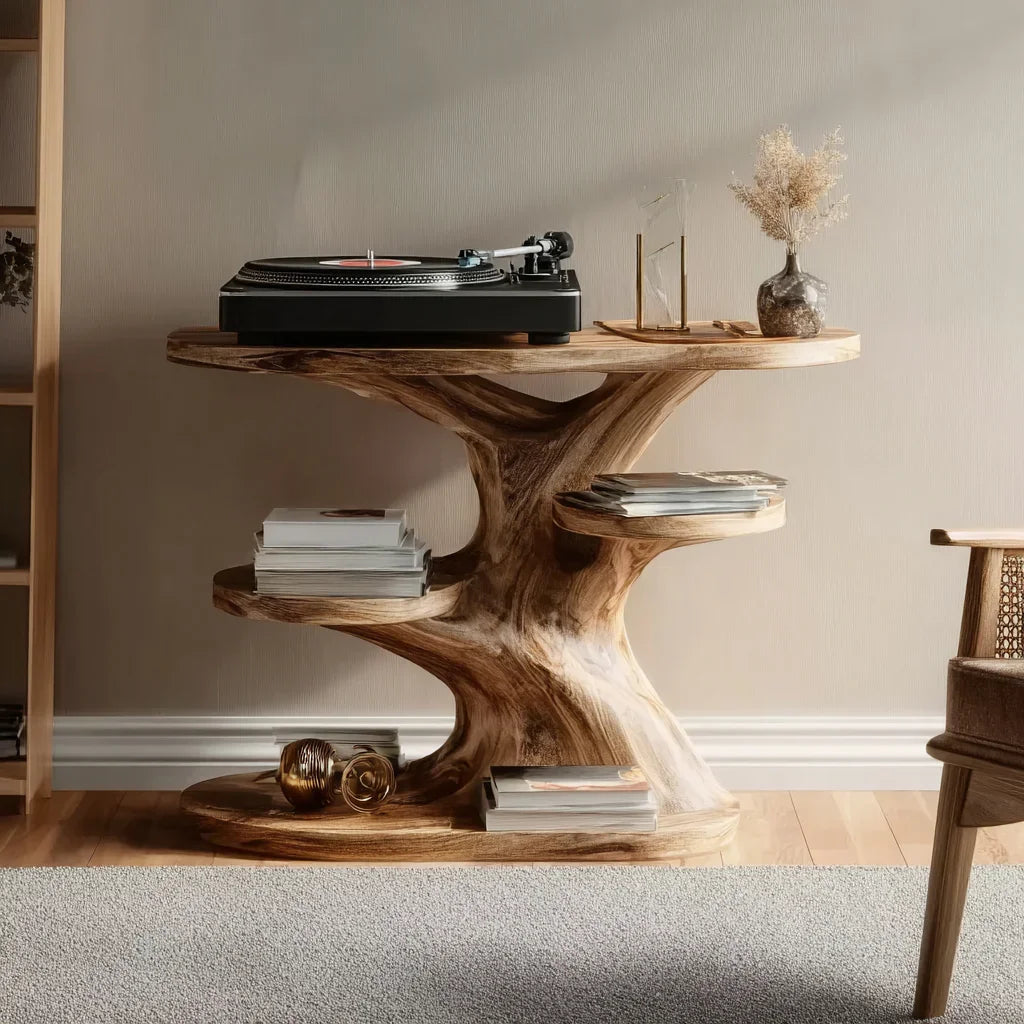
Solid wood record deck stands offer the best combination of mass, vibration dampening, and aesthetic appeal. Hardwoods like oak, walnut, and mango are preferred over softwoods because they resist sagging under heavy record loads. Our record player stand and vinyl storage guide covers the full solid-wood-vs-particleboard comparison side by side if you want the numbers.
Advantages:
- Natural vibration dampening - wood absorbs resonance rather than transferring it
- Substantial weight provides stability
- Ages beautifully; becomes more characterful over time
- Repairable: scratches and dents can be sanded out
Disadvantages:
- Higher price point than particle board or metal
- Requires occasional maintenance (oiling, waxing)
Ashdeco's wood turntable stands are built from sustainably sourced hardwoods with hand-finished surfaces. The mass of solid wood provides genuine acoustic isolation - not just a flat surface.
Metal
Metal stands (usually steel or aluminum) are common in studio environments where space is tight and modular configuration matters.
Advantages:
- Strong and lightweight
- Modern, industrial aesthetic
- Often adjustable or modular
Disadvantages:
- Poor vibration dampening - metal transfers resonance rather than absorbing it
- Cold aesthetic doesn't suit most living rooms
- Can feel less permanent or substantial
Particle Board / MDF
Avoid particle board for any stand that will hold a turntable and records. It sags under sustained weight, swells when exposed to humidity, and provides virtually no vibration isolation.
If budget is a serious constraint, look for a solid wood open shelf stand rather than a cheap composite cabinet. One well-made wood record player stand will outlast three particle board pieces.
---
One well-made stand outlasts three particle board ones
Every Ashdeco record deck stand is built from solid hardwood, engineered to handle 80-120 pounds on the main platform - turntable, records, and components included. Handcrafted by Vietnamese artisans.
Shop Record Player StandsHow to Measure for Your Record Deck Stand
Follow these steps before you buy anything:
- Measure your turntable - Width, depth, and height (including feet). Write these down.
- Determine your listening position - Measure from floor to your seated elbow height. Your turntable platform should sit 1–2 inches below this.
- Measure your records - If storing vertically, each LP takes approximately 0.14 inches of linear space. A 200-LP collection needs about 28 inches of shelf width.
- Check your doorway and hallways - Record deck stands are bulky. Measure every door, hallway, and corner your new stand needs to pass through. Many buyers have received a stand they physically couldn't get into their listening room.
- Account for component stacking - If you plan to place a phono preamp, receiver, or speakers on the same stand, measure those too. You need separate shelves, not a single platform doing double duty. Our wood record player cabinet vs open stand comparison covers isolated shelving options if vibration between components is a concern.
---
Common Mistakes to Avoid
1. Buying for your collection size today, not tomorrow
Always buy a stand with 30–50% more storage than you currently need. Vinyl collections grow. A stand that fits 100 records will be frustrating in two years when you're at 180.
2. Ignoring vibration isolation
Placing a turntable on a lightweight shelf over a HVAC vent or near a speaker is a mistake. The stand itself should be heavy and stable. Solid wood stands outperform hollow-core or metal stands in this regard.
3. Prioritizing looks over function
A beautiful mid-century stand that wobbles or can't hold your collection is the wrong choice. Find a stand that performs first and looks great as a secondary criterion. If you're planning the whole listening corner rather than just the stand, our guide to building a vinyl listening station at home covers gear, placement, and acoustics together so form and function don't end up fighting each other.
4. Skipping the weight capacity spec
Always check the stated weight limit. Include the turntable weight + estimated record weight + any components. If you're at 70% of capacity with everything loaded, look for a heavier-duty option.
5. Forgetting about cable management
Turntables need power, and many have external phono preamps or speed controls. Look for stands with back-panel cutouts, cable routing holes, or enough clearance behind the unit to organize cables cleanly.
---
Why a Record Deck Stand Is Worth the Investment
Your turntable is a precision instrument. It deserves a dedicated platform that matches its level of engineering. A dedicated record deck stand does three things no improvised furniture can:
- Isolates vibration - Protects the cartridge and prevents skipping
- Organizes your collection - Keeps records within arm's reach in a purpose-built storage system
- Completes the room - Turns a listening corner into a deliberate, intentional space
If your taste leans clean and current, our modern record player stand ideas guide covers how to style that kind of setup room by room. If you'd rather lean into a warmer, chunkier look instead, our retro cabinet record player guide covers that 90s-inspired direction.
Skip the particle board. Skip the repurposed nightstand. A quality wood record deck stand is one of the best investments you can make in your vinyl listening experience.
---
Summary: What to Look For in a Record Deck Stand

| Feature | Recommended Spec |
|---|---|
| Height | 28–32 inches (seated listening) |
| Width | Minimum 18 inches; 20+ for large turntables |
| Depth | Minimum 14 inches |
| Weight Capacity | 75+ pounds on main platform |
| Material | Solid hardwood preferred |
| Storage | 30% more than current collection size |
| Vibration Control | Heavy, solid construction; no hollow-core |
---
Ready to find your perfect record deck stand? Browse Ashdeco's collection of handcrafted wood turntable stands - each one built to order in solid hardwood, designed to last decades and sound better doing it.