Corner Shelf Guide: Types, Sizes, Weight Limits & Buying Tips
Every home has corners that no furniture can use. A standard bookshelf gets pushed up against one wall and leaves a 6-inch wedge of wasted floor space. A wall shelf stops short because the next wall starts at 90 degrees. Corner shelves solve this. They turn the geometry that normally works against you into usable display and storage surface.
This guide is not about cramming shelves into a tiny apartment, and it is not about a specific room. It is the general framework for choosing a corner shelf that actually fits your space, your wall type, and the weight you plan to put on it. We cover the five main styles, how to measure correctly, which wood holds up in which room, and the four mistakes most buyers make.

Why Corner Shelves Matter
A corner shelf reclaims space that standard furniture simply cannot reach. Measure the empty wedge in any corner of your home. Most corners have 1 to 3 square feet of vertical wall space doing nothing. Multiply that by four corners in a typical room, and you have 12 square feet of potential display surface that flat-wall furniture will never touch.
Corners also draw the eye. When someone walks into a room, their gaze tracks across the walls. A blank corner registers as unfinished. A well-styled corner shelf turns that same spot into a focal point. Add a plant, a framed photo, and a piece of pottery, and the corner becomes the reason the room feels complete.
Practical storage matters too. Corner shelves work especially well for bathrooms where flat wall space is tight, for entryways where every inch counts, and for kitchens where the junction between two walls is usually dead space above the counter.
Corner Shelf Types
Five configurations cover almost every use case. Each solves a different problem.
Wall-Mounted Floating Corner Shelf

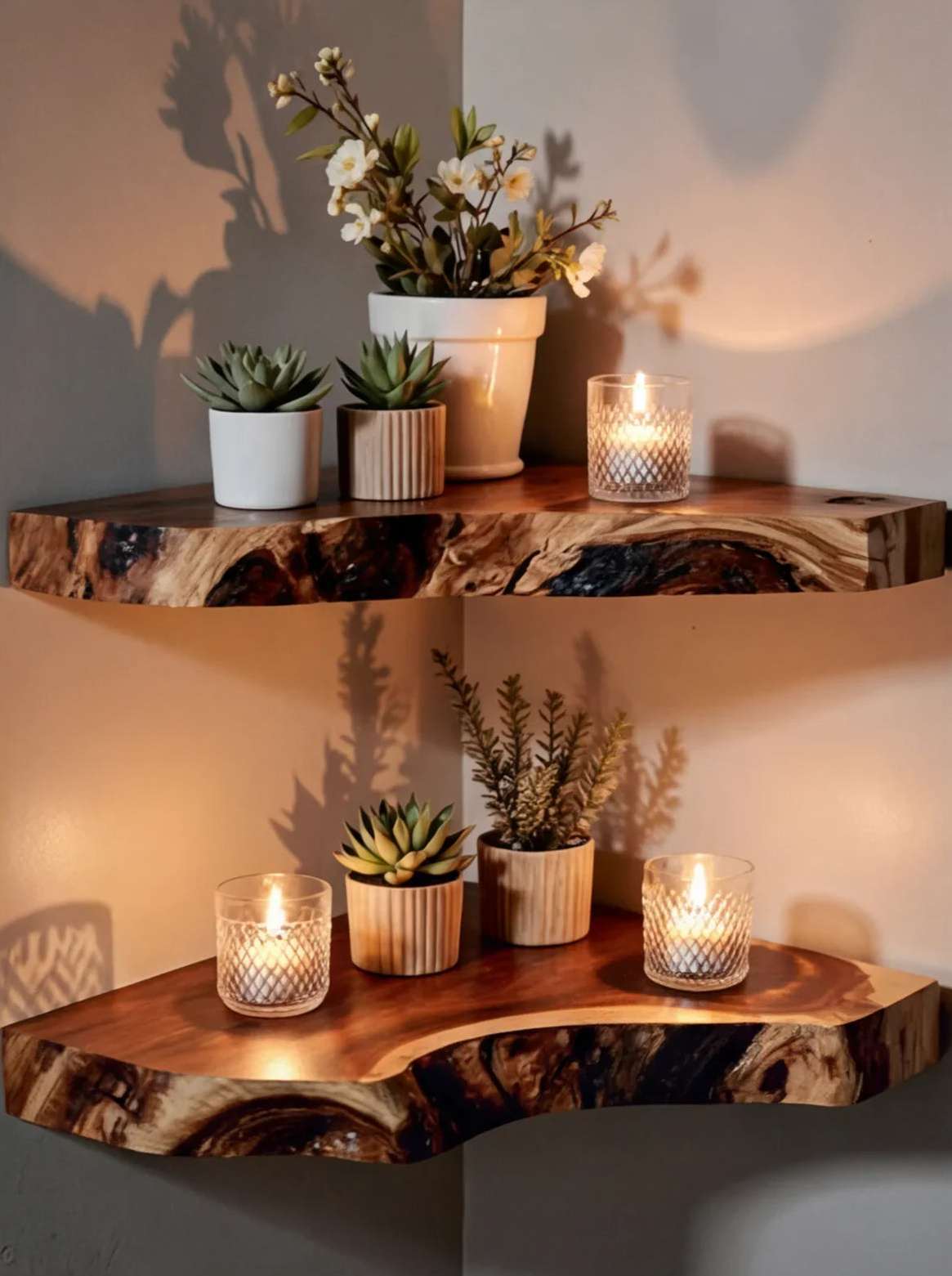
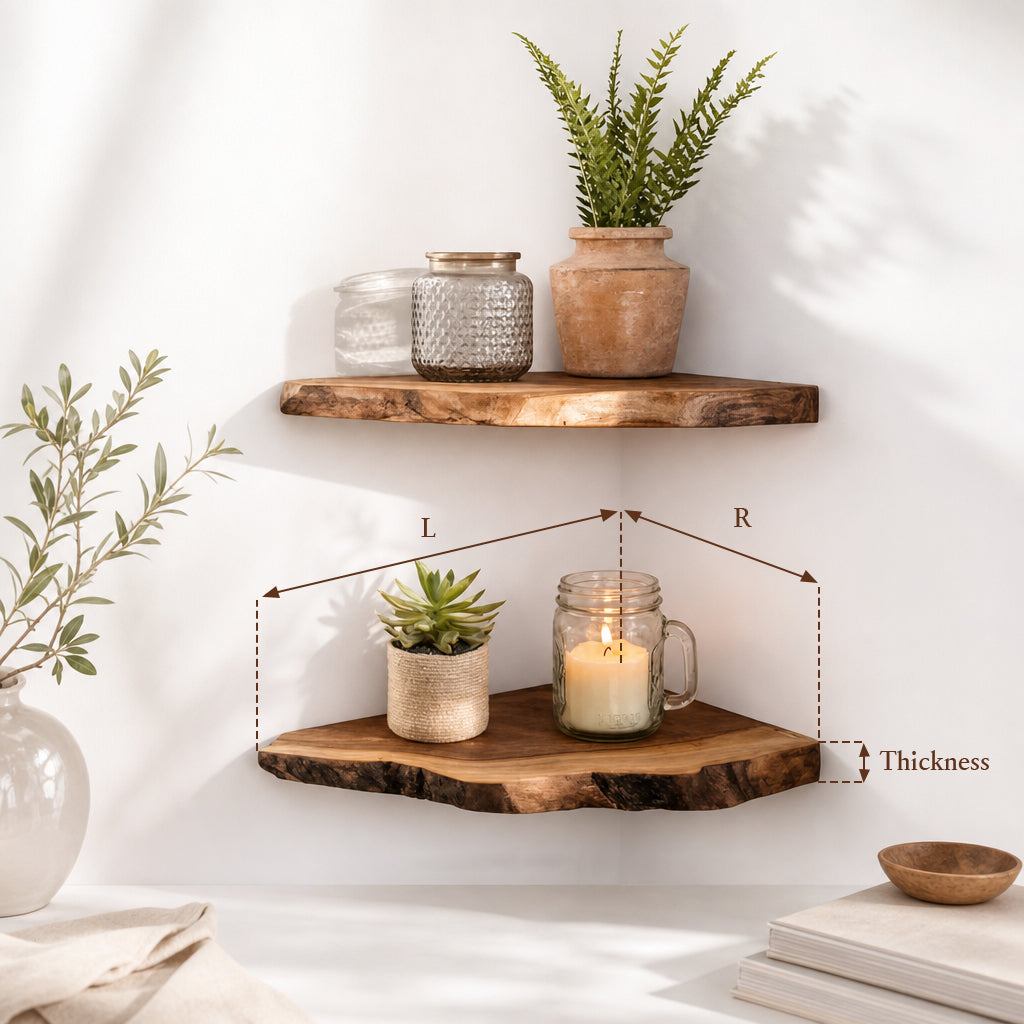
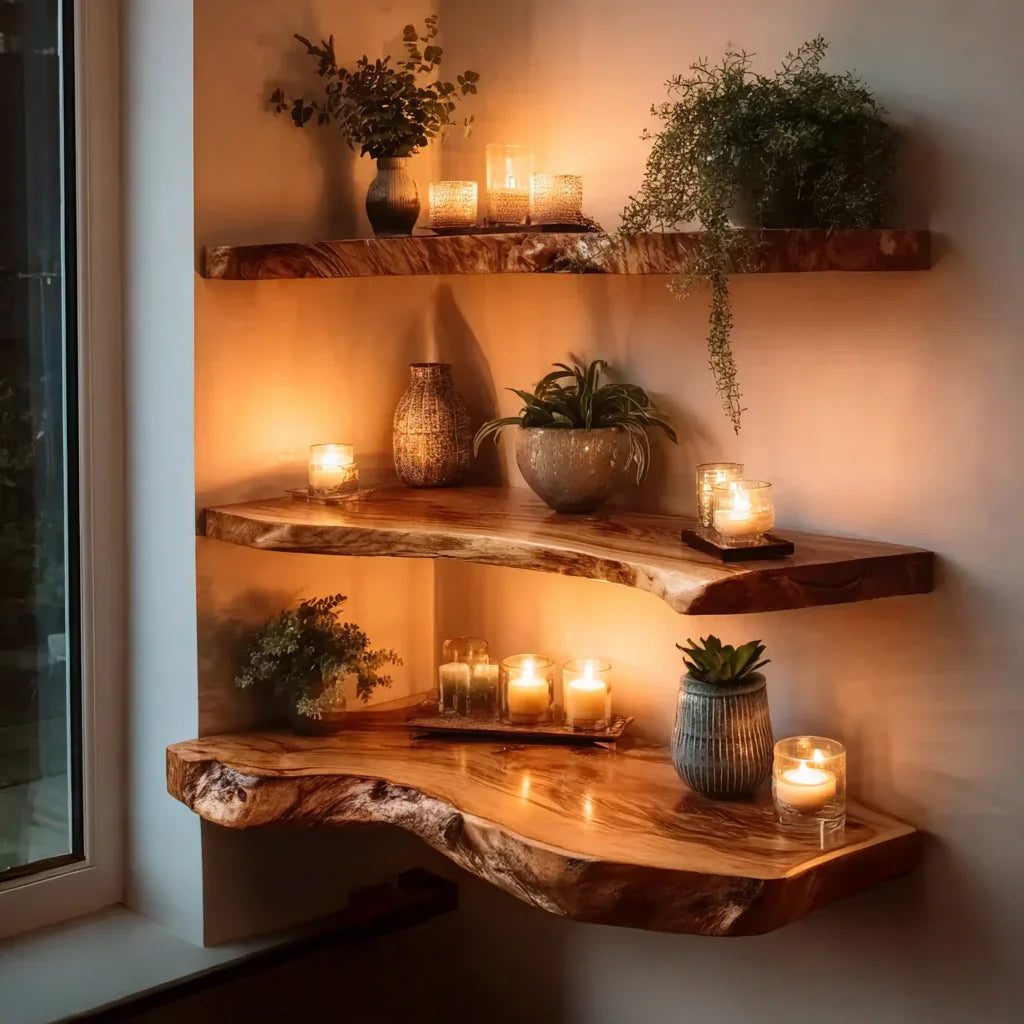
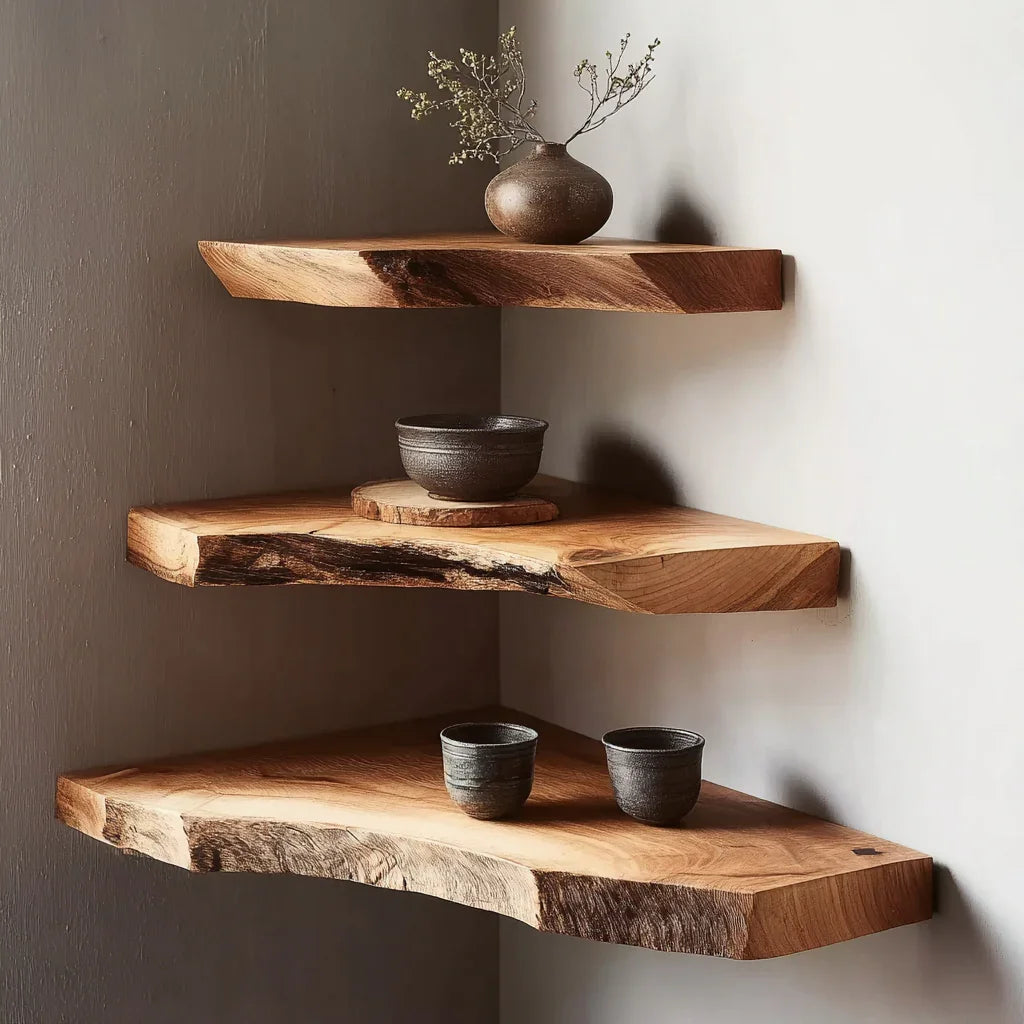
Rustic Teak Root Wood Corner Shelf - Floating Corner Shelves Decor
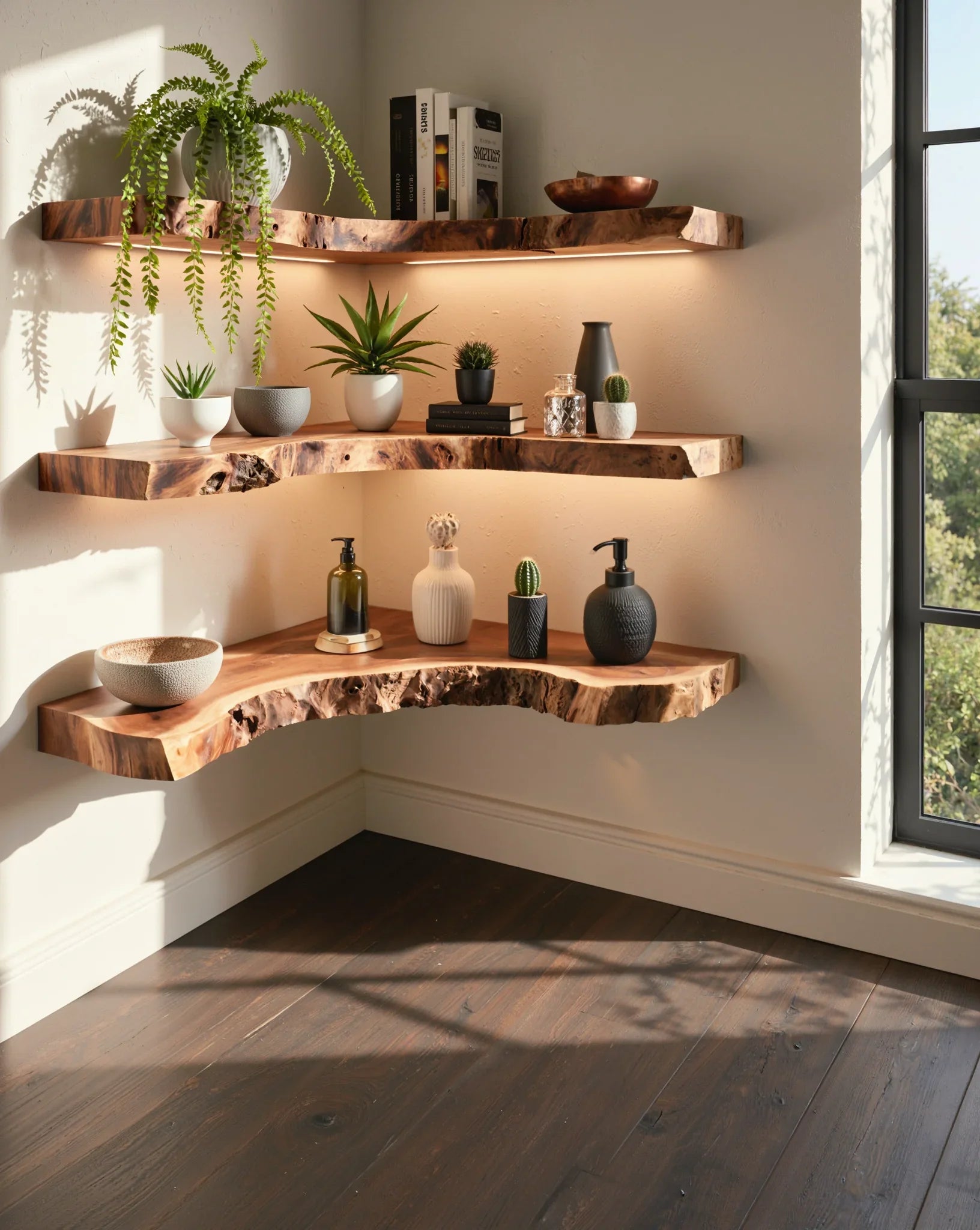
The most popular style. A triangular or quarter-circle shelf that mounts flush into a 90 degree corner with hidden brackets. Frees up the floor completely and leaves a clean profile. Works in any room and handles moderate weight (15 to 35 pounds per shelf with proper anchoring). Browse our corner floating shelves collection for solid hardwood options in walnut, oak, and teak.
Corner Tree Bookshelf
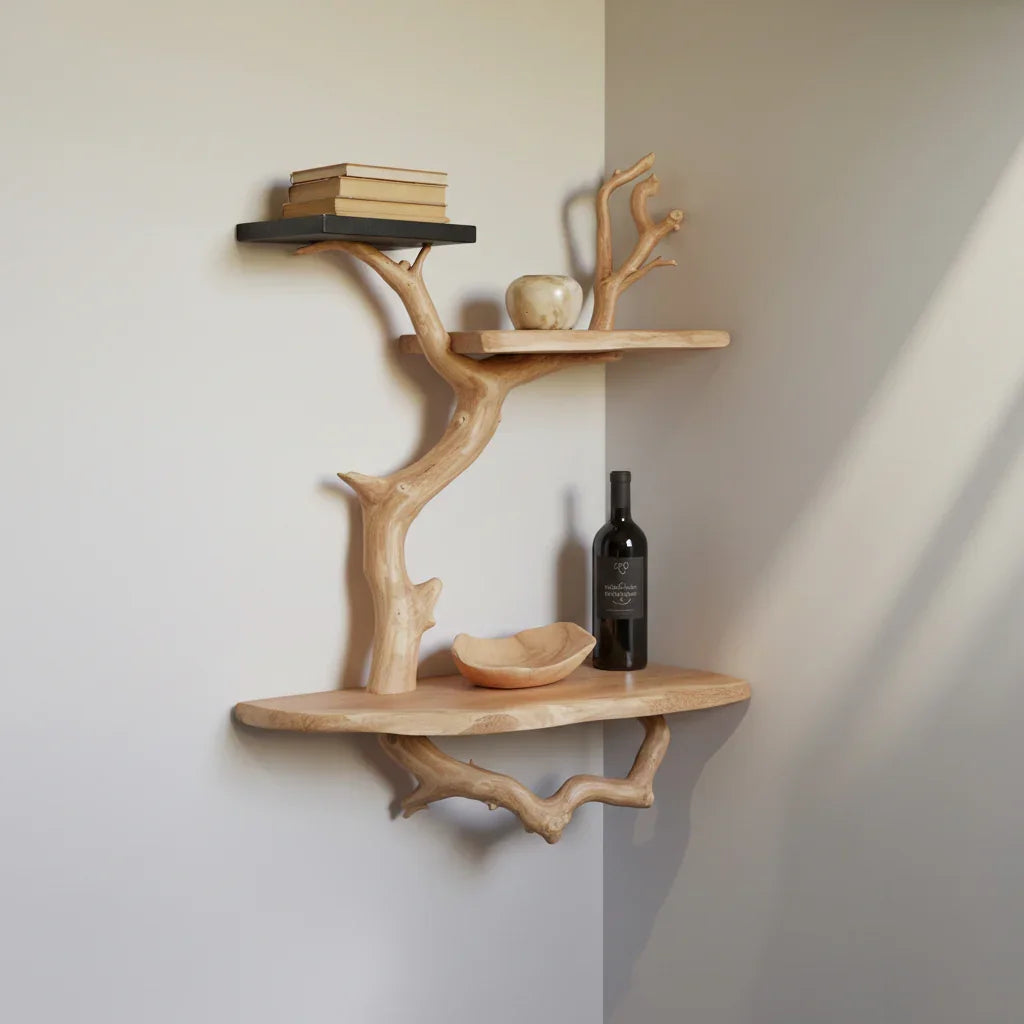
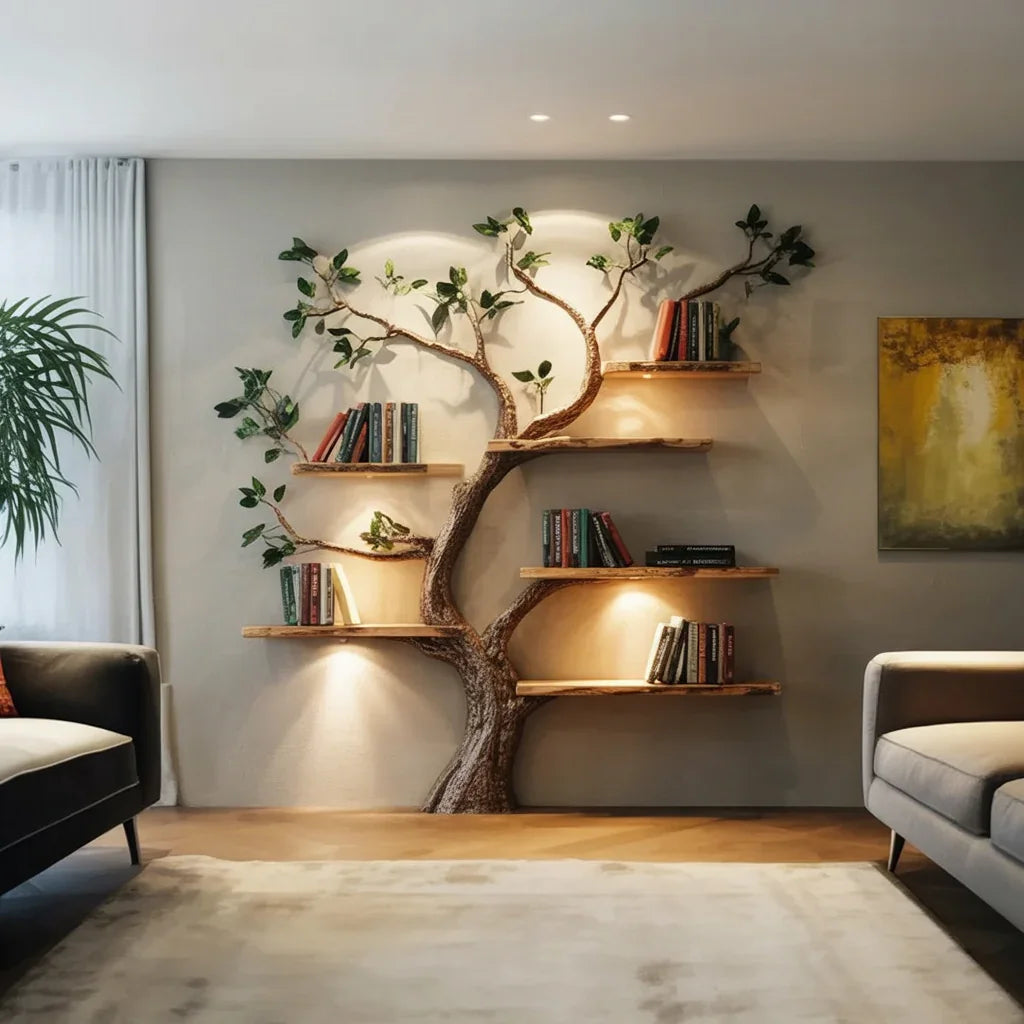
Floating Corner Tree Branch Bookshelf – Driftwood Wall Decor
A sculptural piece shaped like a tree that fits into the corner. Multiple branches act as staggered shelves at different heights. Functions as both storage and statement art. Ideal for living rooms, reading nooks, and bedrooms where you want more than a basic shelf. Our corner tree bookshelf collection includes both wall-mounted and freestanding models.
Corner Standing Unit
A freestanding tower with multiple tiers, designed to sit inside a corner. Works when you need serious storage and do not want to drill into the walls. Useful for renters, for walls that cannot hold weight, and for corners where you want to anchor the room with a substantial piece.
Corner Cubby or Open Shelf
Box-style corner shelves with a back panel, creating a framed display surface. The back panel gives visual weight and makes each shelf feel like a small gallery frame. Good for collections, single statement objects, or plants you want to draw attention to.
Multi-Tier Corner Tower
A stacked set of corner shelves mounted at rising heights to form a vertical column. Fits narrow corners and draws the eye upward, which makes ceilings feel taller. Works well in bathrooms, home offices, and tight apartment living rooms.
Shop the collection
Handcrafted solid wood corner floating shelves
Solid walnut, oak, teak, and acacia in clean-cut and live edge profiles - hand-carved by Vietnamese artisans, rated 15-30 lbs per shelf. Free US shipping, 30-day guarantee.
Shop Corner Floating Shelves →Measuring Your Corner
How to Choose the Right Size for Your Room
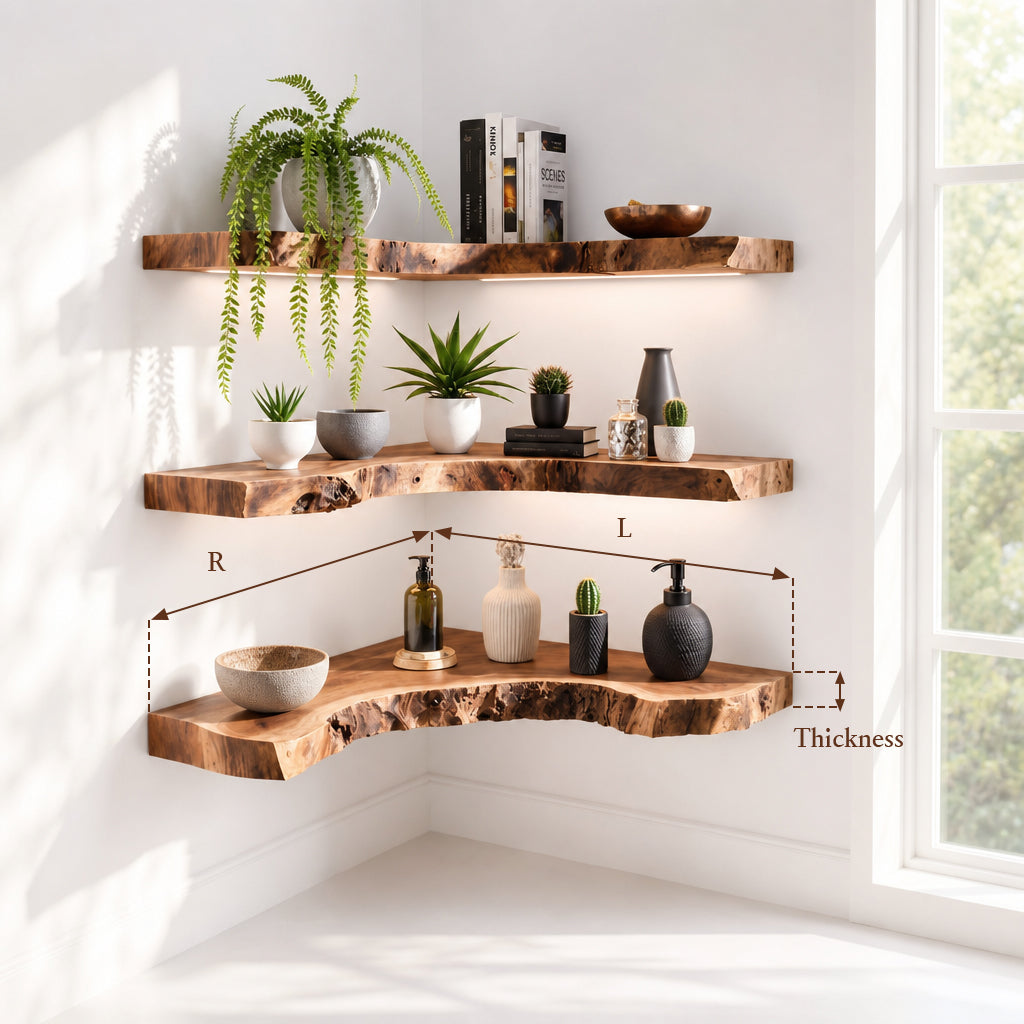
Start with the corner itself, not the shelf. Measure how far each wall extends before hitting a window, door frame, or outlet, then match that to a shelf sized 10 to 24 inches per side. For a single accent shelf, one tier is usually enough. For a corner that needs real storage - books, plants, and display pieces together - a multi-tier corner tower makes better use of the same footprint. As a rule of thumb: small bathrooms and entryways call for compact single or double-tier shelves, while living rooms and bedrooms can comfortably hold a taller 3-to-5-tier unit without feeling crowded.
This is where most purchases go wrong. Buyers assume every corner is 90 degrees. Many are not. Older homes, remodeled spaces, and walls near windows or door frames often sit at 88, 91, or even 95 degrees. A shelf cut for a perfect 90 will gap on one side if your corner is off.
Check the Corner Angle
Use a framing square or a smartphone angle app to measure the actual corner angle. Hold the tool flush against one wall and slide it into the corner. If there is a gap on either side, your corner is not exactly 90 degrees. For off-square corners, look for shelves with a beveled or scribed back edge that can accommodate slight variations, or order a custom-cut piece.
If you're unsure about your measurements, follow our guide on how to measure for a corner floating shelf before ordering to avoid gaps, poor fit, or installation problems.
Measure Wall Length Availability
Most corner shelves extend 10 to 24 inches along each wall. Measure at least that far out from the corner on both walls. Check for obstructions: window frames, door frames, light switches, outlets, HVAC vents, existing artwork, and other furniture. Leave at least 3 inches of visual clearance on either side so the shelf does not look crammed.
Floor-to-Ceiling Height
For floating corner shelves, mounting height is flexible but should match the room function. Above a seating area, mount at 60 to 72 inches so the shelf is visible but not hit by heads. In a bathroom, 48 to 60 inches above the counter works well. In a corner reading nook, anywhere from 42 to 66 inches depending on whether you want to reach books while seated or standing.
Clearance for Furniture Below
If a sofa, bed, or desk sits below the corner, leave at least 14 inches between the top of that furniture and the bottom of the shelf. Less than that and items on the shelf become hard to reach without moving the furniture. For specific measurement guidance on larger corner pieces, our corner tree bookshelf measure guide covers the full process.
Best Wood for Corner Shelves
The right species depends on the room. A wood that performs beautifully in a living room can fail inside a year in a bathroom.
Corner shelves are typically made from one of three material families: solid hardwood (teak, walnut, oak, acacia), engineered wood like MDF or particleboard with a veneer finish, or metal (steel or iron brackets, sometimes with a glass or wood surface). Material affects durability more than almost any other factor - solid hardwood holds up to humidity and daily weight for decades, while MDF and particleboard swell and sag within a few years, especially in bathrooms and kitchens.
Bathroom Corner: Teak
Teak contains natural oils that repel water, making it the only hardwood that genuinely belongs in a humid bathroom. It resists warping, will not mold, and develops a silvery patina if left untreated or a warm honey color if oiled regularly. Pine, poplar, and MDF swell and fail in bathrooms within 2 to 5 years. Teak can last 40 plus.
Kitchen Corner: Acacia or Sealed Oak
Some buyers search for this piece as a "corner rack" rather than a corner shelf - the function is the same, just a different name for the same wall-mounted storage solution.
Kitchens get hit with heat, steam, and grease. Acacia has enough density and natural oil content to handle moderate kitchen conditions, and it costs less than teak. Sealed white oak also works because the tight grain resists staining. Skip walnut in kitchens unless it is well away from the stove, because heat and steam can cloud the finish.
Living Room Corner: Walnut or Oak
Low humidity, moderate temperature, low risk. You have full range here. Walnut brings deep brown tones that pair with brass, black iron, and natural textiles. Oak runs lighter and works in both modern and traditional rooms. Both species hold their finish for decades with just occasional oiling.
Bedroom Corner: Softer Grain, Warmer Tone
Bedrooms benefit from wood that feels calming rather than bold. Acacia with a light stain, oak in natural finish, or reclaimed pine all work. Avoid heavy walnut or ebony in small bedrooms where dark tones can shrink the visual space.
Entryway Corner: Durability First
Entryways see scratches, bumps, and dings. Oak and acacia hold up best. Walnut works if you do not mind the occasional mark, which some owners actually prefer because it adds character over time.
Weight Capacity and Installation
Corner shelf weight math works differently than straight shelves. The triangle shape distributes load across two walls rather than one, which can increase or decrease capacity depending on how the brackets attach.
Load Distribution in Corners
Wall-mounted corner shelves rely on two anchor points, one in each wall. If both anchor points hit studs, capacity is high (35 to 50 pounds for a medium shelf). If one or both hit drywall only, capacity drops by half. The ideal install has each bracket into a stud, with the shelf sitting flush against both walls for additional support.
Wall Stud Considerations
Finding studs near corners is tricky. Builders often place a stud right at the corner junction, which means your bracket holes may land too close to the edge of the wall to anchor properly. If that is the case, use heavy-duty toggle bolts rated for the weight you plan to load. Toggle bolts distribute force across a wider patch of drywall and hold well in most situations.
Hardware for Different Wall Types
Drywall: use toggle bolts rated for at least double the expected load. Plaster walls: pre-drill carefully and use molly bolts to avoid cracking. Brick or concrete: use masonry anchors with appropriate drill bits. Tile (in bathrooms or kitchens): drill through the tile with a diamond bit, then anchor into whatever substrate sits behind.
If you're browsing corner bracket ideas, the same rule applies regardless of style: the bracket, not the shelf itself, is what determines whether the piece stays on the wall.
For full wall-type install instructions, see our guide on how to mount floating shelves.
Style Matching Your Interior
A corner shelf is visible. Unlike a shelf hidden behind a sofa or above a door, corner shelves usually sit at eye level. The style has to match the rest of the room or the room feels discordant.
Organic Modern and Japandi
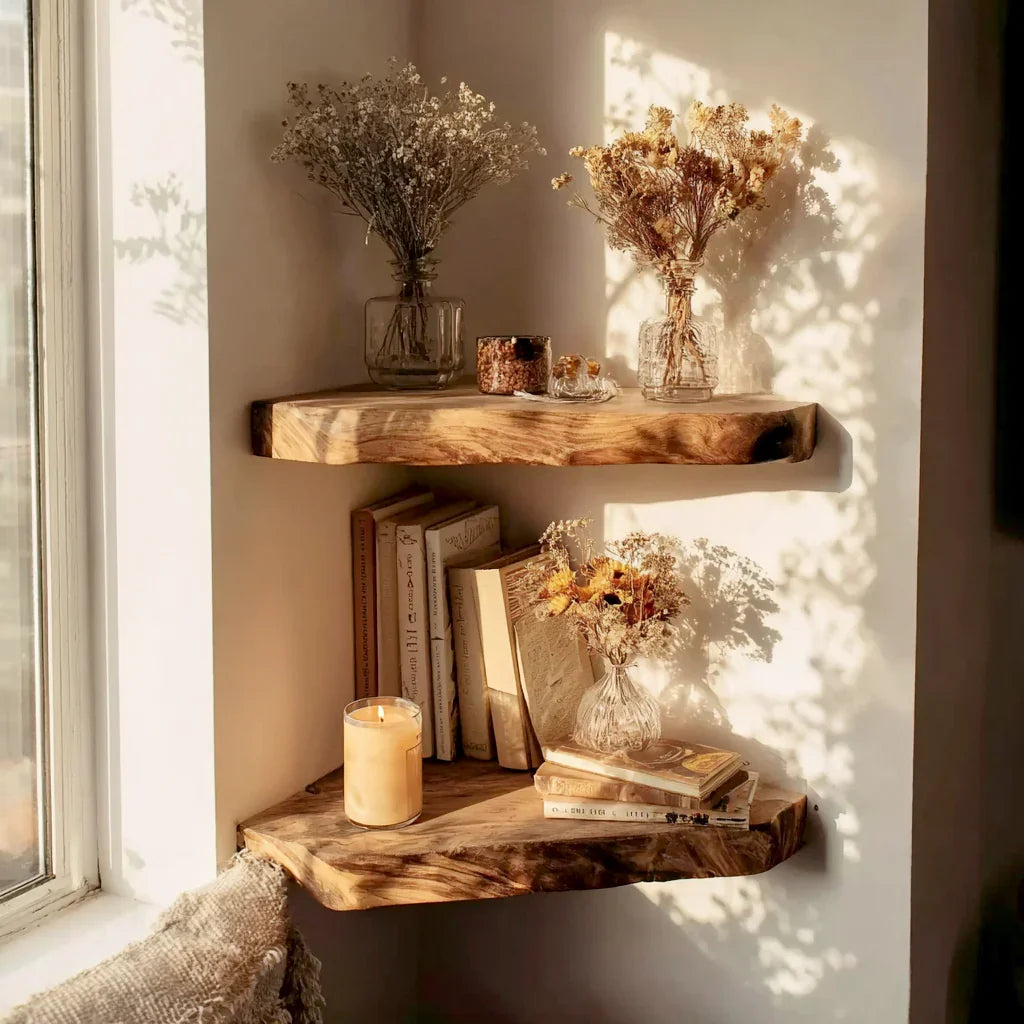
Farmhouse Floating Corner Shelf – Live Edge Wall Shelf, Rustic Walnut Bookshelves
Clean lines, light woods (oak, ash, acacia), minimal visual weight. Look for straight-cut corner shelves with thin profiles and natural oil finishes. Avoid heavy ornamentation, stained dark woods, or visible metal brackets. Our corner floating shelves in natural oak and acacia fit this aesthetic well.
Cottagecore and Rustic
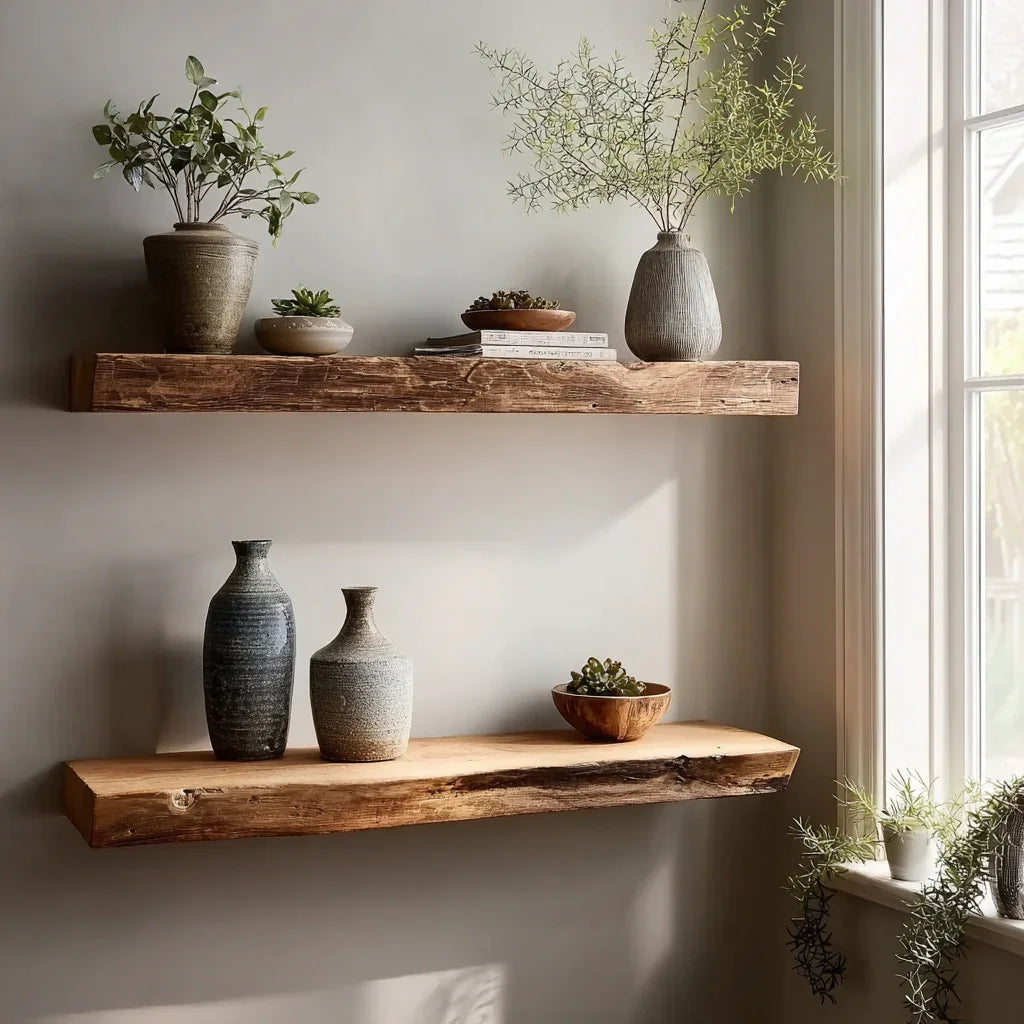
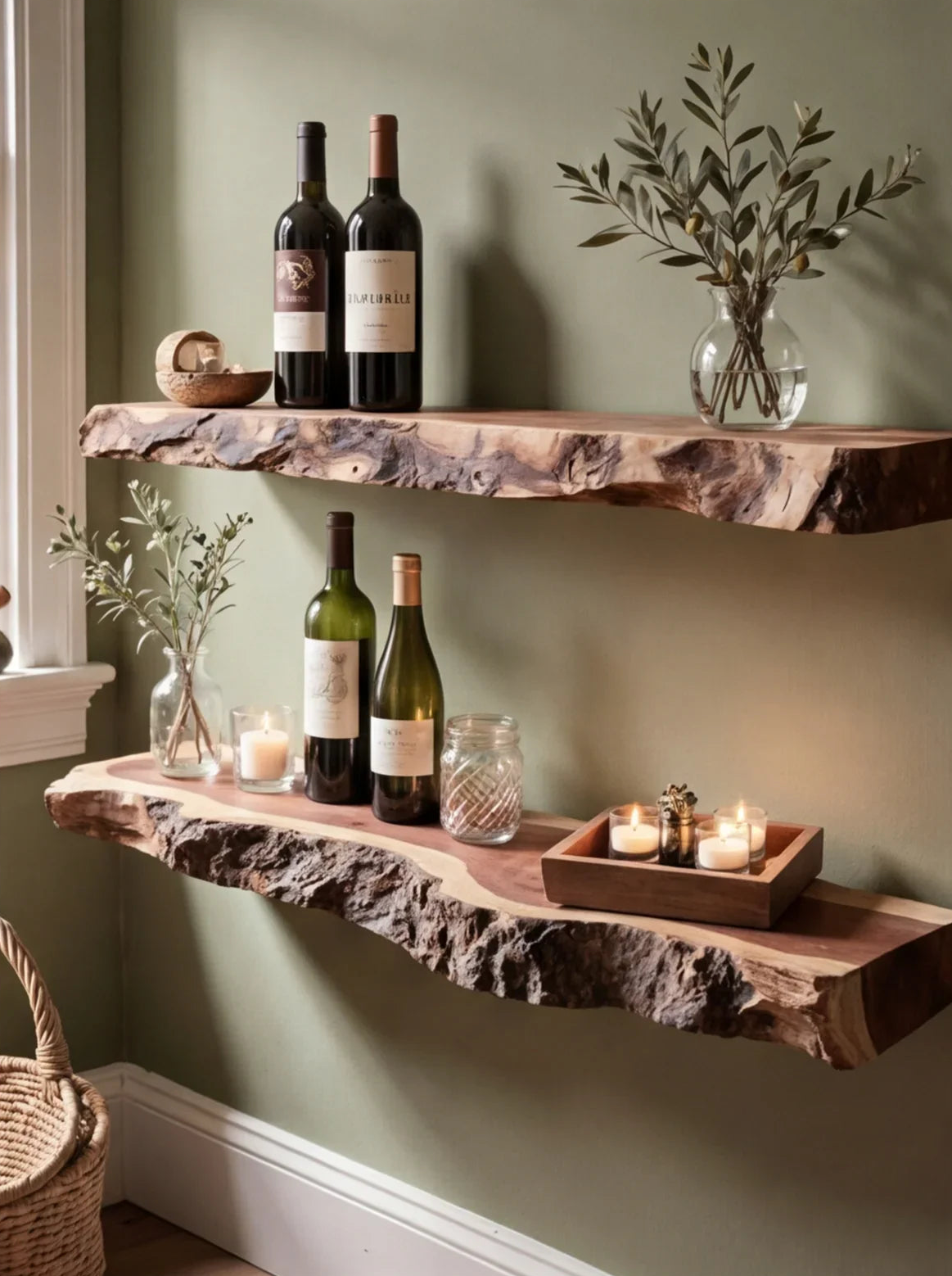
Live edge corner shelves shine here. Visible knots, irregular edges, warm stains (walnut, teak), and pairing with natural textiles. Reclaimed wood works especially well. The goal is to make the corner shelf feel like it grew in the corner rather than being installed there.
Industrial
Reclaimed wood with visible metal brackets. Exposed steel rods, black iron pipes, or brass hardware. Heavier wood profiles (1.75 to 2.5 inches thick). Pairs well with concrete walls, leather seating, and vintage lighting. Skip the hidden bracket look and lean into visible hardware as a design feature.
Mid-Century Modern
Walnut with tapered edges, warm brown tones, and clean bracket profiles. Avoid live edge in mid-century spaces because the organic curves clash with the style's emphasis on sleek geometry. Look for shelves with subtle detail like a beveled front edge or a tapered side profile.
Traditional
Dark stained oak or cherry, often with a front lip or molded profile. Visible but decorative brackets (carved wood corbels or wrought iron). Works in homes with traditional millwork, wainscoting, or formal living spaces.
Common Mistakes
Four mistakes account for most corner shelf complaints.
Buying the Wrong Corner Angle
Assuming your corner is 90 degrees without measuring. Shelves cut for a perfect 90 will gap on one wall if your corner is even a few degrees off. Always measure the actual angle before ordering, or choose a shelf with a beveled back edge that accommodates minor variation.
Ignoring Weight Rating
A small corner shelf might be rated for 10 pounds. A single hardcover book plus a ceramic vase gets you to 7. Add a plant in a glazed pot and you are over. Match the load to the shelf, and always anchor into studs when possible.
Cheap Hardware That Pulls Out
Most corner shelf failures happen at the bracket, not the shelf. Thin rods bend, drywall anchors pull out, and keyhole slots tear through over time. Spend the extra $15 to $30 on proper toggle bolts or masonry anchors. The shelf is only as strong as what holds it up.
Wrong Wood for Moisture or Humidity
Installing pine or MDF in a bathroom. Installing untreated oak in a kitchen behind the sink. These mistakes do not show up for months, but they always show up. Match the wood to the room's conditions, or seal it properly if you want to use a less moisture-tolerant species.
Frequently Asked Questions
How much weight can a corner shelf hold?
A solid hardwood corner shelf with both brackets anchored into studs can hold 25 to 50 pounds depending on size. Shelves anchored only into drywall with toggle bolts hold 15 to 25 pounds. Check the manufacturer's rating and never exceed it.
Are corner shelves worth it?
In short: yes, corner shelves are a good idea for almost any room where wall space is being wasted.
Yes, in almost every room. Corners are the most underused vertical space in a typical home. A single corner shelf reclaims 1 to 3 square feet of display or storage area that would otherwise sit empty. Over a home, that adds up to meaningful functional space.
Wood versus metal corner shelf?
Wood wins on warmth, longevity, and aesthetic range. Metal shelves work in industrial or strictly modern interiors and can handle more weight per inch, but they show fingerprints, scratch more visibly, and often feel cold in residential settings. For most homes, solid wood is the better long-term pick.
Can I install a corner shelf in a rental?
Yes, with the right hardware. Look for corner shelves that use picture-hook-style mounting or removable heavy-duty adhesive strips rated for the shelf weight. Freestanding corner units avoid wall damage entirely. Always check your lease and document the walls before install.
Do corner shelves work in small spaces?
Corner shelves are especially good in small spaces because they use geometry that other furniture cannot. For apartment-specific ideas, see our guide on corner shelves for small spaces. A wall-mounted corner shelf in a tight bathroom, galley kitchen, or studio living area can double usable surface without crowding the walk path.
Choose One That Fits Your Space
The best corner shelf is the one matched to the actual geometry of your corner, the real humidity of the room, and the real weight of what you plan to display. Measure first. Choose the wood species for the room. Pick hardware rated for the load. Skip the decoration until the fundamentals are right.
Ashdeco Corner Floating Shelves – Handcrafted Rustic Live Edge Solid Wood
Ready to browse? Our handcrafted corner floating shelves collection includes solid walnut, oak, teak, and acacia in both clean-cut and live edge profiles. For sculptural corner pieces that work as statement art, see our corner tree bookshelf collection. Every piece is hand-carved by Vietnamese artisans from real solid hardwood. Free US shipping and a 30-day satisfaction guarantee.