



















Quick view
Shop this guide
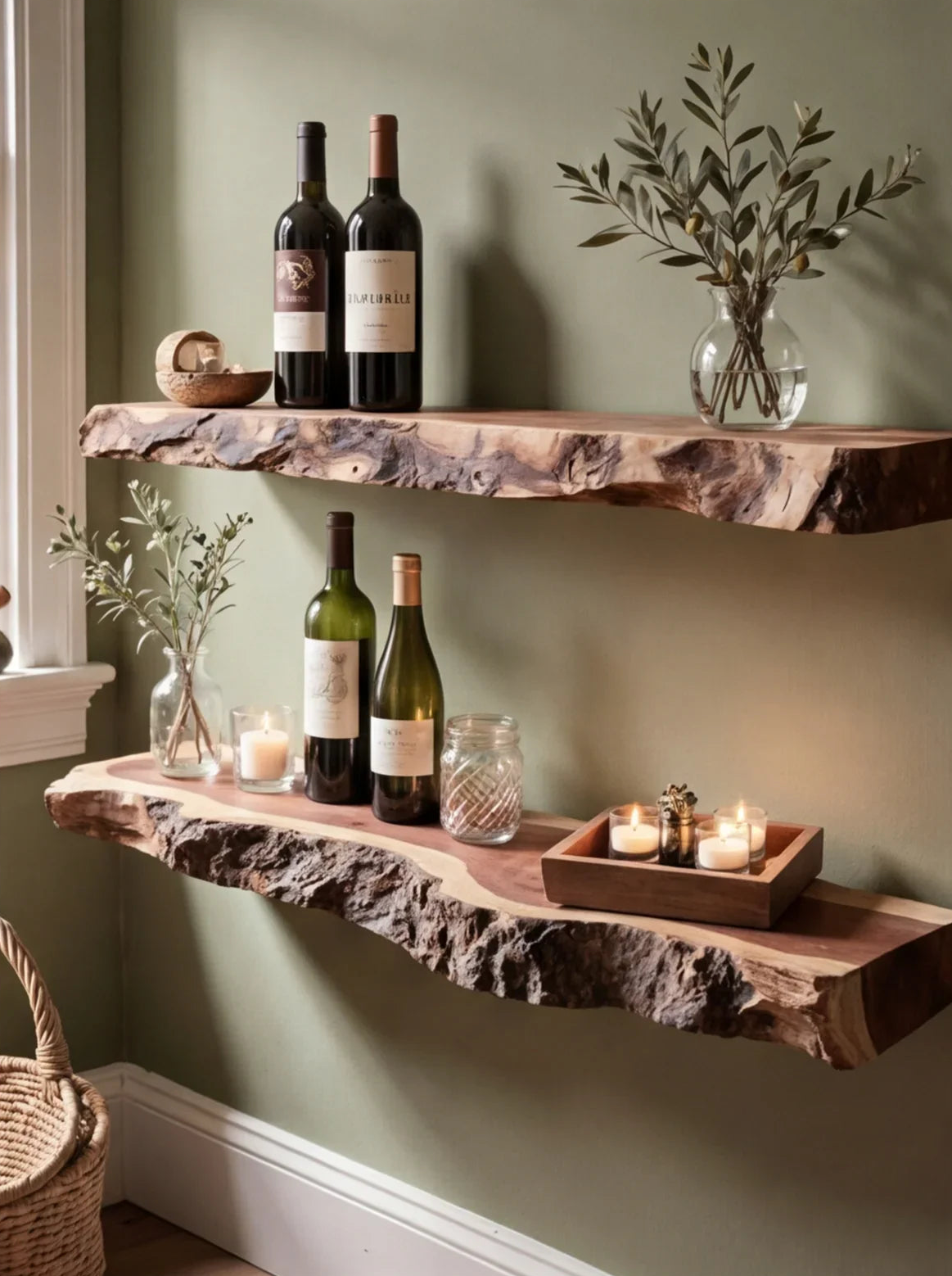
Handcrafted Floating Shelves, made to order in solid wood.
 Sculptural Overlapping Circular Solid Wood Wall Shelf with Multi Tier Display
From $1,354.00
Sculptural Overlapping Circular Solid Wood Wall Shelf with Multi Tier Display
From $1,354.00
 Mountain Landscape Relief Solid Wood Floating Shelf Live Edge Display Ledge
From $1,154.00
Mountain Landscape Relief Solid Wood Floating Shelf Live Edge Display Ledge
From $1,154.00
 Enchanted Forest Circular Wall Shelf - Round Carved Timber Mushroom Portal
From $1,023.00
Enchanted Forest Circular Wall Shelf - Round Carved Timber Mushroom Portal
From $1,023.00
 Cottagecore Arched Wood Wall Niche - Hand-Carved Fairy Mushroom Alcove Shelf
From $1,356.00
Cottagecore Arched Wood Wall Niche - Hand-Carved Fairy Mushroom Alcove Shelf
From $1,356.00
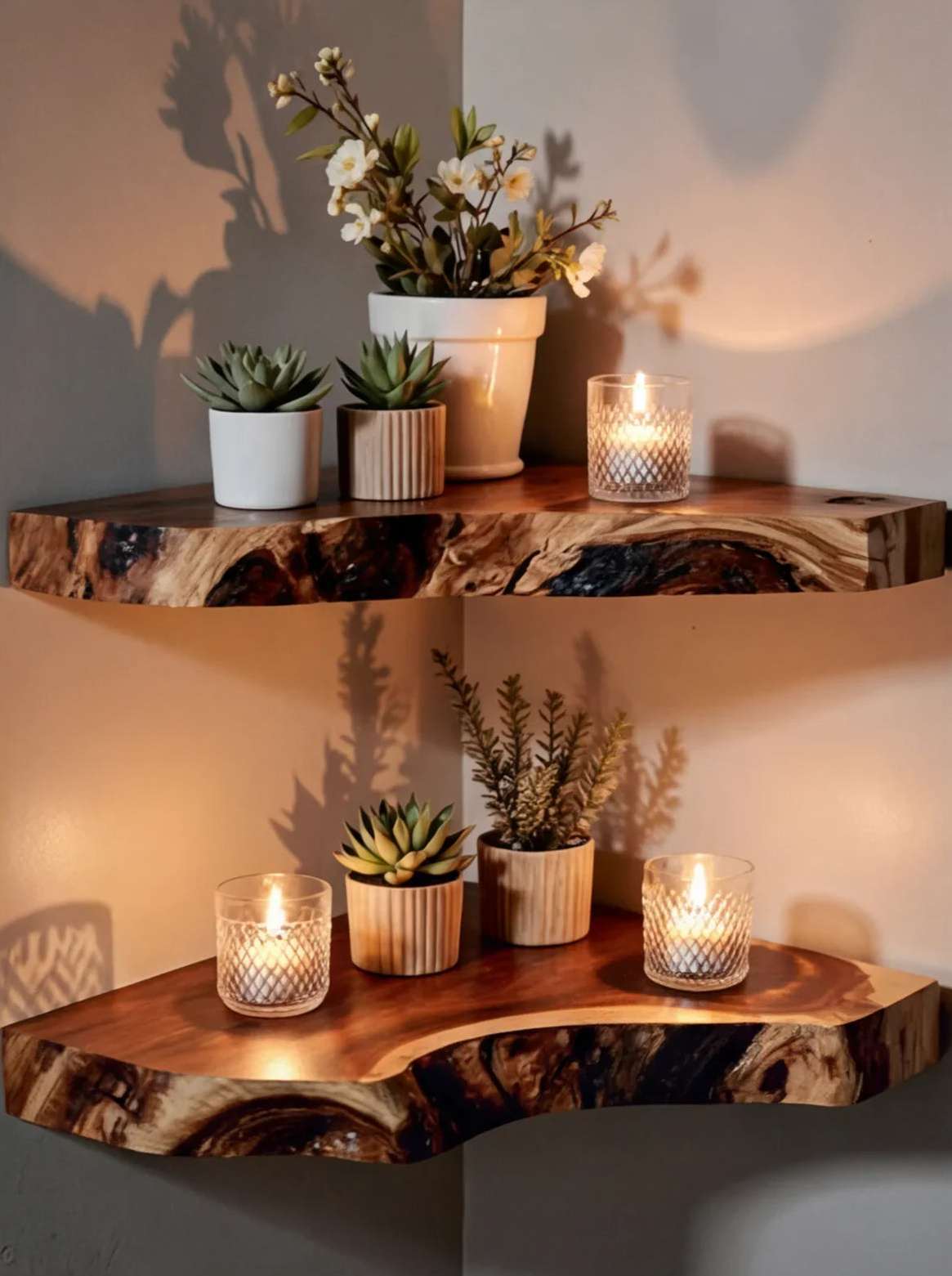
 Sculptural Hand-Carved Mushroom Solid Wood Corner Floating Shelf & Biomorphic Wall Display Ledge
From $345.00
Sculptural Hand-Carved Mushroom Solid Wood Corner Floating Shelf & Biomorphic Wall Display Ledge
From $345.00
 Sculptural Hand-Carved Mushroom Solid Wood Floating Shelves & Biomorphic Wall Display Ledges
From $345.00
Sculptural Hand-Carved Mushroom Solid Wood Floating Shelves & Biomorphic Wall Display Ledges
From $345.00
Corner Floating Shelf Won't Fit? Measure This Before You Buy
As a handmade wood furniture brand specializing in custom sizes, we've helped hundreds of customers solve corner shelf problems - and 90% of issues come from measurement mistakes, not product quality.
A corner floating shelf is the perfect solution for dead space in your bathroom or kitchen - until you measure wrong, buy the wrong size, and end up with gaps or a shelf that won't sit flush.
Corner floating shelves look simple, but get the measurements wrong and you're stuck with wobbly brackets, awkward gaps, or a shelf that just doesn't fit. Let's fix that before you spend a dime.

Why Corner Floating Shelves Are Tricky (And What Goes Wrong)
Think your corner is a perfect 90-degree angle? Think again. Most walls aren't. Here's what trips people up:
"Walls aren't square"
Your corner might be 88 degrees on one side, 92 on the other. A shelf designed for perfect 90-degree angles won't sit flush. You'll see gaps or have to force it.
"Depth changes from top to bottom"
Walls bow and bend. The top of your corner might have 20cm of space, but the bottom only 18cm. Shelf fits up top but hits the baseboard below.
"Obstacles you forgot about"
Light switches, outlets, water pipes, window frames - you don't notice them until you're drilling. Then it's too late.
"Usable space vs shelf size"
A 20cm shelf sounds right, but if your corner only has 15cm of usable depth because the wall curves, you're out of luck.

What to Measure (The Complete Checklist)
Before you buy anything, grab a tape measure and check these:
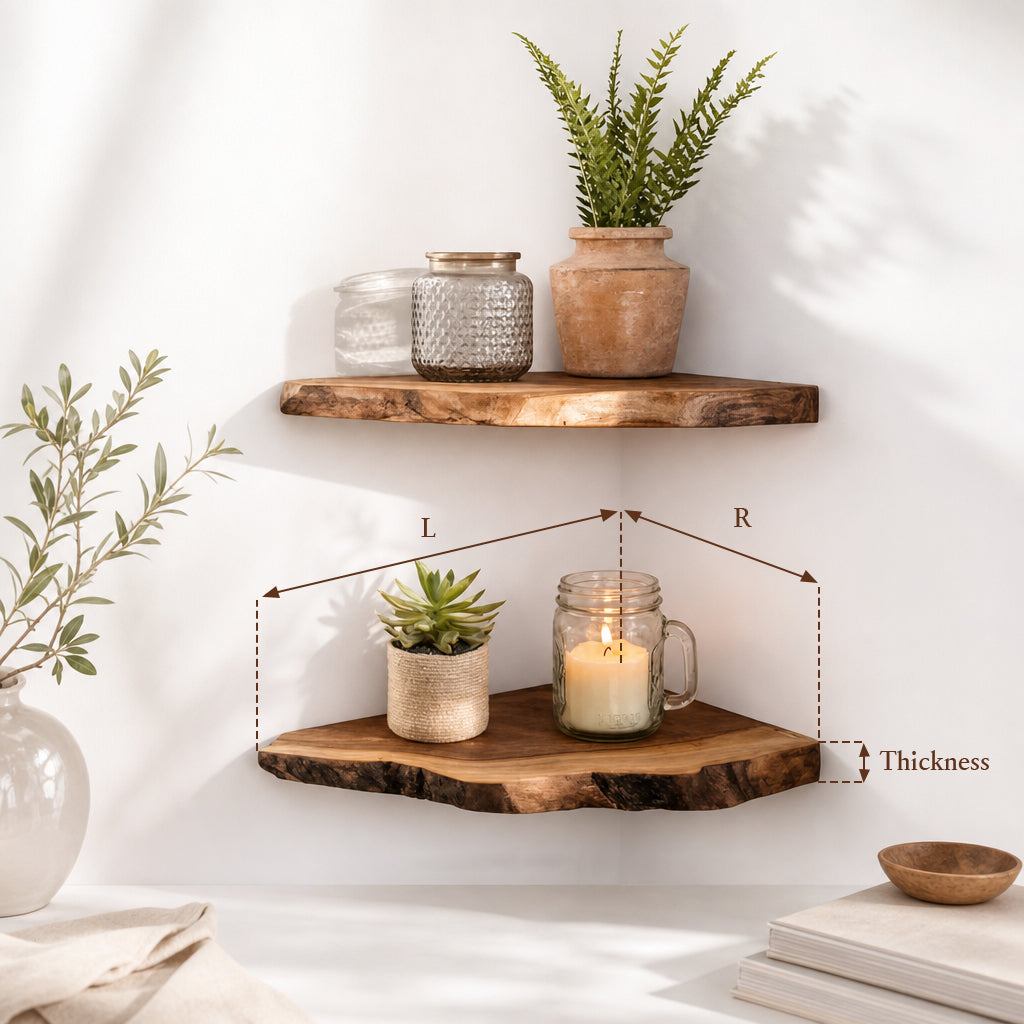
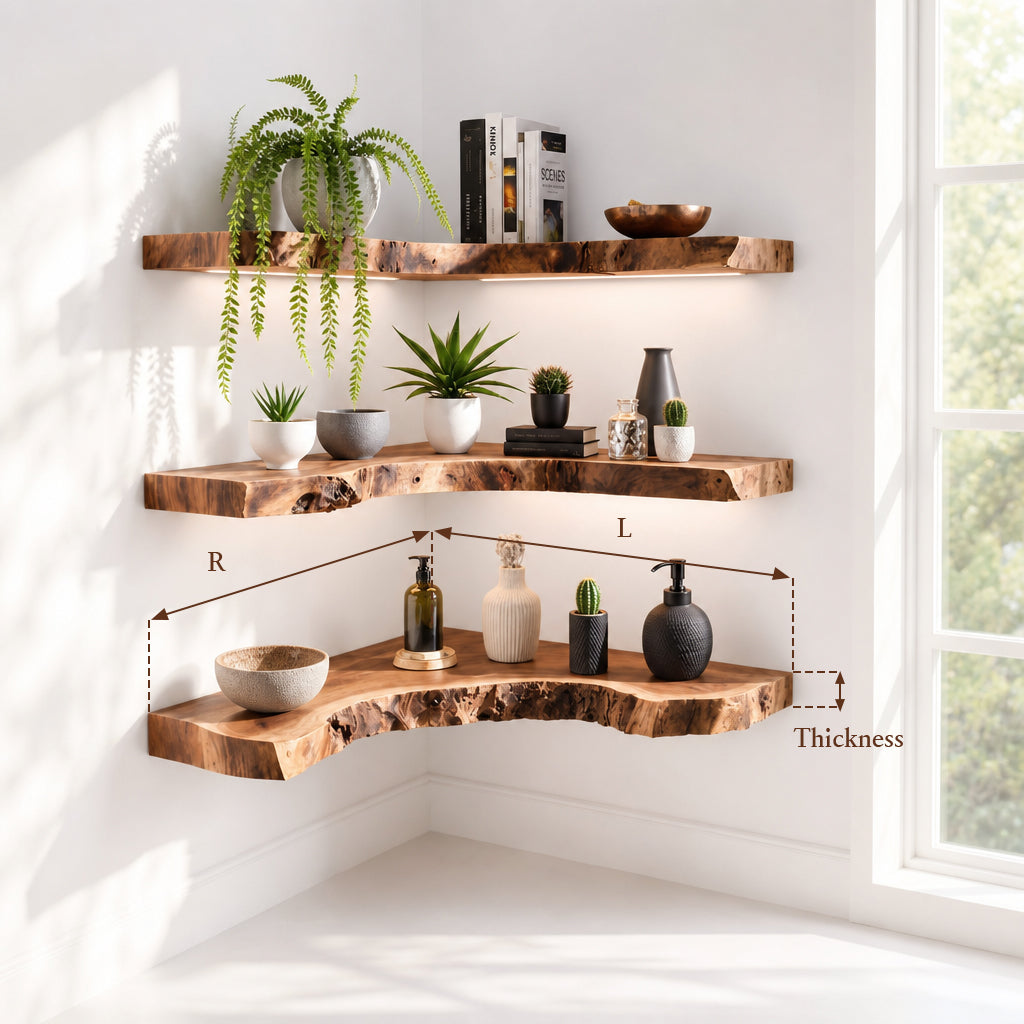
Corner width
Measure 20cm out from the corner on each wall, then measure the diagonal between those two points. This tells you the actual space you're working with.
Available height
Floor to ceiling, or sink/cabinet to ceiling. Don't forget baseboards and crown molding - they eat into your space.
Usable depth
Not the shelf depth, but how far out from the corner you actually want the shelf to extend. In a small bathroom, 15cm might be max before it becomes a head-bumper.
>>>Browse our corner floating shelves to see depth options available.
Check the angle
Use an angle finder or a phone app. If your corner is off by more than 3 degrees, you need an adjustable bracket or a custom shelf.
Map the obstacles
Mark where switches, outlets, and pipes are. Measure their distance from the corner and from each other.



How to Choose the Right Corner Shelf
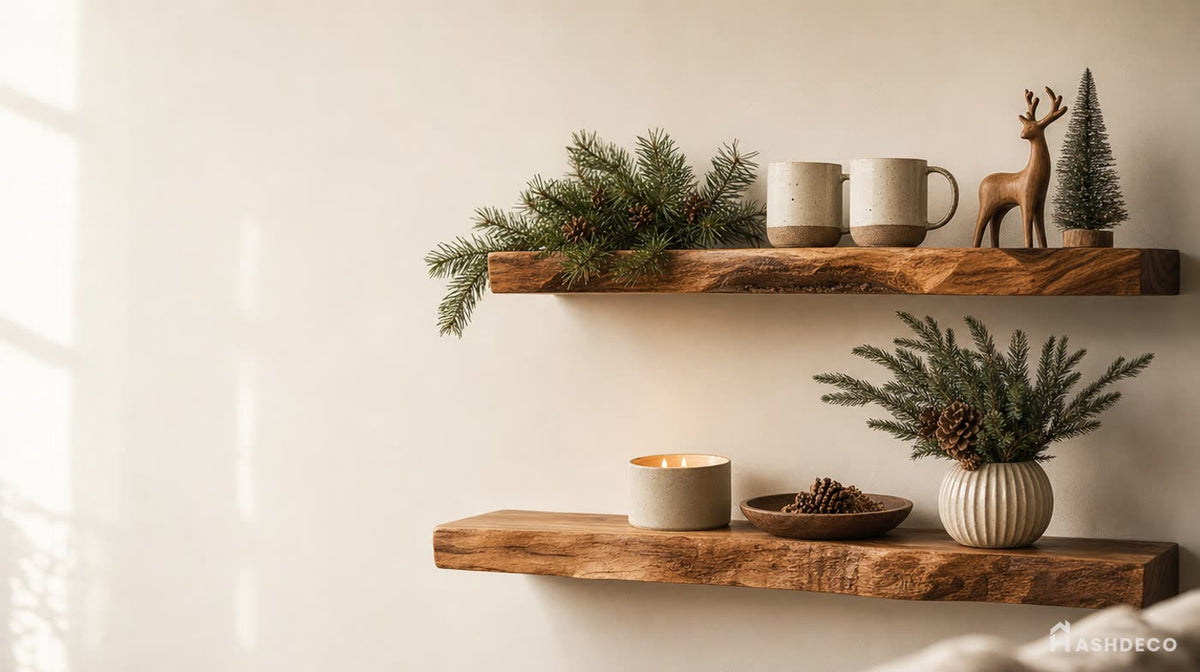
Size it right
Here's the golden rule: your shelf should be 2–3cm wider than your corner measurement to account for wall imperfections. Better a tiny gap than a shelf that won't fit.
Pick the right material
Bathroom? Go with solid wood or marine-grade plywood - anything else will warp from humidity. Dry rooms? MDF works fine and costs less.
Weight capacity matters
Add up what you plan to store (towels, bottles, decor) and add 30% buffer. A shelf rated for 5kg holding 4kg is fine. Rated for 5kg holding 6kg? That's a future accident.
Corner-Specific Installation Tips
Installing in a corner is harder than a straight wall. Here's why and what to do:
Leveling is trickier
On a straight wall, you check one direction. In a corner, you need to level both ways - side to side AND front to back. A bubble level works, but a laser level is way easier. Set it in the corner, project lines on both walls, and you'll see exactly where your brackets need to go.
Brackets need to match the angle
If your corner isn't 90 degrees, standard brackets won't work. Look for adjustable corner brackets or go custom. Some brands (like us) make brackets that accommodate 85–95 degree angles.
Start from the back
When mounting, secure the back edge first (the part touching both walls), then work forward. This ensures the shelf sits flush in the corner before you worry about the front edge.
Test fit before final mount
Hold the shelf in place, check all around with your level, and make sure it's not rocking. Adjust bracket positions now, not after you've drilled holes.
For more detailed installation steps, check out our floating shelf in bathroom guide - the basics are the same, just adapted for wet environments.

Don't miss
These pieces qualify for 10% off orders over $2,000. Applied automatically at checkout.
Frequently Asked Questions
Do corner floating shelves need special brackets?
Yes. Corner brackets are designed for 90-degree angles. Regular straight-wall brackets won't work unless your corner is perfectly square - and almost none are.
Can I install a corner floating shelf on drywall?
Yes, but use drywall anchors rated for the weight. Standard anchors handle up to 5kg. For heavier loads, find a stud or use toggle bolts.
How deep should a corner floating shelf be?
15–20cm is standard. Anything over 25cm starts feeling intrusive, especially in small bathrooms where you're walking close to it.
How do I know if my corner is square?
Use an angle finder or phone app. If it's off by more than 3 degrees, you need adjustable brackets or a custom shelf.
Can corner shelves be custom-sized?
Yes. Many brands (including us) make custom sizes for non-standard corners. Just send us your measurements and we'll build to fit. See our corner floating shelf collection →
Final Thoughts
That awkward corner in your bathroom or kitchen isn't dead space - it's the most underused storage spot in your home. A single corner floating shelf turns wasted wall into something that actually works: a place for everything, flush against the corner, out of the way but right where you need it.
The difference between a shelf that fits perfectly and one you're returning isn't the product - it's the five minutes of measuring you do before you buy. Get those numbers right, choose the right material, and install it properly, and that shelf will still be holding your essentials years from now without a wobble.
Need more storage ideas? Check out our guides on floating shelves for bathrooms and TV stands with storage.