The floating shelves market in 2026 is flooded with cheap MDF that warps inside a year. Walk down any aisle at a big-box store, scroll Amazon, browse Wayfair, and most of what you see is particle board with a thin veneer skin. The "wood" in the product title? Usually means "wood-look." This guide is for buyers who want shelves that actually last decades, not seasons. We pull back the curtain on materials, hardware, sizing, and budget so you can buy once instead of replacing every other year.
At Ashdeco, every floating shelf is hand-carved from solid hardwood by Vietnamese artisans. No factories, no MDF, no shortcuts. We have over 387 verified reviews averaging 4.9 stars across our handcrafted collection, and we built this guide from the questions buyers ask us most often before they hit purchase.
What Makes the "Best" Floating Shelves?
Four things separate a shelf you keep for 30 years from one you replace in 18 months: material, weight rating, hardware, and design. Skip any of these and you end up with a wall hazard.
Material: Solid Wood vs MDF vs Particle Board
Solid wood is one piece carved from a hardwood tree. You can see continuous grain on the top, the bottom, and the cut ends. It expands and contracts slightly with humidity but holds its shape for decades.
MDF is sawdust and glue pressed into a board, then wrapped in a printed plastic skin. It looks like wood until water touches it. Then it swells, bubbles, and crumbles. Most "white floating shelves" under $40 are MDF.
Particle board is similar to MDF but coarser. It is the worst common option for shelving because the chunks pull apart under load and the screws strip out within a year of use.
If a product page does not say "solid hardwood" with the species named (oak, walnut, teak, acacia), assume it is engineered wood. Real solid wood manufacturers proudly list the species and grade.
Weight Capacity
A floating shelf has no visible bracket. The load is held by metal rods that slide into holes drilled in the back of the shelf. The capacity depends on three things: the rod thickness, the depth of the holes, and the wall anchor type.
For solid hardwood shelves with steel rods at least 5/8 inch thick, expect 35 to 60 pounds per linear foot when anchored into wall studs. Drywall anchors alone cut that capacity by half. For a deeper breakdown of how to calculate this for your wall type and shelf size, see our floating shelf weight limit guide.
Hardware Quality
Hidden bracket systems vary wildly in build quality. Cheap shelves use thin steel rods that bend under modest weight. Premium shelves use thick rods welded to a backing plate that distributes force across multiple wall anchors.
Ask the seller for the rod diameter and the backing plate dimensions. If they cannot answer, the bracket is generic and probably not rated for what you need.
Design and Finish
Live edge shelves keep the natural curve of the tree, so each one is unique. Clean cut shelves have straight, milled edges and a uniform look. Both work in modern interiors. Live edge fits organic, japandi, and rustic styles. Clean cut fits minimalist, contemporary, and mid-century interiors.
Finish matters too. Natural oil finishes let the grain show and feel slightly textured. Lacquer creates a glossy, sealed surface that hides character but resists stains. For high-traffic areas like kitchens, a sealed finish is the more practical choice.
Floating Shelf Types: Which Do You Need?
The form follows the function. A 36-inch straight shelf above a sofa solves a different problem than a corner unit in a tight powder room. Five styles cover most use cases.
Straight Floating Shelf (Classic)
The standard rectangle. Mounts flush to the wall, runs 12 to 60 inches in length, and works in almost every room. This is the workhorse of the category. If you only ever buy one floating shelf, this is the one.
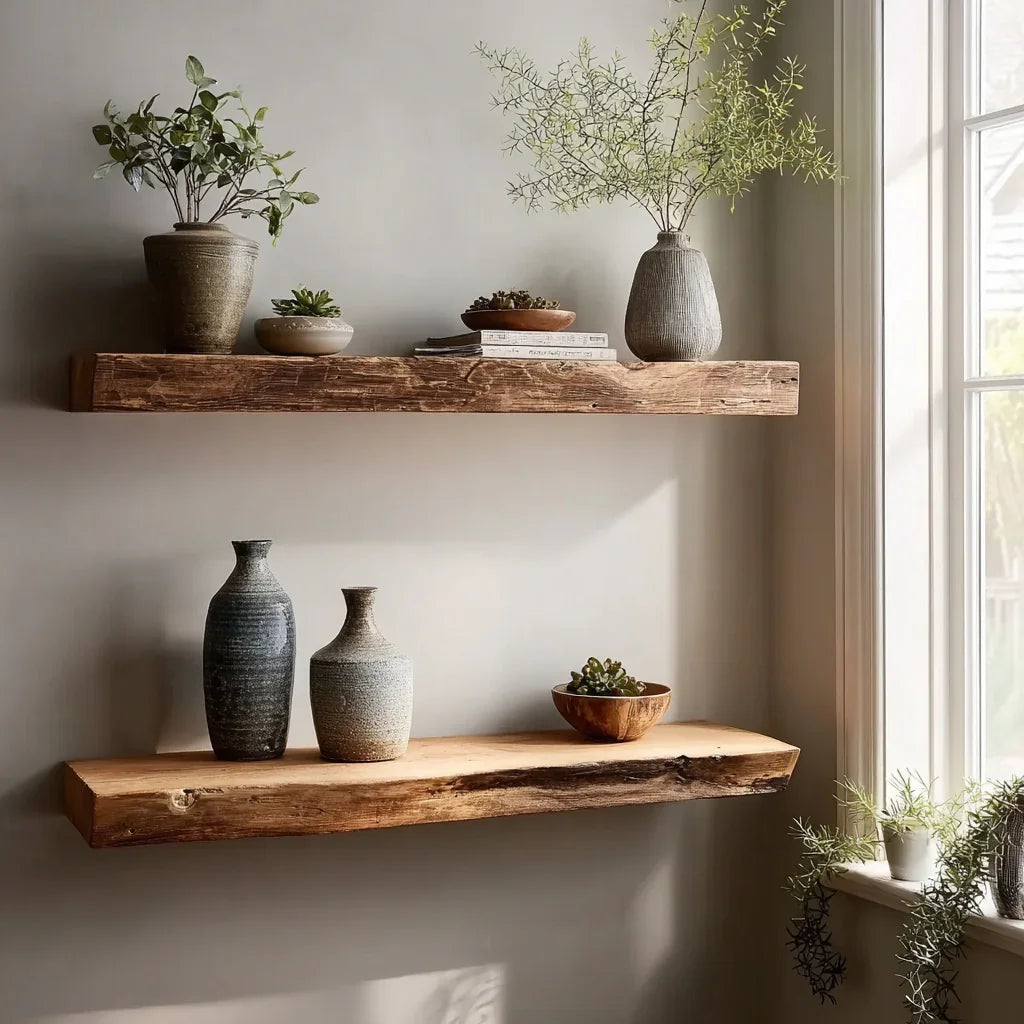
Solid Wood Live Edge Floating Shelf – Rustic Wall Decor for Bathroom & Laundry
Best for: living rooms, kitchens, bedrooms, hallways. Browse our solid wood floating shelves collection for natural oak, walnut, and teak in straight cuts.
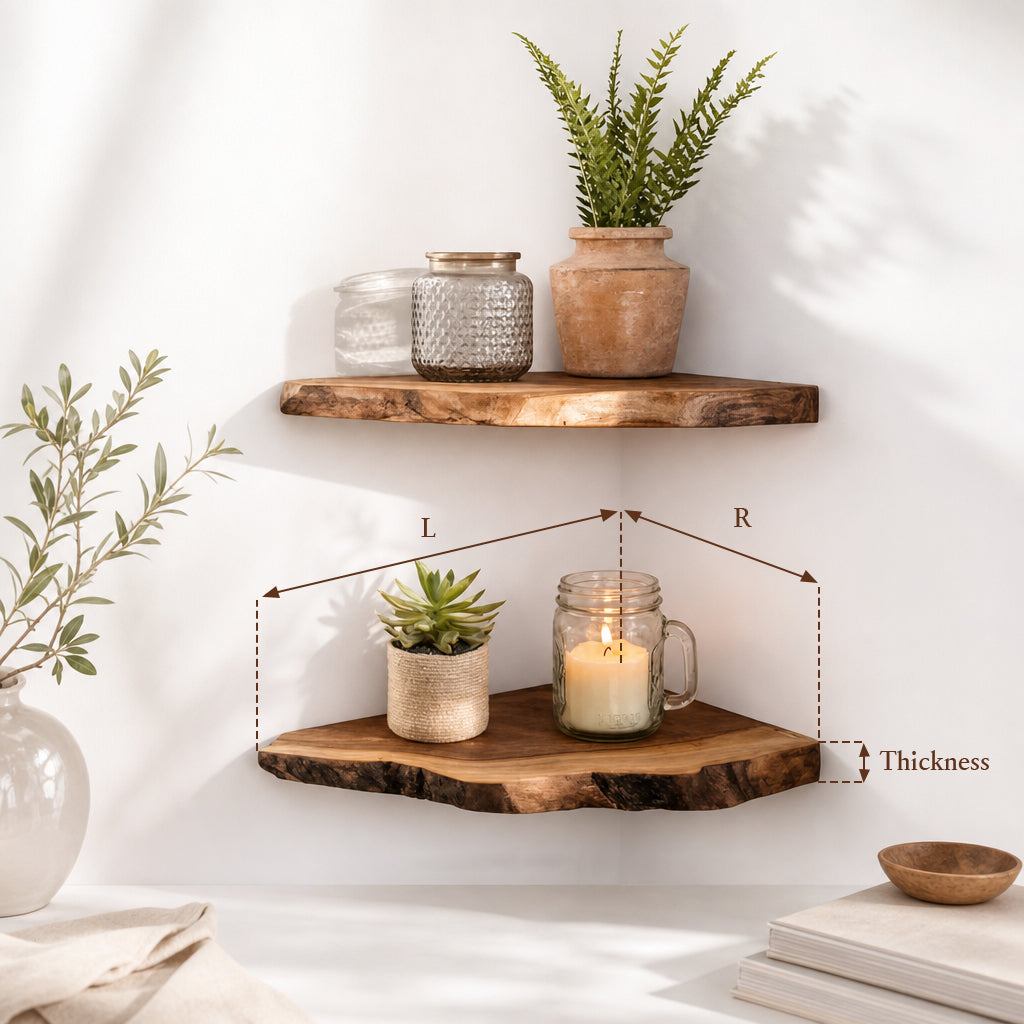
Corner Floating Shelf
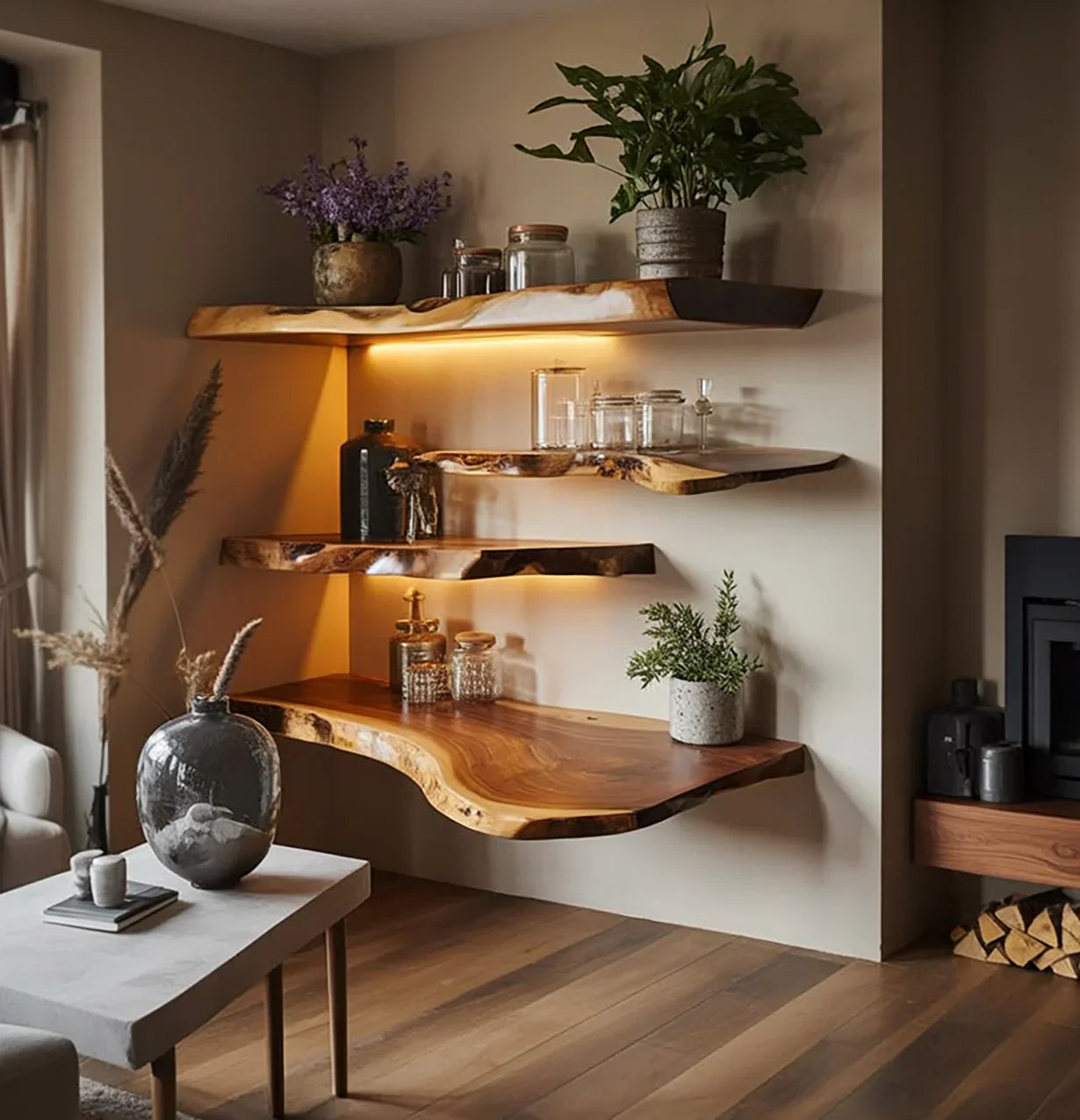
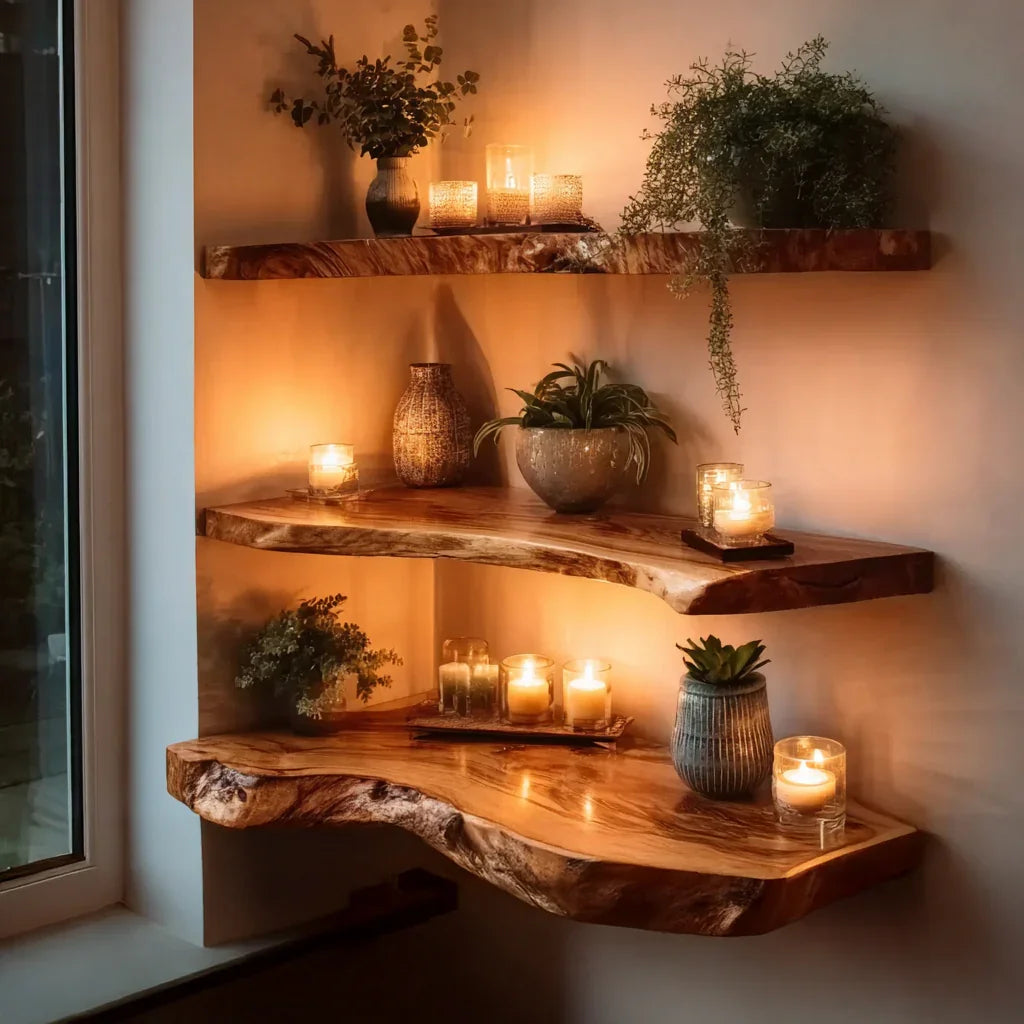
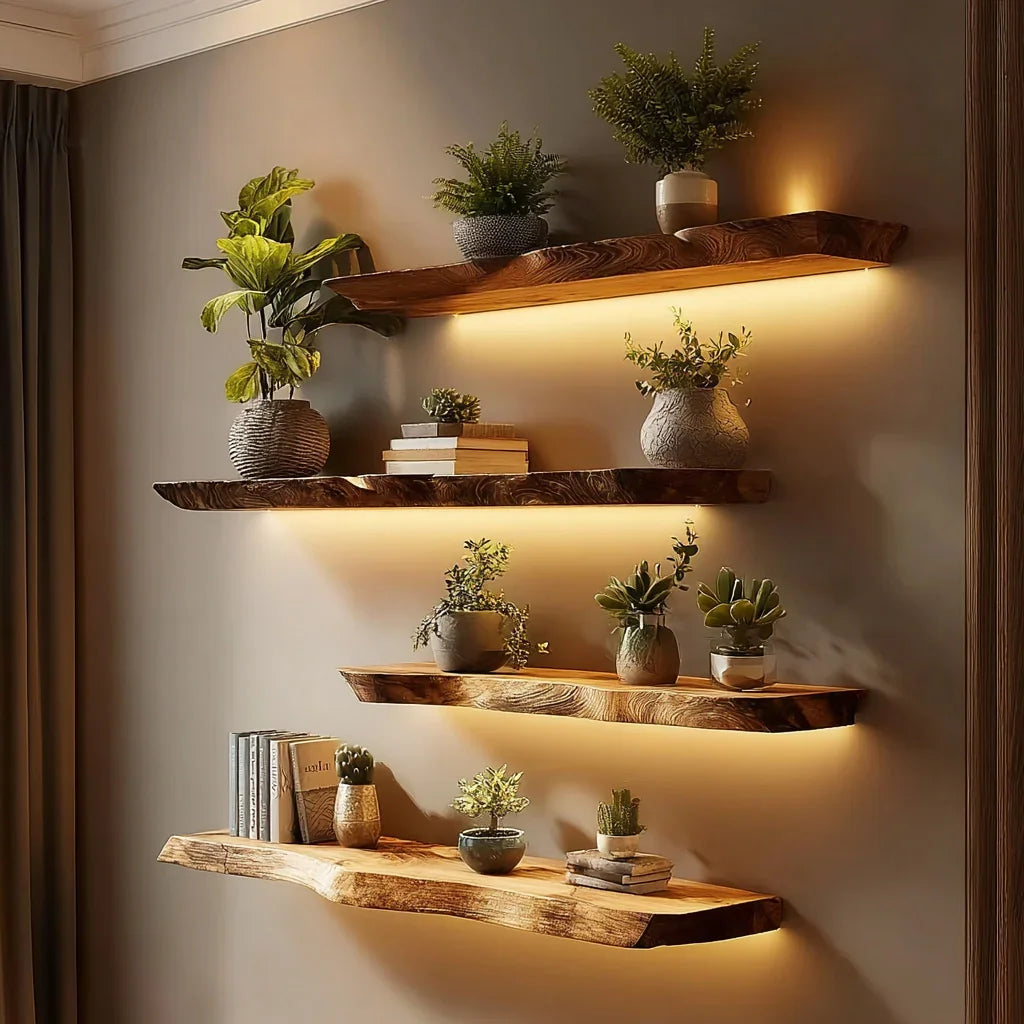
Live Edge Floating Shelves Walnut Shelves Live Edge Shelf Decor
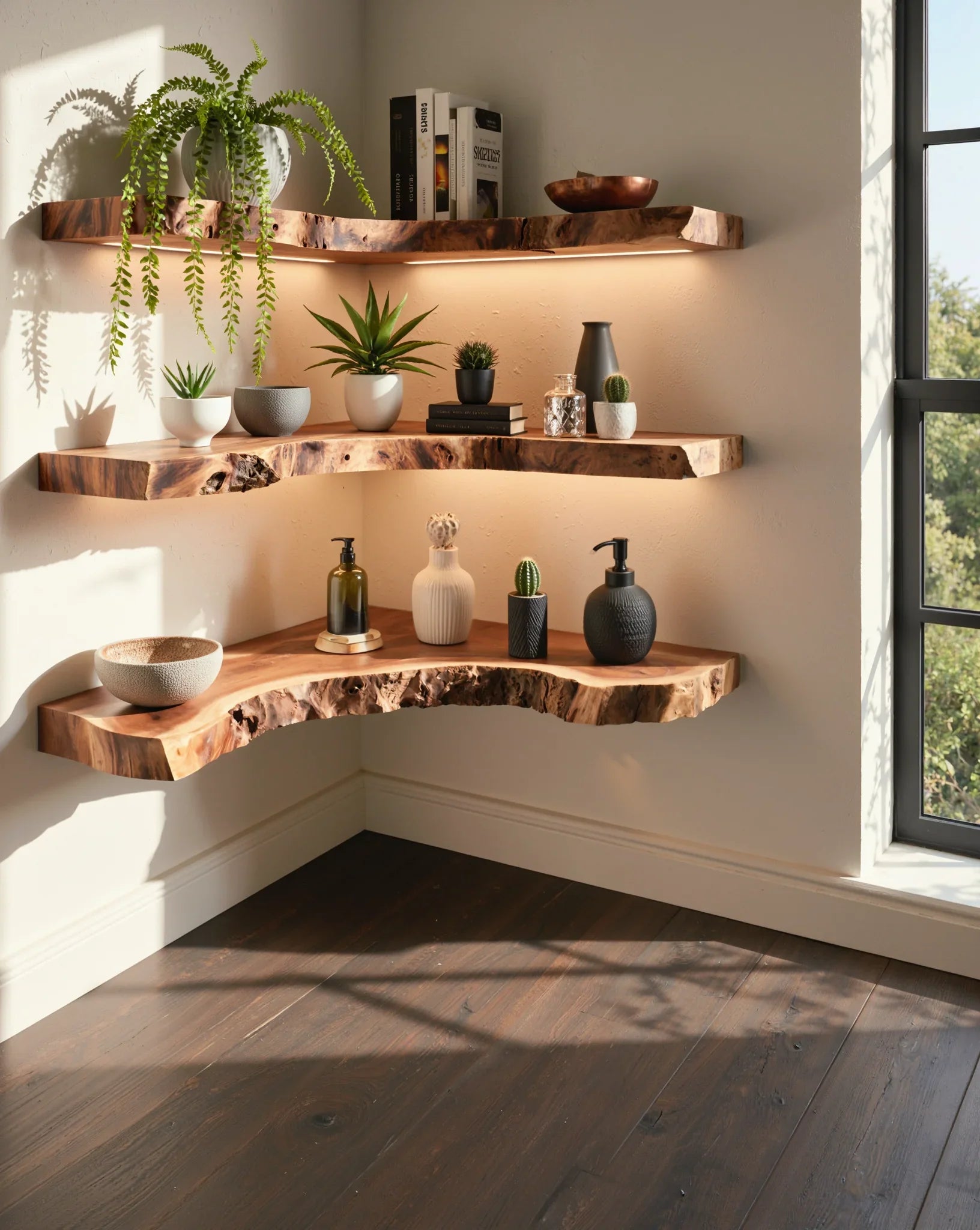
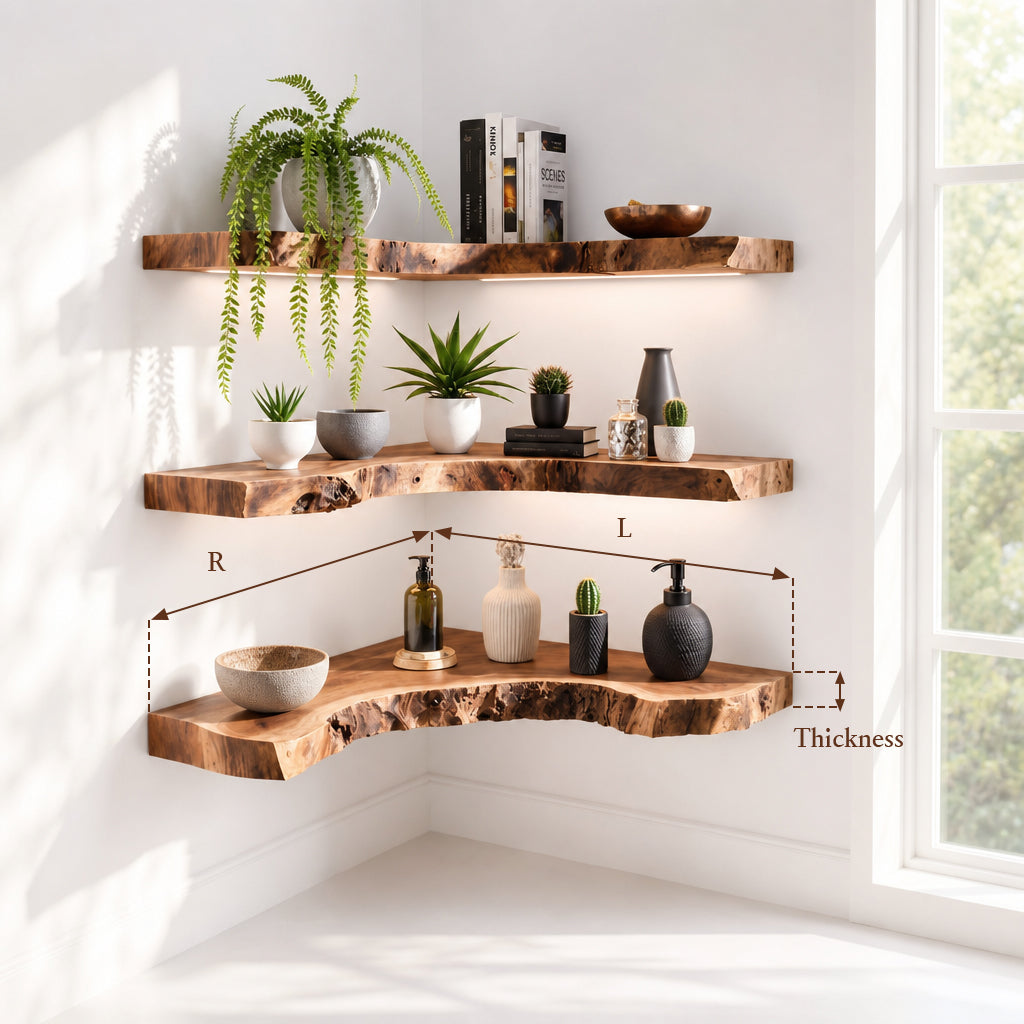
Cut to fit a 90 degree corner, these reclaim dead space that no rectangular furniture can use. They work especially well in bathrooms above the toilet, in kitchens above counter junctions, and in living room corners next to the TV. Our corner floating shelves collection includes both standard right angles and live edge corner pieces.
Box or Cube Floating Shelf
A shelf with sides and a back, forming a partial box. Useful for displaying single objects, shoes, or small collections. The frame draws the eye to whatever sits inside. Works well in groupings of three or five at varied heights.
Sculptural or Mushroom Floating Shelf
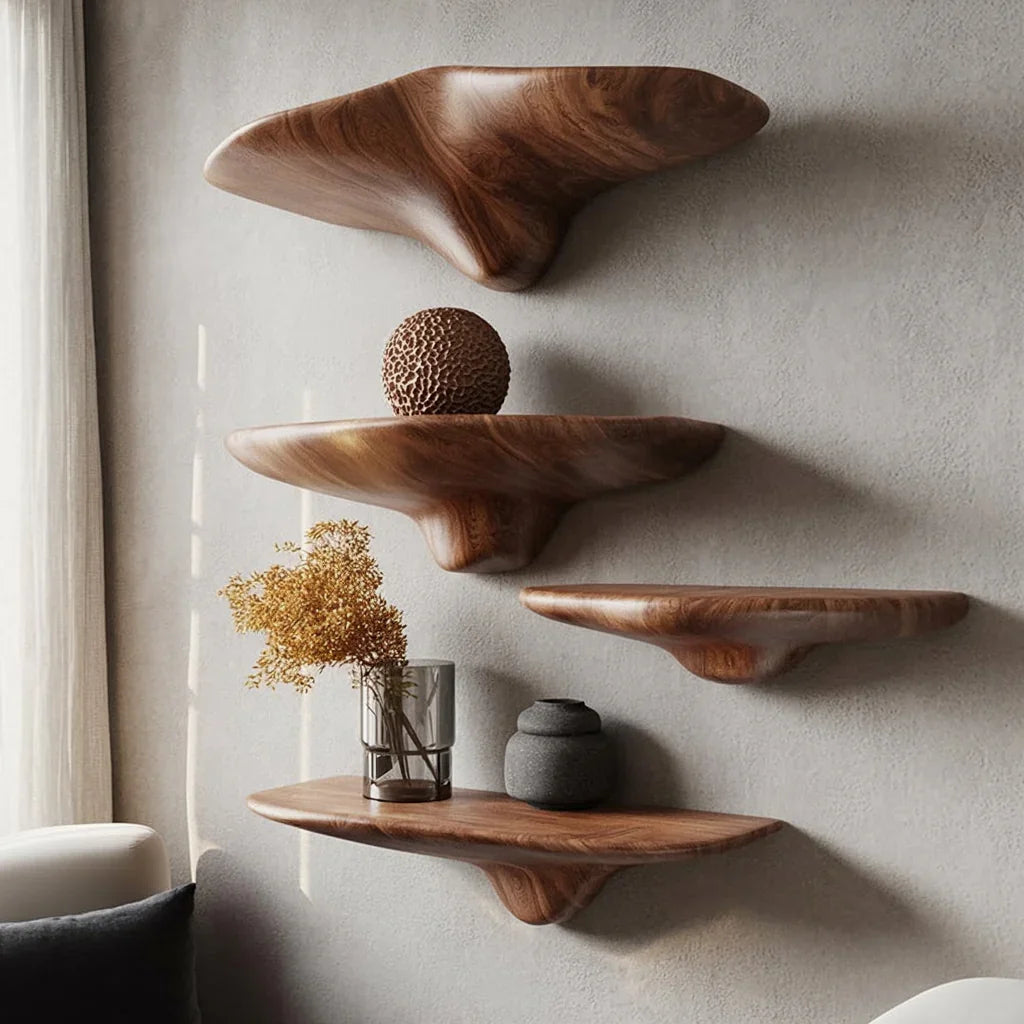
Organic Sculpted Wooden Floating Shelves – Handcrafted Modern Wall Art Storage
Shaped pieces that read more as wall art than storage. Mushroom caps, organic curves, and abstract carvings. They hold less weight than straight shelves but bring personality no rectangle can match. Browse our mushroom floating shelves collection for hand-carved walnut and acacia designs.
Multi-Tier Tree Shelf
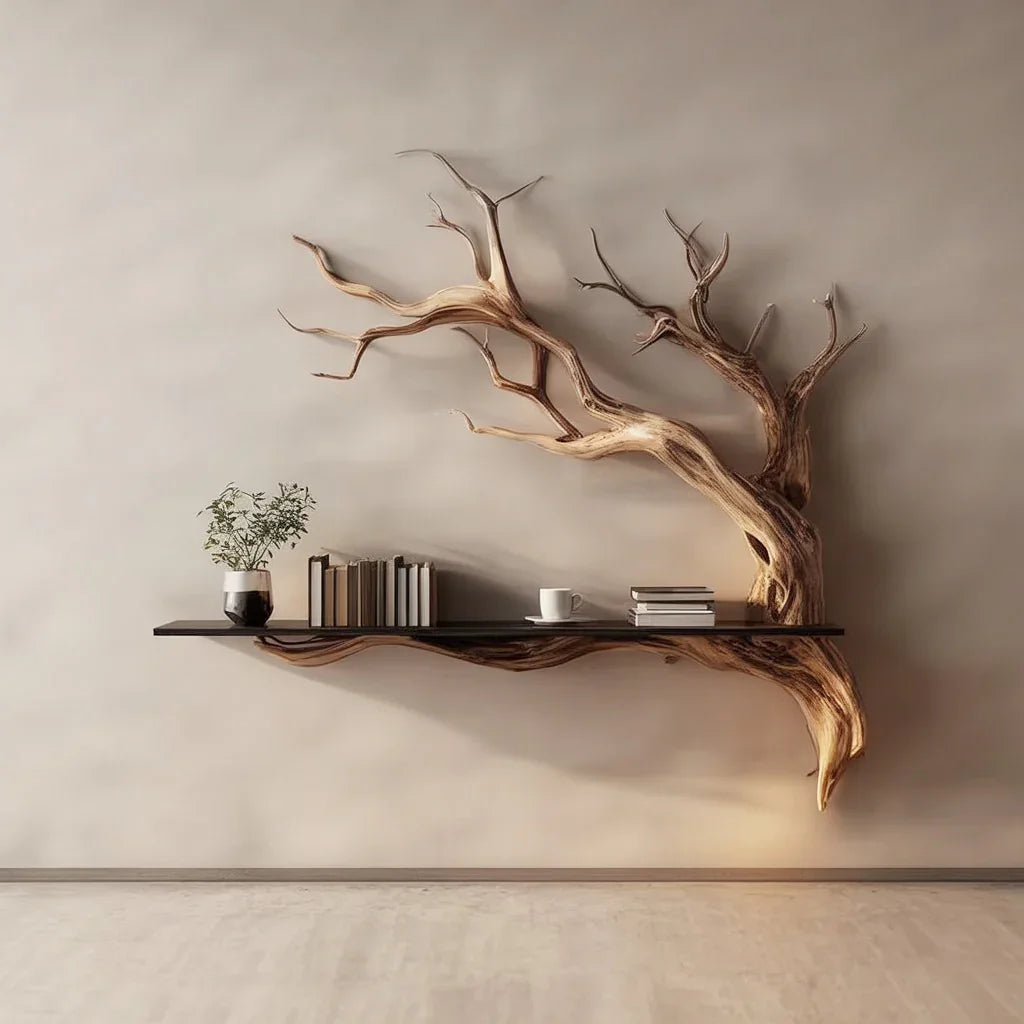
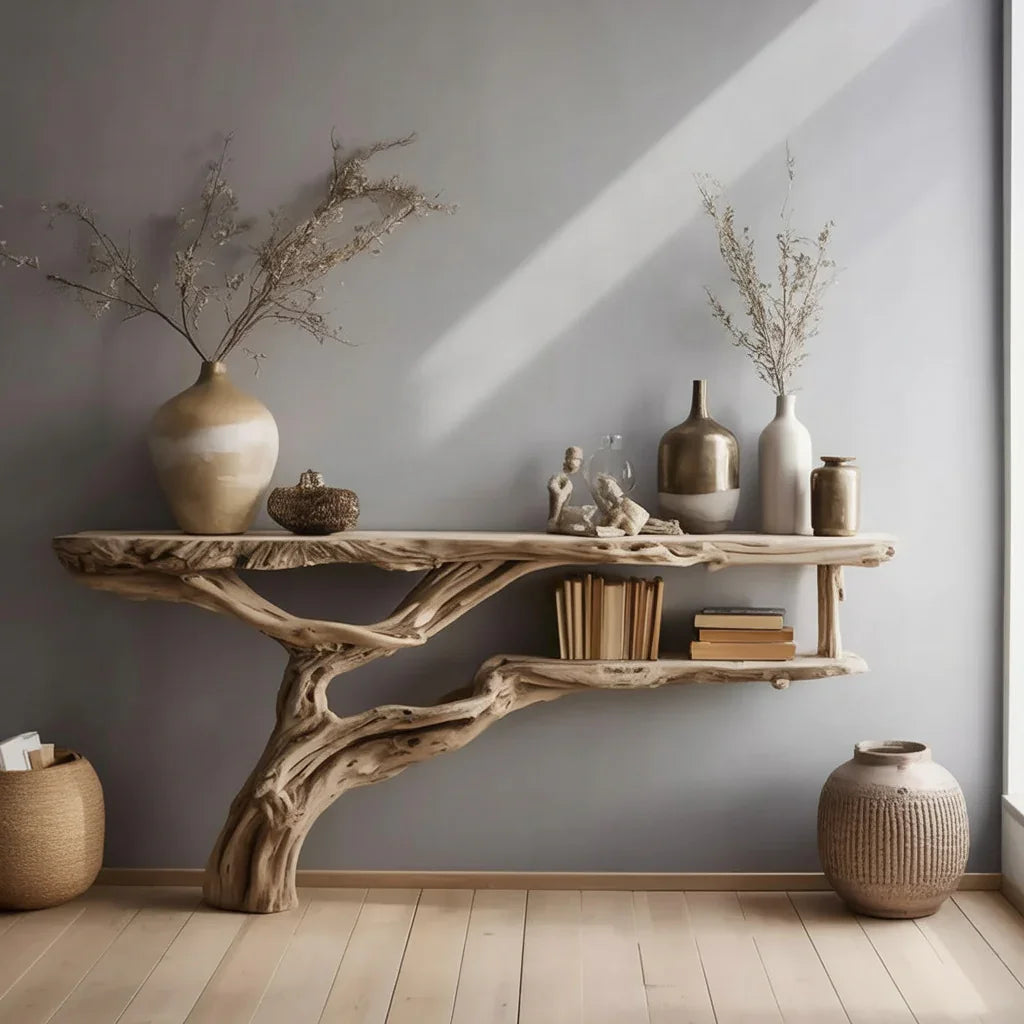
Handcrafted Wooden Tree Wall Shelf – Rustic Branch Bookshelf
A vertical sculpted piece with multiple branch shelves growing from a central trunk. More than a shelf, less than a bookcase. Anchors a wall by itself with no other furniture needed. Our tree bookshelf collection shows the range, from compact wall-mounted models to full standing pieces.
Best Wood for Floating Shelves
Different woods suit different rooms and different budgets. Here is what each species brings to the table.
Oak
The classic furniture hardwood. Strong, durable, with prominent grain that takes stain beautifully. White oak resists moisture better than red oak, which makes it a smarter pick for kitchens and bathrooms. A solid oak floating shelf can hold heavy items for decades without sagging.
Walnut
Deep chocolate brown with rich grain patterns. Walnut feels premium because it is. The wood is dense, stable, and gets richer in color over years of light exposure. It pairs beautifully with brass hardware and natural textiles. The price reflects the quality, but a walnut shelf becomes an heirloom piece.
Teak
The naturally water-resistant hardwood. Teak contains natural oils that repel moisture, which makes it the top choice for bathrooms, kitchens, and any humid space. It also resists insect damage and ages to a silvery patina if left untreated, or holds a warm honey color with regular oiling.
Acacia
The accessible hardwood. Acacia delivers the durability of oak at a lower price point because it grows faster and is more abundant. The grain is bold and irregular, which gives each shelf a distinctive look. Best value for buyers who want real solid wood without the walnut price tag.
Live Edge
Not a species, but a cut style. Live edge shelves keep the natural outer edge of the tree intact, so the curve, knots, and bark texture remain visible. Each piece is one of a kind. Works in any species but most striking in walnut, teak, and acacia where the grain contrast is highest. For a deeper guide on choosing wood by application, see our notes on best wood for closet shelves.
Budget Tiers: What You Get
Floating shelf prices range from $20 to $800 per shelf, and the gap between low and high is not just markup. Here is what each tier actually buys you.
Under $100: Mass-Market MDF
This is the danger zone. Almost every shelf in this range is MDF wrapped in plastic. They look fine in photos and survive light use for a year or two. Then water, weight, or humidity finds the seam and the shelf fails. Avoid unless you genuinely only need a temporary display surface.
$100 to $300: Entry Solid Wood
Real hardwood enters the market here, usually in acacia or pine. Quality varies. Look for thicker shelves (1.5 to 2 inches), proper rod brackets (not just keyhole slots), and clear species labeling. A good $200 acacia shelf can last 10 to 15 years with reasonable care.
$300 to $800: Premium Handcrafted
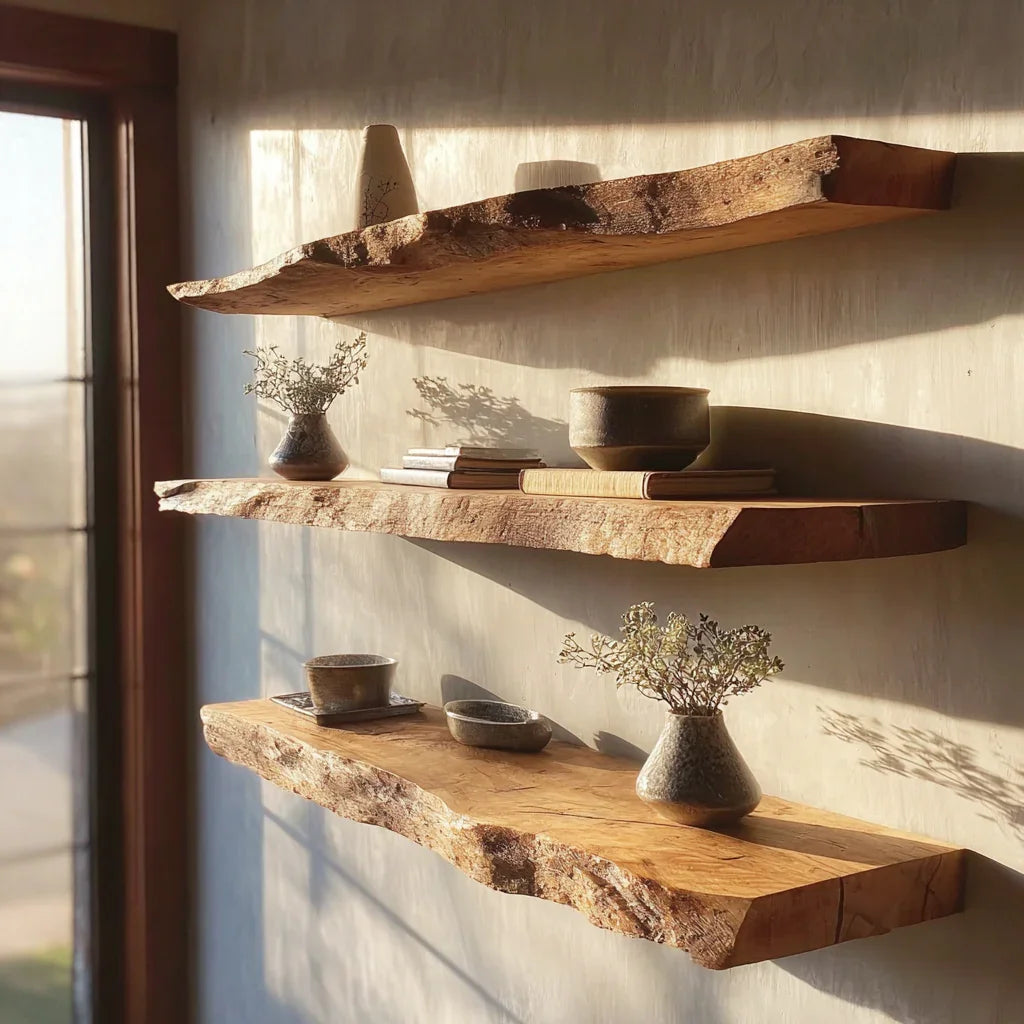
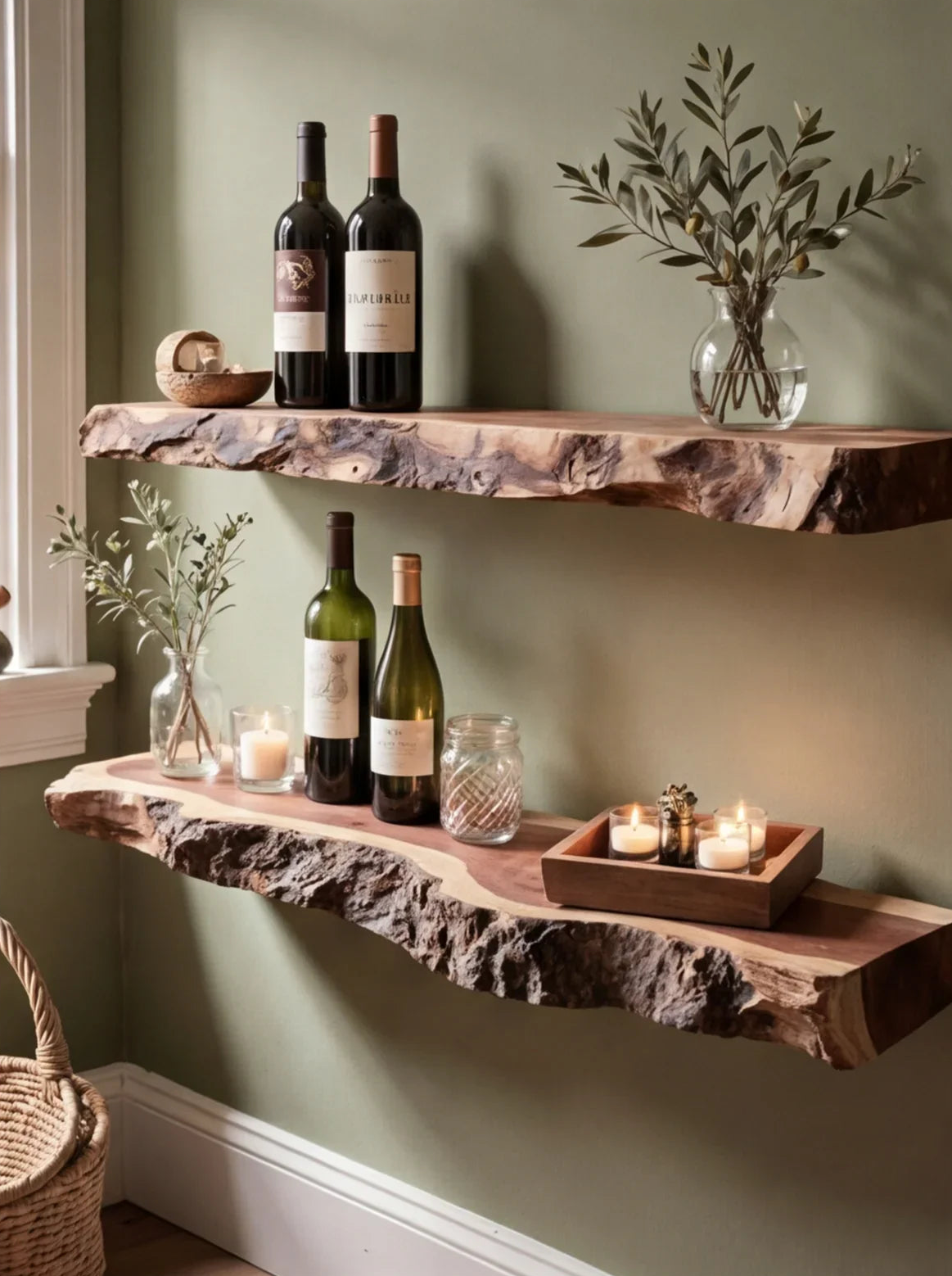
Rustic Floating Wall Shelf with Live Edge – Solid Wood Decor
This is where craftsmanship enters. Hand-finished solid hardwood, premium species (oak, walnut, teak), live edge options, and brackets engineered for the specific shelf. Most of our handcrafted floating shelves sit in this range. Built to last 20 to 50 years with basic oil maintenance.
$800 and Up: Sculptural Artisan
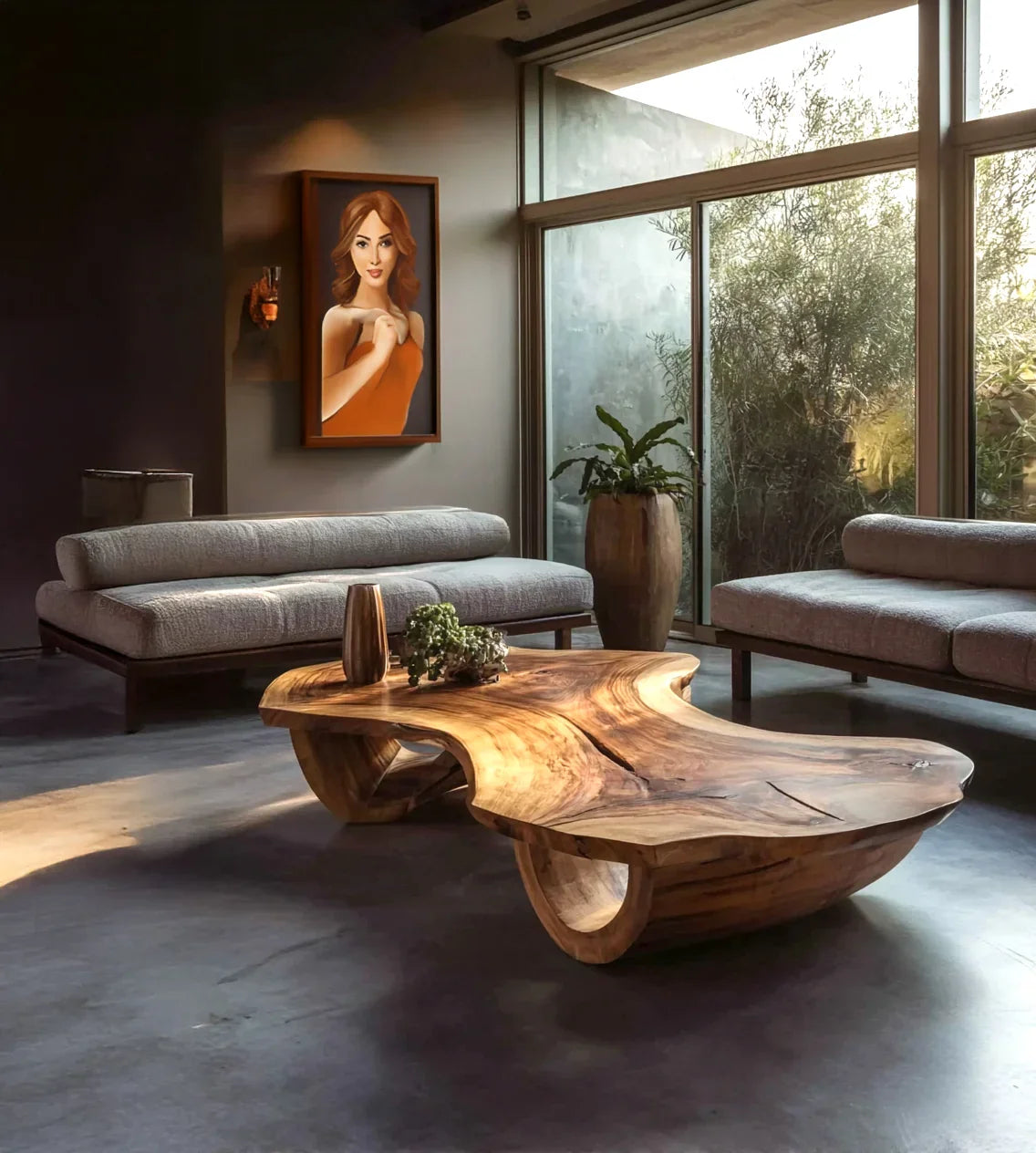
Statement pieces. Multi-tier tree shelves, large live edge slabs, custom carved sculptural designs. These are functional art rather than basic storage. Buyers in this tier are usually furnishing a home they plan to keep for decades.
Our Top Picks for 2026
Different rooms have different requirements. Here is what we recommend by space.
Living Room
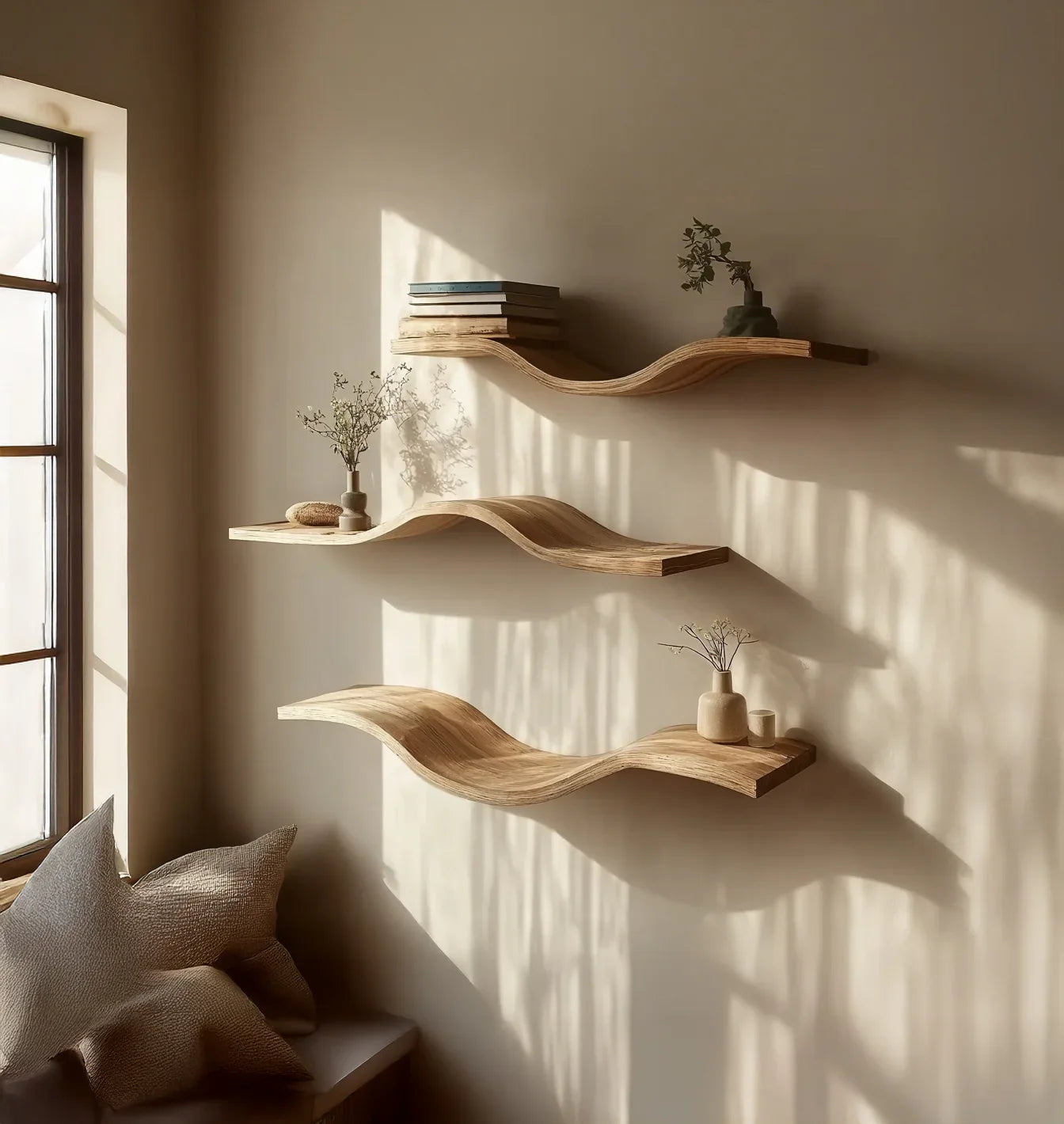
Rustic Floating Wall Shelf with Live Edge – Solid Wood Shelf
For most living rooms, a pair of straight solid wood floating shelves above a sofa or media console is the right move. Walnut or oak, 36 to 48 inches long, mounted with at least 8 inches of vertical space between them. For something more sculptural, our handcrafted floating shelves collection includes statement pieces that work as standalone wall art.
Kitchen
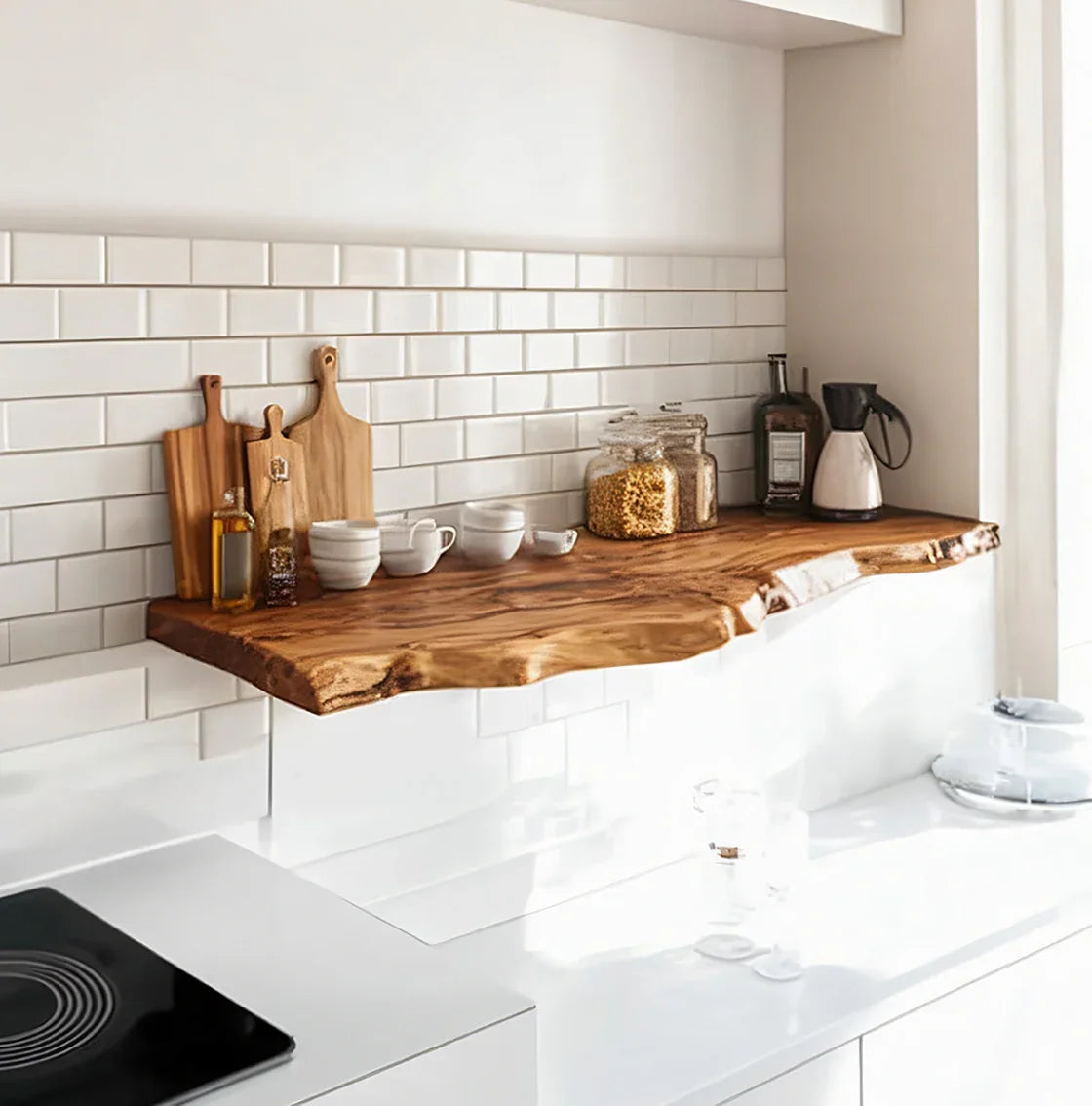
Live Edge Floating Kitchen Shelf – Solid Wood Wall-Mounted Storage
Open kitchen shelving needs to handle weight (dishes, glassware, cookbooks) and survive heat and steam. Teak or sealed white oak in 24 to 36 inch lengths, mounted into studs. Avoid anything with an MDF core no matter how it is sealed. Browse our kitchen floating shelves for moisture-tolerant species.
Bathroom
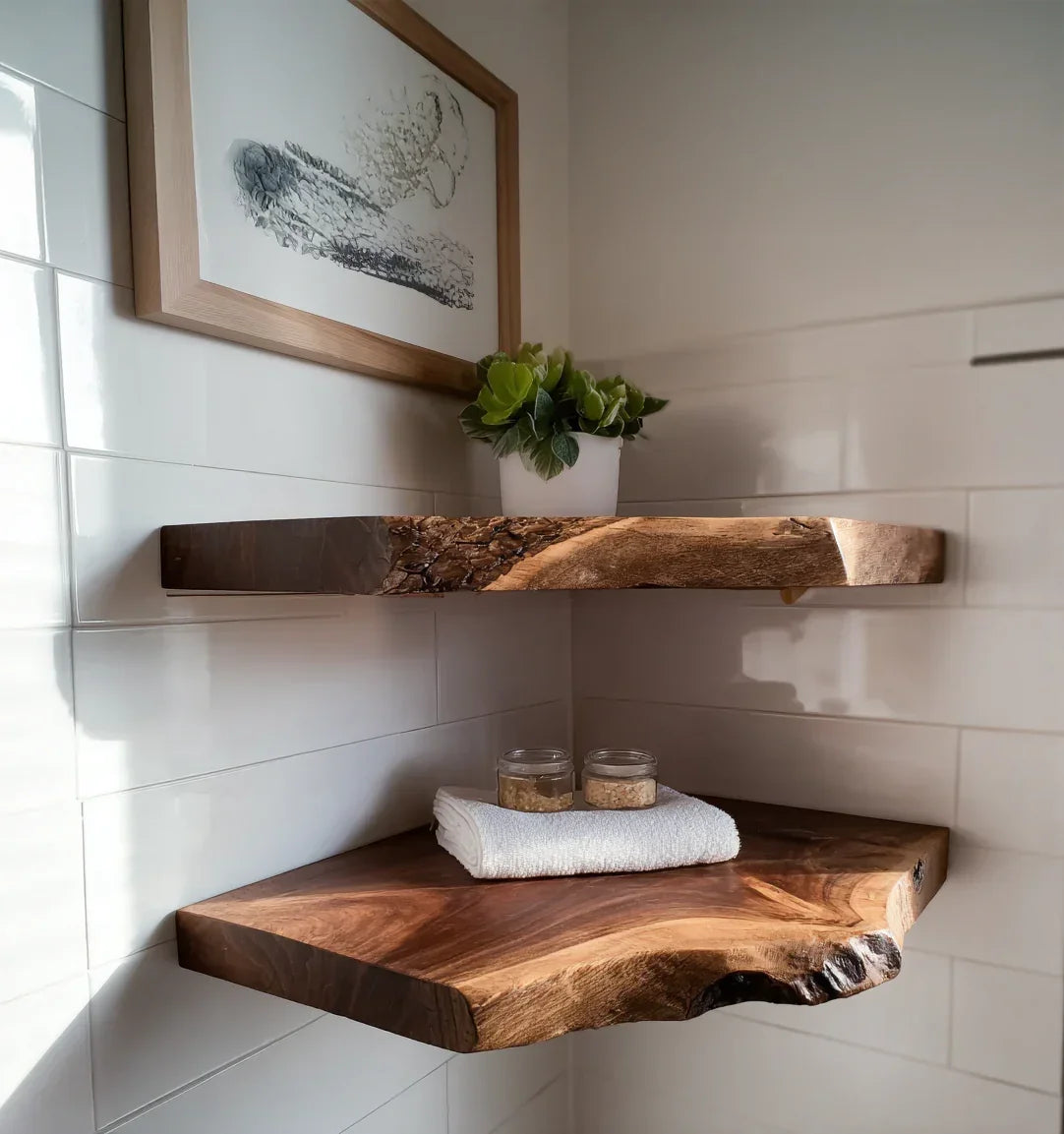
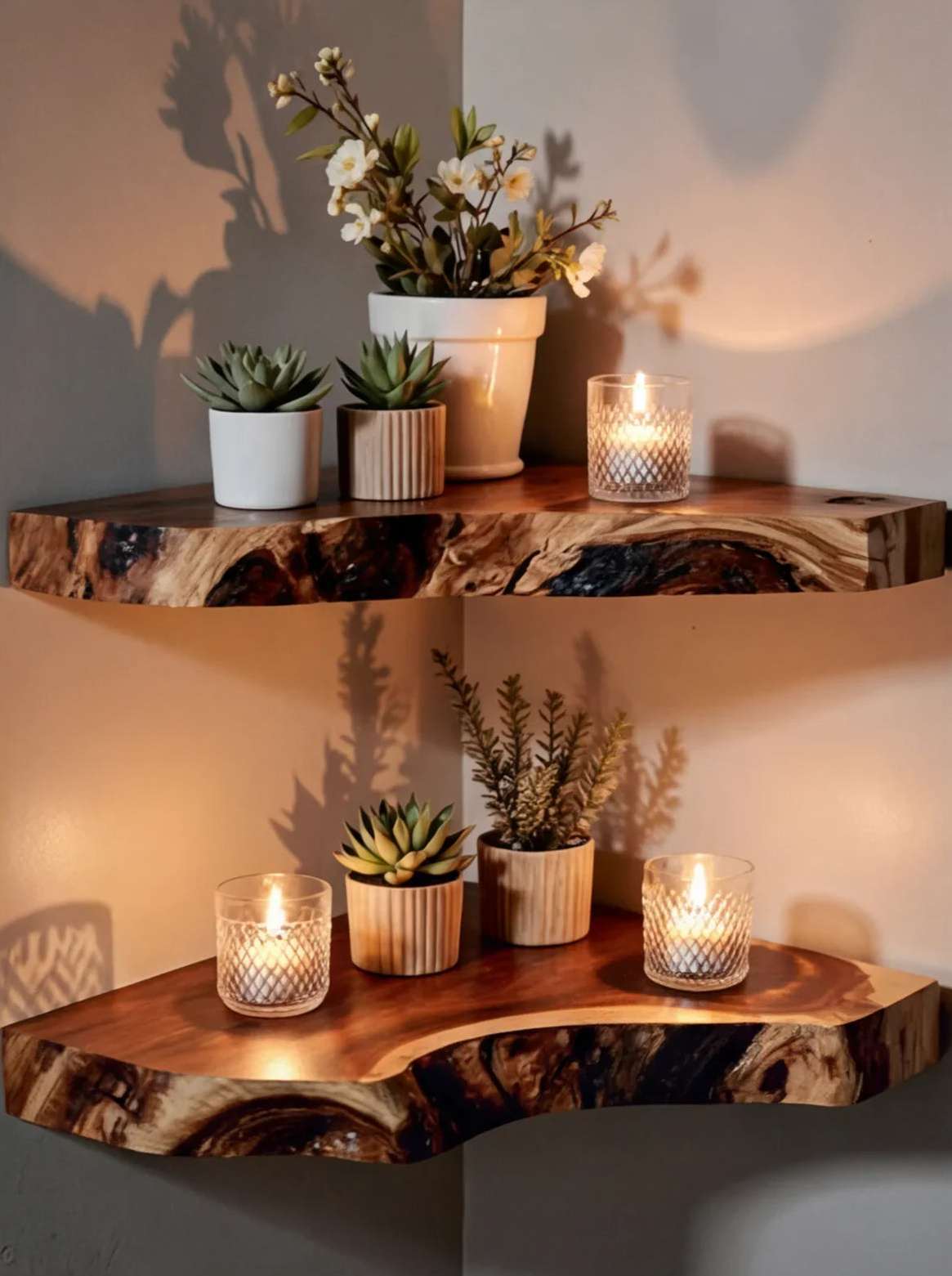
Corner Live Edge Wooden Floating Shelf – Rustic Walnut Christmas Décor & Gift
Teak is the move. Natural water resistance plus natural antibacterial properties. Mount above the toilet for towel and toiletry storage, or as a vanity replacement for small powder rooms. Our bathroom floating shelves are specifically curated for humid environments.
Bedroom
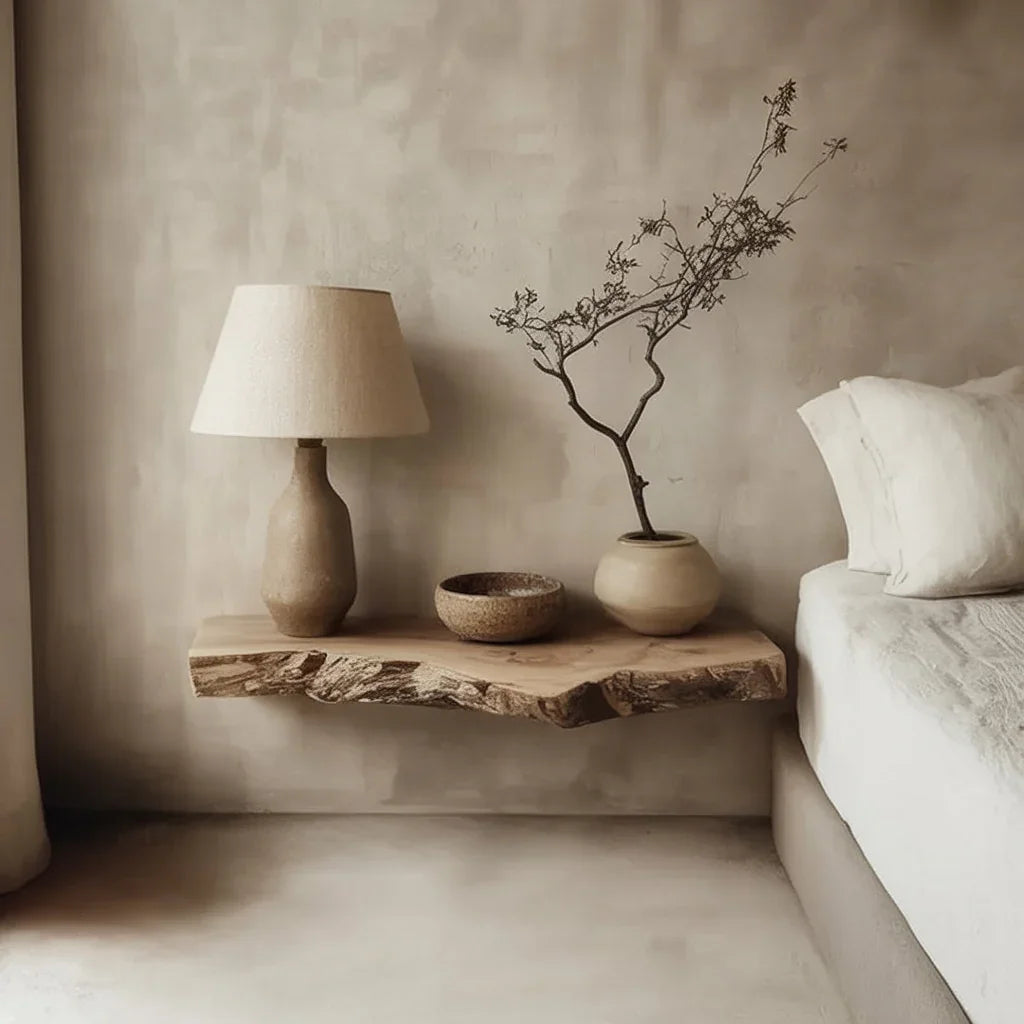
Rustic Live Edge Floating Bedside Shelf – Solid Wood Wall Shelf
Bedside floating shelves are the smartest swap of the decade. They free up floor space, eliminate dusty nightstand surfaces, and create a cleaner visual line. Mount one shelf at mattress height per side of the bed. For full bedroom styling ideas, see our guide on bedroom floating shelves ideas or browse our bedroom floating shelves collection.
Nursery

Solid Wood Floating Wall Shelf – Organic Sculptural Wooden Display Shelf
Mushroom shelves win in nurseries. The organic shapes feel playful without crossing into theme park territory, and parents love that they double as conversation pieces. Mount low enough that you can reach books without a stool. Our mushroom floating shelves are popular with parents who want pieces that grow up with the kid.
Common Buyer Mistakes
Most floating shelf complaints trace back to four predictable mistakes. Skip these and you skip 80 percent of the regret.
Buying Based on Photos Alone
Product photography flatters everything. A shelf that looks rich and warm online may arrive thin, lightweight, and clearly synthetic. Read the material spec carefully. If it does not name the wood species, it is engineered. If the listed weight seems impossibly low for the size, the core is hollow or MDF.
Ignoring Weight Capacity
A 36-inch decorative shelf might be rated for 15 pounds. Stack three hardcover books and a small plant and you are already over the limit. Match the shelf to the load. Books and plants need 30 plus pounds per linear foot. Records and electronics need 50 plus.
Wrong Wall Anchor for the Weight
Drywall anchors hold less than half what stud-mounted brackets hold. If you cannot mount into studs, use heavy-duty toggle bolts rated for the weight. For practical install techniques, our guide on how to mount floating shelves covers each wall type.
Assuming All "Solid Wood" Is Equal
"Solid wood" can mean a 12mm thick veneer over a particle core. Read carefully. Real solid wood is the same material all the way through. The cut edges should look identical to the surface. If the edges are darker, smoother, or have a different texture, you are looking at engineered material with a wood face.
Frequently Asked Questions
How long do solid wood floating shelves last?
A well-made solid hardwood floating shelf with quality bracket hardware can last 30 to 50 years or more. Oil it once a year and avoid hanging it in direct sunlight all day. Compare that to MDF shelves, which typically need replacement within 2 to 5 years.
Can floating shelves hold heavy books?
Yes, when properly installed. A 36-inch solid hardwood shelf with 5/8 inch steel rods anchored into wall studs holds 50 to 60 pounds easily. That is enough for a row of hardcover books with room to spare.
Are solid wood floating shelves worth the price?
The price-per-year math favors solid wood every time. A $300 solid walnut shelf that lasts 30 years costs $10 per year. A $40 MDF shelf that lasts 2 years costs $20 per year, and you have to install it again every two years. Solid wood is cheaper in the long run and looks better the whole time.
How thick should a floating shelf be?
For decorative use (small frames, candles, plants), 1 to 1.5 inches is fine. For functional use (books, dishes, electronics), choose 1.75 to 2.5 inches. Thicker shelves resist sagging better and look more substantial against the wall.
Do floating shelves need to be installed into studs?
For loads over 25 pounds, yes. For lighter decorative use, heavy-duty drywall anchors can work, but they reduce capacity by about half compared to stud mounting. Always use a stud finder before installing anything you plan to load with weight.
Choose Once, Keep for Decades
The best floating shelves are the ones you stop thinking about after install. They hold what you put on them, look good for years, and never become a problem. Solid hardwood with proper hardware does that. MDF does not.
If you are ready to skip the replace-every-two-years cycle, browse our handcrafted solid wood floating shelves collection. Every piece is hand-carved from real hardwood by Vietnamese artisans, with bracket hardware engineered for the specific shelf design. Free US shipping and a 30-day satisfaction guarantee.