


















Quick view
- Best Wood for Closet Shelves: Quick Comparison
- Closet Shelf Wood Comparison: Which Type Is Right for You?
- Why Wood Choice Matters for Closets Specifically
- Best Overall: Plywood (Birch or Maple Veneer)
- Best Budget: Solid Pine
- Best Premium: Solid Oak or Walnut
- Best for Moth Protection: Cedar
- What to AVOID for Closet Shelves
- Closet Shelf Dimensions: What Thickness and Depth?
- How to Install Closet Shelves (Quick Overview)
- Solid Wood vs Plywood vs MDF for Closet Shelves
- Frequently Asked Questions
- Ready to Build Your Closet with Furniture-Grade Wood?
Shop this guide
Handcrafted Floating Shelves, made to order in solid wood.
 Sculptural Overlapping Circular Solid Wood Wall Shelf with Multi Tier Display
From $1,354.00
Sculptural Overlapping Circular Solid Wood Wall Shelf with Multi Tier Display
From $1,354.00
 Mountain Landscape Relief Solid Wood Floating Shelf Live Edge Display Ledge
From $1,154.00
Mountain Landscape Relief Solid Wood Floating Shelf Live Edge Display Ledge
From $1,154.00
 Enchanted Forest Circular Wall Shelf - Round Carved Timber Mushroom Portal
From $1,023.00
Enchanted Forest Circular Wall Shelf - Round Carved Timber Mushroom Portal
From $1,023.00
 Cottagecore Arched Wood Wall Niche - Hand-Carved Fairy Mushroom Alcove Shelf
From $1,356.00
Cottagecore Arched Wood Wall Niche - Hand-Carved Fairy Mushroom Alcove Shelf
From $1,356.00
 Sculptural Hand-Carved Mushroom Solid Wood Corner Floating Shelf & Biomorphic Wall Display Ledge
From $345.00
Sculptural Hand-Carved Mushroom Solid Wood Corner Floating Shelf & Biomorphic Wall Display Ledge
From $345.00
 Sculptural Hand-Carved Mushroom Solid Wood Floating Shelves & Biomorphic Wall Display Ledges
From $345.00
Sculptural Hand-Carved Mushroom Solid Wood Floating Shelves & Biomorphic Wall Display Ledges
From $345.00
Best Wood for Closet Shelves (And 2 to Never Use)
When shopping for wood for closet shelves, choosing the absolute best wood for closet shelves matters more than most people think. The wrong closet shelf wood warps under heavy weight, sags over time, or chips at the edges. Whether you are comparing solid lumber or plywood for closet shelves, the right material must hold your clothes, shoes, and storage bins for decades without flinching.
Here is an honest breakdown of the best wood to use for shelves with real load capacity specs so you can decide based on hard facts, not marketing.
Best Wood for Closet Shelves: Quick Comparison
| Wood Type | Strength | Moisture Resistance | Cost | Best For |
|---|---|---|---|---|
| Plywood (birch/maple) | Excellent | Good | $$ | All closets - best overall |
| Solid pine | Good | Fair | $ | Budget builds, light loads |
| Solid oak | Excellent | Good | $$$ | Walk-in closets, premium look |
| Solid walnut | Excellent | Good | $$$$ | High-end, visible closets |
| Cedar | Moderate | Excellent | $$ | Moth protection, seasonal clothing |
| Poplar | Good | Fair | $$ | Painted shelves, moderate loads |
| MDF | Poor-Fair | Poor | $ | Budget only - sags with weight |
| Particle board | Poor | Very poor | $ | Not recommended |
| Melamine | Fair | Fair (surface only) | $-$$ | Easy-clean, utility closets |
Closet Shelf Wood Comparison: Which Type Is Right for You?
Here's how each wood type performs in a real closet including our recommendation based on 10+ years of handcrafting solid wood furniture.
| Wood Type | Best For | Pros | Cons | Ashdeco Recommendation |
|---|---|---|---|---|
| Pine | Budget closet shelves | Affordable, easy to cut and work with | Softer wood- dents and scratches more easily | Good for low-load storage closets. Not ideal for heavy sweaters or books. |
| Oak | Heavy-duty shelves | Extremely strong and durable, classic grain, stains beautifully | More expensive, harder to work with | Best choice for premium closets. Holds 75+ lbs/linear foot ideal for walk-in dressing rooms. |
| Walnut | Luxury closet design | Beautiful dark grain, no stain needed, premium look | Highest cost among common hardwoods | Best for statement shelves in visible closets. Our most popular solid wood for open closet designs. |
| Plywood (Birch/Maple) | Utility closets | Stable, consistent, resists warping, affordable | Less premium look, visible edge layers | Good for hidden storage where appearance doesn't matter. Use edge banding for a cleaner look. |
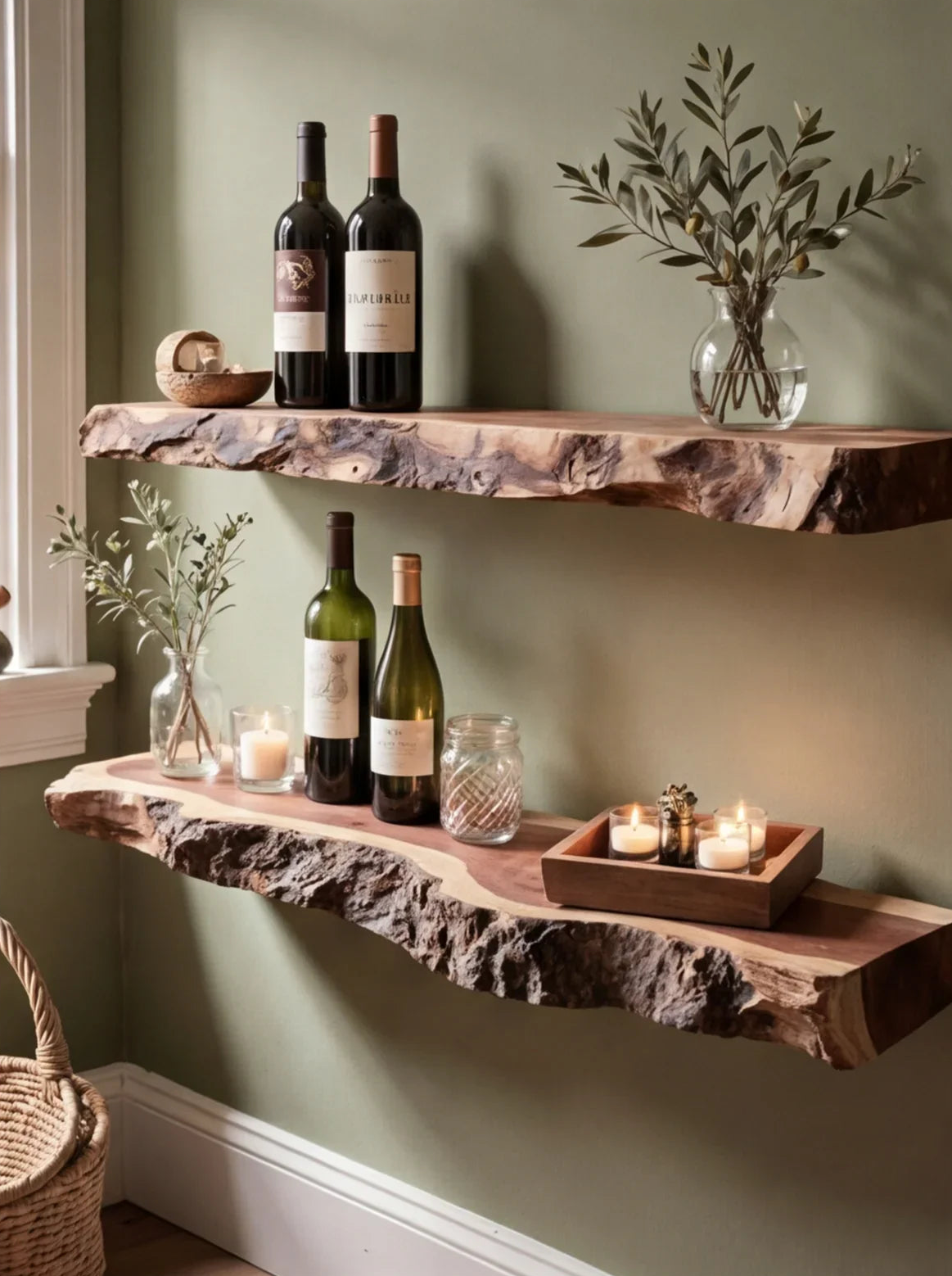
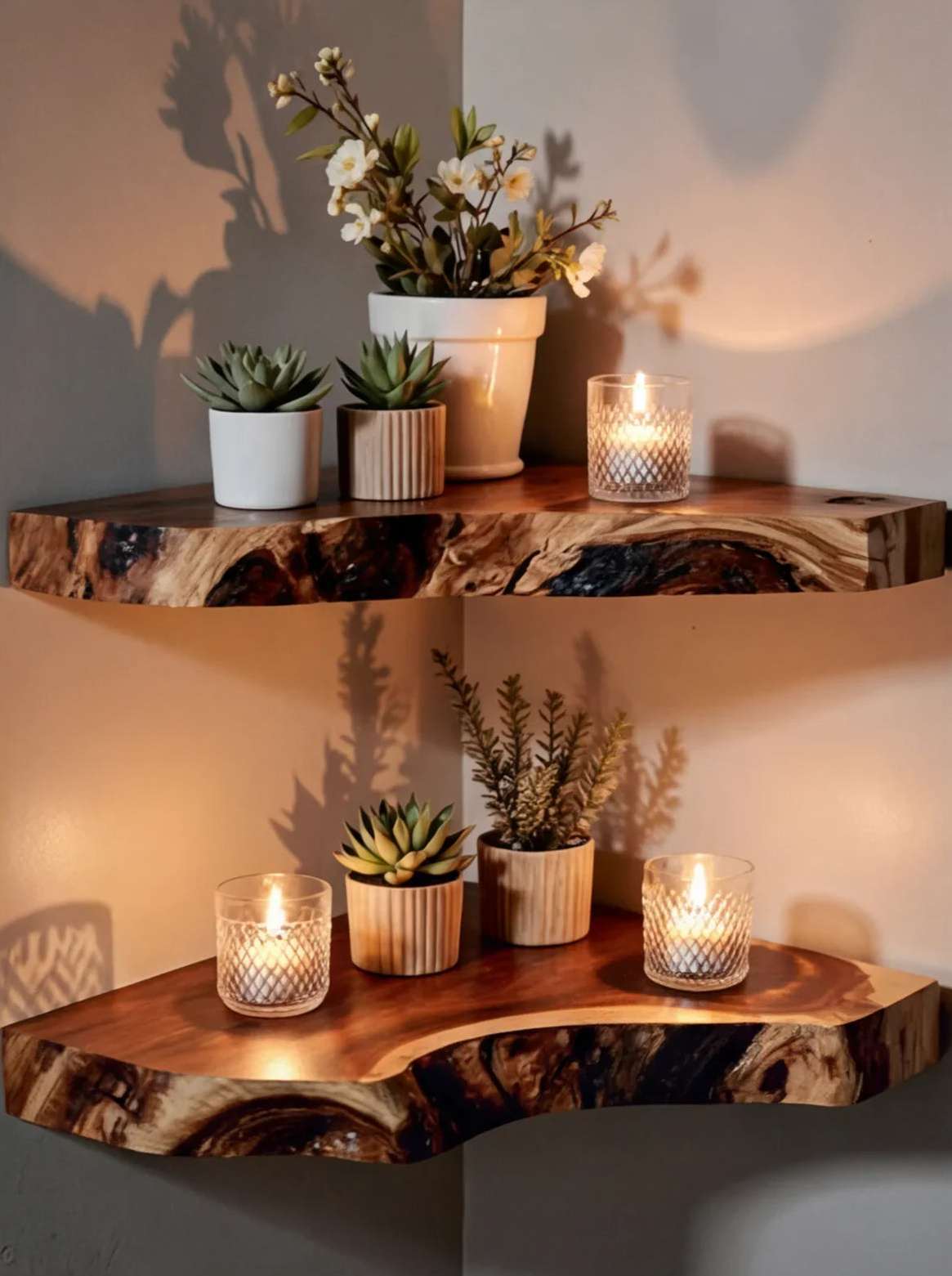
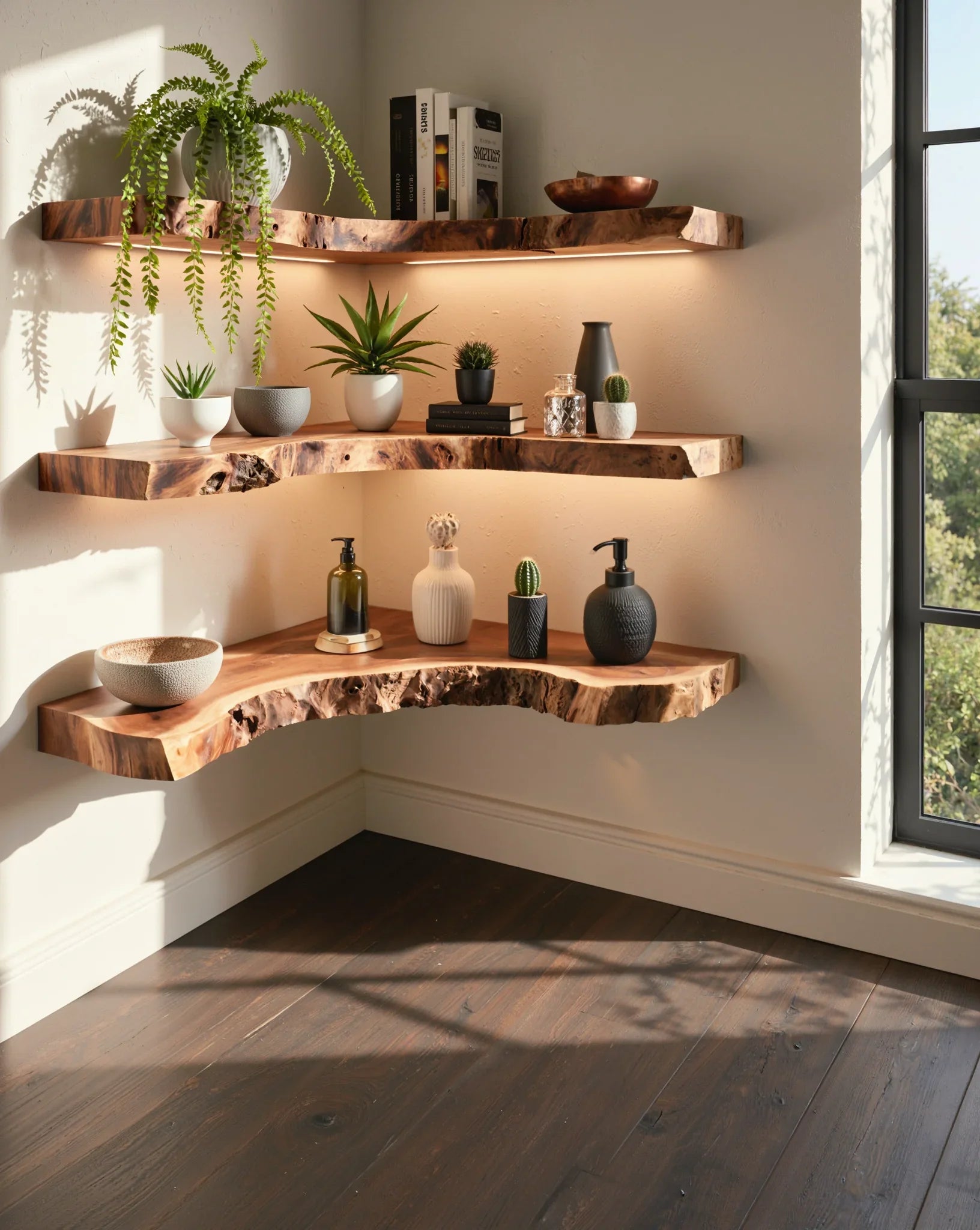
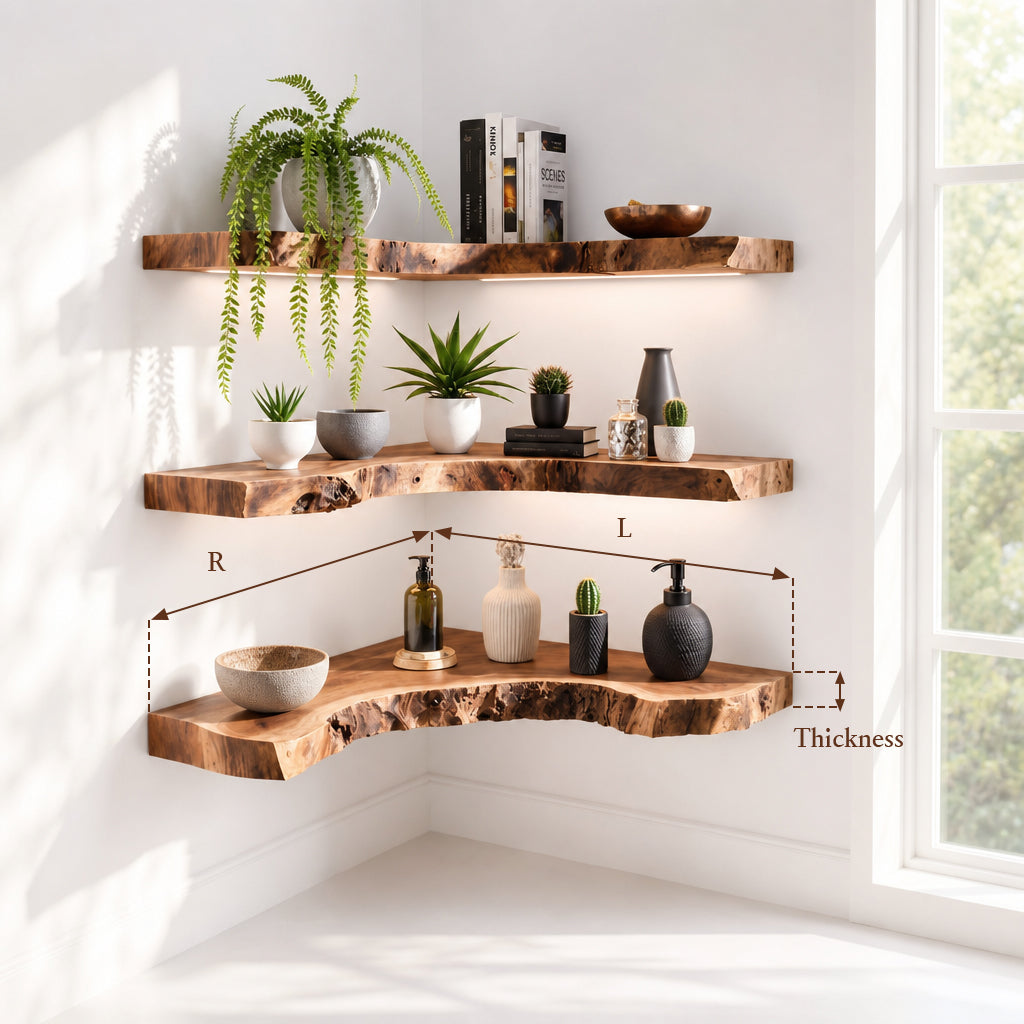
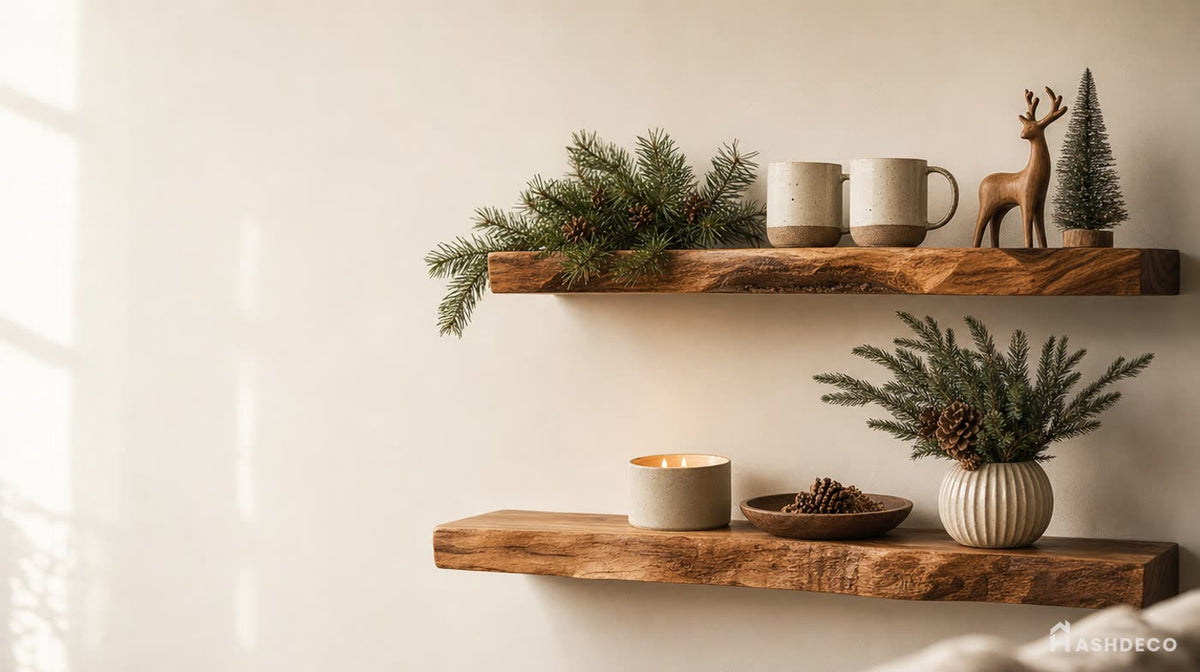
| Solid Wood Slab (Live Edge) | Display closets | Unique grain pattern, one-of-a-kind piece, premium feel | Needs proper wall support, premium price | Best for visible design areas where the shelf itself is a focal point. Our walnut live edge slabs are hand-selected. |
| Cedar | Moth protection | Natural moth/insect repellent, pleasant scent | Soft, can stain light fabrics, aromatic oils | Best used as closet wall lining + regular plywood shelves. Our cedar is sustainably sourced. |
| MDF | Skip entirely | Cheap, smooth surface for painting | Sags, swells with moisture, cannot be repaired | Not recommended. Fails within 3-7 years in closet conditions. |
| Particle Board | Skip entirely | Very cheap | Crumbles under weight, zero structural integrity | Not recommended. Do not use in any closet application. |
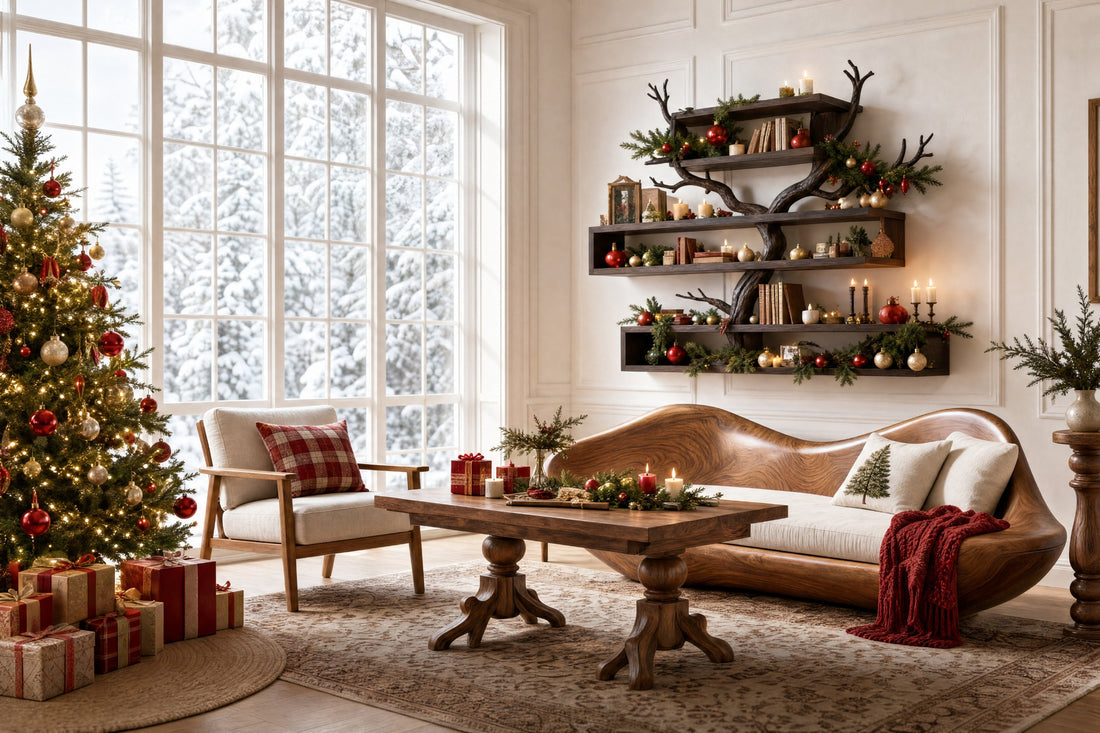
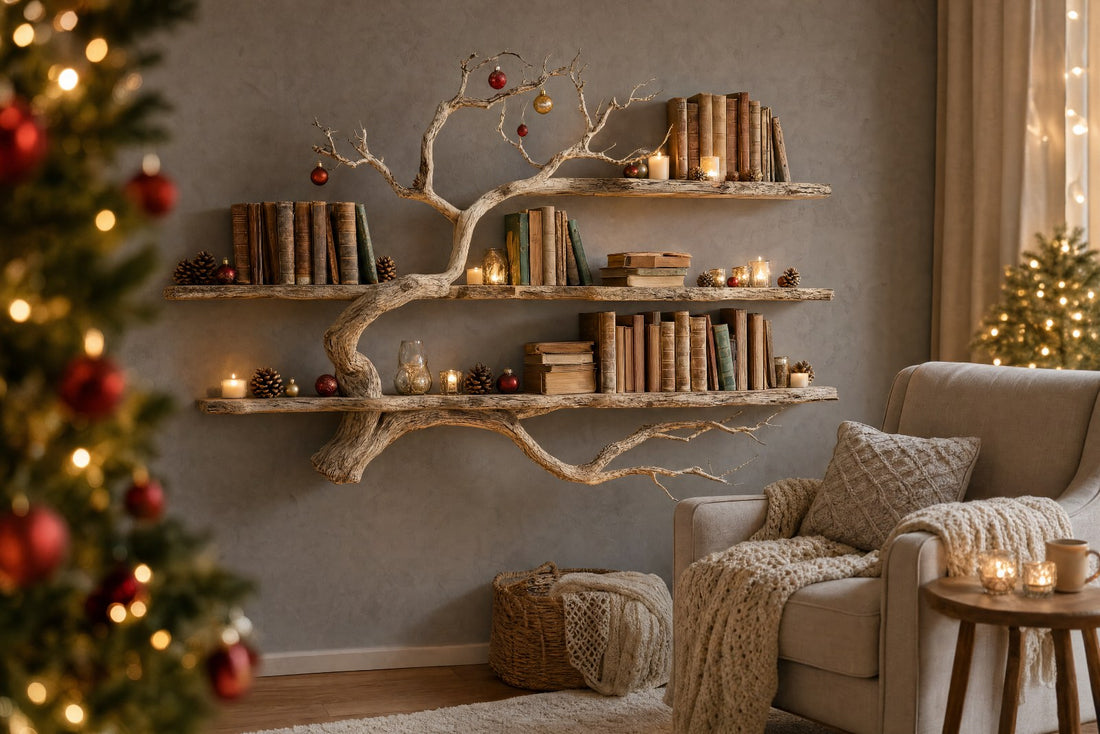
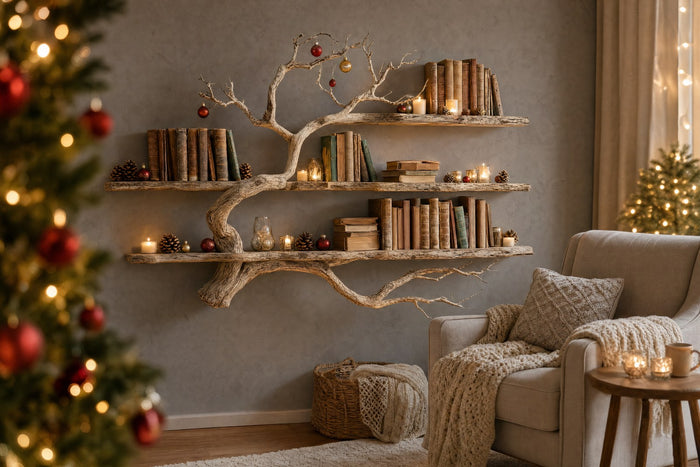
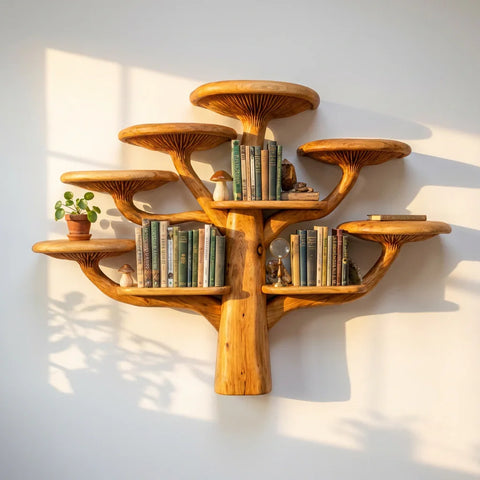
If you want to go beyond functional storage and explore how furniture can also act as a visual statement in a room, a tree bookshelf design shows how vertical storage can be transformed into a sculptural interior feature rather than just a shelving system.


Why Wood Choice Matters for Closets Specifically
Closet shelves face unique challenges that living room shelves don't:
- Constant weight: Clothes, shoes, and bins sit on shelves 24/7 - not like a bookshelf where you add and remove items
- Long spans: Most closet shelves run 24-48 inches between supports, creating more sag potential
- Humidity: Closets have less airflow than open rooms, trapping moisture that warps cheap wood
- Hidden but functional: You need strength first, appearance second
Best Overall: Plywood (Birch or Maple Veneer)
Hardwood plywood is the top choice for most closet shelves. Here's why:
- Sag resistance: 3/4" birch plywood holds 50+ lbs per linear foot over a 36" span without visible sagging
- Dimensional stability: Plywood's cross-grain layers resist warping and swelling better than solid wood
- Cost-effective: A 4x8 sheet of 3/4" birch plywood costs $45-65 - enough for 6-8 standard closet shelves
- Edge options: Apply iron-on edge banding for a clean look, or leave raw if hidden
Best for: Walk-in closets, reach-in closets, pantries, linen closets - essentially every closet type.
Minimum thickness: 3/4 inch (19mm). Never use 1/2" plywood for shelves longer than 24 inches - it will sag.
Don't miss
These pieces qualify for 10% off orders over $2,000. Applied automatically at checkout.
Best Budget: Solid Pine
Pine is the most affordable solid wood option and widely available at every hardware store.
- Pros: Cheap ($3-5 per board foot), easy to cut and sand, takes paint well
- Cons: Softer than hardwoods - dents easily, may sag over 36" spans with heavy loads
- Best for: Kids' closets, linen closets, light-load storage
Tip: If using pine for spans over 30 inches, add a center support bracket or use 1x12 boards (actual 3/4" x 11-1/4") instead of thinner stock.
Best Premium: Solid Oak or Walnut
If your closet shelves are visible - open closets, walk-in dressing rooms, or display shelving - hardwood is worth the investment.
- Oak: Janka hardness 1,290 - extremely durable, classic grain, stains beautifully. $6-10/board foot.
- Walnut: Janka hardness 1,010 - rich dark tones, stunning natural grain, no stain needed. $10-15/board foot.
Both resist sagging far better than pine or MDF. A 3/4" oak shelf handles 75+ lbs per linear foot without issue. For a deeper dive, see our article on how to make a floating shelf - DIY guide.

Our handcrafted solid wood shelves use teak and walnut - the same wood that performs beautifully in closets, bathrooms, and kitchens.
Best for Moth Protection: Cedar
Cedar's natural oils repel moths, silverfish, and other fabric-eating insects. That's why cedar has been used in closets for centuries.
- Aromatic red cedar: The classic choice - strong scent fades over time but can be refreshed with light sanding
- Works best for: Seasonal clothing storage, wool sweaters, vintage garments
- Downsides: Softer than oak/walnut (Janka 900), aromatic oils can stain light fabrics if they touch directly
Tip: Line the closet walls and ceiling with cedar panels, then use plywood or hardwood for the actual shelves. You get moth protection + strong shelves.
What to AVOID for Closet Shelves
MDF (Medium-Density Fiberboard)
MDF is the most common material in budget closet systems - and the most likely to fail.
- Sags visibly at spans over 24 inches with moderate weight
- Swells and crumbles when exposed to moisture (even high humidity)
- Screw holes strip easily - shelves can pull away from brackets
- Cannot be repaired once damaged - must be replaced
If you already have MDF shelves: Add center support brackets to reduce span length. Replace with plywood when budget allows.
Particle Board
Worse than MDF in every way. Particle board is sawdust and glue compressed into sheets. It crumbles under weight, disintegrates with moisture, and has zero structural integrity for shelving. Avoid completely.
Closet Shelf Dimensions: What Thickness and Depth?
| Closet Type | Shelf Depth | Shelf Thickness | Max Span (no center support) |
|---|---|---|---|
| Reach-in closet | 12-14 inches | 3/4 inch | 36 inches |
| Walk-in closet | 14-16 inches | 3/4 inch | 36 inches |
| Linen closet | 12-16 inches | 3/4 inch | 30 inches |
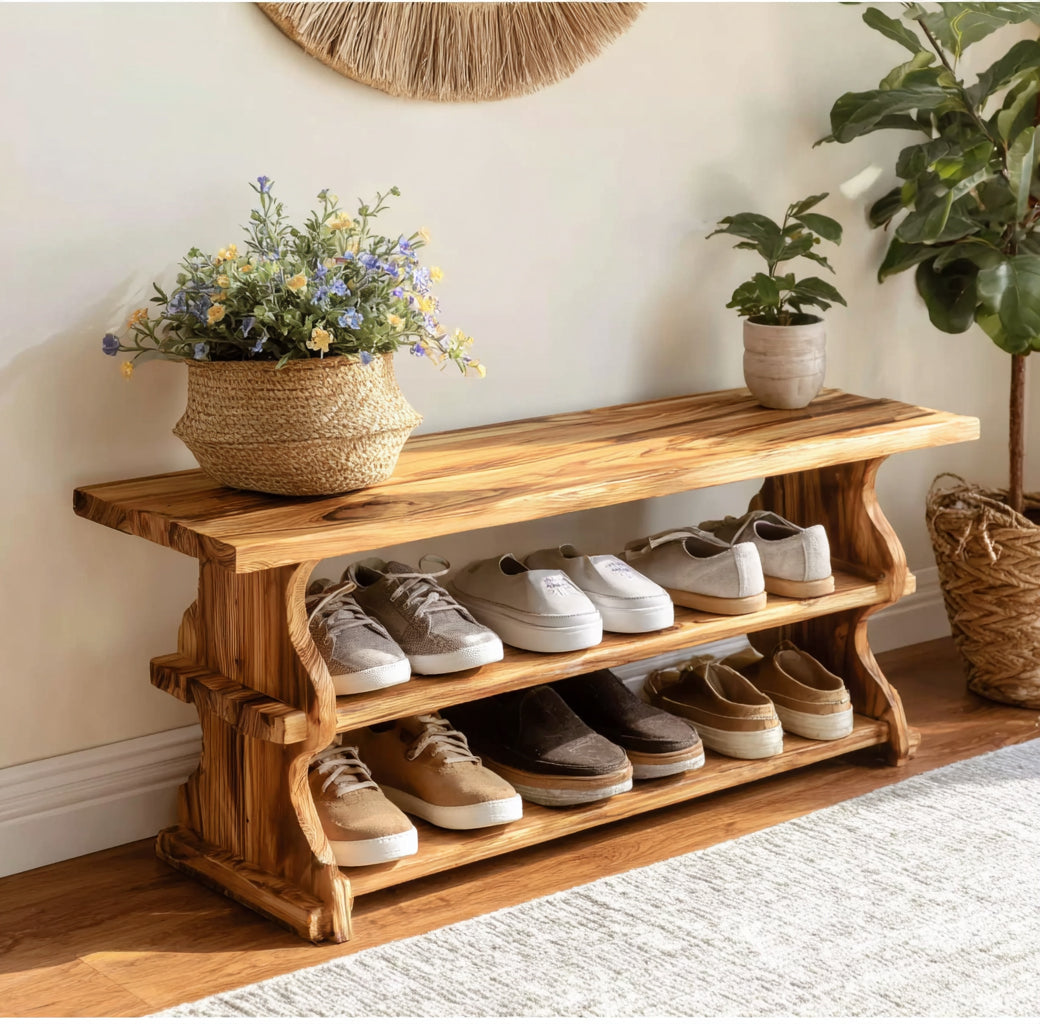
| Shoe shelf | 10-12 inches | 3/4 inch | 36 inches |
| Hat/accessory shelf | 10-12 inches | 1/2-3/4 inch | 24 inches |
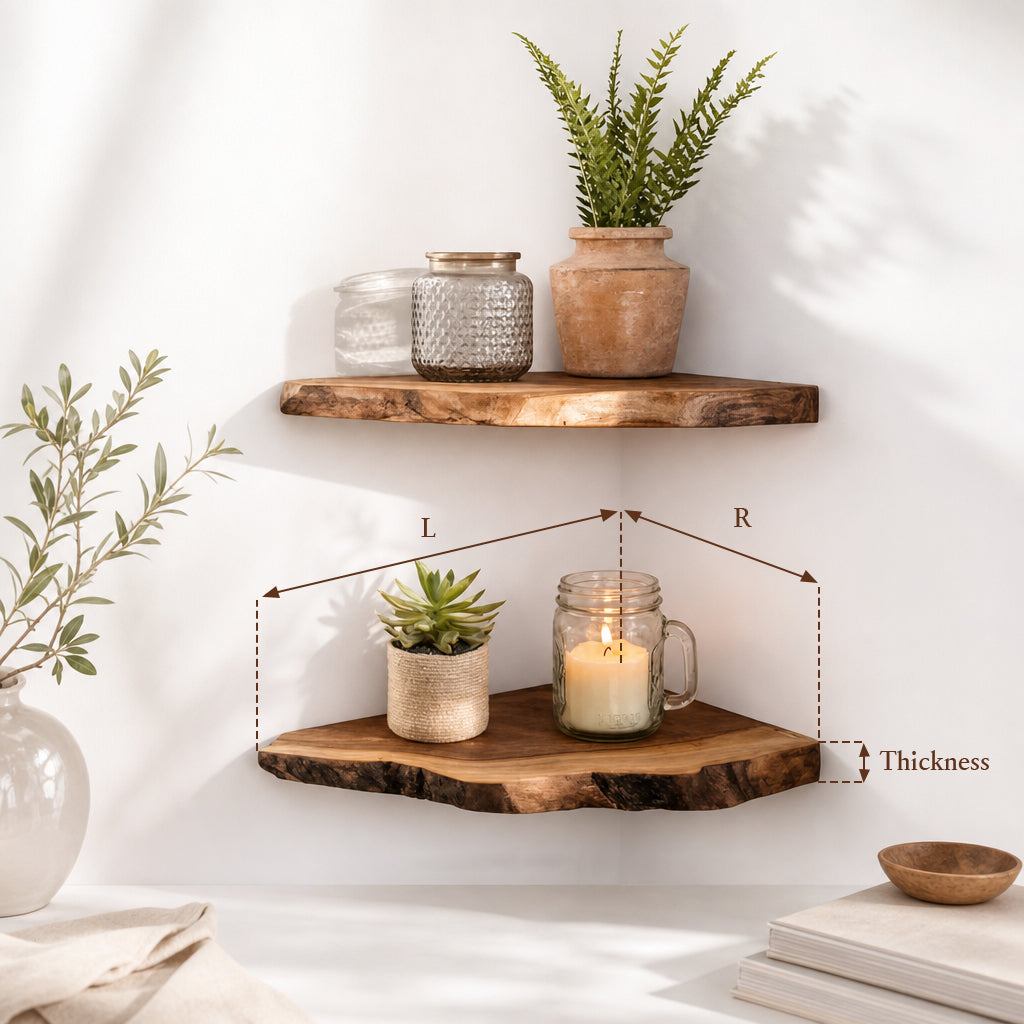
Rule of thumb: Use 3/4" material for any shelf longer than 24 inches. Add center supports for spans over 36 inches regardless of wood type. We've written a full breakdown in our corner floating shelf ideas that actually look good post.
How to Install Closet Shelves (Quick Overview)
Once you've picked the right wood, installation is what actually determines whether the shelf lasts. Most sagging and pull-away failures come from skipping studs, not from the wood itself.
- Find and mark the studs. Use a stud finder to mark every stud along the wall. Brackets and cleats should anchor into studs, not just drywall - drywall anchors alone can't hold sustained closet loads.
- Choose a bracket or cleat system. L-brackets work well for open shelving. A wood cleat (a ledger strip screwed into the studs, with the shelf resting on top) gives a cleaner, hidden-support look.
- Level before you drill. Mark a straight line across the wall with a level before installing brackets or cleats - a small tilt becomes obvious once shoes and bins are loaded.
- Add center support for long spans. Any shelf longer than 36 inches needs a center bracket or cleat, regardless of wood type (see the span table above).
- Secure the shelf. Screw the shelf into the brackets or cleats from underneath where possible, so fasteners stay hidden from view.
If you're building shelves from scratch rather than installing pre-cut boards, cut your plywood or solid wood to depth first, sand the front edge smooth, then follow the same stud-and-level process above.
Solid Wood vs Plywood vs MDF for Closet Shelves
| Factor | Solid Wood | Plywood | MDF |
|---|---|---|---|
| Sag resistance | Excellent (hardwood) | Excellent | Poor |
| Moisture resistance | Good | Good | Very poor |
| Screw holding | Excellent | Good | Poor |
| Appearance | Beautiful grain | Clean veneer | Smooth, paintable |
| Weight capacity (3/4", 36" span) | 60-80 lbs | 50-60 lbs | 20-30 lbs |
| Cost (per shelf) | $15-60 | $8-15 | $5-10 |
| Lifespan | 20+ years | 15-20 years | 3-7 years |
Frequently Asked Questions
What is the best wood for closet shelves?
Birch or maple plywood (3/4 inch) is the best overall choice for closet shelves. It resists sagging, handles moisture better than MDF, and costs less than solid hardwood. For visible shelves in walk-in closets, solid oak or walnut is worth the upgrade.
Is MDF good for closet shelves?
MDF is not recommended for closet shelves, especially spans over 24 inches. It sags under sustained weight, swells with humidity, and can't be repaired once damaged. Use plywood instead - it costs only slightly more but lasts 3-4 times longer.
Does cedar really keep moths away?
Yes - aromatic cedar contains natural oils (thujone) that repel moths, silverfish, and carpet beetles. The scent fades over 2-3 years but can be refreshed by lightly sanding the surface to open fresh wood pores.
What type of wood should I avoid for closets?
Avoid particle board entirely - it crumbles under weight and moisture. MDF should only be used as a last resort for short spans. Untreated softwoods (like raw spruce or fir) warp in humid closet environments unless properly sealed.
What is the strongest wood for closet shelves?
Oak is the strongest domestic hardwood for closet shelves, with a Janka hardness of 1,290. A 3/4" oak shelf can hold 75+ lbs per linear foot over a 36" span without visible sagging. Walnut is slightly softer (Janka 1,010) but offers superior appearance for visible closet applications. For most closets, 3/4" birch plywood handles 50-60 lbs/linear foot - sufficient for clothes, shoes, and bins.
Is solid wood better than plywood for closet shelves?
For structural performance, solid hardwood (oak, walnut) outperforms plywood in load capacity and longevity - but at 2-3x the cost. Plywood (3/4" birch or maple) is the practical choice for most closets: it resists warping better than solid wood in humid closet environments, costs less, and handles 50-60 lbs/linear foot. Use solid wood when the shelves are visible and appearance matters. Use plywood for hidden or utility closets.
What wood is best for heavy closet storage?
For heavy closet storage (winter coats, shoe collections, heavy bins), use 3/4" solid oak or 3/4" birch plywood with center support brackets. Solid oak handles 75+ lbs/linear foot; plywood handles 50-60 lbs/linear foot. Add a center support for spans over 36 inches. Avoid MDF and particle board for heavy storage - they will fail. If your closet has no center support, use solid hardwood.
How thick should closet shelves be?
Minimum 3/4 inch (19mm) for any shelf longer than 24 inches - regardless of wood type. This applies to plywood, solid wood, and even MDF (though MDF is still not recommended). 1/2" material is only acceptable for very short shelves (under 24") holding lightweight items only. Thinner shelves will sag over time, especially under sustained weight from clothes and storage bins.
Are live edge shelves good for closets?
Live edge shelves work beautifully in open closets or walk-in dressing rooms where the shelf is visible. A walnut or oak live edge slab adds a furniture-level focal point to what would otherwise be standard shelving. The natural edge is genuine - no two are alike. For hidden or utility closets, the live edge is unnecessary. For display closets, it's the upgrade that turns storage into design.
Ready to Build Your Closet with Furniture-Grade Wood?
Ashdeco's handcrafted solid wood shelves are built for closets that deserve better than hardware-store plywood. Every piece is handmade by Vietnamese artisans - solid walnut, white oak, or teak - finished and shipped free to your door.
Closet shelves built to last generations, not years.
- Solid wood - no plywood, no MDF, no particle board
- Custom sizes to fit your exact closet dimensions
- Hand-finished with natural oils (no VOCs)
- Free shipping across the US
- Built to order - your wood, your measurements
Want a closet shelf that looks like furniture, not hardware-store shelving? Explore Ashdeco's handmade solid wood floating shelves - or message us for a custom quote on your closet project.
Looking for a complete closet storage system? Our floating shelf collection and tree bookshelf collection work beautifully in walk-in closets and dressing rooms.