Quick view
- What Materials Are Shoe Benches Usually Made From?
- Quick Comparison: 5 Wood Species for Shoe Benches
- Teak: The Gold Standard for Wet Entryways
- Acacia: The Hardness Champion
- Walnut: Beauty First, With Surprising Durability
- White Oak: The All-Rounder
- Pine: The Budget Option (With Honest Limitations)
- Which Wood Handles Wet and Muddy Shoes Best?
- FAQ
Shop this guide
Handcrafted Benches, made to order in solid wood.
 Christmas edit
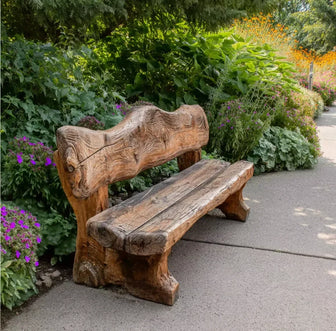
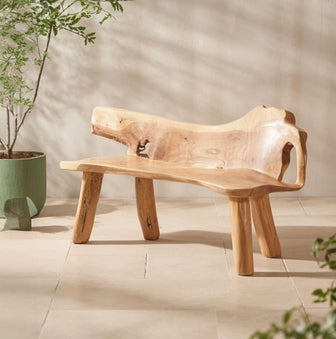
Handcrafted Rustic Solid Wood Bench - Natural Log Seating for Garden & Patio
From $1,553.00
Christmas edit
Handcrafted Rustic Solid Wood Bench - Natural Log Seating for Garden & Patio
From $1,553.00
 Christmas edit
Live Edge Wooden Entryway Bench – Solid Wood Hallway Bench with Shelf
From $1,050.00
Christmas edit
Live Edge Wooden Entryway Bench – Solid Wood Hallway Bench with Shelf
From $1,050.00
 Christmas edit
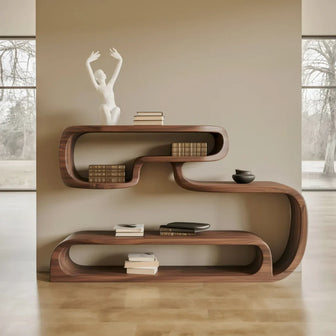
Handcrafted Walnut Bench – Organic Sculptural Mid-Century Design
From $2,327.0010% off at checkout
Christmas edit
Handcrafted Walnut Bench – Organic Sculptural Mid-Century Design
From $2,327.0010% off at checkout
 Christmas edit
Solid Wood Sculptural Bench, Mid-Century Modern Organic Entryway Seating
From $1,876.00
Christmas edit
Solid Wood Sculptural Bench, Mid-Century Modern Organic Entryway Seating
From $1,876.00
 Christmas edit
Handcrafted Sculptural Wood Bench – Modern Organic Curved Entryway Bench
From $2,060.0010% off at checkout
Christmas edit
Handcrafted Sculptural Wood Bench – Modern Organic Curved Entryway Bench
From $2,060.0010% off at checkout
 Christmas edit
Organic Live Edge Solid Wood Halloween Sculptural Bench
From $2,234.0010% off at checkout
Christmas edit
Organic Live Edge Solid Wood Halloween Sculptural Bench
From $2,234.0010% off at checkout
Choosing the best wood for a shoe bench isn't about picking whatever looks nice in the showroom - it's about picking what survives your entryway. This is the wettest, dirtiest zone in your home: muddy boots, rain-soaked sneakers, and salt-crusted winter shoes land here daily. The wood species behind an entryway bench with shoe storage determines whether it ages gracefully or falls apart in two winters. Our workshop has carved, shaped, and stress-tested five species for entryway furniture. Here's what we've learned hands-on.

What Materials Are Shoe Benches Usually Made From?
Shoe benches show up in four main materials: solid wood, MDF or particleboard, metal frames, and less commonly, plastic or rattan. MDF and particleboard dominate the budget end of the market because they're cheap to mass-produce, but they swell and sag once wet shoes sit on them daily. Metal frames hold up structurally but the welds are only as good as the manufacturer, and a bare metal surface isn't pleasant to sit on. Solid wood is the only material that gets genuinely better with age instead of breaking down - which is why the rest of this guide focuses on choosing the right wood species rather than the right material category. For a full breakdown of wood versus MDF versus metal, see our entryway bench material comparison.

Quick Comparison: 5 Wood Species for Shoe Benches
Each wood species brings a different balance of hardness, moisture resistance, weight, and cost. Teak leads in moisture resistance, acacia in hardness-to-cost ratio, walnut in aesthetics, oak in availability, and pine in initial affordability. The best choice depends on your entryway conditions and budget.
| Species | Janka Hardness | Moisture Resistance | Weight (per board foot) | Grain Pattern | Price Tier |
|---|---|---|---|---|---|
| Teak | 1,070 lbf | Excellent (highest oil content) | 3.75 lbs | Straight, golden | $$$$ |
| Acacia | 1,750 lbf | Very Good (natural oils) | 3.50 lbs | Wavy, dramatic | $$$ |
| Walnut | 1,010 lbf | Good | 3.20 lbs | Flowing, dark | $$$$ |
| White Oak | 1,360 lbf | Very Good (tyloses seal pores) | 3.80 lbs | Prominent rays | $$$ |
| Pine | 690 lbf | Poor | 2.50 lbs | Knotty, light | $ |
Source: Wood Database Janka hardness reference.


Teak: The Gold Standard for Wet Entryways
Teak is the most moisture-resistant commercial hardwood available, scoring 1,070 on the Janka scale with the highest natural oil and silica content of any wood species. It's the top choice for an entryway bench with shoe storage that faces rain, snow, or heavy daily moisture. Teak resists warping, cracking, and mold without any applied finish.
In our workshop, teak is the most forgiving wood to work with for entryway pieces. We can leave a teak bench unfinished and it still repels water - the natural oils rise to the surface and create a self-renewing barrier. When we carve teak, the shavings feel almost waxy between your fingers.
The tradeoff is price. Teak costs 2-3× more than acacia for equivalent dimensions. It's also heavier than it looks - a 36-inch teak shoe bench weighs approximately 28-32 lbs. For customers in the Pacific Northwest or Northeast US where entryways face serious weather, teak pays for itself in longevity. We cover this in more detail in our shoe bench dimensions guide guide.
Best for: Entryways exposed to rain, snow, and high humidity. Homes without a covered porch. Buyers who want zero-maintenance wood.

Acacia: The Hardness Champion
Acacia scores 1,750 on the Janka hardness scale - higher than white oak, maple, or teak. It's the hardest commonly available furniture wood at its price point, making it nearly impervious to the dents and scratches that destroy softer shoe benches. Acacia also has natural oils that provide good (not excellent) moisture resistance.

We use more acacia than any other species in our shoe bench collection. The reason is practical: when someone drops a hiking boot onto an acacia bench, it bounces off. The same boot dropped on pine leaves a visible dent. After years of workshop testing, acacia consistently shows the least surface damage from daily use.
Acacia grain is dramatic - wavy, interlocked, and full of character. No two boards look alike. This is a feature, not a flaw. Each bench has a unique grain pattern that becomes a visual signature in your entryway. The wood starts as a warm honey color and deepens to a rich brown over 6-12 months.
One honest note: acacia is harder to carve than pine or walnut. Our artisans spend roughly 30% more time shaping acacia pieces. That time shows in the precision of each joint.
Best for: High-traffic entryways. Families with kids who drop shoes. Buyers who want hardness and character without teak pricing.
Don't miss
These pieces qualify for 10% off orders over $2,000. Applied automatically at checkout.
10% off
Handcrafted Walnut Bench – Organic Sculptural Mid-Century Design
From $2,327.00
10% off at checkout
10% off
Handcrafted Sculptural Wood Bench – Modern Organic Curved Entryway Bench
From $2,060.00
10% off at checkout
10% off
Organic Live Edge Solid Wood Halloween Sculptural Bench
From $2,234.00
10% off at checkout
 10% off
Handcrafted Solid Wood Artistic Wood Bench – Soft Organic Wave Silhouette
From $2,534.00
10% off at checkout
10% off
Handcrafted Solid Wood Artistic Wood Bench – Soft Organic Wave Silhouette
From $2,534.00
10% off at checkout
Walnut: Beauty First, With Surprising Durability
American black walnut scores 1,010 on the Janka hardness scale - moderate by furniture standards, but paired with a tight grain structure that resists moisture penetration better than its hardness number suggests. Walnut is the choice when your entryway bench with shoe storage needs to look exceptional.
Walnut is the most satisfying wood to carve in our workshop. The grain flows predictably, the wood responds cleanly to hand tools, and the finished surface feels like silk without excessive sanding. Our artisans consistently request walnut for detail-heavy pieces because it holds fine edges beautifully.
The color range of walnut - from chocolate brown heartwood to creamy sapwood - creates natural contrast without stain. Over time, walnut lightens slightly rather than darkening, which is the opposite of most wood species. Applying a UV-protective oil slows this lightening.
Walnut's weakness for shoe benches is its moderate hardness. It will dent from heavy boot impacts. If your entryway sees work boots and hiking gear daily, acacia or oak is more practical. If your entryway is a front door in a shoes-off household where footwear is placed gently, walnut is gorgeous.
Best for: Shoes-off households. Design-focused entryways. Buyers who prioritize aesthetics and are willing to accept occasional character marks.
White Oak: The All-Rounder
White oak scores 1,360 on the Janka hardness scale and has a unique structural advantage: its pores are sealed by growths called tyloses, making it naturally water-resistant without finish. This is the same property that makes white oak the standard for whiskey barrels and boat building. For a shoe bench, it means spilled water beads on the surface rather than soaking in.
White oak is the most widely available hardwood in the United States, according to the USDA Forest Service. That availability keeps prices reasonable compared to teak or walnut. It's also the heaviest wood on this list - a 36-inch white oak shoe bench weighs approximately 30-35 lbs.
In our workshop, white oak is the most stable wood through seasonal humidity changes. Where pine swells and shrinks noticeably between summer and winter, white oak barely moves. This dimensional stability means joints stay tight for decades.
The grain pattern features prominent medullary rays - the flecked, almost shimmery pattern visible on quarter-sawn faces. It's distinctive without being flashy.
Best for: All-purpose entryways. Buyers who want moisture resistance without teak pricing. Traditional or farmhouse aesthetics.
Pine: The Budget Option (With Honest Limitations)
Pine scores just 690 on the Janka hardness scale - roughly 60% softer than white oak and 40% of acacia's hardness. It's widely available and inexpensive, which is why mass-produced shoe benches (including IKEA's TJUSIG) default to pine. However, for entryway furniture that faces daily moisture and impact, pine has real limitations. For a deeper dive, see our article on shoe bench vs IKEA cost.
We've worked with pine for 15+ years. It carves beautifully - fast, clean, and forgiving. But in entryway applications specifically, pine disappoints. We've seen pine shoe benches returned with deep dents after just six months. The softness that makes it pleasant to carve also makes it vulnerable to every dropped shoe, scraped heel, and dragged boot.
Pine also absorbs moisture quickly. Without a sealed finish, a wet shoe left sitting on a pine surface for 30 minutes leaves a visible water ring. Even with polyurethane, moisture eventually finds its way through scratches and joints.
Honest assessment from our workshop: Pine works for shoe benches in dry climates, indoor mudrooms with a mat barrier, and budget-conscious buyers who accept that they'll replace it in 2-4 years. For everyone else, step up to acacia or oak.
Best for: Tight budgets. Dry-climate entryways. Temporary or rental situations.
Which Wood Handles Wet and Muddy Shoes Best?
This is the question we answer most often. After testing all five species with wet shoes placed directly on unfinished wood for 4 hours, here's the ranking from our workshop:
- Teak: No visible water mark. Surface dried completely with a wipe.
- White Oak: Faint ring visible when wet, disappeared within 2 hours of drying.
- Acacia: Slight darkening where water pooled, faded within 24 hours.
- Walnut: Visible water mark for 2-3 days, then faded.
- Pine: Permanent water ring after a single exposure.
For muddy shoes specifically, hardness matters more than moisture resistance. Mud contains fine grit that acts like sandpaper. On pine (690 Janka), daily mud exposure creates visible surface erosion within months. On acacia (1,750 Janka), the same mud barely leaves a trace.

Our recommendation for entryways with wet and muddy shoes: acacia with an oil finish. You get the hardness to resist abrasion, enough moisture resistance for daily wet shoes, and a price point between pine and teak. Browse our shoe bench collection for acacia options, and consider pairing with a coffee table or console table in matching species for a cohesive look throughout your home.
Our Workshop's Top Pick
Acacia: 1,750 Janka hardness, built for wet and muddy shoes
The hardest wood on our list, with enough natural moisture resistance for daily entryway use - at a price between pine and teak. Every piece is hand-shaped from real acacia by our artisans, not a veneer.
Shop acacia shoe benches →FAQ
What is the best wood for a shoe bench?
Acacia offers the best overall balance for shoe benches: 1,750 Janka hardness (highest on this list), natural moisture resistance from inherent oils, dramatic grain character, and a mid-range price point. For maximum moisture resistance regardless of cost, choose teak.
Is oak good for a shoe bench?
White oak is excellent for shoe benches. It scores 1,360 on the Janka hardness scale and has naturally sealed pores (tyloses) that resist water penetration. It's the same wood used for whiskey barrels and boat building. Red oak lacks tyloses and is a weaker choice for wet entryways.
Is cedar a good choice for a shoe bench?
Cedar isn't in our core five, but it's worth a mention. Its natural resistance to moisture and insects rivals teak, and it carries a light, pleasant scent that helps mask shoe odor - a real advantage for a closed cabinet-style bench. The tradeoff is hardness: cedar sits around 900 on the Janka scale, softer than acacia or white oak, so it dents more easily under heavy boots. It works best for households with mostly lighter shoes rather than daily work-boot traffic.
Why do cheap shoe benches fall apart?
Most budget shoe benches use pine (690 Janka) or particleboard with cam-lock hardware. Pine dents from daily shoe impacts and absorbs moisture. Particleboard swells when exposed to any water. Both materials weaken at screw joints within 1-2 years of daily use.
Does wood type affect shoe bench weight capacity?
Yes. Denser woods like white oak and acacia create stronger joints and support more weight. A 36-inch acacia shoe bench typically supports 350-400 lbs. The same size in pine supports 200-250 lbs. The difference is in fiber density - denser wood grips fasteners more tightly and resists compression at joints.
How do I protect a wooden shoe bench from water damage?
Apply a penetrating oil finish (tung oil or Danish oil) every 6-12 months. Place a boot tray or rubber mat on the bench surface during wet seasons. Wipe standing water within 30 minutes. For teak or oiled acacia, these steps are optional but extend the wood's appearance. For pine, they're essential for survival.
If you want protection without a glossy, "coated" look, choose a matte penetrating oil (tung or Danish oil) over polyurethane - it soaks into the grain rather than sitting on top, so the wood keeps its natural texture and hand-feel while still repelling water.