






















Quick view
- What "Live Edge" Actually Means (And What It Doesn't)
- Grain Direction: The Invisible Factor That Determines Everything
- Bark Inclusion: Keep It or Strip It?
- Sapwood vs Heartwood: Understanding the Color Divide
- Natural Voids, Cracks, and Knots: Defects or Features?
- The Decision Framework: Picking Your Live Edge Desk
- FAQ
Shop this guide
Handcrafted Desk, made to order in solid wood.
 Christmas edit
Live Edge L-Shaped Desk – Handmade Solid Wood Corner Desk for Home Office
From $2,340.0010% off at checkout
Christmas edit
Live Edge L-Shaped Desk – Handmade Solid Wood Corner Desk for Home Office
From $2,340.0010% off at checkout
 Christmas edit
Sculptural Floating Live Edge Solid Wood Corner Desk & Wall-Mounted Workspace Slab
From $896.00
Christmas edit
Sculptural Floating Live Edge Solid Wood Corner Desk & Wall-Mounted Workspace Slab
From $896.00
 Rustic Floating Shelf Desk – Wall Mounted Study Room Workspace
From $250.00
Rustic Floating Shelf Desk – Wall Mounted Study Room Workspace
From $250.00
 Christmas edit
Handmade Live Edge Desk – Rustic Solid Wood Office Workstation for Home or Studio
From $2,860.0010% off at checkout
Christmas edit
Handmade Live Edge Desk – Rustic Solid Wood Office Workstation for Home or Studio
From $2,860.0010% off at checkout
 Christmas edit
Rustic Live Edge Wooden Desk for Home Office – Natural Wood Desk
From $1,440.00
Christmas edit
Rustic Live Edge Wooden Desk for Home Office – Natural Wood Desk
From $1,440.00
 Christmas edit
Computer Desk Ulm – Unique Mid Century Narrow Writing Desk, Solid Oak Minimalist Scandinavian Furniture
From $1,400.00
Christmas edit
Computer Desk Ulm – Unique Mid Century Narrow Writing Desk, Solid Oak Minimalist Scandinavian Furniture
From $1,400.00
A live edge desk isn't manufactured - it's selected. Every slab of wood has a unique combination of grain pattern, bark profile, natural voids, and color variation that makes it literally impossible to produce two identical desks. Understanding what makes one slab better than another for desk use is the difference between a beautiful desk that performs for decades and an expensive piece of wood that warps, cracks, or frustrates you every time you sit down.

I'll walk you through the exact process our artisans use to evaluate and select slabs for live edge desks. This is workshop knowledge - the stuff you can't learn from a product listing.
What "Live Edge" Actually Means (And What It Doesn't)
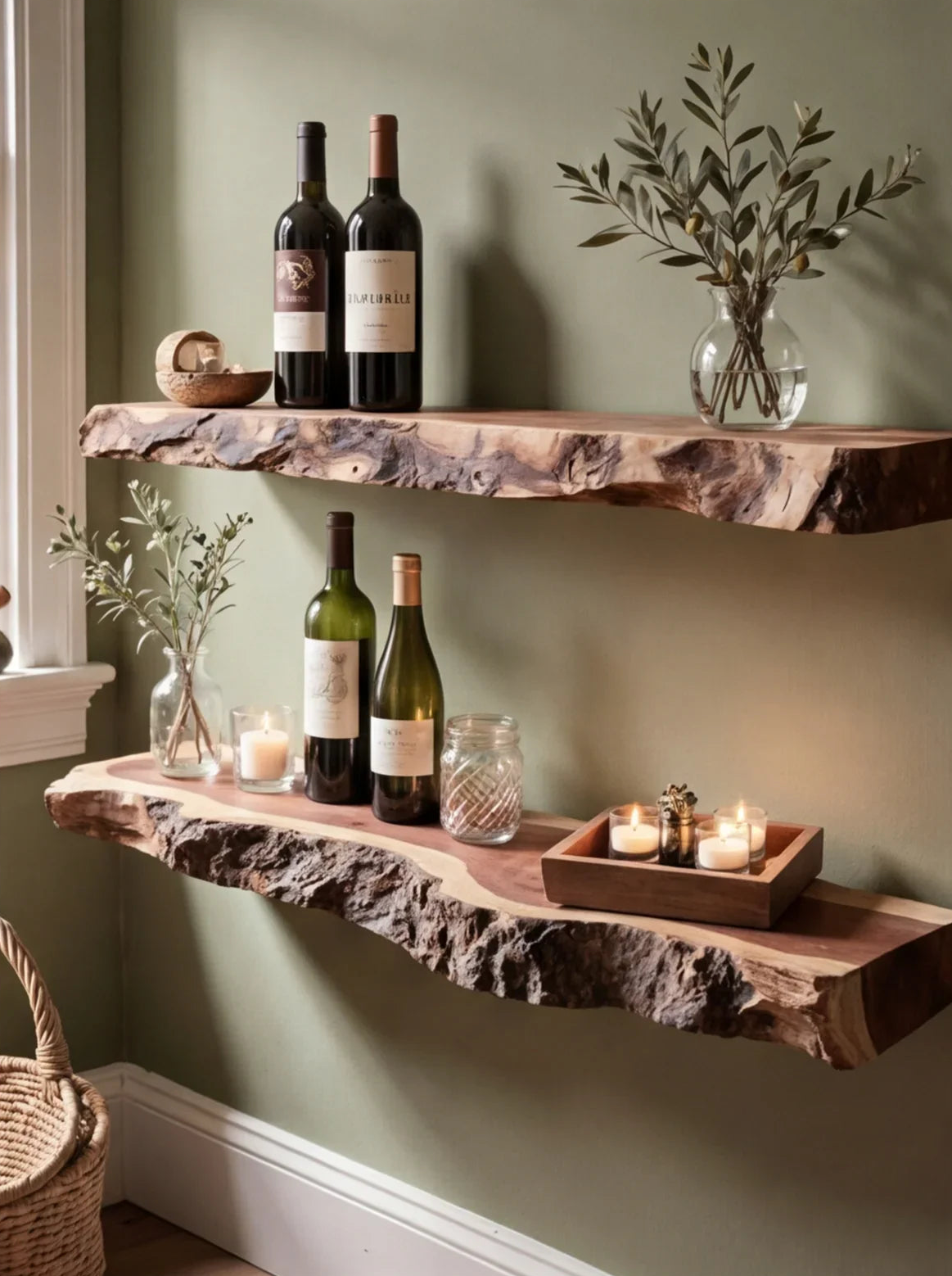
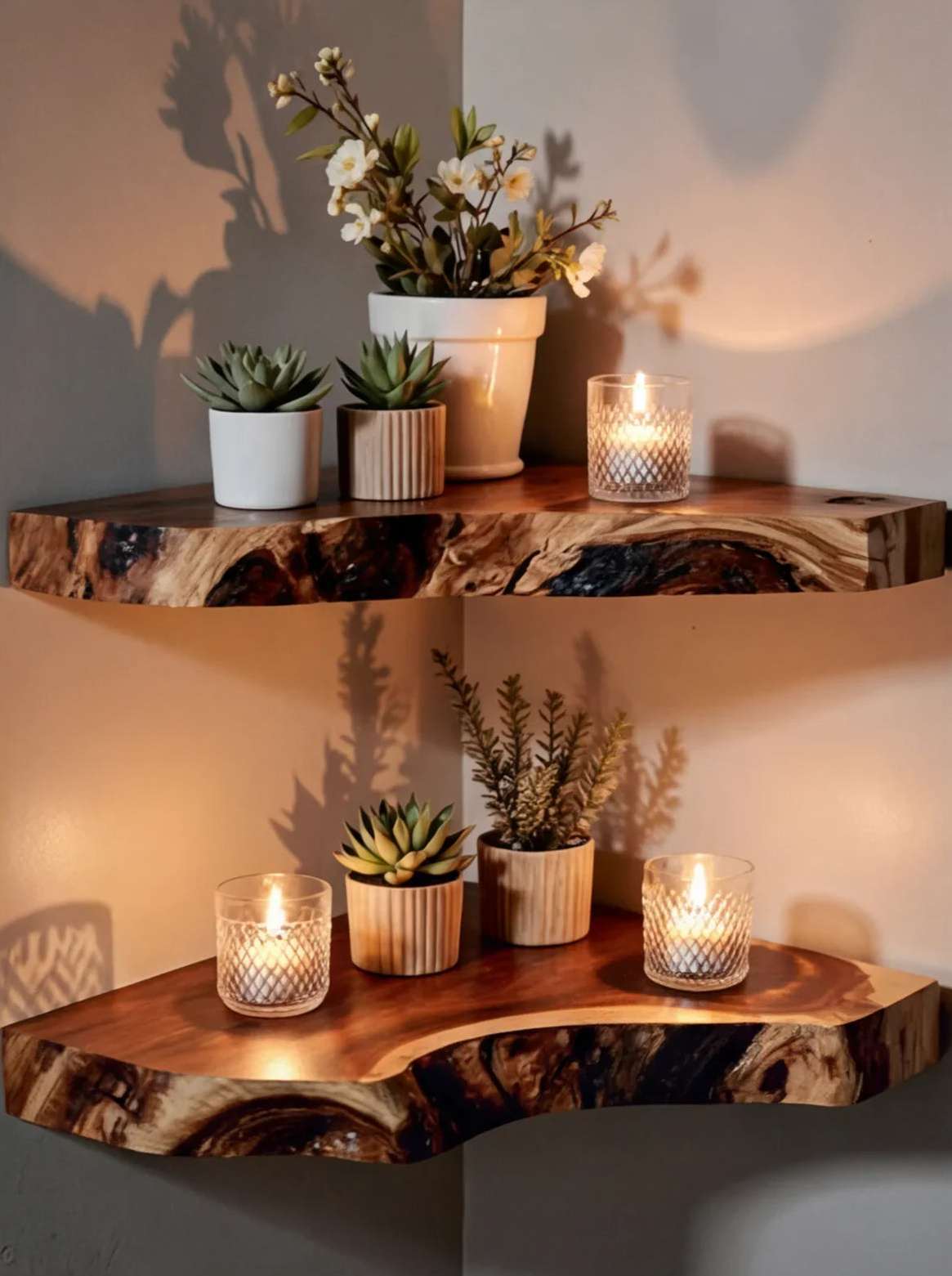
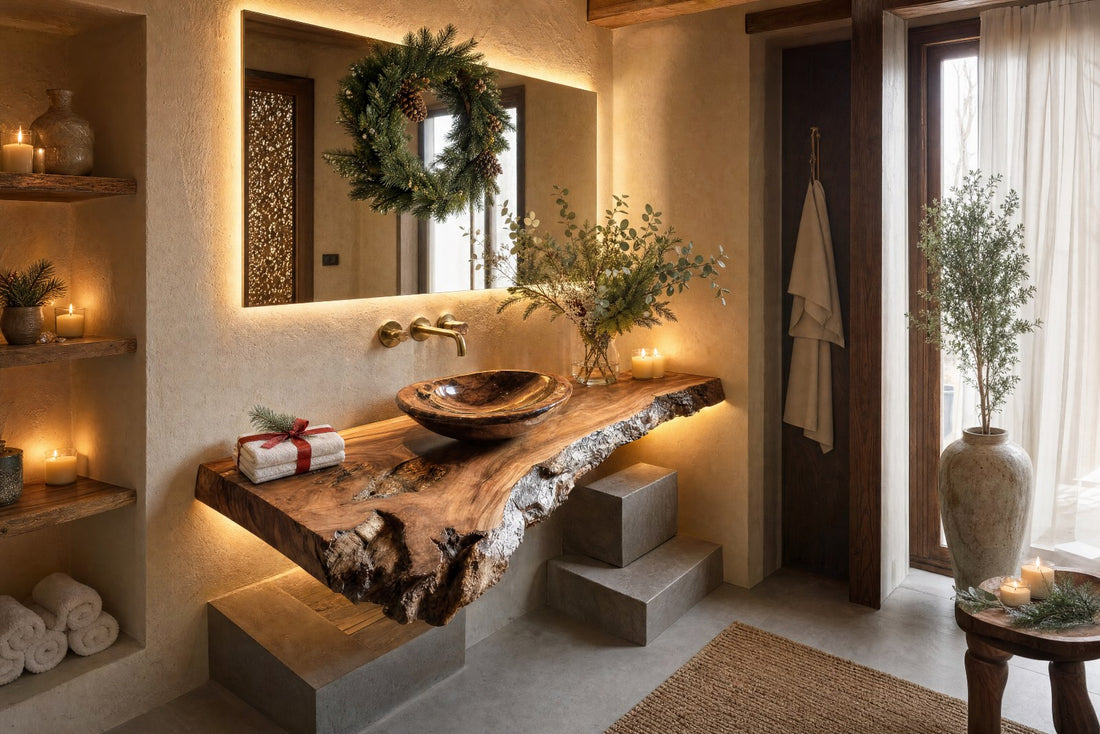
A live edge desk preserves the natural outer contour of the tree along one or both sides of the slab, showing the organic shape of the trunk or branch where the bark once grew. This edge is irregular, curved, and sometimes includes bark - it's the literal "living edge" of the tree before it was milled.
What live edge does not mean: rustic, rough, or unfinished. A properly crafted live edge desk has a glass-smooth working surface. The top is sanded through progressive grits - 80, 120, 180, 220, and sometimes 320 - then sealed with oil, lacquer, or epoxy. Only the edge retains its raw character. The workspace itself is as smooth as any conventional desk.

A live edge standing desk follows the same principle, typically cut to a thinner profile (1.5-2 inches vs 2-3 inches for seated desks) to reduce weight on the adjustable frame. We offer both configurations in our desk collection.
Grain Direction: The Invisible Factor That Determines Everything
Grain direction is the single most important structural consideration for a live edge desk, and it's the one most buyers never think about. Here's what happens inside the wood.

Straight grain runs parallel to the long axis of the slab. Straight-grained slabs are the strongest configuration for a desk - they resist bowing and maintain flatness over decades. When you set a 30-lb monitor on a straight-grained desk, the load transfers evenly through the wood fibers to the legs. We've written a full breakdown in our floating desk ideas post.
Interlocked grain weaves back and forth, creating a ribbon-like shimmer on the surface (especially in species like sapele and African mahogany). Visually stunning, but harder to flatten during finishing and slightly more prone to movement with humidity changes. Functional for a desk, but needs more careful climate control.
Wild grain (also called figured or spalted) includes knots, burls, and irregular fiber patterns. These slabs produce the most dramatic visuals - each knot tells a story of a branch that once grew there. The trade-off: wild grain areas are weaker under concentrated load and harder to sand flat. For a desk, wild grain works best at the edges rather than under the primary workspace.
In our workshop, we orient slabs so straight grain dominates the center workspace and any wild grain falls toward the live edge. This gives you the beauty at the edge and the structural integrity where you actually work.


Bark Inclusion: Keep It or Strip It?
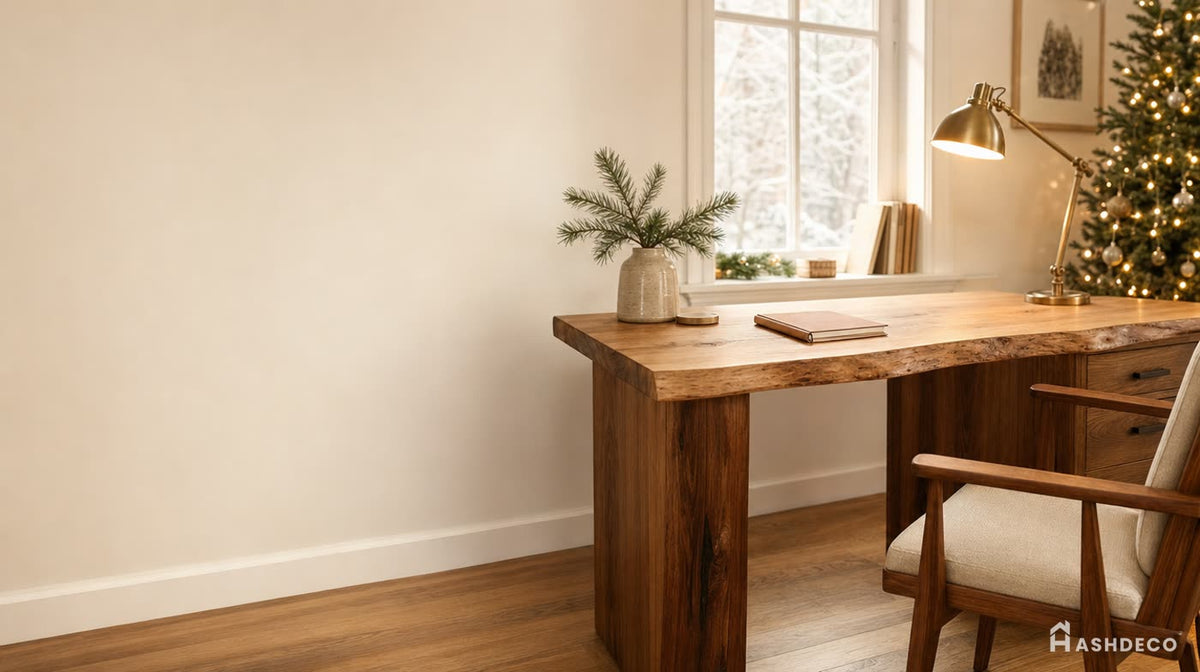
The bark on a live edge is a design choice, not a given. Here's the honest breakdown from someone who handles bark every day.
Bark-on: The full natural look. Fresh bark is firmly attached and adds 0.5-1 inch of visual thickness to the edge. The problem: bark loosens over time. Temperature changes, humidity shifts, and simple aging cause bark to separate from the sapwood beneath it. Even with CA glue stabilization (the standard preservation method), bark-on edges have a 3-5 year window before requiring maintenance.
Bark-off, natural edge preserved: We strip the bark but keep the wavy contour of the sapwood beneath. This gives you the organic edge profile without the maintenance liability. The sapwood surface is sanded smooth, showing the transition between sapwood (lighter) and heartwood (darker). This is our most recommended configuration for desks.
Bark-off, edge cleaned: The bark and loose sapwood are removed, and the edge is smoothed into a gentle curve. Less dramatic than a full natural edge, but zero maintenance and a more consistent feel when you rest your forearms on the desk edge during long work sessions.
For a live edge standing desk specifically, bark-off is almost always better. Standing desks get bumped, brushed against, and occasionally leaned on. Loose bark sheds fragments onto the floor. If you're weighing your options, our guide on live edge desk ergonomic guide breaks it down further.
Sapwood vs Heartwood: Understanding the Color Divide
Every live edge slab shows two distinct zones of color, and understanding them helps you pick a desk that matches your space.
Heartwood is the dense, mature core of the tree. In walnut, it's rich chocolate brown. In ash, it's warm honey gold. In cherry, it ranges from salmon pink to deep reddish brown. Heartwood is denser, more stable, and more resistant to moisture. It makes up the majority of your desk surface.
Sapwood is the outer ring of lighter wood just beneath the bark. In walnut, sapwood is cream to pale tan - a stark contrast against the dark heartwood. In ash, the difference is subtle. Sapwood is less dense and slightly more susceptible to staining and moisture penetration.
For desk use, here's the key: the sapwood strip along the live edge is typically 1-4 inches wide. Some buyers love the contrast - the light sapwood band against dark heartwood creates a natural border that highlights the live edge shape. Others prefer to minimize sapwood visibility for a more uniform look.
We can orient the slab to show more or less sapwood. If a client wants minimal contrast, we select slabs where the heartwood extends closer to the edge. For maximum drama, we choose slabs with a wide, bright sapwood band. This is the kind of customization that's only possible when you're hand-selecting each piece, not pulling from a factory SKU.
Don't miss
These pieces qualify for 10% off orders over $2,000. Applied automatically at checkout.
10% off
Live Edge L-Shaped Desk – Handmade Solid Wood Corner Desk for Home Office
From $2,340.00
10% off at checkout
10% off
Handmade Live Edge Desk – Rustic Solid Wood Office Workstation for Home or Studio
From $2,860.00
10% off at checkout
 10% off
Sculptural Organic Solid Wood Vanity Desk – Modern Japandi Makeup & Writing Table
From $2,576.00
10% off at checkout
10% off
Sculptural Organic Solid Wood Vanity Desk – Modern Japandi Makeup & Writing Table
From $2,576.00
10% off at checkout
 10% off
Modern Live Edge L Shaped Desk For Study Room
From $2,340.00
10% off at checkout
10% off
Modern Live Edge L Shaped Desk For Study Room
From $2,340.00
10% off at checkout
Natural Voids, Cracks, and Knots: Defects or Features?
In mass-produced furniture, any crack, void, or knot is a defect. In live edge work, they're design elements - when handled correctly. Here's how to evaluate them for a desk.
Knots are where branches grew from the trunk. Small, tight knots (under 1 inch) are purely cosmetic and structurally sound. Larger knots (over 2 inches) may have voids behind them and should be stabilized with clear epoxy. For a desk, knots in the workspace area are fine if they're filled flush - your pen won't catch, and a mousepad sits flat.
Checks and cracks form as the slab dries. End checks (cracks at the slab ends) are normal and trimmed during final sizing. Through-cracks that run across the slab need butterfly keys (inlaid wooden bowties) or epoxy fills. Both are standard repair methods, and butterfly keys have become a prized design element in their own right.
Voids are gaps where wood was absent - usually where a branch fell away or insect activity occurred. Our artisans fill voids with tinted or clear epoxy, sanded flush. A well-filled void on a desk surface is smooth to the touch and structurally indistinguishable from solid wood. Some clients request colored epoxy (deep blue is popular) to turn voids into accent features.
The rule of thumb: a defect within 4 inches of the desk edge is a feature. A defect in the center of the workspace should be filled flush and level. Our coffee tables and console tables use the same evaluation criteria.
The Decision Framework: Picking Your Live Edge Desk
After evaluating hundreds of slabs in our workshop, here's the framework we recommend for narrowing your choice.
Step 1: Determine your desk width. Standard desk depth is 24-30 inches. A slab must be at least this wide at its narrowest point after live edge contouring. Slabs that taper below 22 inches won't provide adequate workspace.
Step 2: Choose your edge profile. Both edges live (book-matched or single slab), one edge live and one straight-cut, or one edge live with the opposite against a wall. For standing desks, one live edge facing outward is the most practical configuration.
Step 3: Decide on bark. Bark-on for maximum natural character (with maintenance acceptance), bark-off natural contour for the best balance, or bark-off cleaned for zero-maintenance. This is a lifestyle decision, not an aesthetic one.
Step 4: Select wood species by color palette. Walnut for dark, warm spaces (Janka hardness: 1,010 lbf). Ash for light, airy rooms (1,320 lbf). Cherry for warm-toned rooms that will deepen beautifully over years (950 lbf). Harder species resist dents from keyboards, coffee mugs, and everyday desk use.
Step 5: Evaluate the grain. Ask for photos (or better, video) that show the grain pattern at the center and edges. Straight grain in the center, character at the edges. If you're ordering custom, your maker should be able to photograph the specific slab designated for your desk.
Step 6: Confirm thickness. Seated desks: 1.75-2.5 inches provides substance without excessive weight (a 60 × 30-inch walnut slab at 2 inches thick weighs approximately 55-65 lbs). Standing desk tops: 1.5-2 inches keeps the total assembly under 80 lbs for most frames.
FAQ
How much does a live edge desk weigh? A typical 60 × 30-inch live edge walnut desk top weighs 55-65 lbs at 2-inch thickness. Ash is slightly lighter at 45-55 lbs for the same dimensions. Add 30-50 lbs for the base or frame. Total assembled weight ranges from 85-115 lbs depending on species and base style.
Can you use a live edge slab with a standing desk frame? Yes. Most adjustable standing desk frames (Uplift, FlexiSpot, Fully Jarvis) accommodate tops up to 80 inches wide and support 250-350 lbs. A live edge slab mounts using the same bolt pattern - you drill through the slab from below into the frame's mounting holes. Use a 1.5-2 inch thick slab to stay within frame weight limits.
Does a live edge desk warp over time? Properly kiln-dried and sealed slabs remain stable for decades. The key factors: moisture content at time of finishing should be 6-8% (kiln-dried standard), the slab should be sealed on all six sides (top, bottom, ends, and edges), and indoor humidity should stay between 35-55%. Without these conditions, movement of 1/16 to 1/8 inch across a 30-inch width is possible seasonally.
How do I clean a live edge desk? For oil-finished surfaces: wipe with a damp (not wet) microfiber cloth, dry immediately. Reapply maintenance oil every 6-12 months. For lacquer or poly finishes: any standard wood cleaner works. Avoid silicone-based polishes - they create a film that prevents future refinishing. For the live edge itself: dust with a soft brush to avoid catching bark fragments.
What's the difference between a live edge desk and a butcher block desk? Butcher block is made from strips of wood glued edge-to-edge, creating a uniform, flat surface with no natural edge profile. Live edge is a single slab (or book-matched pair) that preserves the tree's natural contour. Butcher block is more affordable and consistent; live edge is unique and character-driven. Both are solid wood, but they serve different design intents.