How to Choose a Coffee Table by Style: Japandi, Modern & More
A coffee table can match your sofa and still look wrong. Height is fine. Length is fine. The room still feels off because the table is speaking a different style than the rest of the furniture.
This is a style filter, not another size chart. Use it after you already know the table will fit. If you have not measured yet, start with our coffee table height vs sofa height guide and the coffee table dimensions guide. Then come back here and pick the silhouette.
As a handmade furniture brand, we build solid wood tables for rooms that mix Japandi, organic modern, mid-century, and farmhouse pieces in the same house. The pattern we see: people buy the "pretty" table from a mood board, then fight it for two years because the legs, edge, and wood tone do not match how the room actually works.
- The 4 checks that matter more than Pinterest labels
- Japandi coffee table
- Organic modern coffee table
- Mid-century modern
- Scandinavian
- Modern farmhouse and rustic
- Minimalist and contemporary
- Quick match: sofa type to table style
- Wood tone: the fastest way to get the style wrong
- One table, mixed styles
- Buying checklist
- FAQ
The 4 checks that matter more than Pinterest labels
Style names leak. Japandi shops sell live-edge slabs. Organic modern shops sell thin metal frames. Ignore the collection name. Check these four things on the table in front of you.
- Height relative to the sofa seat. Most sofas sit 17-19 inches. The table should land within 1-2 inches of that seat height, usually 16-18 inches. Japandi rooms often go a little lower. Farmhouse rooms often go a little higher. Do not drop 4 inches below the seat unless you like reaching for drinks.
- Length relative to the sofa. Aim for about two-thirds of the sofa length. An 84-inch sofa wants a table around 54-60 inches, not a 36-inch cube floating in the middle.
- Edge and legs. Sharp square edges read modern. Soft radius edges and live edges read organic. Hairpin or tapered legs read mid-century. Thick block or tree-stump bases read rustic.
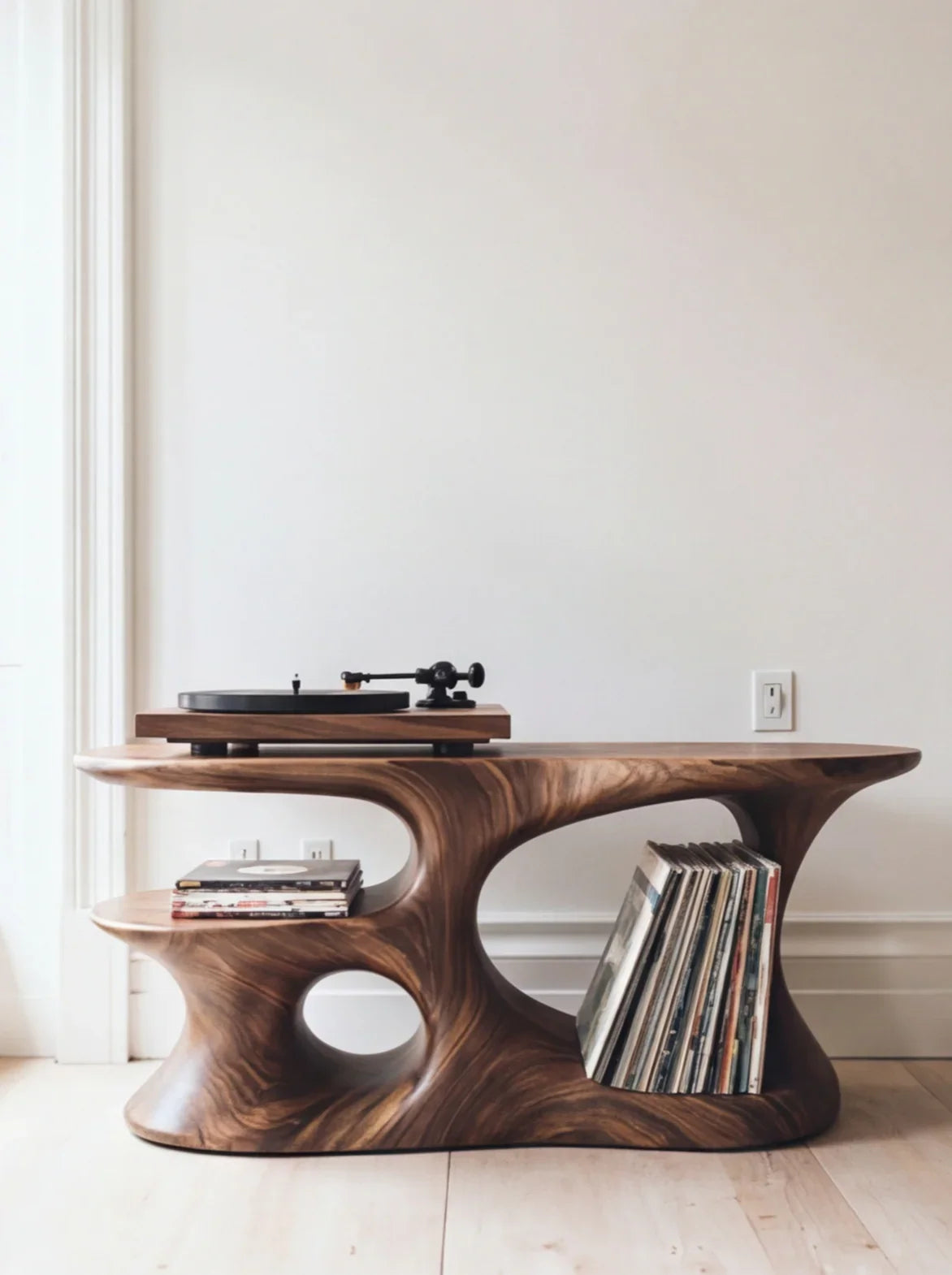
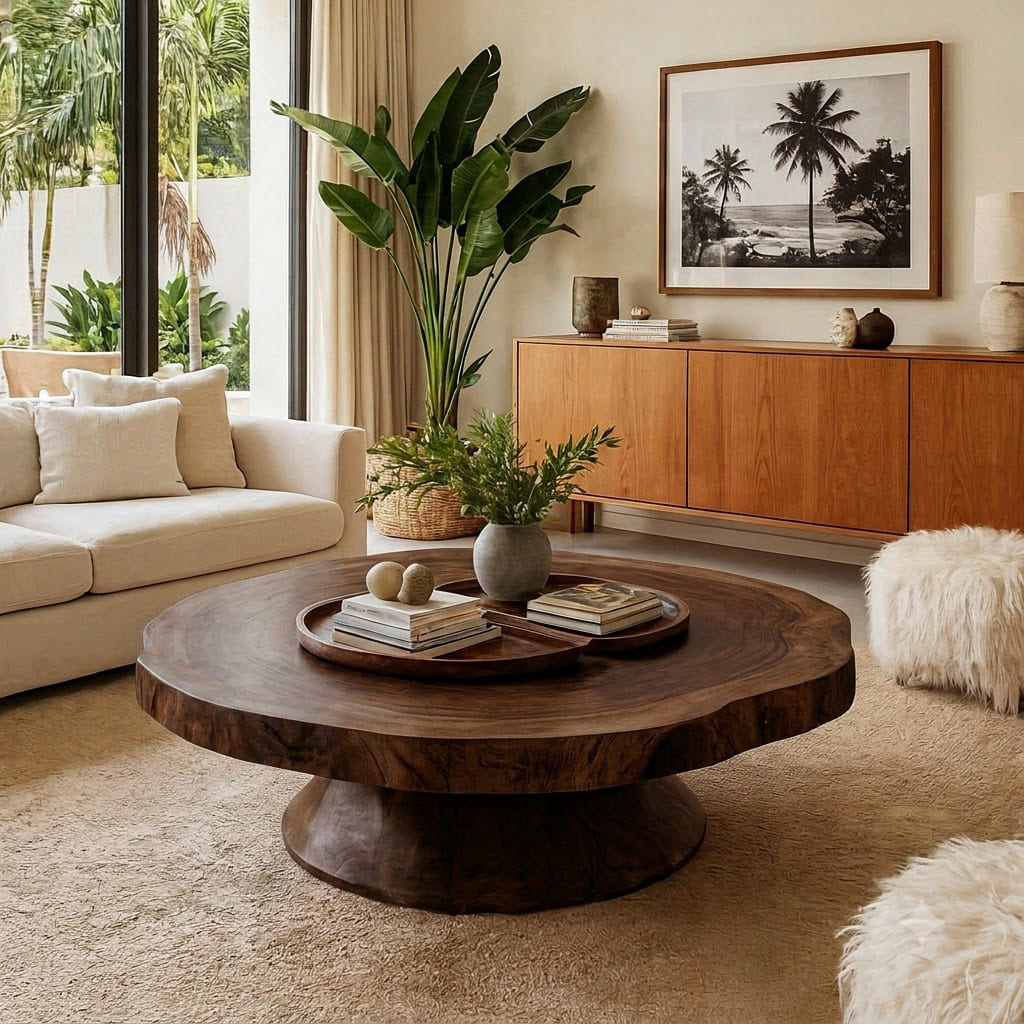
- Visual weight. A thick walnut slab on a sculptural base fills a large room. The same slab in a small apartment eats the floor. Light oak on slim legs leaves air under the table. That air is the style.
If the table fails check 1 or 2, style will not save it. Confirm fit first with Does This Coffee Table Fit Your Sofa?

Japandi coffee table: low, quiet, one material
Japandi wants fewer objects and more grain. The table should look like it was always there, not like a display.
What to pick:
- Height: 14-17 inches if your sofa is low. Stay at 16-18 inches if you have a standard Western sofa. Do not copy a 12-inch Japanese floor table unless you sit on the floor.
- Shape: oval, round, or a rectangle with eased corners. Hard 90-degree corners fight the calm.
- Wood: white oak, ash, walnut with a matte or oil finish. High-gloss lacquer is the wrong family.
- Base: simple four legs, a light trestle, or a quiet pedestal. Avoid chrome X-bases and chunky farmhouse stretchers.
- Styling: one ceramic, one book stack, empty space. If you need a tray of remotes, the table is already too busy for Japandi.
What to skip: distressed paint, heavy hardware, glass boxes with metal frames, pumpkin or mushroom novelty bases.
Japandi is not "any light wood." Pale oak with a live edge can still be too wild if the edge is jagged and the slab is 3 inches thick. Keep the edge honest but controlled. For the broader room rules, see Japandi interior design.
A curved solid wood table with storage can work if the drawers sit flush and the hardware disappears. Example: the curved Japandi-style coffee table with storage. Storage is allowed. Visible clutter is not. Browse more pieces tagged for the style in Japandi coffee tables.

Organic modern coffee table: curve first, then grain
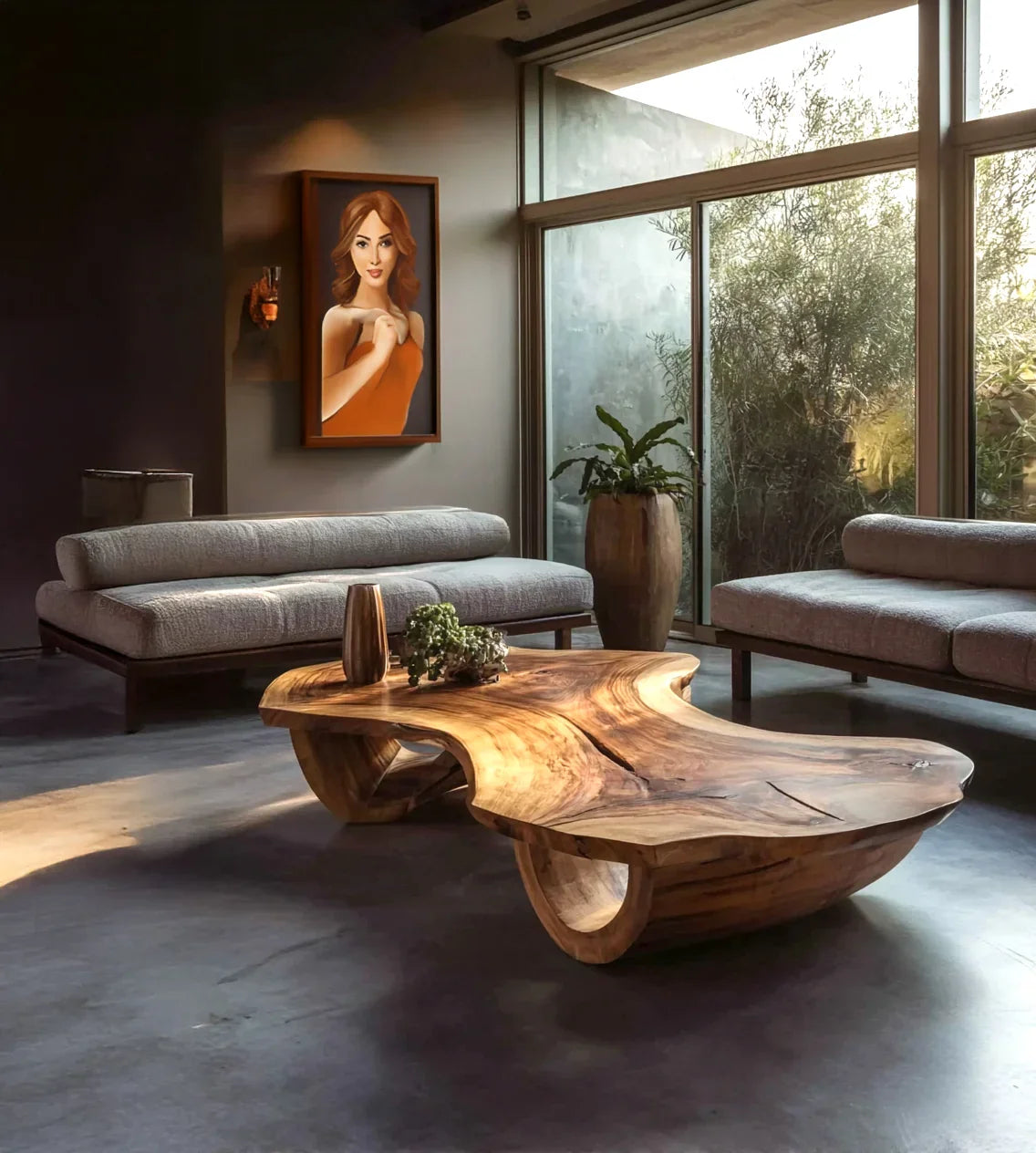
Organic modern is Japandi's louder cousin. Still natural. Still muted color. But the form can be sculptural. Think river stone, not shoji screen.
What to pick:
- Height: 16-18 inches. Keep it usable. Sculpture that sits at 12 inches becomes a shin-breaker and a reach.
- Shape: round, kidney, freeform, or a live-edge slab. Rectangles work if at least one edge is irregular or the base is sculptural.
- Wood: walnut, acacia, teak, or oak with visible grain. Stone or plaster tops also fit, but they scuff and they are cold with bare feet.
- Base: sphere, stump, carved block, or a single organic pedestal. Four skinny metal legs under a wild slab usually look unfinished.
- Styling: 2-3 objects max. Let the table be the object.
What to skip: ornate traditional legs, marble with gold veining, glass-on-chrome sets from 2014.
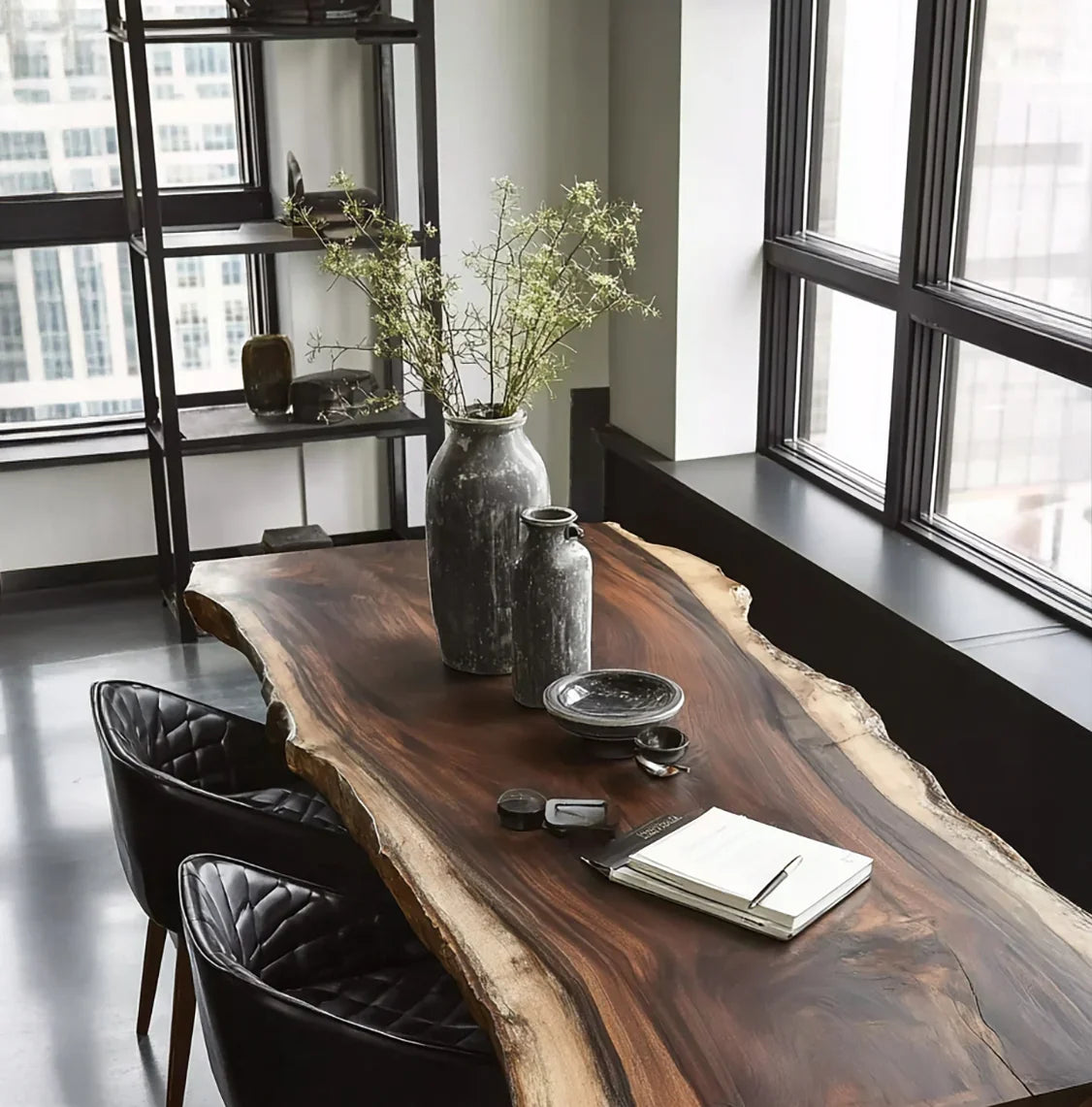
Live edge is the easy organic modern move, and it is also the easy mistake. A raw bark edge in a tailored room looks like a leftover slab, not a design choice. If you want live edge, pick a sanded, sealed edge with a clear silhouette. Start with the live edge coffee table buyer's guide and the round vs rectangular live edge comparison.
Round organic bases help small rooms because there is no corner to clip when you walk past. A spherical-base live edge coffee table reads organic without needing a 7-foot slab. See the full range in organic modern coffee tables.

Mid-century modern: taper, lift, and a thinner top
Mid-century coffee tables look lighter than they are. The trick is lift. Legs taper. Tops are thinner than farmhouse slabs. You should see floor under the table.
What to pick:
- Height: 15-17 inches is classic. Many vintage pieces sit lower than today's sofas, so measure your seat first.
- Shape: kidney, oval, round, or a rectangle with rounded corners. Boat-shaped tops are period-correct if you like them.
- Wood: walnut is the default. Teak if you want a warmer, slightly greener brown. White oak if the room is already dark.
- Legs: tapered wood, hairpin, or a slim sled. Thick turned legs pull it toward traditional.
- Styling: one tray, one object. MCM rooms get messy fast because the table is visually quiet.
What to skip: live-edge bark, chunky farmhouse aprons, rustic distressing.
If your sofa is a boxy modern sectional, a pure 1950s kidney table can look like a prop. Pair it with a sofa that has visible legs, or pick a round wood top with tapered legs and skip the period accessories. More on that mix in the mid-century coffee table guide. Browse tapered-leg options in mid-century coffee tables.

Modern farmhouse and rustic: thicker top, honest wear, still walkable
Farmhouse tables fail when they are too tall, too long, or too "theme." A 20-inch-tall table with a 3-inch top next to a 17-inch sofa seat is a wall, not a table.
What to pick:
- Height: 17-19 inches. Match a deeper sofa.
- Shape: rectangle or round. Oval if the room is tight.
- Wood: oak, pine (expect dents), acacia, walnut if you want farmhouse without the beige kit.
- Edge: eased or live edge. Sharp modern edges look cheap on a thick rustic top.
- Base: trestle, turned legs, or a solid stump. Leave at least 12 inches of knee space if people sit on the floor with kids.
What to skip: fake barn-door hardware on a 40-inch table, white-and-grey distressed finishes that chalk off, glass inserts.
For room ideas, see rustic coffee table ideas and live edge coffee table as a statement piece. A handcrafted live edge wood coffee table sits in this lane when the room already has texture (linen, plaster, iron).

Minimalist and contemporary: fewer parts, tighter tolerances
Minimalist tables look easy and are not. Every joint shows. A 2mm gap in the apron is louder than a live edge knot.
What to pick:
- Height: 16-18 inches.
- Shape: rectangle or round. No novelty.
- Wood: walnut or oak with a dead-flat top and a consistent color. Painted tables only if the paint is furniture-grade, not landlord white.
- Base: hidden, panel, or a clean cylinder. No extra stretchers "for style."
- Styling: one object or nothing.
What to skip: slatted everywhere, mixed metal + wood unless the metal is one thin line, storage cubbies that become junk drawers.
If you need storage, hide it. Drawers with no pulls beat open shelves in a minimalist room. Browse clean-lined options in minimalist coffee tables.

Quick match: sofa type to table style
| Sofa | Table that usually works | Table that usually fights |
|---|---|---|
| Low linen sofa, wood legs | Japandi oval oak, MCM tapered walnut | Tall farmhouse trunk table |
| Deep sectional, skirted base | Organic modern round or large rectangle | Tiny hairpin table |
| Leather mid-century sofa | Walnut MCM or quiet Japandi | Distressed farmhouse |
| Slipcovered farmhouse sofa | Rustic live edge or thick oak rectangle | Glass and chrome |
| Tight apartment sofa | Round 30-36 inch, light legs | 60-inch slab |
Small rooms still need style, just a smaller footprint. See small coffee table ideas for apartments and round coffee table buyer's guide.

Wood tone: the fastest way to get the style wrong
People match wood to wood and then wonder why the room went muddy.
- Japandi: keep the coffee table within one or two shades of the floor, or go clearly darker (walnut on oak floors). Avoid orange pine.
- Organic modern: contrast is allowed. Walnut slab on pale oak floors is a common, good pairing.
- Mid-century: walnut on walnut can work if the grains differ (floor vs furniture). If both are the same red-brown, add a rug.
- Scandi: stay light. A dark table instantly reads as a different style.
- Farmhouse: mixed woods are normal. Keep undertones in the same family (all warm, or all cool). Warm oak plus cool grey-washed pine looks accidental.
Finish matters as much as species. Oil and matte conversion varnish keep grain visible. Thick plastic-looking polyurethane is what makes a decent oak table look like a catalog leftover. More on materials in the solid wood coffee table buying guide.
One table, mixed styles (this is most real homes)
Most living rooms are not a single mood board. A leather MCM sofa, a jute rug, and white walls is already three styles. Pick the table to agree with the dominant line, not with every object.
Rule we use in custom orders:
- If the sofa has visible legs, pick a table with visible legs (Japandi, Scandi, MCM).
- If the sofa is a heavy skirted block, pick a table with a heavier base (organic modern, farmhouse).
- If the room already has one live-edge piece, do not add a second live-edge coffee table. One organic object is enough. Two is a theme park.
Browse current pieces in coffee tables and live edge coffee tables. If you are still deciding shape for the whole room, coffee tables for living room covers layout, not just style.
Buying checklist (print this, ignore the rest)
- Sofa seat height: _____ inches. Table height target: seat height minus 0-2 inches.
- Sofa length: _____ inches. Table length target: about 2/3 of that.
- Walkway in front of the sofa: at least 18 inches, 24 if people cut through the room.
- Style lane: Japandi / organic modern / MCM / Scandi / farmhouse / minimal. Circle one. If you circle three, you do not have a style yet. Circle the sofa.
- Edge: square / eased / live. Live edge only if the rest of the room can handle an irregular line.
- Base: legs / pedestal / sculptural. Legs if you need air. Pedestal if kids and corners are a problem.
- Finish: matte. If the sample looks shiny in daylight, keep looking.
FAQ
What coffee table style is Japandi?
Low or standard-height solid wood, quiet legs, matte oak or walnut, almost no decor. See the Japandi interior design guide.
What is an organic modern coffee table?
A table with a natural curve or live edge and a sculptural base, still at a usable 16-18 inch height. Live edge buyer's guide.
Can a live edge table work in a Japandi room?
Yes if the edge is clean, the slab is not oversized, and you style almost nothing on top. Skip barky, rustic slabs.
What size coffee table do I need for my sofa?
About two-thirds the sofa length, and within 1-2 inches of seat height. Full numbers in the dimensions guide.
Round or rectangular for organic modern?
Round if the room is tight or the sofa is a sectional. Rectangular slab if you have a long sofa and a wide walkway. Round vs rectangular live edge.
Does mid-century mix with organic modern?
Yes if you keep one hero: either tapered legs or a sculptural base, not both fighting. Match wood tone first.
What wood is best for a Japandi coffee table?
White oak, ash, or walnut with a matte oil or low-sheen finish. Avoid heavy stain and high gloss.
How do I style a coffee table without wrecking the style?
Japandi and minimal: 1-2 objects. Organic modern: let the table show. Farmhouse can take a tray. Book rules in the coffee table books guide.