























Quick view
- The 3 Numbers That Define a Perfect Sofa-Coffee Table Pair
- How Far From Sofa Should a Coffee Table Be? (By Room Scenario)
- Coffee Table Size for Different Sofa Types
- 5 Mistakes That Make a Coffee Table Look Wrong on Your Sofa
- Shape Matching: Rectangle, Round, Oval, or Square?
- Material & Style Coordination - Making It Feel Intentional
- FAQ
Shop this guide
Handcrafted Coffee Tables, made to order in solid wood.
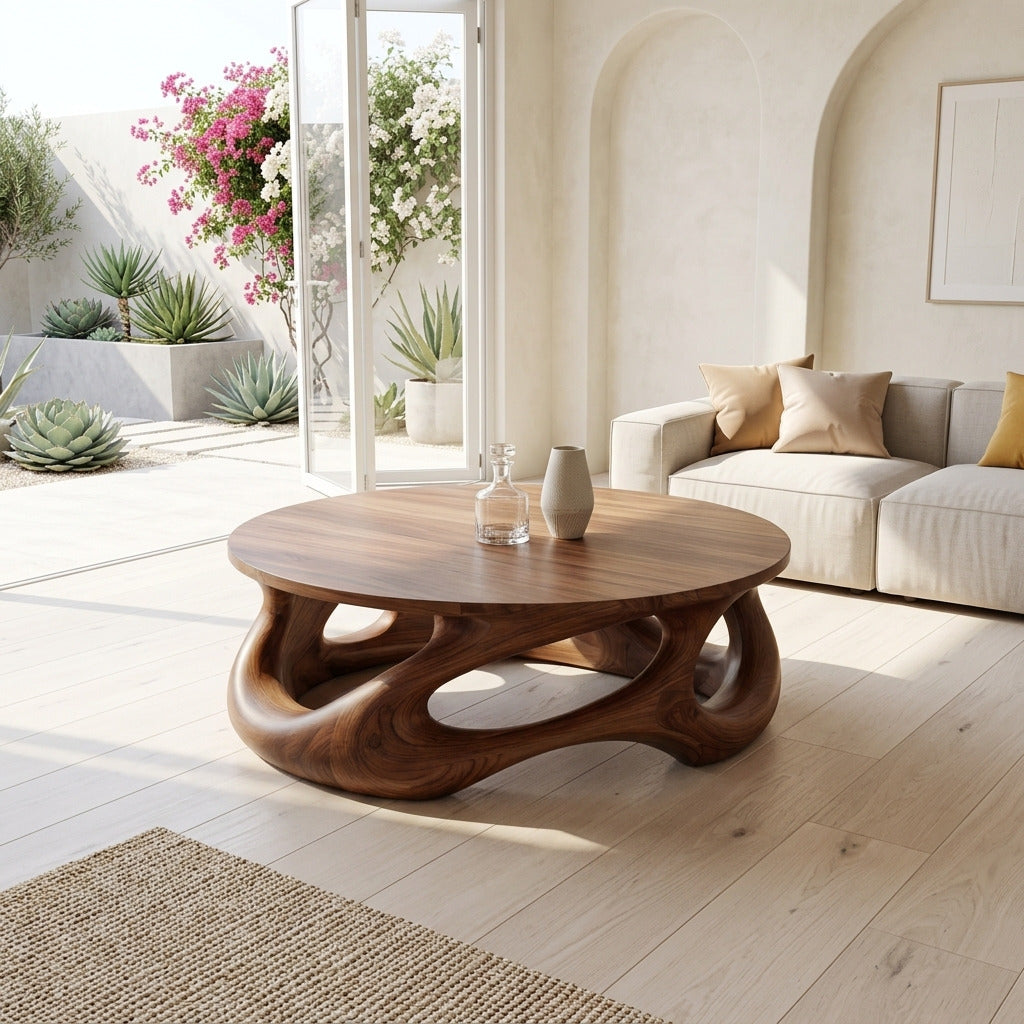
 Round Biomorphic Solid Wood Coffee Table Sculptural Hollowed Center Table
From $2,156.0010% off at checkout
Round Biomorphic Solid Wood Coffee Table Sculptural Hollowed Center Table
From $2,156.0010% off at checkout
 Curved Biomorphic Solid Wood Coffee Table Monolithic Organic Low Table
From $1,789.00
Curved Biomorphic Solid Wood Coffee Table Monolithic Organic Low Table
From $1,789.00
 Christmas edit
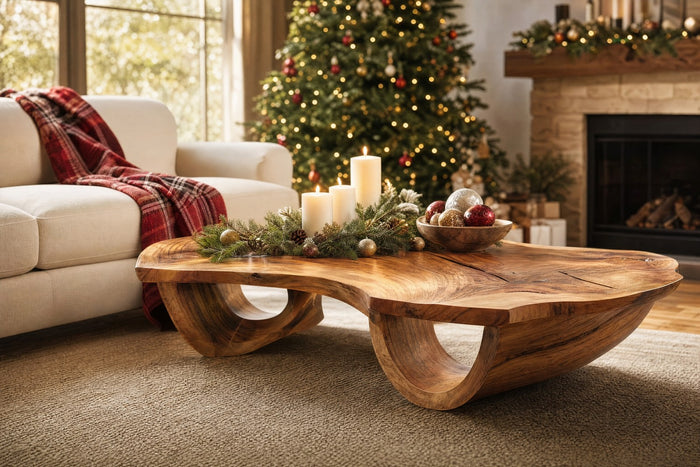
Handcrafted Live-Edge Solid Wood Christmas Coffee Table with Monolithic Tree-Trunk Stump Pedestal Base & Natural Slab Top
From $2,176.0010% off at checkout
Christmas edit
Handcrafted Live-Edge Solid Wood Christmas Coffee Table with Monolithic Tree-Trunk Stump Pedestal Base & Natural Slab Top
From $2,176.0010% off at checkout
 Modern Handcrafted Solid Wood Square Plinth Coffee Table with Open Storage & Architectural Block Pillars
From $1,567.00
Modern Handcrafted Solid Wood Square Plinth Coffee Table with Open Storage & Architectural Block Pillars
From $1,567.00
 Modern Handcrafted Solid Wood Plinth Coffee Table with Cantilevered Top, Storage Cubby & Drawer
From $1,865.00
Modern Handcrafted Solid Wood Plinth Coffee Table with Cantilevered Top, Storage Cubby & Drawer
From $1,865.00
 Sculptural Hand-Carved Tree Root Round Solid Wood Coffee Table & Sprawling Branch Base
From $2,212.0010% off at checkout
Sculptural Hand-Carved Tree Root Round Solid Wood Coffee Table & Sprawling Branch Base
From $2,212.0010% off at checkout
How to Tell If a Coffee Table Fits Your Sofa (Distance, Size & Height Rules)
Getting a sofa coffee table pairing right isn't just about picking something that "looks nice." Three specific measurements determine whether your living room feels polished or awkward - and most people get at least one of them wrong.
This guide gives you the exact numbers: the distance, the length ratio, and the height match, then goes further into sofa-specific sizing, shape matching, and material coordination that our full Solid Wood Coffee Table Buying Guide only touches on briefly.
The 3 Numbers That Define a Perfect Sofa-Coffee Table Pair
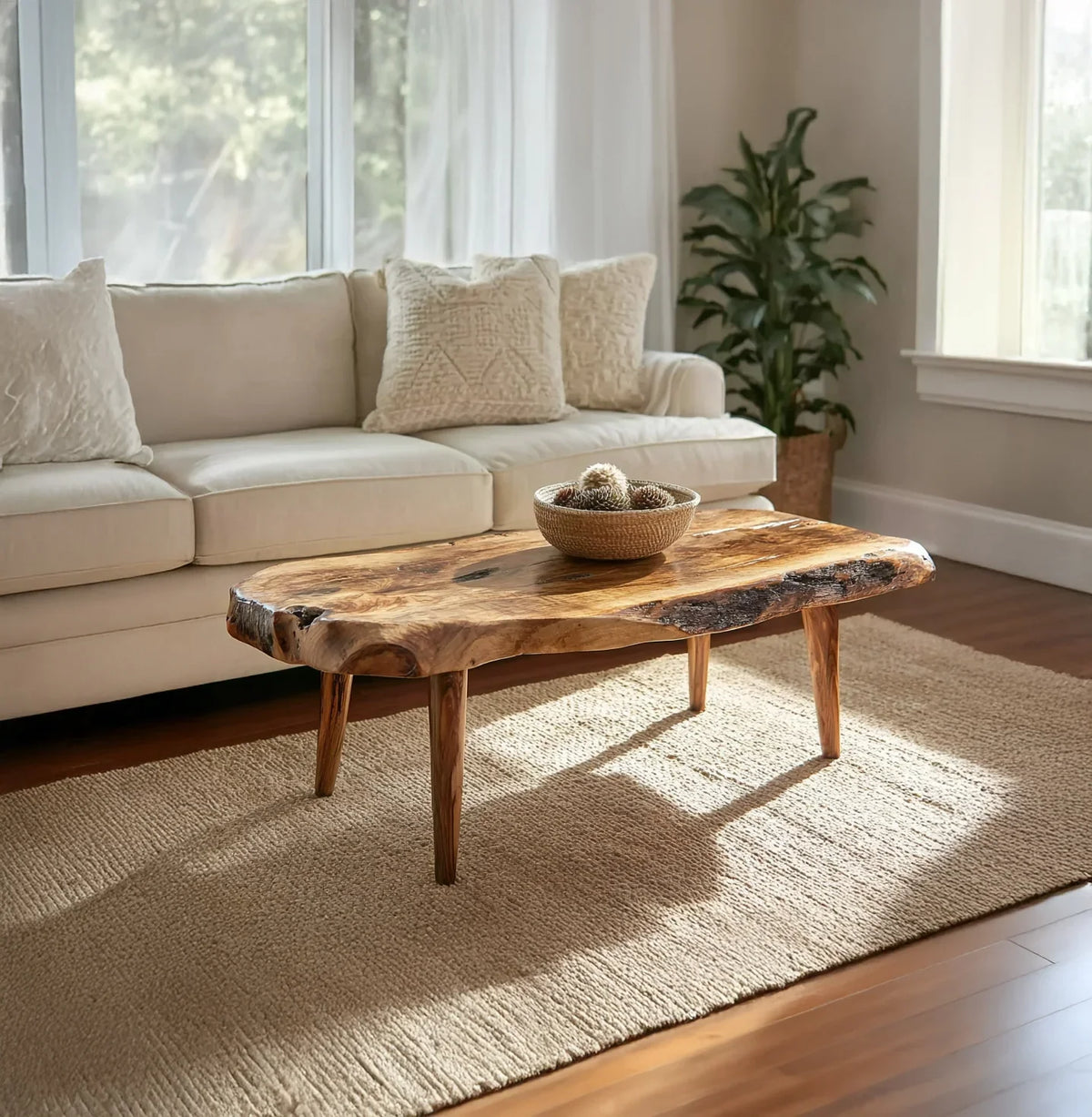
Every well-proportioned living room follows three spacing rules. Here's the cheat sheet:
| Measurement | The Number | Why It Matters |
|---|---|---|
| Distance (sofa edge to table edge) | 14–18 inches | Reachability + legroom + traffic flow |
| Length (table vs. sofa) | ≈ two-thirds of sofa length | Visual balance - neither dwarfs the other |
| Height (table vs. seat cushion) | Same height or 1–2 inches lower | Comfort, sightlines, no shin-banging |
These three numbers are the same clearance and sizing rules covered in depth in our coffee table buying guide - a commonly cited industry range, not something we invented. What that guide doesn't cover is how the numbers shift depending on your specific sofa type, which is what the rest of this article focuses on.
For rooms with small children or pets, lean toward 16–18 inches of sofa-to-table distance to give extra clearance for crawling or running through the space. In tight spaces you can go as low as 12–14 inches, but not less.
How Far From Sofa Should a Coffee Table Be? (By Room Scenario)
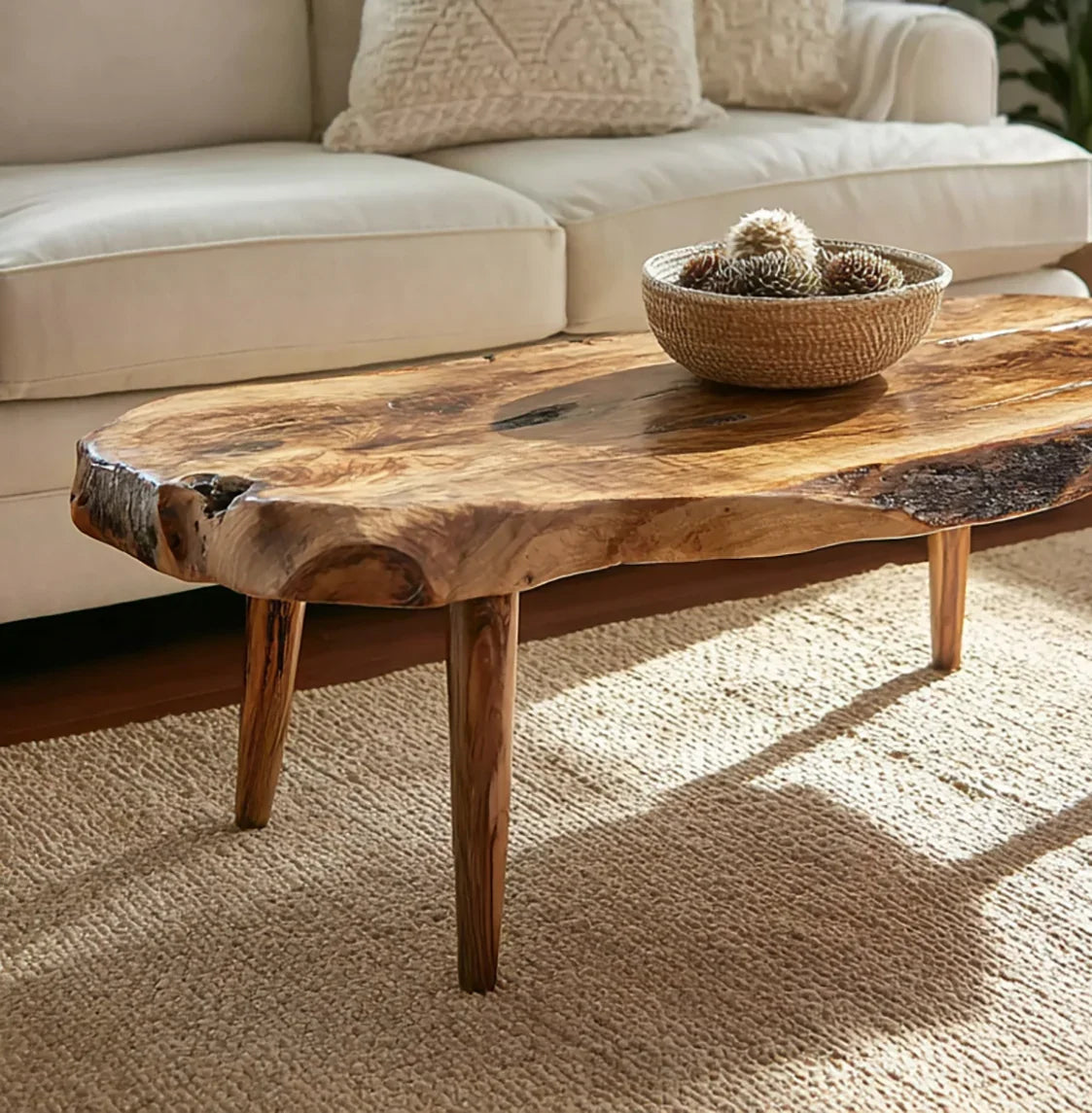
The space between sofa and coffee table isn't one-size-fits-all. Here's how to adjust based on your room's layout:
| Scenario | Recommended Distance | Notes |
|---|---|---|
| Standard living room | 16 inches | The default - works in most cases |
| Small apartment / tight room | 12–14 inches | Minimum viable clearance. Don't go below 12". |
| Large open-plan room | 18 inches | Extra breathing room suits the scale |
| House with toddlers | 16–18 inches | More space for kids to move without tripping |
| Sectional (L-shape) | 14–16 inches | Measure from the shorter leg; consider a round or oval table |
Pro tip: Before buying, use painter's tape or cardboard boxes to mark the table's footprint on your floor at your planned distance. Sit on the sofa. Stand up. Walk past. If the spacing feels natural in the mockup, it will work in reality.
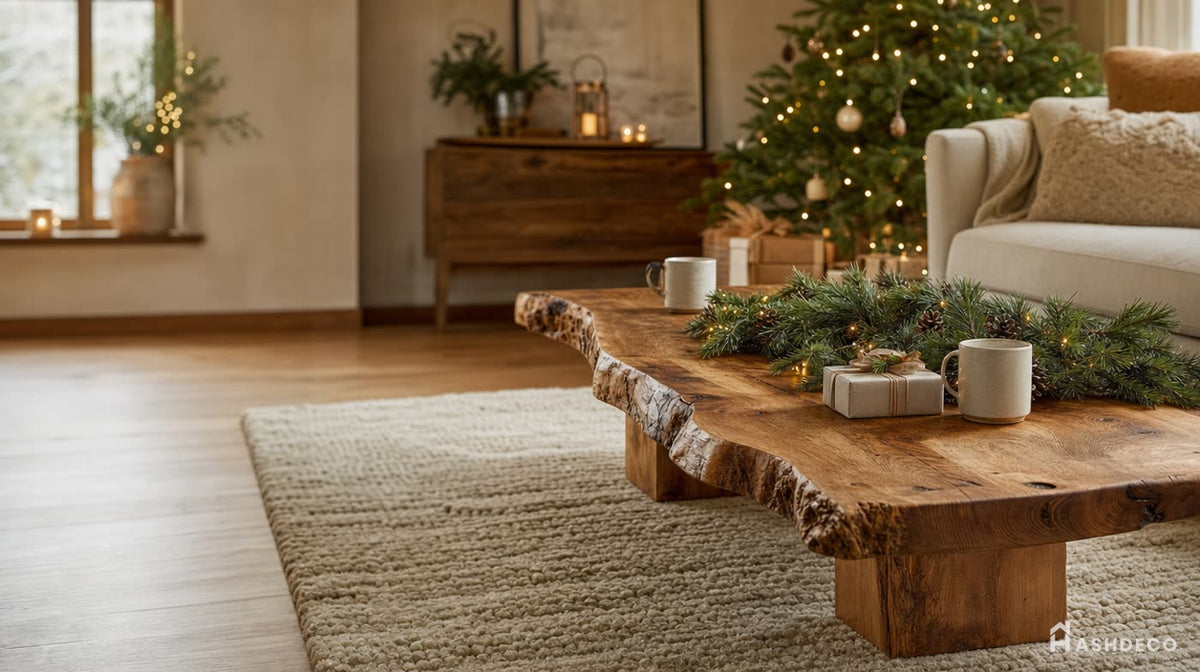


Coffee Table Size for Different Sofa Types
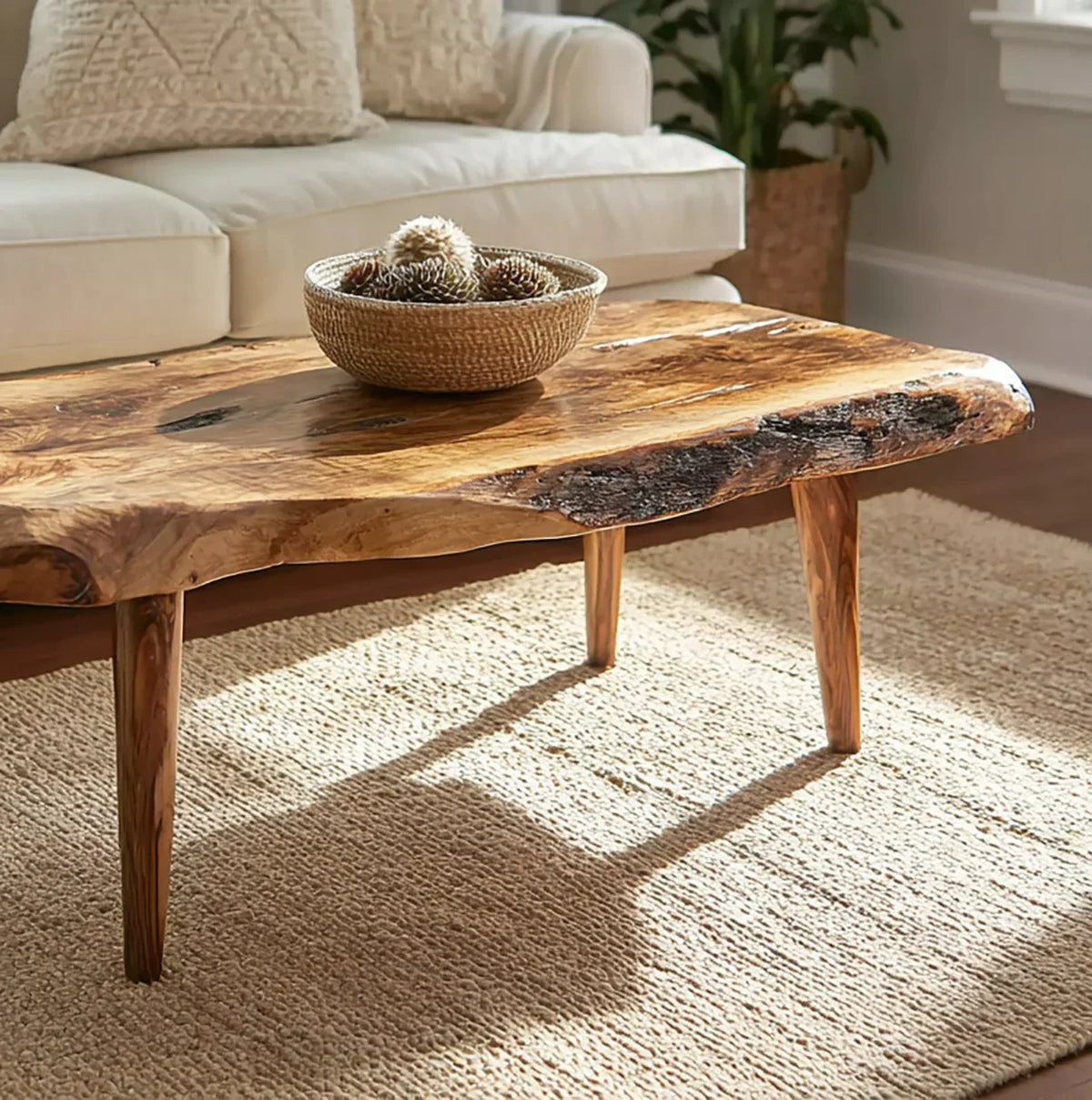
Not every sofa pairs with the same table. Here's a quick reference:
| Sofa Type | Seat Height | Best Table Height | Best Table Shape |
|---|---|---|---|
| Standard 3-seater | 17–19" | 16–18" | Rectangular or oval |
| Mid-century / low-profile | 14–16" | 13–15" | Round or rectangular, slim profile |
| Deep sectional | 18–20" | 16–18" | Round, square, or oversized rectangular |
| Traditional high-back | 19–21" | 17–19" | Rectangular, substantial visual weight |
| Modular / floor-level | 10–13" | 9–12" | Low rectangular, round, or Japanese-style |
For sectionals specifically, a round or oval coffee table softens the hard angles of the L-shape and creates a more natural flow between the two seating zones. If your sectional is large enough, two smaller tables side-by-side can work better than one oversized piece.
5 Mistakes That Make a Coffee Table Look Wrong on Your Sofa
Mistake 1: Table Too Far From the Sofa
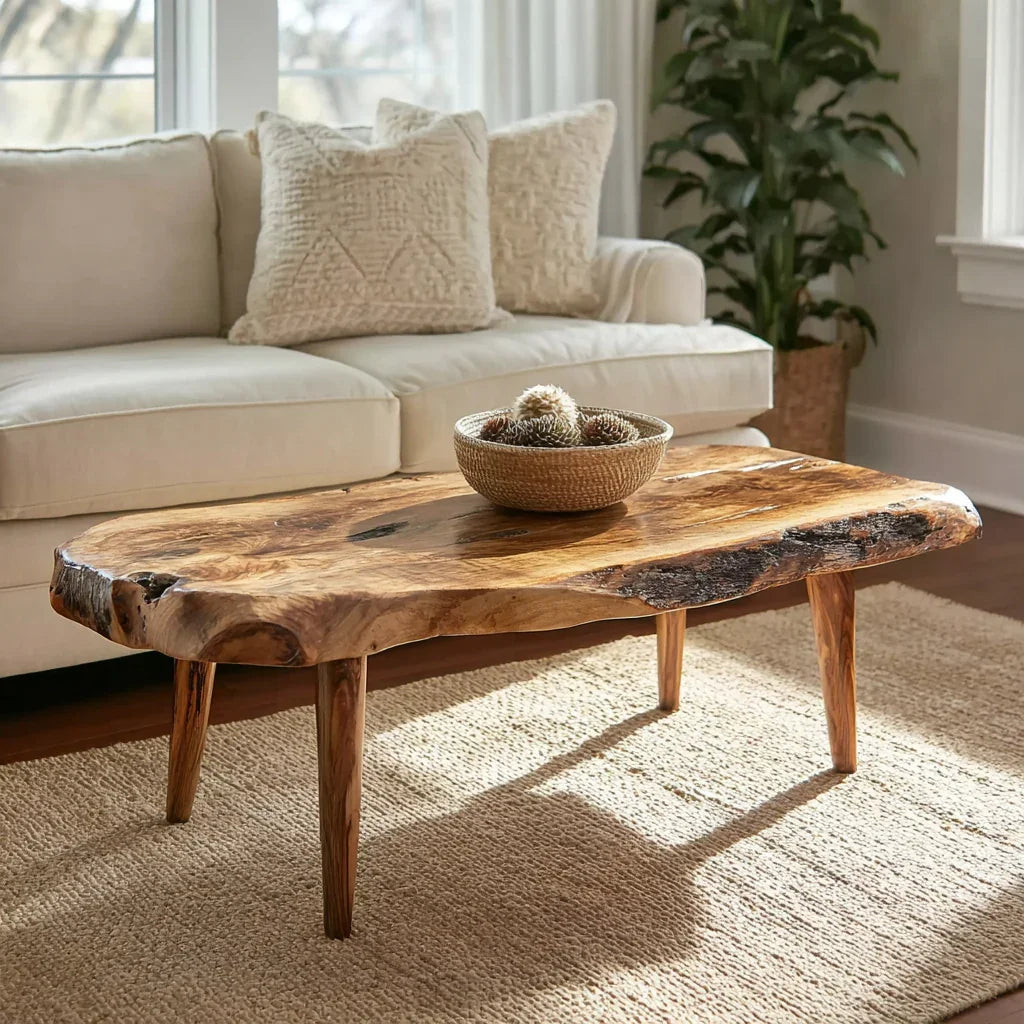
The most common complaint we see: people push the coffee table too far away to "open up" the room. The result? A table you can't reach. Keep the space between sofa and coffee table at 14–18 inches max.
Mistake 2: Table Taller Than the Seat Cushion
A tall coffee table in front of a standard-height sofa looks like the table is wearing the sofa's shoes. It blocks your view across the room and makes the seating zone feel heavy and closed in.
Mistake 3: Tiny Table on a Big Sofa
A 36-inch coffee table in front of a 96-inch sectional looks like a postage stamp. Scale matters - use the two-thirds rule as your minimum.
Mistake 4: Ignoring Walkway Clearance
Even if the sofa-to-table distance is perfect, you still need 18–24 inches of clear walkway on the far side of the coffee table for people to pass through comfortably.
Mistake 5: Clashing Styles Without Intention
A glass-and-chrome modern table in front of a rustic farmhouse sofa can work - but only if the contrast is deliberate and tied together with shared elements (color palette, wood accents, metal finishes). Random mismatch just looks chaotic.
Don't miss
These pieces qualify for 10% off orders over $2,000. Applied automatically at checkout.
10% off
Round Biomorphic Solid Wood Coffee Table Sculptural Hollowed Center Table
From $2,156.00
10% off at checkout
10% off
Handcrafted Live-Edge Solid Wood Christmas Coffee Table with Monolithic Tree-Trunk Stump Pedestal Base & Natural Slab Top
From $2,176.00
10% off at checkout
10% off
Sculptural Hand-Carved Tree Root Round Solid Wood Coffee Table & Sprawling Branch Base
From $2,212.00
10% off at checkout
 10% off
Sculptural Oval Solid Wood Coffee Table with Continuous Infinity Wave Base
From $2,176.00
10% off at checkout
10% off
Sculptural Oval Solid Wood Coffee Table with Continuous Infinity Wave Base
From $2,176.00
10% off at checkout
Shape Matching: Rectangle, Round, Oval, or Square?
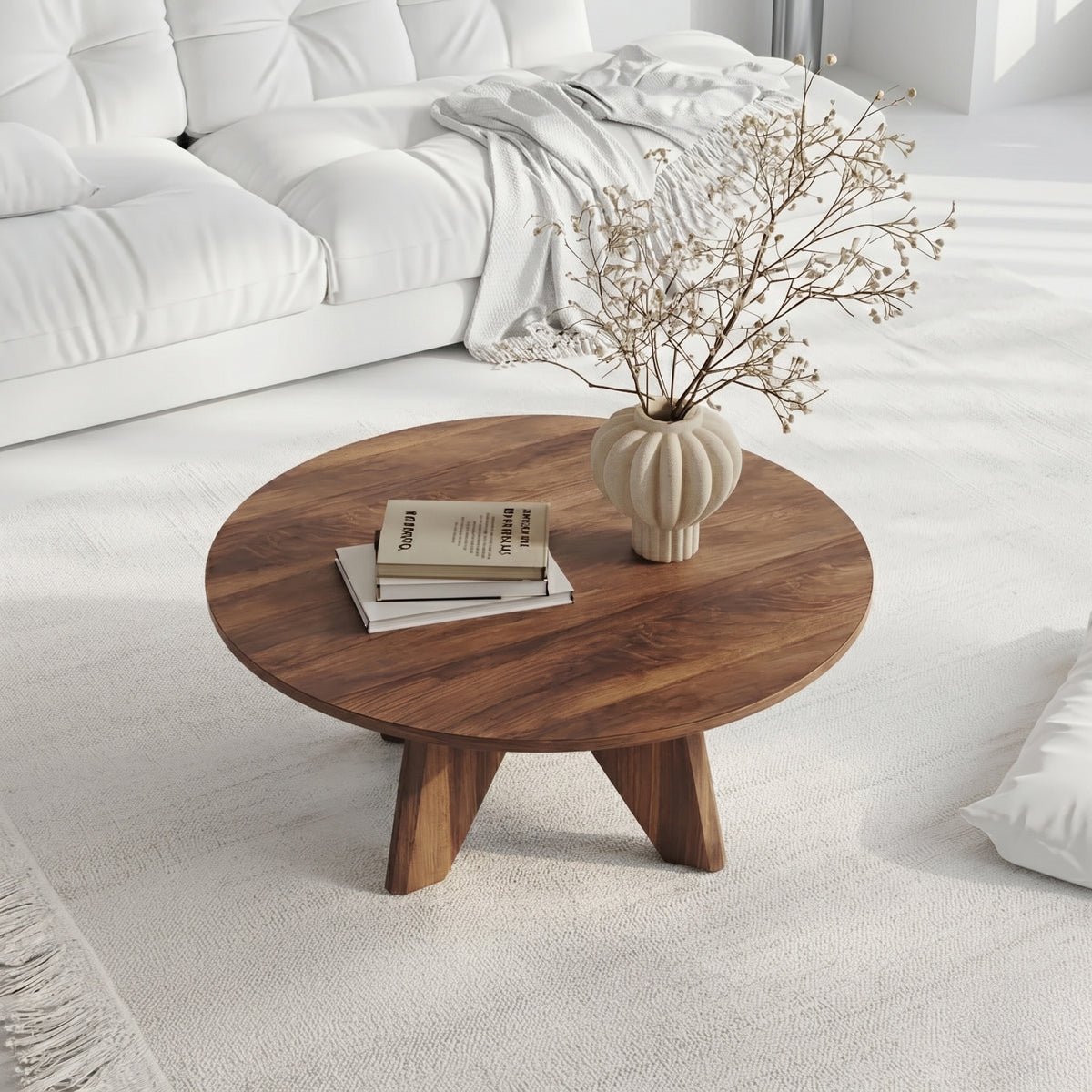
The shape of your coffee table should complement - not compete with - your sofa's lines:
- Rectangular tables are the safest bet. They mirror the horizontal line of most sofas and provide the most surface area. Best for standard 3-seaters and family rooms.
- Round tables soften angular rooms and sectionals. They're kid-friendly (no sharp corners) and create a more conversational seating arrangement. For a 6-foot sofa, a 36-to-44 inch round table usually works well. For an 8-foot sofa, go 44–54 inches.
- Oval tables combine the surface area of a rectangle with the softness of a round. Great for narrow rooms - the tapered ends reduce the footprint without sacrificing tabletop space.
- Square tables work best with sectionals or large U-shaped seating. They create a central gathering point and pair nicely with oversized sofas (96+ inches).
Material & Style Coordination - Making It Feel Intentional
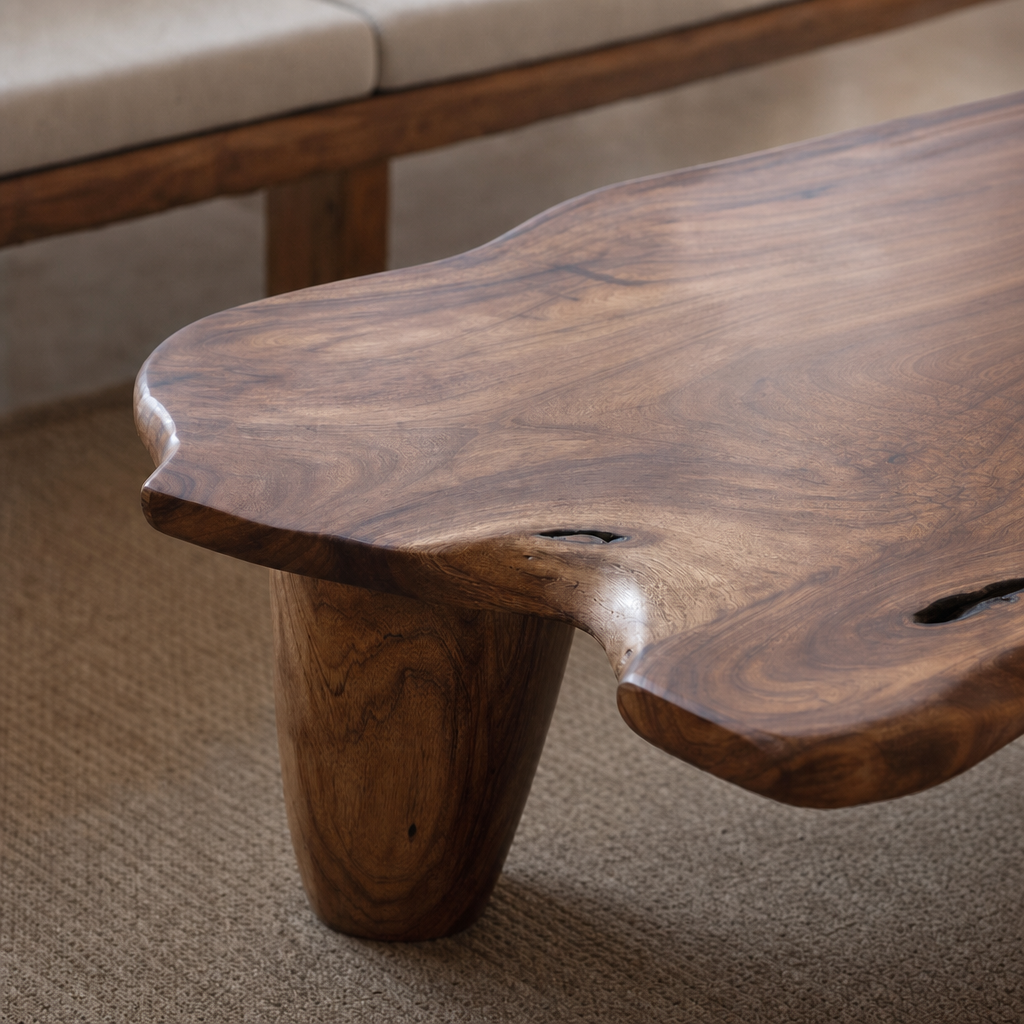
Once the measurements are right, the final step is making the pair feel cohesive:
- Match or contrast wood tones deliberately. A walnut table with a walnut sofa frame reads as coordinated. A light oak table against a dark espresso sofa reads as intentional contrast. Random mid-tone-on-mid-tone reads as accidental.
- Repeat a material. If your sofa has brass legs, a coffee table with brass accents ties them together. If your sofa is linen, a wood-grain table adds warmth without competing.
- Consider weight and presence. A chunky, solid wood coffee table anchors a heavy, overstuffed sofa beautifully. A delicate glass table would look lost underneath it. Conversely, a slim mid-century sofa pairs elegantly with a lighter, lower-profile table.
If you're looking for a handcrafted solid wood coffee table that brings natural warmth to any sofa setup, browse our full coffee table collection or explore our live edge designs for truly one-of-a-kind pieces.
Found your numbers? Find your table.
Browse Ashdeco's handcrafted solid wood coffee tables - round, rectangular, and live edge designs sized to pair with any sofa.
Shop Coffee Tables →FAQ
How far should a coffee table be from a sofa?
The ideal distance between sofa and coffee table is 14 to 18 inches (35–46 cm). This gives you enough room to reach your drink comfortably while leaving clear legroom and a walkable path.
How far from the sofa should a coffee table be in a small room?
In tight spaces, you can reduce the gap to 12–14 inches, but never less than 12 inches. Below that, you'll constantly bump your knees and the room will feel cramped.
What size coffee table goes with a sectional sofa?
For a sectional, choose a table that's roughly two-thirds the length of the longer section. A round or oval shape (44–54 inches diameter) usually works better than rectangular, as it softens the sectional's angles and creates a natural gathering point.
Should the coffee table be the same height as the sofa?
Close to it, yes - or slightly lower. A coffee table that's at or within 1–2 inches below your sofa seat height feels most natural. Avoid tables taller than your seat cushion.
Can I put two coffee tables in front of one sofa?
Absolutely. Two smaller tables (often called a "coffee table pair") work great in front of large sofas or sectionals. Leave about 2 inches between the tables, and ensure the combined width stays within two-thirds of the sofa length.