





Quick view
- What coffee table height should match
- The simplest rule: close to seat height, slightly lower is usually safer
- Why tables that are too high feel worse than people expect
- Why tables that are too low are not automatically better
- How room size changes the height decision
- How this affects handcrafted solid wood coffee tables
- Common mistakes buyers make
- Honest downsides
- My recommendation
- FAQ
Shop this guide
Handcrafted Sofas, made to order in solid wood.
 Christmas edit
Elegant Modern Wooden Sofa with Sculptural Frame – Statement Living Room Piece
From $6,469.0010% off at checkout
Christmas edit
Elegant Modern Wooden Sofa with Sculptural Frame – Statement Living Room Piece
From $6,469.0010% off at checkout
 Sculptural Hand-Carved Curved Solid Wood Sofa Frame & Living Room Settee Base
From $7,210.0010% off at checkout
Sculptural Hand-Carved Curved Solid Wood Sofa Frame & Living Room Settee Base
From $7,210.0010% off at checkout
 Organic Sculptural Wood Sofa – Handcrafted Natural Edge Design
From $9,469.0010% off at checkout
Organic Sculptural Wood Sofa – Handcrafted Natural Edge Design
From $9,469.0010% off at checkout
 Handcrafted Solid Wood Sofa – Modern Organic Curved Wooden Couch
From $9,469.0010% off at checkout
Handcrafted Solid Wood Sofa – Modern Organic Curved Wooden Couch
From $9,469.0010% off at checkout
 Handcrafted Live Edge Solid Wood Sofa – Natural Wood Frame Design
From $9,469.0010% off at checkout
Handcrafted Live Edge Solid Wood Sofa – Natural Wood Frame Design
From $9,469.0010% off at checkout
 Ashdeco Modern Wooden Sofa – Sculptural Artistic Living Room Design
From $9,469.0010% off at checkout
Ashdeco Modern Wooden Sofa – Sculptural Artistic Living Room Design
From $9,469.0010% off at checkout
Coffee table height becomes confusing when advice stops at one number. Yes, many coffee tables land around standard living room height ranges, but the better rule is simpler than that. Your coffee table should usually sit close to your sofa seat height, and the exact match depends on how you actually use the room.
This guide focuses on that one decision. Not full table dimensions. Not room styling in general. Just how to choose the right coffee table height based on sofa height, clearance, and daily use.
What coffee table height should match
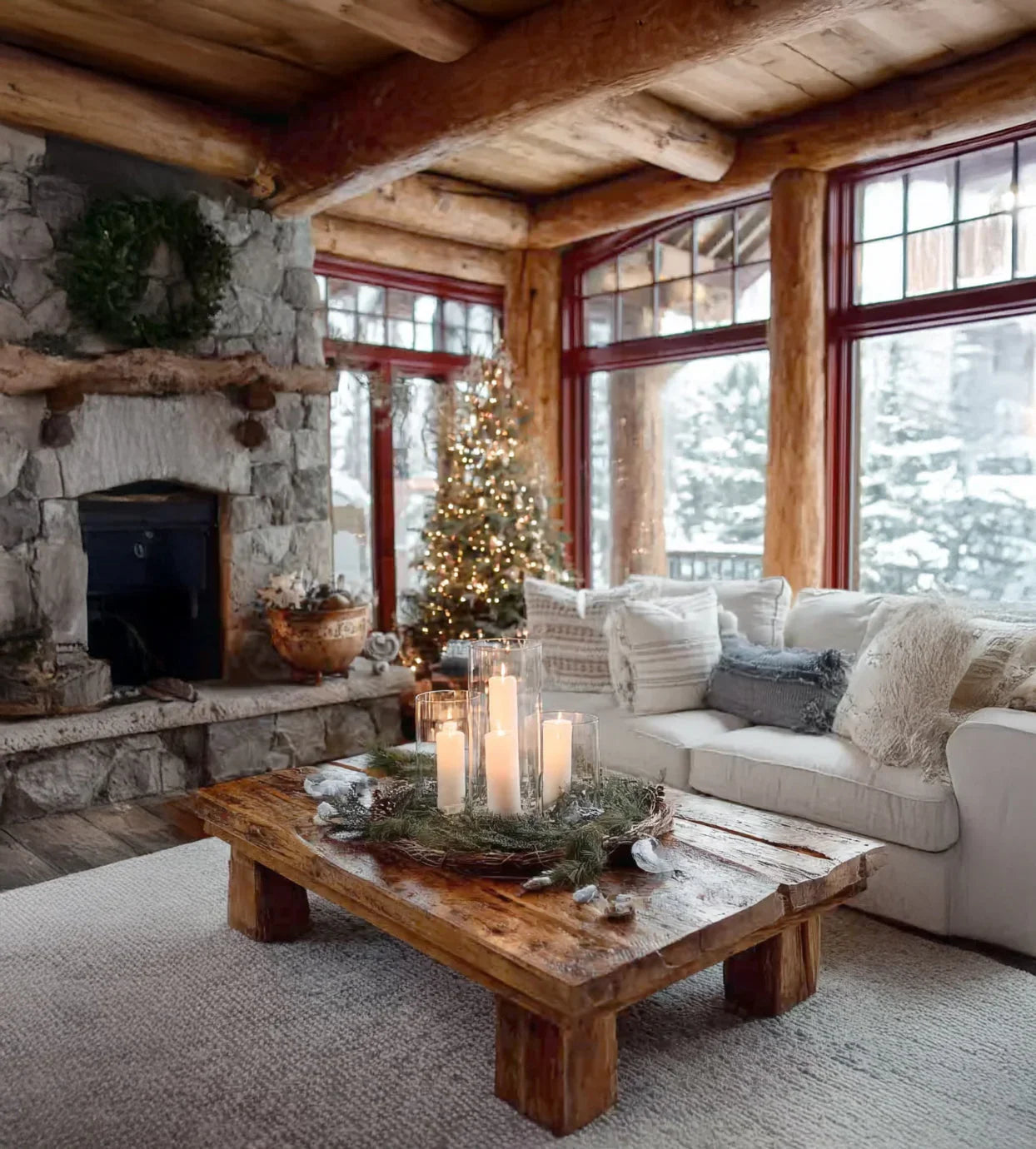
The most useful coffee table height rule is to compare the table with the sofa seat, not just the size of the room. In most setups, the table looks and works best when it is roughly level with the seat cushion or slightly lower. Once the table sits too high or too low, the whole room starts to feel awkward in ways people notice without always knowing why.
This is why a generic dimensions article is only half the answer. Height is about body comfort and reach. Width and length are separate decisions.
The simplest rule: close to seat height, slightly lower is usually safer
If you want the blunt version, here it is. A coffee table that is close to sofa seat height usually feels right. Slightly lower often looks better than slightly higher, because a tall table starts to block sightlines and make leg movement feel tighter. That matters more in compact living rooms where every inch feels visible.
| Sofa situation | Better coffee table move | Why |
|---|---|---|
| Deep casual sofa | Slightly lower table | Feels relaxed and easier on the eyes |
| Formal upright seating | Closer to exact seat height | Improves reach and visual balance |
| Small room | Lower profile table | Reduces visual bulk |
| Frequent dining on sofa | Avoid going too low | Keeps the surface usable |



Why tables that are too high feel worse than people expect
A coffee table that sits too high makes the room feel cramped fast. It cuts across the line of sight, competes with the sofa instead of supporting it, and becomes annoying when you stretch your legs. Buyers sometimes choose taller tables because they think more surface presence means more usefulness. In practice, it often just makes the seating zone feel heavier.
This is especially obvious with solid wood tables because the material has visual weight already. The height has to help the room breathe, not fight it.
If you are looking at larger statement pieces, browse the coffee table collection with height in mind first, not only shape.
Why tables that are too low are not automatically better
Going too low creates a different problem. The room may look stylish in photos, but everyday use gets worse. Drinks, books, remotes, and trays all become a reach. If your household actually uses the coffee table instead of treating it as sculpture, extremely low tables can feel tiring after the novelty wears off.
This is why the right answer is usually not "low is modern." The right answer is whether the height supports how you sit, reach, and move around the sofa.
Don't miss
These pieces qualify for 10% off orders over $2,000. Applied automatically at checkout.
10% off
Elegant Modern Wooden Sofa with Sculptural Frame – Statement Living Room Piece
From $6,469.00
10% off at checkout
10% off
Sculptural Hand-Carved Curved Solid Wood Sofa Frame & Living Room Settee Base
From $7,210.00
10% off at checkout
10% off
Organic Sculptural Wood Sofa – Handcrafted Natural Edge Design
From $9,469.00
10% off at checkout
10% off
Handcrafted Solid Wood Sofa – Modern Organic Curved Wooden Couch
From $9,469.00
10% off at checkout
How room size changes the height decision
Small rooms usually benefit from slightly lower coffee tables because a low profile keeps the center of the room open. Larger rooms can carry more table presence without feeling crowded. But even in a large room, height still needs to relate to the sofa first. Room size changes tolerance. It does not replace proportion.
If you are also weighing total footprint, keep that question separate from height. For full size planning, the broader coffee table dimensions guide should carry that job.
How this affects handcrafted solid wood coffee tables
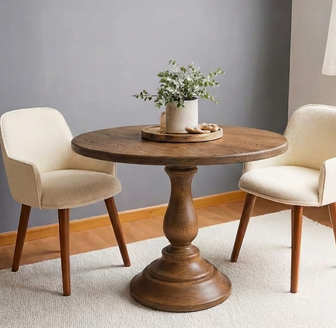
Handcrafted solid wood coffee tables have more physical presence than thin factory tables, so proportion matters even more. A slightly oversized height can feel heavier here than it would with glass or light metal. The upside is that when the height is right, a solid wood table feels grounded and intentional instead of bulky.
The Functional Vintage Natural Wood Coffee Table is a good example of a piece where proportion matters as much as style because the table acts as a visual anchor in the room.

Functional Vintage Natural Wood Coffee Table | $1,345-$2,653
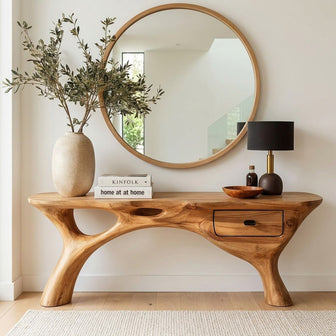
If you want to compare how coffee tables balance against nearby storage pieces, it also helps to look at related room anchors like console tables and other living room surfaces.
Common mistakes buyers make
The first mistake is choosing height by trend. The second is focusing only on tabletop shape. The third is forgetting how people actually use the room. A coffee table can look beautiful in isolation and still feel wrong when someone tries to sit down, stretch out, or place a drink without leaning forward awkwardly.
Another common mistake is trying to solve every sizing question in one article. That is exactly why buyers end up mixing dimensions, width, clearance, and height into one decision. Height should be handled first as a comfort question. Then you can move to footprint.
Honest downsides
Height advice gets messy because sofas vary, cushions compress, and people use living rooms differently. A table that feels perfect in a formal sitting room may feel wrong in a lounge-heavy family room. There is no single number that solves every case.
Solid wood coffee tables also have more visual weight than thin factory-made pieces, so a bad height choice feels more obvious. That means buyers need to pay closer attention to proportion, not less.
My recommendation
If you want a safe rule, choose a coffee table that lands close to sofa seat height and avoid going taller unless there is a very specific functional reason. Slightly lower is usually easier to live with than slightly higher. Then handle length and width as a separate step.
That is the cleanest way to avoid cannibalizing the decision. One article for height. One article for full dimensions. Much easier for readers, and frankly much easier for Google too.
FAQ
Should a coffee table be lower than the sofa?
Usually yes, or at least very close to the seat height. Slightly lower tends to feel more relaxed and less visually heavy than a table that rises above the seating line.
Is a taller coffee table ever better?
Sometimes. If you regularly eat, work, or play games from the sofa, a slightly taller table can be more usable. It still should not overpower the seating area.
Does room size matter for coffee table height?
Yes, but not as much as sofa relationship. Small rooms often benefit from a lower profile, while larger rooms can handle more visual weight in the center.
What if I am still choosing overall size?
Use this article for height only, then check a separate dimensions guide for length, width, and clearance. Those are related questions, but they are not the same decision.
Do handcrafted solid wood tables need different sizing attention?
Yes. Because they carry more visual presence, proportion matters more. A small height mistake shows up faster with solid wood than with thinner, lighter-looking materials.