

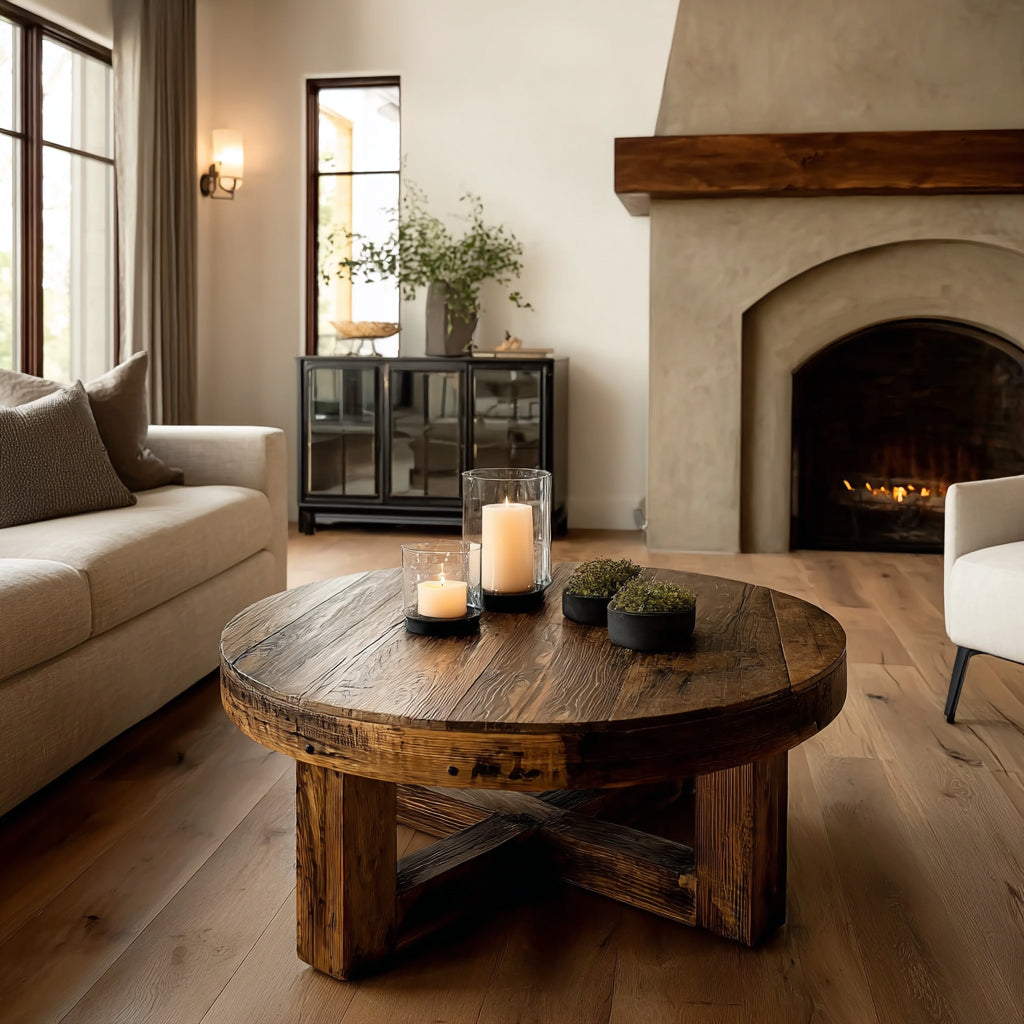
Quick view
- Small Rooms Need Smarter Tables, Not Smaller Compromises
- Round Tables: The Small-Room MVP
- Nesting Tables: Maximum Flexibility, Minimum Footprint
- Round vs. Square: Which Shape Saves More Space?
- Coffee Tables With Built-In Storage
- The Apartment Layout Playbook
- Styling Small Coffee Tables Without Cluttering
- Why Material Matters More in Small Spaces
- Frequently Asked Questions
- Finding Your Apartment Coffee Table
Shop this guide
Handcrafted Coffee Tables, made to order in solid wood.
 Round Biomorphic Solid Wood Coffee Table Sculptural Hollowed Center Table
From $2,156.0010% off at checkout
Round Biomorphic Solid Wood Coffee Table Sculptural Hollowed Center Table
From $2,156.0010% off at checkout
 Curved Biomorphic Solid Wood Coffee Table Monolithic Organic Low Table
From $1,789.00
Curved Biomorphic Solid Wood Coffee Table Monolithic Organic Low Table
From $1,789.00
 Christmas edit
Handcrafted Live-Edge Solid Wood Christmas Coffee Table with Monolithic Tree-Trunk Stump Pedestal Base & Natural Slab Top
From $2,176.0010% off at checkout
Christmas edit
Handcrafted Live-Edge Solid Wood Christmas Coffee Table with Monolithic Tree-Trunk Stump Pedestal Base & Natural Slab Top
From $2,176.0010% off at checkout
 Modern Handcrafted Solid Wood Square Plinth Coffee Table with Open Storage & Architectural Block Pillars
From $1,567.00
Modern Handcrafted Solid Wood Square Plinth Coffee Table with Open Storage & Architectural Block Pillars
From $1,567.00
 Modern Handcrafted Solid Wood Plinth Coffee Table with Cantilevered Top, Storage Cubby & Drawer
From $1,865.00
Modern Handcrafted Solid Wood Plinth Coffee Table with Cantilevered Top, Storage Cubby & Drawer
From $1,865.00
 Sculptural Hand-Carved Tree Root Round Solid Wood Coffee Table & Sprawling Branch Base
From $2,212.0010% off at checkout
Sculptural Hand-Carved Tree Root Round Solid Wood Coffee Table & Sprawling Branch Base
From $2,212.0010% off at checkout
Small Rooms Need Smarter Tables, Not Smaller Compromises
Living in an apartment or studio doesn't mean settling for a plastic tray on legs or skipping the coffee table entirely. It means being intentional about what you choose - and in a small room, the right coffee table does more work than in a large one. It defines your seating area, provides storage you don't have elsewhere, and anchors a room that might otherwise feel like a collection of furniture pushed against walls.
The challenge is real, though. In a studio apartment, your coffee table might sit 24 inches from your bed, 18 inches from your sofa, and 30 inches from a bookshelf. Every inch of that table's footprint is floor space you're committing. That makes shape, height, and function matter more than style trends or whatever's on sale.
This guide covers the coffee table options that actually work in apartments and studios - with specific dimensions, layout strategies, and honest assessments of what works and what doesn't when square footage is limited.
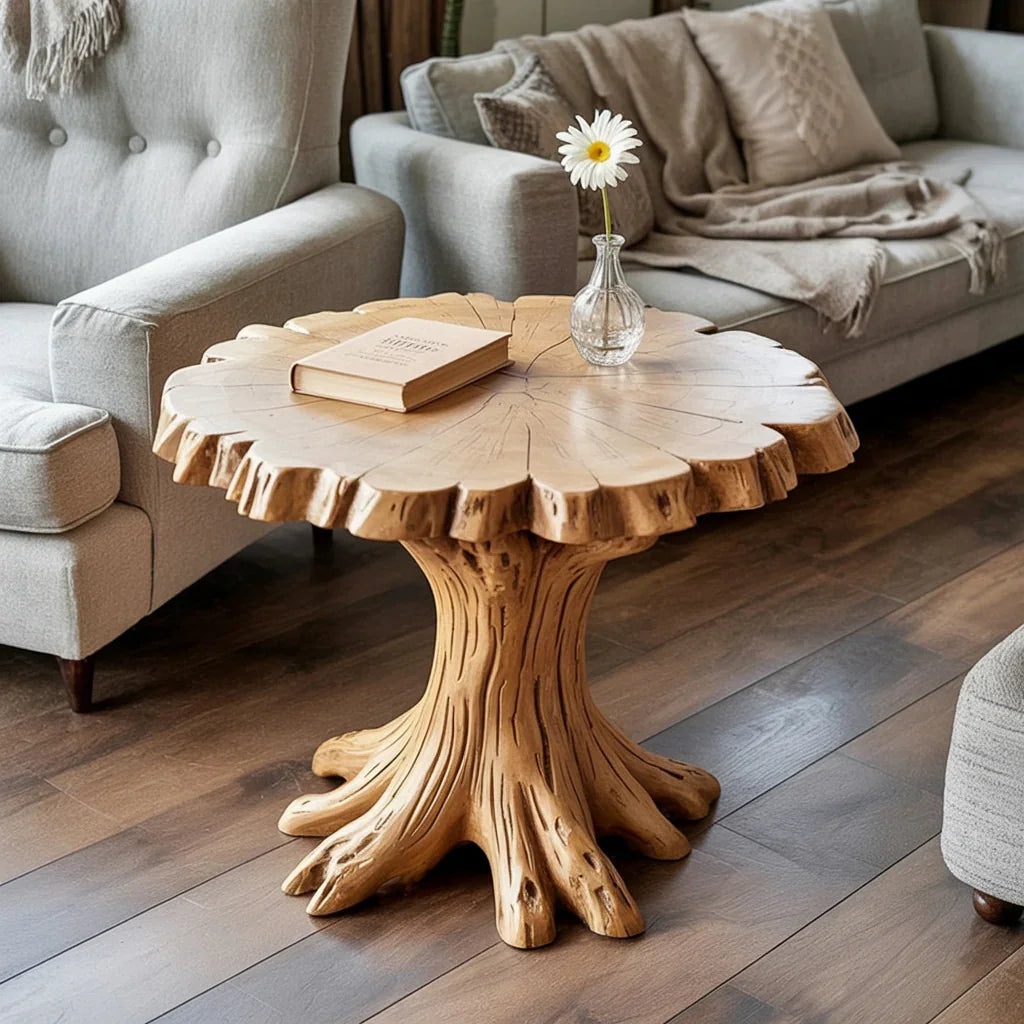
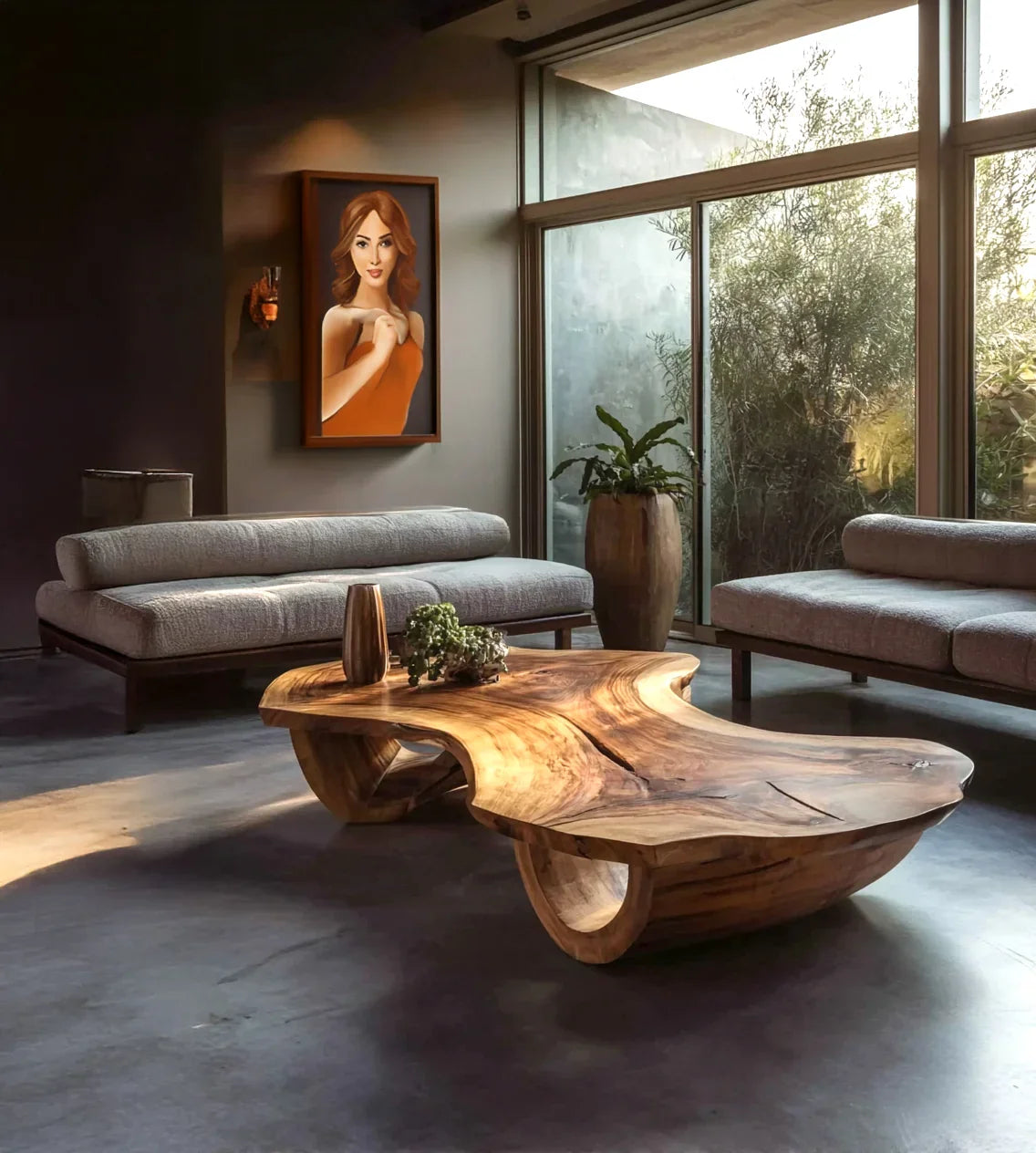
Solid Wood Round Coffee Table – Live Edge Tree Trunk Design
Round Tables: The Small-Room MVP
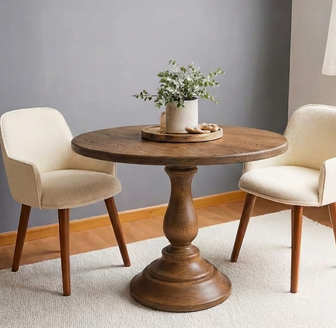
Round coffee tables consistently outperform rectangular ones in small spaces, and the reason is geometry.
A 30-inch round table provides 707 square inches of surface area. A 30 × 24 inch rectangular table provides 720 square inches - nearly the same. But the round table feels smaller and allows easier movement because there are no corners jutting into walkways. In a tight room where you're navigating around furniture multiple times a day, the absence of sharp corners changes how the room functions.
Round tables also work better with smaller seating arrangements. If your apartment has a loveseat and one armchair rather than a full sofa, a round table creates a more natural grouping than a rectangular one that extends awkwardly past the seating.
Recommended sizes for apartments:
- Studio (under 500 sq ft): 24–28 inch diameter
- One-bedroom apartment: 28–34 inch diameter
- Compact living room in a larger apartment: 30–36 inch diameter
At Ashdeco's coffee table collection, several round and compact designs are specifically sized for apartment living - handcrafted from solid wood rather than the particle board common in "apartment-sized" furniture.


Nesting Tables: Maximum Flexibility, Minimum Footprint
Nesting tables might be the single best coffee table solution for studio apartments. The concept is simple: two or three tables of graduated sizes that tuck together when not in use.
Why they work in small spaces:
- When nested, they take up the footprint of one table
- Pull them apart for entertaining, push them back together for daily use
- Individual pieces can serve as side tables, laptop stands, or bedside surfaces
- The staggered arrangement adds visual depth to a small room without consuming floor space
What to look for in nesting tables:
- The largest table should be no more than 36 inches in the longest dimension
- Height difference between the largest and smallest should be 3–5 inches for easy nesting
- Solid wood or metal construction , lightweight composite nesting tables slide around on hard floors and don't hold up to daily repositioning
- Legs that won't tangle when nesting (hairpin legs work well; wide splayed legs can interfere)

Round vs. Square: Which Shape Saves More Space?
This isn't a style question in a small room , it's a functional one.
Round tables win when:
- The room has multiple traffic paths (common in studios with open layouts)
- Seating is arranged in an L or U shape
- You want to maximize walkway space
- You have small children navigating the space
Square tables win when:
- The room layout is symmetrical (sofa centered against one wall, TV against the opposite)
- You need the table to double as a dining surface (easier to use for meals)
- You want storage underneath , square/rectangular tables accommodate baskets and shelves more efficiently
- The table needs to push flush against a wall when not in use
The honest answer: In most apartments, round edges are worth the slight loss in surface area. The practical difference in usable space is small, but the difference in how your room feels to move through is significant.
Don't miss
These pieces qualify for 10% off orders over $2,000. Applied automatically at checkout.
10% off
Round Biomorphic Solid Wood Coffee Table Sculptural Hollowed Center Table
From $2,156.00
10% off at checkout
10% off
Handcrafted Live-Edge Solid Wood Christmas Coffee Table with Monolithic Tree-Trunk Stump Pedestal Base & Natural Slab Top
From $2,176.00
10% off at checkout
10% off
Sculptural Hand-Carved Tree Root Round Solid Wood Coffee Table & Sprawling Branch Base
From $2,212.00
10% off at checkout
 10% off
Sculptural Oval Solid Wood Coffee Table with Continuous Infinity Wave Base
From $2,176.00
10% off at checkout
10% off
Sculptural Oval Solid Wood Coffee Table with Continuous Infinity Wave Base
From $2,176.00
10% off at checkout
Coffee Tables With Built-In Storage
In an apartment, every piece of furniture should earn its floor space. A coffee table with storage is doing double duty , and in a studio, that might mean it's replacing a bookshelf, media console, or side table you don't have room for.
Storage types that work in small spaces:
- Open lower shelf: The most common and most useful. Keeps books, magazines, remotes, and coasters accessible while hiding clutter below the sightline. Look for at least 4 inches of clearance between shelf and floor for easy cleaning underneath.
- Drawer(s): Better for hiding clutter completely , mail, chargers, coasters, notepads. Drawers add cost but create a cleaner look. Make sure the drawer slides smoothly; soft-close mechanisms are worth the upgrade.
- Lift-top: The surface hinges up to create a workspace or dining surface at a comfortable height. Useful in studios where the coffee table doubles as a desk or eating area. The mechanism adds weight and complexity but genuinely expands what the table can do.
- Hidden compartment: Some tables have a removable tray top or sliding panel that reveals storage inside the table body. Clever but sometimes fiddly , check that you can access the storage without moving everything off the top.
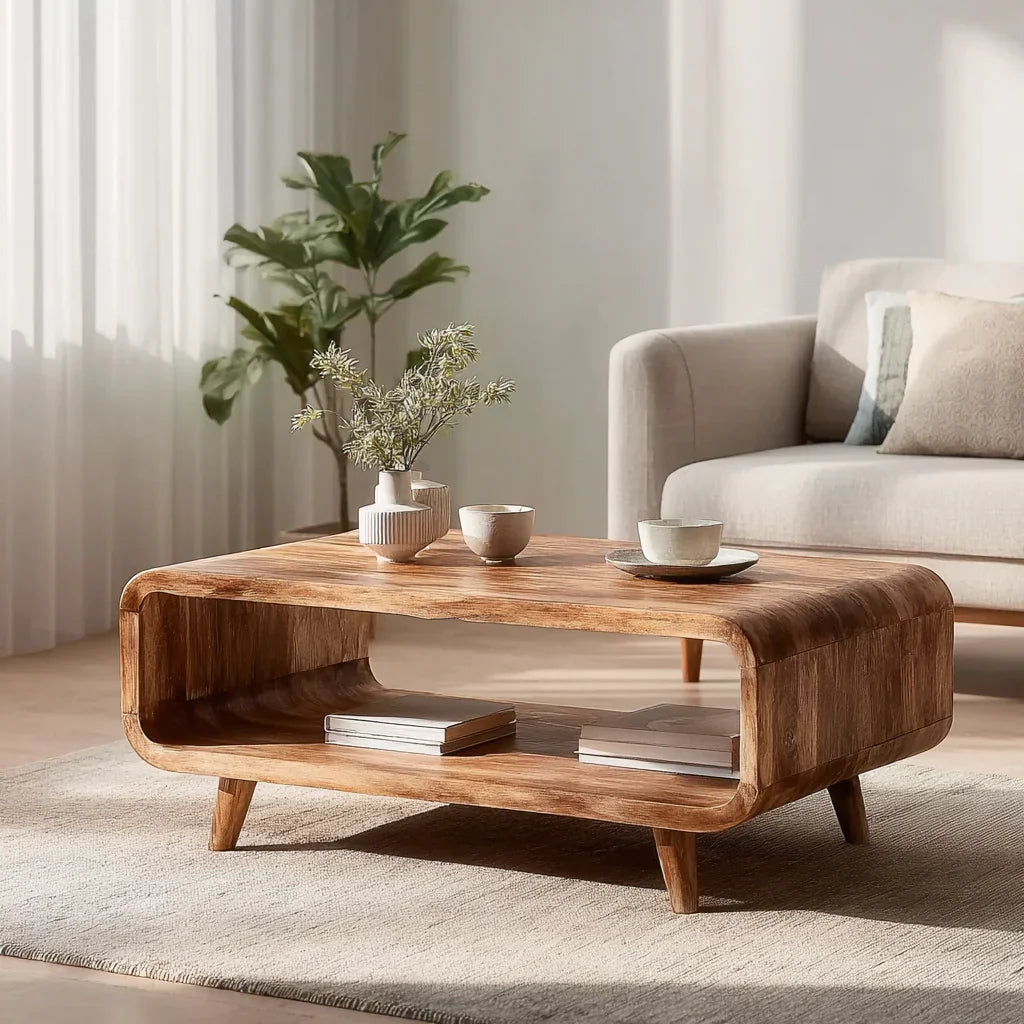
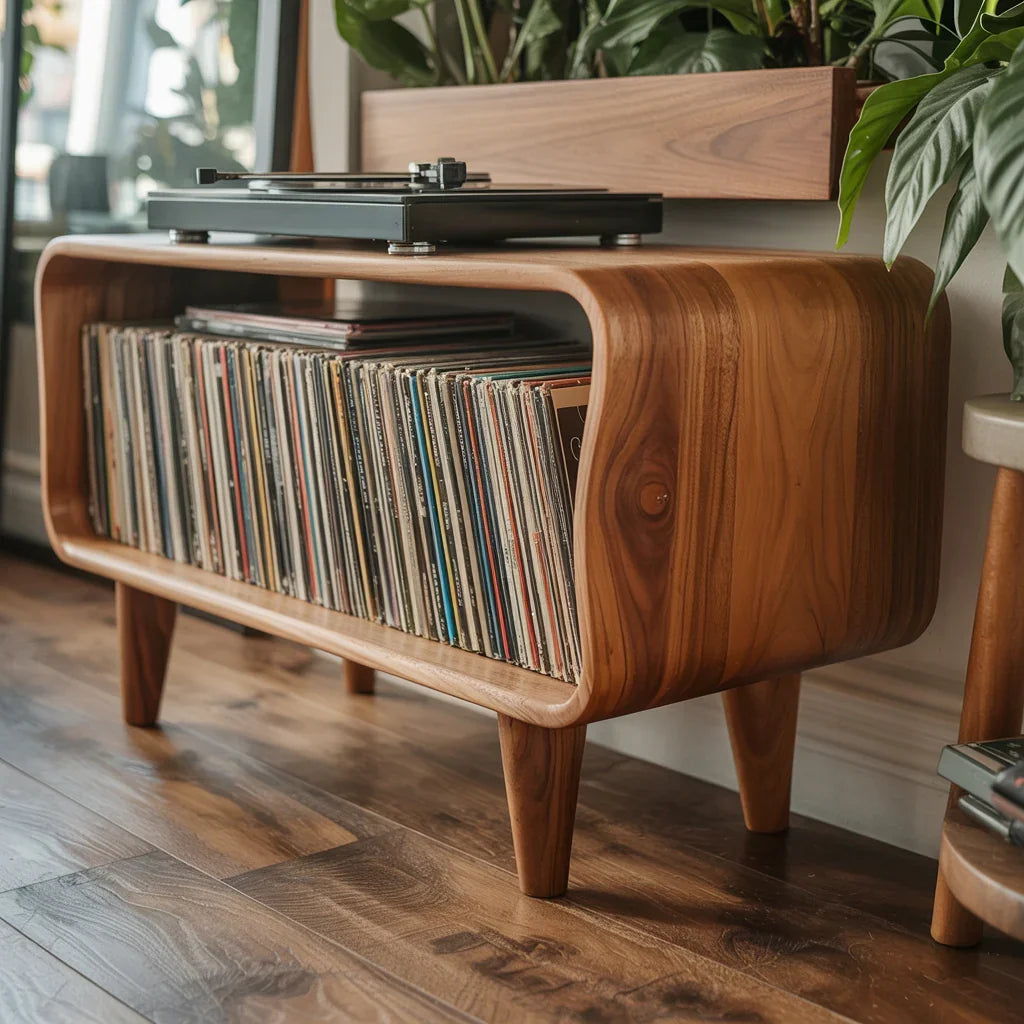
Mid Century Flow Form Coffee Table Living Room
The Apartment Layout Playbook
Where you put the coffee table matters as much as which one you buy. Here are layouts that work for common apartment floor plans:
Studio Apartment (350–550 sq ft)
Your living area, bedroom, and possibly dining area share one room. The coffee table needs to define the living zone without blocking movement to other areas.
- Position the table parallel to the sofa with 12–14 inches of clearance (tighter than the standard 18 inches, but necessary)
- Choose a table no wider than 20 inches to maintain a walkway past the sofa
- A round or oval table keeps corner-to-corner diagonal clear , this is the main traffic path in most studios
- Consider a table with legs (rather than a solid base) to maintain visual openness at floor level
L-Shaped Living/Dining Area
Common in one-bedroom apartments where the living room connects to a dining nook at a right angle.
- A round coffee table works well at the intersection because it doesn't create a visual barrier between zones
- Keep the table diameter under 30 inches if the living area width is under 10 feet
- Avoid rectangular tables oriented perpendicular to the sofa , they block the visual flow between living and dining
Galley-Style Living Room
Long and narrow, usually with the sofa along one wall and the TV on the opposite.
- An oval or narrow rectangular table (18–20 inches wide) fits best
- The table should leave at least 30 inches on one side for a walkway
- If 30 inches isn't possible, skip the coffee table and use side tables instead , forcing a table into a space that's too narrow makes the room feel like an obstacle course
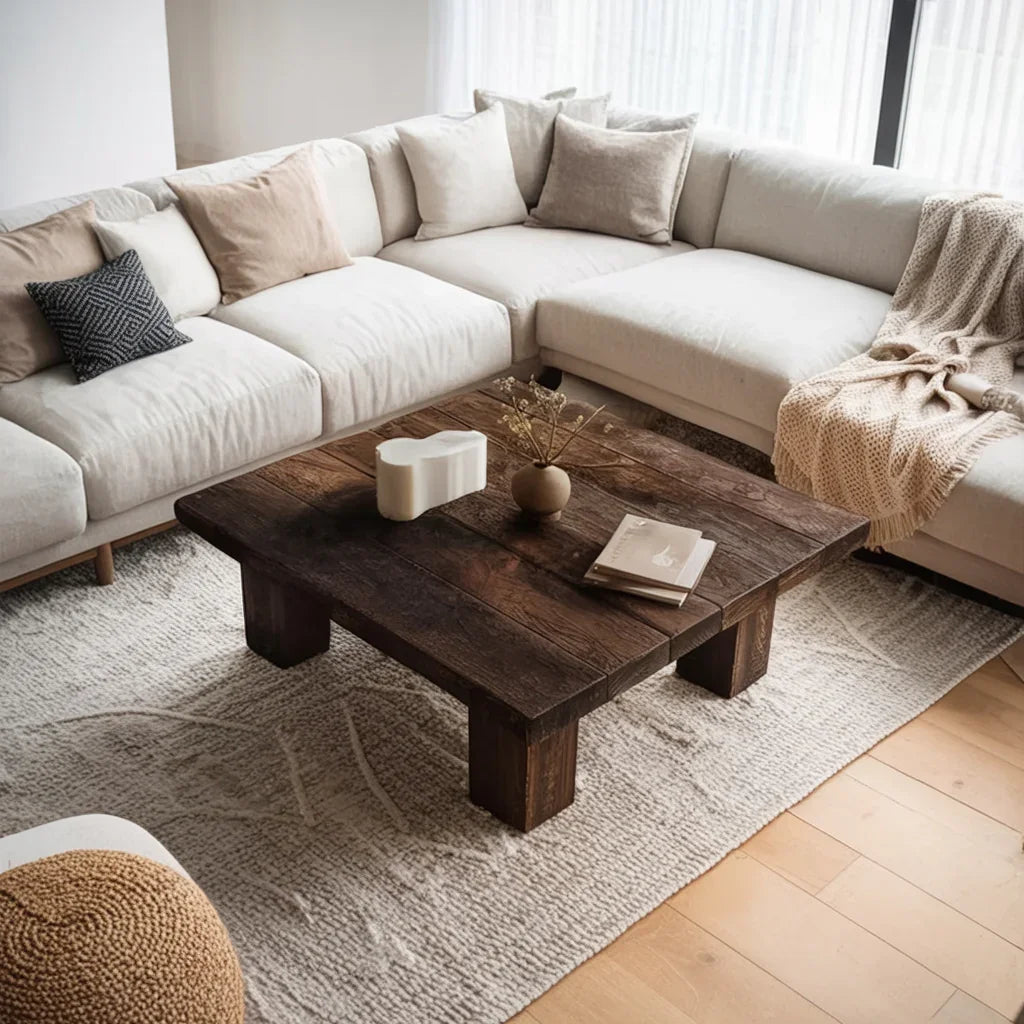
Handmade Reclaimed Chestnut Wood Coffee Table, Rustic Farmhouse Design
Styling Small Coffee Tables Without Cluttering
In a large living room, you can put a stack of books, a tray, a candle, a plant, and a decorative bowl on the coffee table and it still looks clean. In an apartment, that same arrangement covers 80% of the surface and makes the table feel like a shelf.
The one-tray rule: Use a single tray (round or rectangular, no larger than one-third the table surface) to contain decorative items. Everything outside the tray stays functional , a coaster, a remote, a glass. The tray creates visual order and gives you a lifting handle to clear the table instantly when you need the surface.
Vertical over horizontal: A single tall candle or small plant in a slim pot adds visual interest without consuming surface area. Skip the coffee table books unless you actually read them , in a small space, they're just clutter with good covers.
Clear materials help: Glass or acrylic trays, transparent vases, and slim metallic accents occupy physical space without visual weight. They let the table's surface (especially beautiful wood grain) show through.
The clear-surface test: If you can't clear your coffee table in under 10 seconds, you have too much on it. In a small home, every surface needs to be quickly convertible , from display to workspace to dining surface and back.
Why Material Matters More in Small Spaces
In a large room, a cheap coffee table is one piece among many , it doesn't define the space. In a studio apartment, the coffee table might be the most prominent piece of furniture you own. It's the visual center of your living area, and you interact with it constantly.
This is where material quality shows. MDF and particle board coffee tables marketed as "apartment-sized" have a shorter lifespan precisely because smaller tables take more abuse per square inch. You're using every part of the surface, bumping the edges more frequently, and likely moving the table more often (pushing it aside for yoga, pulling it closer for dinner).
Solid wood handles this wear naturally. A handcrafted solid wood coffee table from Ashdeco develops character marks rather than damage. Scratches blend into the grain. The weight keeps the table stable on hard floors. And when you move apartments , which in most cities happens every 1–3 years , solid wood survives the move. MDF doesn't.
The economics scale differently too. An MDF apartment coffee table costs $80–$150 and lasts 2–3 years through moves and daily use. A solid wood table costs $200–$500 and lasts 10–20 years across multiple apartments, multiple cities, and eventually into a house. Per year, solid wood costs less , and it actually looks better with age.
Frequently Asked Questions
What size coffee table works in a small apartment?
For studio apartments, look for tables no larger than 36 inches in the longest dimension and 20 inches wide. A 30-inch round table or 36 × 18 inch rectangular table works for most compact living rooms. Always measure your specific space , leave at least 12 inches between the sofa and table, and 30 inches on at least one side for a walkway.
Should I skip the coffee table in a studio apartment?
Not necessarily. A well-chosen coffee table defines your living area and provides storage and surface space you'd otherwise need from other furniture. If your studio is under 350 square feet, consider nesting tables or a side table instead. But for most studios, a compact coffee table improves both function and feel of the space.
Are round or rectangular coffee tables better for small rooms?
Round tables generally work better in small rooms because they eliminate sharp corners, improve traffic flow, and feel less bulky. Rectangular tables are better if you need the table against a wall or want storage underneath. For most apartment layouts, round or oval wins on practicality.
What's the best coffee table for a studio with no dining table?
A lift-top coffee table is ideal when the table needs to double as a dining or work surface. The top raises to a comfortable height for eating or typing, then lowers back to standard coffee table height. Look for one with storage underneath to keep placemats, napkins, or a laptop when not in use.
How do I make a small coffee table look proportional?
Follow the two-thirds rule , the table should be approximately two-thirds the length of your sofa. If your sofa is short (60 inches), a 36–40 inch table works. Keep the table height within 1–2 inches of the sofa seat height. Legs that lift the table off the floor create airiness, while solid bases can feel heavy in compact rooms.
Finding Your Apartment Coffee Table
Small spaces reward thoughtful choices. The right coffee table for your apartment isn't the cheapest one that fits , it's the one that fits, functions, lasts, and makes your space feel like home rather than a temporary compromise.
At Ashdeco, our solid wood coffee tables come in sizes that suit apartments and studios , from compact round designs to slim rectangular tables with storage. Each one is handcrafted by Vietnamese artisans from real hardwood, built to survive apartment moves and daily use for years. No MDF, no particle board, no corners cut.
Measure your space, decide what you need from the table beyond surface area, and choose something that works as hard as your apartment does.