Quick view
- How to Choose the Right Shelving Style for Your Living Room
- Floating Shelves: Minimal Footprint, Maximum Impact
- Built-In Shelving: The Architectural Approach
- Freestanding Shelving: Flexible and Moveable
- Shelving Ideas by Living Room Zone
- How to Style Living Room Shelves
- Choosing the Right Shelf Material
- Frequently Asked Questions
- Find Your Shelving Style
Shop this guide
Handcrafted Trending, made to order in solid wood.
 Christmas edit
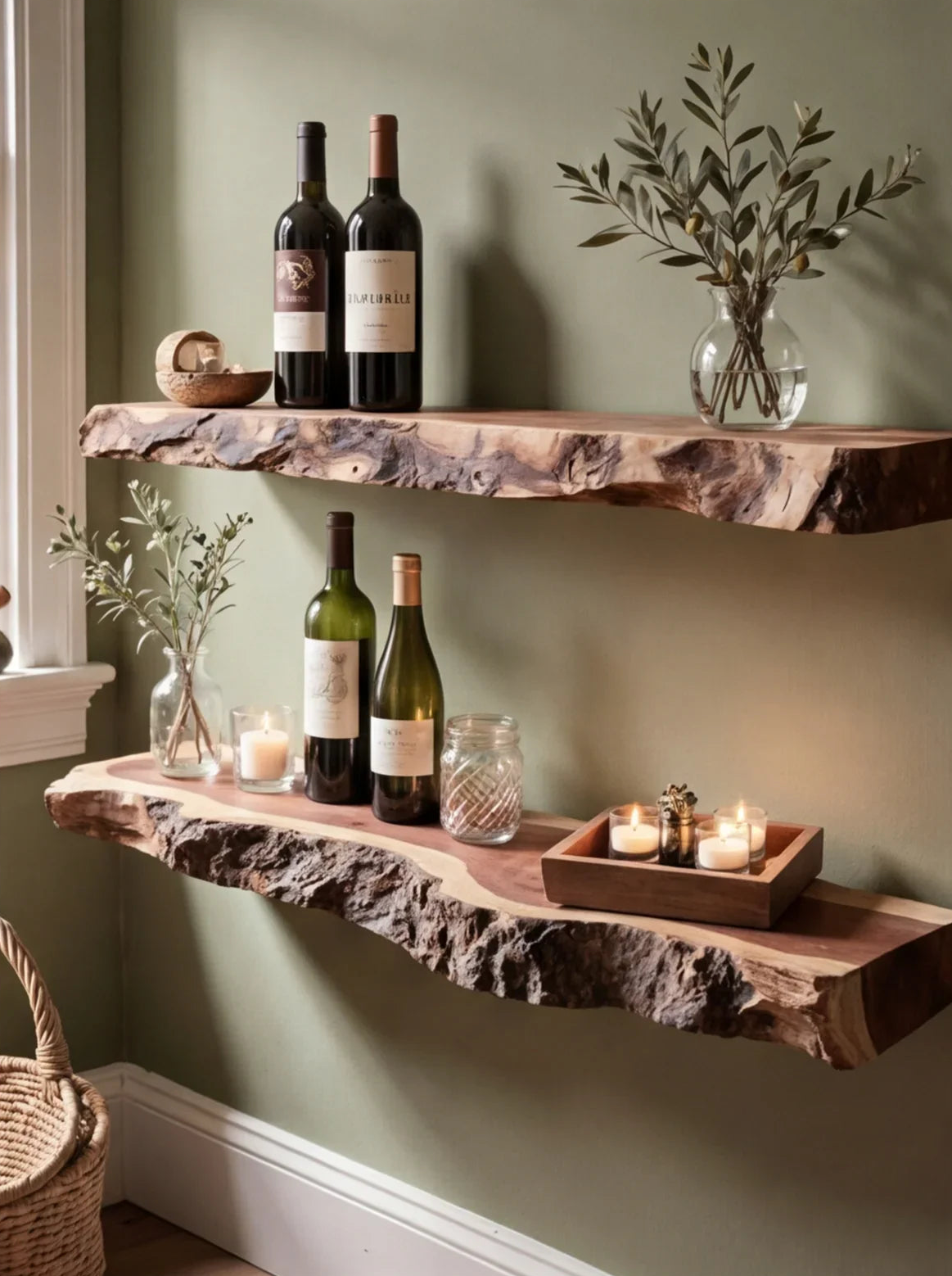
Handcrafted Live Edge Floating Bar Shelf – Rustic Solid Wood Wall Shelf for Kitchen or Bar
From $167.00
Christmas edit
Handcrafted Live Edge Floating Bar Shelf – Rustic Solid Wood Wall Shelf for Kitchen or Bar
From $167.00
 Christmas edit
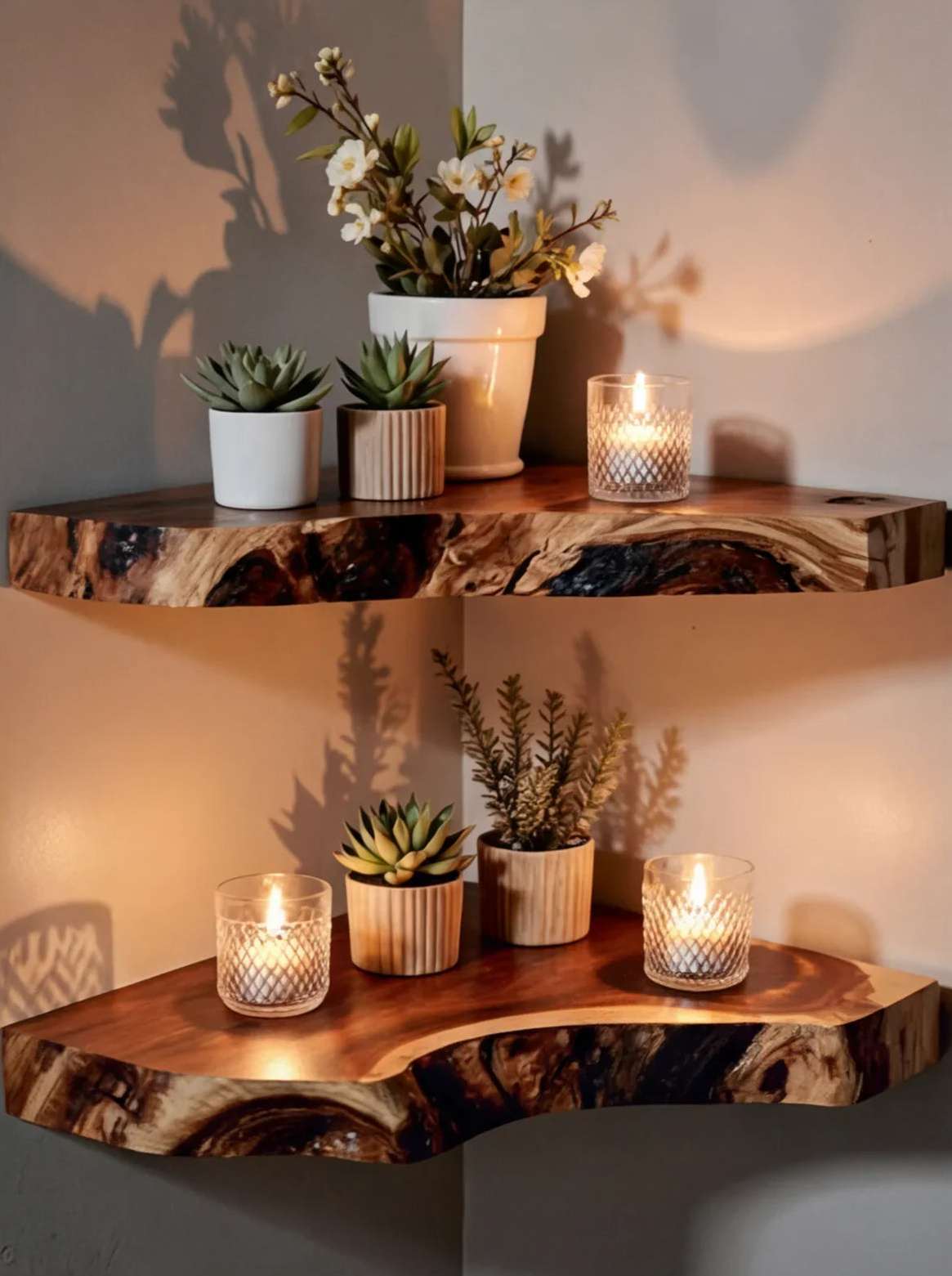
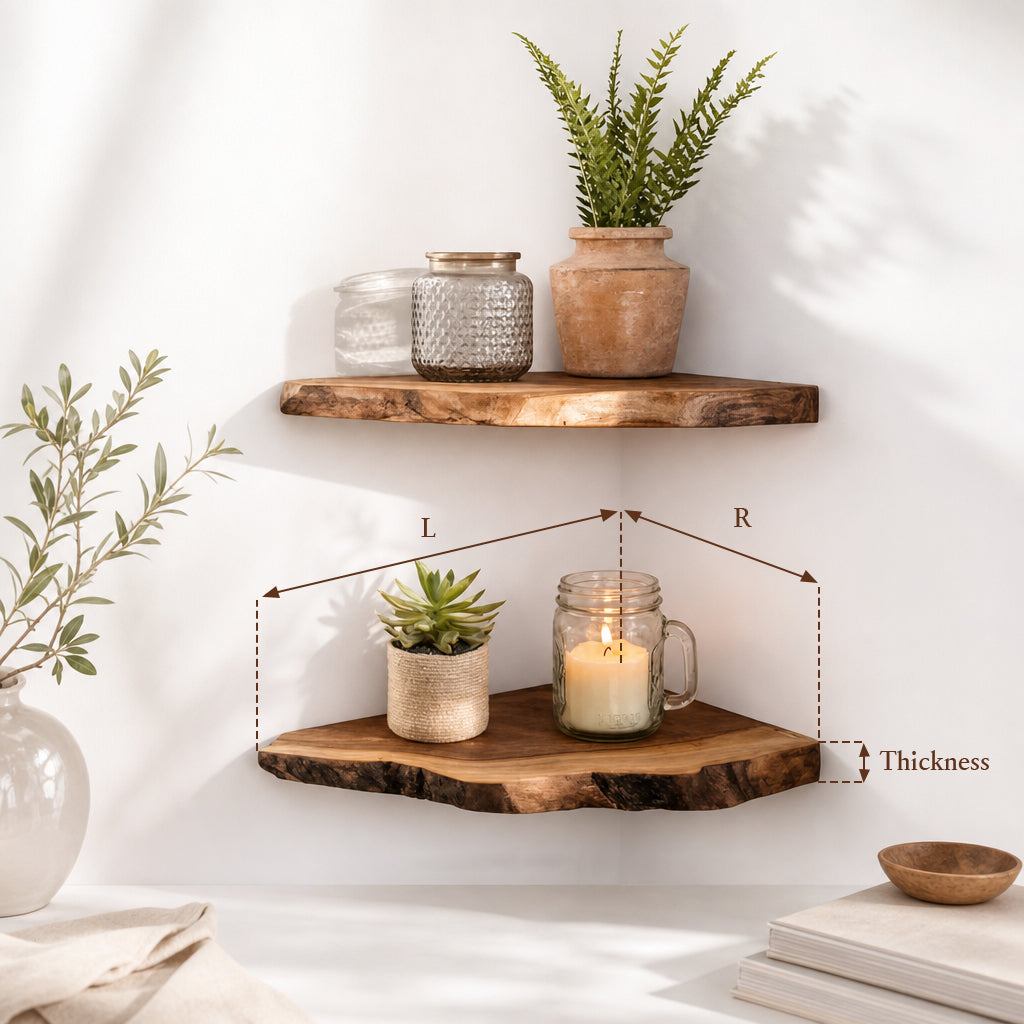
Rustic Corner Wall Shelf – Natural Live Edge Wood Floating Shelf for Candles and Plants
From $176.00
Christmas edit
Rustic Corner Wall Shelf – Natural Live Edge Wood Floating Shelf for Candles and Plants
From $176.00
 Christmas edit
Rustic Live Edge Floating Vanity – Handmade Wooden Bathroom Shelf with Brackets
From $180.00
Christmas edit
Rustic Live Edge Floating Vanity – Handmade Wooden Bathroom Shelf with Brackets
From $180.00
 Christmas edit
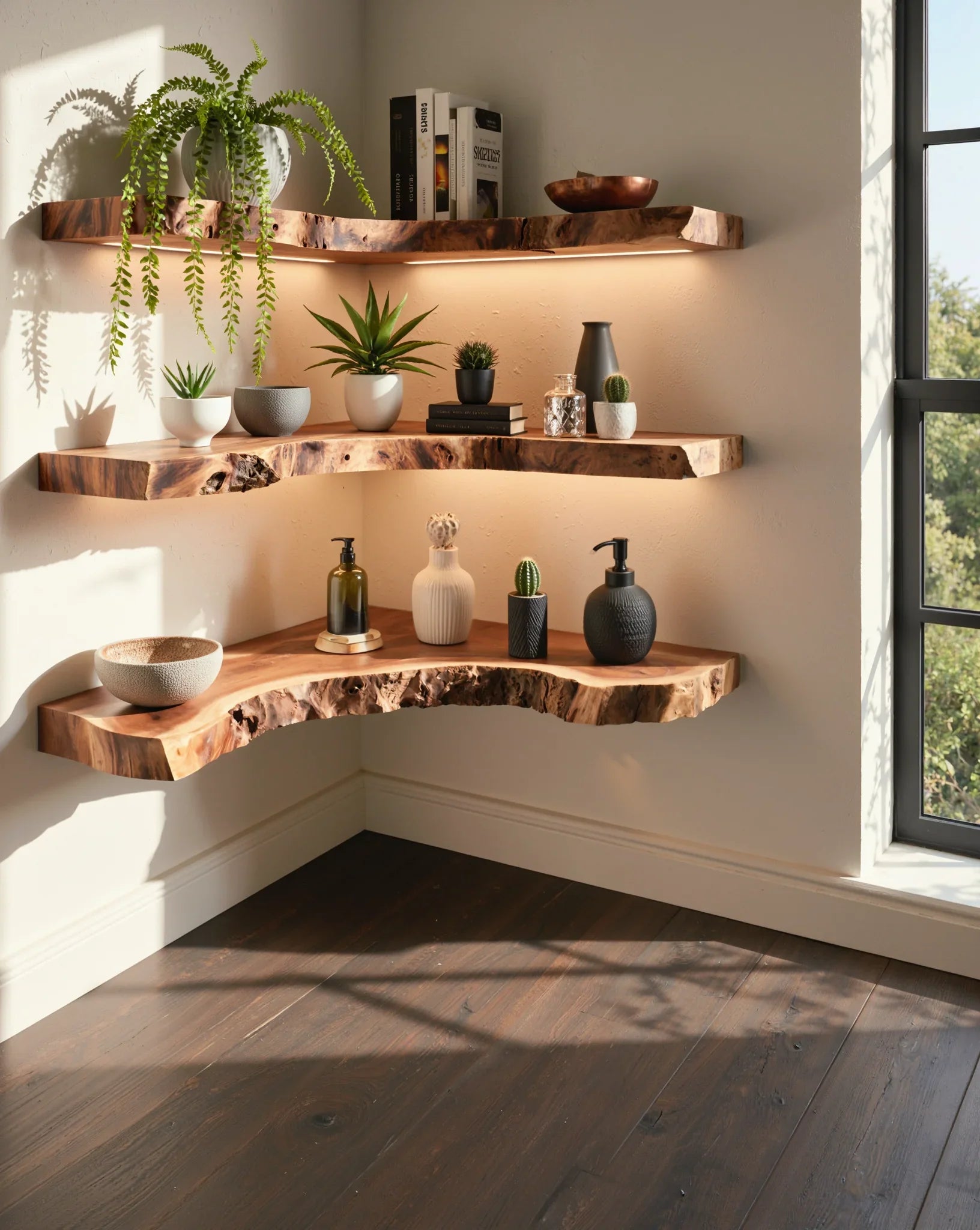
Rustic Teak Root Wood Corner Shelf - Floating Corner Shelf Decor
From $176.00
Christmas edit
Rustic Teak Root Wood Corner Shelf - Floating Corner Shelf Decor
From $176.00
 Christmas edit
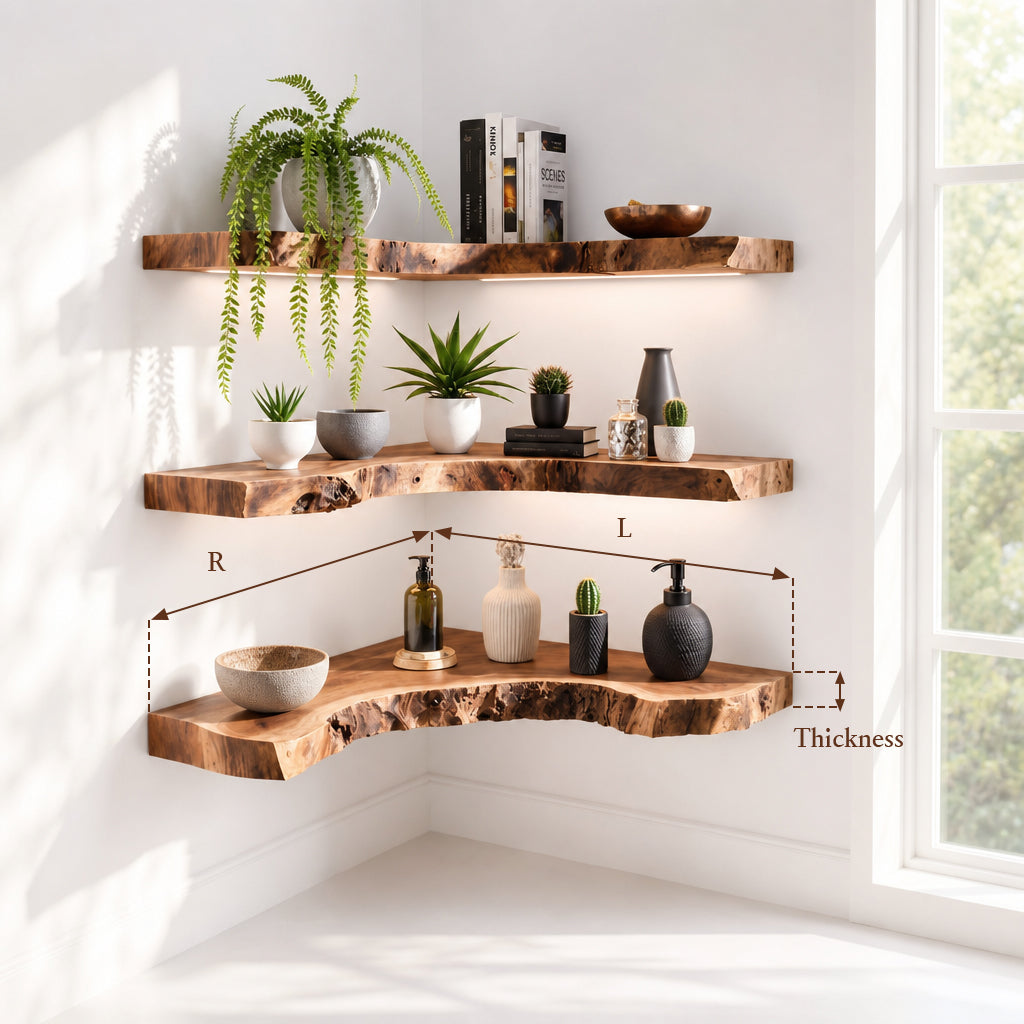
Live Edge Corner Floating Shelf – Handcrafted Solid Wood Wall Shelf
From $140.00
Christmas edit
Live Edge Corner Floating Shelf – Handcrafted Solid Wood Wall Shelf
From $140.00
 Christmas edit
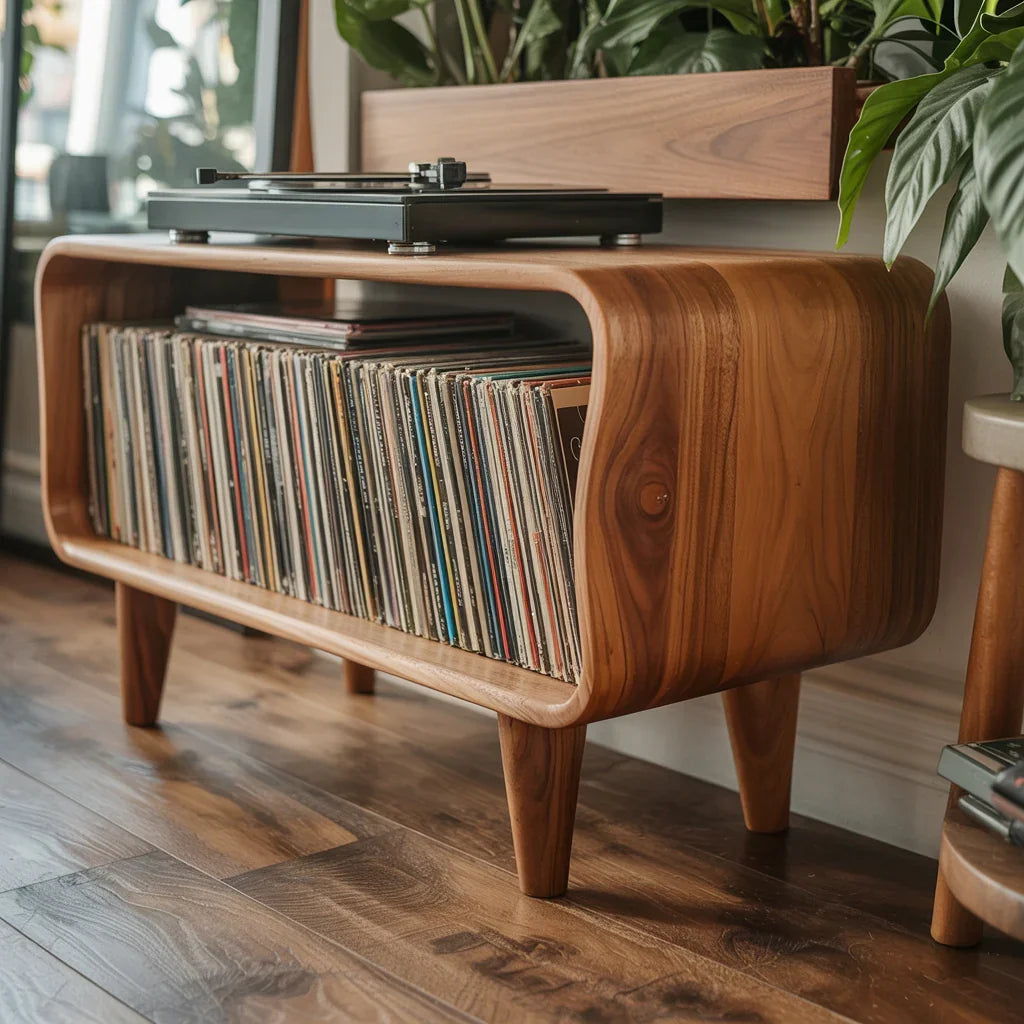
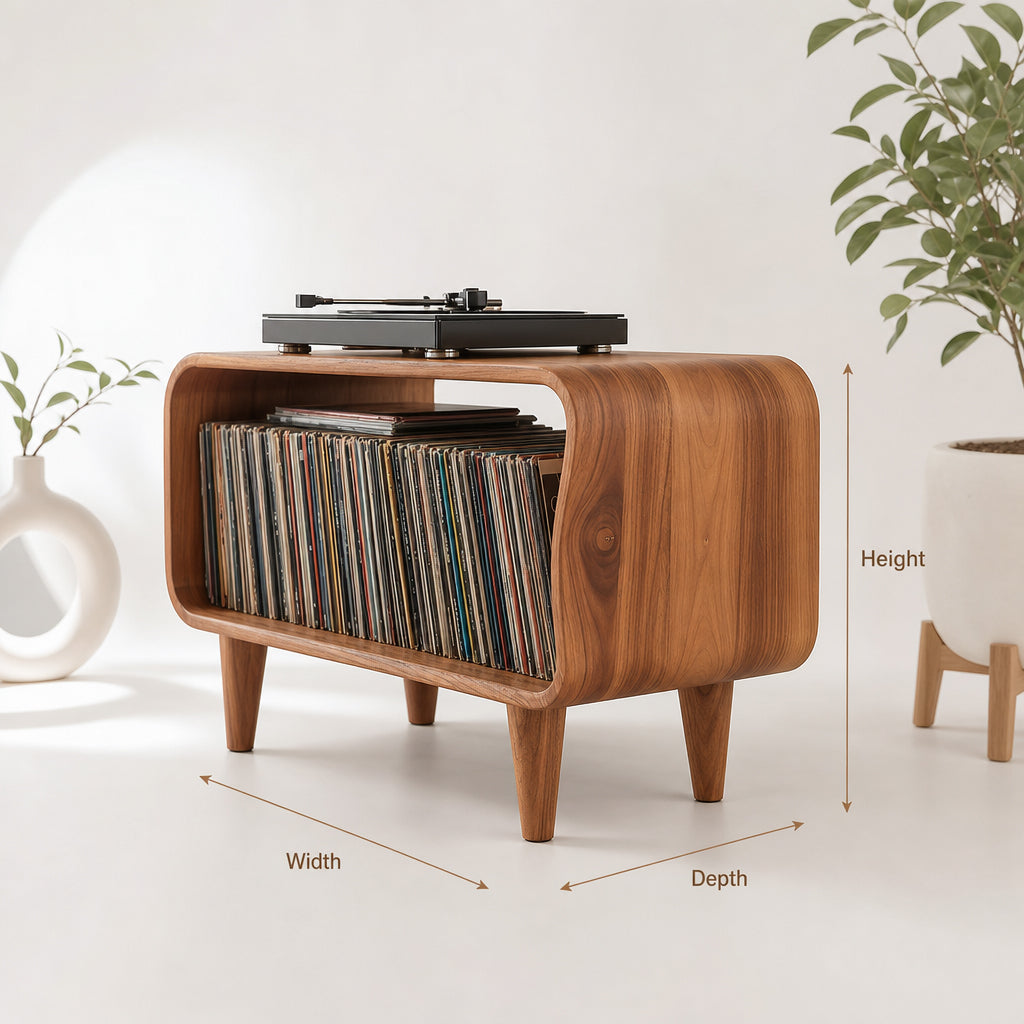
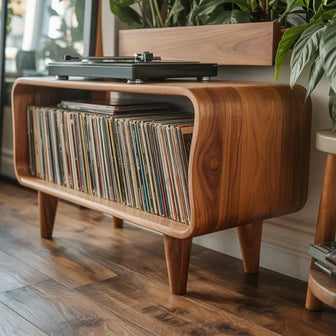
Ashdeco Solid Wood Record Player Stand – Mid-Century Modern Turntable Console
From $1,023.00
Christmas edit
Ashdeco Solid Wood Record Player Stand – Mid-Century Modern Turntable Console
From $1,023.00
How to Choose the Right Shelving Style for Your Living Room
Living room shelves do more than store things. They display your personality, organize your books, frame your TV, fill awkward empty walls, and quietly define the character of the room. Get the shelving right and the whole space feels pulled together. Get it wrong - or skip it entirely - and you end up with bare walls, cluttered surfaces, and nowhere to put the things that make a living room yours.
The three main categories - floating shelves, built-ins, and freestanding shelving - each solve different problems and suit different spaces. This guide covers when to use each type, how to arrange them, and what makes the difference between shelves that look intentional and shelves that look like an afterthought.
Floating Shelves: Minimal Footprint, Maximum Impact
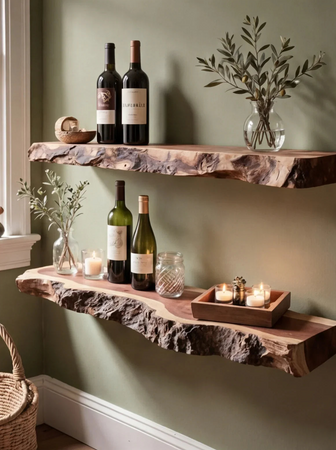
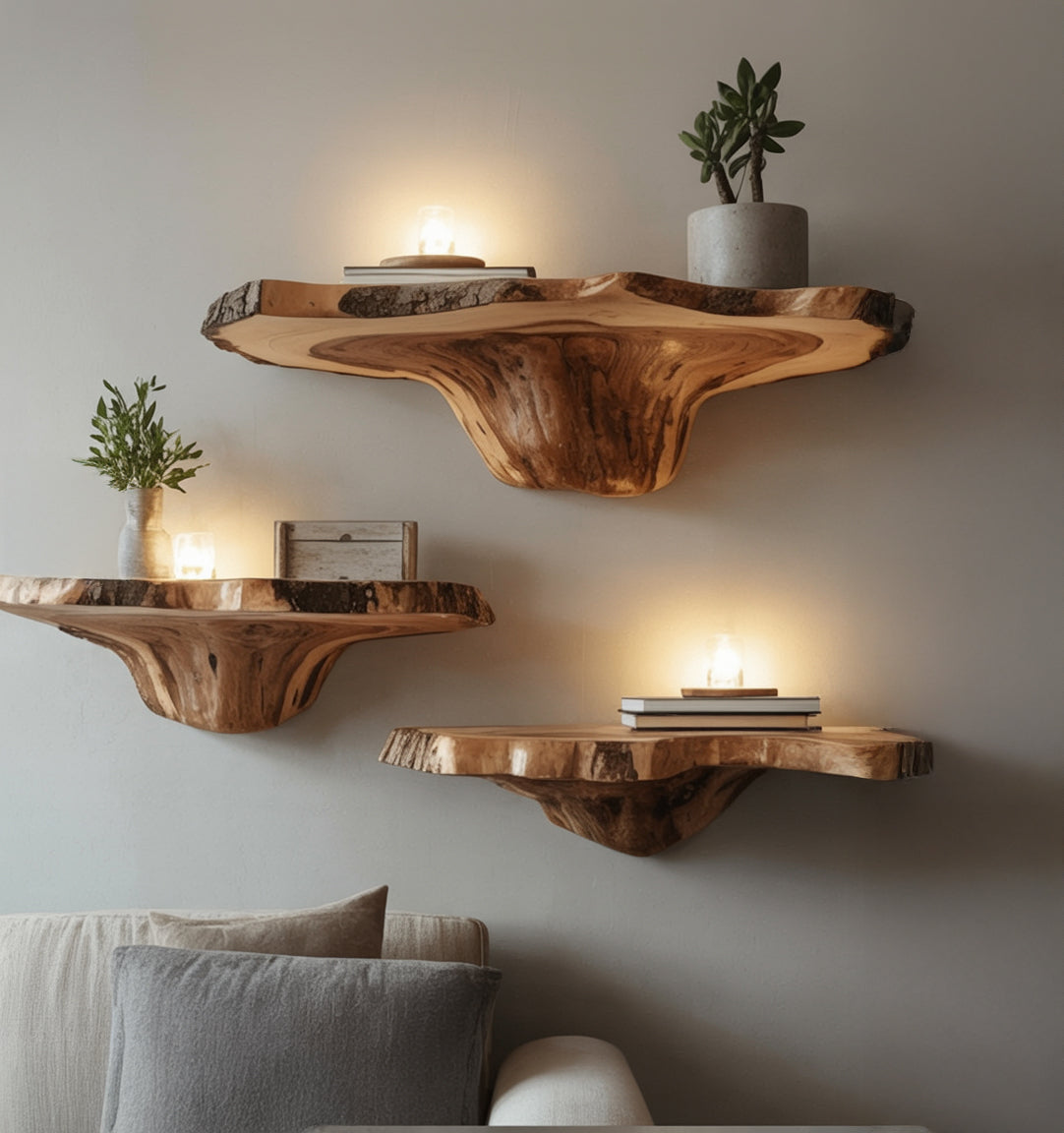
Floating shelves mount directly to the wall with concealed hardware, creating the visual effect of shelves that simply hover. No visible brackets, no supports, no legs touching the floor. They're the most popular shelving choice for modern living rooms, and for good reason.
Where Floating Shelves Work Best
- Above the sofa: A row of two or three floating shelves above the couch creates a gallery-style display without the commitment of a gallery wall. Stagger the lengths for visual interest, or keep them uniform for a cleaner look.
- Flanking the TV: Floating shelves on either side of a wall-mounted TV fill out the wall while keeping the focus on the screen. They provide spots for speakers, remotes, and decorative objects without the bulk of a full entertainment unit.
- In narrow or awkward spaces: That weird wall between two doors? The space above a radiator? The area next to the fireplace? Floating shelves fit where freestanding furniture can't.
- As a room accent: A single, well-styled floating shelf can serve as a design moment , a place for a few carefully chosen objects rather than general storage.
Advantages
- Take up zero floor space , ideal for smaller living rooms
- Clean, modern aesthetic that works with nearly any decor style
- Highly flexible , add more, rearrange, or remove without changing the room's footprint
- Available in a wide range of sizes, depths, and finishes
- Easy to install (most are a one-person job with basic tools)
Limitations
- Weight capacity is limited by the mounting system and wall type , heavy book collections may need a different solution
- No backing or sides means items can fall off during cleaning or if bumped
- Require solid wall mounting (drywall anchors for light items; studs for anything heavier)
- Limited depth , typically 6-10 inches, which restricts what you can display
Styling Tips for Floating Shelves
The most common mistake with floating shelves is treating them as pure storage. Books crammed edge to edge with no breathing room looks chaotic. Instead, think of each shelf as a mini composition:
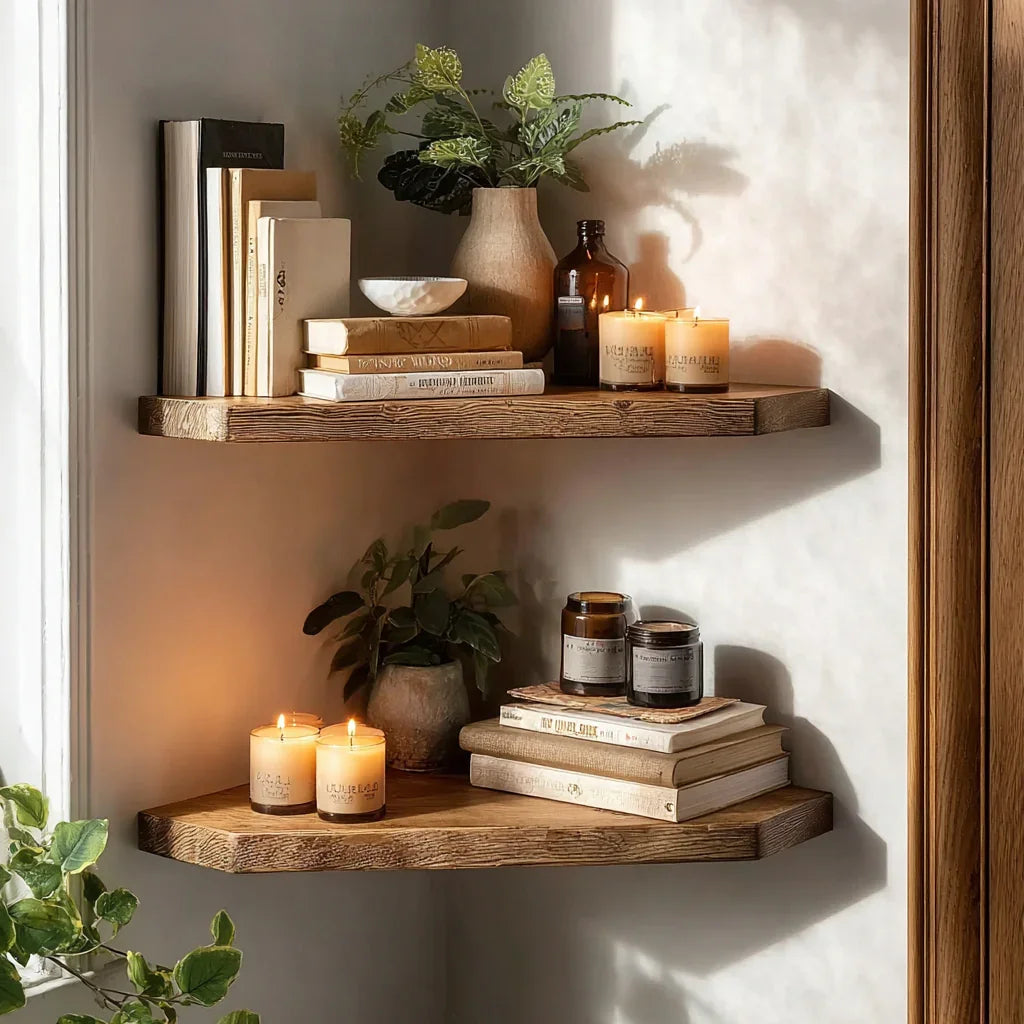
- The rule of odds: Group items in clusters of 3 or 5. Odd numbers feel more natural than even groupings.
- Vary heights: Mix tall items (vases, candlesticks) with medium items (small plants, picture frames) and low items (stacked books, small bowls).
- Leave white space: Not every inch needs to be filled. Empty space between groupings lets each display moment breathe.
- Lean, don't only stand: Frame prints and photos leaning against the wall rather than hung. This creates a relaxed, curated feel.
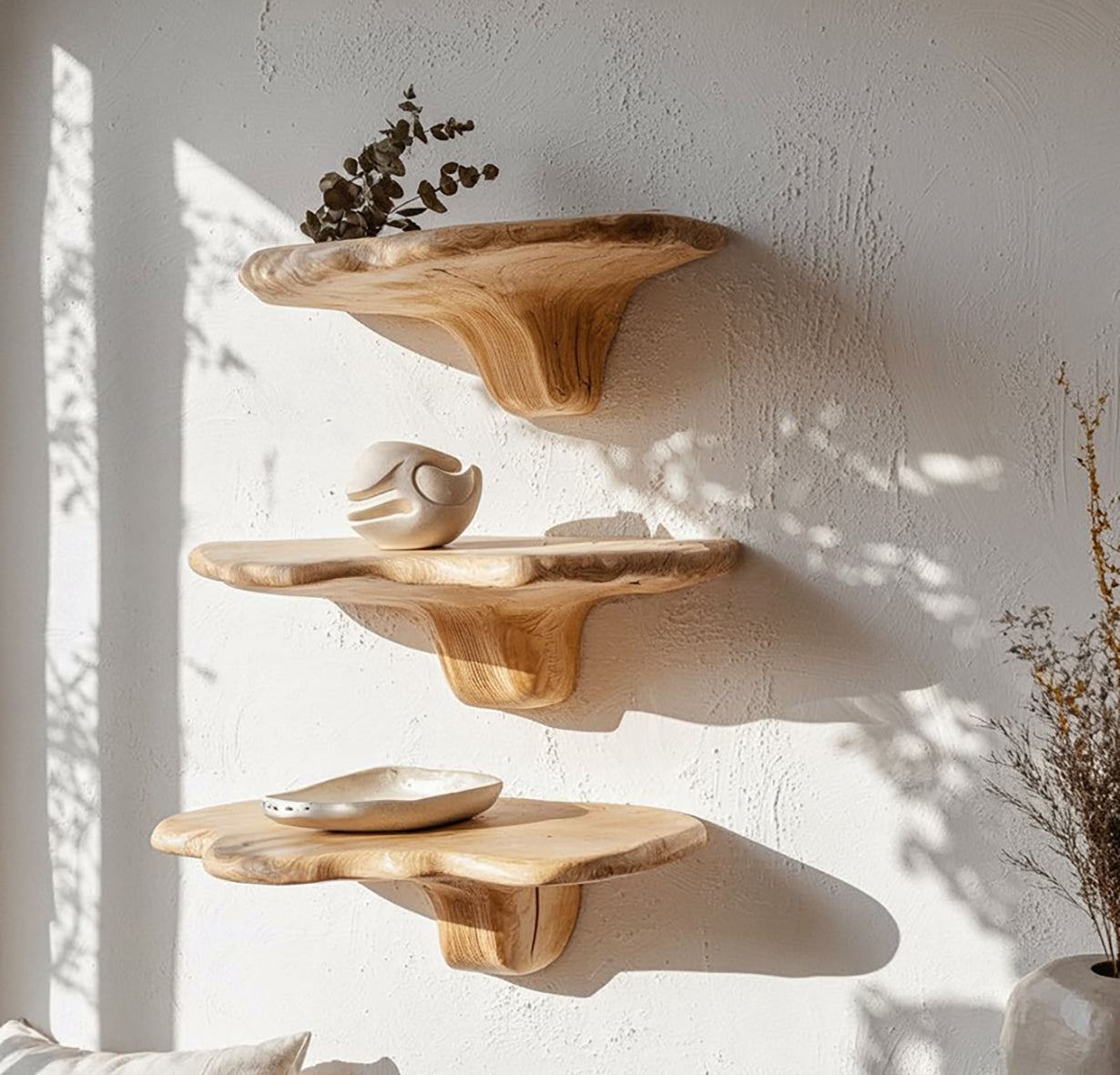
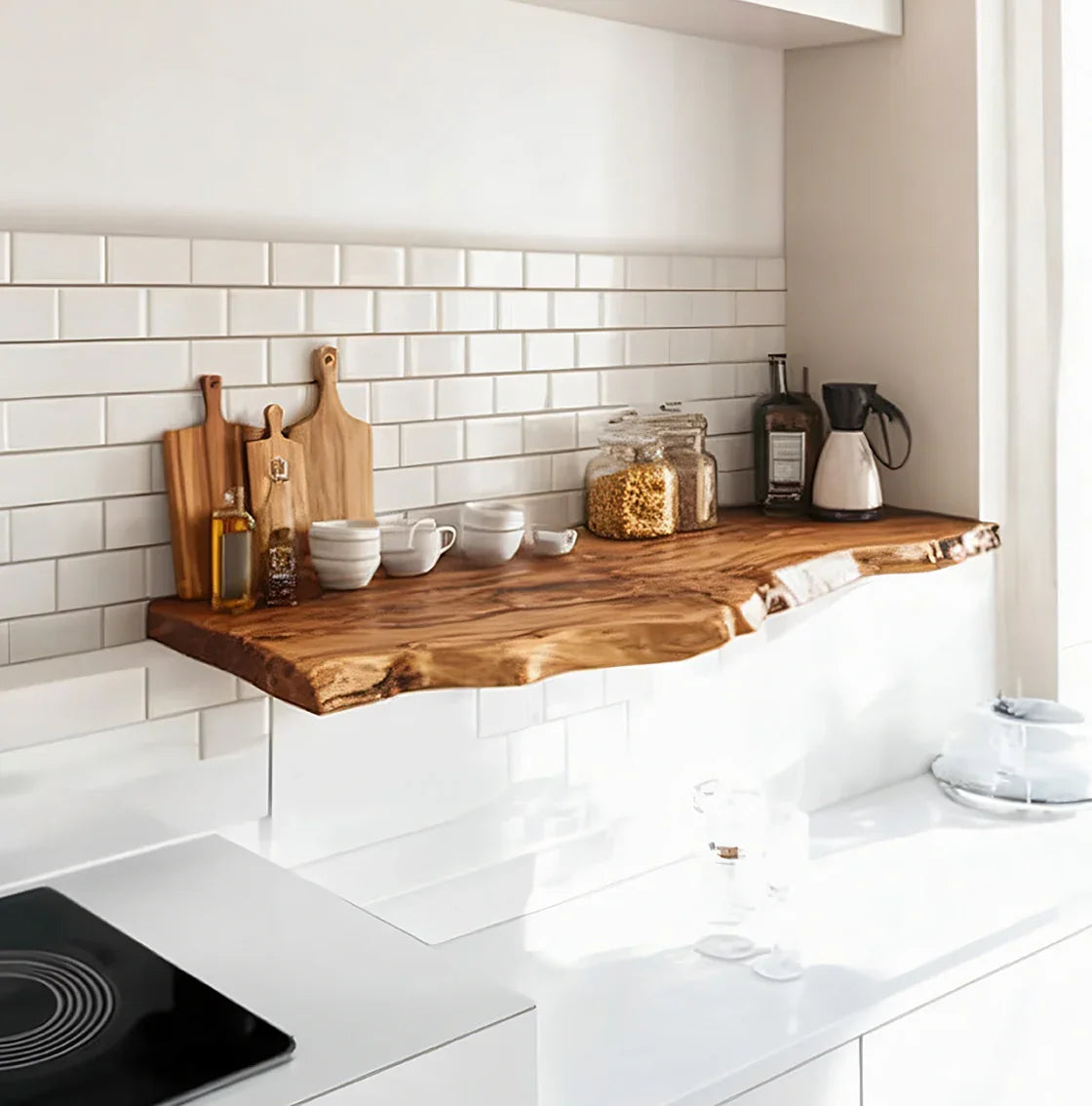
Ashdeco's floating shelf collection includes solid wood options that bring natural warmth to the minimal floating shelf concept. The visible wood grain and handcrafted edges add character that painted MDF shelves simply can't match.


Built-In Shelving: The Architectural Approach
Built-in shelving is integrated into the architecture of the room , recessed into walls, framed by trim, and designed to look like it was always part of the house. It's the most permanent and visually impactful shelving option, but also the most involved to install.
Where Built-Ins Work Best
- Flanking a fireplace: The classic application. Shelves on either side of the fireplace create symmetry and provide abundant storage and display space. This is the single most effective way to make a living room feel both grand and organized.
- Surrounding a TV: A built-in media wall with shelves above, below, and beside the TV turns a mounted screen into an integrated part of the room's architecture rather than something stuck on a bare wall.
- An entire wall: Floor-to-ceiling, wall-to-wall shelving transforms a living room into a library. This is a significant design choice that becomes the room's defining feature.
- Alcoves and niches: Older homes often have architectural features , arched niches, window alcoves, under-stair spaces , that are perfect for custom built-in shelving.
Advantages
- Maximizes storage without consuming floor space (recesses into the wall)
- Creates a finished, architectural look that increases home value
- Customizable to exact dimensions and storage needs
- Can include cabinets below for hidden storage, open shelves above for display
- Makes a room feel larger by using wall depth instead of floor area
Limitations
- Most expensive option , custom carpentry or high-end cabinet systems
- Permanent , can't take them with you when you move
- Requires professional installation in most cases
- Not feasible in all homes (load-bearing walls, rental restrictions)
- Planning and construction take weeks to months

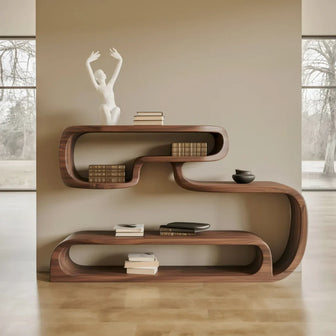
Ashdeco Modern Wooden Bookshelf – Handcrafted Artistic Curved Shelf
DIY vs. Professional Built-Ins
If you're handy, basic built-in shelving between two walls (an alcove, for example) is achievable as a weekend project using pre-cut lumber and a level. But anything involving trim work, cabinet construction, or structural modification is professional territory.
A middle-ground option: freestanding bookcases that are designed to look built-in. Place them wall-to-wall and add crown molding at the top to integrate them with the room's trim. This gives 80% of the built-in look at a fraction of the cost and commitment.
Freestanding Shelving: Flexible and Moveable
Freestanding shelves , bookcases, étagères, ladder shelves, and tree-style shelving units , stand on their own without wall mounting. They're the most versatile category and the easiest to incorporate into a living room without tools or permanent changes.
Types of Freestanding Shelving
Traditional Bookcases: The workhorses of freestanding shelving. Available in every size from small two-shelf units to tall five-shelf towers. Best for heavy book collections and general living room storage.
Étagères: Open-frame shelving units, typically with metal frames and wood or glass shelves. They have a lighter visual presence than solid bookcases, making them better for smaller spaces where a solid bookcase would feel heavy.
Ladder Shelves: Shelving that leans against the wall with progressively narrower shelves toward the top. Trendy, space-efficient, and good for display items. Less ideal for heavy books due to the leaning angle.
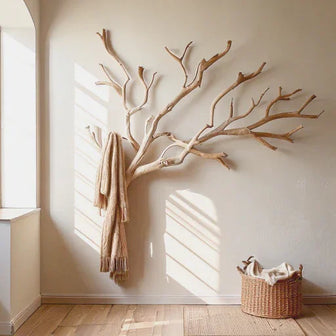
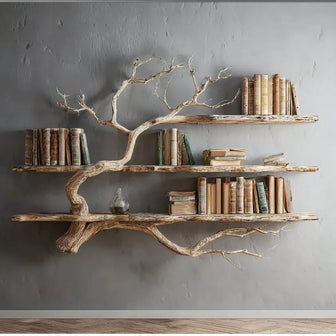
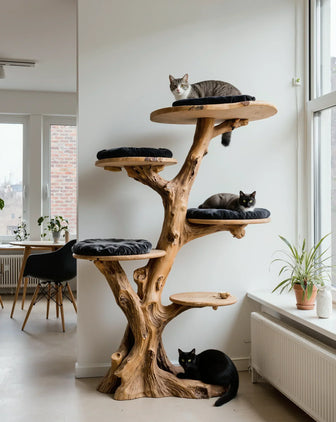
Tree Bookshelves: Sculptural shelving with organic, branch-like forms that spread outward from a central trunk. These are functional art pieces , they hold books and decorative items while serving as a visual centerpiece. Ashdeco's tree bookshelves are handcrafted from solid wood by Vietnamese artisans, making each piece a unique expression of natural form and skilled craftsmanship.
Advantages
- No installation required , place it and start using it
- Moveable , rearrange your room without patching holes or reinstalling hardware
- Available at every price point from budget to premium
- No wall damage , ideal for renters
- Can serve as room dividers in open floor plans
Limitations
- Takes up floor space , the trade-off for not mounting to walls
- Can look bulky in small rooms if not sized appropriately
- Should be anchored to the wall with anti-tip straps in homes with children or in earthquake-prone areas
- Less customizable than built-ins
Don't miss
These pieces qualify for 10% off orders over $2,000. Applied automatically at checkout.
 10% off
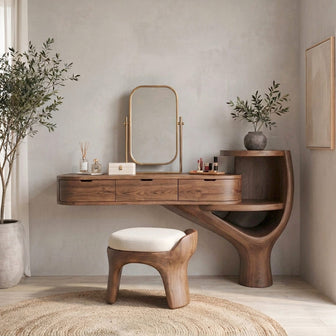
Modern Floating Wooden Vanity – Handmade Rustic Solid Wood Bathroom Cabinet
From $2,090.00
10% off at checkout
10% off
Modern Floating Wooden Vanity – Handmade Rustic Solid Wood Bathroom Cabinet
From $2,090.00
10% off at checkout
 10% off
Solid Wood Turntable Stand – Rustic Record Player Cabinet with Farmhouse Storage
From $2,036.00
10% off at checkout
10% off
Solid Wood Turntable Stand – Rustic Record Player Cabinet with Farmhouse Storage
From $2,036.00
10% off at checkout
 10% off
Tree Bookshelf – Rustic Wooden Book Tree Shelf, Wall-Mounted Natural Wood Décor
$2,099.00
10% off at checkout
10% off
Tree Bookshelf – Rustic Wooden Book Tree Shelf, Wall-Mounted Natural Wood Décor
$2,099.00
10% off at checkout
 10% off
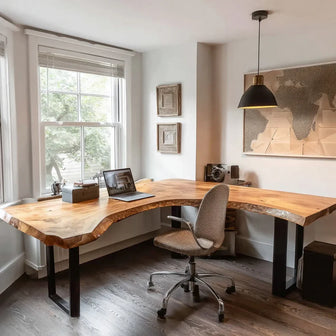
Live Edge L-Shaped Desk – Handmade Solid Wood Corner Desk for Home Office
From $2,340.00
10% off at checkout
10% off
Live Edge L-Shaped Desk – Handmade Solid Wood Corner Desk for Home Office
From $2,340.00
10% off at checkout
Shelving Ideas by Living Room Zone
Now that you understand the three main types, here's how to apply them to specific areas of your living room.
Around the TV
The TV wall is prime shelving territory. Options from simplest to most involved:
- Two floating shelves above a TV console: Quick, inexpensive, and effective. Display art prints, small plants, and decorative objects.
- Floating shelves flanking the TV: Symmetrical shelves on either side create a balanced media wall without furniture bulk.
- A freestanding bookcase beside the TV: Works when the TV is on a stand rather than wall-mounted. The bookcase adds vertical interest and storage.
- Full built-in media wall: The premium option , shelves, cabinets, and the TV all integrated into one architectural feature.
Above the Sofa
The wall above your sofa is the second-largest blank canvas in most living rooms (after the TV wall). Shelving options:
- Single long shelf: A single floating shelf running most of the sofa's width, styled with leaning artwork, books, and objects. Simple and impactful.
- Staggered pair: Two shelves of different lengths at slightly different heights. More dynamic than a single shelf, still clean.
- Gallery shelf arrangement: Three or more shelves at various heights creating an asymmetric gallery wall alternative. Best for displaying art and photographs.
Important note: Keep shelves above the sofa mounted high enough that seated people don't hit their heads when standing up , at least 8-10 inches above the typical head height of a seated person (roughly 24 inches above the sofa back).
Corners and Awkward Spaces
Corners are often wasted in living rooms. Shelving solutions:
- Corner floating shelves: Triangular or L-shaped shelves designed specifically for corners
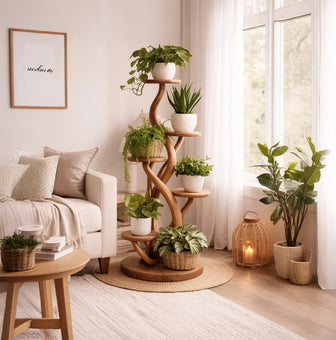
- A tree bookshelf: The organic form fills corners naturally without the rigid, boxy look of conventional shelving
- Narrow ladder shelf: Leans into the corner and adds vertical storage without consuming much floor area
Room Dividers
In open-plan living spaces, freestanding shelving can define zones without closing off sightlines. An open-backed bookcase placed perpendicular to a wall creates a visual boundary between the living room and dining area while remaining airy and accessible from both sides.

Handcrafted Live Edge Floating Shelf – Carved Wall-Mounted Wood Art
How to Style Living Room Shelves
Installing shelves is the easy part. Styling them , making them look intentional rather than cluttered , is where most people get stuck. Here are tested approaches:
The Bookend Method
Anchor each shelf with a "bookend" object on each side , something visually substantial like a stack of books, a plant, or a solid decorative object. Fill the middle more loosely. This creates visual weight at the edges that grounds the display.
The Rule of Three
Group items in threes: tall + medium + small. A vase, a framed photo, and a small plant. A stack of books, a candle, and a decorative bowl. Three items with varying heights create a pleasing visual rhythm without looking overcrowded.
The 60/40 Ratio
Fill about 60% of each shelf's surface area and leave 40% empty. This gives each item room to be seen and prevents the "I'm-using-shelves-as-storage" look. More space = more visual impact per item.
Mix Categories
The most interesting shelf displays combine different types of objects:
- Books (both vertical and horizontal stacks)
- Plants (trailing varieties work especially well on higher shelves)
- Art and photographs (leaned, not necessarily hung)
- Textural objects (woven baskets, ceramic pieces, natural materials)
- Personal items (travel souvenirs, meaningful objects, collections)
Edit Ruthlessly
When in doubt, remove something. The most common styling mistake is putting too much on the shelves. Step back, assess the overall look, and take away anything that feels redundant or cluttered. The items you keep will have more impact.
Choosing the Right Shelf Material
Shelving material affects both aesthetics and performance:
Solid wood: The premium choice. Natural grain adds warmth, each piece has unique character, and solid wood handles weight better than alternatives. Hardwood shelves (oak, walnut, ash) can support heavy books without sagging over time , a common problem with cheaper materials.
MDF/Particle board: Budget-friendly but prone to sagging under weight, especially in longer spans. Fine for light decorative items, inadequate for book collections. The painted surface can chip, revealing the beige composite underneath.
Metal: Industrial aesthetic, strong and thin. Works well for modern and minimalist spaces but can feel cold in rooms going for warmth and comfort.
Glass: Visually light and elegant, but shows dust immediately, requires frequent cleaning, and can crack under heavy loads.
For shelving that combines visual warmth with structural reliability, solid wood is the clear winner , especially for longer spans where material strength directly affects performance.
Frequently Asked Questions
What's the best type of shelf for a small living room?
Floating shelves. They add storage and display space without consuming any floor area. In a small room, floor space is precious , freestanding bookcases eat into it, while floating shelves use wall space that would otherwise be empty. Focus on wall areas above existing furniture (above the sofa, around the TV) to maximize efficiency.
How deep should living room shelves be?
For display shelves: 6-8 inches deep is sufficient for most decorative items, small plants, and picture frames. For bookshelves: 10-12 inches deep accommodates standard book sizes. Deeper than 12 inches and items start getting pushed to the back where they're hard to see and reach.
Can floating shelves hold heavy books?
Yes, if properly installed. A floating shelf mounted into wall studs ( drywall anchors) can typically hold 30-50 pounds depending on the shelf design and length. Solid wood floating shelves generally handle more weight than hollow MDF versions. For heavy book collections, keep shelf spans shorter (under 36 inches) to prevent sagging.
How do I make shelves look styled without spending a lot on decor?
Use what you have. Books you've actually read make better displays than books bought for decoration. Plants propagated from existing houseplants cost nothing. Framed postcards, travel photos, and meaningful personal objects add more character than generic store-bought decor. The most interesting shelf displays tell a story about the person who lives there.
Should shelves on either side of the TV match?
Not necessarily identical, but they should feel balanced. Matching shelves create symmetry, which reads as formal and orderly. Slightly different arrangements (same shelf style but different items) feel more relaxed. The key is visual weight , both sides should feel roughly equal even if the specific items differ.
What's the trend for living room shelving right now?
The current direction is toward natural materials and organic forms over industrial metal-and-glass minimalism. Solid wood floating shelves, sculptural tree-style bookshelves, and warm-toned display units are replacing the cold, ultra-minimal look that dominated the last decade. The emphasis is on shelving that feels handmade, personal, and warm , which is exactly where handcrafted solid wood pieces excel.
Find Your Shelving Style
The best living room shelving solution is the one that matches how you actually live. Heavy reader? A freestanding bookcase or full-wall built-in gives you room to grow your collection. Prefer minimal decor with a few curated objects? Floating shelves provide just enough display space without overwhelming the room. Want something that's equal parts functional and beautiful? A handcrafted tree bookshelf or set of solid wood floating shelves brings the warmth of natural wood and artisan craftsmanship into the equation.
Whatever direction you choose, remember that shelves are one of the few furniture elements that are both functional and expressive. They store your things and display your personality. Get them right, and your living room gains both organization and character in one move.