Quick view
- Why Solid Wood Beats Every Other Coffee Table Material
- Best Solid Wood Types for Coffee Tables - Oak, Walnut, Maple, Acacia & More
- Solid Wood vs Veneer vs MDF vs Particle Board - How to Tell the Difference
- How to Choose the Right Size - The Two-Thirds Rule Explained
- Shape Guide - Rectangular, Round, Oval, or Square?
- Coffee Table Base Styles - How the Bottom Changes Everything
- Solid Wood Coffee Table Styles That Define Your Living Room
- Storage & Multi-Function Features - Do You Actually Need Them?
- Finish & Care - Protecting Your Investment for Decades
- How Much Should You Spend - Solid Wood Coffee Table Cost Breakdown
- 7 Mistakes People Make When Buying a Solid Wood Coffee Table
- Frequently Asked Questions
Shop this guide
Handcrafted Coffee Tables, made to order in solid wood.
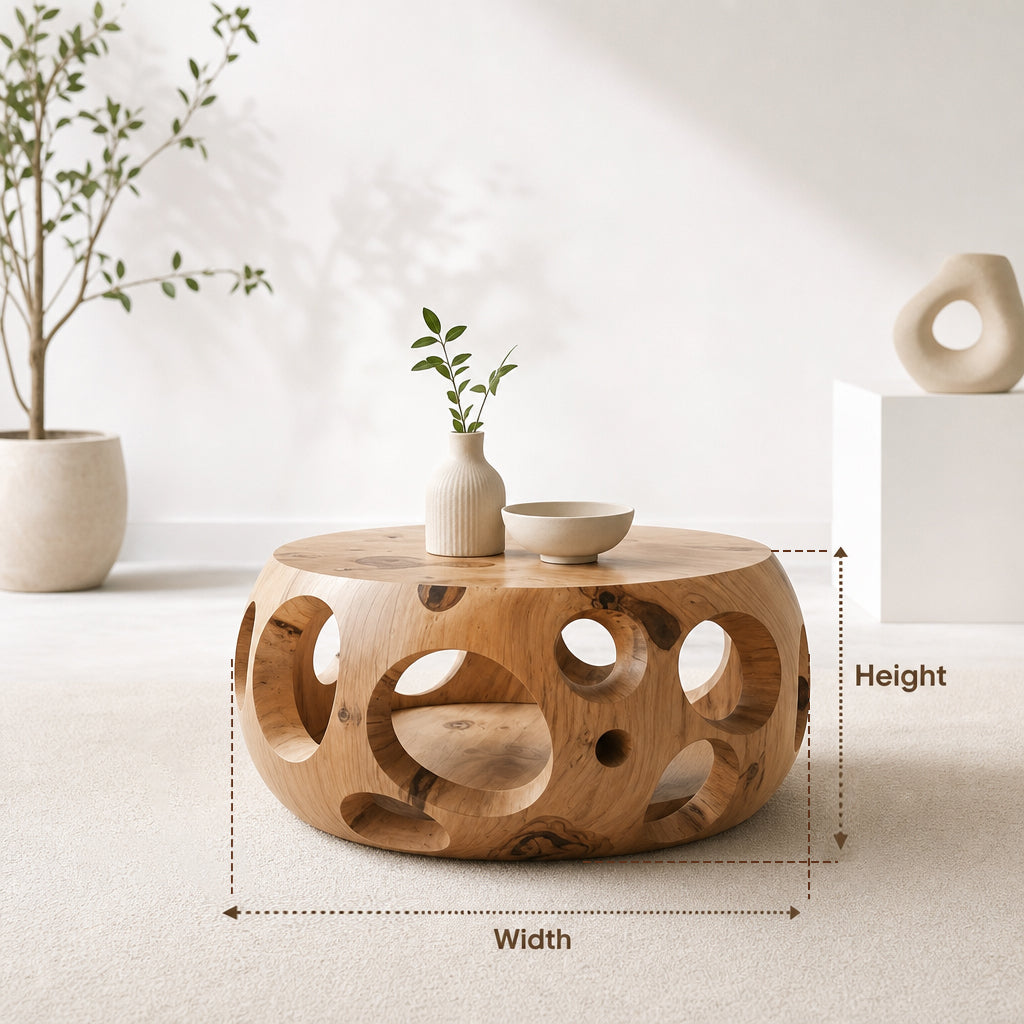
 Round Biomorphic Solid Wood Coffee Table Sculptural Hollowed Center Table
From $2,156.0010% off at checkout
Round Biomorphic Solid Wood Coffee Table Sculptural Hollowed Center Table
From $2,156.0010% off at checkout
 Curved Biomorphic Solid Wood Coffee Table Monolithic Organic Low Table
From $1,789.00
Curved Biomorphic Solid Wood Coffee Table Monolithic Organic Low Table
From $1,789.00
 Christmas edit
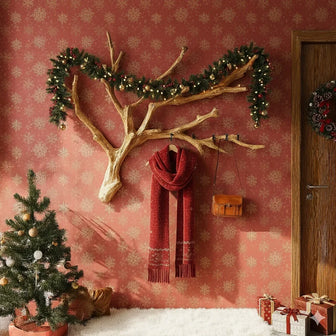
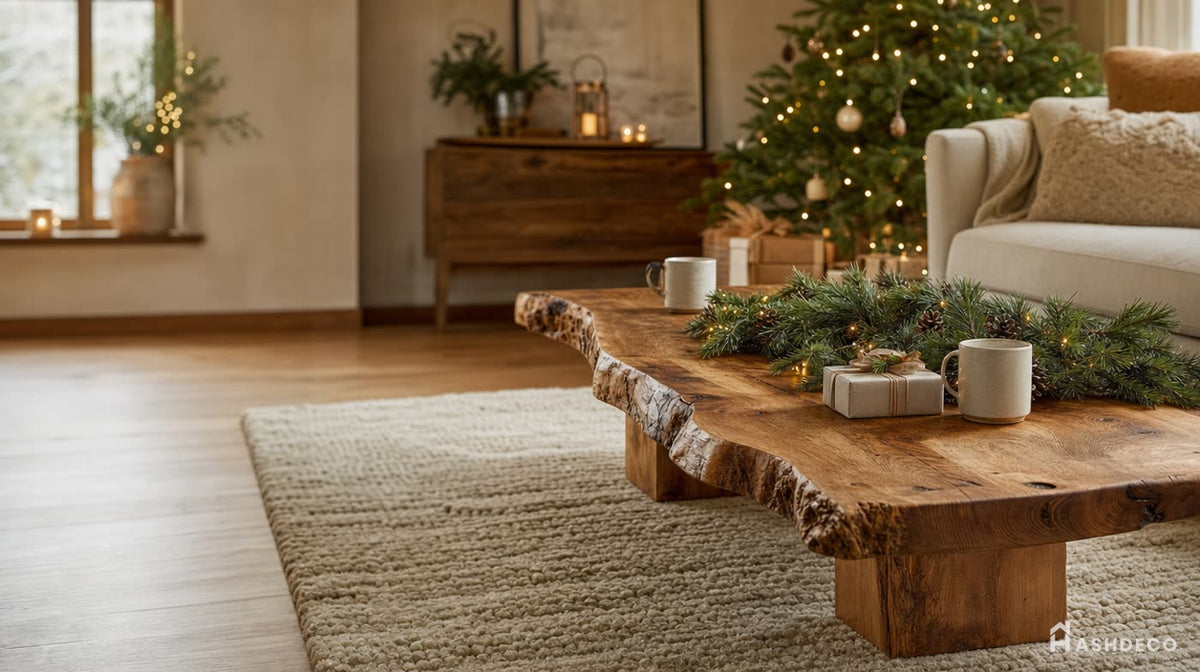
Handcrafted Live-Edge Solid Wood Christmas Coffee Table with Monolithic Tree-Trunk Stump Pedestal Base & Natural Slab Top
From $2,176.0010% off at checkout
Christmas edit
Handcrafted Live-Edge Solid Wood Christmas Coffee Table with Monolithic Tree-Trunk Stump Pedestal Base & Natural Slab Top
From $2,176.0010% off at checkout
 Modern Handcrafted Solid Wood Square Plinth Coffee Table with Open Storage & Architectural Block Pillars
From $1,567.00
Modern Handcrafted Solid Wood Square Plinth Coffee Table with Open Storage & Architectural Block Pillars
From $1,567.00
 Modern Handcrafted Solid Wood Plinth Coffee Table with Cantilevered Top, Storage Cubby & Drawer
From $1,865.00
Modern Handcrafted Solid Wood Plinth Coffee Table with Cantilevered Top, Storage Cubby & Drawer
From $1,865.00
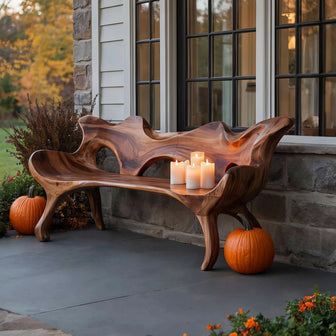
 Sculptural Hand-Carved Tree Root Round Solid Wood Coffee Table & Sprawling Branch Base
From $2,212.0010% off at checkout
Sculptural Hand-Carved Tree Root Round Solid Wood Coffee Table & Sprawling Branch Base
From $2,212.0010% off at checkout
A solid wood coffee table is the single piece of furniture that anchors your entire living room. It's where you set your morning coffee, spread out work papers on a Sunday afternoon, rest your feet after a long day, and gather around when friends come over. Getting it right matters more than most people realize.
The challenge? The market is flooded with veneer and particle board pieces marketed as "wood" - and many buyers don't realize what they've bought until it starts peeling, warping, or collapsing after two years. This guide covers everything you need to know to choose a genuine solid wood coffee table that lasts decades, not seasons.

Why Solid Wood Beats Every Other Coffee Table Material
When you're shopping for a coffee table, you're choosing between solid wood, veneer, MDF, particle board, glass, metal, and stone. Here's why solid wood consistently wins for most households.
Wood is the most popular coffee table material by a wide margin. In a 2024 Living Spaces survey of 400 shoppers, 65% said wood was their preferred coffee table material - more than glass, marble, metal, and upholstered options combined.
Solid Wood Coffee Table vs Veneer
Veneer is a thin slice of real wood (often 1/32" to 1/16" thick) glued onto a cheaper core material like MDF or particle board. It looks like solid wood from the surface - at first. But veneer has hard limits:
- Cannot be refinished deeply. Once you sand through that thin layer, the core shows. Solid wood can be sanded and restained multiple times over decades.
- Peels and bubbles in humid environments. The adhesive bond breaks down, especially near the edges where moisture gets in.
- Edge banding fails over time. Those thin strips along the edges are the first to separate, revealing the fake core underneath.
- Lifespan: 5–10 years with daily use vs 25–50+ years for solid wood.
Veneer makes sense for formal living rooms that rarely get used. For a table you actually live with every day, solid wood is the only honest choice.

Solid Wood vs MDF and Particle Board
MDF (medium-density fiberboard) and particle board are engineered materials made from compressed wood fibers or chips bound with resin. They're cheap for a reason:
- Swelling and disintegration when exposed to moisture - a single spilled drink left unattended can cause permanent damage.
- Cannot hold screws well after initial assembly. Cam-lock joints in flat-pack MDF tables loosen over time and cannot be retightened effectively.
- Zero resale value. A 5-year-old MDF table is landfill. A 10-year-old solid wood table can sell for 40–60% of its original price.
- Short lifespan: 3–7 years for particle board, 5–10 years for quality MDF.
Solid Wood Coffee Table vs Glass and Stone
Glass and marble have their place in formal or minimalist interiors, but they're impractical for most daily use: glass shows every fingerprint and water spot, marble stains from coffee and wine and needs resealing every 6–12 months, and both feel cold in a room meant for comfort. Neither can be repaired easily - a chip in glass or marble is permanent. Solid wood brings warmth, develops character over time (patina), and can be repaired from almost any damage a normal household throws at it.
The Long-Term Cost Reality
Here's the math that changes the conversation:
| Material | Purchase Price | Lifespan | Cost Per Year |
|---|---|---|---|
| Particle board | $100–200 | 3–5 years | $30–50/year |
| MDF | $200–400 | 5–8 years | $30–65/year |
| Veneer | $300–700 | 7–12 years | $30–70/year |
| Solid oak | $500–900 | 25–40 years | $15–30/year |
| Solid walnut | $700–1,800 | 30–50+ years | $15–40/year |
Solid wood costs more upfront but costs less per year than cheap alternatives. Over a lifetime, buying one solid wood table is cheaper than buying three or four veneer replacements.
The Sustainability Angle
The global eco-friendly furniture market is growing at approximately 10% annually from 2026 to 2033 (Grand View Research, 2024). Nearly 10% of consumers say they're willing to pay a premium for sustainably produced goods (PwC Voice of Consumer Survey, 2024). Solid wood furniture aligns with this shift: it's made from a renewable resource, contains no formaldehyde-laden resins (unlike MDF), and its long lifespan means fewer pieces end up in landfills.

Every Ashdeco solid wood coffee table is hand-carved from a single selected slab - no veneer, no MDF, no shortcuts. Shop solid wood coffee tables →
Best Solid Wood Types for Coffee Tables - Oak, Walnut, Maple, Acacia & More
Not all wood is equal. The species determines hardness, grain pattern, color, price, and how the table will age. Here's a detailed comparison of the seven most common solid wood species used for coffee tables.
The Full Comparison
| Wood Type | Janka Hardness | Durability | Grain Pattern | Color Range | Price | Best Style Match |
|---|---|---|---|---|---|---|
| White Oak | 1,360 | 8/10 | Prominent, ray fleck | Light tan to medium brown | $$ | Traditional, Rustic, Farmhouse |
| Red Oak | 1,290 | 8/10 | Open grain, bold pattern | Warm pinkish-brown | $$ | Traditional, Craftsman |
| Black Walnut | 1,010 | 8/10 | Straight to wavy, occasional curls | Rich dark brown to chocolate | $$$$ | Mid-Century Modern, Contemporary |
| Hard Maple | 1,450 | 9/10 | Subtle, uniform | Creamy white to light tan | $$ | Scandinavian, Modern, Minimalist |
| Acacia | 1,100–1,700 | 8/10 | Varied, dramatic contrast | Honey to dark brown with streaks | $ | Rustic, Bohemian, Budget |
| Teak | 1,155 | 10/10 | Straight, occasionally interlocked | Golden brown, darkens with age | $$$$ | Tropical, Outdoor, Luxury |
| Ash | 1,320 | 8/10 | Similar to oak, less pronounced | Light blonde to medium brown | $$$ | Bent/curved designs, Scandinavian |
| Mango Wood | 1,070 | 7/10 | Interlocked, variable | Warm golden to dark brown | $ | Eco-budget, Rustic, Eclectic |
Janka Hardness Explained
The Janka hardness test measures how much force (in pounds-force, lbf) it takes to embed a 0.444" steel ball halfway into a wood sample. Higher numbers mean harder, more scratch-resistant wood. For a solid wood coffee table that faces daily use, 1,000+ is the minimum you should accept.
- Maple (1,450) is the hardest common choice - ideal for homes with kids who do homework, draw, or play at the table.
- White Oak (1,360) and Ash (1,320) are close behind - excellent all-rounders.
- Walnut (1,010) is softer but still well above the threshold - its beauty comes from rich color and grain, not brute hardness.
- Mango wood (1,070) is the softest on this list - fine for light-use living rooms but not ideal if the table doubles as a work surface.

Which Wood for Your Lifestyle
Kids and pets: Choose hard maple or white oak. Both resist scratches from toys, claws, and accidental impacts. Pair with a matte polyurethane finish for maximum protection.
Formal living room (light use): Black walnut or ash. These woods have stunning grain patterns that look incredible with minimal finishing.
Daily work-from-coffee-table (laptop, meals, projects): White oak or hard maple. Hardness plus closed-grain structure means fewer places for spills to penetrate.
Budget-conscious but still solid wood: Acacia or mango wood. Both are genuinely solid wood at lower price points.
Humid climates or outdoor-adjacent spaces: Teak. Its natural oils make it nearly waterproof - it's what boat decks are made from.
For a deeper species-by-species breakdown across all furniture categories - not just coffee tables - see our best wood species for furniture guide.



Solid Wood vs Veneer vs MDF vs Particle Board - How to Tell the Difference
Knowing the differences on paper is one thing. Spotting them in a showroom or from product photos is another. Here's how to identify what you're actually buying.
Head-to-Head Comparison
| Factor | Solid Wood | Veneer | MDF | Particle Board |
|---|---|---|---|---|
| Durability | 25–50+ years | 7–12 years | 5–8 years | 3–5 years |
| Moisture resistance | Good (varies) | Poor at edges | Very poor | Very poor |
| Can be refinished | Yes, multiple times | No | No | No |
| Weight capacity | 150–300+ lbs | 80–150 lbs | 60–100 lbs | 30–60 lbs |
| Repairability | Sand, fill, restain | Limited touch-up | Not repairable | Not repairable |
| Typical price (48" table) | $400–1,800 | $250–600 | $150–350 | $80–200 |
| Environmental impact | Low | Medium | High | High |
| Resale value (10 yrs) | 40–60% | 10–20% | 0–5% | 0% |
When Veneer Is Actually OK
If the table will sit in a formal living room that gets used maybe twice a month, veneer can work. You get the look of real wood grain at a lower price point, and the limited use means the veneer won't face the wear that causes peeling. Just don't pay solid wood prices for veneer - that's where buyers get burned.
When Solid Wood Is Non-Negotiable
- The solid wood coffee table will be used daily (meals, work, kids' activities)
- You want a piece that ages beautifully and develops character
- You care about long-term cost (buy once, not every 5 years)
- Your household includes kids or pets
- You want a table that can be refinished or restored in the future
How to Spot Fake Solid Wood
Check the edges. Real wood grain wraps naturally around edges and corners. Veneer shows a distinct seam or edge banding - a thin strip that doesn't match the grain flow of the top surface.
Look underneath. Solid wood shows the same grain pattern on the underside as the top (just less finished). Veneer on top + raw MDF or particle board underneath = not solid wood.
Check the weight. Solid wood is heavy. A 48" solid oak coffee table weighs 50–80 lbs. MDF of the same size weighs 35–50 lbs. If a "solid wood" table feels suspiciously light, it probably isn't.
Examine the grain pattern consistency. Real wood has natural variation - no two areas look identical. If the grain repeats perfectly across panels, you're looking at printed veneer or laminate.
Ask about joinery. Solid wood tables use mortise-and-tenon, dovetail, or dowel joints. Cheap constructions use cam locks and plastic connectors - a telltale sign the core material can't hold wood screws.

How to Choose the Right Size - The Two-Thirds Rule Explained
Size is the most common coffee table mistake. A table that's too large makes the room feel cramped; one that's too small looks lost and forces you to reach uncomfortably for your drink.
The Two-Thirds Rule
The golden rule of coffee table sizing: your table should be approximately two-thirds the length of your sofa. For a 90-inch sofa, that's a 60-inch table. For a 72-inch sofa, aim for 48 inches. For sectionals: measure only the main seating section facing the table - don't include the chaise.
Complete Size Guide by Sofa Type
| Sofa Type | Sofa Length | Table Length | Table Width | Height | Best Shape |
|---|---|---|---|---|---|
| Small 2-seater | 60–72" | 40–48" | 18–22" | 15–17" | Oval, Round |
| Standard 3-seater | 72–84" | 48–56" | 20–24" | 16–18" | Rectangular |
| L-shaped Sectional | 78–100" (main section) | 40–54" | 24–30" | 16–18" | Square, Round |
| U-shaped / Conversation | 84–120" | 36–48" | 30–36" | 16–18" | Square, Round |
Height: The Overlooked Dimension
Standard coffee table height ranges from 16 to 18 inches. The critical measurement is your sofa's seat cushion height - your table should sit at approximately the same height or 1 to 2 inches lower. Reaching upward for a drink is uncomfortable and risks spills; reaching slightly downward feels natural. If your sofa seat is 19 inches high, a 17-inch table is your sweet spot.
Spacing: Don't Forget the Walkways
- Between sofa and table: 14–18 inches. Less than 14" and your knees hit the table. More than 18" and you can't reach your coffee without standing up.
- Walkway clearance: 30–45 inches minimum. 30 inches is the bare minimum for single-person passage; 40–45 inches is comfortable for high-traffic areas.
For a full breakdown of sofa-matched heights and clearance rules, see our solid wood coffee table dimensions guide.

Don't miss
These pieces qualify for 10% off orders over $2,000. Applied automatically at checkout.
10% off
Round Biomorphic Solid Wood Coffee Table Sculptural Hollowed Center Table
From $2,156.00
10% off at checkout
10% off
Handcrafted Live-Edge Solid Wood Christmas Coffee Table with Monolithic Tree-Trunk Stump Pedestal Base & Natural Slab Top
From $2,176.00
10% off at checkout
10% off
Sculptural Hand-Carved Tree Root Round Solid Wood Coffee Table & Sprawling Branch Base
From $2,212.00
10% off at checkout
 10% off
Sculptural Oval Solid Wood Coffee Table with Continuous Infinity Wave Base
From $2,176.00
10% off at checkout
10% off
Sculptural Oval Solid Wood Coffee Table with Continuous Infinity Wave Base
From $2,176.00
10% off at checkout
Shape Guide - Rectangular, Round, Oval, or Square?
Shape affects how your room flows, how safe it is for kids, and how functional the surface actually is.
Rectangular
Best for: Standard 3-seater sofas, long narrow rooms, traditional layouts. Rectangular tables echo the linear shape of most sofas, provide maximum surface area, and use rectangular rugs efficiently. Drawback: sharp corners can be a hazard in homes with small children or narrow rooms.

Round
Best for: Small spaces, sectionals, homes with kids, organic modern style. Round coffee tables have surged in popularity in 2026, driven by the organic curves trend. The sweet spot for diameter is 36 inches - ideal range is 30–42 inches depending on room size. Our round coffee table buyer's guide covers wood, size, and style pairings in more depth.

Oval
Best for: Rooms that need rectangular surface area but rounded-edge safety. Oval tables combine the surface area of a rectangle with the traffic-friendly curves of a round table - particularly good in narrow rooms.

Square
Best for: L-shaped or U-shaped sectional configurations, large balanced rooms. Square tables nest perfectly into the corner of an L-shaped sectional, giving every seat equal access.
Quick Decision Matrix
| Your Situation | Recommended Shape |
|---|---|
| Standard sofa in average living room | Rectangular |
| Small room under 150 sq ft | Round or Oval |
| L-shaped sectional | Square or Round |
| U-shaped seating arrangement | Square |
| Homes with young children | Round or Oval |
| Formal living room, rarely used | Rectangular (any size) |
| Long narrow room | Rectangular (slim width) |
Furnishing a small apartment or studio specifically? Our guide to small coffee table ideas for apartments and studios covers layout math for tight footprints.
Coffee Table Base Styles - How the Bottom Changes Everything
Most buying guides skip this entirely. But the base style determines how heavy the table feels, how much legroom you have, how easy it is to clean underneath, and whether it's safe around kids.
Four-Leg Base (Traditional)
Legroom: Maximum. Visual weight: Light - the open base shows more of your rug and floor. Stability: Good, but corners can be bumped into. Best for: most living rooms, especially small spaces where visual lightness matters.
Pedestal Base (Single Center Support)
Legroom: Excellent in all directions. Visual weight: Sculptural. Stability: Can be less stable than four-leg designs if the footprint is narrow - watch for tipping risk with kids. Best for: formal living rooms, homes where people sit cross-legged near the table.
Trestle or X-Base
Legroom: Restricted by the horizontal crossbeam. Visual weight: Heavy and grounded. Stability: Excellent - among the most stable coffee table designs. Best for: farmhouse, rustic, and traditional interiors.
Plinth or Solid Block Base
Legroom: None - the base is a solid block from floor to tabletop. Visual weight: Very heavy. Stability: Cannot tip - the safest option for very active households with toddlers. Best for: large rooms, contemporary or minimalist interiors.
Hairpin or Metal Leg Base
Legroom: Maximum - thin metal legs take up virtually no space. Visual weight: Minimal, airy. Stability: Depends on leg thickness and attachment quality. Best for: mid-century modern, Scandinavian, and contemporary styles.

Solid Wood Coffee Table Styles That Define Your Living Room
The style of your coffee table should harmonize with your overall interior design aesthetic - or intentionally contrast with it as a statement piece.
Live Edge
Live edge coffee tables preserve the natural bark line of the wood slab, making each piece truly one-of-a-kind. The organic, irregular edge brings nature indoors and has been one of the strongest trends in solid wood furniture since 2020. Best woods: walnut (dark dramatic edge), oak (lighter, subtler), acacia (highly varied grain). Wondering whether the premium is worth it? Our comparison, Live Edge Coffee Table vs Regular: Is It Worth $500+?, breaks down the real cost-per-year math.
Mid-Century Modern
Clean lines, tapered legs, and warm wood tones define mid-century modern coffee tables - slender profiles, angled legs (often 15–20 degrees), minimal ornamentation. Best woods: walnut (the quintessential mid-century wood), teak, maple.
Farmhouse / Rustic
Thick tops (often 2" or more), chunky turned or trestle legs, and distressed or weathered finishes. Best woods: reclaimed oak, pine, acacia. See more direction in our rustic coffee table ideas guide.
Scandinavian
Light wood tones, minimal profiles, functional elegance - "less but better." Best woods: ash, birch, light oak, maple.
Industrial
Solid wood combined with metal elements - steel pipe legs, welded iron frames, black powder-coated bases. Best woods: reclaimed pine, oak, mango wood.
Contemporary / Organic Modern
The 2026 trend in contemporary furniture is organic modern - sculptural forms, burl wood surfaces, asymmetrical shapes, mixed materials. Best woods: burl wood (the dominant 2026 trend), olive wood, figured walnut.
As a handmade furniture brand, Ashdeco crafts each solid wood coffee table from carefully selected timber, finished by hand to highlight the natural grain and character of every piece. Unlike mass-produced furniture built on automated lines, each Ashdeco table goes through individual quality checks, ensuring the joinery, finish, and final appearance meet standards that factory output simply cannot match.
If you're drawn to the organic modern style, explore how Ashdeco's handcrafted tree bookshelves use similar craftsmanship principles - the same attention to wood selection and hand-finishing that goes into our coffee tables.
Storage & Multi-Function Features - Do You Actually Need Them?
| Storage Type | What It Holds | Best For | Trade-off |
|---|---|---|---|
| Open shelf | Books, magazines, baskets, remotes | Readers, families, styled rooms | Visible clutter if not maintained |
| Drawers (1–2) | Remotes, chargers, notebooks | Minimalists, work-from-home | Reduced legroom under table |
| Lift-top | Laptops, paperwork, hidden workspace | WFH professionals | Mechanism can wear over time, higher cost |
| Trunk/chest style | Blankets, seasonal decor, games | Families, small apartments | Heavy to open |
| No storage | Nothing - a pure surface | Formal rooms, statement pieces | No clutter hiding option |
The Lift-Top Trend
Lift-top coffee tables have become one of the fastest-growing categories in 2026, driven by the continued normalization of working from home. The mechanism raises the tabletop to a comfortable working height (usually 24–28 inches) while revealing a hidden compartment for your laptop and chargers.
Storage Decision Quick Guide
| Household Type | Recommended Storage |
|---|---|
| Work-from-home professional | Lift-top with compartment |
| Family with young children | Trunk/chest style |
| Avid readers / book collectors | Open shelf or 2-drawer |
| Minimalist, low-clutter lifestyle | 1 small drawer |
| Formal living room | No storage needed |
Already have a table and just need to style it? Our coffee table books display guide covers exactly how much surface to leave clear.
Finish & Care - Protecting Your Investment for Decades
The finish on a solid wood coffee table is its first line of defense against spills, scratches, UV damage, and daily wear. Choosing the right finish and maintaining it properly is the difference between a table that looks great at year 20 and one that looks wrecked by year 5.
Finish Types Compared
| Finish Type | Durability | Appearance | Reapplication | Best For |
|---|---|---|---|---|
| Polyurethane | 9/10 | Glossy to satin | Every 5–10 years | High-use households, families |
| Oil (tung, linseed, Danish) | 6/10 | Natural, shows grain | Every 3–6 months | Low-use rooms, wood purists |
| Wax | 4/10 | Soft sheen | Every 1–3 months | Display pieces, formal rooms |
| Lacquer | 8/10 | Smooth, gloss or matte | Every 8–15 years | Showroom-quality finishes |
| Hard wax oil (Osmo, Rubio) | 7/10 | Natural, protected | Every 1–2 years | The modern sweet spot |
In 2026, matte hard wax oil finishes are the dominant trend - the natural look of oiled wood with significantly better protection than plain oil alone.
Maintenance Schedule
Monthly: Dust with a soft, slightly damp cloth. Use a wood-specific cleaner. Check for water rings or scratches.
Quarterly (oil finishes): Apply a thin coat of the matching oil, let it penetrate 15 minutes, wipe off excess.
Yearly: Inspect the entire surface for wear, lightly sand rough spots with 220-grit sandpaper, and reapply finish.

Common Damage and How to Fix It
Water rings: place a clean cotton towel over the ring and press a warm (not hot) iron on it for 10–15 seconds; for deeper rings, rub gently with a mix of equal parts vinegar and olive oil.
Light scratches: use a wood filler pen or wax stick matched to your wood tone.
Deep scratches or dents: sand with 220-grit, fill if needed, sand again with 320-grit, then reapply finish.
Dull finish: clean thoroughly, lightly sand with the grain using 320-grit, then reapply your finish.
Prevention Tips That Actually Work
- Coasters. Always. One glass of iced tea without a coaster can leave a permanent water ring in a polyurethane finish.
- Trivets or hot pads for any hot dish - wood finishes can craze (develop tiny cracks) from heat exposure.
- Felt pads under decorative objects, vases, and candles.
- Keep away from direct sunlight and heat vents. UV exposure causes uneven darkening; heat vents dry out the wood, leading to cracking.
- Maintain 40–60% indoor humidity. Below 40% in winter can cause cracking; above 60% in summer can cause swelling. A hygrometer costs $10.
If your table has a live edge specifically, we've written a full maintenance walkthrough in How to Care for Your Live Edge Coffee Table - it covers slab-specific issues like edge checking that don't apply to flat-panel tops.

How Much Should You Spend - Solid Wood Coffee Table Cost Breakdown
Price Ranges by Wood Type and Size
| Wood Type | 36–42" | 42–48" | 48–54" | 54–60" |
|---|---|---|---|---|
| Mango Wood | $150–300 | $200–400 | $250–500 | $300–600 |
| Acacia | $200–400 | $250–500 | $350–650 | $400–800 |
| Oak (Red/White) | $300–500 | $400–700 | $500–900 | $600–1,100 |
| Maple | $350–550 | $450–750 | $550–1,000 | $700–1,300 |
| Ash | $350–600 | $500–800 | $600–1,100 | $750–1,400 |
| Walnut | $500–900 | $700–1,300 | $900–1,800 | $1,100–2,200 |
| Teak | $600–1,000 | $800–1,500 | $1,000–2,000 | $1,200–2,500+ |
Prices vary based on construction quality, finish type, and whether the piece is handmade or mass-produced.
The Real Cost: Price Per Year
| Table | Purchase Price | Lifespan | Cost Per Year |
|---|---|---|---|
| Flat-pack particle board | $150 | 4 years | $37.50/year |
| IKEA-style MDF with veneer | $300 | 7 years | $42.86/year |
| Mass-produced solid acacia | $400 | 15 years | $26.67/year |
| Handmade solid oak | $800 | 30 years | $26.67/year |
| Handmade solid walnut | $1,200 | 40 years | $30.00/year |
At the same cost per year, you get to own a beautiful handmade solid wood table instead of replacing cheap furniture every few years. Curious whether building your own pencils out ahead of buying handmade? See our breakdown in DIY vs Handcrafted Coffee Tables: What's Actually Worth It?
Resale Value
Solid wood furniture retains value in a way that engineered wood never does: a solid oak table bought for $800 is still worth $320–480 after 10 years on the used market; a solid walnut table bought for $1,200 is still worth $480–720; an MDF/veneer table bought for $300 is worth $0–30 after 10 years - essentially landfill.
Handmade vs Mass-Produced
Handmade solid wood tables typically cost 30–50% more than mass-produced equivalents. Here's what that premium buys: better joinery (mortise-and-tenon, dovetail, dowel joints instead of cam locks and staples), individually inspected wood selection, hand-applied multi-layer finishes, one-of-a-kind character, and support for skilled craftspeople instead of automated production lines.
Not sure which wood or size fits your room? Browse the full collection by species, shape, and price. Shop live edge solid wood coffee tables →
7 Mistakes People Make When Buying a Solid Wood Coffee Table
1. Buying Veneer Thinking It's Solid Wood
The #1 mistake. Showroom lighting and marketing photos make veneer look identical to solid wood. By the time the edge banding peels and the surface bubbles, the return window has closed. Always check the edges, underside, and weight before buying.
2. Wrong Proportions - Too Big or Too Small
A table larger than two-thirds your sofa length blocks walkways and dominates the room. A table smaller than half your sofa length looks like it belongs in a different room. Measure your sofa, apply the two-thirds rule, and stick to it.
3. Choosing a High-Maintenance Finish for a High-Use Table
An oil-finished walnut table is gorgeous - but if you have kids who do art projects at the coffee table, you'll spend every weekend re-oiling. Match your finish to your actual lifestyle, not your aspirational one. Polyurethane or hard wax oil for daily use; pure oil for show pieces.
4. Ignoring Wood Movement
Solid wood expands in humid summer air and contracts in dry winter heat. This is normal and unavoidable. But a table built without accounting for wood movement - no expansion gaps, rigid glue joints across the grain - will crack. Quality builders use floating panels, breadboard ends, and slotted screw holes to allow natural movement.
5. Trying to Match Wood Tones Perfectly
Your coffee table doesn't need to match your TV stand, dining table, and bookshelf exactly - perfect matching looks artificial and staged. Aim for complementary tones instead, and let the slight variations add depth.
6. No Plan for Finish Protection
Water rings are the #1 cause of premature coffee table wear and appear within the first 6 months if coasters aren't used consistently. The fix costs almost nothing: keep a set of coasters on or near the table at all times.
7. Buying Flat-Pack Without Checking Joinery
Flat-pack furniture is convenient until the cam locks strip and the table wobbles. Before buying, check the joint type:
- Good: Mortise-and-tenon, dovetail, dowel joints, through-tenons with wedges
- Acceptable: Confirmat screws, well-executed pocket hole joinery
- Avoid: Cam locks only, plastic connectors, staples, glue-only joints
If the product listing doesn't mention joinery type, it's almost certainly the cheap kind.
Frequently Asked Questions
Is solid wood better than veneer for a coffee table?
Yes - solid wood lasts 25–50+ years and can be refinished multiple times; veneer lasts 5–10 years and cannot be sanded or restained once the thin layer wears through.
What is the best wood for a coffee table?
Oak for the best balance of durability and value, walnut for premium aesthetics, and maple for the hardest, most scratch-resistant surface.
How thick should a solid wood coffee table top be?
1 to 1.5 inches is standard for most styles; 2 inches or more for live edge and rustic statement pieces.
Can a solid wood coffee table last forever?
No piece of furniture lasts forever, but a well-made solid wood coffee table will last 25–50+ years with proper care - compared to 5–10 years for veneer or MDF.
Does solid wood crack?
It can, if indoor humidity drops below 40% for extended periods or if the table was built without accounting for wood movement. Maintain 40–60% humidity and choose quality construction to prevent it.
How much does a solid wood coffee table cost?
Anywhere from $200 for mango or acacia to $2,000+ for large walnut or teak pieces - the price depends on wood species, size, construction quality, and whether it's handmade.
What height should a solid wood coffee table be?
16 to 18 inches standard, ideally equal to or 1–2 inches lower than your sofa seat height for comfortable reach.
Looking for more solid wood buying guidance? See our Solid Wood Dining Table: The Complete Buyer's Guide for sizing and joinery tips that apply to any wood furniture, or explore how solid wood vs particle board affects furniture longevity across your entire home.