

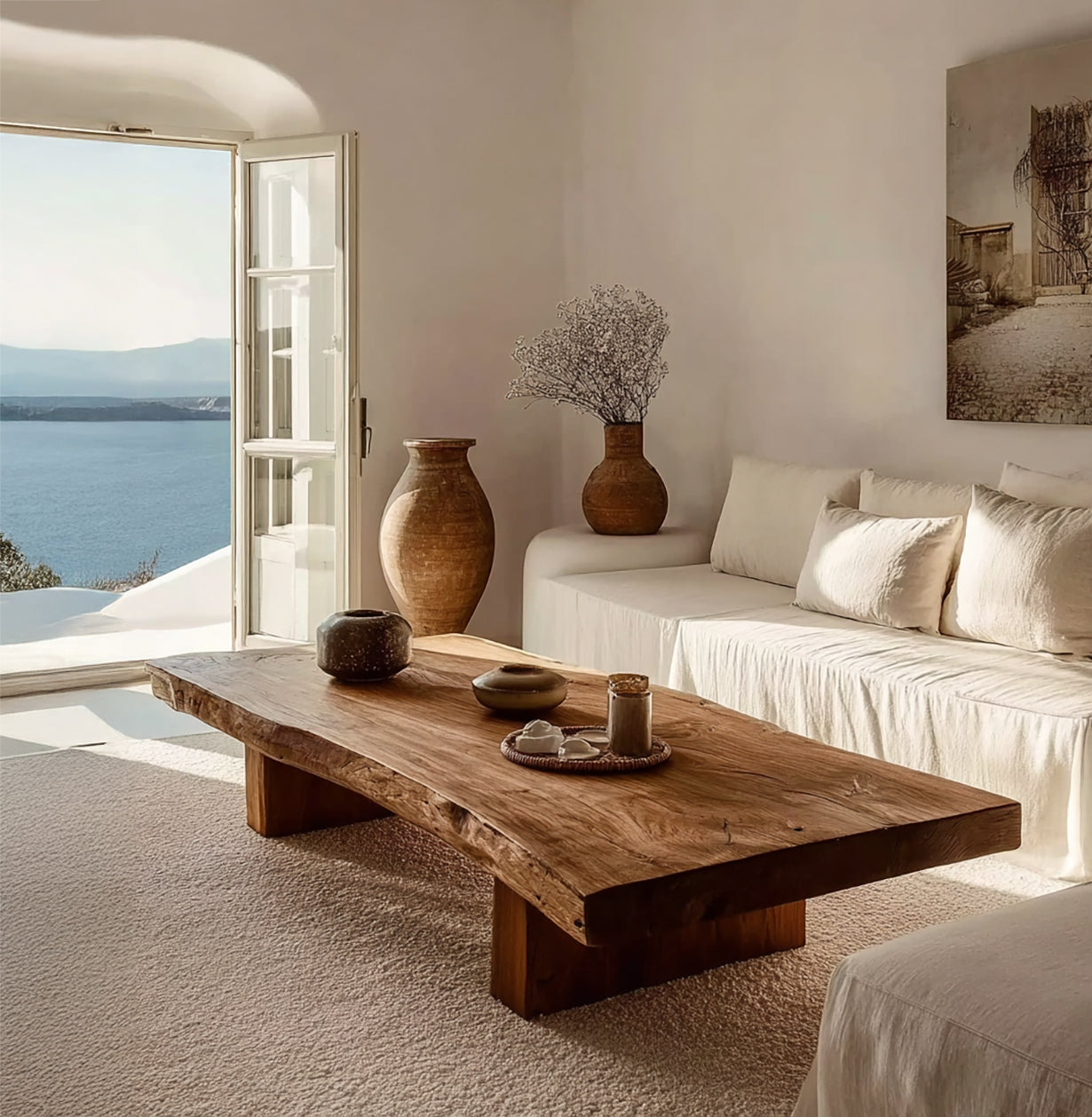
Quick view
Shop this guide
Handcrafted Coffee Tables, made to order in solid wood.
 Round Biomorphic Solid Wood Coffee Table Sculptural Hollowed Center Table
From $2,156.0010% off at checkout
Round Biomorphic Solid Wood Coffee Table Sculptural Hollowed Center Table
From $2,156.0010% off at checkout
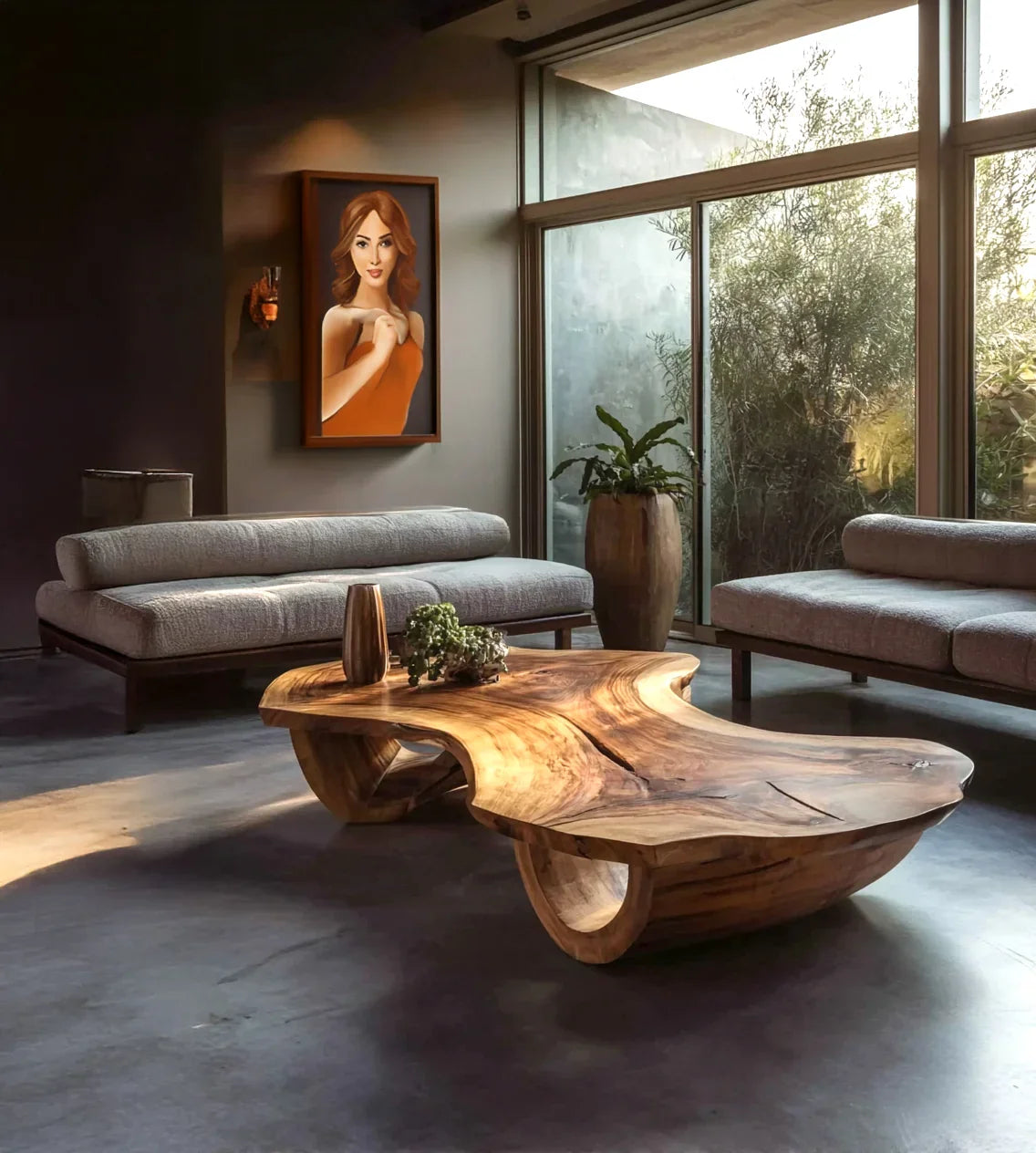
 Curved Biomorphic Solid Wood Coffee Table Monolithic Organic Low Table
From $1,789.00
Curved Biomorphic Solid Wood Coffee Table Monolithic Organic Low Table
From $1,789.00
 Christmas edit
Handcrafted Live-Edge Solid Wood Christmas Coffee Table with Monolithic Tree-Trunk Stump Pedestal Base & Natural Slab Top
From $2,176.0010% off at checkout
Christmas edit
Handcrafted Live-Edge Solid Wood Christmas Coffee Table with Monolithic Tree-Trunk Stump Pedestal Base & Natural Slab Top
From $2,176.0010% off at checkout
 Modern Handcrafted Solid Wood Square Plinth Coffee Table with Open Storage & Architectural Block Pillars
From $1,567.00
Modern Handcrafted Solid Wood Square Plinth Coffee Table with Open Storage & Architectural Block Pillars
From $1,567.00
 Modern Handcrafted Solid Wood Plinth Coffee Table with Cantilevered Top, Storage Cubby & Drawer
From $1,865.00
Modern Handcrafted Solid Wood Plinth Coffee Table with Cantilevered Top, Storage Cubby & Drawer
From $1,865.00
 Sculptural Hand-Carved Tree Root Round Solid Wood Coffee Table & Sprawling Branch Base
From $2,212.0010% off at checkout
Sculptural Hand-Carved Tree Root Round Solid Wood Coffee Table & Sprawling Branch Base
From $2,212.0010% off at checkout
A live edge coffee table typically costs $500-$1,500 - sometimes more. A regular coffee table from a big-box retailer runs $150-$400. That price gap makes people pause, and rightfully so. But the real question isn't "how much does it cost?" - it's "how much value do you get per dollar over its lifetime?"

This comparison breaks down materials, construction, durability, aesthetics, and true cost-per-year so you can decide whether a live edge wood coffee table is the right investment for you.
What You're Actually Paying For
Not sure about sizing? Our coffee table dimensions guide covers standard sizes for every room. The price difference between live edge and regular coffee tables comes down to three things: material, labor, and uniqueness. Understanding each one explains exactly where your money goes - and why the gap exists.
Material: Solid Hardwood vs Engineered Materials
A live edge coffee table starts with a solid slab of hardwood - walnut, oak, maple, or cherry - cut from a single tree. That slab is kiln-dried for weeks to reach 6-8% moisture content. The raw material alone for a 48" walnut slab costs $150-$400 depending on thickness and figure.
Most regular coffee tables under $400 use MDF (medium-density fiberboard), particleboard, or veneered plywood. These materials cost a fraction of solid hardwood. Some use rubberwood or pine with a veneer finish - real wood, but the cheapest grades available.
Construction: Handcrafted vs Factory-Assembled
Every live edge table requires individual attention. The slab must be flattened, sanded through multiple grits (80 → 120 → 180 → 220), filled where needed, and finished by hand. Each piece is handcrafted by Vietnamese artisans who spend 15-30 hours on a single table.
Factory furniture is cut, assembled, and finished by machines in minutes. Dowels, cam locks, and pocket screws replace traditional joinery. This isn't inherently bad - it's efficient. But efficiency and craftsmanship produce different results.
Uniqueness: One-of-a-Kind vs One-of-Ten-Thousand
Your live edge coffee table is literally unique. The grain pattern, edge contour, knots, and color variations exist on no other table in the world. It's a piece of a specific tree that grew for decades in a specific place.
A regular coffee table is identical to thousands of others on the same production line. That's fine if you want function. It's a deal-breaker if you want character.
Durability: How Long Does Each Last?
Longevity is where the value equation flips. A live edge table's higher upfront cost often results in a lower lifetime cost because it simply lasts longer - dramatically longer.
| Factor | Live Edge (Solid Hardwood) | Regular (MDF / Particleboard) |
|---|---|---|
| Expected lifespan | 50-100+ years | 3-8 years |
| Water damage resistance | Surface finish protects; can be refinished | Swells and delaminates permanently |
| Scratch repair | Sand and refinish - good as new | Cannot be refinished; scratches are permanent |
| Structural integrity over time | Solid wood maintains strength | Joints loosen; fasteners strip in soft material |
| Resale value | Holds or increases value | Near zero after 2-3 years |
Here's the math that matters. A $1,000 live edge table lasting 50 years costs $20/year. A $300 MDF table replaced every 5 years costs $60/year - three times more. And that doesn't count the disposal hassle and environmental cost of throwing away furniture every few years.


The Aesthetic Difference
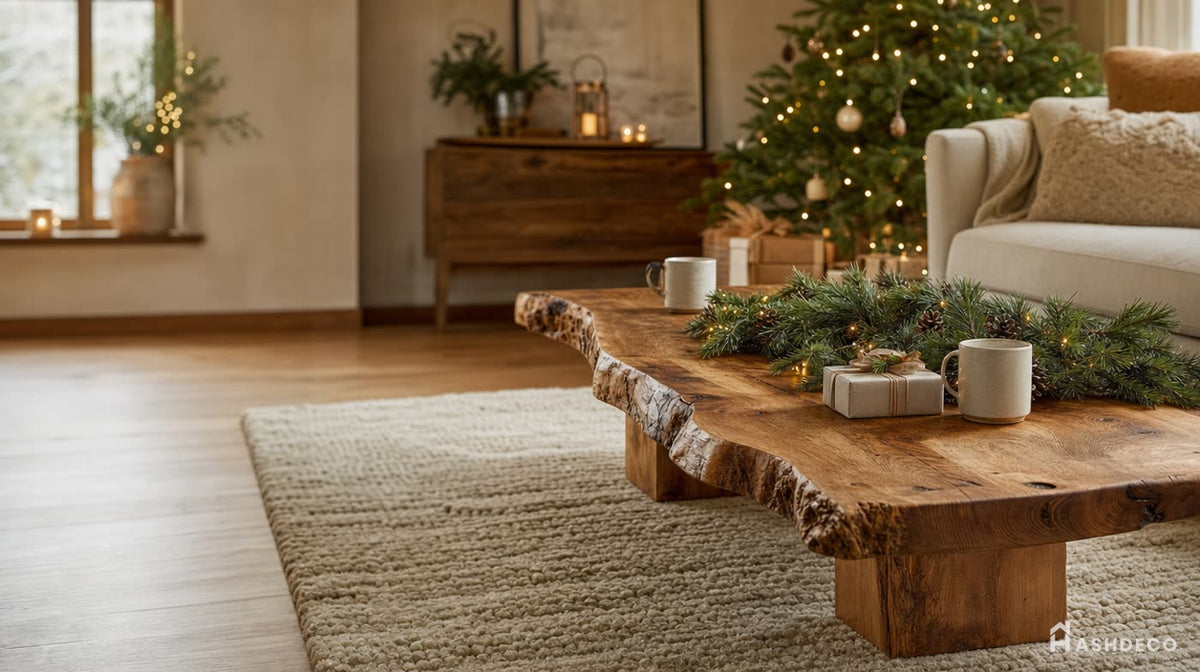
Put a live edge coffee table and a regular one in the same room. The difference is immediately visible - and it's not subtle. Natural wood has depth, warmth, and variation that manufactured materials cannot replicate.
Grain and texture: Solid walnut has grain patterns that shift in the light - dark streaks, golden highlights, occasional burls that look like topographic maps. MDF has a flat, uniform surface because it's ground-up wood fibers pressed into sheets.
The edge: This is the defining feature. The natural bark line on a live edge table is organic, unpredictable, and visually magnetic. Regular tables have straight, factory-cut edges. Both are functional. Only one is interesting.
Aging: Solid wood develops a patina over decades - a warmth and depth that improves the piece. Cherry darkens to a rich red-brown. Walnut mellows to a warmer chocolate. MDF just… deteriorates.
When a Regular Coffee Table Makes Sense
Live edge isn't always the answer. Being honest about this makes the recommendation more useful.
Temporary housing. If you're moving in 1-2 years and don't want to transport heavy furniture, a lighter, cheaper option is practical.
Extremely tight budget. If $500+ genuinely isn't in the budget right now, a solid $200 table beats going into debt for furniture. Upgrade later when you can.
You prefer ultra-modern minimalism. Some design styles call for glass, metal, or lacquered surfaces. If organic wood textures don't fit your vision, that's a valid aesthetic choice.
Don't miss
These pieces qualify for 10% off orders over $2,000. Applied automatically at checkout.
10% off
Round Biomorphic Solid Wood Coffee Table Sculptural Hollowed Center Table
From $2,156.00
10% off at checkout
10% off
Handcrafted Live-Edge Solid Wood Christmas Coffee Table with Monolithic Tree-Trunk Stump Pedestal Base & Natural Slab Top
From $2,176.00
10% off at checkout
10% off
Sculptural Hand-Carved Tree Root Round Solid Wood Coffee Table & Sprawling Branch Base
From $2,212.00
10% off at checkout
 10% off
Sculptural Oval Solid Wood Coffee Table with Continuous Infinity Wave Base
From $2,176.00
10% off at checkout
10% off
Sculptural Oval Solid Wood Coffee Table with Continuous Infinity Wave Base
From $2,176.00
10% off at checkout
When Live Edge Is Clearly Worth It
For most homeowners buying furniture for a space they'll live in for 5+ years, the live edge investment pays for itself. Here's when it's an obvious choice.
You value craftsmanship. Owning something made by hand - not stamped out by a machine - means something to you. Every mark on the table has a story.
You want a conversation piece. Live edge tables get commented on. Guests notice them. They anchor a room in a way flat-pack furniture never will.
You're tired of replacing furniture. If you've bought and discarded cheap coffee tables before, breaking the cycle with one quality piece saves money and frustration long-term.
Sustainability matters to you. One solid wood table lasting 50 years is better for the planet than ten disposable ones ending up in landfills.
What to Expect at Different Price Points
Not all live edge coffee tables cost a fortune. Here's what your budget actually gets you. Our DIY vs handcrafted coffee tables: what's actually worth it? article walks through the specifics.
$400-$700: Smaller slabs (36-44"), species like ash or elm, standard metal legs. Real solid wood, real live edge, real craftsmanship - just a more modest scale.
$700-$1,200: Full-size slabs (48-56"), premium species like walnut or white oak, choice of base styles. This is where most buyers land and where you get the best value-to-impact ratio.
$1,200-$2,500+: Book-matched slabs, waterfall construction, figured wood (curly maple, spalted maple), large statement pieces, or custom dimensions.

See real pricing across all these ranges in our live edge coffee table collection.
The Bottom Line
A live edge coffee table costs more upfront. It costs less per year of ownership. It looks better, lasts longer, holds its value, and gives you something no one else has.
Is it worth $500+? If you're furnishing a home you plan to live in - not staging a dorm room - the answer is yes. It's one of the few furniture purchases that genuinely gets better with time instead of worse.
Frequently Asked Questions
Can I find a quality live edge coffee table under $500?
Yes. Smaller slabs (36-42") in species like ash, elm, or acacia with simple hairpin legs can come in under $500. You're getting real solid wood and genuine live edge - just a more compact size. It's a great entry point.
Do live edge coffee tables hold resale value?
Solid hardwood furniture generally holds 40-70% of its original value on the resale market. Walnut live edge pieces in good condition can hold even more. Compare that to MDF furniture, which has essentially zero resale value after a couple years of use.
Is live edge furniture just a trend that will look dated?
Natural wood furniture has been valued for centuries - it predates any modern "trend." The specific term "live edge" became popular recently, but the concept of showcasing raw wood is timeless. Solid wood ages gracefully. Trendy materials don't.
How much does shipping cost for a heavy wood table?
Most live edge furniture makers include shipping in the price or charge $50-$200 for domestic delivery. A typical live edge coffee table weighs 40-80 lbs depending on species and size. Always confirm the shipping policy before ordering - some smaller makers ship freight, which can be more expensive. We've written a full breakdown in our standard coffee table dimensions — the complete size guide post.
Is MDF really that bad?
MDF isn't terrible for what it is - an affordable, flat, uniform material. It works fine for shelving, cabinet interiors, and items that aren't load-bearing or exposed to moisture. For a coffee table that gets daily use, spills, and wear? Solid wood is the better choice every time.