Quick view
- What "Solid Wood" Actually Means (And What It Doesn't)
- Wood Species: What You Need to Know
- Joinery: The Part That Determines How Long Your Table Lasts
- The Extendable Table Question: Worth It or Not?
- Sizing: How to Not Buy a Table That Dominates or Gets Lost
- Price Breakdown: What You Get at Each Level
- Caring for Your Solid Wood Table
- Making Your Decision
Shop this guide
Handcrafted Dining Tables, made to order in solid wood.
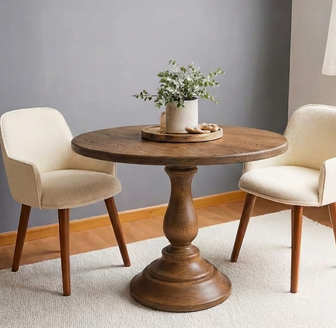
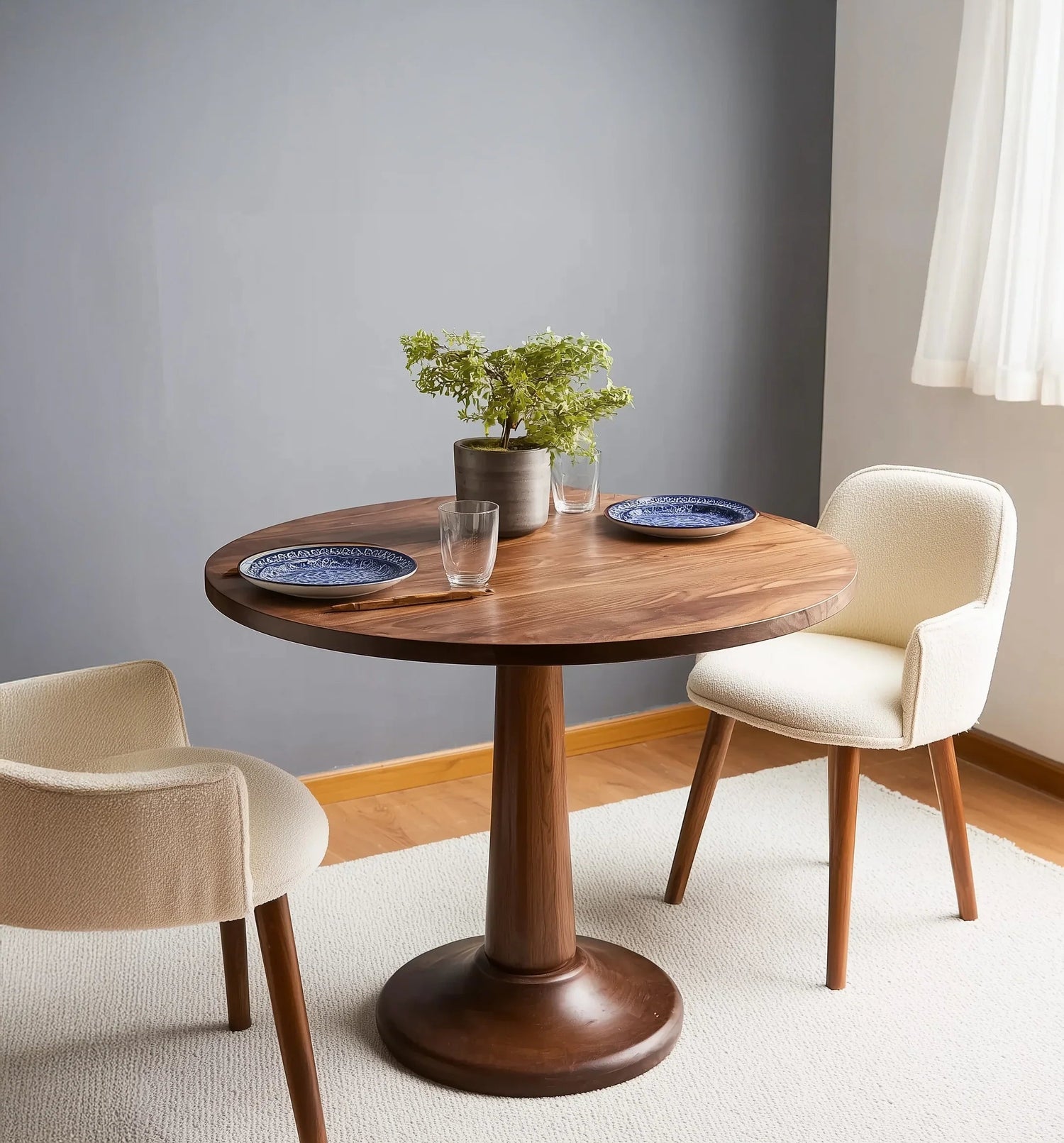
 Round Solid Wood Pedestal Dining Table Handcrafted Solid Wood Center Table
From $1,345.00
Round Solid Wood Pedestal Dining Table Handcrafted Solid Wood Center Table
From $1,345.00
 Round Bistro Dining Table, Small Kitchen Breakfast Table, Compact Circular Dining Table
From $1,022.00
Round Bistro Dining Table, Small Kitchen Breakfast Table, Compact Circular Dining Table
From $1,022.00
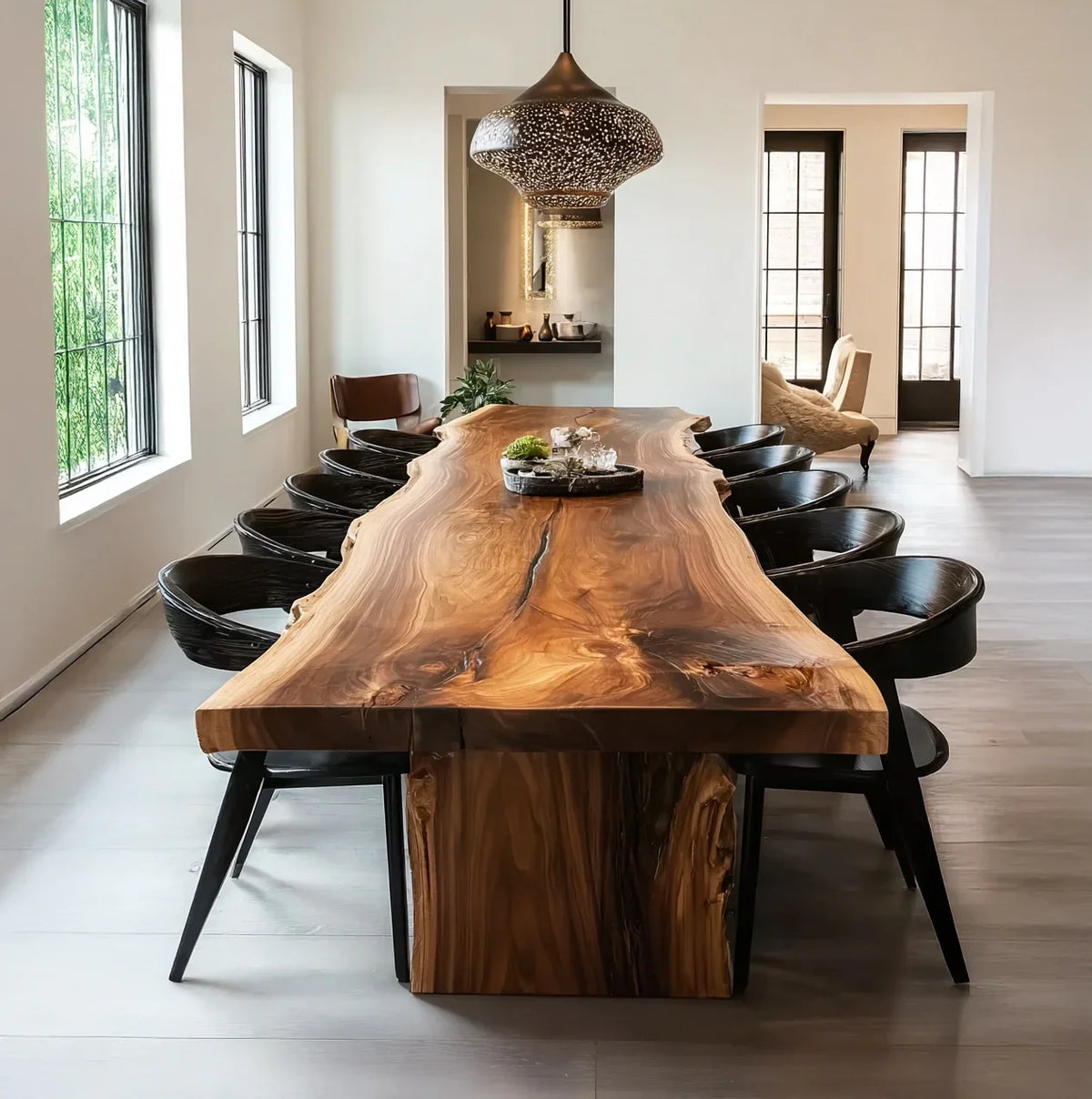
 Organic Modern Live Edge Solid Wood Dining Table - Handcrafted Slab Table with Dual Storage Pedestals
From $6,800.0010% off at checkout
Organic Modern Live Edge Solid Wood Dining Table - Handcrafted Slab Table with Dual Storage Pedestals
From $6,800.0010% off at checkout
 Round Solid Wood Dining Table with Architectural Spider Pedestal Base
From $1,254.00
Round Solid Wood Dining Table with Architectural Spider Pedestal Base
From $1,254.00
 Flowing Pedestal Solid Wood Round Dining Table - Japandi Living Sculpture
From $5,850.0010% off at checkout
Flowing Pedestal Solid Wood Round Dining Table - Japandi Living Sculpture
From $5,850.0010% off at checkout
 Sculptural Pedestal Solid Wood Round Dining Table - Organic Modern Centerpiece
From $5,850.0010% off at checkout
Sculptural Pedestal Solid Wood Round Dining Table - Organic Modern Centerpiece
From $5,850.0010% off at checkout
A solid wood dining table is not a small purchase. You're spending anywhere from under $1,000 to over $5,000, and you expect it to last. Maybe you're buying for a new house, upgrading after years with a flimsy IKEA special, or finally furnishing that dining room you've been putting off.
Whatever brought you here, this guide is meant to help you understand what separates a table that lasts a generation from one that starts wobbling after two years.
We'll cover wood types, joinery, the veneer versus solid debate, extendable tables, sizing, price ranges, and how to figure out what you actually need. No fluff, no sales pitch. Just information so you can make a decision you're not going to regret.
What "Solid Wood" Actually Means (And What It Doesn't)
Let's clear up confusion first, because the term "solid wood" gets thrown around loosely in product descriptions, and not everything labeled that way is the real thing.
Solid wood means the entire tabletop is made from real wood, all the way through. Oak, acacia, walnut, maple. Boards glued together side by side, yes, but still real wood. When you look at the edge of the table, you see continuous wood grain running through it, not a thin layer over something else.
Veneer means a thin slice of attractive wood (maybe 1/50th of an inch) glued on top of something else. That base could be plywood, particleboard, or MDF. The surface looks like wood, maybe even nice wood, but underneath is not. When veneer starts peeling, chipping, or delaminating after a few years, there's no real fix. Sanding it down and refinishing is not an option because you're down to glue and base material within a millimeter.
Engineered wood like MDF or particleboard is even further removed. These materials are made from wood fibers or chips bonded with adhesives. They can be stable and useful in certain contexts, but they are not built to last decades, and they do not age well. Moisture is particularly damaging.
Here's a quick field test you can use: look at the underside of the tabletop. If you see a different material, seams that don't match the top grain, or a very uniform, smooth surface with no natural variation, you're probably looking at veneer over engineered wood. A solid wood underside will show natural grain character, may have small knots, and the color will match the top even if the surface texture differs.
Another test is weight. Solid wood is heavy. If a large dining table feels surprisingly light, be suspicious.
One common misleading phrase is "solid wood construction." That can mean the frame is solid wood but the top is veneer. Always read the full product description or ask specifically about the tabletop material.
Wood Species: What You Need to Know
Different woods have different characteristics. Here's a straightforward breakdown of the most common options for dining tables.
### Acacia
Acacia is a dense, durable hardwood that naturally resists moisture and rot. It's become very popular in imported furniture because it offers solid durability at a moderate price point. The grain is typically bold and interesting, often with dramatic color variation between light golden tones and darker brown streaks. Each piece looks different from the next.
Acacia tables from importers like Ashdeco typically range from around $1,000 to $2,500 depending on size and design. At that price point, you're getting real solid hardwood with natural character. The wood is hard enough to resist daily wear, and because it has some natural oil content, it holds up better around water than some softer woods.
One thing to note: acacia can have some movement (slight expansion and contraction with humidity changes), but quality construction accounts for this with proper joinery and finish.
### Oak
Oak has been a furniture standard for centuries, and for good reason. It's hard, stable, takes finish well, and has a classic look that fits almost any dining room style. White oak is slightly more moisture-resistant than red oak. Oak grain is prominent and can range from subtle to dramatic depending on the cut.
American and European oak tables tend to sit in the mid to premium price range. You won't find many under $1,500 for a genuine solid oak dining table, and well-crafted pieces easily reach $3,000 to $5,000. If you're buying oak, expect to pay for the real thing.
### Walnut
Walnut is generally considered a premium wood. It's dark, rich, and has a flowing grain that many people find more visually interesting than oak. It's slightly softer than oak by some measurements (Janka hardness around 1,010 vs. oak's 1,290), but it's still plenty durable for a dining table and ages beautifully.
The catch is price. Solid walnut dining tables start around $2,500 to $3,000 for smaller or simpler designs, and easily go to $5,000 or more for large live edge slabs or premium craftsmanship. If your budget allows and you love the look, walnut is an excellent choice.
### Rubberwood
You may encounter rubberwood in some imported furniture. It's a softer hardwood from Southeast Asia, often used as a cost-effective option. It's not bad wood, but it's softer and more prone to dents and scratches compared to acacia or oak. Many furniture pieces described as "rubberwood" at lower price points are also constructed with engineered wood components rather than being solid throughout. Proceed with caution and check whether the product description confirms full solid wood construction.


Joinery: The Part That Determines How Long Your Table Lasts
The wood species matters less than most people think. What really determines whether a table lasts twenty years or two is how the pieces are joined together.
Mortise and tenon is the gold standard for table construction. This is a traditional joinery method where a protruding tenon on one piece slots into a precisely cut mortise hole in another piece, often secured with a wooden peg. The joint becomes stronger over time as the wood settles. You typically see this in quality farmhouse tables and artisan furniture. Ashdeco's handcrafted tables use this approach in their modular assembly, with artisans fitting each joint by hand.
Dowel and glue is a common modern method. Wooden dowels are glued into matching holes to hold pieces together. When done well with proper glue and good fit, this is perfectly adequate and used in many solid wood tables. The problem comes when dowels are slightly undersized or glue is cheap, which can lead to joints loosening over time.
Bolt and metal bracket construction is often found in flat-pack or budget furniture. Metal brackets bolted to the wood frame hold everything together. This is functional for assembly but not ideal for long-term durability, and the metal can corrode or loosen with age.
Floating tenon joints are a hybrid approach, using a machined floating tenon (often made of the same wood) that fits into routed grooves. This combines some of the strength of mortise and tenon with modern manufacturing efficiency.
When evaluating a table, look at the connection points between legs and apron, and between apron and top. You want to see solid wood-to-wood contact, appropriate provision for wood movement, and no over-reliance on metal fasteners.
The Extendable Table Question: Worth It or Not?
If you're working with a smaller dining space, you've probably looked at extendable or expandable tables. They promise the best of both worlds: compact day-to-day, extra seating when needed. The reality is more nuanced.
The good: Extendable tables genuinely solve a real problem. If your dining room can only comfortably fit a 60-inch table but you entertain groups of eight or more a few times a year, a table with a leaf makes sense. Some modern extension mechanisms are smooth and reasonably sturdy.
The bad: Every extension mechanism is a potential failure point. Over time, many extension systems develop a wobble that no amount of tightening fully resolves. The leaf itself, if stored separately, is an extra thing to manage. If it's a self-storing leaf hidden within the table, the storage compartment adds complexity and potential for moisture buildup.
One pattern from woodworking forums and Reddit reviews is instructive: extendable tables with simple, well-engineered leaf systems (like a solid wood insert that slides and locks) outperform those with complex multi-position mechanisms or gear-driven slides. If you're considering an extendable table, test the mechanism physically if possible, or at minimum watch a video review showing it in operation.
For pure stability and longevity, a fixed-size table with quality joinery will almost always outlast an extendable equivalent. The trade-off is space. Only you can make that call based on your actual living situation.
Don't miss
These pieces qualify for 10% off orders over $2,000. Applied automatically at checkout.
10% off
Organic Modern Live Edge Solid Wood Dining Table - Handcrafted Slab Table with Dual Storage Pedestals
From $6,800.00
10% off at checkout
10% off
Flowing Pedestal Solid Wood Round Dining Table - Japandi Living Sculpture
From $5,850.00
10% off at checkout
10% off
Sculptural Pedestal Solid Wood Round Dining Table - Organic Modern Centerpiece
From $5,850.00
10% off at checkout
 10% off
Organic Live Edge Solid Wood Dining Table with Sculptural River Legs
From $4,180.00
10% off at checkout
10% off
Organic Live Edge Solid Wood Dining Table with Sculptural River Legs
From $4,180.00
10% off at checkout
Sizing: How to Not Buy a Table That Dominates or Gets Lost
Dining table sizing seems obvious but trips people up more than you'd expect.
The general rule is to allow 24 inches of width per person, and 30 inches depth per seat. For a rectangular table that seats six comfortably, you're looking at roughly 72 inches long by 36 inches wide.
For a table that seats eight, 84 to 96 inches is more realistic. Before you buy, measure your room and account for traffic flow. You want at least 36 inches of clearance behind chairs when they're pulled out. A table that's too large for the room makes the entire space feel cramped and uncomfortable. A table that's too small makes every meal feel pinched.
One practical approach: use painter's tape to mark the table footprint on your floor. Live with it for a few days. Move chairs in and out. See how it feels before committing to a purchase.
Ashdeco offers dining tables in a range of sizes, from compact 32 to 36 inch bistro tables (seating two to four) up to 84-inch and larger live edge slabs for six to eight or more. The Solid Wood Dining Table in the Modern Minimalist line, for instance, is priced at $5,989 and designed for the larger end of that spectrum. The Round Bistro Dining Table at $1,022 is a more compact option for smaller spaces.
Price Breakdown: What You Get at Each Level
Understanding furniture pricing helps you evaluate whether a particular table is genuinely worth it or overpriced for what it is.
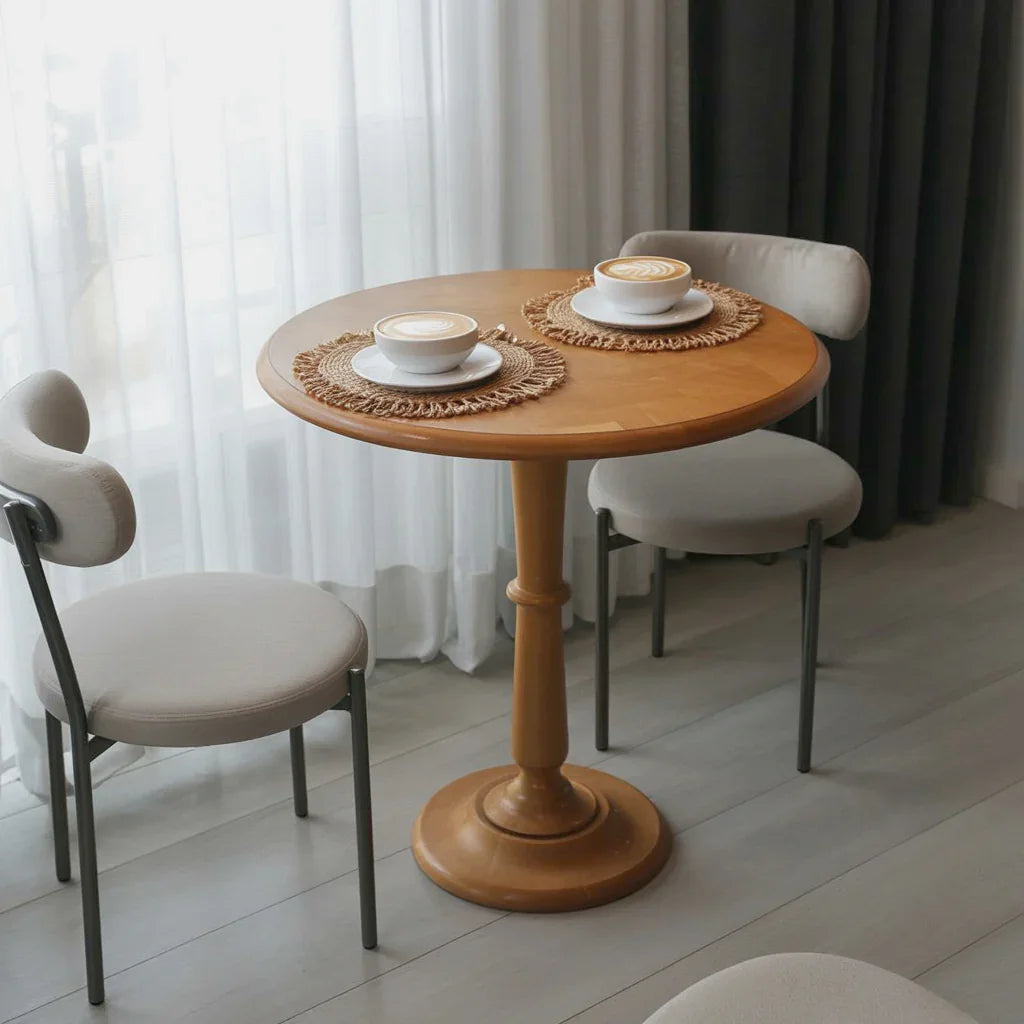
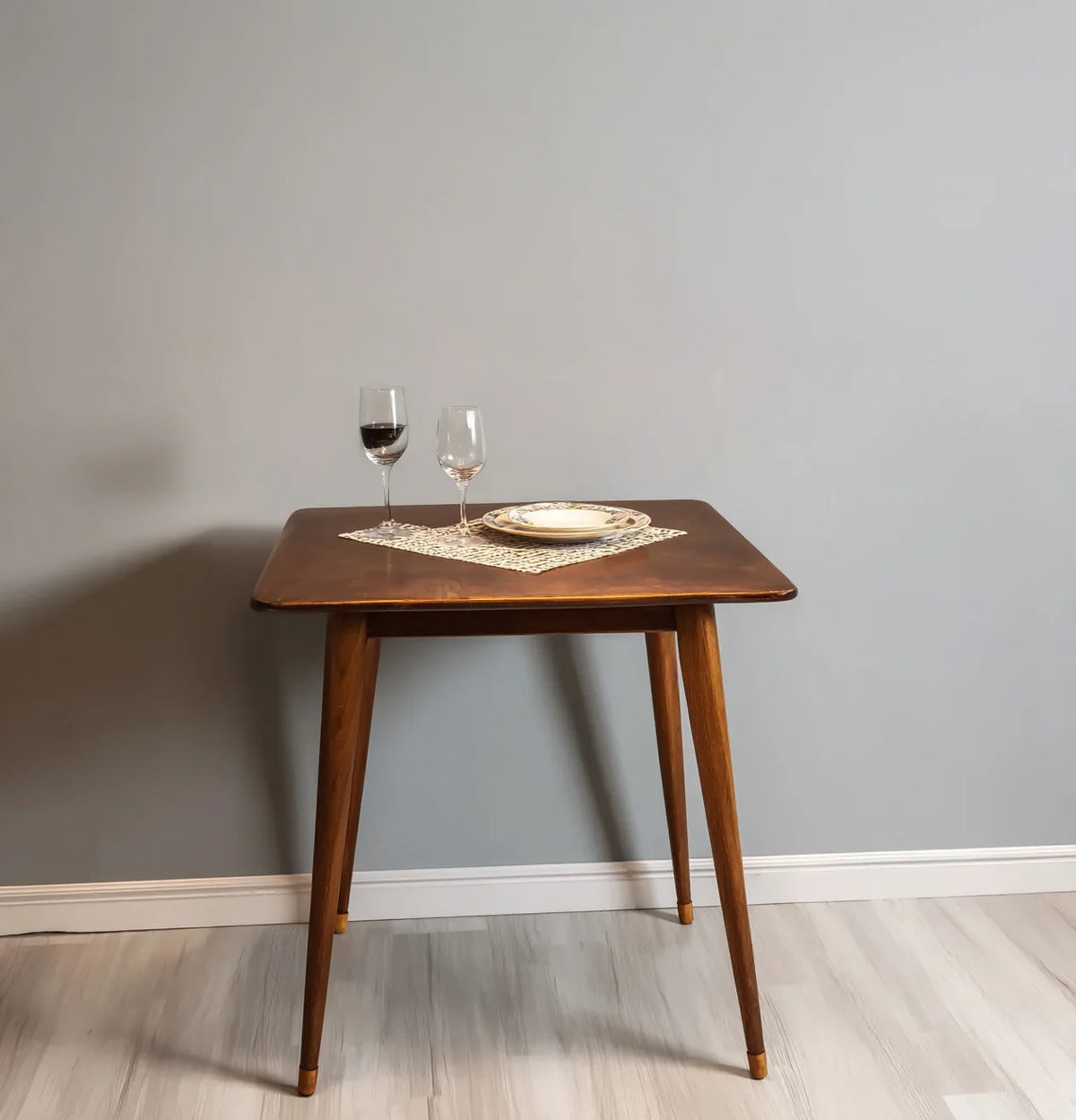
Under $1,000: At this level, solid wood tables are rare. Most options in this range are either veneer over engineered wood, softwood (like pine), or rubberwood with mixed construction. That said, some smaller solid wood bistro tables do fall here, particularly in acacia. The Round Bistro Dining Table from Ashdeco at $1,022 is borderline and represents solid acacia at a genuinely accessible price point. Small Space Square Dining Table at $867 is one of the most affordable genuine solid wood dining tables you'll find online.
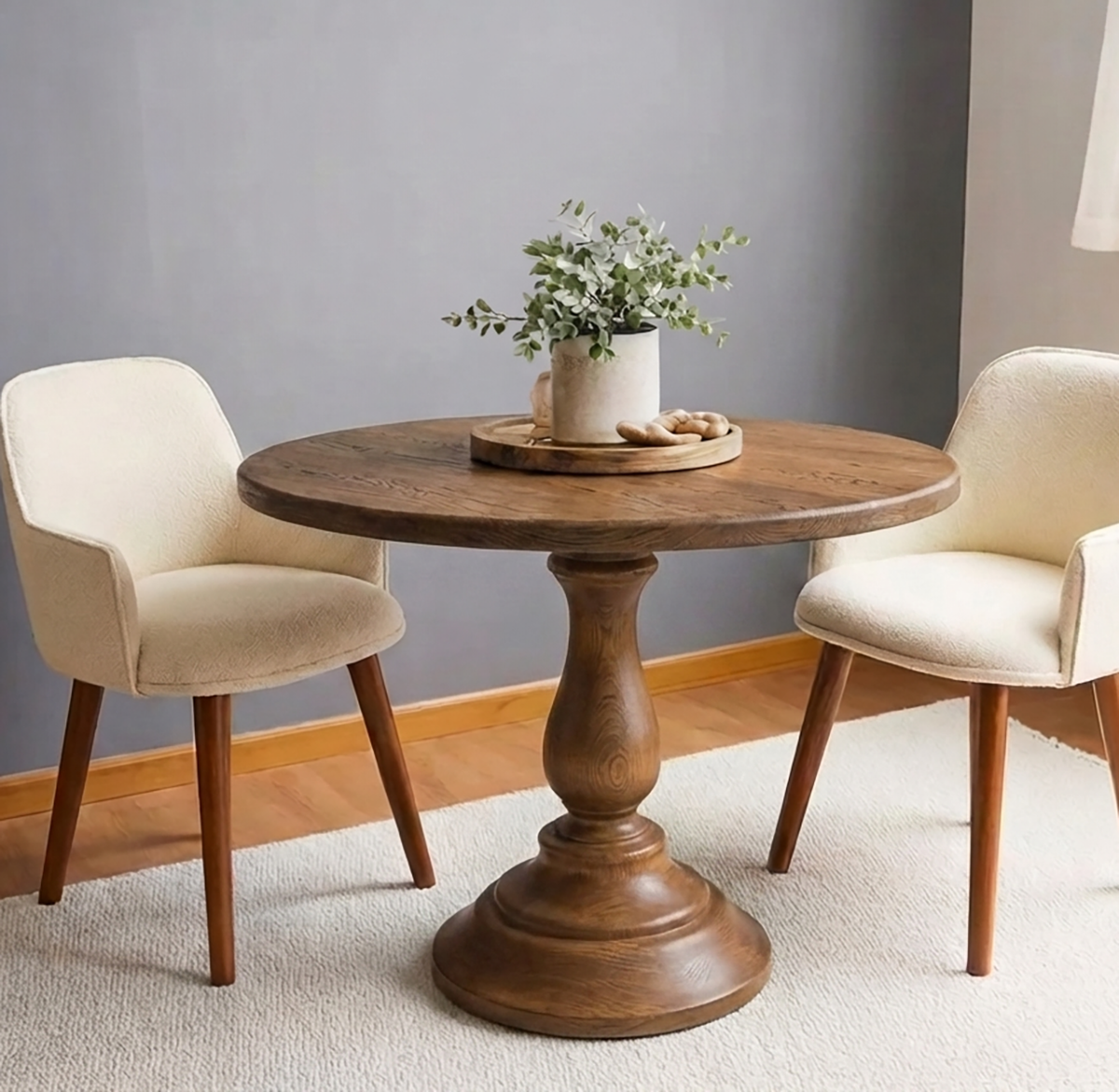
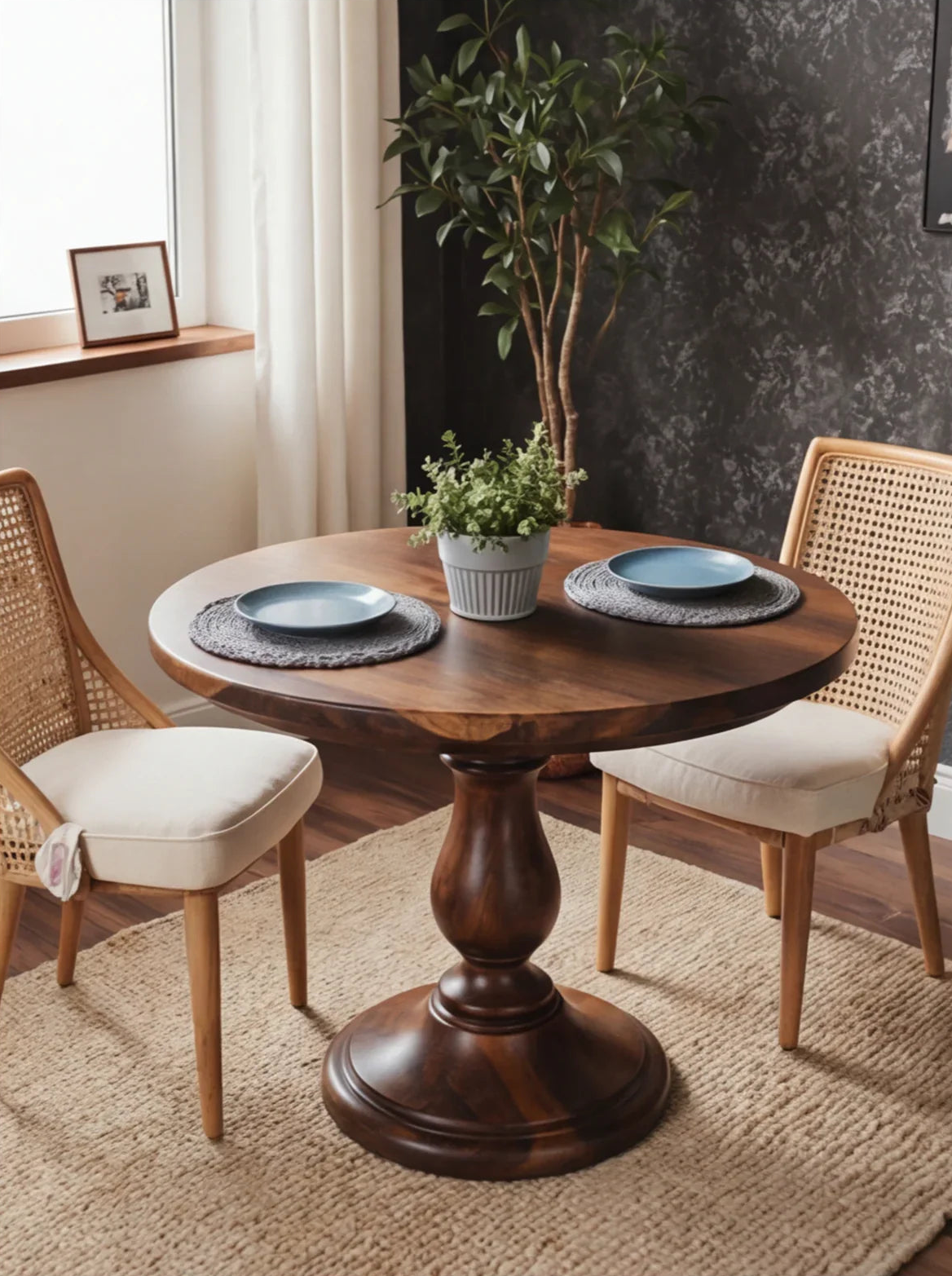
$1,000 to $2,500: This is where solid hardwood tables become more realistic. You're in the territory of solid acacia and solid oak tables with decent joinery. Ashdeco's Round Solid Wood Pedestal Dining Table at $1,345 and $1,545 represents this tier well, with handcrafted construction and solid wood throughout. Solid Oak Round Dining Table at $1,022 is an interesting outlier here, suggesting a promotional or simpler design at the lower end of this range.
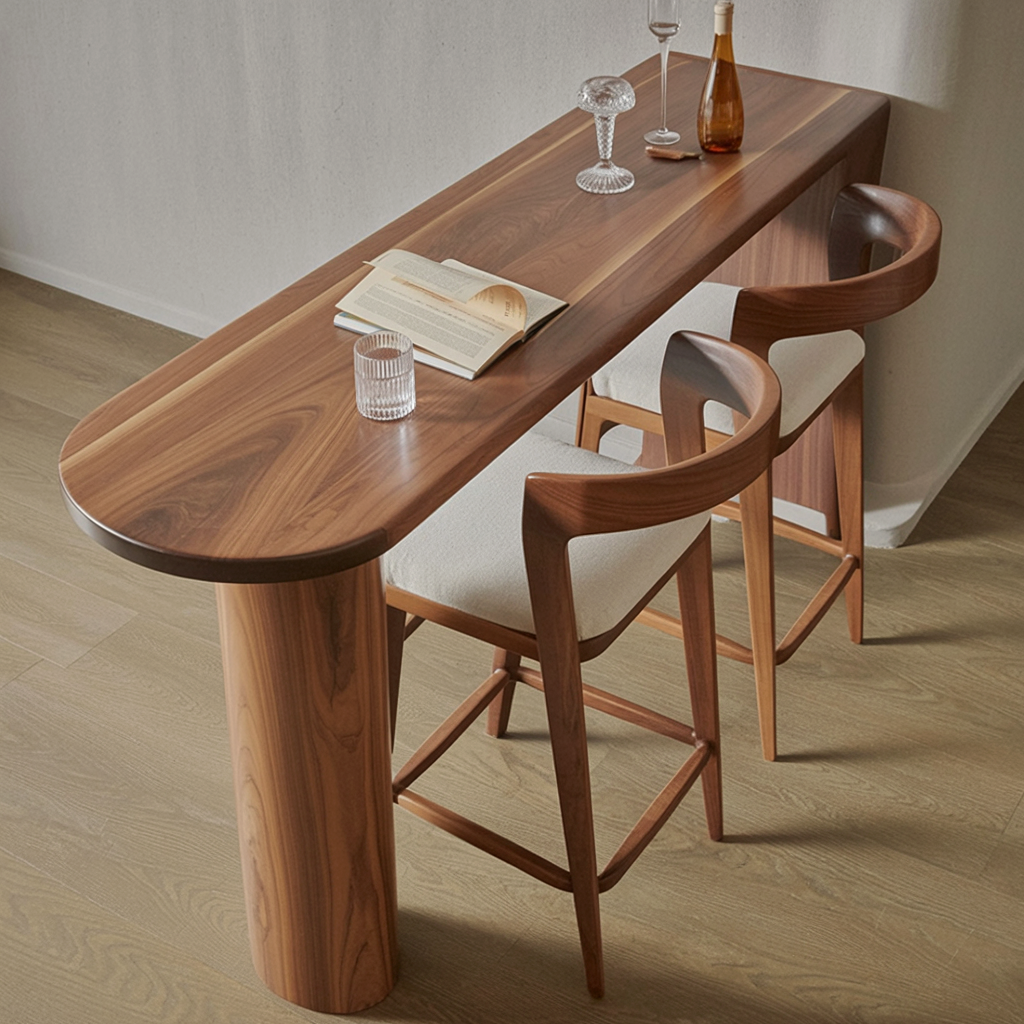
$2,500 to $4,000: Quality artisan construction, often with more interesting design or larger sizing. The Handcrafted Solid Wood Sculptural Dining/Bar Table at $2,456 sits here, priced for its distinctive design and handcrafted nature. At this level, joinery is consistently good and wood species often include walnut or figured oak.
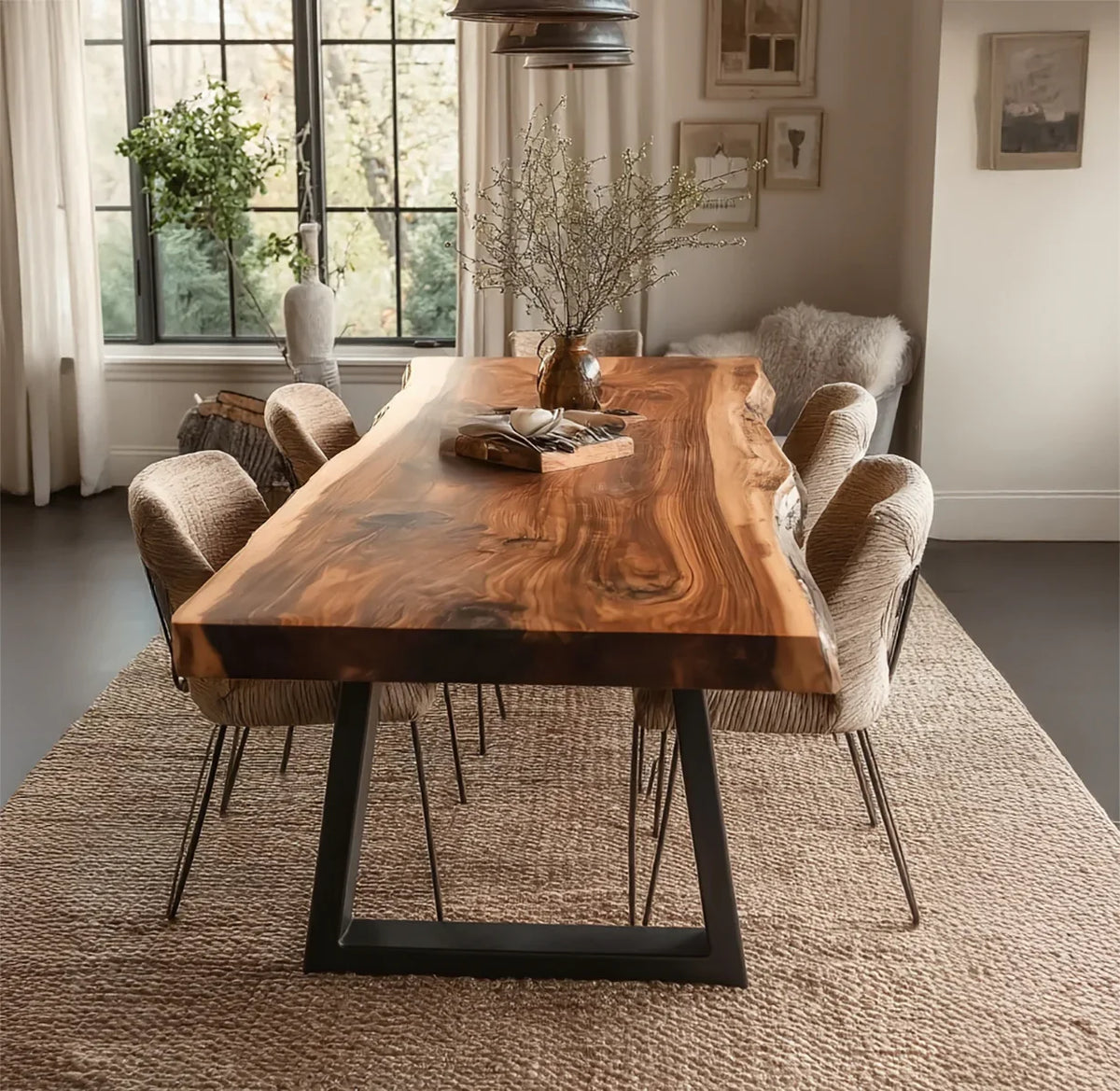
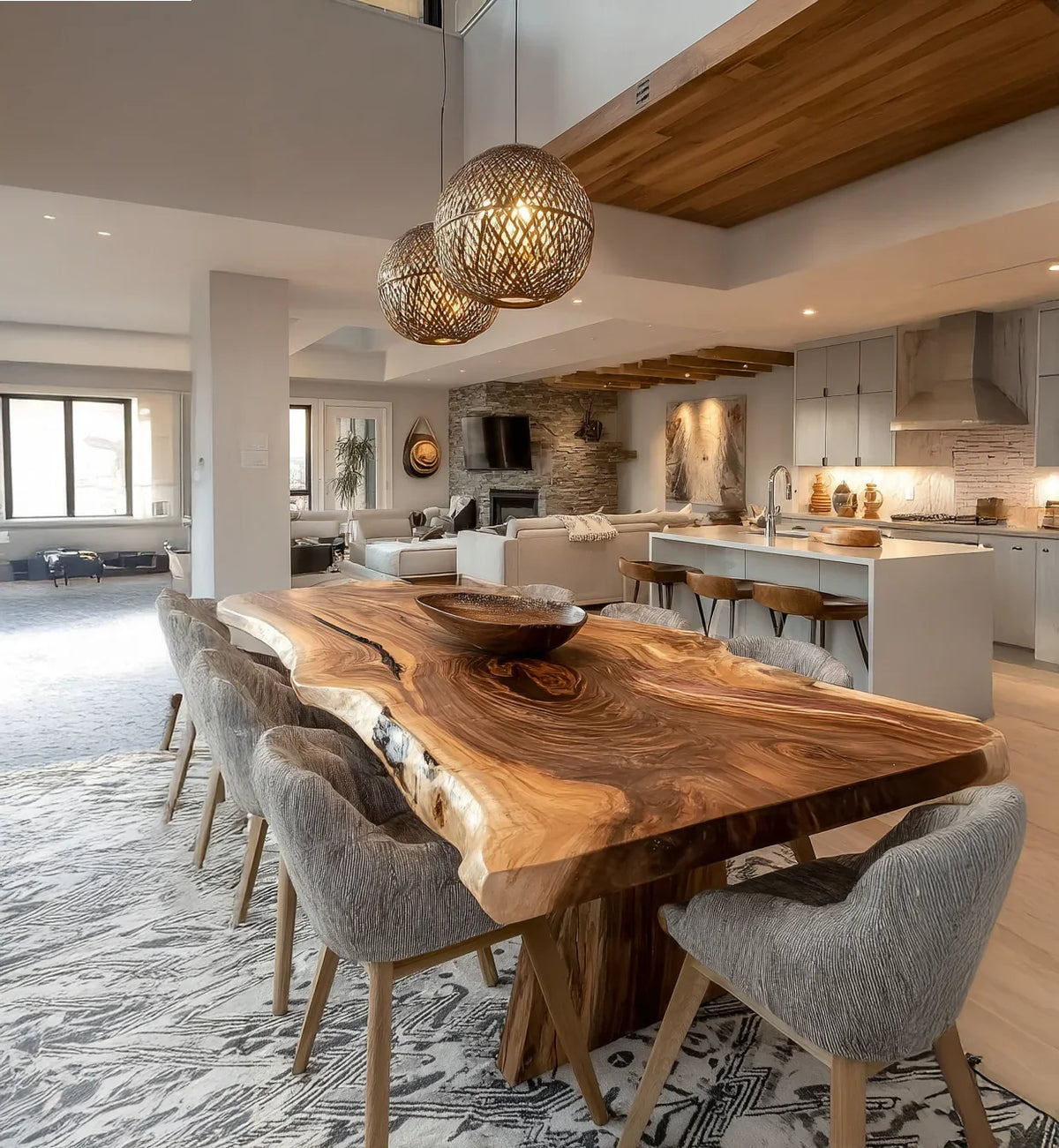
$5,000 and above: Premium tier. Here you find large live edge slabs, exotic species, custom dimensions, and serious craftsmanship. Ashdeco's live edge collection (priced at $4,989 to $5,989) falls into this category, with each piece being handcrafted from large solid wood slabs. Walnut dining tables from domestic American makers at this price point typically include fully custom sizing and hand-applied finishes.
Caring for Your Solid Wood Table
One advantage of solid wood over veneer or engineered wood is refinishing potential. If you get a scratch, dent, or worn finish, you can sand and refinish. This is a genuine long-term advantage that justifies the higher initial cost.
For everyday care, use a slightly damp cloth and dry immediately. Water left standing can cause white rings or damage the finish over time. Use trivets and coasters, especially for hot items. Most food-safe wood oils will nourish the surface and maintain appearance, but check what finish was used on your specific table.
With solid wood, minor surface damage is fixable. With veneer, damage often means living with it or costly professional repair.
Making Your Decision
A solid wood dining table costs more upfront. That's simply the reality. But when you calculate cost per year of use, a $1,500 table that lasts twenty years costs $75 per year. A $500 table that needs replacing after three years costs more per year and generates waste.
The best table for you depends on your space, your budget, and how you live. A small apartment might call for a compact solid bistro table that fits perfectly and will still look good in ten years. A large family home with an open-plan dining area might warrant a substantial live edge piece that becomes the room's centerpiece.
What matters most is confirming you're actually getting solid wood throughout, that the joinery is appropriate for the table's size and intended use, and that the design fits your space both practically and aesthetically.
Products mentioned in this guide:
- Round Bistro Dining Table, Small Kitchen Breakfast Table - $1,022 - Small Space Square Dining Table, Dark Wood, 2-4 Person - $867 - Round Solid Wood Pedestal Dining Table Handcrafted - $1,345 - Solid Oak Round Dining Table, Tulip Pedestal Leg - $1,022 - Handcrafted Solid Wood Sculptural Dining/Bar Table - $2,456 - Solid Wood Dining Table Modern Minimalist Kitchen Table - $5,989 - Ashdeco Live Edge Dining Table Handmade Solid Wood Rustic Farmhouse Style - $4,989