Quick view
- Why Corner Shelves Deserve Better Than Generic Brackets
- Types of Corner Shelves: Which Design Fits Your Space
- Material Matters: Solid Wood vs Particle Board
- Sizing Corner Shelves: Depth, Width, and Height Placement
- Where Corner Shelves Work in Every Room
- Rustic vs Modern: Choosing a Style That Fits Your Interior
- Common Questions About Corner Shelves
- Choosing the Right Corner Shelves for Your Space
Shop this guide
Handcrafted Floating Shelves, made to order in solid wood.
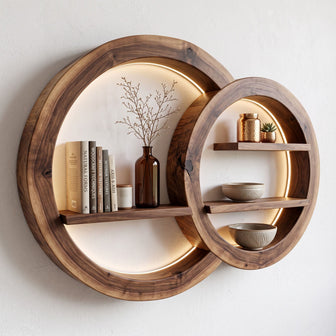
 Sculptural Overlapping Circular Solid Wood Wall Shelf with Multi Tier Display
From $1,354.00
Sculptural Overlapping Circular Solid Wood Wall Shelf with Multi Tier Display
From $1,354.00
 Mountain Landscape Relief Solid Wood Floating Shelf Live Edge Display Ledge
From $1,154.00
Mountain Landscape Relief Solid Wood Floating Shelf Live Edge Display Ledge
From $1,154.00
 Enchanted Forest Circular Wall Shelf - Round Carved Timber Mushroom Portal
From $1,023.00
Enchanted Forest Circular Wall Shelf - Round Carved Timber Mushroom Portal
From $1,023.00
 Cottagecore Arched Wood Wall Niche - Hand-Carved Fairy Mushroom Alcove Shelf
From $1,356.00
Cottagecore Arched Wood Wall Niche - Hand-Carved Fairy Mushroom Alcove Shelf
From $1,356.00
 Sculptural Hand-Carved Mushroom Solid Wood Corner Floating Shelf & Biomorphic Wall Display Ledge
From $345.00
Sculptural Hand-Carved Mushroom Solid Wood Corner Floating Shelf & Biomorphic Wall Display Ledge
From $345.00
 Sculptural Hand-Carved Mushroom Solid Wood Floating Shelves & Biomorphic Wall Display Ledges
From $345.00
Sculptural Hand-Carved Mushroom Solid Wood Floating Shelves & Biomorphic Wall Display Ledges
From $345.00
Why Corner Shelves Deserve Better Than Generic Brackets
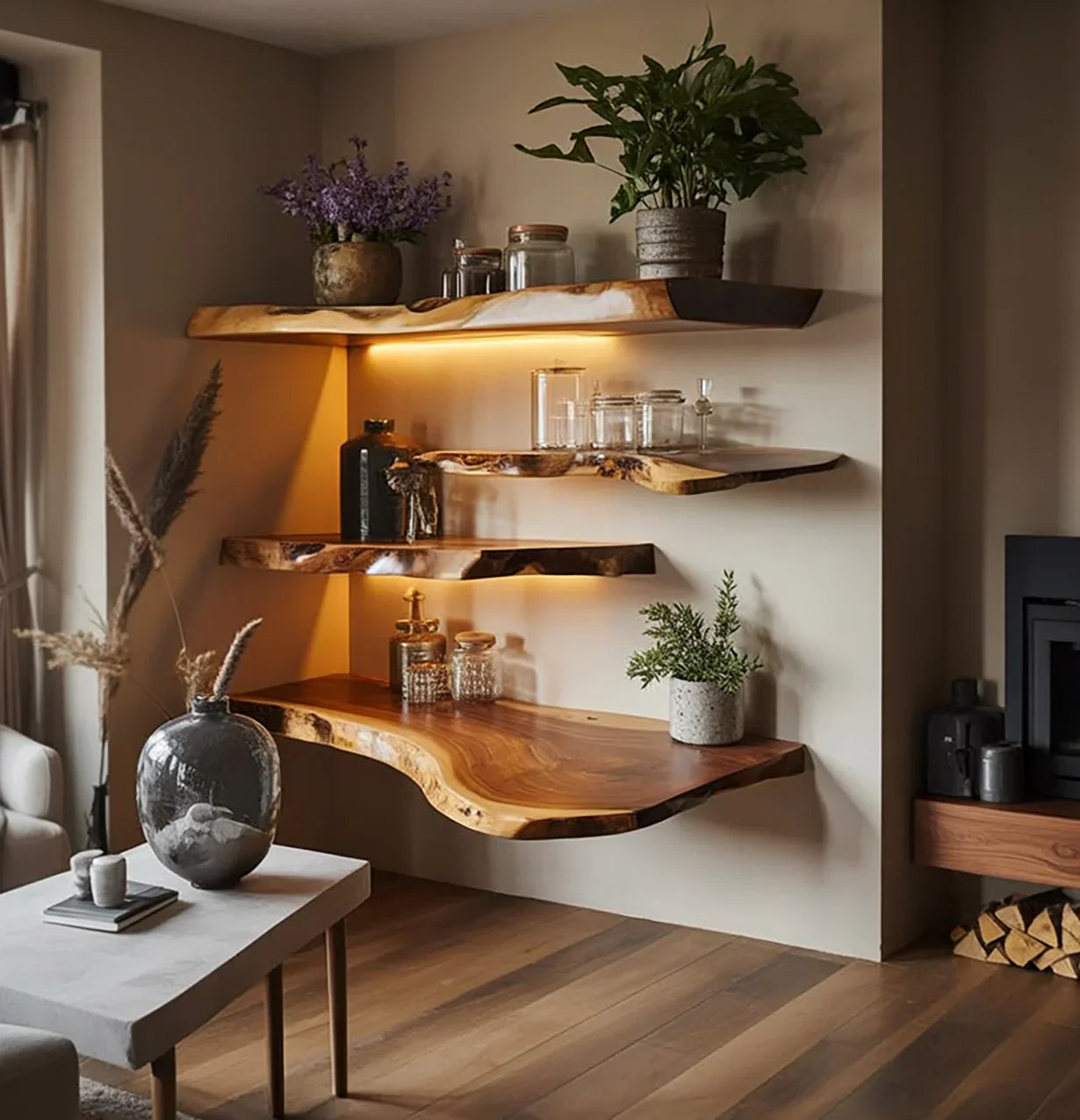
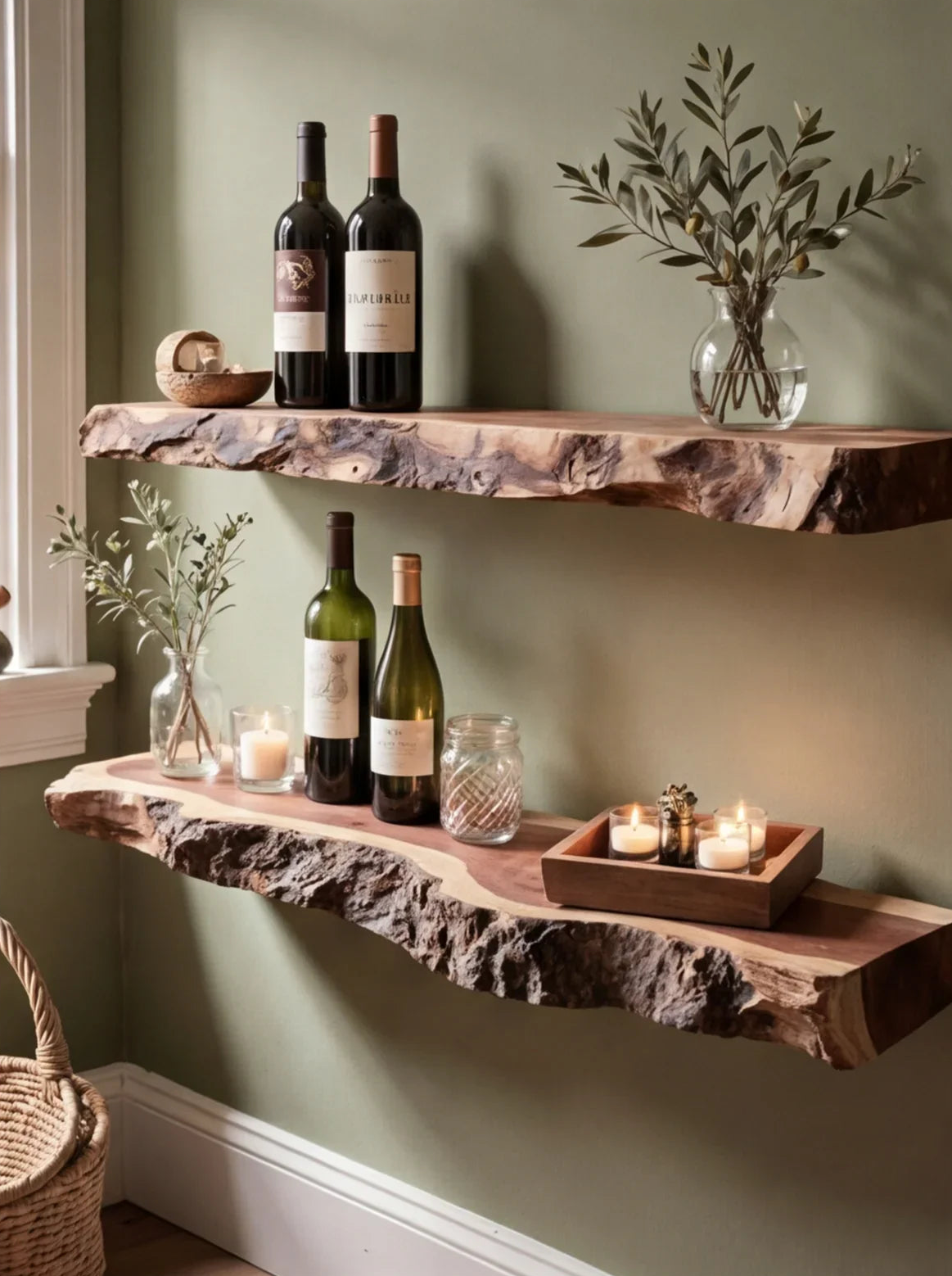
Live Edge Floating Shelves Walnut Shelves Live Edge Shelf Decor
Corners are dead space. In almost every room, the corner where two walls meet gets ignored - furniture does not fit there, nothing looks right when you try to place something, and the wall space goes unused. That is exactly why corner shelves exist: to reclaim space that the room has already built but never used well.
The typical corner shelf solution at home goods stores is a pair of L-shaped metal brackets with a floating shelf on top. It works in the most basic sense. It holds things. It fills the corner. But it does not make the corner feel intentional. It makes it feel like an afterthought.
A well-designed rustic corner shelf solves the same problem with more purpose. The wood matches the room. The form respects the corner geometry. The shelves are scaled for the space rather than off-the-rack generic sizing. And the material - solid hardwood - handles load without flexing or failing the way pressed wood does.
Rustic corner shelves also bring warmth to a space that is usually all wall and no character. The grain of real wood softens the hard angles. The natural variation in tone and pattern makes each corner different. A corner with a well-placed rustic shelf reads as designed, not filled in.
Types of Corner Shelves: Which Design Fits Your Space
Not all corner shelves are the same type. The design affects how much load they hold, how they mount, and how they look in the room.
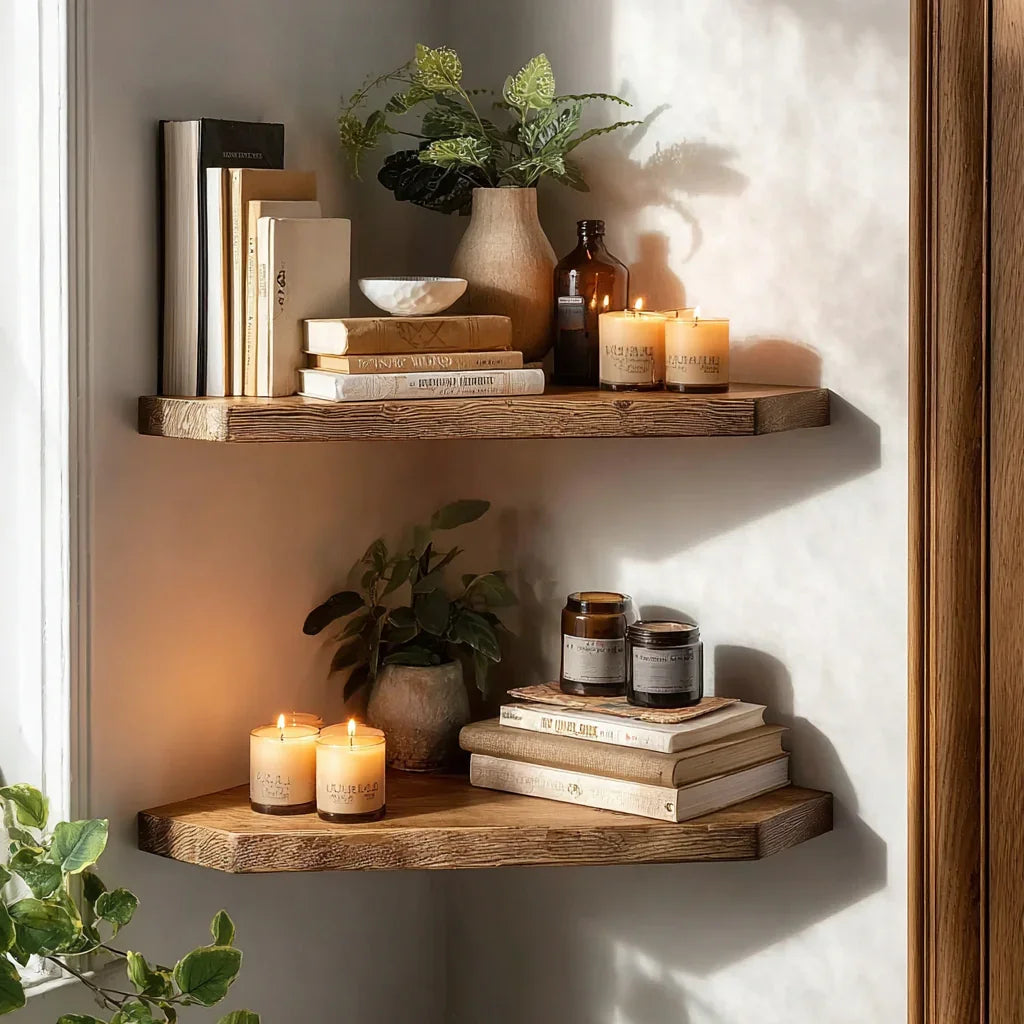
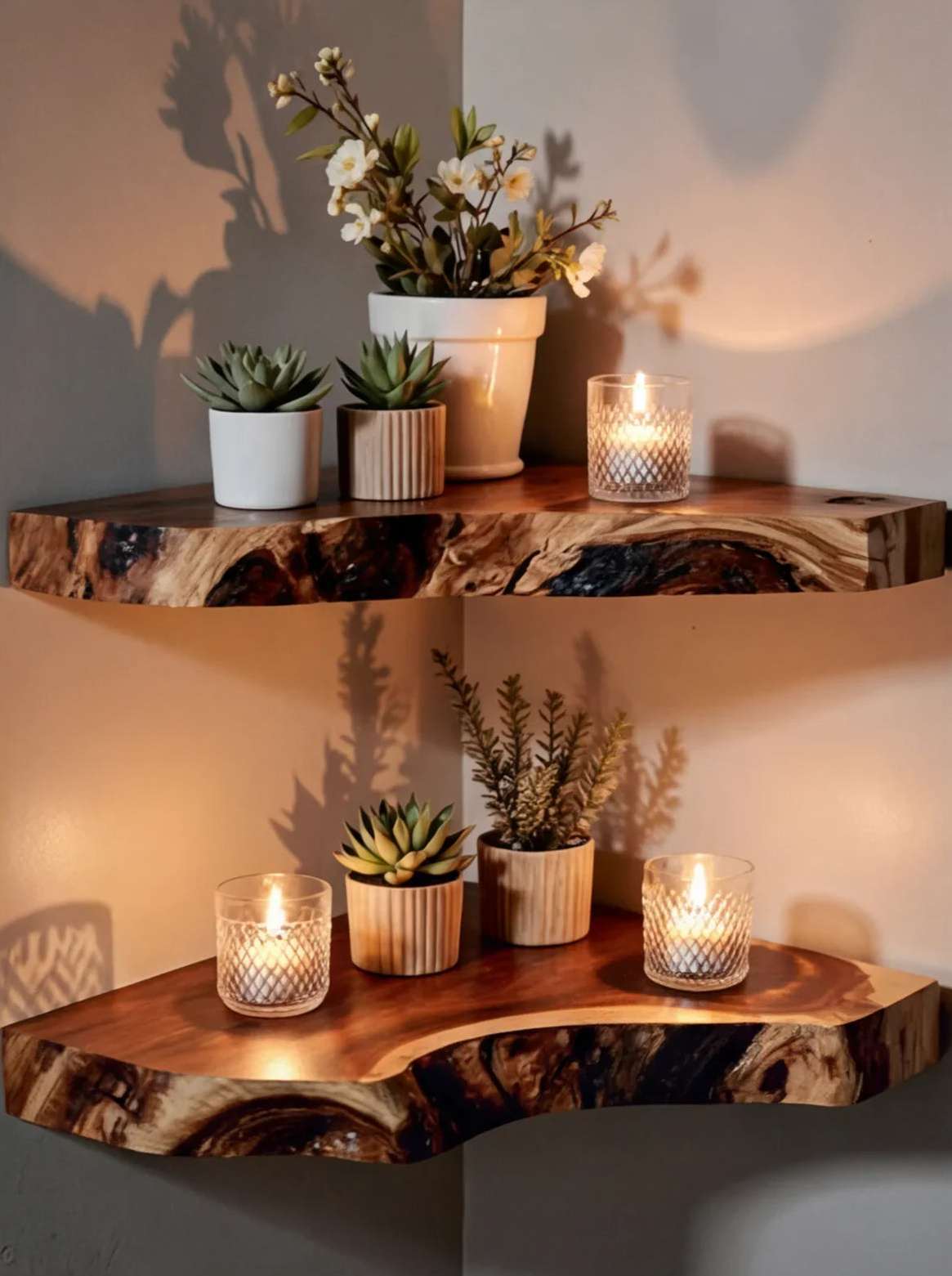
Rustic Corner Floating Shelves – Solid Wood Wall Shelves for Books, Plants & Home Decor
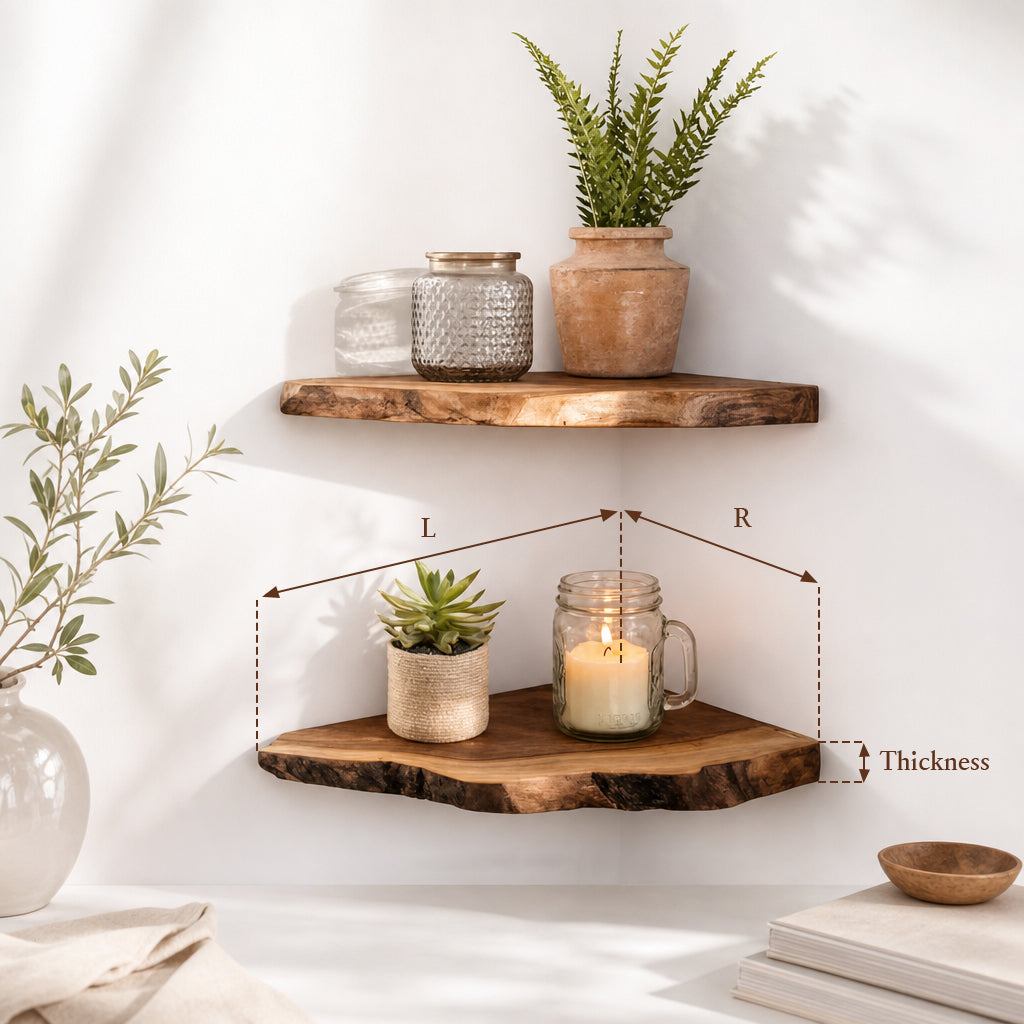
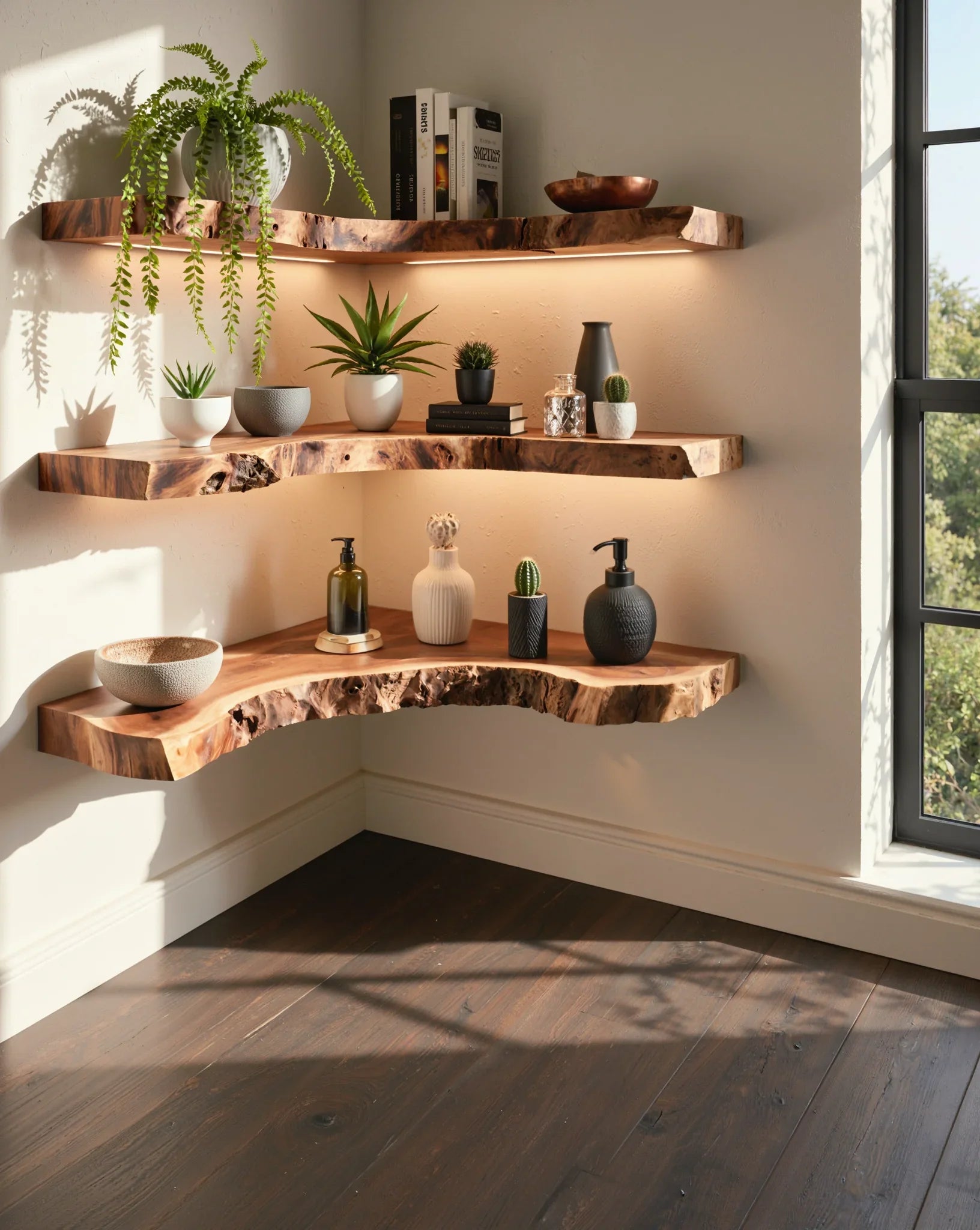
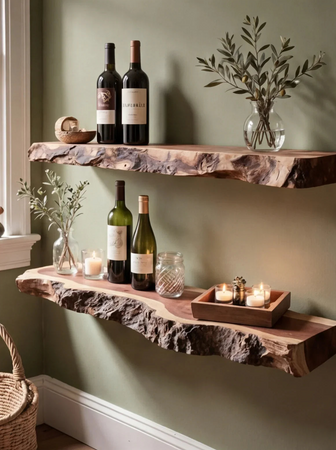
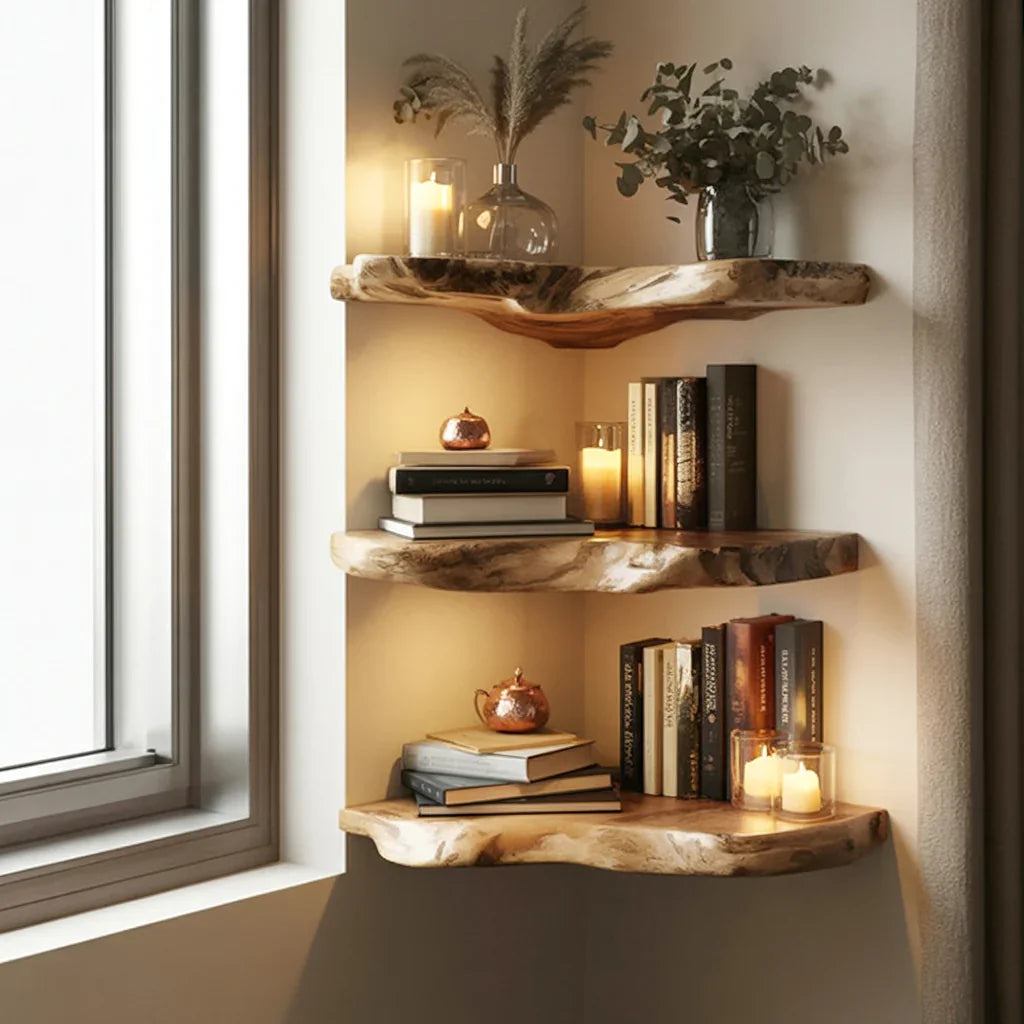
Floating corner shelves are the most common and most versatile. They appear to have no visible support - the bracket or support system is hidden inside or behind the shelf. In a rustic design, the shelf itself is the design element. Floating corner shelves work well for display - books, plants, decorative objects - where you want the shelf to disappear and the items on it to stand out.
The load capacity of floating corner shelves depends on the hidden bracket system. Cheap versions use hollow metal brackets that deflect under load and eventually loosen. Quality floating corner shelves use solid wood corbels or a concealed solid wood support system that does not flex.
Bracket-supported corner shelves use visible wood or metal corbels underneath the shelf. In a rustic interior, wooden corbels that match or complement the shelf material look intentional. This style works for heavier loads - large book collections, heavy decorative objects - because the corbels carry the weight visibly.
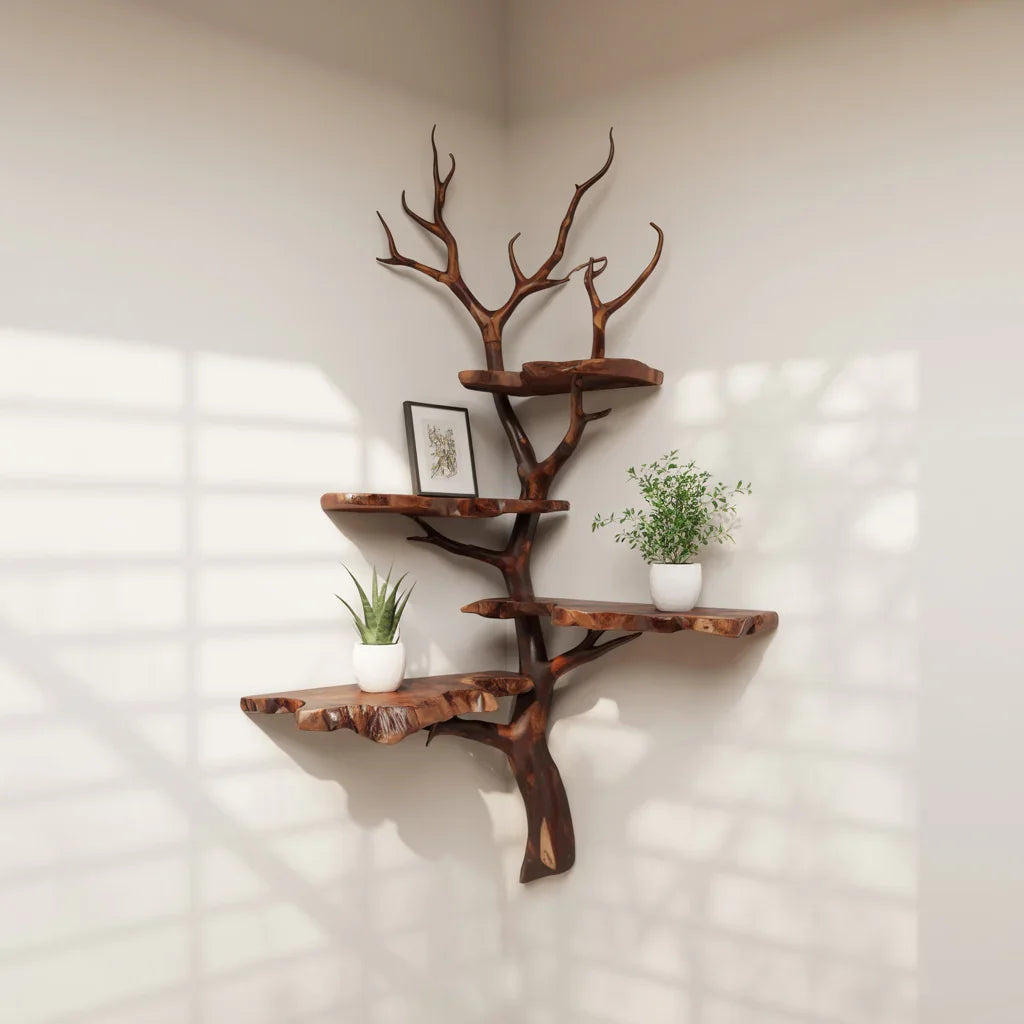
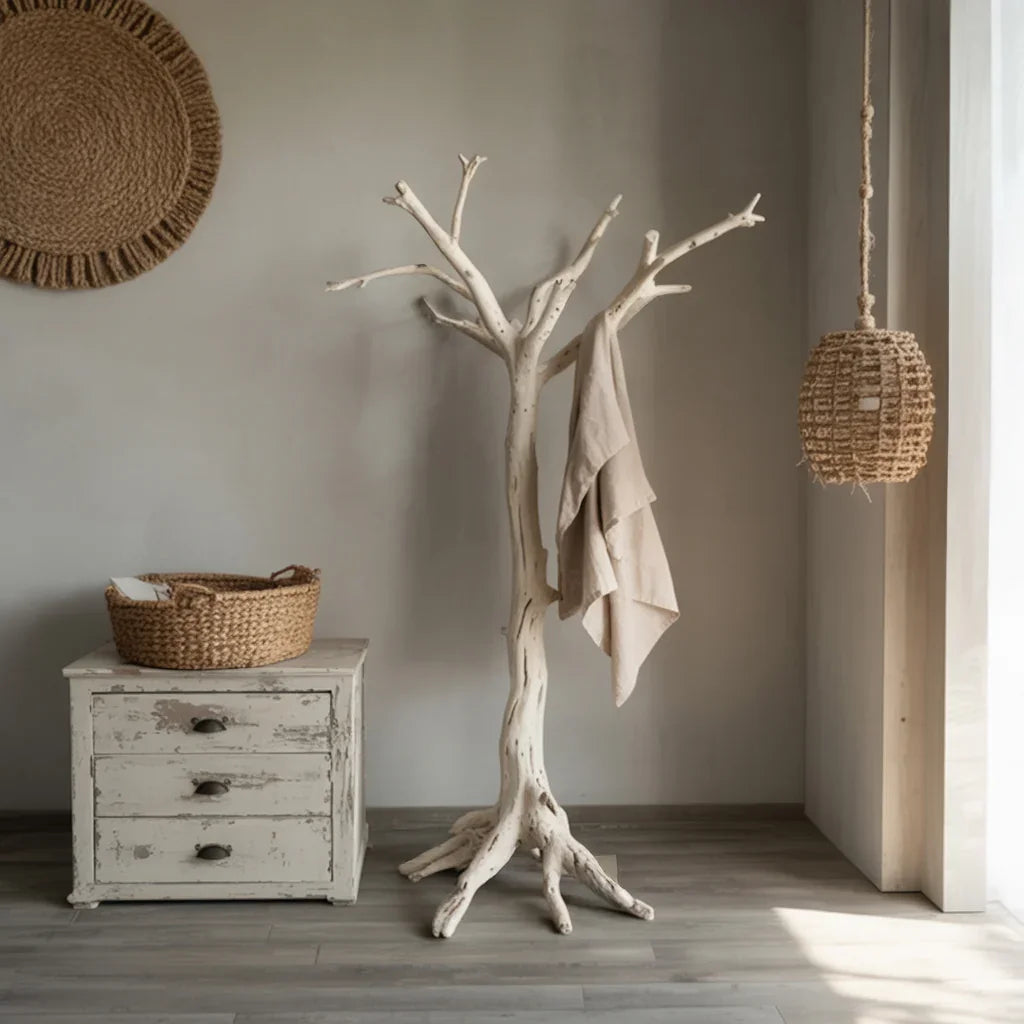
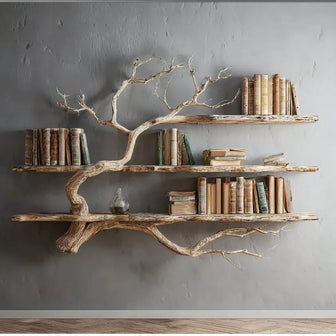
Corner Live Edge Shelf – Driftwood Tree Branch Floating Bookshelf
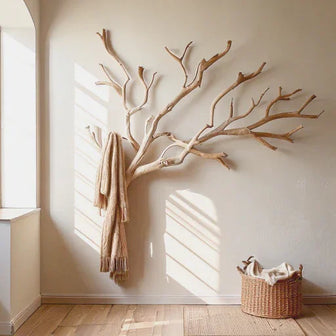
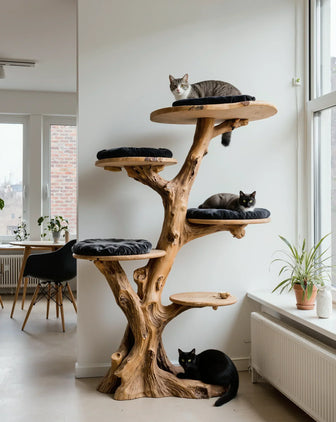
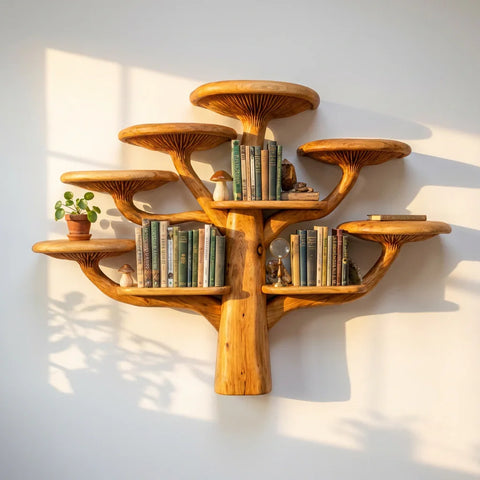
Corner tree shelves extend from the corner the way a tree extends from a wall - a trunk element with branching shelves at different heights. This is a more sculptural approach that works well in living rooms, reading corners, and bedrooms where the shelf itself is a design feature rather than just storage.
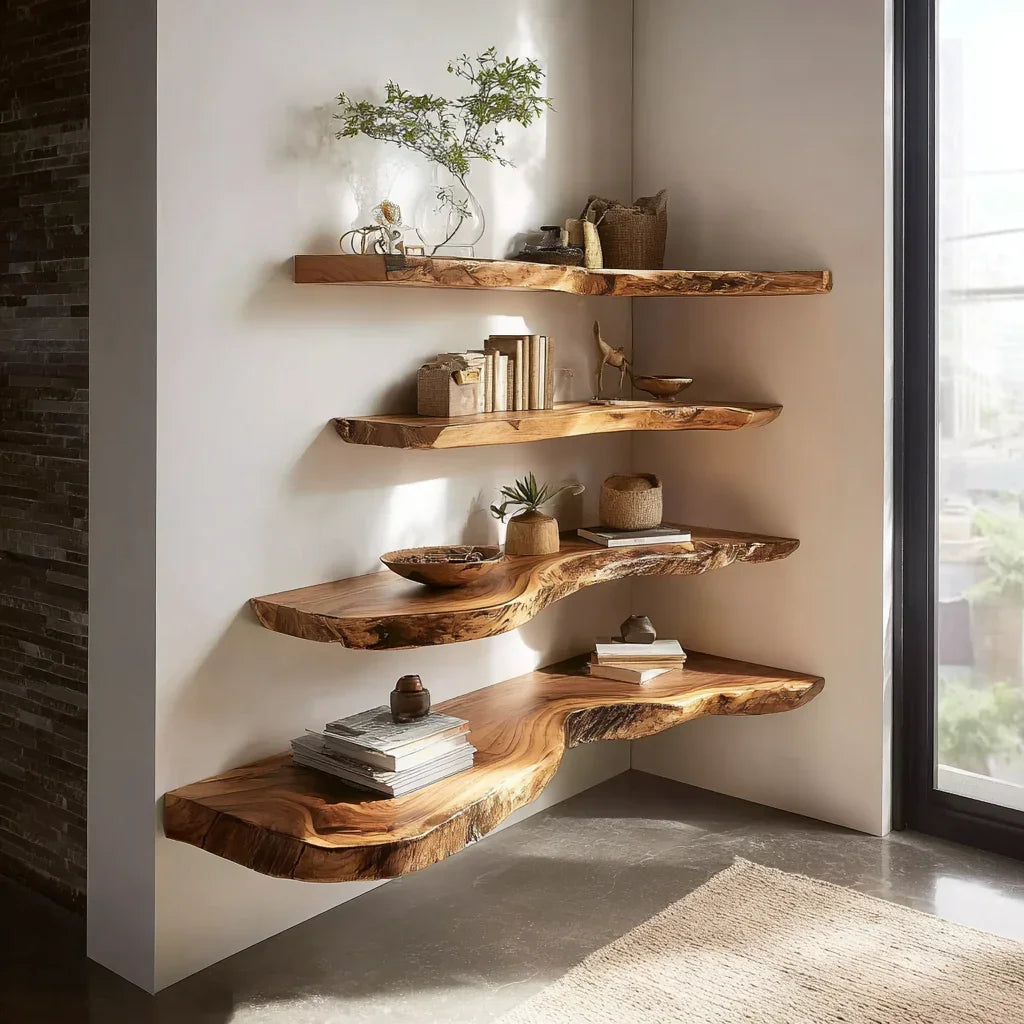
Rustic Floating Wall Shelf with Live Edge – Solid Walnut for Home Decor
L-shaped corner shelves use two perpendicular shelf surfaces meeting in the corner, creating an L-shaped display surface. This configuration works well for deeper corner spaces where you want shelf depth on both walls, not just in the corner angle itself.
Ashdeco's corner shelf collection includes floating shelves and corner tree designs, all in solid hardwood with handcrafted details. Browse the corner floating shelves collection.
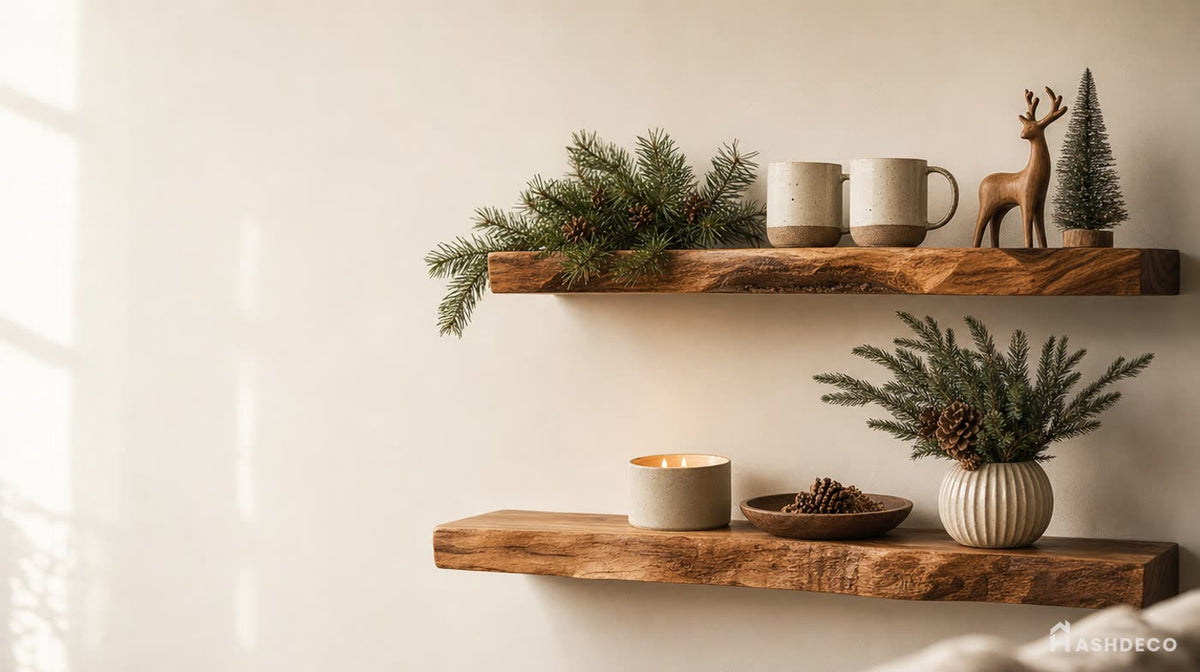


Material Matters: Solid Wood vs Particle Board

The material determines how the corner shelf looks in five years, not just on the day you install it.
Solid hardwood corner shelves are made from oak, walnut, or hevea. Each species has a distinct grain pattern and color range. Oak is lighter and more casual. Walnut runs darker with richer tones. Hevea is a balanced mid-tone. All three are hardwoods that hold fasteners permanently, resist moisture damage, and develop a natural patina over time rather than degrading.
Particle board and MDF corner shelves are the budget option. They look acceptable in photos, they are lightweight for shipping, and they are cheap. But they have two structural problems: they deflect under load, and they fail in humidity.
Deflection is a physics issue. A shelf that is 12 inches deep and made from half-inch particle board will bend under a load of 20 pounds over time. The bending is permanent. The shelf will hold less and less as the material fatigues. A solid hardwood shelf of the same depth will not deflect under that load.
Humidity failure is an environmental issue. Particle board expands when it absorbs moisture. In a bathroom corner or a kitchen corner where humidity fluctuates daily, particle board shelves expand and contract until the edges lift and the shelf surface becomes uneven. Solid hardwood handles humidity changes without delaminating.
The finish on solid wood matters too. Hand-rubbed oil finishes look natural and protect the wood. Avoid high-gloss coatings on rustic designs - they look like plastic and chip over time. A matte or satin finish that shows the wood grain is the right choice for rustic interiors.
Sizing Corner Shelves: Depth, Width, and Height Placement
Getting the size right is where most buyers go wrong with corner shelves. Generic sizing from home stores does not account for the specific geometry of your corner or what you plan to put on the shelves.
Corner angle is the first measurement. Most interior corners meet at 90 degrees. But older homes can have slightly different angles, and new construction sometimes varies. Measure the angle of your corner with a protractor or a smartphone angle measurement app. If your corner is not exactly 90 degrees, you may need a custom-built shelf to fit properly. A shelf that sits slightly off-angle in the corner looks wrong.
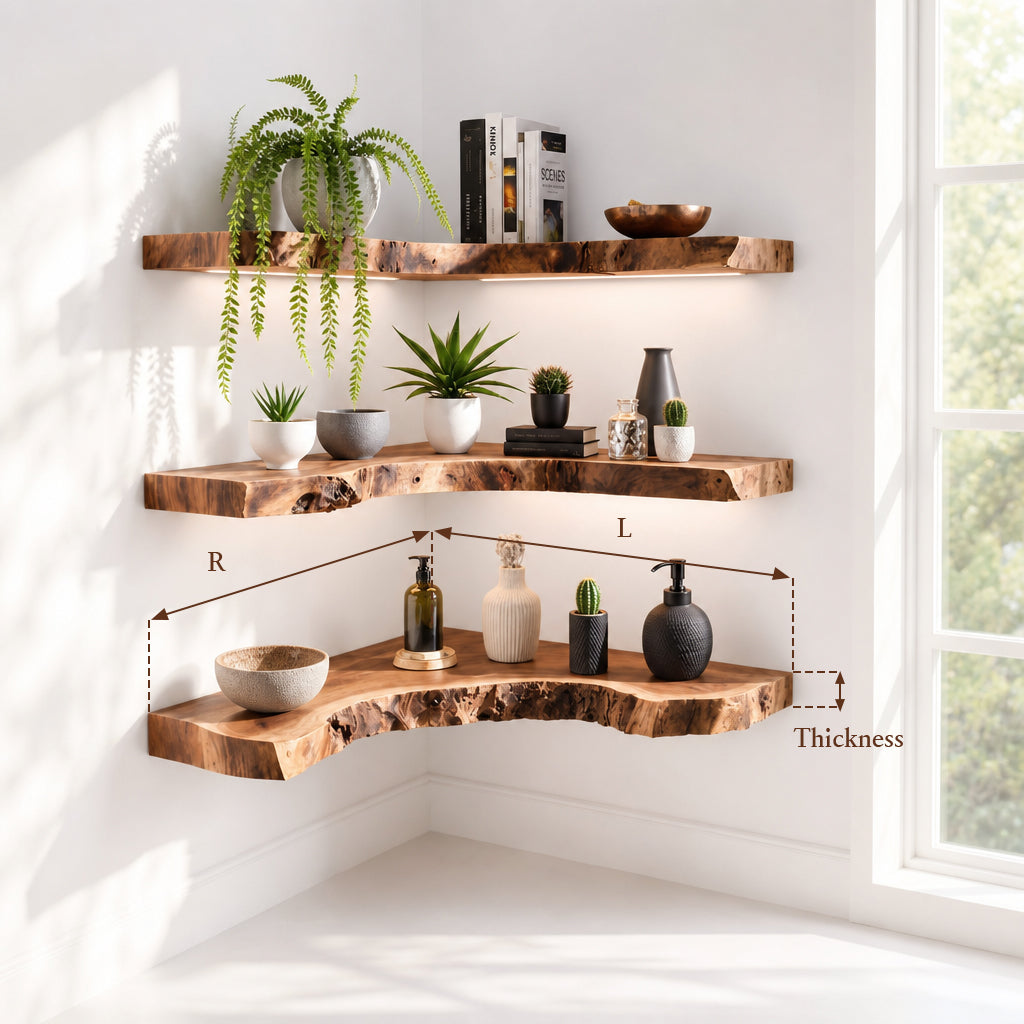
Shelf depth for corner shelves is typically measured from the corner point outward along each wall. Common depths are 8 to 10 inches per side. Deeper shelves hold more but protrude further into the room and can feel dominant. In most living spaces, 8 to 10 inches per side is the right range.
Shelf width runs along each wall from the corner outward. The total width depends on how much wall space you want to use and how the shelf relates to other furniture in the room. A single shelf at 24 inches per side covers enough space for a plant or a small book collection. A stack of three shelves at 16 to 20 inches per side handles more items while keeping the arrangement proportionate.
Height placement follows the rule of thumb for wall art: eye level or slightly below when standing. The center of the lowest shelf should be at 48 to 52 inches from the floor. For a stack of shelves, space them 12 to 16 inches apart vertically. If you are placing items on the shelves that you want to see from a seated position - books on a side table-height shelf - adjust accordingly.
For bathroom corner shelves, keep the bottom shelf at least 18 inches above the tub rim or shower surround to prevent water exposure. For kitchen corner shelves, place them at eye level or above, not at counter height where they will interfere with food prep.
Don't miss
These pieces qualify for 10% off orders over $2,000. Applied automatically at checkout.
Where Corner Shelves Work in Every Room
The beauty of corner shelves is that they work in almost any room. The key is matching the shelf style and loading to the function of that space.
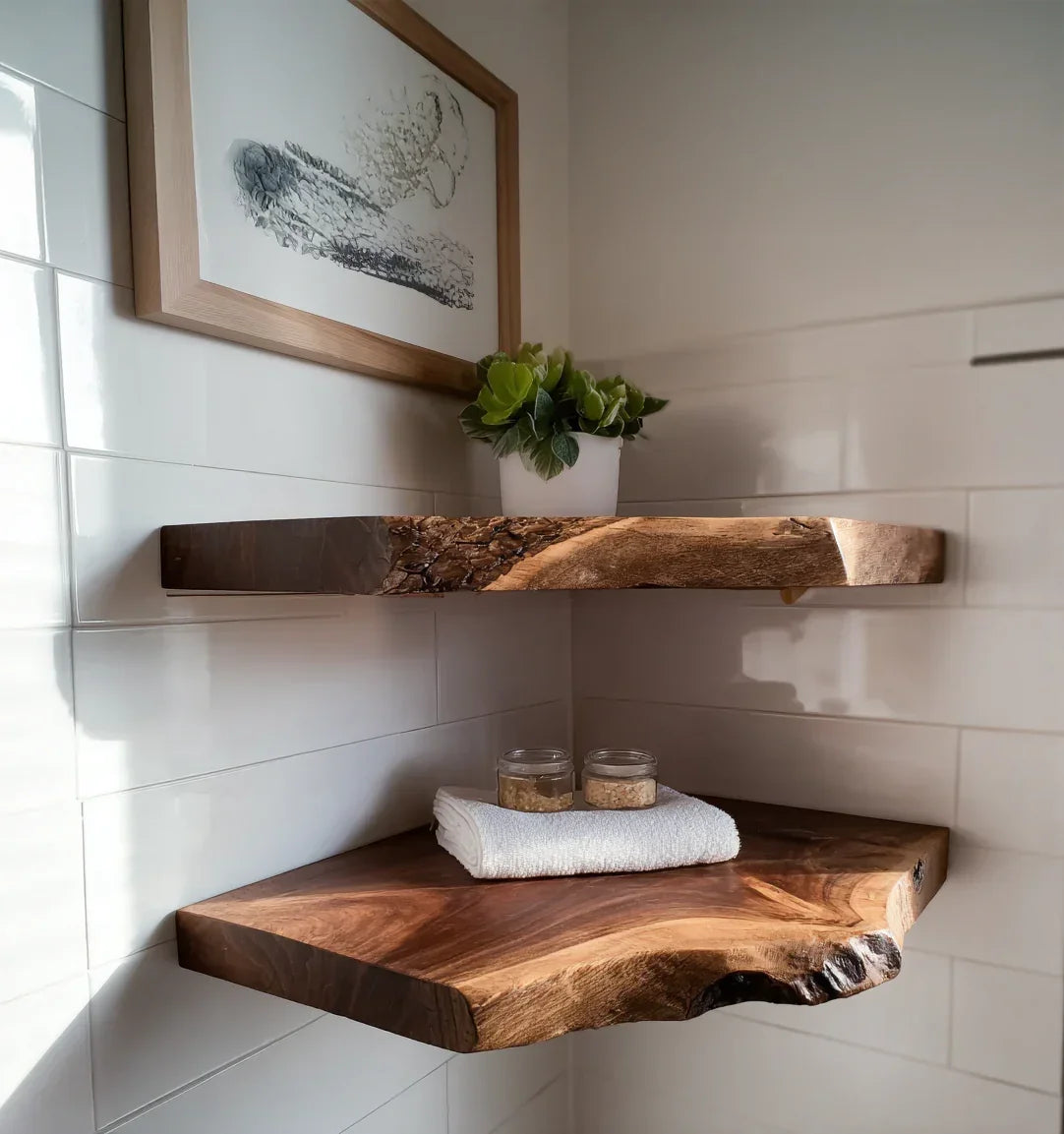
Corner Live Edge Wooden Floating Shelf – Rustic Walnut Christmas Décor & Gift
Bathrooms are the most common application for corner shelves. Bathrooms have corners everywhere - above the toilet, beside the shower, in the powder room - and they are almost always underutilized. Rustic corner shelves in solid wood handle bathroom humidity better than any engineered wood product. They hold towels, toiletries, and decorative elements without warping or delaminating. The natural wood also breaks up the hard tile and glass surfaces that dominate most bathrooms.
Living rooms benefit from corner shelves above seating areas. A pair of floating corner shelves above a sofa or reading chair creates a display surface without taking floor space. Stack books, add a small plant, and the corner becomes a designed element rather than dead space.
Kitchens are trickier but rewarding when done right. Corner shelves at eye level in a kitchen corner can hold spices, oils, and frequently used items. Avoid placing them directly above the stove where grease and steam will coat the wood. Keep them away from the sink unless they are well-ventilated.
Bedrooms are underused for corner shelves. A corner reading nook with a chair and corner shelves at different heights creates a dedicated book browsing and display area. The shelves do not take floor space and they give the corner a purpose beyond collecting dust.
Home offices corner shelves above a desk add storage without the visual weight of a bookcase. They hold reference books, small objects, and plants at a height that does not compete with the work surface.
Hallways and entryways corner shelves are useful for keys, mail, and small bags in tight spaces where a table or console would be too deep. A single floating corner shelf at entryway height handles the daily drop zone without dominating the space.
Rustic vs Modern: Choosing a Style That Fits Your Interior
The term rustic covers a range of specific looks. Understanding the variations helps you choose a corner shelf that fits your room rather than clashing with it.
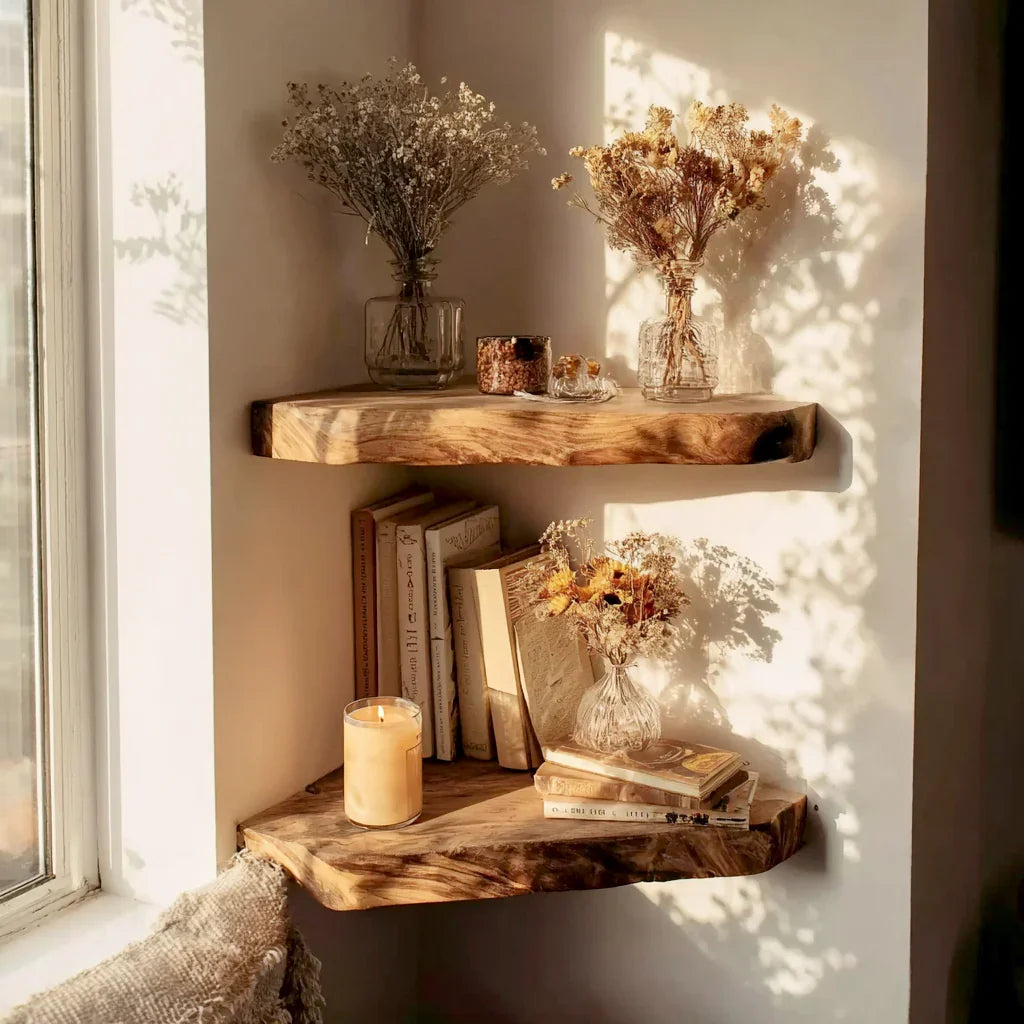
Farmhouse Floating Corner Shelf – Live Edge Wall Shelf, Rustic Walnut Bookshelves
Farmhouse rustic uses reclaimed or character-grade wood with visible knots, natural edge, and warm finishes. The wood reads as old and honest. Corner shelves in this style work best in country farmhouse interiors, cottages, and homes with exposed wood or natural material palettes. Pair with Mason jar lighting, linen textiles, and muted greens and blues.
Industrial rustic combines rough-hewn wood with dark metal brackets or pipe fittings. The metal adds contrast and a slightly urban edge. This style works in loft apartments, modern industrial spaces, and homes with exposed brick or concrete. The wood grain is prominent but the hardware is architectural.
Organic modern is the subtler cousin of rustic - natural wood tones and organic forms that fit into contemporary interiors without looking country. The shelves have clean lines, minimal ornamentation, and a matte finish. This style works in Scandinavian-influenced spaces, Japandi interiors, and modern homes with neutral palettes and natural material accents.

Rustic Live Edge Corner Shelves – Handmade Solid Wood Floating Wall Shelves
Scandinavian rustic uses light oak with a matte finish and simple geometric forms. The warmth of the wood is present but restrained. This style works in bright spaces with white walls and natural textiles.
Ashdeco corner shelves are available in multiple wood species and finishes, covering the farmhouse rustic through organic modern range. Match the finish to your dominant wood tones - if your furniture is oak, an oak shelf will feel intentional; if it is walnut, match to walnut.
Common Questions About Corner Shelves
How much weight can a corner shelf hold?
With solid wood construction and proper mounting into studs, a corner shelf holds 30 to 50 pounds per shelf depending on depth and support type. Floating shelves with concealed corbels typically handle 30 to 40 pounds. Bracket-supported shelves handle 40 to 50 pounds. Do not exceed the rated capacity, and always mount into studs.
Can I install corner shelves myself?
Yes for most designs. You need a stud finder, a level, a drill, and basic hand tools. The key steps are finding the wall studs in both walls of the corner, marking level positions, and drilling the mounting holes. For drywall-only mounting, use toggle bolts rated for the expected load. For any shelf holding more than 20 pounds, stud mounting is required.
How do I install corner shelves in a non-90-degree corner?
Non-standard corners require either custom-built shelves that match the exact angle, or floating shelves that can be adjusted slightly during installation to account for the variance. Measure the angle at multiple points along the corner height - it may vary from floor to ceiling in older homes. For angles that deviate more than 5 degrees from 90, custom fabrication is the right solution.
What is the best height for corner shelves in a bathroom?
Install bathroom corner shelves with the bottom shelf at least 18 inches above the tub rim. Space subsequent shelves 12 to 16 inches apart vertically. If installing above a toilet, the top shelf should be below the tank height so the shelf does not overwhelm the visual of the toilet.
Do corner shelves need to be sealed in a bathroom?
Solid wood corner shelves in bathrooms should have a water-resistant finish. Hand-rubbed oil finishes provide some water resistance but are not waterproof. A polyurethane or conversion varnish finish is more appropriate for high-humidity environments. Ashdeco offers appropriate finishes for bathroom use on their solid wood corner shelves.
How do I style a corner shelf without it looking cluttered?
Edit aggressively. Corner shelves are small surfaces - resist the urge to fill them. Group two to three related objects per shelf rather than spreading eight items across the surface. Use books as a base for smaller objects. Leave 25 to 30 percent of the shelf surface visible. Rotate items seasonally to keep the arrangement fresh.
Choosing the Right Corner Shelves for Your Space
The right corner shelf starts with three measurements: your corner angle, your available wall space per side, and the height you want the lowest shelf. Those three numbers define the viable options.
Then evaluate load. What are you actually putting on these shelves? If it is lightweight decorative items and small books, any quality shelf works. If it is heavy reference books or large objects, prioritize bracket-supported or corner tree designs with solid hardwood construction.
Finally, match the finish to your room. The wood tone should complement your existing furniture without matching it exactly. A slight tonal variation reads as intentional rather than default.
Corner shelves are not a place to economize. The difference in quality between a solid hardwood corner shelf and a particle board version is visible immediately and compounds over years. A solid wood corner shelf costs more upfront and lasts a decade. A particle board shelf needs replacing in three to five years.
Browse the corner floating shelves collection to find solid wood options in the right size and finish for your space.