






Quick view
- Small Bathroom Vanity Sizes - What Actually Fits
- Mount Types - Floor, Floating, or Wall-Hung?
- Material - Solid Wood vs. MDF vs. Plywood in a Humid Bathroom
- Countertop & Sink Pairings for Small Vanities
- Storage Tricks That Make a Small Vanity Work Harder
- Small Bathroom Vanity Cost - What to Expect by Size & Material
- How to Measure Your Space (Before You Buy)
- Common Mistakes in Small Bathroom Vanity Selection
- FAQ
- The Bottom Line
Shop this guide
Handcrafted Bathroom Vanities, made to order in solid wood.
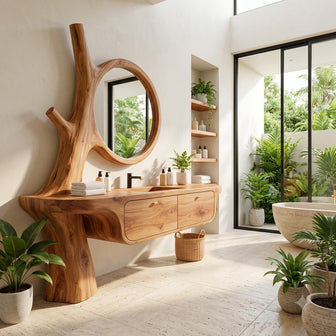
 Sculpted Tree Trunk Solid Wood Bathroom Vanity with Integrated Circular Mirror Frame and Dual Drawers
From $3,276.0010% off at checkout
Sculpted Tree Trunk Solid Wood Bathroom Vanity with Integrated Circular Mirror Frame and Dual Drawers
From $3,276.0010% off at checkout
 Curved Floating Solid Wood Bathroom Vanity Sculptural Wall Mounted Washstand
From $1,843.00
Curved Floating Solid Wood Bathroom Vanity Sculptural Wall Mounted Washstand
From $1,843.00
 Curved Arch Solid Wood Bathroom Vanity Freestanding Four Drawer Washstand
From $2,365.0010% off at checkout
Curved Arch Solid Wood Bathroom Vanity Freestanding Four Drawer Washstand
From $2,365.0010% off at checkout
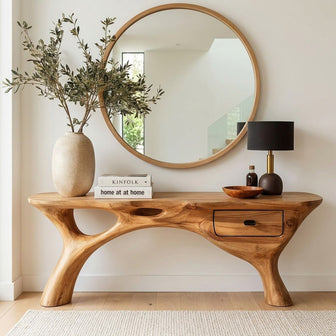
 Sculptural Tree Trunk Solid Wood Bathroom Vanity Organic Live Edge Storage Console
From $2,154.0010% off at checkout
Sculptural Tree Trunk Solid Wood Bathroom Vanity Organic Live Edge Storage Console
From $2,154.0010% off at checkout
 Sculpted Branch Pedestal Solid Wood Bathroom Vanity Organic Live Edge Washstand
From $1,432.00
Sculpted Branch Pedestal Solid Wood Bathroom Vanity Organic Live Edge Washstand
From $1,432.00
 Floating Live Edge Solid Wood Bathroom Vanity Wall Mounted Storage Cabinet
From $2,316.0010% off at checkout
Floating Live Edge Solid Wood Bathroom Vanity Wall Mounted Storage Cabinet
From $2,316.0010% off at checkout
If your bathroom is under 40 square feet, picking a vanity is a compromise game: you want storage but there's no room for it, you want a nice countertop but it eats the walkway, and you want it to look good while doing both. The right size, mount type, and material can make a tiny bathroom feel twice as big. The wrong ones - and you'll be squeezing past a cabinet door every morning for the next ten years.
Quick answer: For most small bathrooms, a 24-inch wide vanity at 18-inch depth is the practical sweet spot. If your bathroom is narrow front-to-back (not just side-to-side), look for a 16-18 inch depth - that's the dimension most people forget to measure, and the one that determines whether your door actually closes. Floating mounts save floor space but cost $200-600 more to install; traditional floor-mounted vanities are cheaper and hold more storage. Solid wood costs more upfront but outlasts MDF 2-3x in a humid bathroom. Total installed cost for a small vanity typically runs $300-1,500 depending on size, material, and mount type.
This guide covers sizing (including the often-overlooked depth dimension), mount types, material durability, countertop and sink pairings, storage tricks, real costs, and which combination actually works in a small space. If you're also wondering about height, we've covered that separately in our bathroom vanity height guide.

Small Bathroom Vanity Sizes - What Actually Fits
Width gets all the attention. But depth is the silent killer of small bathroom function. Let's break both down - and be clear about which problem each one solves, because they're not the same measurement.
Width: 18, 24, 30, or 36 Inches?
Standard vanity widths jump in 6-inch increments. Here's what each one means in a small bathroom:
- 18 inches: Minimum functional width. Fits a small vessel sink or narrow drop-in. Good for powder rooms, half baths, and laundry-bathroom combos where you only need handwashing.
- 24 inches: The small bathroom sweet spot. Fits a standard single sink with 4-6 inches of counter space on each side - enough for a toothbrush holder, soap, and maybe a small plant. This is the size we recommend most often for bathrooms under 40 sq ft.
- 30 inches: Comfortable single-sink territory. You get actual counter space - room for a hair dryer, a skincare product, a cup of coffee while you brush your teeth. Works if your small bathroom is at least 5x7 feet.
- 36 inches: Borderline too big for a "small" bathroom. In a room under 40 sq ft, a 36-inch vanity eats a quarter of your wall space and leaves you fighting for door clearance. Only go here if you specifically need dual-counter space and the room can handle it.
Depth - The Dimension Everyone Forgets (Especially 16-18 Inch Vanities)
Here's the problem most vanity guides skip: width tells you how much counter you get, but depth tells you whether you can close the door.
Standard vanities run 18-22 inches deep. That's fine for a normal bathroom. But in a bathroom that's narrow front-to-back - say, 5 feet (60 inches) door-to-wall - a 22-inch-deep vanity leaves only 38 inches of walkway. Add a toilet (usually 28-30 inches from the wall) and you're squeezing through a 10-inch gap.
That's where narrow-depth vanities (16-18 inches) matter. Note: this table measures walkway clearance based on how deep the room itself is front-to-back - it's a separate question from how wide your bathroom is, which is what the size table below addresses.
| Vanity Depth | Walkway in a 60" Deep Bathroom | Best For |
|---|---|---|
| 22" (standard) | 38" | Bathrooms 6+ feet deep |
| 20" | 40" | Standard small baths, 5x7 or larger |
| 18" | 42" | Narrow bathrooms, ~5-foot depth |
| 16" (slim) | 44" | Half baths, powder rooms, tight door swings |
The 16-18 inch depth is especially critical when:
- Your bathroom door swings inward and would hit the vanity - every inch of depth you shave off is a door that opens freely
- The vanity sits across from the toilet - shallower depth means more knee room and less claustrophobia
- You have a galley-style bathroom (long and narrow, like on a boat or in a converted closet) where width is fine but front-to-back space is brutal
Trade-off: a 16-inch-deep vanity gives you barely any counter space. A vessel sink helps here - it sits on top rather than recessing into the counter, so you preserve the cabinet depth below. But you'll be setting toothbrushes on the edge, so plan extra storage (medicine cabinet, floating shelves above the toilet) to compensate.

Quick Size Reference (by Room Size, Not Depth)
This table answers a different question than the one above: given your total room square footage, what width and depth range should you be shopping in?
| Bathroom Size | Recommended Width | Recommended Depth |
|---|---|---|
| Under 30 sq ft (e.g., 5x5 powder room) | 18-24" | 16-18" |
| 30-40 sq ft (e.g., 5x7 or 6x6) | 24-30" | 18-20" |
| 40-50 sq ft (e.g., 5x8 or 6x7) | 30-36" | 18-21" |
Measure twice, buy once. Specifically: measure the door swing radius, the toilet-to-wall distance, and the distance from the planned vanity wall to the opposite wall. Those three numbers dictate everything.
Mount Types - Floor, Floating, or Wall-Hung?
The mount type changes how the vanity feels, how much it costs, and how much storage you get. In a small bathroom, this choice matters even more than in a large one.
Floor-Mounted (Traditional / Freestanding)
The vanity sits on the floor, self-supporting. Slide it in, level it, connect the plumbing. Done.
Pros: More storage (full base cabinet, drawers, sometimes shelves inside). Simpler installation - no wall prep, no stud-finding, no blocking. Lower cost, typically $100-300 less than floating. Hides plumbing behind the cabinet, out of sight.
Cons: Takes up visual floor space, so the room feels smaller. Harder to clean underneath - dust and moisture collect in the toe-kick gap. Fixed height, usually 30-34 inches, not adjustable.
Best for: Small bathrooms where storage is the priority and the room doesn't feel visually cramped. If you need to hide a plunger, cleaning supplies, and spare toilet paper behind a door, go floor-mounted.

Floating (Wall-Mounted)
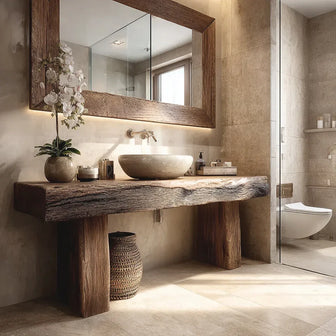
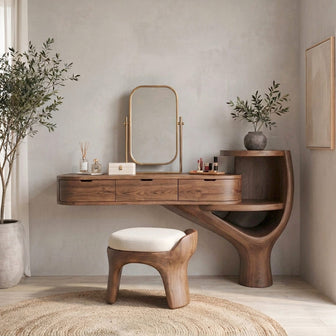
The vanity hangs from wall studs with no legs or base touching the floor, leaving a visible gap underneath - typically 6-12 inches of exposed floor.
Pros: Makes small rooms feel bigger - visible floor space reads as more room. Easier to clean, since a mop slides straight underneath. Height flexibility for different household needs. Reads as modern and intentional.
Cons: Less storage - usually one or two shallow drawers, roughly 30-40% less capacity than a floor-mounted vanity of the same width. Installation needs structural anchoring into studs, often requiring added blocking ($150-300 extra). Plumbing is exposed underneath unless routed inside the wall. Higher total cost: $200-600 installation premium.
Best for: Small bathrooms where making the room feel larger matters more than hiding everything behind doors. For the full breakdown on floating vanity installation, mounting requirements, and sizing, see our floating bathroom vanity guide.

Wall-Hung with Legs (Hybrid)
Some vanities mount to the wall but have decorative legs or a partial base that touches the floor - a compromise between storage and visual openness.
Pros: Middle ground on storage and visual weight; legs can add style (wood, metal, hairpin) without the bulk of a full base.
Cons: You pay the installation complexity of floating plus you still have legs to clean around.
Best for: Small bathrooms where you want the floating look but need a bit more storage than a pure wall-mounted unit provides.

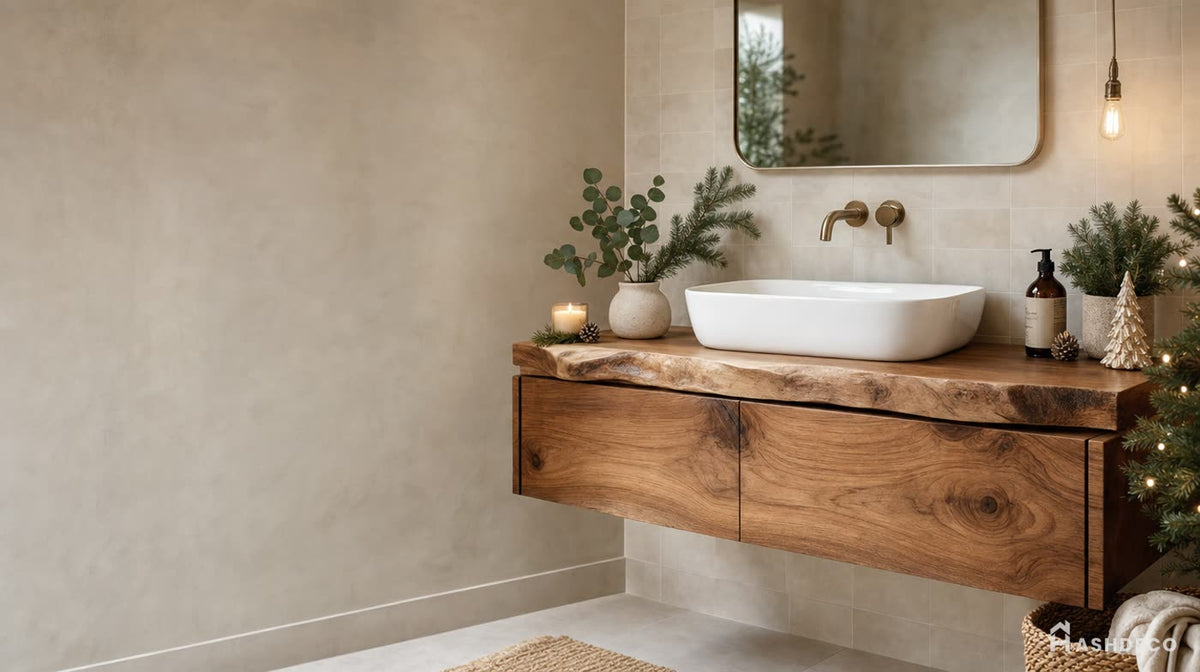


Material - Solid Wood vs. MDF vs. Plywood in a Humid Bathroom
A small bathroom vanity takes a beating: splashes, steam, humidity swings, and daily use in a room that rarely gets cross-ventilation. Material choice determines whether it lasts 5 years or 25.
| Material | Water Resistance | Typical Lifespan | Repairability | Best For |
|---|---|---|---|---|
| MDF (engineered wood) | Poor - swells at cut edges and sink cutout | 3-8 years in humid bathrooms | Low - swollen board usually needs replacing | Rentals, flips, short-term use |
| Plywood | Moderate - better than MDF, still needs sealed edges | 8-15 years | Moderate | Budget-conscious, moderate humidity |
| Solid wood, properly sealed | Good - with polyurethane, marine varnish, or epoxy finish | 15-25+ years | High - can be sanded, refinished, repaired | Long-term homes, humid climates, no exhaust fan |
Ventilation changes the math: with a working exhaust fan or window, MDF can reasonably last 5-8 years. Without one, MDF swelling shows up at the sink cutout and cabinet edges within 2-3 years - solid wood is worth the premium in that case.
At Ashdeco, our vanities are handcrafted from solid wood with multi-layer sealing designed specifically for bathroom humidity - not a raw wood finish that swells at the first splash. It's the same reason solid wood shows up as the better long-term value in the cost breakdown below, even though it costs more on day one.

Countertop & Sink Pairings for Small Vanities
The sink type you choose interacts directly with how much usable counter space you actually get - which matters more in a small vanity than a large one, where a few lost inches barely register.
- Undermount sink: Mounted below the counter, so the full counter surface stays usable with no rim to catch water or grime. Best default choice for vanities 24" and wider.
- Integrated countertop-sink combo: Counter and sink are one molded piece, with zero seam. Easiest to clean, minimal visual footprint, good for a streamlined small-bathroom look.
- Vessel sink: Sits on top of the counter rather than recessed into it. Looks striking and works well on shallow (16") vanities where recessing a sink isn't possible - but it eats 3-5 inches of usable counter height and depth, and can create clearance issues with wall-mounted faucets in a low-ceiling or shallow-depth bathroom.
Countertop material matters too: quartz and solid surface resist staining and are easy to repair if scratched; natural marble looks great but etches and stains more easily in a splash-prone small bathroom. For most small vanities, an undermount or integrated sink on quartz or solid surface gives you the most usable space with the least maintenance.

Don't miss
These pieces qualify for 10% off orders over $2,000. Applied automatically at checkout.
10% off
Sculpted Tree Trunk Solid Wood Bathroom Vanity with Integrated Circular Mirror Frame and Dual Drawers
From $3,276.00
10% off at checkout
10% off
Curved Arch Solid Wood Bathroom Vanity Freestanding Four Drawer Washstand
From $2,365.00
10% off at checkout
10% off
Sculptural Tree Trunk Solid Wood Bathroom Vanity Organic Live Edge Storage Console
From $2,154.00
10% off at checkout
10% off
Floating Live Edge Solid Wood Bathroom Vanity Wall Mounted Storage Cabinet
From $2,316.00
10% off at checkout
Storage Tricks That Make a Small Vanity Work Harder
Square footage is fixed, but how the cabinet is built inside can change how much it actually holds.
- U-shaped drawers: Cut around the P-trap and plumbing instead of stopping short of it, reclaiming space that's normally dead storage in a standard drawer.
- Full-extension drawer slides: Pull all the way out instead of stopping at 70-80%, so you can actually see and reach what's in the back - worth the small upcharge in a small vanity where every drawer counts.
- Soft-close hinges and slides: In a tight bathroom, cabinet doors and drawers get bumped constantly. Soft-close prevents the slamming that loosens hardware over time.
- Open shelf + closed cabinet combo: A lower open shelf for towels alongside a closed cabinet for toiletries gives you display and hidden storage in the same footprint.
- Door-mounted organizers: Slim pull-out racks attached to the inside of a cabinet door use space that's otherwise wasted.

Small Bathroom Vanity Cost - What to Expect by Size & Material
Vanity Unit Cost by Size & Material
| Width | MDF / Engineered | Solid Wood | Stone Top Upgrade |
|---|---|---|---|
| 18" | $150-300 | $400-700 | +$100-300 |
| 24" | $250-500 | $600-1,200 | +$150-400 |
| 30" | $350-700 | $800-1,800 | +$200-500 |
| 36" | $450-900 | $1,000-2,500 | +$250-600 |
Installation Cost
- Floor-mounted, DIY: $0 if you're handy, $100-200 for a plumber to connect
- Floor-mounted, professional: $150-400 total (leveling, plumbing hookup, caulking)
- Floating, professional: $400-900 (wall mounting, possible blocking, plumbing)
- Plumbing reroute (if needed): $300-800 extra - common when switching from floor-mounted to floating because the old pipe position doesn't line up
Realistic Total Installed Cost
| Scenario | Low End | High End |
|---|---|---|
| 18" MDF, floor-mounted, DIY | $150 | $350 |
| 24" MDF, floor-mounted, pro install | $400 | $900 |
| 24" Solid wood, floating, pro install | $1,000 | $2,100 |
| 30" Solid wood, floating, plumbing reroute | $1,500 | $3,500 |
Cost-Per-Year: MDF vs. Solid Wood
Here's the analysis nobody runs but everyone should:
- MDF vanity: $300 unit, lasts ~5-8 years in a humid bathroom → $38-60/year
- Solid wood vanity: $800 unit, lasts 15-25 years when properly sealed → $32-53/year
Over a decade, the solid wood vanity actually costs less per year - and you get better looks, better resale value, and no swollen-particle-board syndrome at year six. If you're planning to stay in the house, solid wood usually wins. If you're flipping or renting, MDF gets the job done cheaply. For the full durability breakdown, see our solid wood vs. MDF vanity guide.

How to Measure Your Space (Before You Buy)
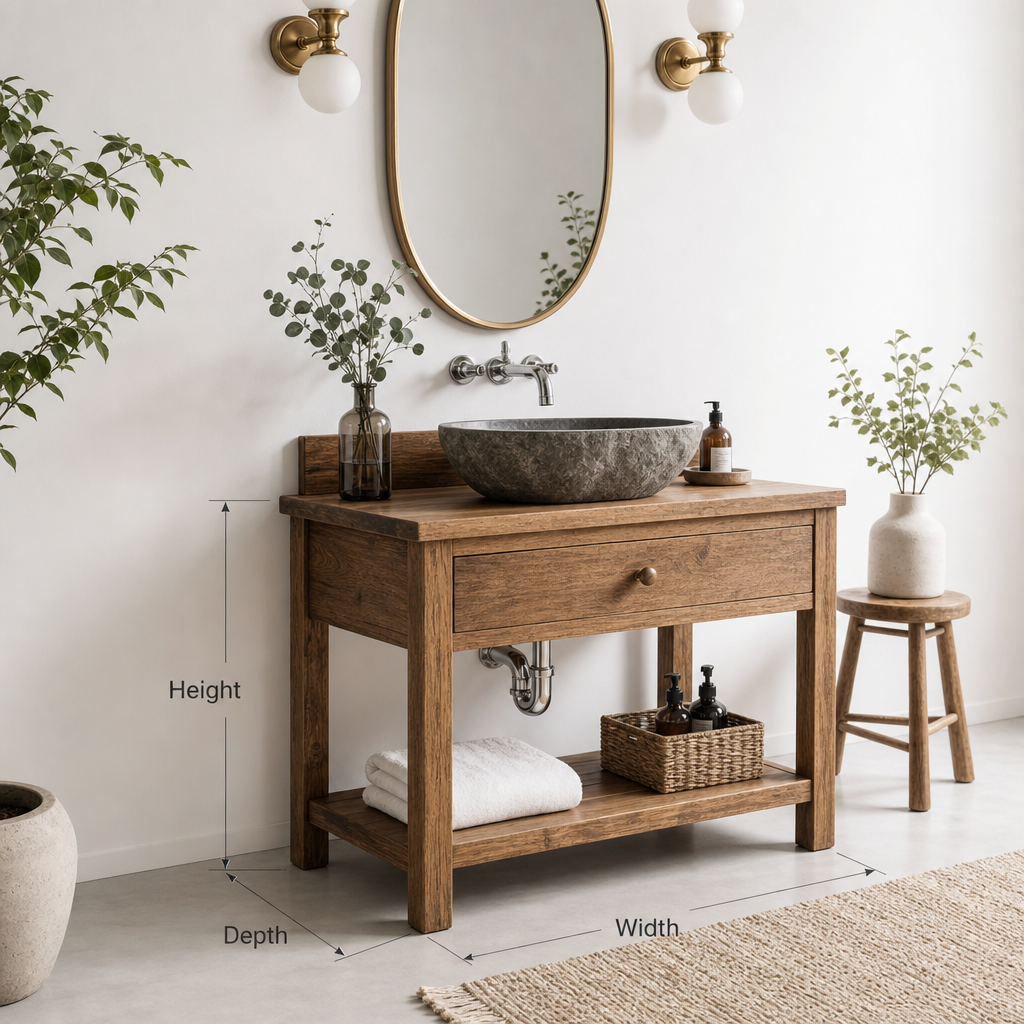
- Width: Measure the wall where the vanity will go. Subtract 2-4 inches for clearance on each side. That's your max width.
- Depth: Measure from the wall to the nearest obstruction (toilet, door swing, opposite wall). If the door swings inward, measure to the door edge when fully open - the vanity must not block it.
- Height: Standard is 30-34 inches. If you're tall (over 6 feet) or short (under 5'3"), factor that in - see our vanity height guide for the full breakdown.
- Plumbing location: Note where the current drain and water lines are. Moving them costs $300-800 - matching the existing position saves big.
- Door swing: Open the bathroom door fully. Does it clear your planned vanity? If not, you need a shallower depth or a different mount type.
Pro tip: use painter's tape to outline the vanity footprint on the floor. Stand in the room. Walk through your morning routine in that space. You'll instantly feel if it's too tight.
Common Mistakes in Small Bathroom Vanity Selection
Buying for width only. You measured the wall, picked a 24-inch vanity, and now the door won't close. Depth and door swing matter just as much - maybe more.
Choosing floating without checking studs first. Floating vanities need structural anchoring. If your studs are 24 inches apart and the vanity brackets need 16, you're paying a contractor to add blocking. Check before you buy.
Ignoring plumbing reroute costs. The vanity is $400. The plumber to move the drain is $600. Read the install specs before buying, not after delivery.
Putting a vessel sink on an 18-inch vanity. A vessel sink already takes up counter depth; on the narrowest vanity width, that leaves almost no usable surface at all.
Picking dark, non-sealed MDF for a windowless bathroom. In a bathroom with no natural light and constant humidity, cheap unsealed MDF swells at the edges within 2-3 years. Either go solid wood with a good sealant, or pick MDF only if you have a working exhaust fan.
Skipping the tape test. Don't trust numbers on a page. Tape out the dimensions on your actual bathroom floor. Live with it for an afternoon. You'll know immediately if it works.

FAQ
What's the smallest bathroom vanity with storage?
18 inches wide, roughly 14-16 inches deep, with one cabinet door. That's the smallest configuration that still functions as storage rather than just a sink stand.
Is a 24-inch vanity big enough for a full bathroom?
Yes. It fits a 17-19 inch undermount sink and typically gives you 2-3 drawers, which covers a single-person full bathroom comfortably.
How much clearance do you need in front of a bathroom vanity?
21 inches is the code minimum; 30 inches is the NKBA-recommended comfortable clearance for two people to pass or bend down at the sink.
Can you install a floating vanity on drywall alone?
No. Floating vanities need to anchor into wall studs or added 2x6 blocking - drywall anchors alone can't support the weight long-term.
What depth should a small bathroom vanity be?
18 inches is the standard minimum. If your bathroom is narrow front-to-back (under about 5 feet), look for 16-18 inch depth specifically - that's a different constraint than narrow width and it's the one most buyers overlook.
How much does it cost to install a small bathroom vanity?
$300-1,500 for most small bathroom setups. The low end is an 18-24 inch MDF floor-mounted vanity installed DIY ($0-200 in labor); the high end is a 30-inch solid wood floating vanity with professional installation and plumbing rerouting.
The Bottom Line
A small bathroom vanity isn't about finding the biggest one that fits - it's about matching width, depth, mount type, and material to your specific room. The 24-inch at 18-inch depth is the safe default for most small bathrooms. If your room is narrow front-to-back, drop to a 16-18 inch depth. If storage is critical, go floor-mounted with well-built drawers. If visual space matters more, go floating and add wall shelves to compensate.
The biggest mistake is measuring once and ordering. Tape it out, walk through your morning routine in the space, check the door swing, and verify the plumbing alignment. An hour of prep saves an $800 mistake.
Browse Ashdeco's handcrafted bathroom vanity collection for solid wood options in both floating and floor-mounted styles - built by artisans who understand which dimensions actually matter in real, lived-in bathrooms.