

























Quick view
Shop this guide
Handcrafted Bathroom Vanities, made to order in solid wood.
 Curved Floating Solid Wood Bathroom Vanity Sculptural Wall Mounted Washstand
From $1,843.00
Curved Floating Solid Wood Bathroom Vanity Sculptural Wall Mounted Washstand
From $1,843.00
 Curved Arch Solid Wood Bathroom Vanity Freestanding Four Drawer Washstand
From $2,365.0010% off at checkout
Curved Arch Solid Wood Bathroom Vanity Freestanding Four Drawer Washstand
From $2,365.0010% off at checkout
 Sculptural Tree Trunk Solid Wood Bathroom Vanity Organic Live Edge Storage Console
From $2,154.0010% off at checkout
Sculptural Tree Trunk Solid Wood Bathroom Vanity Organic Live Edge Storage Console
From $2,154.0010% off at checkout
 Sculpted Branch Pedestal Solid Wood Bathroom Vanity Organic Live Edge Washstand
From $1,432.00
Sculpted Branch Pedestal Solid Wood Bathroom Vanity Organic Live Edge Washstand
From $1,432.00
 Floating Live Edge Solid Wood Bathroom Vanity Wall Mounted Storage Cabinet
From $2,316.0010% off at checkout
Floating Live Edge Solid Wood Bathroom Vanity Wall Mounted Storage Cabinet
From $2,316.0010% off at checkout
 Sculptural Hand-Carved Tree Solid Wood Bathroom Vanity & Sprawling Branch Wall Unit
$3,265.0010% off at checkout
Sculptural Hand-Carved Tree Solid Wood Bathroom Vanity & Sprawling Branch Wall Unit
$3,265.0010% off at checkout
If you are trying to figure out the standard bathroom vanity height in 2026, the short answer is simple. Most standard vanities still sit around 30 to 32 inches high, while comfort-height vanities usually land closer to 34 to 36 inches. ADA-compliant setups follow a different limit. That is the quick answer, but it is not the full buying decision.
The right vanity height depends on who uses the bathroom, the sink style, and whether you are designing a powder room, family bath, or primary bathroom. A height that feels perfect in one room can feel awkward in another. That is why this guide matters.

What Is the Standard Bathroom Vanity Height?
The standard bathroom vanity height is still usually around 30 to 32 inches. That range remains common in many homes, especially in bathrooms designed around older vanity proportions or drop-in sink setups. Newer bathrooms often lean taller, but 30 to 32 inches is still the baseline people mean when they ask for the standard size.
If you walk through enough vanity listings, you will notice that "standard" and "comfortable" are no longer the same thing. A lot of newer vanities are built taller because adults generally prefer not to bend as much. So while 30 to 32 inches is still the traditional standard, many current buyers end up choosing something taller.
Here is the clearest way to think about it:
| Vanity Type | Typical Height | Best Fit |
|---|---|---|
| Standard vanity | 30-32 inches | Secondary bathrooms, older-style layouts, rooms with a lower visual profile |
| Comfort-height vanity | 34-36 inches | Primary bathrooms, adult users, newer remodels |
| ADA-focused setup | Up to the required accessible maximum | Accessibility-focused layouts and specific user needs |
In metric: standard vanities are roughly 76–81 cm, comfort-height vanities run about 86–91 cm, and the ADA maximum is 86 cm.
To be specific: the ADA maximum is 34 inches (about 86 cm), measured from the finished floor to the top of the rim or counter, whichever is higher. Underneath, at least 27 inches of knee clearance is required. A comfort-height vanity at 36 inches is too tall to meet this requirement — if accessibility is a factor, 34 inches is the hard ceiling, not a target to round up to.
That table matters because a lot of confusion starts when people use the word "standard" to mean "most common today." Those are not always the same thing.
Why More Bathrooms Are Moving Taller
Traditional bathroom vanity height came from older cabinet proportions and sink styles. It worked, but it also made many adults bend more than they wanted to. That is why comfort-height vanities became more common. They feel closer to kitchen counter height, which many people find easier on the back and more natural for daily use.
This does not mean taller is always better. A vanity that feels good for one adult can feel too tall for children or shorter family members. In a guest bathroom, the safer choice may still be the more traditional range. In a primary bathroom used mainly by adults, a taller vanity often feels better almost immediately.
The main thing to remember is that buyers now have two real standards in the market: - the older traditional standard - the newer comfort-height standard
That shift is exactly why so many bathroom shoppers feel confused. They are comparing two normal options, not one right choice and one wrong choice.
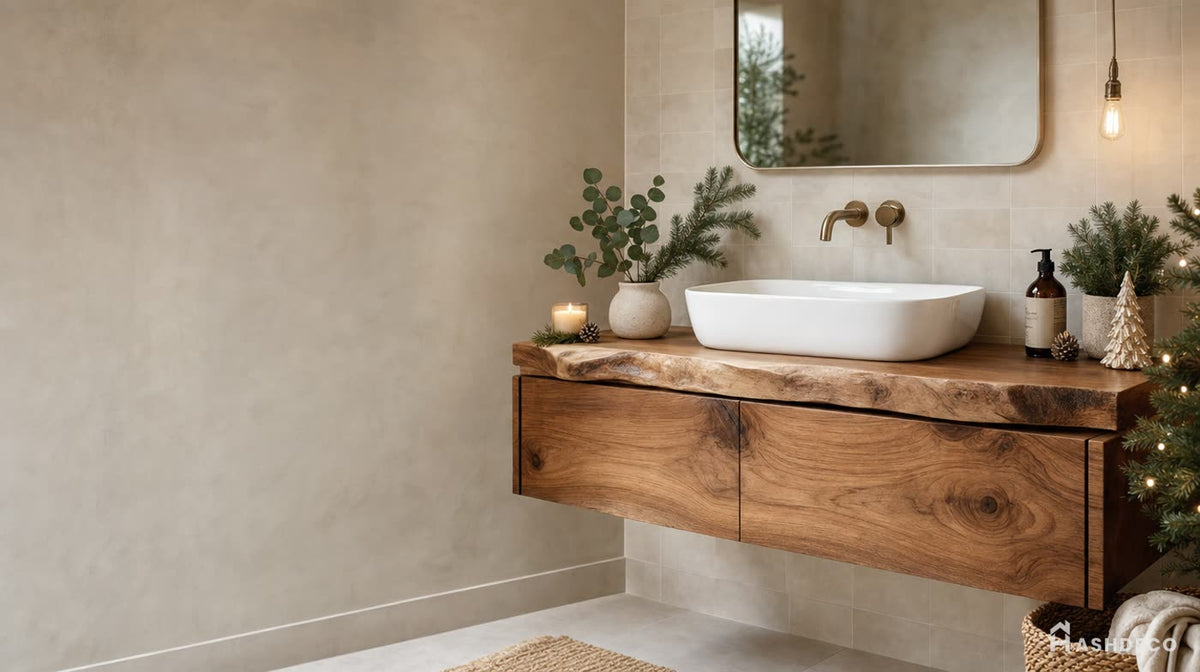


Standard vs Comfort Height Vanity
A standard vanity usually sits at 30 to 32 inches, while comfort-height vanity typically lands around 34 to 36 inches. The practical difference is not dramatic on paper, but it feels obvious in real use. A taller vanity reduces bending and often feels more natural for adult users, while a lower vanity can work better in mixed-use family bathrooms.
This is where buying by room type helps.
Standard height usually works better when:
- the bathroom is shared with children - the room is smaller and you want a lower visual profile - the vanity uses a sink setup that already adds height above the cabinet - you are matching an older bathroom layout
Comfort height usually works better when:
- adults are the primary users - the bathroom is a primary or ensuite bath - you want a more current feel - the sink style keeps the overall usable height under control
Floating (wall-mounted) vanities follow the same 30–36 inch range as freestanding ones — the difference is that installation height is adjustable, so it's worth confirming the mounting height matches the primary users before drilling.
A lot of people make the mistake of picking the cabinet height first and thinking about the sink later. That is backwards. The sink changes the real working height more than most buyers expect.
Not sure which height fits your bathroom?

Shop Handcrafted Comfort-Height Vanities
Solid wood, live-edge designs built at 34–36" - sized right for adult daily use.
Browse the Vanity Collection →Why Sink Style Changes the Decision
Vanity height is not just cabinet height. The sink changes the total working height, and that changes comfort fast. A lower cabinet paired with a vessel sink can end up feeling taller than expected. A taller cabinet paired with an integrated sink may still feel balanced.
This is where many sizing mistakes happen. Someone hears that 36 inches is more comfortable, buys a 36-inch cabinet, then adds a vessel sink and ends up with a bathroom vanity that feels too high in daily use. On the other side, someone buys a lower cabinet thinking it will feel traditional, then realizes the undermount sink keeps the top feeling lower than they wanted.
If you want a simple rule, use this one: think about the height of the actual working surface, not just the cabinet box.

Reclaimed Live Edge Solid Wood Bathroom Vanity - Handmade Floating Rustic Wall-Mounted Vanity | $1,780.20
That is also why this page should stay focused on height. Width, depth, and sink spread matter too, but they are separate decisions. If you are comparing sink sizes specifically, that belongs in a different measurement guide.
Don't miss
These pieces qualify for 10% off orders over $2,000. Applied automatically at checkout.
10% off
Curved Arch Solid Wood Bathroom Vanity Freestanding Four Drawer Washstand
From $2,365.00
10% off at checkout
10% off
Sculptural Tree Trunk Solid Wood Bathroom Vanity Organic Live Edge Storage Console
From $2,154.00
10% off at checkout
10% off
Floating Live Edge Solid Wood Bathroom Vanity Wall Mounted Storage Cabinet
From $2,316.00
10% off at checkout
10% off
Sculptural Hand-Carved Tree Solid Wood Bathroom Vanity & Sprawling Branch Wall Unit
$3,265.00
10% off at checkout
ADA Vanity Height Is a Different Question
ADA vanity height should not be mixed casually into standard vanity advice. It is a separate accessibility decision, and the maximum usable height follows different requirements than a typical residential comfort-height vanity. If the bathroom needs to meet accessibility rules, that requirement should come first.
This matters because some people search "standard bathroom vanity height" when they are really trying to understand accessible height. Those are not interchangeable. A comfort-height vanity may feel better for many adults, but that does not automatically make it ADA-compliant.
So the order of questions should be: - Does this bathroom need to follow accessibility requirements? - Who uses the bathroom most often? - What sink style is being installed? - Do you want the traditional lower look or the newer taller feel?
If accessibility is the main constraint, start there and do not size the vanity the same way you would for a decorative remodel.
What Actually Feels Right in Real Bathrooms
The right vanity height is usually easier to choose when you stop thinking in abstract numbers and start thinking in bathroom type.
Powder room
A powder room gives you more flexibility because it is used for shorter visits. The vanity can stay closer to traditional height, especially if the room is small and you want the furniture to feel lighter.
Family bathroom
A shared bathroom often needs compromise. If children use it daily, standard height still makes sense more often than people want to admit.
Primary bathroom
This is where comfort-height usually wins. Adults use it most, and the taller vanity often feels more natural over time.
Design-led bathroom
If the bathroom is highly styled, the visual profile matters too. A lower vanity may feel more grounded and furniture-like. A taller vanity may feel cleaner and more current. Neither is automatically better. The rest of the room decides a lot.
If you are pairing the vanity with other handcrafted solid wood pieces from Ashdeco, such as a floating bathroom vanity or a nearby console table, the room should still feel balanced as a whole. Height is part of that balance, not a standalone number.
Common Mistakes Buyers Make
The most common mistake is treating cabinet height as the full answer. It is not. Sink style changes the real height.
The second mistake is assuming taller always means better. For many adult bathrooms that is often true, but not always. In a child-shared bathroom or a room with a taller sink profile, the result can feel wrong fast.
The third mistake is using broad renovation advice without checking who actually uses the bathroom day to day. A room used mainly by one tall adult should not be sized the same way as a family bathroom used by several people.
The fourth mistake is trying to solve width, height, depth, sink size, and style all at once. That usually creates confusion instead of clarity.
Honest Downsides
Bathroom vanity height is one of those topics where a simple number sounds reassuring, but the real decision is messier. That is the first downside. Buyers want one clean answer, and bathrooms rarely work that way.
The second downside is that comfort-height recommendations can push people too high if they forget the sink. This happens a lot with vessel-style setups.
The third downside is that standard height can feel dated or too low in a primary bathroom used mostly by adults. Some buyers choose it because it sounds "normal," then regret it once the vanity is installed.
The fourth downside is that accessibility, aesthetics, and comfort do not always point to the same answer. In some bathrooms you have to prioritize one over the others.
My Recommendation
If you want the safest short answer, start here: - standard bathroom vanity height is usually 30 to 32 inches - comfort-height vanity is usually 34 to 36 inches - sink style can change how tall the vanity actually feels - accessibility needs should override generic sizing advice
If the bathroom is mainly for adults, I would look at comfort-height first. If it is a family bathroom or a smaller room where a lower profile still makes sense, standard height is still a solid choice.
The key is not chasing one number. The key is choosing the height that fits the user, the sink, and the room at the same time.
If you are also comparing full vanity styles or materials, it helps to look at the broader bathroom vanity collection and then separate the height decision from the style decision. That usually leads to a better call.

Farmhouse Corner Bathroom Vanity Wood - Live Edge Sink Shelf, Modern Unique Rustic Corner Vanity | $1,780.20

FAQ
What is the standard bathroom vanity height?
The standard bathroom vanity height is usually around 30 to 32 inches. That is still the traditional baseline in many bathrooms, even though taller comfort-height vanities are now common in newer remodels.
Is 36 inches too tall for a bathroom vanity?
Not necessarily. A 36-inch vanity often feels comfortable for adults, especially in a primary bathroom. But if the sink adds extra height, or if children use the bathroom daily, it can start to feel too tall.
What is comfort-height vanity?
Comfort-height vanity usually falls around 34 to 36 inches. It is taller than the traditional standard and often feels easier for adults to use because it reduces bending during daily routines.
Does a vessel sink make a vanity feel taller?
Yes. A vessel sink raises the working height above the cabinet, sometimes enough to make an otherwise reasonable vanity feel too tall. That is why sink style should always be considered along with cabinet height.
What is ADA vanity height?
ADA vanity height follows accessibility requirements and should be treated as a separate decision from standard residential sizing. If the bathroom needs to meet accessibility rules, that requirement should come before general comfort or style preferences.