Solid Wood vs MDF Bathroom Vanity: What Actually Survives a Wet Room
Every bathroom vanity ad says "built to last." Nobody mentions that half the vanities sold online are made from compressed sawdust held together with glue, and th
at glue starts failing the moment humidity crosses 60%.
If you've ever peeled back the edge of a vanity door and found puffy, crumbling material underneath the laminate, that's MDF doing what MDF does in a bathroom. It absorbs moisture, swells, and slowly self-destructs.
This isn't a "premium vs budget" argument. It's a physics problem. Bathrooms are wet rooms. The material you choose determines whether your vanity looks the same in year five or looks like it needs replacing in year two.
What Is MDF? (And Why Is It Everywhere?)
MDF stands for Medium-Density Fiberboard. It's made by breaking down hardwood or softwood residuals into fibers, combining them with wax and resin, and pressing them into flat panels under high heat and pressure.
The result: a perfectly smooth, perfectly flat surface that takes paint beautifully. No grain variation. No knots. No natural imperfections. Furniture manufacturers love it because it's cheap, consistent, and easy to machine.
The problem: those fibers are held together by adhesive, not by the natural structure of wood. When moisture gets in, whether through a chip in the finish, through the uncoated back panel, or through the drill holes for hardware, the fibers swell. Research confirms that MDF thickness swell during moisture absorption is consistently higher than shrinkage during drying - meaning the damage is cumulative and permanent.
In a living room bookshelf, this barely matters. In a bathroom where hot showers send humidity to 80%+ twice a day, it's a countdown.
How MDF Fails in Bathrooms (The Timeline)
This is what we hear from customers replacing MDF vanities. The pattern is remarkably consistent:
Months 1-6. Everything looks perfect. The paint is smooth. The doors close evenly. You think you made a smart choice saving $400.
Months 6-18. The bottom edge of the vanity, closest to the floor where water splashes and steam condenses, starts feeling slightly rough. The paint bubbles in one or two spots. You might not notice unless you look closely.
Months 18-30. Door edges swell visibly. Doors that used to close flush now catch slightly. The back panel, if it wasn't sealed (most aren't), has warped. Screws holding the hinges start loosening because the material around them has expanded. You tighten them, but they won't hold.
Month 30+. The finish is peeling in multiple spots. One hinge has pulled free entirely. The bottom shelf has a visible sag. The vanity still "works" but it looks tired, and fixing it means replacing it.
This isn't hypothetical. Search "MDF vanity water damage" and you'll find thousands of bathroom forums telling the same story.
What Makes Solid Wood Different
Solid wood, actual boards cut from actual trees, has a cellular structure that naturally resists moisture penetration. Wood cells contain lignin, a natural polymer that gives wood its rigidity even when exposed to humidity. The USDA Wood Handbook documents how solid wood's cellular structure allows it to absorb and release moisture without permanent deformation - unlike composite panels.
Does solid wood react to moisture? Yes. Wood expands and contracts slightly with humidity changes. But it does so uniformly and reversibly. It moves, then moves back. MDF expands and stays expanded.
In practice, the difference shows up in four ways.
Daily steam from hot showers pushes bathroom humidity past 80%. Solid wood absorbs that moisture and releases it as the room dries. MDF absorbs it and keeps it. Over months, the fibers swell further with each shower cycle.
Water hits your vanity every day. On sealed solid wood, it beads up and wipes away. On MDF, a single chip in the finish becomes a permanent entry point. Once moisture reaches the raw fiberboard, there's no reversing the swell.
Screws grip solid wood fibers and hold for decades. In MDF, the compressed material around each screw loosens as moisture weakens the adhesive bond. Tighten a hinge today, and it wobbles again in six months.
Scratch a solid wood vanity and you can sand it, restain it, reseal it on a Saturday afternoon. Scratch an MDF vanity and the damage exposes raw fiberboard that immediately starts absorbing moisture. Your options become touch-up paint (temporary) or a new vanity.
"But Isn't Solid Wood More Expensive?"
Yes. And here's the honest math.
A mass-produced MDF vanity runs $200-600. A solid wood vanity runs $500-1,500. That's a real price gap.
But run the numbers over 10 years:
MDF path: $400 vanity → replace at year 3 ($400 + $200 installation) → replace again at year 7 ($400 + $200 installation). Total: $1,600 over 10 years. Three vanities in your landfill.
Solid wood path: $900 vanity → refinish at year 6 ($50 in sandpaper and stain, Saturday afternoon project). Total: $950 over 10 years. One vanity, still in your bathroom.
The "expensive" option costs $650 less over a decade. And you never have to disconnect plumbing twice.

Not All Solid Wood Vanities Are Equal
Saying "solid wood" covers everything from a $300 pine cabinet from a factory to a $2,000 hand-carved walnut slab. The wood species matters, the construction method matters, and the finish matters.
Wood Species for Bathrooms
Teak - the gold standard for wet environments. Naturally high in oils that repel water. Used in boat building for centuries. Expensive, but nearly indestructible in a bathroom.
Walnut - dense, stable, and naturally resistant to warping. Rich dark grain that deepens with age. Our most requested wood for bathroom vanities.
Acacia - extremely hard, moisture-resistant, and available at lower price points than teak or walnut. The grain pattern is dramatic - swirling, unpredictable, unique to each piece.
Oak - strong and durable, but more porous than teak or walnut. Needs a quality seal coat. Works well in bathrooms with good ventilation.
Pine - affordable but soft. Dents easily. Needs heavy sealing for bathroom use. Better suited to rustic aesthetics where wear adds character rather than looking like damage.
Construction Method
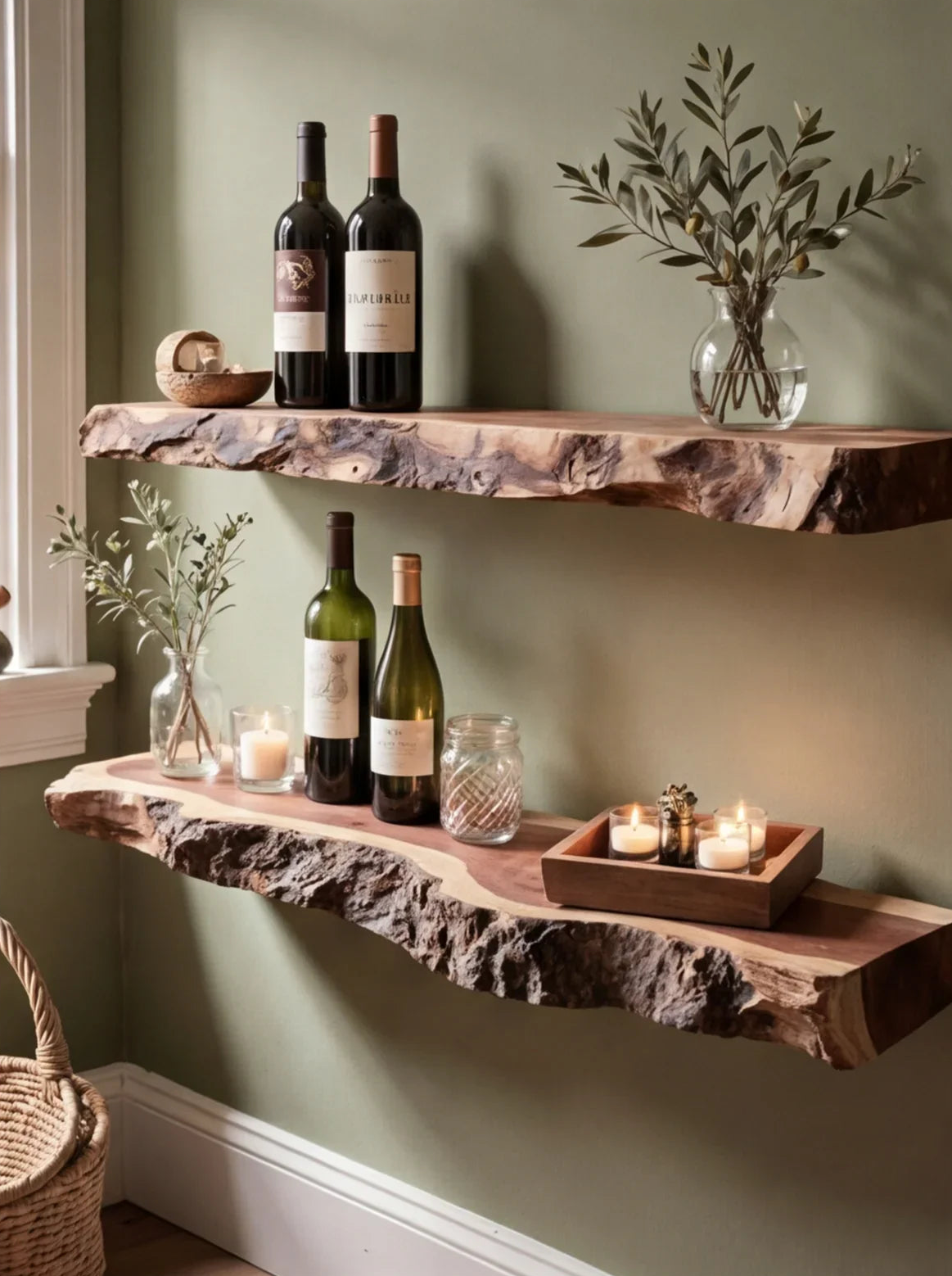
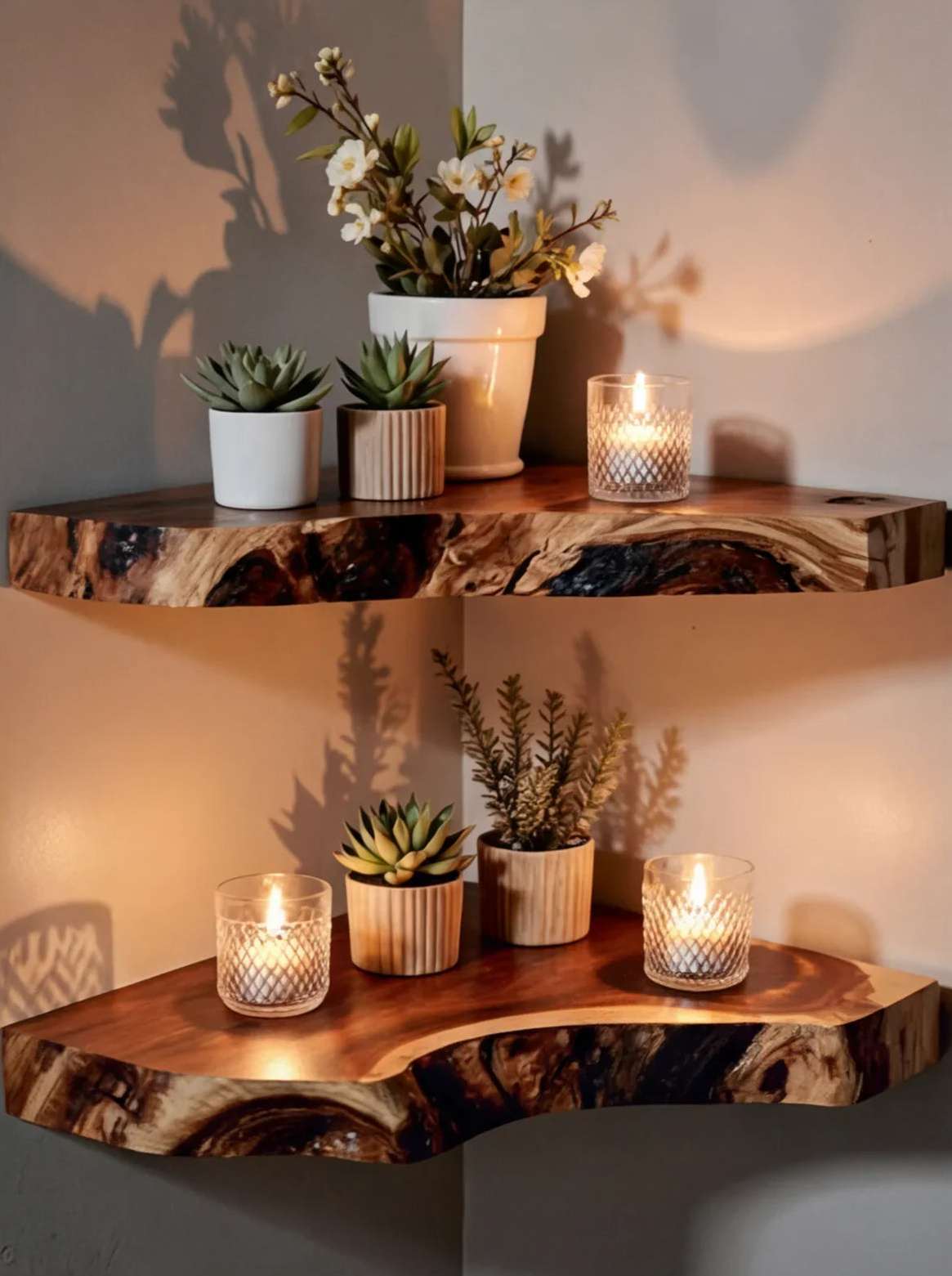
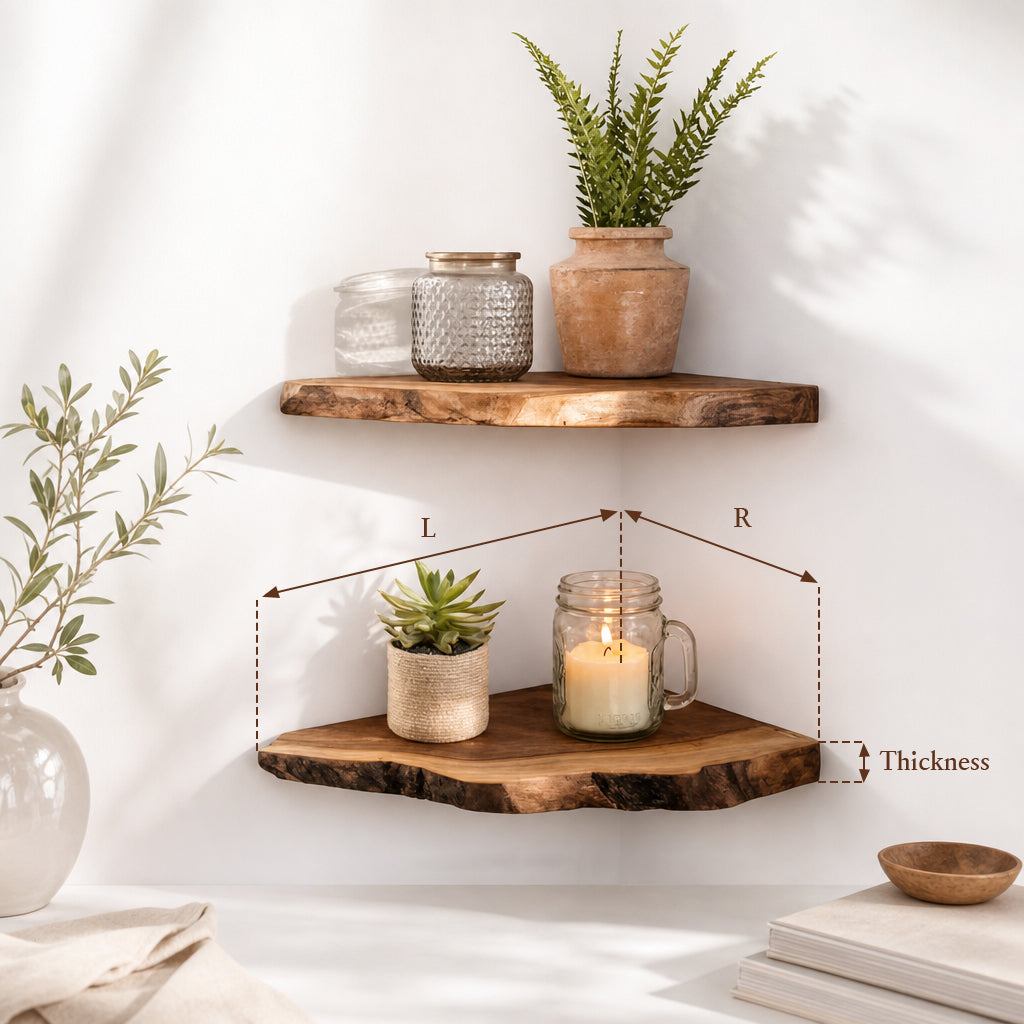
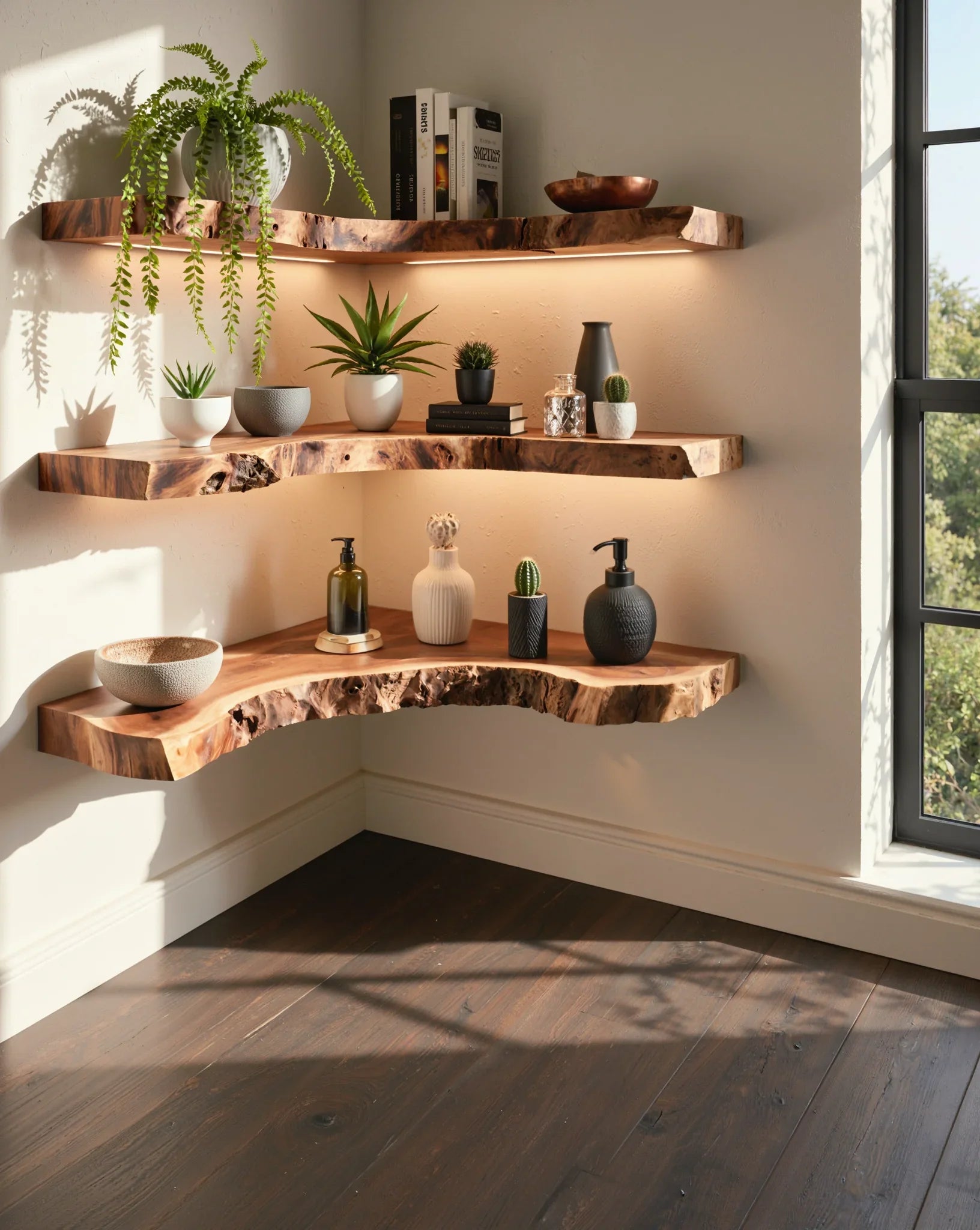
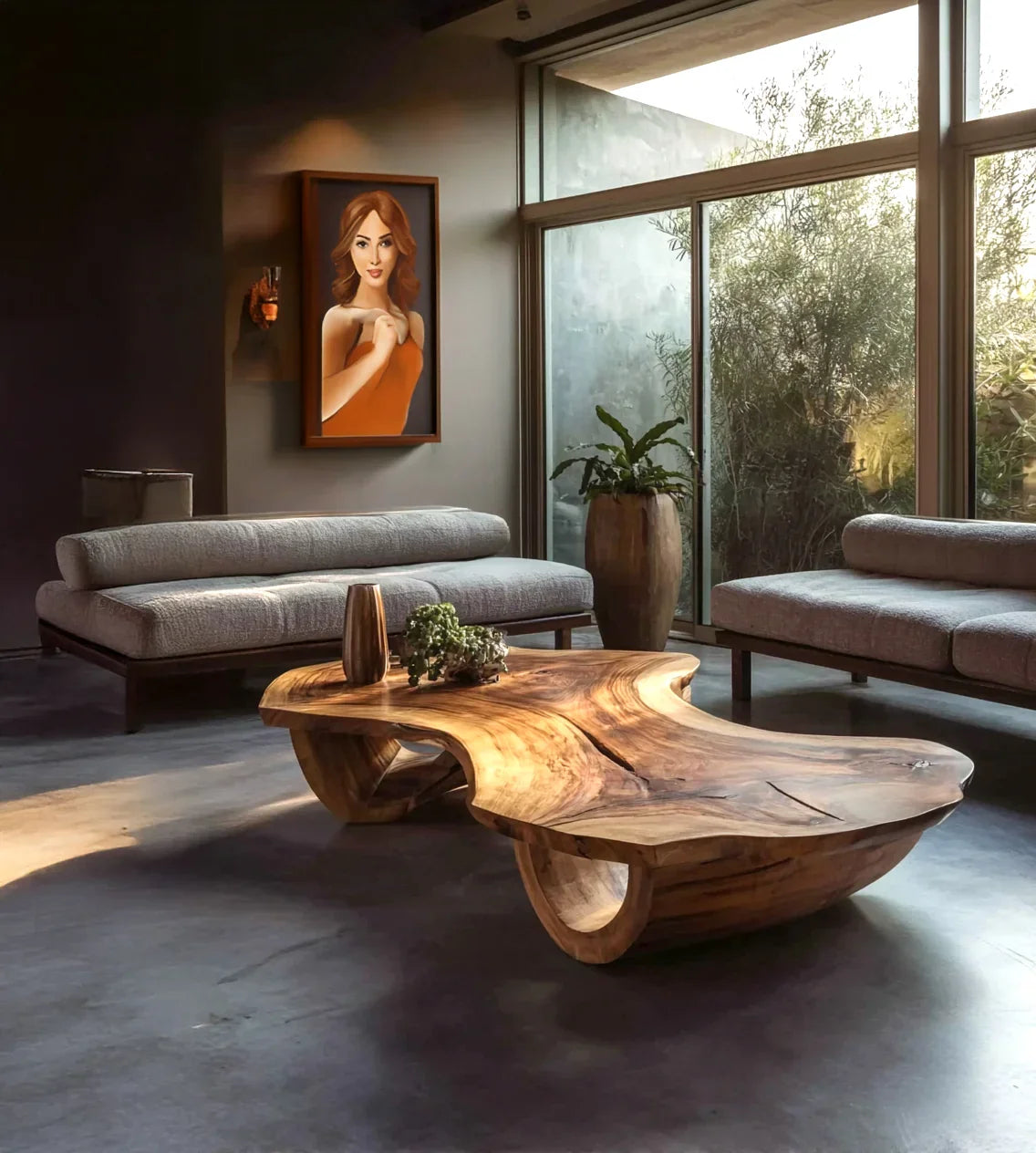
Slab construction (single piece of wood, live edge intact) is the strongest option. No joints to separate. No glue lines to fail. A live edge floating bathroom vanity made from a single slab is about as tough as bathroom furniture gets.
Panel construction (solid wood boards joined edge-to-edge) is strong when done with proper joinery. Look for mortise-and-tenon or dovetail joints. Avoid anything held together primarily by screws or staples. That's furniture built to a price, not a standard.
Butcher block style (strips of wood glued in parallel) is stable and affordable. Good for countertops. The many glue lines create some moisture vulnerability, but quality butcher block with marine-grade adhesive handles bathroom humidity well.
Finish
The finish is your vanity's first line of defense. In a bathroom:
- Polyurethane or marine varnish - hard, water-resistant surface coat. Multiple coats on all surfaces (including the back and underside) create a sealed barrier. Best for maximum protection.
- Penetrating oil finish (tung oil, Danish oil) - soaks into the wood grain rather than sitting on top. Natural look and feel. Needs reapplication every 1-2 years. Works best on naturally oily woods like teak.
- Wax - beautiful soft sheen. Minimal water protection. Not recommended as the primary finish for bathroom vanities.
What We Build (and Why It Matters)
At Ashdeco, our bathroom vanities are built from solid wood by Vietnamese artisans. Not a factory line. Individual craftspeople who shape each piece by hand.
Why that distinction matters: a factory CNC-cuts identical pieces from sheet material. Fast, cheap, and every unit looks the same. Our artisans work with the natural shape of each wood slab - following the grain, preserving the live edge, working around knots instead of discarding them. That's why no two Ashdeco vanities are identical.
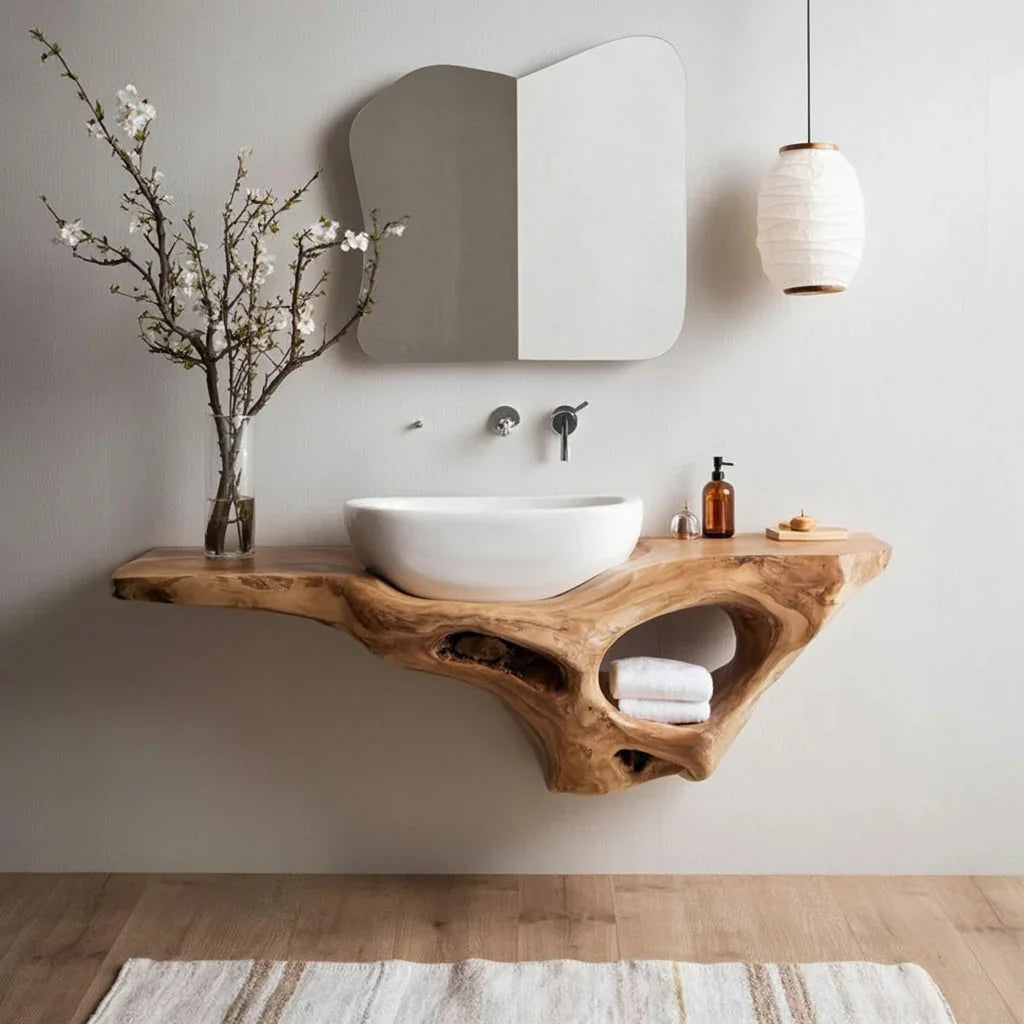
The driftwood bathroom vanities are a good example. Each piece starts as reclaimed wood that's been naturally weathered. The artisan shapes it into a functional vanity while keeping the character of the original wood: the texture, the color variation, the organic curves that no machine produces.
The craftsmanship changes the math on durability. Handcrafted solid wood means:
- Every joint is individually fitted (not mass-assembled with a pneumatic staple gun)
- Problem areas in the wood are identified and reinforced during construction
- The finish is applied to all six surfaces of every component, the visible faces
- Hardware mounting points are drilled into solid grain, not into compressed fiber
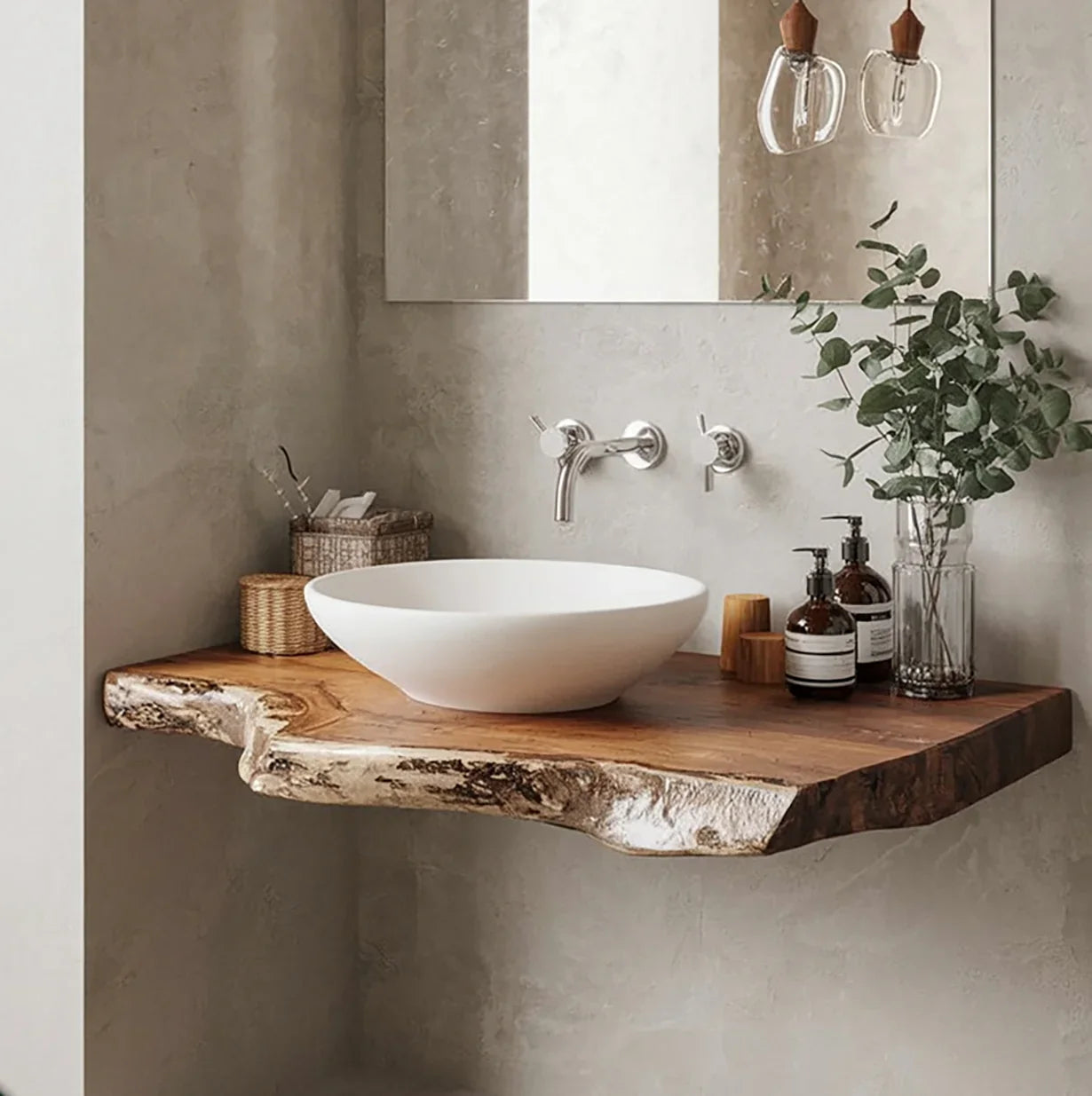
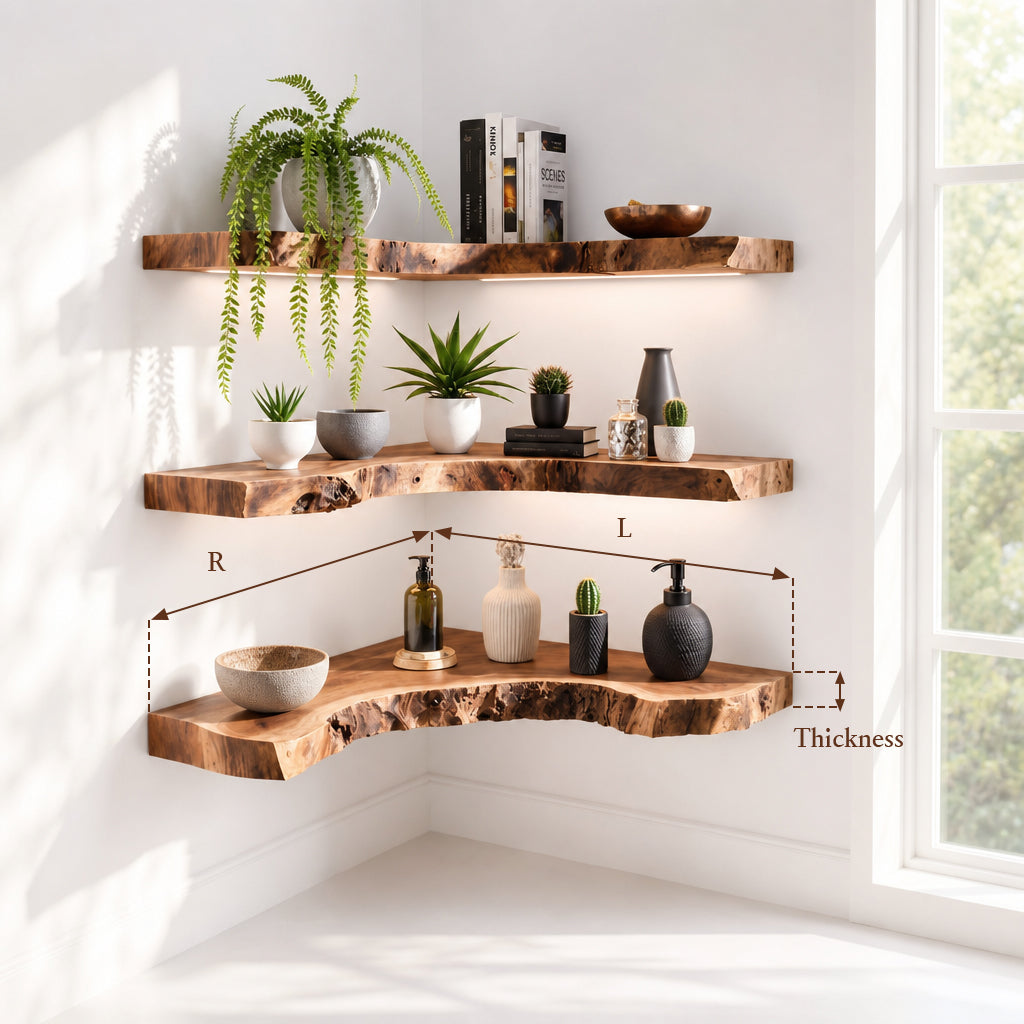
Rustic Live Edge Bathroom Vanity Shelf – Handmade Wood Decor

Farmhouse Corner Bathroom Vanity Wood – Live Edge Sink Shelf, Modern Unique Rustic Corner Vanity
How to Check if a Vanity Is Really Solid Wood
Online listings can be misleading. "Wood vanity" might mean MDF with a wood veneer. "Solid construction" might mean the frame is solid but the panels are particleboard. Here's how to verify:
Check the material description. Look for "solid [species name]," like "solid walnut" or "solid teak." If it just says "wood" or "engineered wood" or "wood composite," it's not solid wood.
Look at the edges in photos. Solid wood shows end grain, visible wood fibers running perpendicular to the surface. MDF shows a smooth, uniform cross-section. Particleboard shows visible chips. If the listing doesn't show close-up edge shots, ask the seller.
Check the weight. A 36" solid wood vanity weighs 50-80 lbs. An MDF vanity the same size weighs 30-45 lbs. If the shipping weight seems light for the size, it's probably not solid wood.
Read the reviews at the 1-year mark. Sort by oldest reviews first. If reviews from 12+ months ago mention swelling, peeling, or loose hinges, the material is failing. Solid wood vanities don't produce these complaints.
FAQ
Is MDF ever acceptable for a bathroom vanity?
In a powder room or half bath with no shower (low humidity), MDF can work for years. In a full bathroom with daily showers, solid wood is the significantly better choice for long-term durability. The U.S. Access Board also notes that ADA-compliant vanities need open knee clearance underneath - floating solid wood vanities handle this better than freestanding MDF cabinets.
How do I protect a solid wood vanity in a bathroom?
Keep the finish intact. Wipe up standing water promptly, use a bath mat to catch splashes, and run your exhaust fan during and after showers. Refinish every 5-7 years, or whenever the finish feels rough or dull. Between refinishes, an annual coat of furniture wax adds extra protection.
Can solid wood vanities handle vessel sinks?
Absolutely. Solid wood supports vessel sinks easily. You'll drill the drain hole and faucet hole through actual wood, which grips hardware more securely than any composite material. For height considerations with vessel sinks, see our vanity height guide.
What's the difference between solid wood and "real wood veneer"?
Veneer is a thin slice of real wood (usually 1/40 inch) glued over MDF or particleboard. It looks like real wood on the surface but behaves like MDF underneath, because it is MDF underneath. When the veneer chips or peels, you're left with exposed composite material that swells in moisture.
Are Ashdeco vanities sealed for bathroom use?
Yes. Every vanity is finished with multiple coats of protective sealant on all surfaces: top, bottom, inside, and back panel. We don't leave uncoated surfaces that could absorb moisture. Each piece is also treated with natural wood oil before the topcoat for additional moisture resistance.
Do handcrafted vanities cost more than factory-made?
Initially, yes. Typically $300-600 more than a mass-produced MDF alternative. Over 5-10 years, the total cost is lower because solid wood doesn't need replacement. A single refinish costs under $100 in materials versus $600+ for a full replacement.