





















Quick view
- Most "modern" cat trees are just regular cat trees with better marketing
- Four approaches to "modern" cat furniture (and what's really inside each one)
- The material question nobody asks (but should)
- Where to actually put a cat tree in a modern room
- How to tell if a "modern" cat tree will last
- Making it work with your existing furniture
- Frequently asked questions
Shop this guide
Handcrafted Cat Tree Tower, made to order in solid wood.
 Sculptural Spiral Solid Wood Cat Tree Tiered Modern Feline Lounger
From $2,217.0010% off at checkout
Sculptural Spiral Solid Wood Cat Tree Tiered Modern Feline Lounger
From $2,217.0010% off at checkout
 Nature Inspired Branch Solid Wood Corner Cat Tree Tower Condo
From $1,854.00
Nature Inspired Branch Solid Wood Corner Cat Tree Tower Condo
From $1,854.00
 Live Edge Slice Tiered Solid Wood Cat Tree Freestanding Multi Level Perch
From $1,732.00
Live Edge Slice Tiered Solid Wood Cat Tree Freestanding Multi Level Perch
From $1,732.00
 Artisanal Solid Wood Sculptural Tree Cat Tower & Multi-Tier Botanical Display Perch Stand
From $2,076.0010% off at checkout
Artisanal Solid Wood Sculptural Tree Cat Tower & Multi-Tier Botanical Display Perch Stand
From $2,076.0010% off at checkout
 Sculptural Hand-Carved Tree Solid Wood Wall-Mounted Cat Climbing Tower with Dual House Condos & Display Shelves
$3,012.0010% off at checkout
Sculptural Hand-Carved Tree Solid Wood Wall-Mounted Cat Climbing Tower with Dual House Condos & Display Shelves
$3,012.0010% off at checkout
 Sculptural Hand-Carved Tree Solid Wood Cat Tower & Multi-Tier Luxury Feline Climbing Tree with Tunnel Condo Base
From $2,654.0010% off at checkout
Sculptural Hand-Carved Tree Solid Wood Cat Tower & Multi-Tier Luxury Feline Climbing Tree with Tunnel Condo Base
From $2,654.0010% off at checkout
Most "modern" cat trees are just regular cat trees with better marketing
Search "modern cat tree" and the first page of results is carpet-covered towers in gray instead of beige. Maybe they swapped the faux fur for felt. Maybe the platforms have rounded edges instead of square ones. The product page says "mid-century modern" somewhere in the bullet points.
But the thing is still particle board wrapped in fabric, held together with dowels and Allen bolts. It'll look fine in the product photo, and then starts leaning within six months.
The actual question people are trying to answer when they search "modern cat tree" isn't about style. It's about this: I want something my cat will use that I don't have to hide when guests come over. Something that looks like it belongs in my living room alongside real furniture.
That's a harder problem than most pet brands are solving. This guide looks at what's actually available, what each approach gets right and wrong, and how to find a cat tree that works for both species in your household.

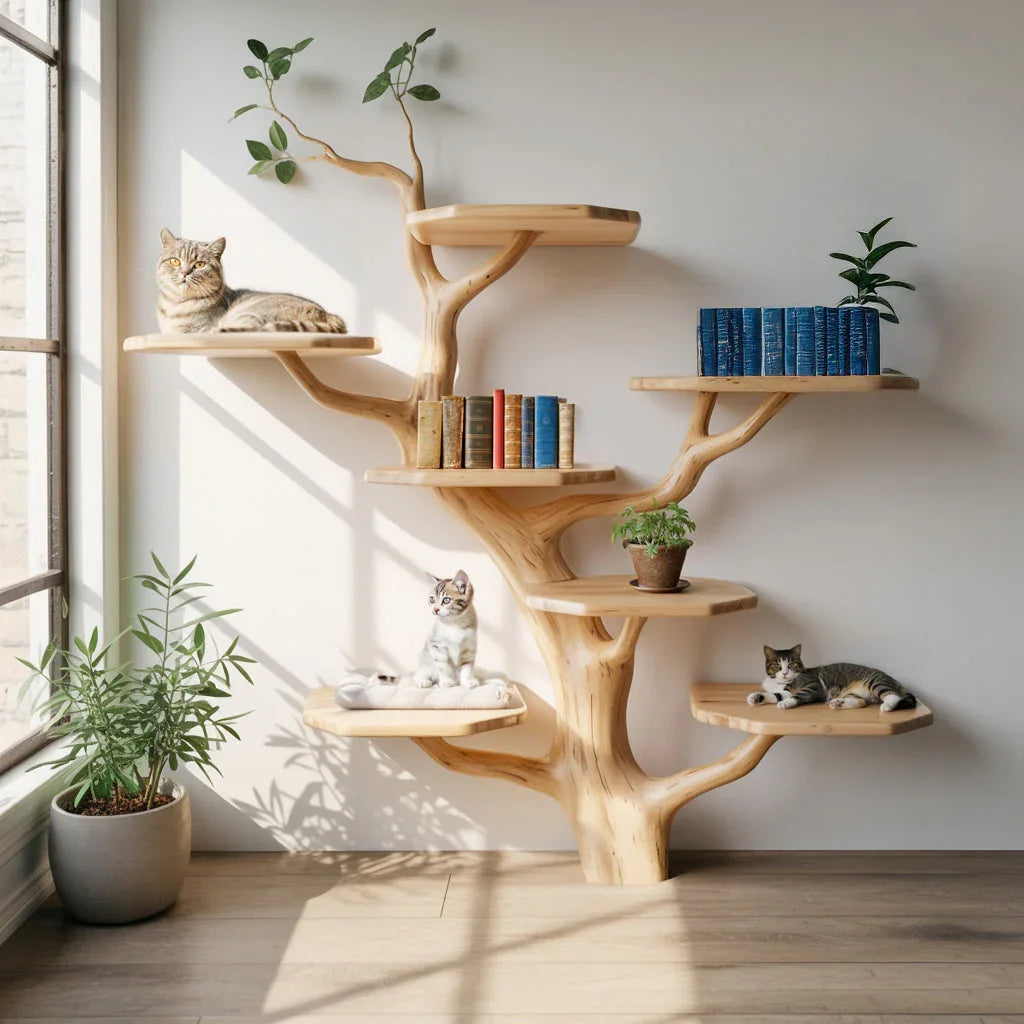
Rustic Tree Cat Tower — Modern Living Room — from $2,456
Four approaches to "modern" cat furniture (and what's really inside each one)

Not every modern cat tree is built the same way. The word "modern" gets slapped on everything from $60 Amazon towers to $3,000 custom pieces. Here's what separates them.
The carpet tower in a new color
Take a standard cat tree. Swap the beige carpet for charcoal gray. Maybe add a neutral-toned cushion. Photograph it against a white wall. List it as "modern."
The construction is identical to the carpet towers that have been on the market for two decades. Particle board frame, carpet wrap, jute or sisal posts, plastic connectors. The weight usually falls between 15 and 25 pounds. A determined 12-pound cat can rock the whole thing just by jumping down from the top.
These run $50 to $150. They work. Cats use them. But they don't actually integrate into a room any better than the beige version. You're still looking at a piece of cat equipment that reads as cat equipment from across the room.
Lifespan: 8 to 18 months before the carpet frays and the lean develops.
The Scandinavian approach
Plywood panels, clean lines, neutral fabric cushions, sometimes with a felt or linen wrap instead of carpet. These are the ones that show up on design blogs. Brands like Tuft + Paw and MiaCara work in this space.
The construction is a step up from carpet towers. Plywood is more dimensionally stable than particle board, and the minimalist design means fewer joints to fail. The weight depends on the model, but most fall in the 20 to 35 pound range.
The tradeoff: these designs often prioritize aesthetics over cat behavior. Platforms are smaller to maintain visual proportion. Scratching surfaces are minimal because sisal posts break the clean lines. Some models look better than they function, and a cat tree that looks perfect but gets ignored is $400 of furniture you can't use.
Price: $200 to $600. Lifespan: 2 to 4 years.
Metal and wood combinations
A steel frame with wooden platforms and shelves. These have an industrial edge to them and they're structurally strong. The metal frame doesn't flex or lean. The wooden platforms can be real hardwood or engineered, depending on the brand and price point.
Weight is the advantage here. A steel frame with wooden shelves can hit 40 to 50 pounds easily, which means stability even with large cats. The downside is that metal doesn't provide the same scratching satisfaction as wood. Cats may need a separate scratching post alongside the tree, which partially defeats the purpose of an all-in-one piece.
Price: $300 to $800. Lifespan: 3 to 5 years for the frame (longer if it's powder-coated steel), but wooden shelves may need refinishing.
Natural wood, carved by hand
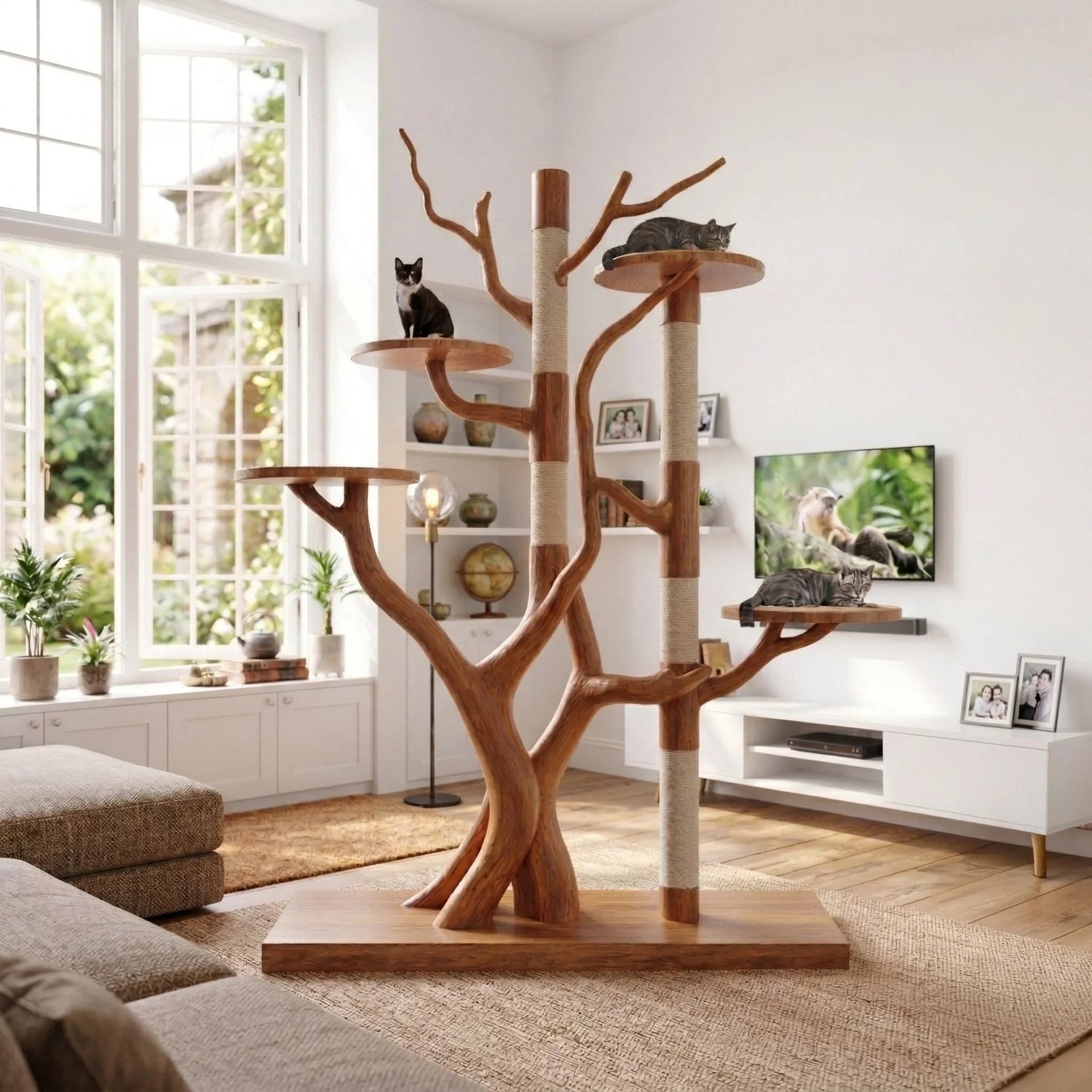
Take the question "modern cat tree" literally. A tree. In your room. Made from actual wood, shaped by a person with woodworking tools, with platforms integrated into the branch structure.
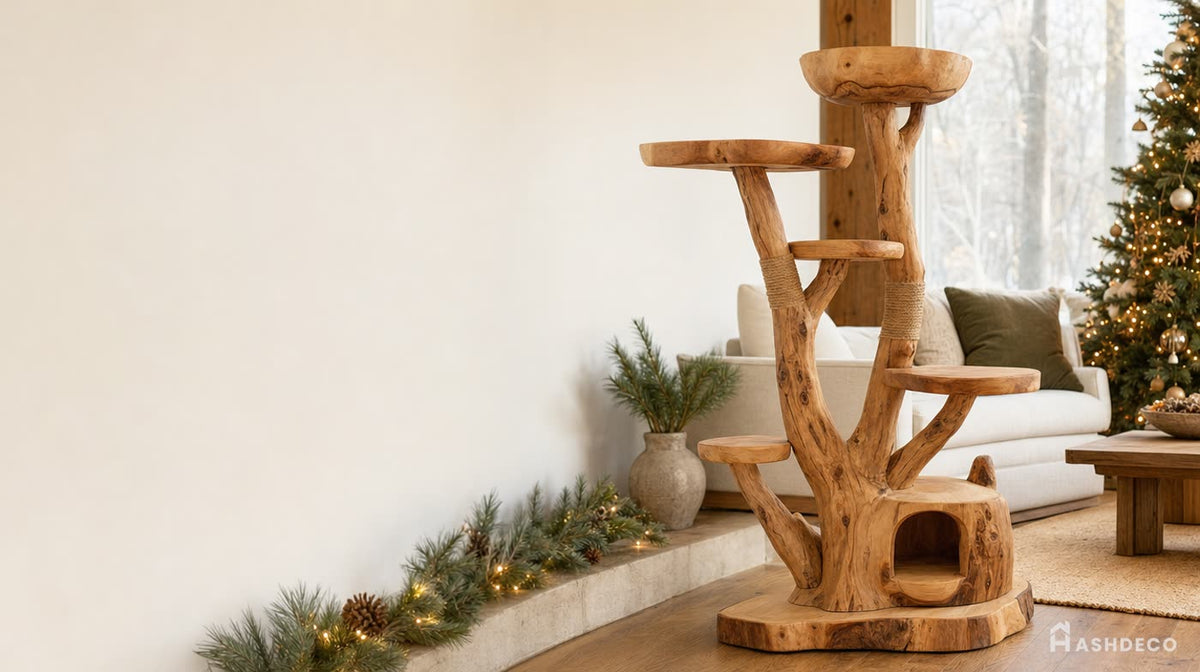
This is the approach that often confuses people at first. It looks rustic, not modern. But "modern" in interior design doesn't just mean minimalist and Scandinavian. It means intentional, considered, and designed to serve the space. A hand-carved wood cat tree works in a modern room the same way a live-edge dining table or a driftwood sculpture works. It's a statement piece, not a compromise.
These structures typically weigh 30 to 60 pounds. Wood grain gives cats a natural scratching surface. Each piece comes out differently because the artisan follows the grain instead of forcing a fixed template. The heaviest models will outlast most furniture in the room.
Price: $800 to $2,500. Lifespan: 5 to 10+ years.

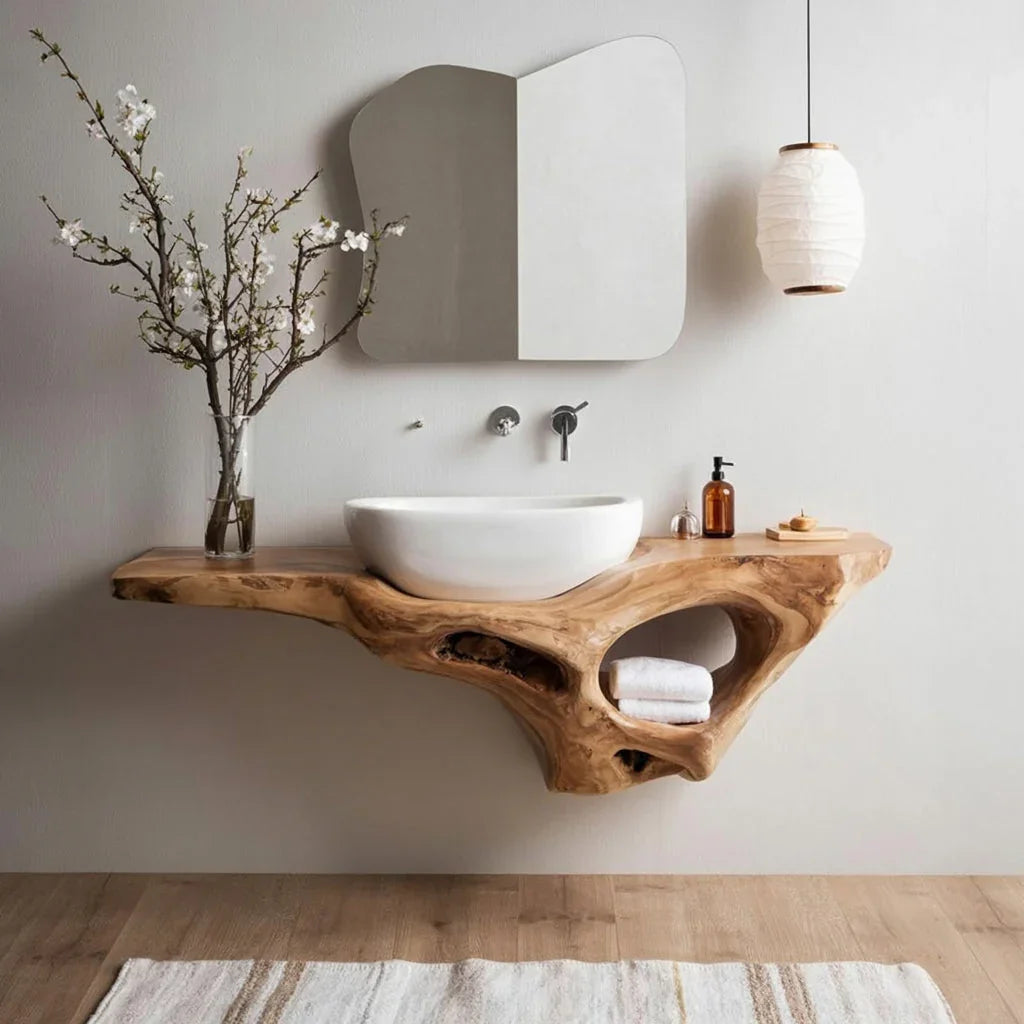
Natural Wood Cat Tree Tower — Modern Handmade — from $2,160


The material question nobody asks (but should)

People shop for cat trees by appearance first. That's understandable. But the material determines how the thing looks after 6 months, not just on day one.
Particle board + carpet. Cheap to manufacture, cheap to buy. Particle board is sawdust and glue pressed into sheets. It handles static weight fine but fails under repeated impact. Every time your cat jumps onto a platform, the landing force travels through the joints. Over time, the dowel holes widen and the joints loosen. Carpet covers the damage until the lean becomes visible. Moisture is a killer too. Cat trees near water dishes or in humid rooms swell and degrade faster.
MDF + sisal. A marginal improvement. MDF is denser than particle board but still an engineered product. It holds screws better and stays flat longer. Sisal wraps give cats a scratching surface, but sisal shreds under use. Plan to re-wrap posts every 3 to 6 months with a heavy scratcher.
Plywood + fabric. Plywood is real wood layers bonded with adhesive. It's the strongest engineered wood in this list. Good plywood doesn't swell, warp, or delaminate easily. The limitation is that plywood has a manufactured look. Fabric coverings add warmth but absorb cat hair and odors over time. Machine-wash covers help, but not every design offers them.
Steel + engineered wood. The frame lasts basically forever. Powder-coated steel doesn't rust, flex, or degrade. The platforms are the weak link. If they're particle board with a veneer, expect replacement in 2 to 3 years. Real wood platforms on a steel frame is the strongest combination, but few brands offer it at a reasonable price.
Solid hardwood, hand-carved. Heaviest, densest, most durable. A piece of ash or acacia that's been properly dried and sealed resists moisture, scratching, impact, and time. The surface develops a patina from use rather than degrading. Cats scratch it because it feels like an outdoor tree trunk. You don't wrap it in anything. The wood is the product.
The gap between the cheapest and most expensive options on this list is about 10x in price. The gap in lifespan is also about 10x. Whether that math works depends on how many $100 cat trees you’re willing to replace versus buying one $1,000 piece that lasts.
Where to actually put a cat tree in a modern room

Cat tree placement matters more than cat tree selection. A well-placed average tree gets more use than a poorly placed, expensive one. Three positions work consistently:
Near a window. Cats are surveillance animals. They want to watch birds, squirrels, and passing humans. A cat tree near a window with a good sightline gets used heavily. If your living room has a window with outdoor views, put the tree there. This is the single highest-impact placement decision you can make.
In a corner with wall contact. Corners feel secure. Cats with walls on two sides feel enclosed from behind, which lets them relax and observe the room. A corner position also hides the cat tree's footprint. Tall, narrow models work especially well in corners.
Along a traffic path. Cats want to be near the action without being in it. A cat tree along the path between the kitchen and living room, or near a hallway entrance, puts your cat in the social flow of the house. They can watch you move without being underfoot. This is counterintuitive since most people push the cat tree to the least visible spot, but that's exactly why those cat trees get ignored.
Where NOT to put it. Against an interior wall with no window, no adjacent furniture, and no foot traffic. That's the equivalent of placing a chair facing a blank wall. Your cat won't sit there either.
For space-constrained rooms, wall-mounted cat shelves or a wall-leaning design can occupy as little as 2 square feet of floor space while offering the same vertical territory as a freestanding tower.

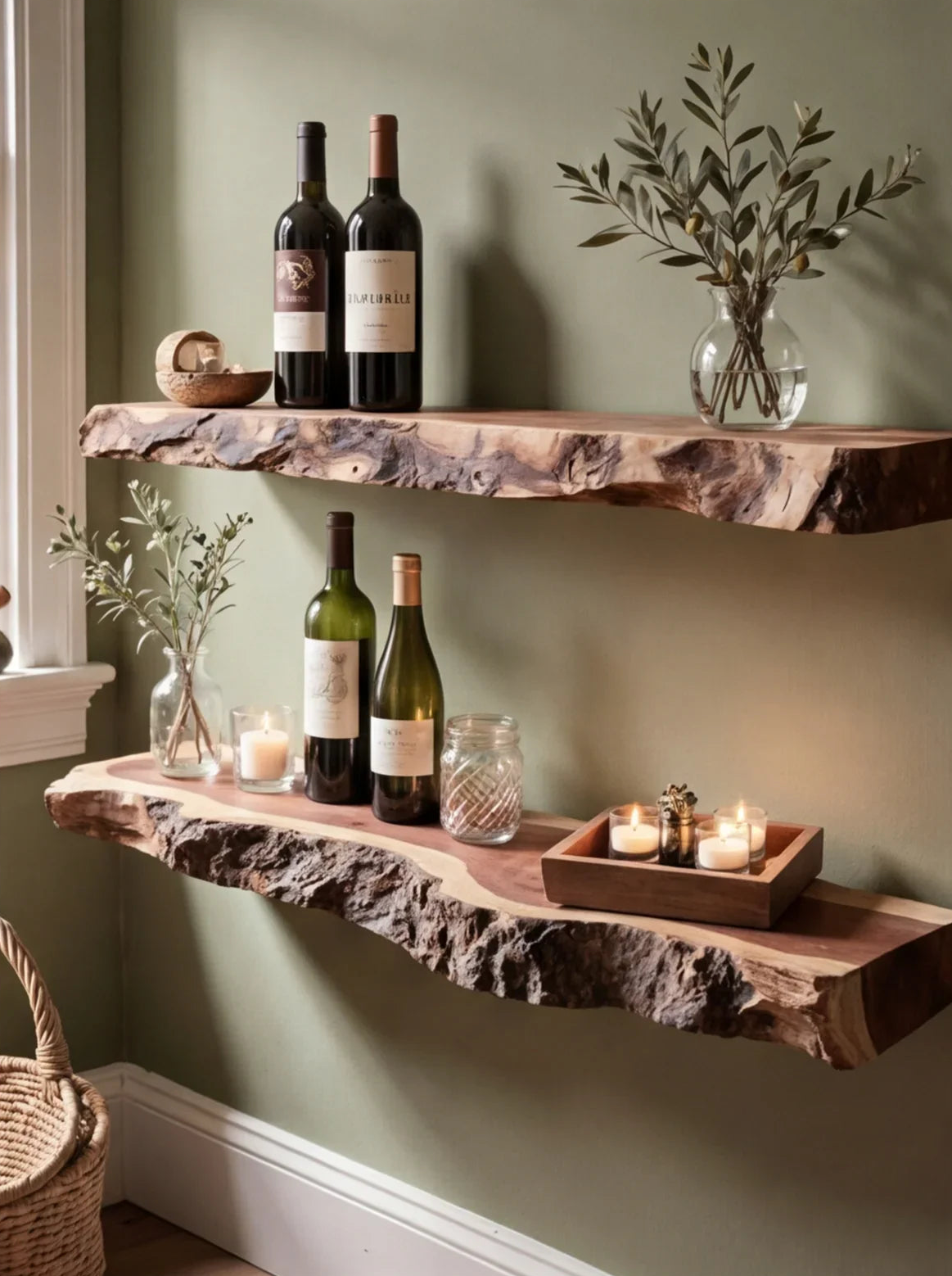
Wood Cat Tree Tower House — from $2,145
Don't miss
These pieces qualify for 10% off orders over $2,000. Applied automatically at checkout.
10% off
Sculptural Spiral Solid Wood Cat Tree Tiered Modern Feline Lounger
From $2,217.00
10% off at checkout
10% off
Artisanal Solid Wood Sculptural Tree Cat Tower & Multi-Tier Botanical Display Perch Stand
From $2,076.00
10% off at checkout
10% off
Sculptural Hand-Carved Tree Solid Wood Wall-Mounted Cat Climbing Tower with Dual House Condos & Display Shelves
$3,012.00
10% off at checkout
10% off
Sculptural Hand-Carved Tree Solid Wood Cat Tower & Multi-Tier Luxury Feline Climbing Tree with Tunnel Condo Base
From $2,654.00
10% off at checkout
How to tell if a "modern" cat tree will last
Five things to check before buying, regardless of style:
1. Total weight. Pick it up mentally using the specs. Under 20 pounds for a floor model means lightweight construction. Over 35 pounds means there's real material in there. The heavier it is (proportional to size), the more stable and durable it'll be.
2. Joint construction. Dowels and Allen bolts are the weakest common joints. They loosen over time. Look for models that use mortise-and-tenon joints, metal brackets, or internal hardware. If the assembly instructions show you hammering plastic pegs into pre-drilled holes, manage your expectations.
3. Platform material. Press on a platform in the store (or check the specs online). Is it hollow? Does it flex? Solid wood and thick plywood don't flex under hand pressure. Particle board and thin MDF do. If you can feel give, your cat feels it too.
4. Scratching surface integration. A modern cat tree without a built-in scratching surface means you'll need a separate scratcher nearby. That's one more piece of cat furniture in your room. The best designs integrate scratching into the structure itself, whether that's sisal sections, rope wraps, or natural wood grain.
5. What happens after 6 months? Ask the manufacturer. Read long-term reviews (filter to 6-month and 1-year reviews on Amazon or similar). Fresh-out-of-the-box reviews tell you about assembly. Six-month reviews tell you about the product.
Making it work with your existing furniture
A cat tree doesn't have to match your furniture. It has to make sense next to it. Two principles help:
Material agreement. If your room has warm wood tones (walnut, oak, ash), a natural wood cat tree reads as part of the room. If your furniture is mostly white, gray, and steel, a Scandinavian or industrial cat tree fits better. Carpet-covered cat trees struggle in any modern room because carpet reads as distinctly "pet product" regardless of color.
Scale agreement. A 6-foot cat tree next to a low-profile 30-inch sofa creates visual tension. Match the height of the cat tree to the dominant vertical in the room. If your tallest piece is a 5-foot bookshelf, a 5-foot cat tree will feel proportional. A 7-foot tower in the same room feels like it's taking over.
The goal isn't invisible cat furniture. Cats are part of your household. The goal is cat furniture that looks deliberate, like you chose it, not like you tolerated it.
Browse our full collection of handcrafted wood cat trees to see models designed for living rooms, not utility closets. Each one is built from solid wood by Vietnamese artisans and finished to sit alongside real furniture.

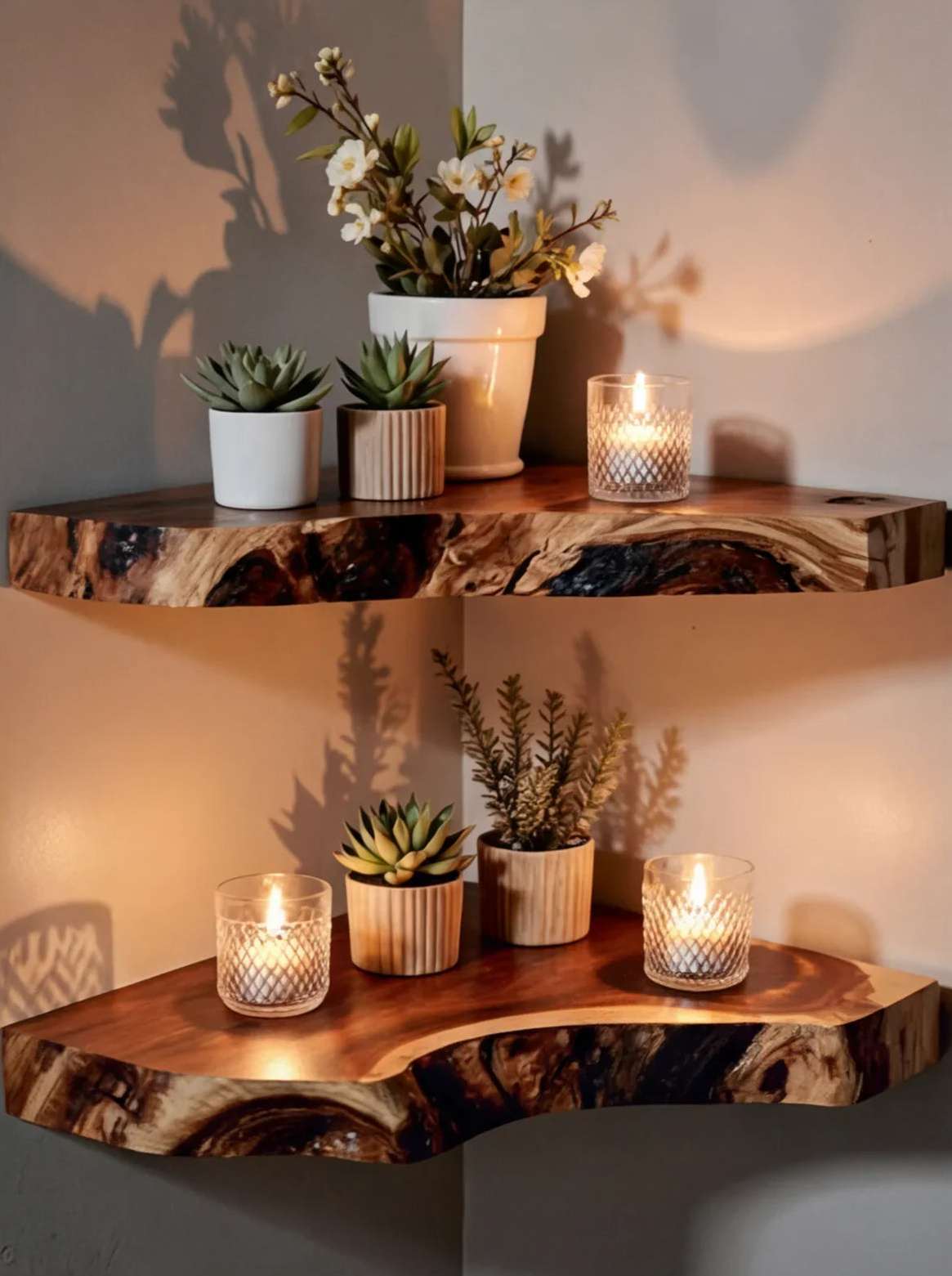
Handcrafted Rustic Tree Cat Tower — from $2,239
Frequently asked questions
What makes a cat tree "modern" vs regular?
Honestly, most of the time it's just the color and the marketing copy. A truly modern cat tree uses better materials, has cleaner proportions, and was designed to fit into a living space rather than tolerated in one. Look at the construction, not the product name.
Can a natural wood cat tree work in a minimalist room?
Yes, and well. Minimalism is about intentional objects, not about having nothing. A single piece of hand-carved wood cat furniture reads as a sculptural object, similar to how a live-edge shelf or driftwood art piece works in a minimal space. The key is choosing one piece that does the job instead of cluttering the room with multiple cat accessories.
How do I stop my cat tree from wobbling?
Weight is the fix. If the tree weighs under 25 pounds, there's no easy way to stabilize it permanently. You can secure the top to the wall with an L-bracket (works well for tall narrow models), or replace it with something heavier. A 40-pound solid wood tree doesn't wobble.
Is it worth spending $1,000+ on a cat tree?
Run the math on your current replacement cycle. If you buy a $100 cat tree every year, that's $1,000 in 10 years plus the hassle of assembly and disposal each time. A $1,200 solid wood cat tree that lasts 10+ years costs the same but requires zero maintenance. It also looks better on day one and day 3,000.
Do cats actually prefer one material over another?
Yes. Cats respond to weight (stability), texture (scratching satisfaction), and scent (natural vs chemical). In side-by-side tests, most cats spend more time on solid wood structures than on carpet or fabric ones. The wood grain gives their claws variable resistance, which satisfies the scratching instinct more completely. We covered this in detail in our cat tree with branches guide.