

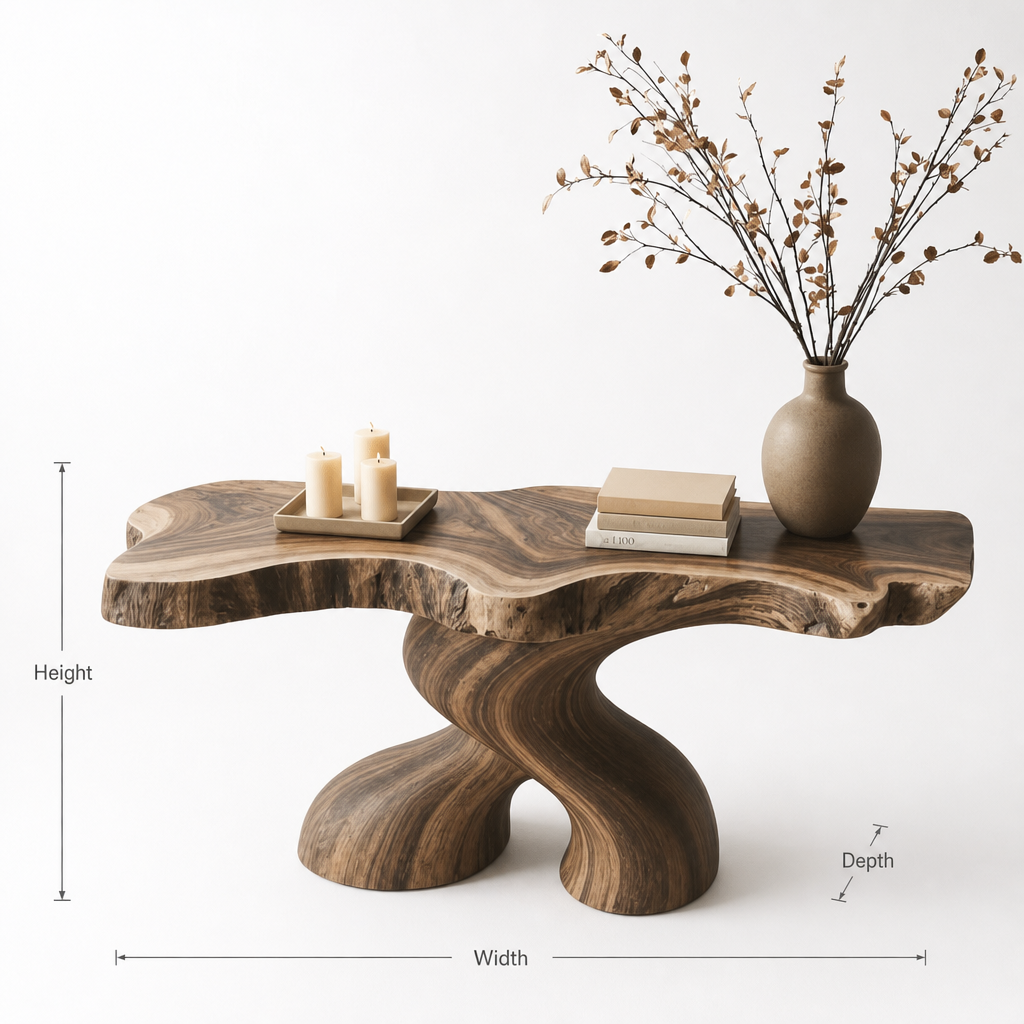
Quick view
- Why Solid Wood Tables Outlast Everything Else
- Dining Tables - The Centerpiece That Takes the Most Abuse
- Coffee Tables - The Low Surface That Defines Your Living Room
- Console Tables - The Slim Surface That Does Heavy Lifting
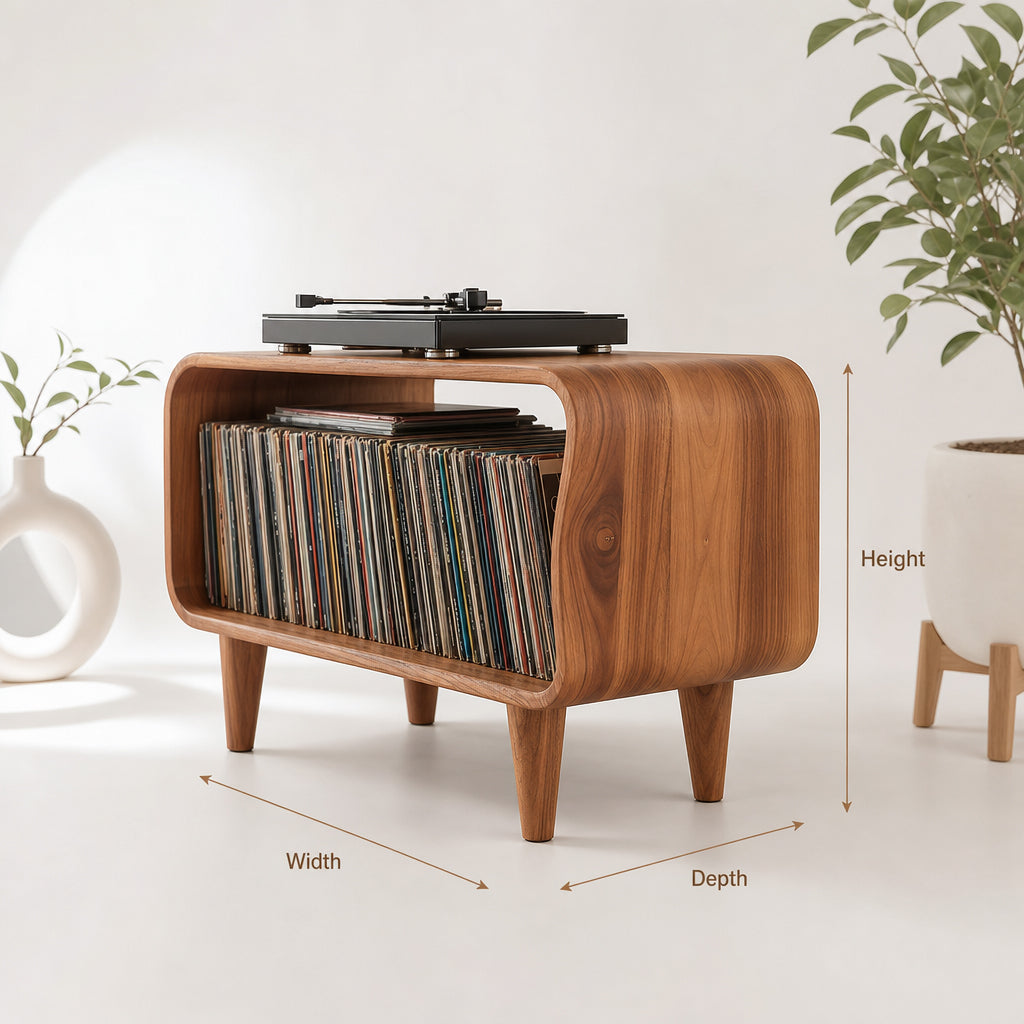
- End Tables (Side Tables) - The Small Surface You Reach For Constantly
- Bar Tables & Counter-Height Tables - The Casual Gathering Spot
- Other Table Types Worth Knowing
- How to Tell If a "Solid Wood Table" Is Actually Solid Wood
- Solid Wood Table Care - Keep It Looking Good for Decades
- Quick Comparison: Table Types at a Glance
- FAQ: Solid Wood Tables
Shop this guide
Handcrafted Sofas, made to order in solid wood.
 Christmas edit
Elegant Modern Wooden Sofa with Sculptural Frame – Statement Living Room Piece
From $6,469.0010% off at checkout
Christmas edit
Elegant Modern Wooden Sofa with Sculptural Frame – Statement Living Room Piece
From $6,469.0010% off at checkout
 Sculptural Hand-Carved Curved Solid Wood Sofa Frame & Living Room Settee Base
From $7,210.0010% off at checkout
Sculptural Hand-Carved Curved Solid Wood Sofa Frame & Living Room Settee Base
From $7,210.0010% off at checkout
 Organic Sculptural Wood Sofa – Handcrafted Natural Edge Design
From $9,469.0010% off at checkout
Organic Sculptural Wood Sofa – Handcrafted Natural Edge Design
From $9,469.0010% off at checkout
 Handcrafted Solid Wood Sofa – Modern Organic Curved Wooden Couch
From $9,469.0010% off at checkout
Handcrafted Solid Wood Sofa – Modern Organic Curved Wooden Couch
From $9,469.0010% off at checkout
 Handcrafted Live Edge Solid Wood Sofa – Natural Wood Frame Design
From $9,469.0010% off at checkout
Handcrafted Live Edge Solid Wood Sofa – Natural Wood Frame Design
From $9,469.0010% off at checkout
 Ashdeco Modern Wooden Sofa – Sculptural Artistic Living Room Design
From $9,469.0010% off at checkout
Ashdeco Modern Wooden Sofa – Sculptural Artistic Living Room Design
From $9,469.0010% off at checkout
Solid Wood Table Guide: Every Type of Table, Where It Belongs, and What Makes the Material Matter
You need a new solid wood table. You search "table" online and get 47,000 results in particle board, metal, glass, MDF, and something called "engineered wood." None of them look like they'll still be in your home in ten years.
Here's the thing most buyers don't realize until after purchase: the type of table you need matters, but the material matters more. A well-built solid wood table outlasts three or four cheap replacements - and it ages better instead of worse.
This guide walks you through every type of table you'll actually use in a real home, why solid wood is worth the premium, and how to spot quality before you buy.

Why Solid Wood Tables Outlast Everything Else
Before we get into types, let's address the material question - because it's the one decision that affects every table in your house.
Particle board and MDF tables cost less upfront. They also swell when they get wet, chip at the edges, and can't be refinished. When the veneer peels (and it will), there's nothing underneath but sawdust and glue.
Solid wood tables - built from actual wood boards, not a thin veneer over cheap core - behave differently. They develop a patina over time. Scratches add character. You can sand and re-oil them decades later and they look fresh again. That's not marketing copy. That's the physical property of real wood versus compressed fiber.
The key difference is construction:
- One-piece slab - cut from a single tree trunk. No seams, no joints to fail. The most durable option, and the most expensive. Live edge tables fall into this category.
- Book-matched boards - multiple solid boards glued edge-to-edge with grain carefully aligned. The joint is invisible when done right, and the table is just as solid as a slab. This is how most quality solid wood tables are built.
- Veneer over engineered wood - thin layer of real wood on top of MDF or particle board. Looks like solid wood on day one. Fails within 3-5 years. This is what you want to avoid.
For a deeper look at wood species, hardness, and how to match wood type to how you'll actually use a table, see our Best Wood Species for Furniture guide.

Dining Tables - The Centerpiece That Takes the Most Abuse
Your dining table sees more stress than any other surface in your house. Hot plates, spilled drinks, kids doing homework, holiday dinners with twelve people, and the occasional laptop work session. It needs to handle all of it.
Solid Wood Dining Table: What to Look For
A quality solid wood dining table should feel heavy when you push it. Not immovable, but substantial. Light usually means hollow-core or thin veneer.
Key things to check:
- Joinery at the legs and apron - mortise-and-tenon or dovetail joints last decades. Screws and brackets loosen within a year or two of daily use.
- Tabletop construction - book-matched boards with tight seams, or a single slab. If you can see a visible gap between boards in the photos, skip it. That gap will widen and trap crumbs.
- Finish quality - hand-rubbed oil or wax finishes can be refreshed at home. Thick polyurethane coatings look glossy but chip and can't be easily repaired.
Choosing the Right Size
Getting the size wrong is the most common dining table mistake. Too large and the room feels cramped. Too small and elbows collide at dinner.
A quick rule: leave at least 36 inches of clearance on every side of the table for chairs and walkway space. For a 4-person table, that means a minimum 36" × 36" surface. For 6-8 people, aim for 72" × 36" or larger.
For detailed seating capacity numbers by table shape and size, see our dining table seating capacity guide.
Shape Matters
Round tables work great in small spaces and square rooms - no sharp corners to bump into, and everyone sits equidistant from the center. Rectangular tables handle more people and fit the classic "head of the table" dynamic. Oval tables split the difference: more seating than round, softer edges than rectangular.
Common Problems to Avoid
Real buyers report the same issues over and over: seam gaps collecting crumbs, rough edges that catch clothing, water rings that won't come out from cheap finishes, and wobbling legs from poor joinery.
We documented all of these in our dining table problems guide - read it before you buy so you know exactly what to look for in product photos and descriptions.
For handcrafted solid wood dining tables with proper joinery and finished edges, browse Ashdeco's dining collection.

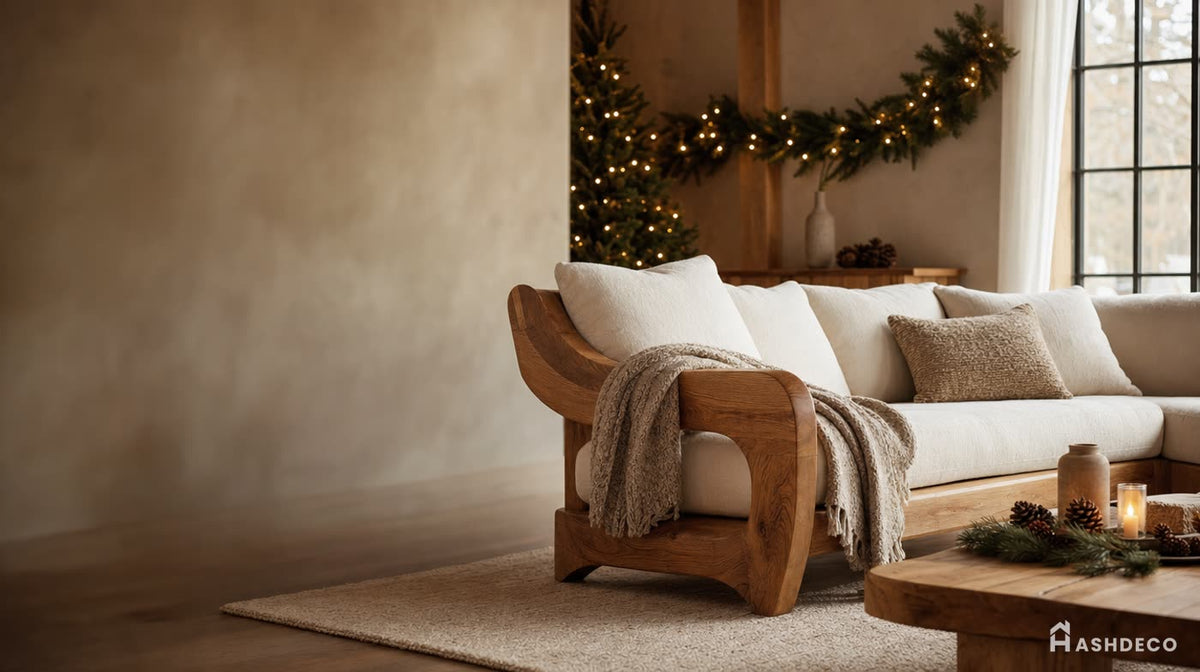


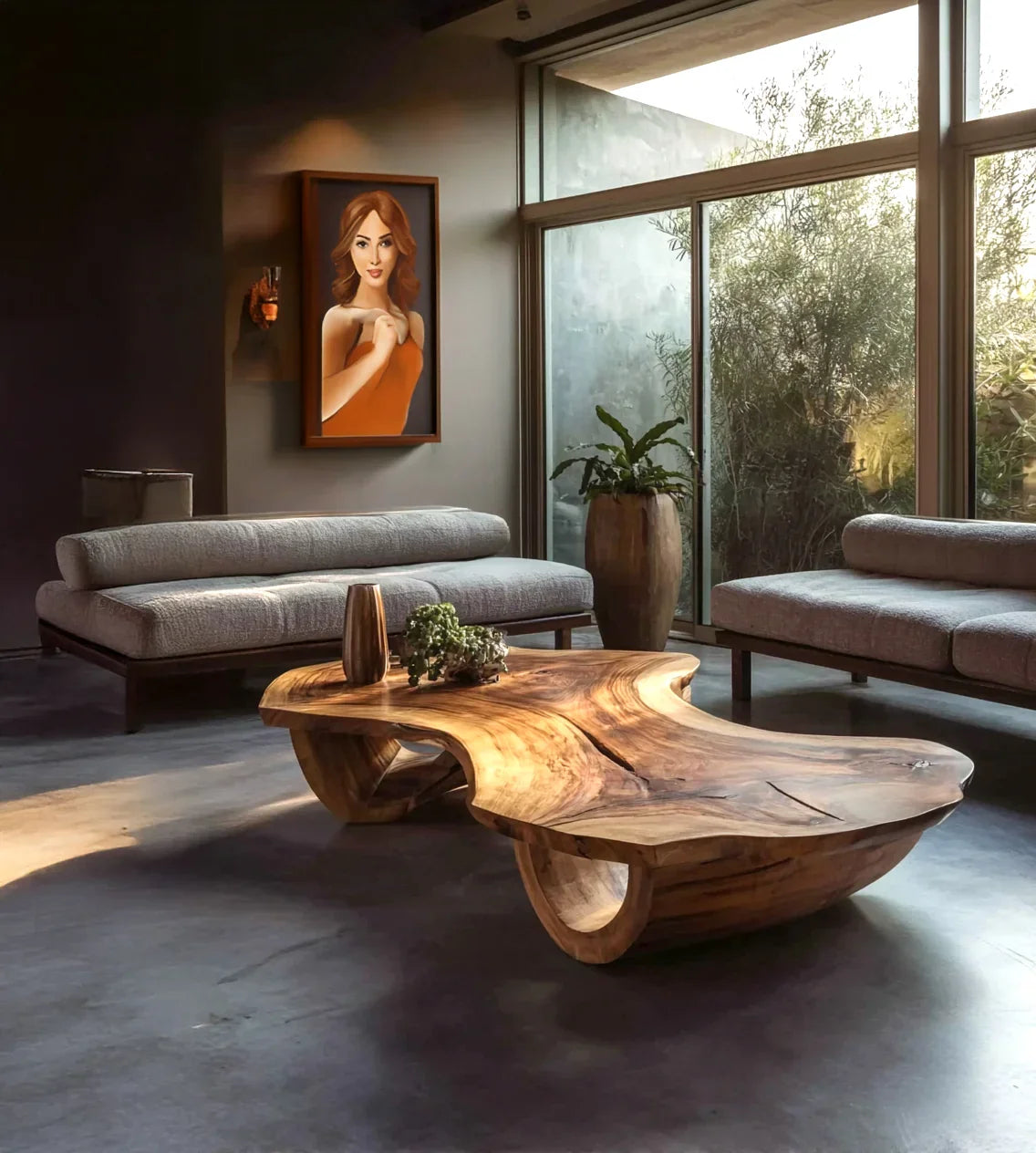
Coffee Tables - The Low Surface That Defines Your Living Room
Your coffee table is the anchor of the living room. Everything else - sofas, chairs, accent pieces - arranges around it. Get this one wrong and the whole room feels off.
Wood Coffee Table vs. Other Materials
Glass coffee tables look sleek but show every fingerprint and dust particle. Metal tables are heavy and cold to the touch. MDF tables with printed "wood grain" patterns look fake under real light.
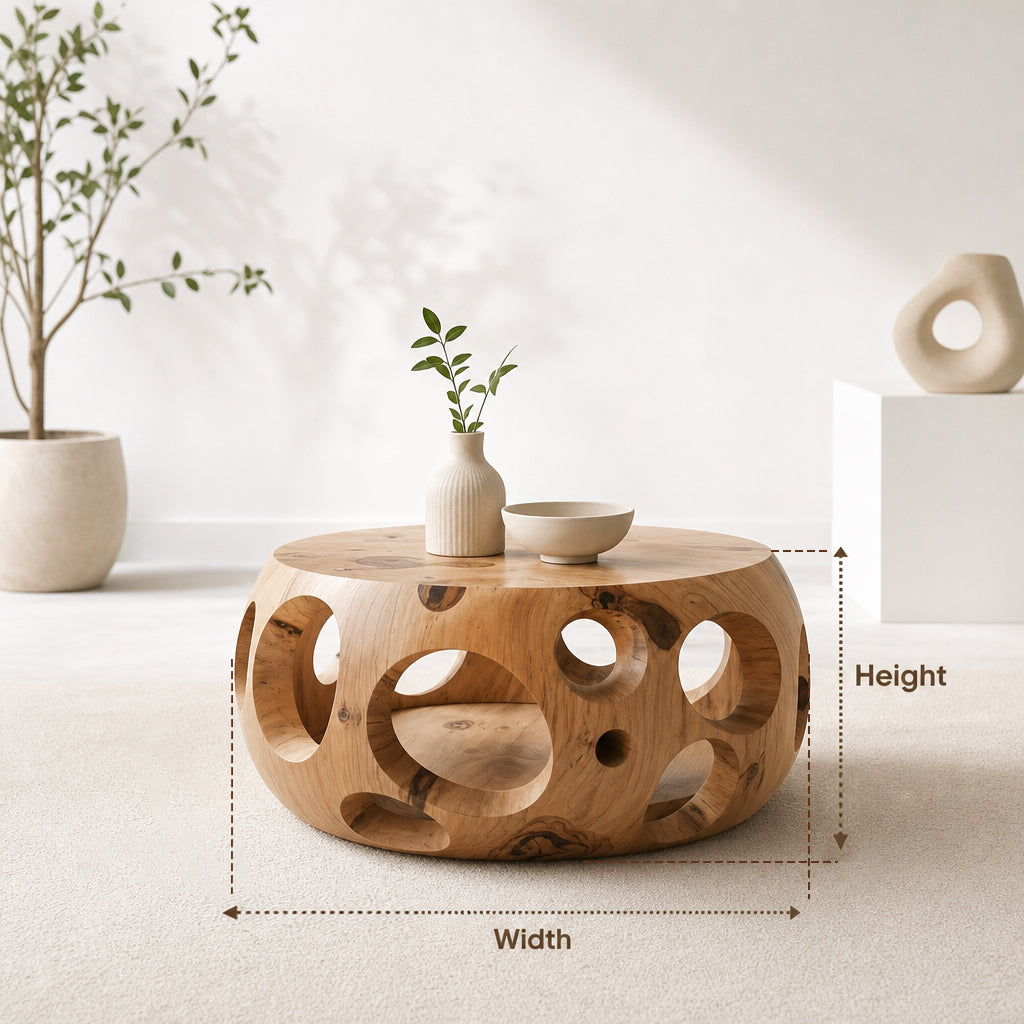
A solid wood coffee table brings warmth and texture that no material replicates. The grain pattern is unique to each piece - no two are identical. Over time, the wood develops a richer tone, especially with oil-finished surfaces.
Height and Proportions
The right coffee table height sits roughly level with your sofa seat cushion - typically 16-18 inches. Any higher and it feels like a desk. Any lower and reaching for your drink becomes an exercise in leaning forward.
Length should be about two-thirds the length of your sofa. So if your sofa is 84 inches wide, a 54-60 inch coffee table fills the space proportionally.
Depth depends on your room layout. In a spacious living room, 24-30 inches deep gives you room for books, a tray, and decorative pieces. In tighter spaces, 18-22 inches keeps the walkway clear.
Styling Without Clutter
The Rule of Three applies perfectly here: pick three items at different heights. A stack of books (low), a small vase or candle (medium), and something taller like a sculptural piece or small plant (high). Leave the rest of the surface bare. Your coffee table should look lived-in, not like a display shelf.
For seasonal styling ideas, including how to style a coffee table for fall and Halloween, our Pumpkin Coffee Table guide covers materials and the 3-item rule in more depth.
Browse Ashdeco's coffee table collection for solid wood pieces that anchor a room.

Console Tables - The Slim Surface That Does Heavy Lifting
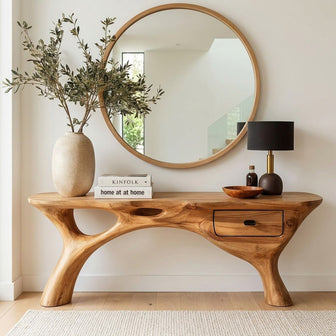
A console table is the most underrated piece of furniture in a home. It's narrow enough to fit in spaces other tables can't, and it solves problems people don't realize they have until they own one.
Where Console Tables Actually Work
Entryways - the classic spot. A slim console (12-14 inches deep) in the entryway creates an instant drop zone for keys, mail, and everything you carry through the door. Add a mirror above and you have a functional vignette.
Behind the sofa - a console table behind a sofa turns a dead zone into usable surface. Set a lamp there for reading light, display a small piece of art, or use it as a bar cart during parties.

Hallways - long, narrow hallways feel unfinished without something on the wall. A console table breaks up the blank space and gives you somewhere to set down things while walking through.
Dining rooms - flanking a buffet or standing against a wall, a console table extends your serving surface during gatherings and doubles as everyday display space.
For a deep dive on entryway console tables and why even tiny spaces benefit, read Why Every Entryway Needs a Console Table.
For styling a console table in front of a mirror, see our console table and mirror guide.

Solid wood, shaped for every surface in your home.
From dining tables to vanities, every Ashdeco piece is hand-carved from real hardwood - no veneer, no MDF, no shortcuts. Explore the full range of handcrafted solid wood furniture built to last generations.
Shop All Solid Wood Table →Solid wood · Handcrafted · Made to order
Don't miss
These pieces qualify for 10% off orders over $2,000. Applied automatically at checkout.
10% off
Elegant Modern Wooden Sofa with Sculptural Frame – Statement Living Room Piece
From $6,469.00
10% off at checkout
10% off
Sculptural Hand-Carved Curved Solid Wood Sofa Frame & Living Room Settee Base
From $7,210.00
10% off at checkout
10% off
Organic Sculptural Wood Sofa – Handcrafted Natural Edge Design
From $9,469.00
10% off at checkout
10% off
Handcrafted Solid Wood Sofa – Modern Organic Curved Wooden Couch
From $9,469.00
10% off at checkout
End Tables (Side Tables) - The Small Surface You Reach For Constantly
End tables - also called side tables - live next to your sofa, armchair, or bed. They're small, often overlooked, and used dozens of times per day.
What Makes a Good End Table
The best solid wood end table does three things:
- Matches your sofa arm height - ideally 0-2 inches above or below the arm. Too tall and it towers over your armrest. Too short and reaching down feels awkward.
- Has enough surface area - at least 18 × 18 inches. You need room for a lamp, a drink, and maybe a book or phone. Anything smaller becomes a balancing act.
- Is stable enough not to tip - end tables get bumped constantly. A heavy, solid wood base prevents the "wobble and spill" scenario that kills cheap tables.
End Table vs. Side Table - Any Difference?
In practice, no. The terms are used interchangeably. "End table" usually refers to the piece at the end of a sofa. "Side table" is the broader term that includes small tables anywhere in a room - beside a chair, in a corner, next to the bed.
Material Choice Matters Here Too
An end table takes more abuse per square inch than almost any other surface. Drinks get set down without coasters. Laptops balance on the edge. Pets jump on it. A solid wood end table handles all of this and looks better with age. A veneer or MDF table? One spilled glass and the edge starts to bubble.

Bar Tables & Counter-Height Tables - The Casual Gathering Spot
Bar tables (also called pub tables or high tables) sit at 40-42 inches - significantly taller than standard dining tables at 28-30 inches. They pair with bar stools and create a more casual, social eating environment.
When a Bar Table Makes Sense
- Small kitchens where a full dining table won't fit. A bar table against a wall or as a room divider takes less floor space.
- Open-plan living - a bar table between the kitchen and living area defines zones without building walls.
- Entertaining - people naturally gather around a bar-height surface. It encourages standing, mingling, and casual grazing rather than formal seated meals.
- Home bars - if you're setting up a dedicated bar area, a solid wood bar table is the centerpiece.
Counter-Height vs. Bar-Height
- Counter-height tables - 34-36 inches tall. Pair with counter stools (24-26 inch seat height). Comfortable for working on a laptop or casual meals.
- Bar-height tables - 40-42 inches tall. Pair with bar stools (28-30 inch seat height). More social, more standing-room energy.
Solid wood bar tables bring warmth to what can otherwise feel like a sterile, metal-and-glass bar area. The natural grain and weight of real wood grounds the space.\

Other Table Types Worth Knowing
Desk Tables
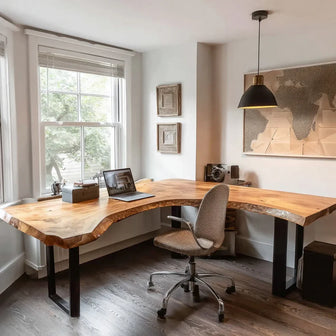
A solid wood desk handles daily computer work, writing, and projects without the flex and wobble of particle board office furniture. The weight keeps it stable when you type, and the surface takes pen marks and coffee rings without damage.
Nesting Tables
Nesting tables are two or three small tables that stack inside each other. Pull them out when you need extra surface area, tuck them away when you don't. In solid wood, they're durable enough for daily use and look good stacked in the corner as a design element themselves.

How to Tell If a "Solid Wood Table" Is Actually Solid Wood
This matters because some manufacturers use the term loosely. Here's how to check:
Look at the end grain. On a real solid wood board, you can see the growth rings on the exposed end. If the end is covered with edge banding or looks like a flat printed surface, it's veneer.
Check the weight. Solid wood tables are heavy - especially hardwoods like oak, walnut, acacia, and teak. If a "solid wood" table lifts easily with one hand, be suspicious.
Read the description carefully. "Solid wood frame" means only the frame is solid wood. The top could be veneer. "Solid wood top" is what you want. "Wood finish" usually means MDF with a printed pattern.
Ask about the wood species. Quality sellers specify the exact wood: acacia, mango, teak, walnut, oak. Vague descriptions like "natural wood" or "wood construction" often hide engineered materials.
Price is a signal. A full-size solid wood dining table costs more than $500 to produce. If the retail price is $299, the materials are almost certainly not solid wood throughout.
For a detailed breakdown of wood species, hardness, and which ones make the best tables, see our wood species guide.

Solid Wood Table Care - Keep It Looking Good for Decades
A solid wood table needs minimal care, but the care it does need is different from other materials.
Daily use: Coasters for drinks. Trivets or hot pads for hot dishes. That's it. Solid wood handles normal daily use without issue.
Cleaning: Damp cloth, mild soap if needed. Avoid harsh chemical cleaners - they strip the finish. Wipe spills promptly, but don't panic if you don't catch every one. Good finishes handle brief water contact.
Maintenance: Oil-finished tables benefit from a fresh coat of mineral oil or tung oil once or twice per year. This takes 20 minutes and makes the table look new. Polyurethane-finished tables need nothing until the coating chips, at which point professional refinishing is the best option.
Scratches and dents: Small scratches blend into the patina over time. Deeper gouges can be sanded and re-oiled at home. This is the advantage of solid wood - you can repair it. You can't repair a veneer that's been scratched through to the MDF underneath.
For a complete cleaning and maintenance routine, see our Wood Furniture Care guide.

Quick Comparison: Table Types at a Glance
| Table Type | Typical Height | Primary Use | Best Placement |
|---|---|---|---|
| Dining table | 28-30" | Meals, gatherings, work | Dining room, kitchen |
| Coffee table | 16-18" | Living room anchor | Center of seating area |
| Console table | 28-33" | Drop zone, display | Entryway, behind sofa, hallway |
| End table | 22-28" | Side surface | Next to sofa, chair, bed |
| Bar table | 40-42" | Casual dining, entertaining | Kitchen, bar area, open plan |
| Counter-height table | 34-36" | Casual meals, workspace | Kitchen island, breakfast nook |
FAQ: Solid Wood Tables
What is the best wood for a solid wood table?
Acacia, walnut, and oak are top choices for durability and grain character. Each has distinct color and hardness - see our wood species guide for specifics.
How long does a solid wood table last?
Decades, often generations. With proper care, a quality solid wood table outlasts 3-4 cheaper replacements.
Is solid wood worth the extra cost?
Yes - solid wood tables don't need replacing every few years, and they appreciate in character over time rather than deteriorating.
What's the difference between solid wood and engineered wood?
Solid wood is cut from actual timber. Engineered wood uses sawdust, fibers, and adhesive pressed into sheets, then covered with a thin veneer.
Can you repair scratches on a solid wood table?
Yes. Light scratches blend into the patina naturally. Deeper marks can be sanded and re-oiled at home - a veneer table can't do this.
What height should a coffee table be?
16-18 inches, roughly level with your sofa seat cushion. See our full sizing guides for room-specific recommendations.
How do I know if a table is actually solid wood?
Check the end grain for growth rings, verify the weight (solid wood is heavy), and confirm the seller specifies the exact wood species.
Where should I place a console table?
Entryways, behind sofas, hallways, and dining rooms. Read our entryway console table guide for placement tips.
Ready to find a solid wood table that'll still be in your home in 20 years? Browse Ashdeco's full collection - handcrafted, one-of-a-kind, built from real wood that ages beautifully.