Quick view
- Why Wood Color Matters More Than You Think
- Mushroom Shelf Colors by Room Vibe
- How to Test If a Color Works in Your Space
- Finish Types Explained: Oil vs Wax vs Clear Coat
- Color Mistakes to Avoid
- Which Color Should You Start With?
- Frequently Asked Questions About Mushroom Shelf Colors & Finishes
- Ready to Find Your Perfect Mushroom Shelf?
Shop this guide
Handcrafted Lamps for Modern Homes, made to order in solid wood.
 Christmas edit
Rustic Driftwood Floor Lamp – Handmade Solid Wood Standing Light for Home Décor
From $1,220.00
Christmas edit
Rustic Driftwood Floor Lamp – Handmade Solid Wood Standing Light for Home Décor
From $1,220.00
 Christmas edit
Driftwood Wall Sconce - Handcrafted Rustic Wooden Wall Lamp
From $650.00
Christmas edit
Driftwood Wall Sconce - Handcrafted Rustic Wooden Wall Lamp
From $650.00
 Christmas edit
Rustic Driftwood Floor Lamp with Shelves – Handmade Wooden Standing Light
From $2,350.0010% off at checkout
Christmas edit
Rustic Driftwood Floor Lamp with Shelves – Handmade Wooden Standing Light
From $2,350.0010% off at checkout
 Sculptural Twisted Solid Wood Floor Lamp - Organic Modern Statement Lamp
From $1,780.00
Sculptural Twisted Solid Wood Floor Lamp - Organic Modern Statement Lamp
From $1,780.00
 Christmas edit
Twisted Vine Wooden Floor Lamp - Handcrafted Driftwood Standing Light With Leaf Shade
From $1,280.00
Christmas edit
Twisted Vine Wooden Floor Lamp - Handcrafted Driftwood Standing Light With Leaf Shade
From $1,280.00
 Christmas edit
S-Curve Wooden Floor Lamp - Driftwood Standing Light With Dual Glow Openings
From $1,480.00
Christmas edit
S-Curve Wooden Floor Lamp - Driftwood Standing Light With Dual Glow Openings
From $1,480.00
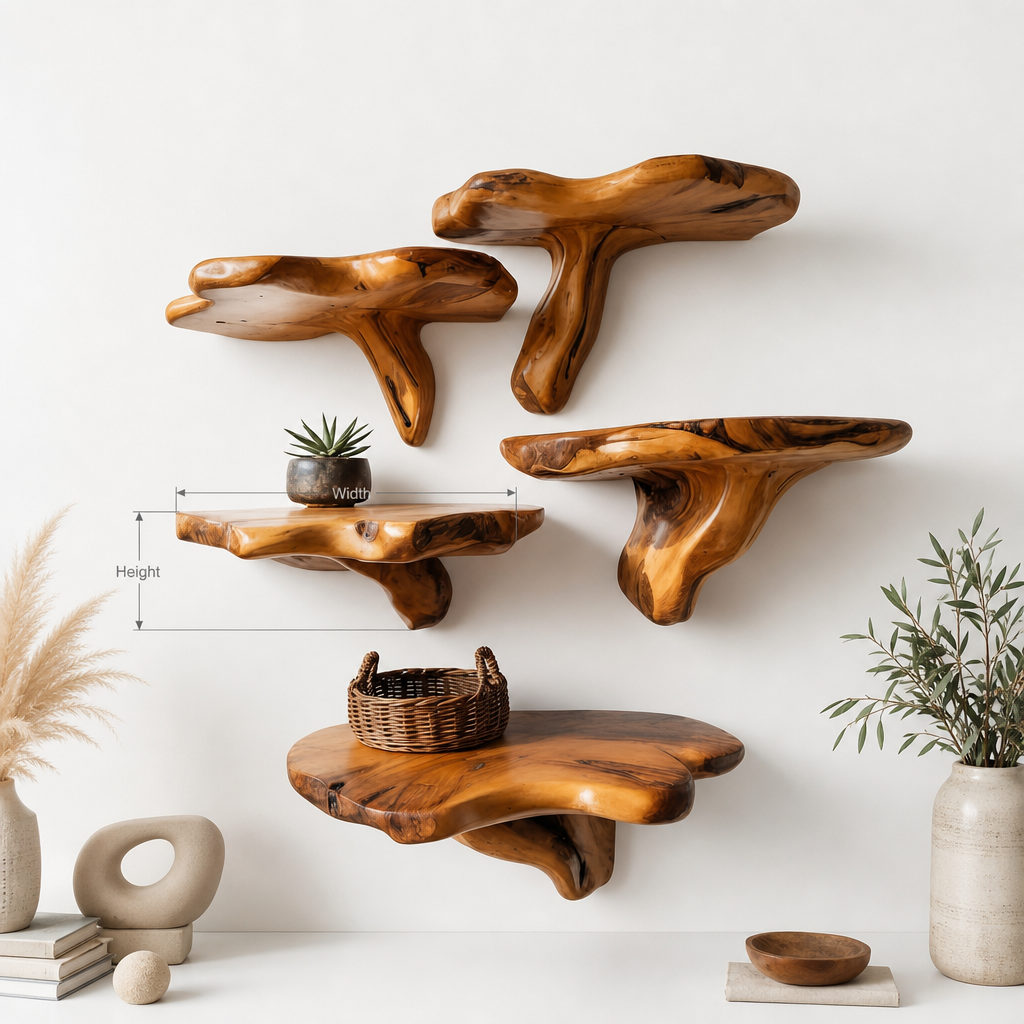
A mushroom shelf's wood color and finish change the whole feel of a room - sometimes more than the shape itself. The same carved gill detail reads as "warm cottage accent" in honey oak and "dramatic gallery piece" in dark walnut. The mushroom floating shelf collection at Ashdeco includes dozens of wood types and stain options, which is great if you know what you want - and overwhelming if you don't.
This guide breaks down which color and finish pairings work best for different room styles so you can pick the right tone before you buy.

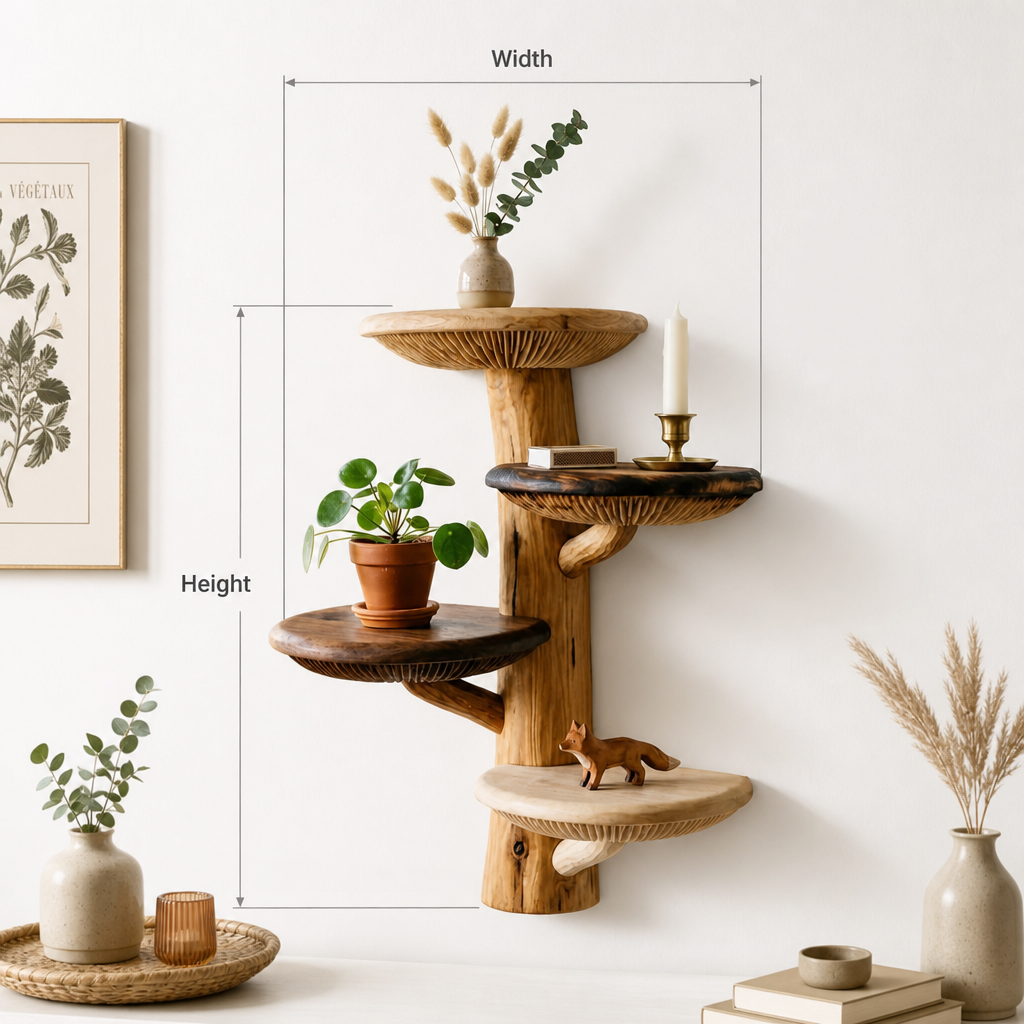
Raw Bark Mushroom Floating Shelf - Natural Blonde
A real example of the light, warm-toned finish this guide talks about below - raw bark edge, honey-blonde wood, hand-carved caps. Exactly the tone that works with 90% of interiors if you're still deciding.
View This Mushroom Floating ShelfWhy Wood Color Matters More Than You Think
When you're shopping for a mushroom wall shelf, most guides focus on size, weight capacity, and mounting. But the wood color and finish determine how the shelf lives in your space day to day.
Wood tone changes visual weight. Light woods like maple and ash feel airy and recede into the background. Dark woods like walnut and ebony command attention and anchor a wall. The same shelf shape in two different stains can read as two completely different pieces of furniture.
Finish changes how light interacts with the carving. A matte oil finish absorbs light and makes carved gill lines look soft and organic. A satin clear coat catches light at angles, revealing the carved detail only from certain viewpoints. A high-gloss finish reflects so much light that it can actually flatten the three-dimensional carving - making an intricately hand-carved shelf look more like a flat cutout.
This is especially true for mushroom shelves because their entire appeal is the sculptural shape - the rounded cap, the carved gill lines underneath, sometimes an entire tree trunk with branching platforms. The wrong finish can erase those details.

Mushroom Shelf Colors by Room Vibe
Warm & Cozy (Farmhouse, Cottage, Scandinavian)
- Best tones: Natural oak, honey pine, light maple, warm walnut
- Finish recommendation: Hand-rubbed mineral oil or matte beeswax - keeps the grain visible and the surface soft to the touch
- Wall colors it works with: Cream, warm white, sage green, soft beige, pale terracotta
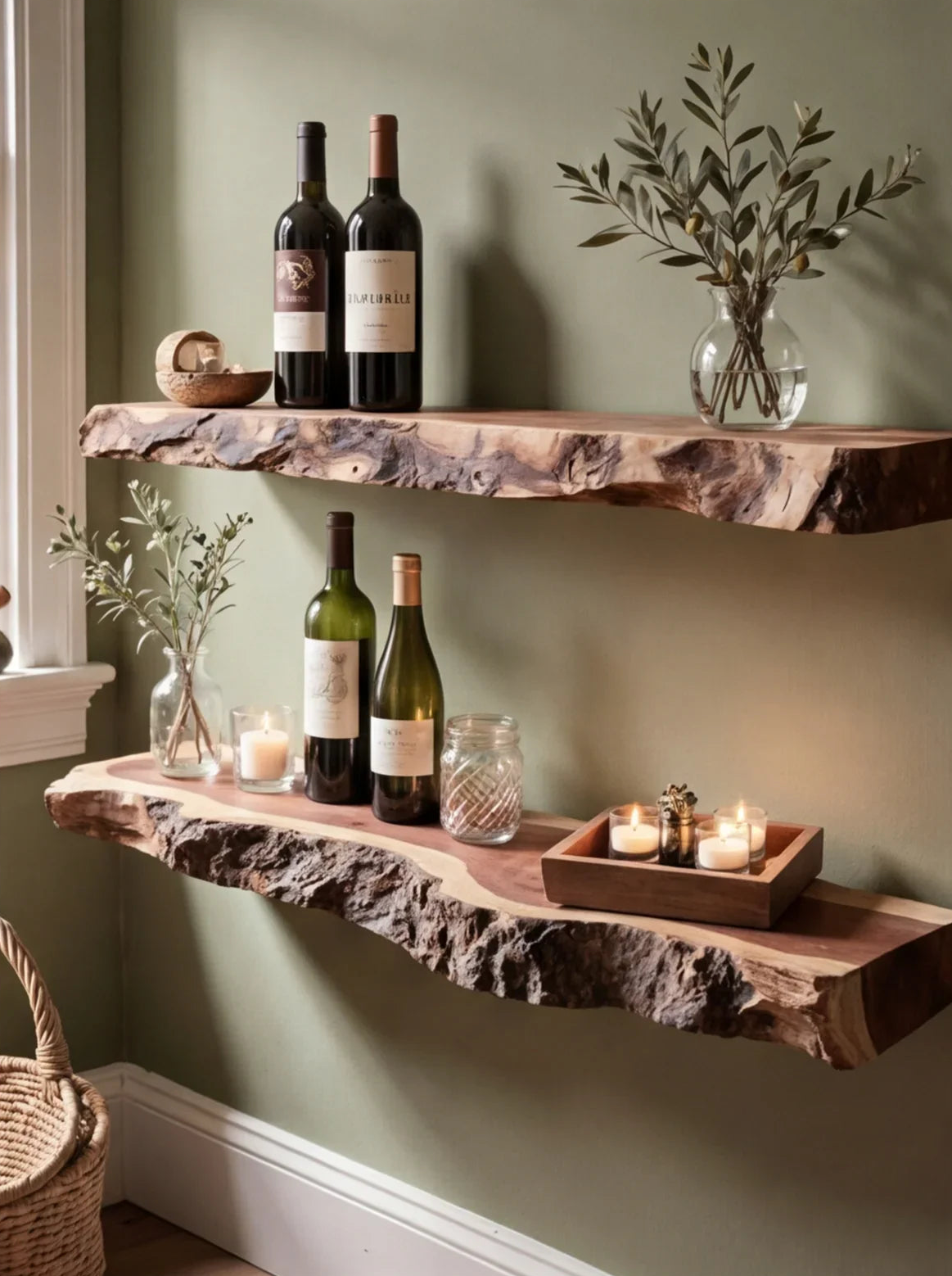
Light warm tones amplify natural light and make the carved details feel organic - like the shelf actually grew on your wall. In farmhouse and cottage spaces, you want the shelf to feel like it belongs, like it's always been there. An oil finish that deepens slightly over time helps with that aged, lived-in quality.
The Rustic Raw Bark Mushroom Tree Wall Shelf is a strong example here - the bark texture combined with warm-toned wood creates an instant nature-forward statement without needing any additional styling.
Styling tip: Pair with dried eucalyptus, a small ceramic vase, or a vintage book stack. The warm wood tone connects naturally with linen textiles, woven baskets, and matte ceramic objects.
Modern & Minimalist (Japandi, Contemporary, Clean Lines)
- Best tones: Bleached ash, natural birch, white-washed, light grey stain
- Finish recommendation: Matte or satin clear coat - clean, no visible sheen, lets the sculptural shape speak without distraction
- Wall colors it works with: Pure white, off-white, soft grey, charcoal accent wall
Pale finishes recede visually so the sculptural silhouette stands out without dominating. In a Japandi or minimalist room, every object earns its place by serving both function and form. A bleached-ash mushroom shelf on a white wall reads as architectural art - not cute décor.
If you're debating between solid wood and resin for a minimalist space, the wooden vs resin mushroom shelf comparison breaks down why wood's natural grain variation actually enhances (not fights) a clean aesthetic when finished correctly.
Styling tip: One object. Maybe a single black ceramic bowl or a small air plant. Resist the urge to fill the shelf - empty space around the shelf is part of the design.
Moody & Dramatic (Dark Academia, Industrial, Modern Gothic)
- Best tones: Ebony, dark walnut, espresso, charred or stained black
- Finish recommendation: Satin or semi-gloss - subtle reflection adds depth to the carved gills without looking plastic
- Wall colors it works with: Navy, forest green, charcoal, deep burgundy, matte black
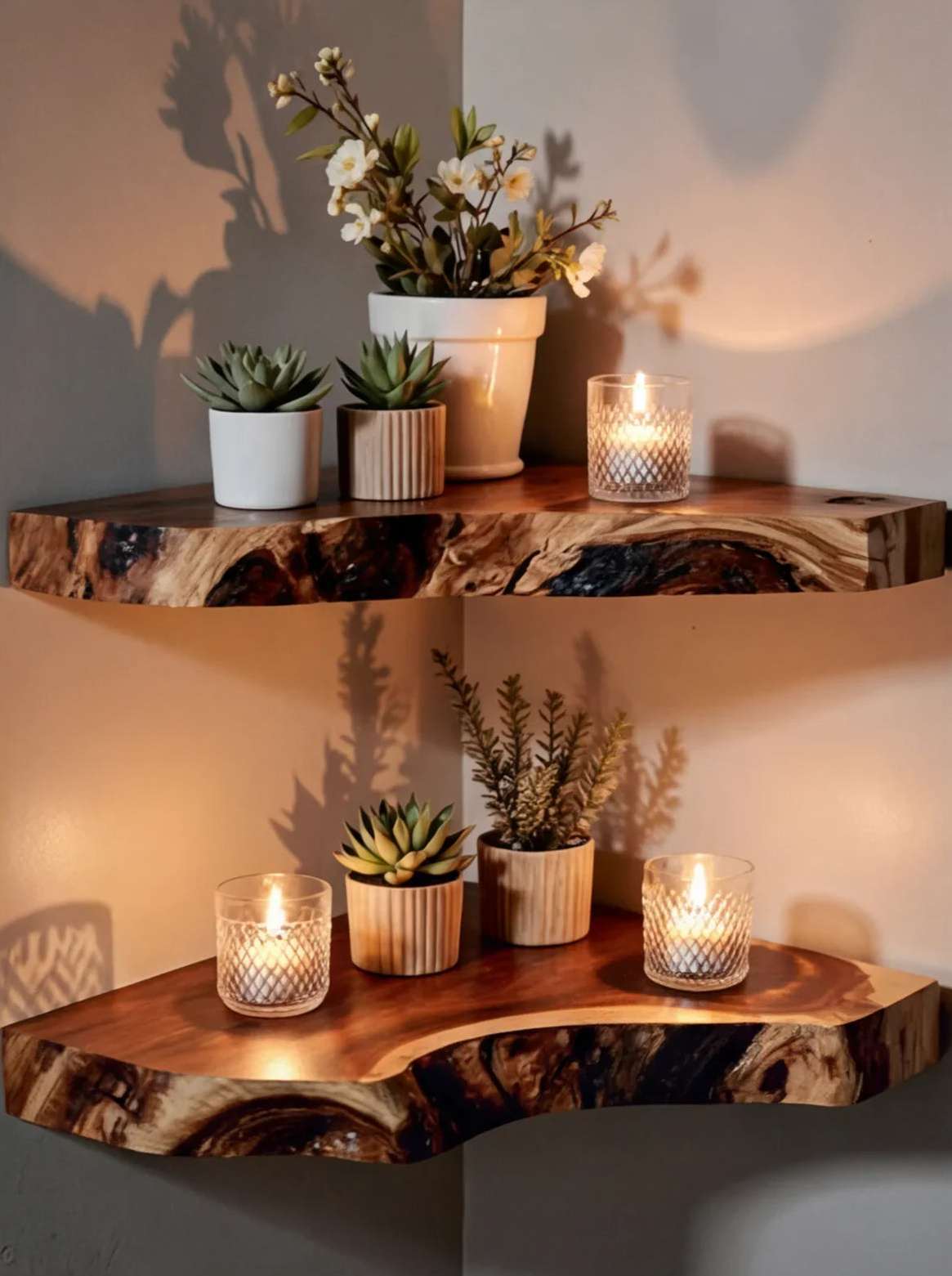
Dark shelves create shadow play against light walls. The carved gill lines become visible only at certain angles, which gives the shelf a living, shifting quality as daylight moves across the room. On a dark wall, a dark shelf becomes a sculptural silhouette - you see the shape more than the material, which can be stunning if the shelf has strong contours.
The Two-Tone Mushroom Tree Wall Shelf offers an interesting option for moody spaces - the contrast between light caps and dark trunk creates visual drama that complements darker room palettes without feeling flat.
Styling tip: Brass candlesticks, dark-bound books, a small fossil or mineral specimen. The darker the shelf, the more your objects need to contrast - metallics and light ceramics pop beautifully against dark wood.
Boho & Eclectic (Maximalist, Global, Artsy)
- Best tones: Two-tone, mixed woods, natural with bark edges, warm cherry
- Finish recommendation: Oil finish that enhances grain variation and color shifts - embrace the imperfection
- Wall colors it works with: Terracotta, mustard, teal, patterned wallpaper, gallery walls
Mixed tones and natural imperfections complement layered textiles, plants, and colorful décor perfectly. Boho rooms thrive on visual texture - a mushroom shelf with bark edges, two-tone staining, or visible grain knots adds another layer of organic complexity without needing to be "styled" at all.
Browse the full mushroom floating shelf collection for pieces with natural edge details, mixed wood caps, and bark-inclusive designs that fit this aesthetic right out of the box. If you're planning more than one shelf on the same wall, our staggered mushroom shelf arrangement guide covers spacing and layout for exactly this kind of layered look.
Styling tip: Layer it - trailing pothos, a small macramé piece, a colorful handmade ceramic. Boho is about abundance, so let the shelf be part of a larger visual story on the wall.
Nursery & Playful (Kids' Rooms, Whimsical)
- Best tones: Light natural - maple, birch, pine - nothing too dark or heavy
- Finish recommendation: Food-safe mineral oil or non-toxic matte wax - safety first, especially in rooms where kids might touch or mouth objects
- Wall colors it works with: Pastel pink, soft blue, mint, lavender, warm white
Light, gentle tones feel safe and friendly. The carved mushroom shapes read as fairy-tale elements - a little tree stump with a mushroom cap on your child's wall is inherently whimsical, and a light wood finish keeps it feeling sweet rather than imposing.
For a detailed breakdown on sizing, mounting height, and safety considerations for kids' rooms, check out our mushroom shelf for kids room guide.
Styling tip: Small stuffed animals, a tiny picture book, a wooden toy. Keep it light and accessible - place the shelf at a height your child can see and interact with safely.



How to Test If a Color Works in Your Space
Don't guess. Test. Here's what actually works:
The photo test: Take a photo of your wall in morning light, afternoon light, and evening light. Use your phone's editing tools to adjust the color temperature toward warm tones (like oak) and cool tones (like ash or grey stain). This won't be perfect, but it'll show you whether a warm or cool shelf tone reads better against your specific wall color and lighting conditions.
The room direction matters. North-facing rooms get cool, bluish light - warm wood tones (oak, cherry, honey pine) help counteract that and make the space feel inviting. South-facing rooms get warm, golden light - cooler wood tones (ash, grey-wash, white-washed) balance the warmth so the room doesn't feel oversaturated. East-facing rooms get bright morning light and cooler afternoon light. West-facing rooms stay cool until sunset, then flood with warm light. Your shelf will look different at 8 AM than at 6 PM.
View it with your existing furniture. A mushroom shelf in isolation on a white background looks great. But it needs to coexist with your bookshelf, your TV stand, your side table. Hold your phone up to those pieces while browsing shelf options. If the tones clash (warm cherry shelf next to a cool grey IKEA Kallax), you'll feel that friction every time you walk into the room.

Finish Types Explained: Oil vs Wax vs Clear Coat
The finish you choose affects how the shelf looks, how long it lasts, and how much maintenance it needs.
| Finish Type | Look | Durability | Maintenance | Best Room Match |
|---|---|---|---|---|
| Natural oil (mineral oil, tung oil) | Warm, rich grain enhancement with a soft glow | Moderate - can dry out over time | Re-oil every 6–12 months; wipe with dry cloth between | Farmhouse, cottage, boho, nursery |
| Beeswax | Soft matte, hand-rubbed feel - most natural appearance | Low to moderate - water rings easily | Re-wax every 3–6 months; buff with soft cloth | Traditional, Scandinavian, nursery |
| Satin clear coat (polyurethane, lacquer) | Subtle sheen, reveals carved detail at certain angles | High - water-resistant, scratch-resistant | Wipe clean with damp cloth; no re-application needed | Modern, industrial, high-traffic areas |
| Matte clear coat | Flat, modern look - protects without changing wood's natural feel | High - same durability as satin, less visible | Wipe clean; no re-application needed | Japandi, minimalist, contemporary |
For mushroom shelves specifically, oil and beeswax finishes are the most popular because they enhance the carved gill lines and give the wood a tactile warmth that clear coats can't replicate. But if you're placing the shelf in a bathroom or kitchen where humidity and splashes are a concern, a satin clear coat is the more practical choice.
For more context on why solid wood finishes outlast resin and MDF alternatives over time, see our wood vs resin mushroom shelf comparison.
Don't miss
These pieces qualify for 10% off orders over $2,000. Applied automatically at checkout.
10% off
Rustic Driftwood Floor Lamp with Shelves – Handmade Wooden Standing Light
From $2,350.00
10% off at checkout
 10% off
Rustic Driftwood Floor Lamp with Side Table – Solid Wood Standing Light with Rattan Shade
From $2,350.00
10% off at checkout
10% off
Rustic Driftwood Floor Lamp with Side Table – Solid Wood Standing Light with Rattan Shade
From $2,350.00
10% off at checkout
 10% off
Sculpted Spiral Twist Floor Lamp Handcrafted Solid Timber Standing Light with Linen Drum Shade
From $2,280.00
10% off at checkout
10% off
Sculpted Spiral Twist Floor Lamp Handcrafted Solid Timber Standing Light with Linen Drum Shade
From $2,280.00
10% off at checkout
 10% off
Biomorphic Sculpted Hollow Floor Sculpture Organic Timber Art Piece Hand Carved in Solid Wood
From $2,280.00
10% off at checkout
10% off
Biomorphic Sculpted Hollow Floor Sculpture Organic Timber Art Piece Hand Carved in Solid Wood
From $2,280.00
10% off at checkout
Color Mistakes to Avoid
1. Choosing a Finish That's Too Glossy
High-gloss finishes reflect so much light that they can flatten the three-dimensional carving. An intricately hand-carved mushroom shelf with detailed gill lines will look more like a flat cutout under a glossy coat. If you want to see the craftsmanship, go matte or satin - never high-gloss.
2. Ignoring Your Room's Natural Light Direction
A dark walnut shelf in a north-facing room with limited natural light can feel heavy and closed-in. A white-washed shelf in a west-facing room that gets golden-hour sun might look washed-out and sterile. Match the wood warmth to your room's light temperature - warm wood for cool light, cool wood for warm light.
3. Clashing With Existing Wood Tones
If your room already has warm wood furniture (oak bookshelf, cherry side table), a cool grey-washed mushroom shelf will look out of place - and vice versa. You don't need to match perfectly, but the tones should live in the same family. Warm with warm, cool with cool.
4. Assuming Dark = Smaller Room
A common myth is that dark furniture always makes a room feel smaller. A single dark accent piece - like a walnut mushroom shelf - on a light wall actually adds depth and visual interest without shrinking the space. The problem arises when you combine multiple large dark pieces in a small room with low light. One dark shelf? Fine. A dark shelf, dark bookshelf, and dark TV stand in a windowless 120 sq ft room? That's when it feels cramped.
5. Forgetting the Finish Affects Maintenance
If you're putting a mushroom shelf in a bathroom, kitchen, or kids' room, an oil finish requires regular re-application. A clear coat is more hands-off. Pick your finish based on where the shelf lives, not just how it looks in the product photo.
Which Color Should You Start With?
If you're still unsure, here's a quick decision framework:
- If you want one shelf that works with anything: Natural/honey oak tone with oil finish. It complements roughly 90% of interior styles and wall colors.
- If you want the shelf to be the focal point: Dark walnut or ebony on a light wall. The contrast draws the eye immediately.
- If you want the shelf to blend in: Match the shelf tone to your existing furniture. Same wood family, same warmth level.
- If you want the shelf to feel like art: Bleached ash or white-wash on a white wall - the subtle tone difference creates a sculptural, gallery-like effect.
Once you've picked your color and finish, our mushroom shelf styling guide and our 3 looks in under 10 minutes guide walk through how to arrange objects on the shelf for different visual effects - from minimalist one-object displays to layered boho clusters. For more general inspiration across styles, browse our mushroom decor ideas roundup, or see why the shape is having a moment in our mushroom floating shelf trend guide.

Frequently Asked Questions About Mushroom Shelf Colors & Finishes
Does the finish affect durability?
Yes. Oil and beeswax finishes enhance the wood's natural beauty but require periodic maintenance - re-oiling every 6–12 months or re-waxing every 3–6 months. Satin and matte clear coats are more durable and water-resistant, making them better for bathrooms, kitchens, and homes with young children. The trade-off is that clear coats don't deepen the wood's color the way oil does.
Will a dark mushroom shelf make a small room feel smaller?
Not necessarily. A single dark accent piece - like an ebony or dark walnut mushroom shelf - on a light-colored wall actually adds depth and visual interest without shrinking the space. The key is contrast and isolation: one dark shelf against a light wall feels intentional and dramatic. Multiple large dark pieces in a small, dimly lit room is what creates a cramped feeling. If your room gets decent natural light and the surrounding wall is light, a dark shelf will work beautifully.
How do I care for an oil-finished mushroom shelf?
Wipe with a dry or slightly damp cloth for regular cleaning. Every 6–12 months (depending on humidity and sun exposure), apply a thin coat of food-grade mineral oil or tung oil with a soft cloth, let it absorb for 15–20 minutes, then buff off any excess with a clean dry cloth. This keeps the wood nourished and the color rich. Avoid harsh chemical cleaners - they strip the oil finish.
Can I change the finish on an existing mushroom shelf?
It depends on the current finish. If it's oil or wax, you can sand lightly and apply a different oil or switch to a clear coat. If it's already finished with polyurethane or lacquer, you'll need to sand more aggressively to strip the existing coat before applying anything new. For hand-carved pieces with detailed gill lines, aggressive sanding risks losing those details - so consider consulting the maker before refinishing an Ashdeco shelf.
Ready to Find Your Perfect Mushroom Shelf?
Whether you want a warm honey-oak shelf for your cottage bedroom or a dark walnut statement piece for your living room, Ashdeco's mushroom floating shelf collection has handcrafted solid wood options in a range of tones, finishes, and sizes to match your space.
Use code ASHDECO5 at checkout for 5% off your order. Free shipping on all mushroom shelves.