Quick view
Shop this guide
Handcrafted Lamps for Modern Homes, made to order in solid wood.
 Christmas edit
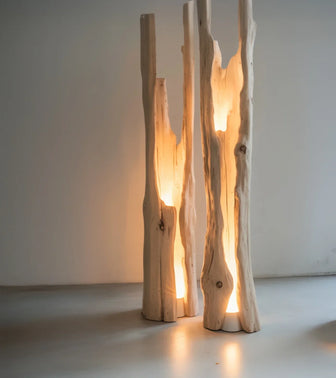
Rustic Driftwood Floor Lamp – Handmade Solid Wood Standing Light for Home Décor
From $1,220.00
Christmas edit
Rustic Driftwood Floor Lamp – Handmade Solid Wood Standing Light for Home Décor
From $1,220.00
 Christmas edit
Driftwood Wall Sconce - Handcrafted Rustic Wooden Wall Lamp
From $650.00
Christmas edit
Driftwood Wall Sconce - Handcrafted Rustic Wooden Wall Lamp
From $650.00
 Christmas edit
Rustic Driftwood Floor Lamp with Shelves – Handmade Wooden Standing Light
From $2,350.0010% off at checkout
Christmas edit
Rustic Driftwood Floor Lamp with Shelves – Handmade Wooden Standing Light
From $2,350.0010% off at checkout
 Sculptural Twisted Solid Wood Floor Lamp - Organic Modern Statement Lamp
From $1,780.00
Sculptural Twisted Solid Wood Floor Lamp - Organic Modern Statement Lamp
From $1,780.00
 Christmas edit
Twisted Vine Wooden Floor Lamp - Handcrafted Driftwood Standing Light With Leaf Shade
From $1,280.00
Christmas edit
Twisted Vine Wooden Floor Lamp - Handcrafted Driftwood Standing Light With Leaf Shade
From $1,280.00
 Christmas edit
S-Curve Wooden Floor Lamp - Driftwood Standing Light With Dual Glow Openings
From $1,480.00
Christmas edit
S-Curve Wooden Floor Lamp - Driftwood Standing Light With Dual Glow Openings
From $1,480.00
Small kitchens don't have the luxury of wasted wall space. Every inch matters. A well-placed small kitchen shelf can add serious storage without the bulk of additional cabinets - and it can actually make the room feel more open at the same time.
The key is choosing the right shelf type, size, and placement for your specific layout. Here's a practical guide.
Types of Small Kitchen Shelves
| Shelf Type | Best For | Typical Depth |
|---|---|---|
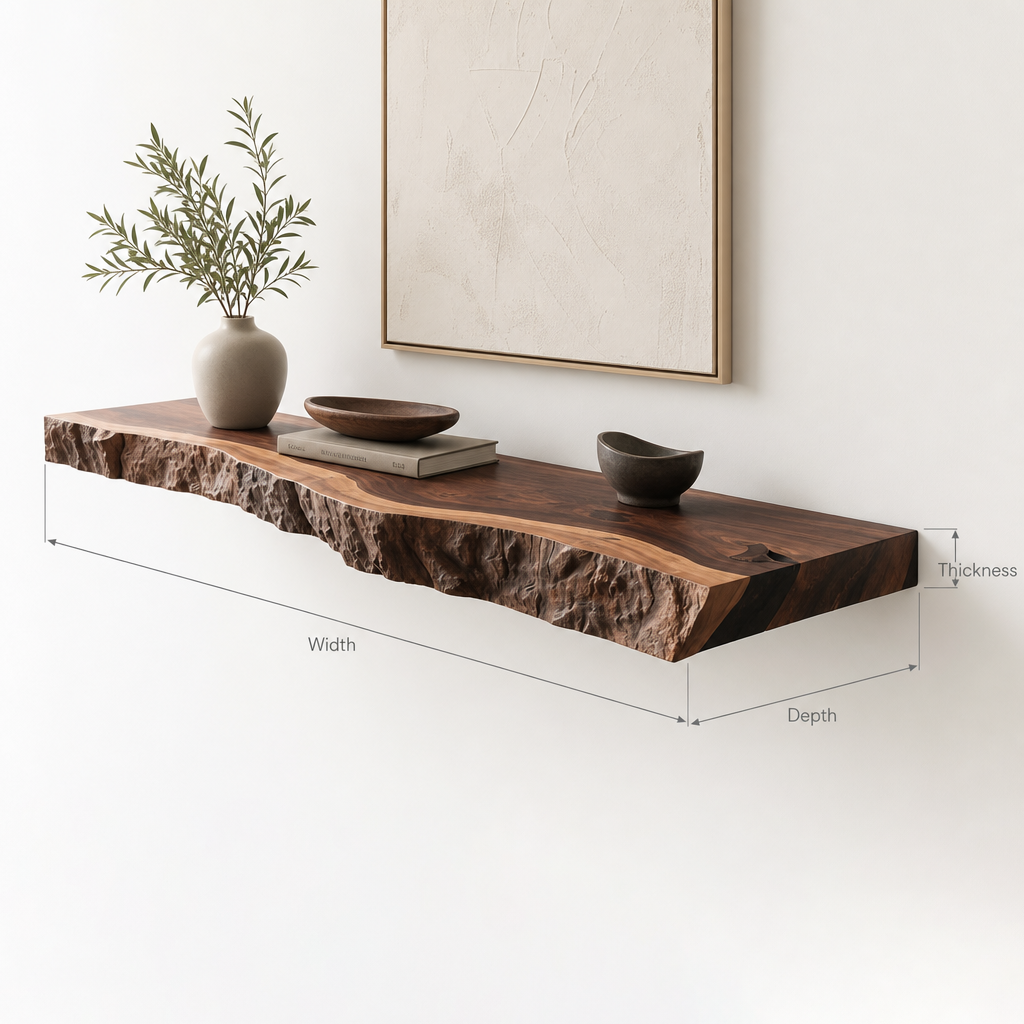
| Floating shelves | Dishes, mugs, cookbooks, display | 6–10 inches |
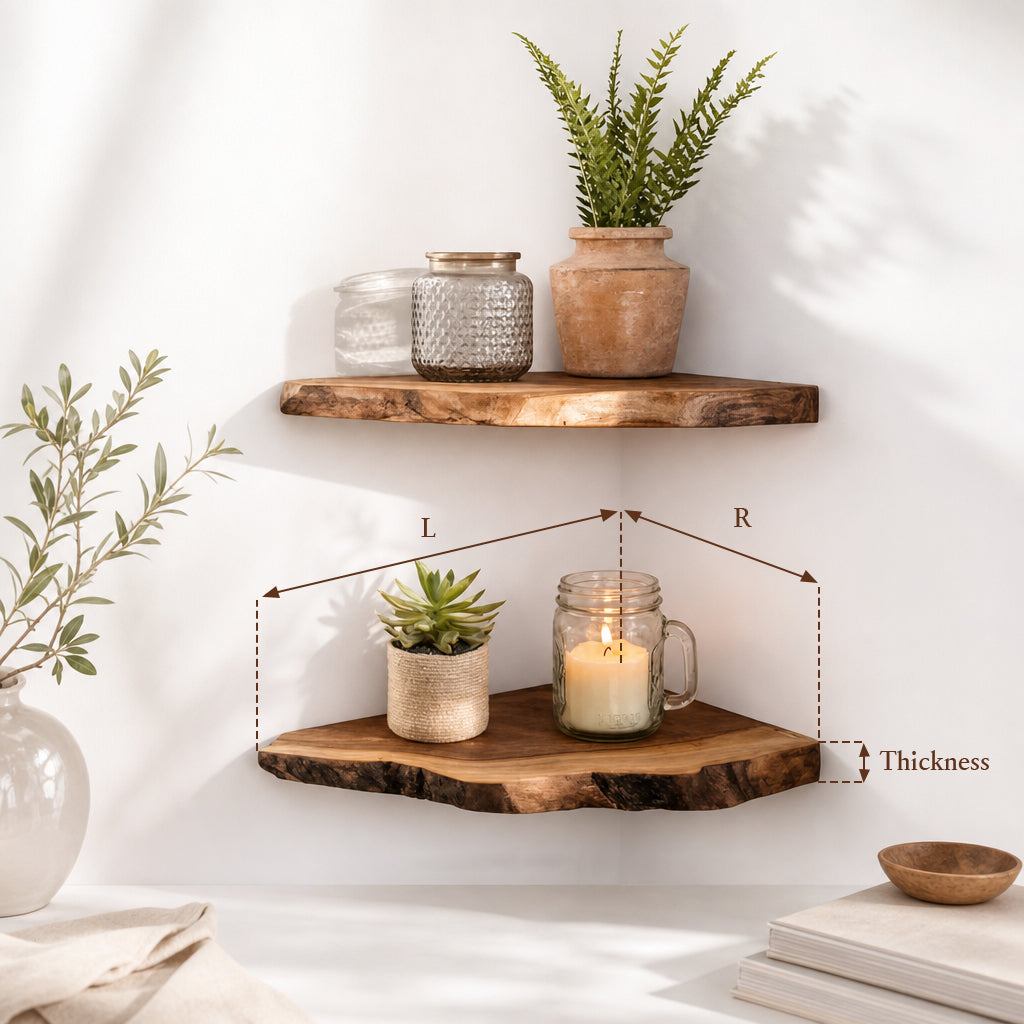
| Corner shelves | Dead corner space, spices, small plants | 8–12 inches |
| Wall-mounted brackets | Heavy items, cast iron, small appliances | 8–12 inches |
| Over-sink shelves | Utilizing above-sink vertical space | 6–8 inches |
| Under-cabinet shelves | Spices, small jars, tea collection | 4–6 inches |
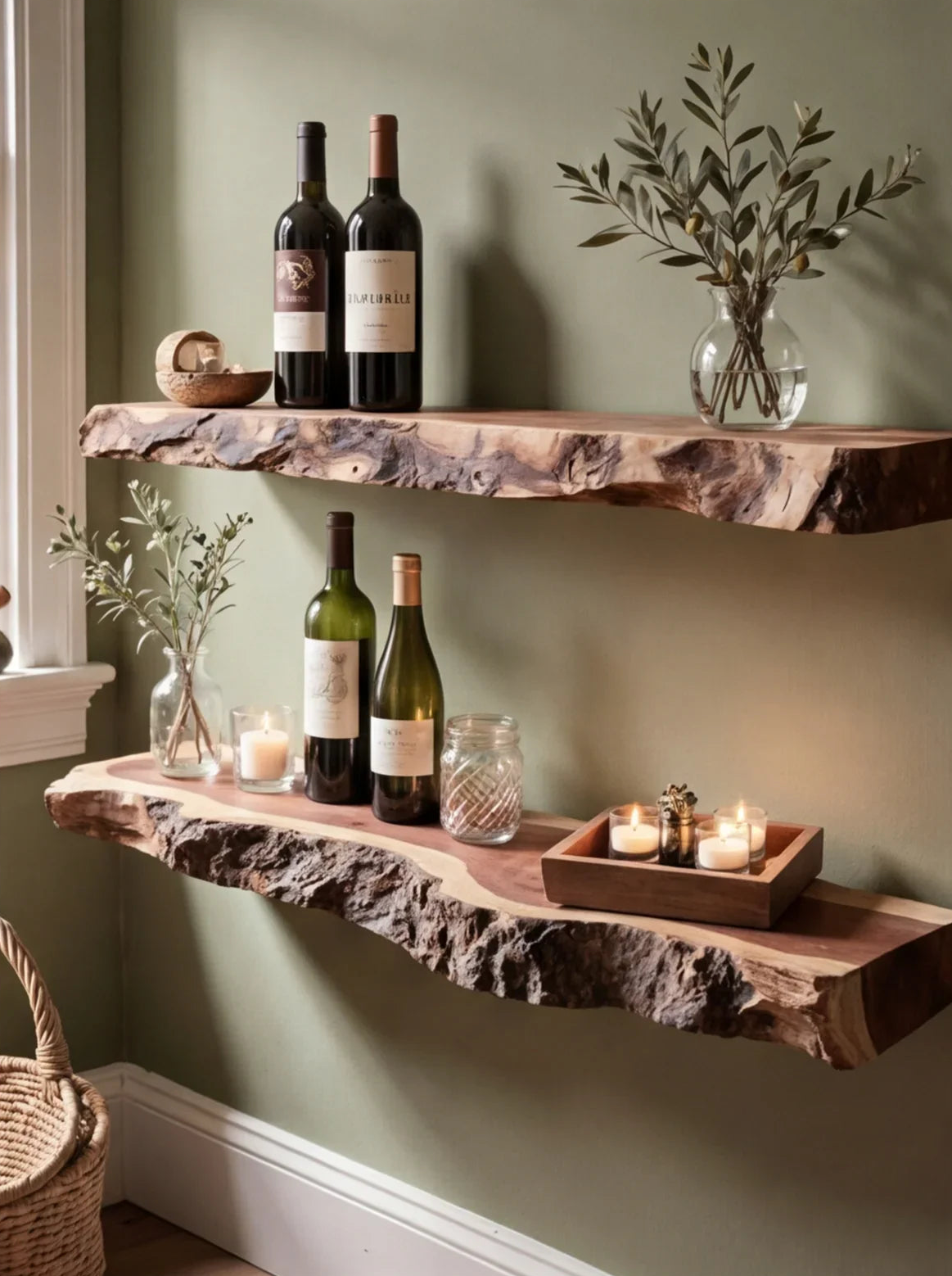
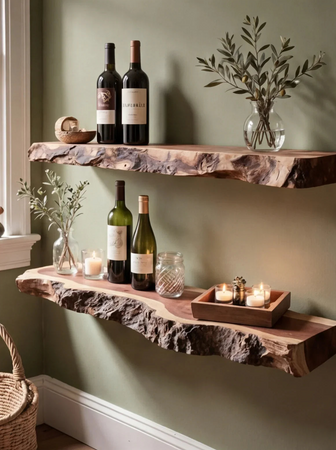
In a small kitchen, floating shelves are usually the best choice. They don't visually crowd the space like bracketed shelves do, and they use wall space that would otherwise go wasted. For the full rundown of types, sizing, and installation across every room (not just the kitchen), see our floating shelves guide.

Where to Put Shelves in a Small Kitchen
Above the Counter
The most common spot - and for good reason. Mount shelves 18–20 inches above your countertop to keep items within easy reach while leaving enough workspace below. A shelf 24–30 inches long fits most small kitchen walls without overwhelming them.
Inside the Corner
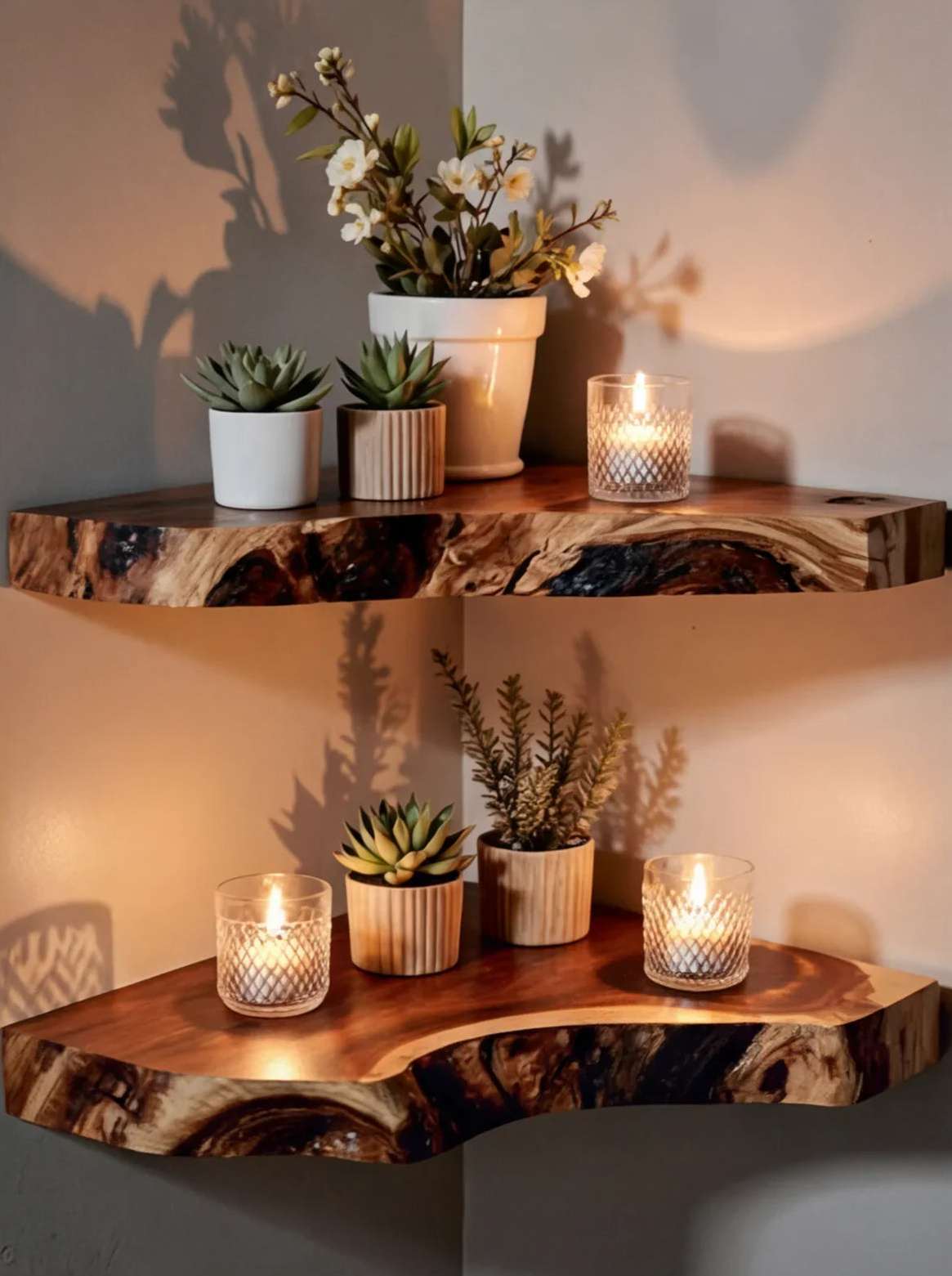
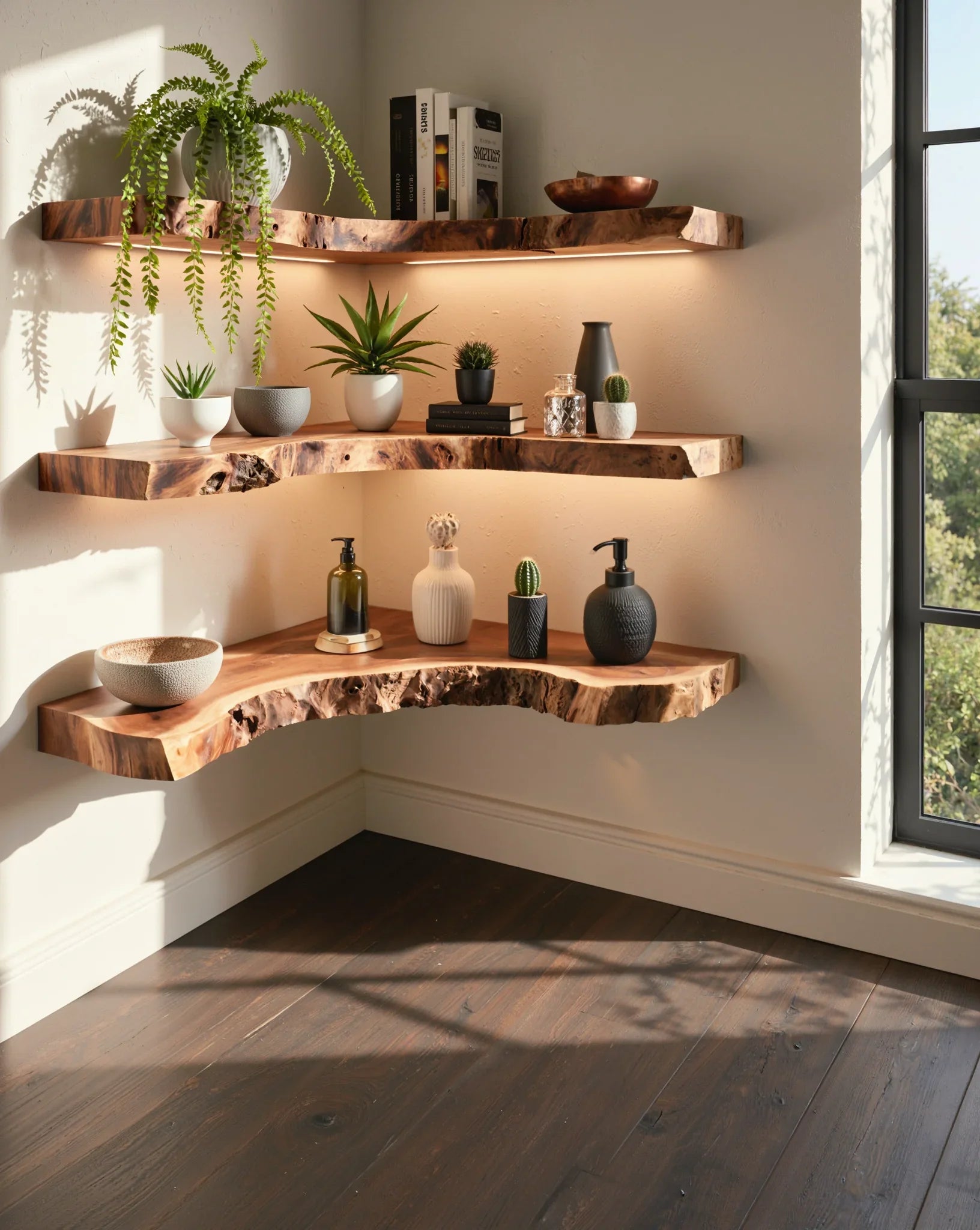
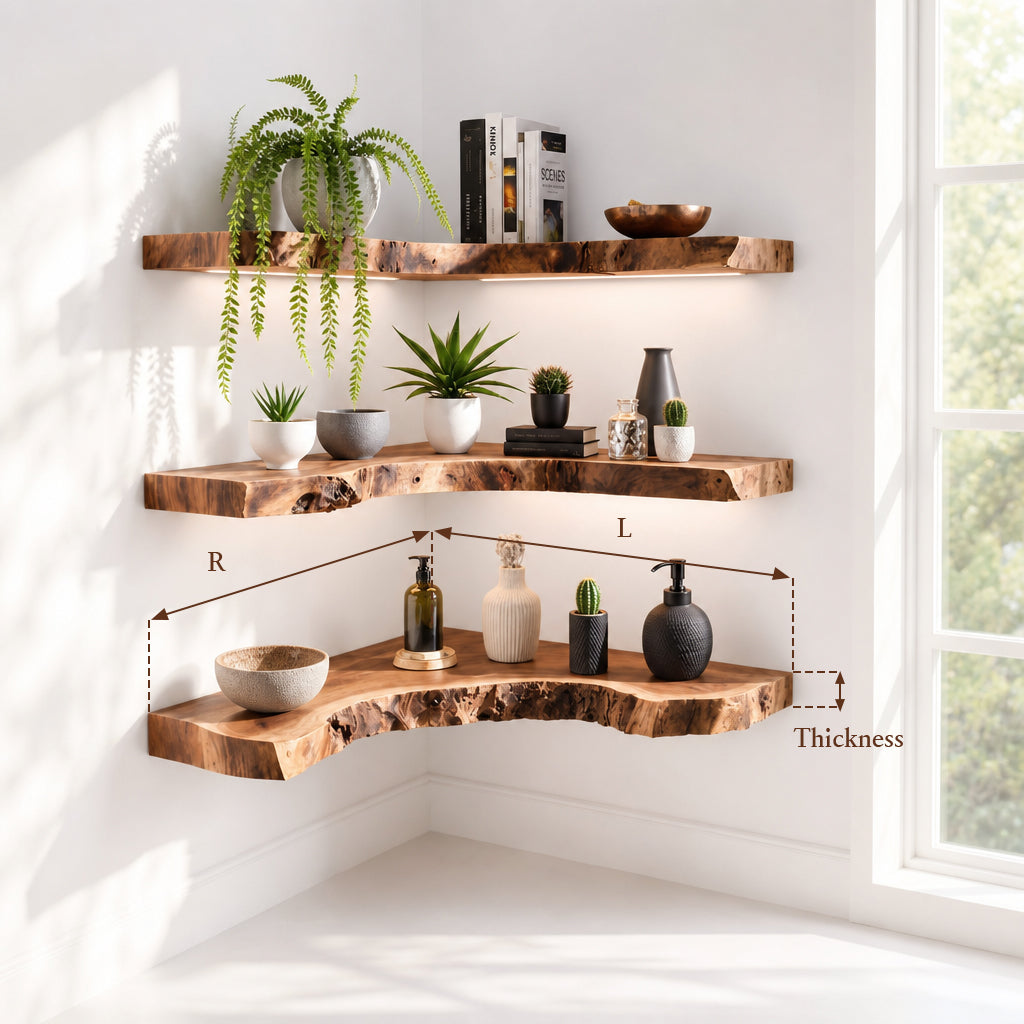
Corners are the most underutilized space in small kitchens. A corner floating shelf fills the dead zone and creates a natural display area for spices, a small plant, or your favorite cooking oil. Ashdeco's corner shelves are handcrafted from solid wood and fit flush into the corner without awkward gaps. Our corner floating shelves guide covers sizing for tight angles like these in more depth.
Next to the Stove
A narrow shelf (4–6 inches deep) beside the range holds spices, cooking oils, and utensils within arm's reach of the cooktop. This is one of the highest-utility shelf positions in any kitchen, small or not.
Above the Sink
If you have wall space above your kitchen sink, a shallow shelf here holds dish soap, a sponge holder, or a small herb garden. Keep it narrow - 4–6 inches max - so it doesn't interfere with the faucet or make the sink area feel cramped.
The Coffee Station
Dedicate one small wall to coffee: machine on the counter, a shelf above for mugs and beans, maybe a small decorative shelf for a candle or small plant. It creates a functional zone without eating precious counter space.

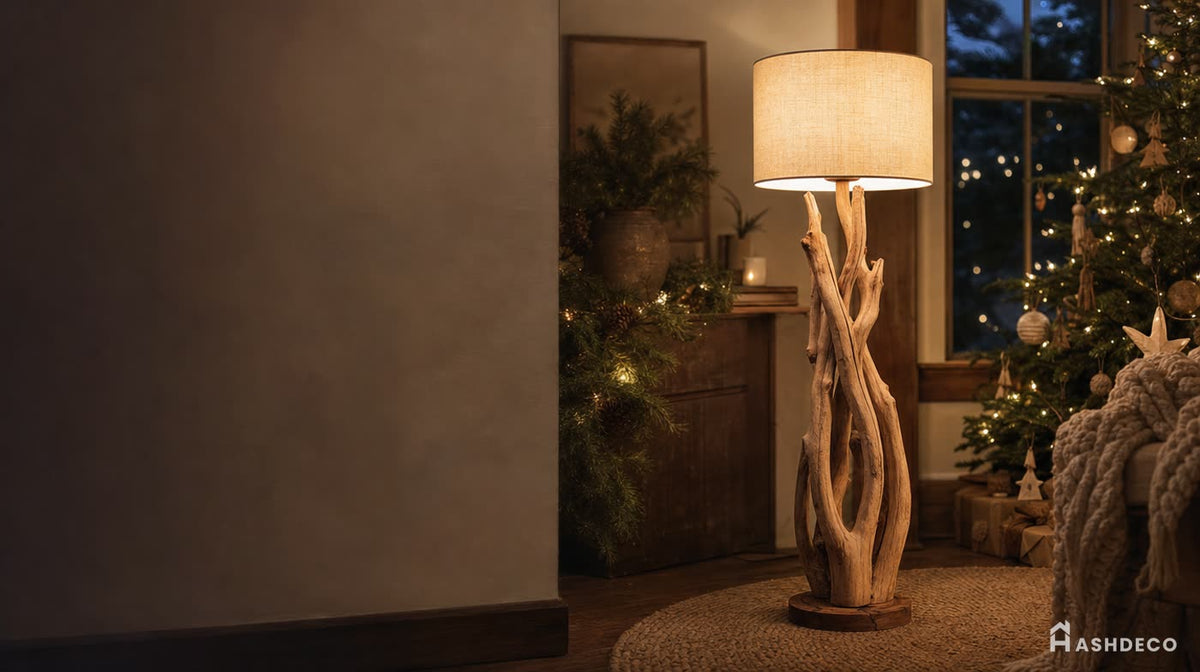


Sizing Rules for Small Kitchen Shelves
Getting shelf dimensions wrong in a small kitchen is a costly mistake. Here's what to keep in mind:
- Depth: 6–10 inches for most items. Deeper shelves (10+ inches) work for dish storage but will visually dominate a small wall.
- Length: 16–36 inches. Shorter shelves (16–24 inches) work in tight spots; 24–36 inches for longer walls.
- Vertical spacing: 10–12 inches between shelves for mugs and glasses, 12–15 inches for dinner plates.
- Mounting height: 15–18 inches above the counter for easy reach. The bottom shelf should never block your workspace.
For step-by-step mounting instructions once you've settled on dimensions, our installation guide walks through the full process.

Material Matters - Especially in Kitchens
Kitchen shelves deal with steam, splashes, heat, and grease. The material you choose affects both durability and how easy the shelf is to clean.
| Material | Durability | Moisture Resistance | Aesthetic |
|---|---|---|---|
| Solid hardwood (acacia, walnut, oak) | Excellent | Good with proper finish | Warm, natural, premium |
| Pine | Good | Moderate | Light, casual, budget-friendly |
| MDF / particle board | Fair | Poor - swells with moisture | Flat, uniform, budget |
| Metal | Excellent | Excellent | Industrial, modern |
| Glass | Fair | Excellent | Airy, minimalist |
For a small kitchen where every shelf gets used daily, solid wood is the best investment. It's durable, easy to wipe clean, and adds warmth to a space that's usually dominated by cold surfaces like tile and stainless steel. Ashdeco's kitchen floating shelves are handcrafted from solid acacia and walnut - built to handle daily cooking without warping or sagging.

Don't miss
These pieces qualify for 10% off orders over $2,000. Applied automatically at checkout.
10% off
Rustic Driftwood Floor Lamp with Shelves – Handmade Wooden Standing Light
From $2,350.00
10% off at checkout
 10% off
Rustic Driftwood Floor Lamp with Side Table – Solid Wood Standing Light with Rattan Shade
From $2,350.00
10% off at checkout
10% off
Rustic Driftwood Floor Lamp with Side Table – Solid Wood Standing Light with Rattan Shade
From $2,350.00
10% off at checkout
 10% off
Sculpted Spiral Twist Floor Lamp Handcrafted Solid Timber Standing Light with Linen Drum Shade
From $2,280.00
10% off at checkout
10% off
Sculpted Spiral Twist Floor Lamp Handcrafted Solid Timber Standing Light with Linen Drum Shade
From $2,280.00
10% off at checkout
 10% off
Biomorphic Sculpted Hollow Floor Sculpture Organic Timber Art Piece Hand Carved in Solid Wood
From $2,280.00
10% off at checkout
10% off
Biomorphic Sculpted Hollow Floor Sculpture Organic Timber Art Piece Hand Carved in Solid Wood
From $2,280.00
10% off at checkout
Small Kitchen Shelf Mistakes to Avoid
- Going too deep. A 12-inch shelf in a 6-foot-wide kitchen eats up precious walkway space. Stick to 6–10 inches for small kitchens.
- Overcrowding the wall. Three well-spaced shelves look intentional. Five or six crammed together look chaotic. Leave visual breathing room.
- Ignoring weight limits. Kitchen shelves hold plates, cookbooks, and small appliances. Make sure brackets and anchors are rated for the load - cheap drywall anchors will fail. Our weight capacity guide breaks down what different mounting methods can actually hold.
- Putting shelves where you can't reach them. In a small kitchen, every shelf should be within arm's reach. Anything higher needs a step stool, which defeats the convenience.
- Matching everything too perfectly. Mixed materials (wood shelf + metal bracket + ceramic jar) look more natural and interesting than a perfectly matched set.
Styling Tips for Small Kitchen Shelves
Shelves that actually get used are styled for function first, beauty second. Here's how to balance both:
- Put everyday items (mugs, plates, oils) on the lower, most reachable shelf
- Reserve the top shelf for lighter, less-used items - cookbooks, decorative pieces, seasonal things
- Leave some negative space - shelves that are 70% full look curated, not cluttered
- Group items in odd numbers (3 mugs, 5 jars) for a naturally pleasing arrangement
- Add one living thing - a small herb pot or trailing pothos makes any shelf feel more alive
For more arranging principles like these, see our guides on how to arrange floating shelves and floating shelf placement ideas.
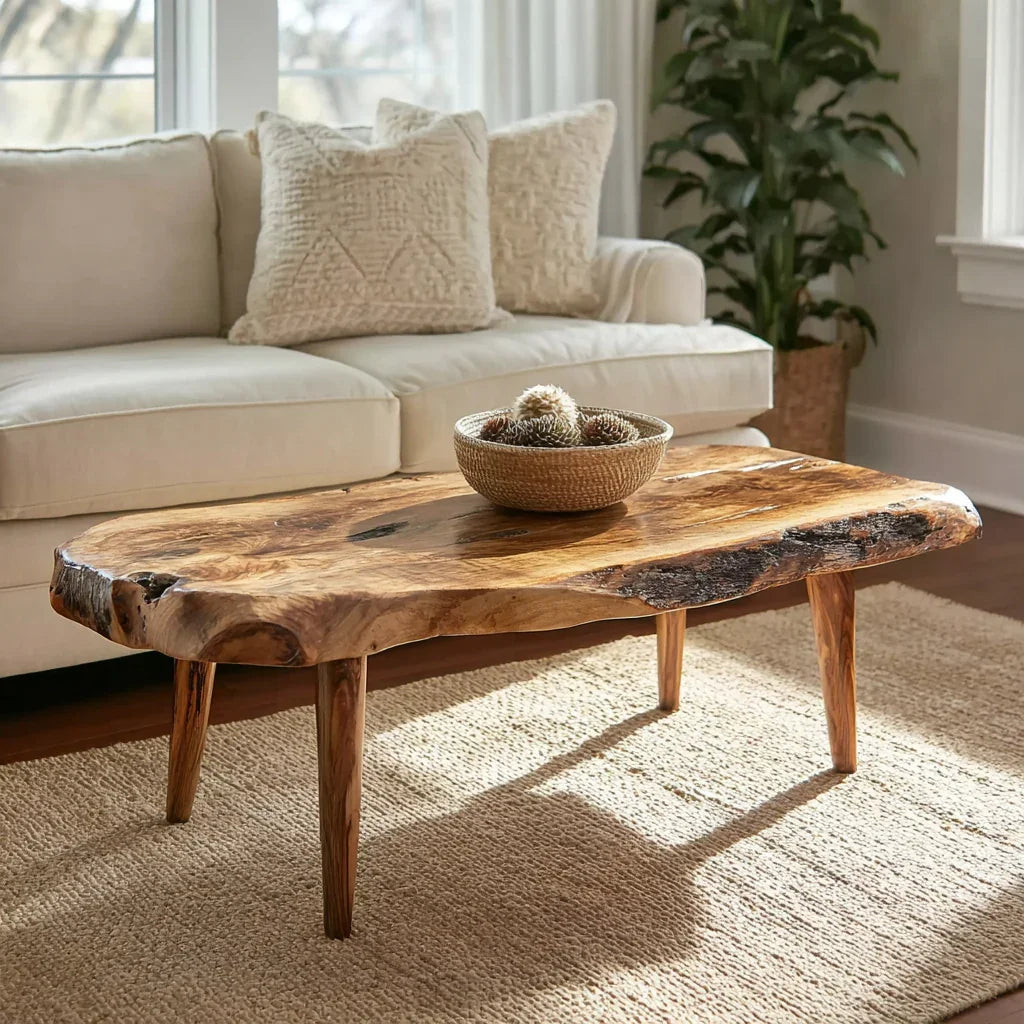
Make every inch of wall count.
Browse Ashdeco's handcrafted solid acacia and walnut floating shelves - sized for tight kitchens, rated to hold real dishware, and built to handle daily cooking without warping.
Shop Floating Shelves →Frequently Asked Questions
How deep should kitchen shelves be?
For a small kitchen, 6–10 inches is ideal. Six inches handles mugs and spice jars. Eight to ten inches fits standard dinner plates. Anything deeper than 10 inches will make a small kitchen feel cramped and is harder to reach into.
Can floating shelves hold heavy dishes?
Yes, if they're properly mounted into wall studs with quality brackets. A solid wood floating shelf can easily hold 30–50 lbs when installed correctly. The weak point is almost always the wall anchors, not the shelf itself.
How many shelves should I install in a small kitchen?
Two to three is the sweet spot. One shelf rarely provides enough storage; four or more in a small space starts to look cluttered. Start with two, live with them for a week, and add a third if you need the space.
Are open shelves practical or just trendy?
They're genuinely practical for items you use daily - dishes, glasses, frequently-used spices. They're less practical for things you want to hide. In small kitchens, the visual openness of floating shelves often makes the room feel larger, which is a functional benefit beyond storage.
More floating shelf guides: Best Floating Shelves 2026 · Floating Shelves Cost Guide · Mounting Without Damage · DIY Floating Shelf Guide