
















Quick view
Shop this guide
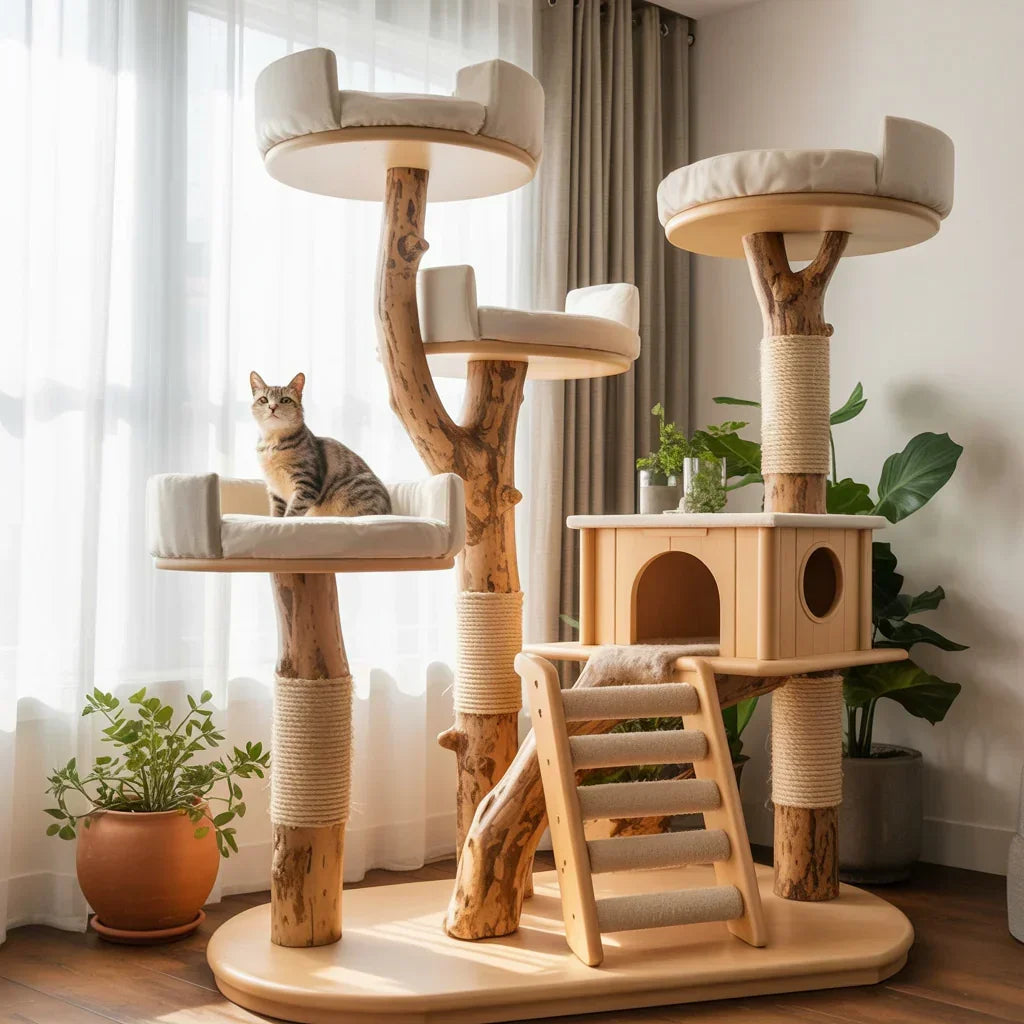
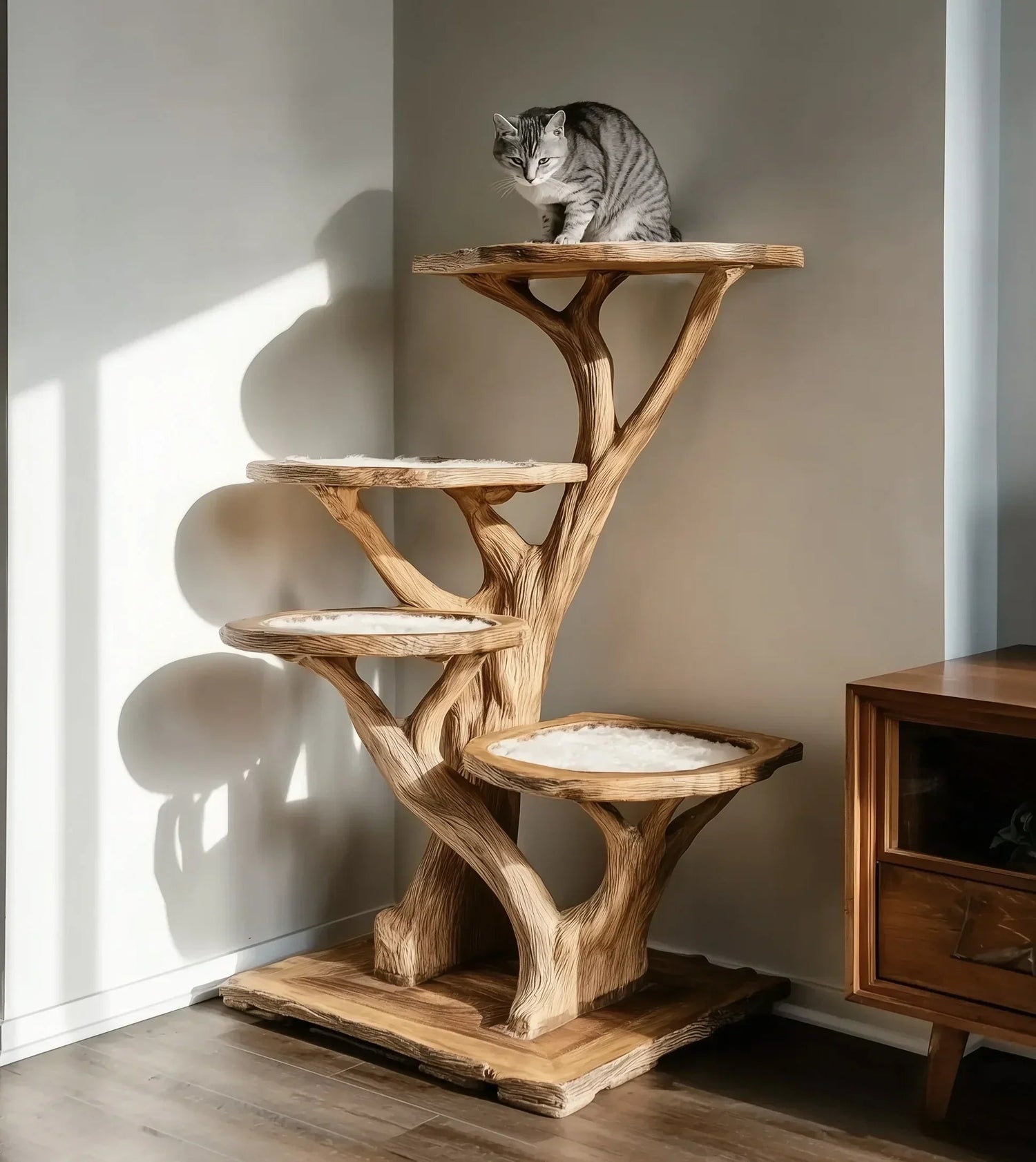
Handcrafted Cat Tree Tower, made to order in solid wood.
 Hollow Tunnel Cave Sisal Scratching Cat Tree Tower in Sculpted Solid Wood
From $1,532.00
Hollow Tunnel Cave Sisal Scratching Cat Tree Tower in Sculpted Solid Wood
From $1,532.00
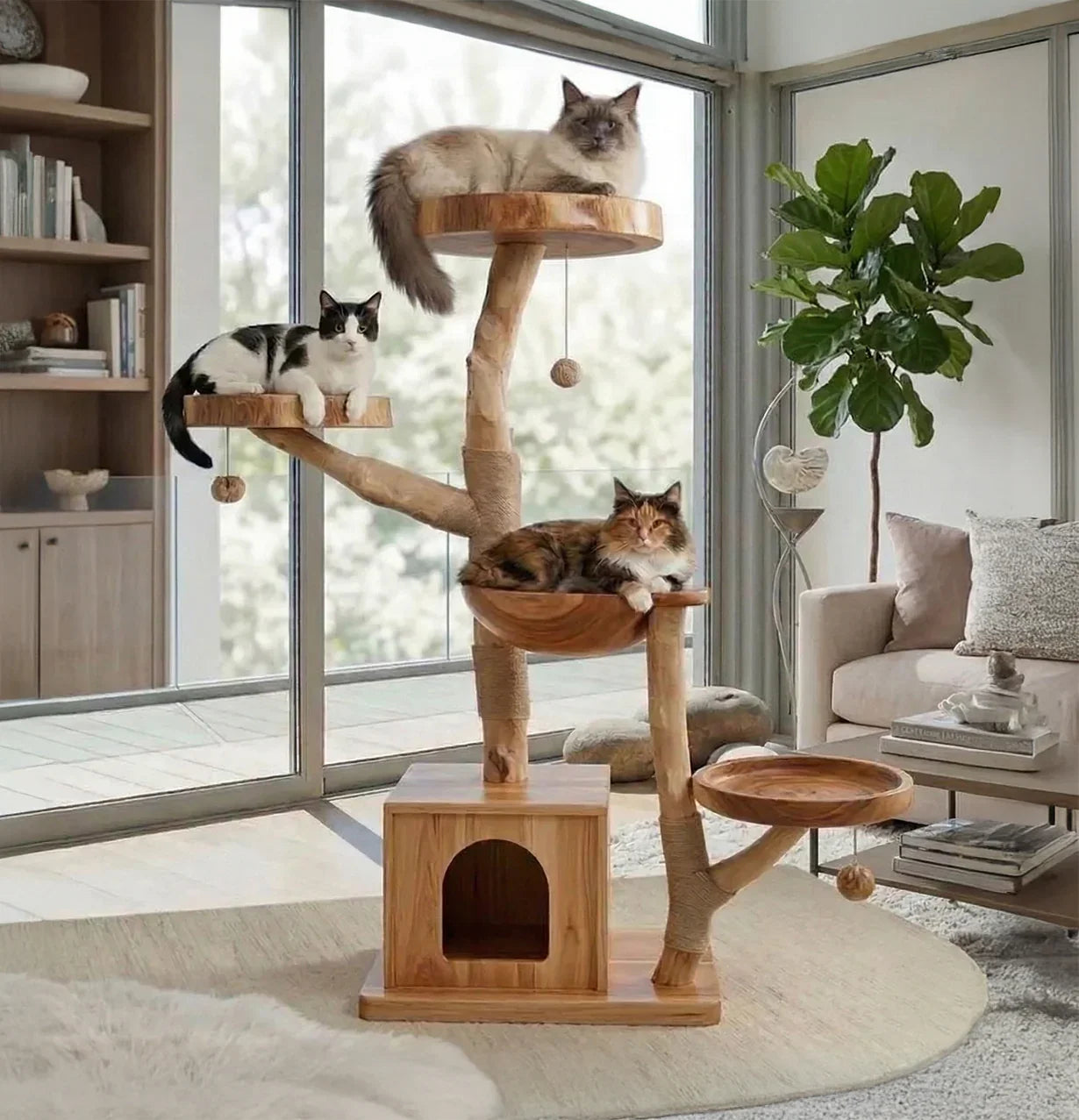
 Multi Tier Sculpted Botanical Canopy Cat Tree Tower in Matte Finished Solid Wood
From $1,765.00
Multi Tier Sculpted Botanical Canopy Cat Tree Tower in Matte Finished Solid Wood
From $1,765.00
 Sculptural Spiral Solid Wood Cat Tree Tiered Modern Feline Lounger
From $2,217.0010% off at checkout
Sculptural Spiral Solid Wood Cat Tree Tiered Modern Feline Lounger
From $2,217.0010% off at checkout
 Nature Inspired Branch Solid Wood Corner Cat Tree Tower Condo
From $1,854.00
Nature Inspired Branch Solid Wood Corner Cat Tree Tower Condo
From $1,854.00
 Live Edge Slice Tiered Solid Wood Cat Tree Freestanding Multi Level Perch
From $1,732.00
Live Edge Slice Tiered Solid Wood Cat Tree Freestanding Multi Level Perch
From $1,732.00
 Artisanal Solid Wood Sculptural Tree Cat Tower & Multi-Tier Botanical Display Perch Stand
From $2,076.0010% off at checkout
Artisanal Solid Wood Sculptural Tree Cat Tower & Multi-Tier Botanical Display Perch Stand
From $2,076.0010% off at checkout
Stop Cats Slipping on a Wooden Cat Tree - Anti-Slip Guide
Full transparency: this guide comes from the Ashdeco team. We handcraft wooden cat tree furniture, and we've spent a lot of time reading customer reviews to understand what actually works - and what doesn't.
Surface grip is one of the most common complaints in customer reviews for a cat tree on major e-commerce platforms. We manually read through reviews for multiple cat tree products across price ranges, and the pattern is consistent: cats slipping on platforms, owners buying anti-slip tape as a fix, and some cats simply abandoning the tree after a bad experience.
It's not the cat's fault. It's not your cat being "picky." It's a material and finish problem - and one that's easy to spot before you buy a cat tree if you know what to look for. Below, we'll walk through why cat tree platforms get slippery, how to tell from product photos, and which surfaces actually give cats something to grip.

Why a Wooden Cat Tree Gets Slippery
Based on our review of customer feedback across multiple cat tree products on Amazon, here are the main reasons cats slip:
Glossy or lacquered finishes. Some cat tree products come with a polished, lacquered finish that looks great in photos but creates a surface as slick as a hardwood floor. Cats' claws need texture to grip - a smooth, shiny surface gives them nothing to hold onto. Several reviewers mentioned their cats sliding on "slick wood" platforms, and one ended up sewing custom non-slip pads because the bare surface was too smooth.
Particle board with laminate coating. Many budget cat tree designs use manufactured wood covered with a thin laminate layer. The laminate creates an unnaturally flat, smooth surface with no grain texture at all. Claw traction requires microscopic irregularities - laminate has none. (For more on why manufactured wood behaves this way, see our guide on cat tree vs. cat tower construction.)
Wood sanded too smooth. Even a solid wooden cat tree can be slippery if the wood is sanded to a very fine grit during production. The result is a surface that feels smooth to the touch but provides almost no grip for claws. A few reviewers of mid-range cat tree products noted that the platforms "feel polished" and their cats hesitate to jump on them.
Carpet that's worn down. Carpet-covered cat trees start with decent grip, but the fibers flatten and wear down within a few months of use. Once the carpet is worn, the surface underneath (often particle board or smooth wood) is exposed - and that's when slipping starts. Multiple reviewers mentioned their cats slipping on "old" or "worn" carpet surfaces. We cover this comparison in more depth in wood vs. carpet cat trees.
Humidity and condensation. In humid environments, a cat tree surface can develop a thin film of moisture that makes it temporarily slick. This is more common with sealed wood (lacquer, polyurethane) than with natural, unfinished wood.
These aren't rare edge cases. They're the most frequently mentioned surface-related complaints across the cat tree products we reviewed.

4 Wooden Cat Tree Surface Types - How They Handle Grip
Based on material properties and customer feedback, here's how the most common cat tree surfaces compare when it comes to grip:
| Surface Type | Grip Characteristics | Durability | Cleanability | Verdict |
|---|---|---|---|---|
| Glossy / lacquered wood | Surface is too slick for claws to catch. Several reviewers explicitly mentioned cats "sliding" or "slipping" on these cat tree platforms. | High | Easy to wipe clean | Avoid - not recommended for any cat, regardless of age or health. |
| Raw wood with matte finish | Natural wood grain creates light texture - decent grip for young, healthy cats, but may not be enough for senior cats or cats with weaker claws. | High | Easy to wipe clean | Good solid choice for a cat tree used by younger cats. Senior cats or cats with brittle claws may benefit from an added felt pad. See our guide on choosing a cat tree for senior cats. |
| Wood + felt pad | Felt creates reliable friction for most claw types, including the brittle claws common in older cats. Some reviewers sewed their own felt pads for exactly this reason. | Medium (felt wears down over time and needs replacing) | Medium (requires washing or replacing the pad) | Better ideal for senior cats, though the velcro attachment needs to be secure (some reviews mention weak velcro over time). |
| Textured bark (natural branch) | Natural bark creates inherent texture with many points for claws to catch. No added pad or modification needed. Based on the reviews and material comparisons we looked at, this is the most reliable grip surface a cat tree can offer. | High | Medium (harder to wipe than a flat surface) | Best - the strongest natural grip, suitable for cats of any age or mobility level. |
The key takeaway: texture is everything. A cat tree surface doesn't need to be soft to be grippy - it needs enough microscopic irregularities for a cat's claws to catch. Natural bark and wood grain do this inherently. Glossy finishes and laminate actively prevent it.



How to Tell If a Wooden Cat Tree Will Be Slippery - Before You Buy
You don't need to wait for the cat tree to arrive to find out the platforms are slick. Here's what to check:
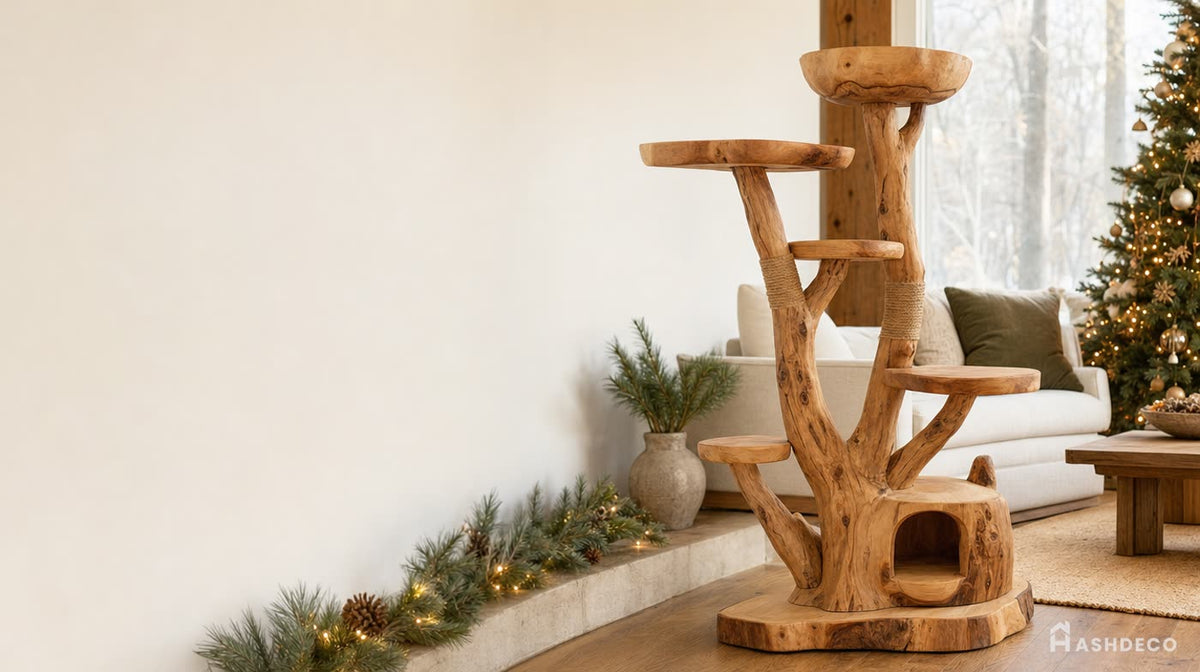
Look at product photos for light reflection. If the platforms show bright white reflections or a mirror-like shine, that's a glossy or lacquered finish. A real wooden cat tree with a natural or matte finish has a warm, diffused look - no sharp reflections.
Read the product description carefully. Words like "smooth finish," "polished," "glossy," or "high-gloss" are red flags for grip on a cat tree. Look for "natural finish," "textured," "raw," "matte," or "unpolished" instead.
Check the material listing. "Manufactured wood," "MDF with laminate," or "engineered wood with veneer" almost always means a smooth, low-grip surface. A "solid wood" listing with "natural finish" or "kiln-dried wood" is more likely to have natural grain texture. Our guide on choosing the best wood for a cat tree breaks down which species and finishes hold up best.

Search reviews for keywords. Before buying a cat tree, search the product reviews for "slippery," "slide," "grip," "slick," or "slip." If these words appear in multiple reviews, the surface is a problem. We found these complaints repeatedly across popular cat tree listings.
Consider the price point. A cat tree in the lower price range often uses laminate or glossy finishes to make cheaper materials look more premium. If a cat tree seems unusually cheap, the surface finish is one area where corners were likely cut.

3 Ways to Fix a Slippery Wooden Cat Tree You Already Own
If you've already bought a cat tree and your cat is slipping on it, here are the solutions that reviewers actually tried - with honest pros and cons:
1. Anti-slip tape or grip strips. Available at hardware stores for a few dollars. Cut to size and stick on the platform surface.
Pros: cheap, easy to apply, immediate grip improvement.
Cons: looks unpolished, adhesive can leave residue on wood, tape edges peel over time and need replacing.
2. Felt pads with velcro attachment. Cut felt to platform size and attach with velcro strips so you can remove them for washing. Several reviewers mentioned sewing their own felt pads for exactly this reason.
Pros: good grip, removable, washable, looks better than tape.
Cons: velcro weakens over time (a common complaint in reviews), felt needs periodic replacement.
3. Rug gripper mesh. Cut rubber mesh (the kind used under area rugs) to platform size and place it under your cat's cushion or bed.
Pros: invisible under cushions, provides grip without altering the surface, cheap.
Cons: only works if you have a cushion on the platform, doesn't help on bare surfaces your cat wants to walk on directly.
None of these fixes are perfect - which is why choosing a cat tree with inherent grip from the start is always the better option.
Don't miss
These pieces qualify for 10% off orders over $2,000. Applied automatically at checkout.
10% off
Sculptural Spiral Solid Wood Cat Tree Tiered Modern Feline Lounger
From $2,217.00
10% off at checkout
10% off
Artisanal Solid Wood Sculptural Tree Cat Tower & Multi-Tier Botanical Display Perch Stand
From $2,076.00
10% off at checkout
 10% off
Sculptural Hand-Carved Tree Solid Wood Wall-Mounted Cat Climbing Tower with Dual House Condos & Display Shelves
$3,012.00
10% off at checkout
10% off
Sculptural Hand-Carved Tree Solid Wood Wall-Mounted Cat Climbing Tower with Dual House Condos & Display Shelves
$3,012.00
10% off at checkout
 10% off
Sculptural Hand-Carved Tree Solid Wood Cat Tower & Multi-Tier Luxury Feline Climbing Tree with Tunnel Condo Base
From $2,654.00
10% off at checkout
10% off
Sculptural Hand-Carved Tree Solid Wood Cat Tower & Multi-Tier Luxury Feline Climbing Tree with Tunnel Condo Base
From $2,654.00
10% off at checkout
4 Ashdeco Wooden Cat Tree Designs With Strong Natural Grip
Every Ashdeco cat tree is handcrafted from solid, kiln-dried wood with a natural finish - no lacquer, no gloss, no laminate. Here's how the grip works on four designs from our cat tree collection:
| Product | Surface Material | Grip Assessment | Why It Works | Price |
|---|---|---|---|---|
| Rustic Solid Wood Cat Tree – Natural Branch | Natural bark, unpolished | Strongest grip of our floor-standing designs | Natural bark creates inherent texture with many points for claws to catch - no added pad or modification needed. Bark doesn't get slick even when damp, and the texture doesn't wear away the way carpet does. | $1,023 (~$68/year over a 15-year lifespan) |
| Modern Solid Wood Climbing Tower | Solid wood, matte finish | Moderate-to-good grip | Natural wood grain provides light texture, enough for young, healthy cats. Matte finish preserves the grain texture better than a glossy coat would. Senior cats or cats with weaker claws may benefit from an added felt pad. | $1,939 (~$129/year over a 15-year lifespan) |
| Cat Tree Tower – Tall Cat Scratcher | Wrapped scratching surface + wood platforms | Good grip on scratching areas | The wrapped material on scratching posts creates friction cats can climb and dig into easily. The flat wood platforms may benefit from an added pad for senior cats. The wrapping texture doesn't wear down as quickly as traditional carpet. | $1,339 (~$89/year over a 15-year lifespan) |
| Artistic Branch Cat Tree & Bookshelf | Natural branch, wall-mounted | Strongest grip overall, plus zero wobble | Natural branch texture gives cats the same reliable grip as our other cat tree bark surfaces. The wall-mounted design also eliminates sway - a related risk, since cats are more likely to slip on a platform that's moving when they land. No gloss, no laminate, nothing to wear down. | $2,662 (~$177/year over a 15-year lifespan) |
All four cat tree designs use solid wood with natural finishes - no glossy coatings, no laminate, no particle board. The grip comes from the wood itself, not from an added layer that can wear down or peel off. If you're furnishing a home with a large or heavy-bodied cat, our complete buyer's guide for large cats covers weight capacity and platform sizing in more detail.
Ashdeco Rustic Solid Wood Cat Tree with Natural Branch Texture
Natural bark texture means inherent grip - no tape, no pads, no modifications.
This cat tree uses unpolished natural branch surfaces that give cats something real to grip - the way nature intended.
FAQ
Is a wooden cat tree more slippery than a carpet one?
It depends on the finish. New carpet has decent grip, but it wears down within months and becomes slippery. A cat tree with a natural or matte finish maintains its grip over time because the wood grain doesn't wear away. Glossy or lacquered wood, on the other hand, is slippery from day one. The best long-term grip comes from natural bark or textured wood - not carpet, not polished wood.
How can I tell if a wooden cat tree surface is slippery from product photos?
Look for light reflections on the platforms. If you see bright white spots or mirror-like shine, that's a glossy finish and the surface will likely be slippery. Natural wood has a warm, even tone with visible grain - no sharp reflections. If the product photo looks like it was taken under studio lighting and the surface is glowing, that's a warning sign.
Does anti-slip tape damage cat claws?
Standard anti-slip tape (the kind used for stairs and bathtubs) doesn't damage claws. However, the adhesive can leave residue on a cat tree's surface, and the tape edges tend to peel up over time, creating a tripping hazard for cats. It's a functional fix, but not a permanent one.
What wooden cat tree surface is best for senior cats or cats with weak claws?
For senior cats or cats with brittle claws, felt pads on wood platforms or natural bark surfaces are the best options. Avoid glossy finishes entirely. Thin carpet can work initially but will wear down and need replacement. Natural bark provides the most consistent grip without any added materials. For a full breakdown of what to look for, see our guide on cat trees for senior cats.
Is natural wood grain enough grip on its own?
Yes - if the finish is matte, oil-based, or completely natural (unpolished). Wood grain creates microscopic texture that claws can catch onto. The problem arises when a cat tree is sanded too fine or coated with lacquer, which fills in the grain and creates a smooth surface. If you can see and feel the grain texture, the surface should provide adequate grip for most cats.
Do wall-mounted wooden cat tree designs have better grip than floor-standing ones?
Wall-mounted designs don't inherently have better grip - grip depends on the surface material. However, wall-mounted cat tree designs eliminate wobble, which is a related problem: cats are more likely to slip on a platform that's moving when they land. So a wall-mounted tree with natural branch surfaces combines the best of both - good grip and zero sway.
The Bottom Line
Surface grip is one of the most overlooked factors when buying a wooden cat tree - and one of the most common reasons cats stop using them. A glossy finish looks great in photos but creates a surface your cat literally can't hold onto. Worn carpet starts fine but becomes a slipping hazard within months.
Natural wood texture - especially natural bark - provides the most reliable, long-lasting grip because it's built into the material itself. It doesn't wear down like carpet, and it doesn't need anti-slip tape or felt pads to work.
If you're looking for a cat tree with inherent grip, browse our cat tree collection or book a free design consultation to talk through your cat's specific needs. We're also happy to answer questions about other cat furniture options if a traditional cat tree isn't the right fit.