What Wood Is Safe for Cats? Best & Worst Species Ranked (2026)
The material of a cat tree matters more than most pet owners realize. Your cat walks on it, scratches it, sleeps on it, and occasionally chews on it. The wrong material means splinters, instability, toxic off-gassing, and a replacement purchase in 18 months. The right material means a piece that lasts a decade and actually looks good in your home.
This guide covers the best wood for cat trees: which species work, which finishes are pet-safe, and why material choice affects your cat's behavior. For a deeper look at how wood density translates into a more stable structure, see our full weight and stability guide.

Wood Species Ranked for Cat Trees
| Wood | Hardness (Janka) | Scratch Resistance | Weight (Stability) | Cat Safety | Overall Rating |
|---|---|---|---|---|---|
| Acacia | 1,750 | Excellent | Heavy (very stable) | Safe | A+ |
| Oak | 1,290 | Very Good | Heavy | Safe | A |
| Maple | 1,450 | Very Good | Heavy | Safe | A |
| Walnut | 1,010 | Good | Medium-Heavy | Safe | A- |
| Birch | 1,260 | Good | Medium | Safe | B+ |
| Pine | 690 | Poor (soft, deep scratches) | Light (less stable) | Safe | B- |
| Cedar | 350 | Very Poor | Very Light | Caution* | C |
| MDF/Particle Board | N/A | Poor (laminate chips) | Light | Caution** | D |
*Cedar's aromatic oils can irritate some cats' respiratory systems, especially in enclosed spaces.
**MDF contains formaldehyde-based resins. Off-gassing is a concern when cats sleep on the surface for extended periods.

Why Hardness Matters for Cat Trees
Scratching
Cats scratch for three reasons: claw maintenance, territory marking (scent glands in paw pads), and stretching. A cat's claws exert roughly 2-4 lbs of pressure per square millimeter when scratching.
- Soft wood (pine, cedar, Janka < 800): Deep gouges appear within weeks. The surface becomes rough and splintery. Pine cat trees look destroyed within 6 months.
- Medium wood (walnut, birch, Janka 1,000-1,300): Surface scratching visible but doesn't gouge deeply. The patina of light scratches actually adds character over time.
- Hard wood (acacia, maple, Janka 1,400+): Cat claws leave minimal marks. The surface stays smooth for years. Scratching provides satisfying resistance for the cat without damaging the furniture.
Weight and Stability
The denser the wood, the heavier the cat tree, and the more stable it is. This matters because:
- A 15-lb cat jumping from 4 feet generates significant lateral force on landing
- Two cats chasing each other through a tree create dynamic, unpredictable forces
- A 60-lb hardwood tree absorbs these forces without wobbling. A 15-lb MDF tree tips.
Pet-Safe Finishes
Cats groom themselves after walking on every surface. Whatever finish is on the cat tree ends up in the cat's mouth. Use only pet-safe finishes:
| Finish | Safety | Durability | Application |
|---|---|---|---|
| Natural oil (tung, linseed) | Safe when cured (24-48 hrs) | Good (re-oil annually) | Wipe on, wipe off. Easy. |
| Food-grade mineral oil | Safe immediately | Moderate (re-apply every 3-6 months) | Wipe on. Simplest option. |
| Beeswax | Safe immediately | Moderate | Rub on, buff. Natural sheen. |
| Water-based polyurethane | Safe when fully cured (7+ days) | Excellent | Brush on, 2-3 coats. Most durable. |
| Oil-based polyurethane | Safe when fully cured (14+ days) | Excellent | Brush on. Longer cure time, stronger odor. |
| Unfinished | Safe | Poor (stains, absorbs odor) | None needed. |
Avoid: Spray lacquers, shellac with colorants, any finish containing lead or zinc. When in doubt, look for "food-safe" or "toy-safe" on the finish label.
All Ashdeco cat trees use natural oil finish - safe for pets once cured (24-48 hours), zero VOC after curing, and easy to maintain.

Carpet vs Wood vs Sisal: What Cats Prefer
Carpet
- Cats scratch it immediately (satisfying for them)
- Traps cat hair, dander, and odor permanently
- Shreds within months, leaving loose fibers cats ingest
- Cannot be cleaned effectively
- Looks terrible within 6 months
Sisal Rope
- Purpose-built for scratching (most cat trees use it on posts)
- Shreds over time, producing loose fibers
- Needs replacement every 1-2 years
- Functional but not attractive
Solid Wood
- Natural scratching surface (cats scratch trees in the wild)
- No loose fibers to ingest
- Wipes clean in seconds (no trapped hair or odor)
- Gets better with age (scratch patina adds character)
- Never needs replacement
- Looks like actual furniture
Most cats adapt to solid wood within 1-2 weeks. If they're used to carpet trees, place the new wood tree next to the old one. Once they discover the wood provides satisfying resistance for scratching, they switch naturally.
Real Trees vs Crafted Tree Shapes
Some DIY enthusiasts use actual tree branches or trunks. This works but requires preparation:
- Species matters: Use hardwood branches (oak, maple). Avoid softwood (pine branches break under cat weight).
- Drying: Fresh-cut branches contain moisture that causes cracking and mold. Kiln-dry or air-dry for 4-6 weeks before use.
- Bark: Remove bark if possible - it harbors insects and mold. If keeping bark for aesthetics, seal with a pet-safe finish.
- Stability: Natural branches are unpredictable in structure. Test every branch by applying 30+ lbs of force in the direction a cat would jump. If it flexes or creaks, reinforce or replace it.
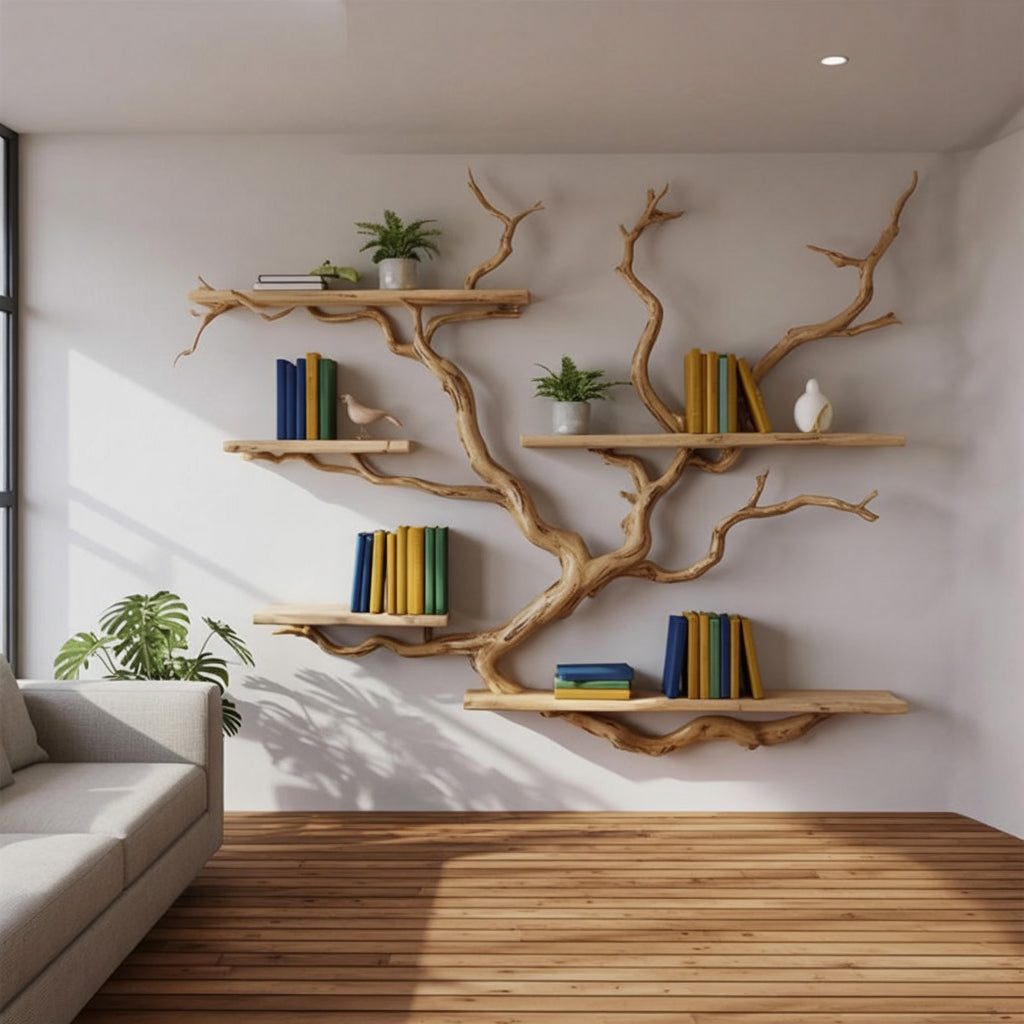
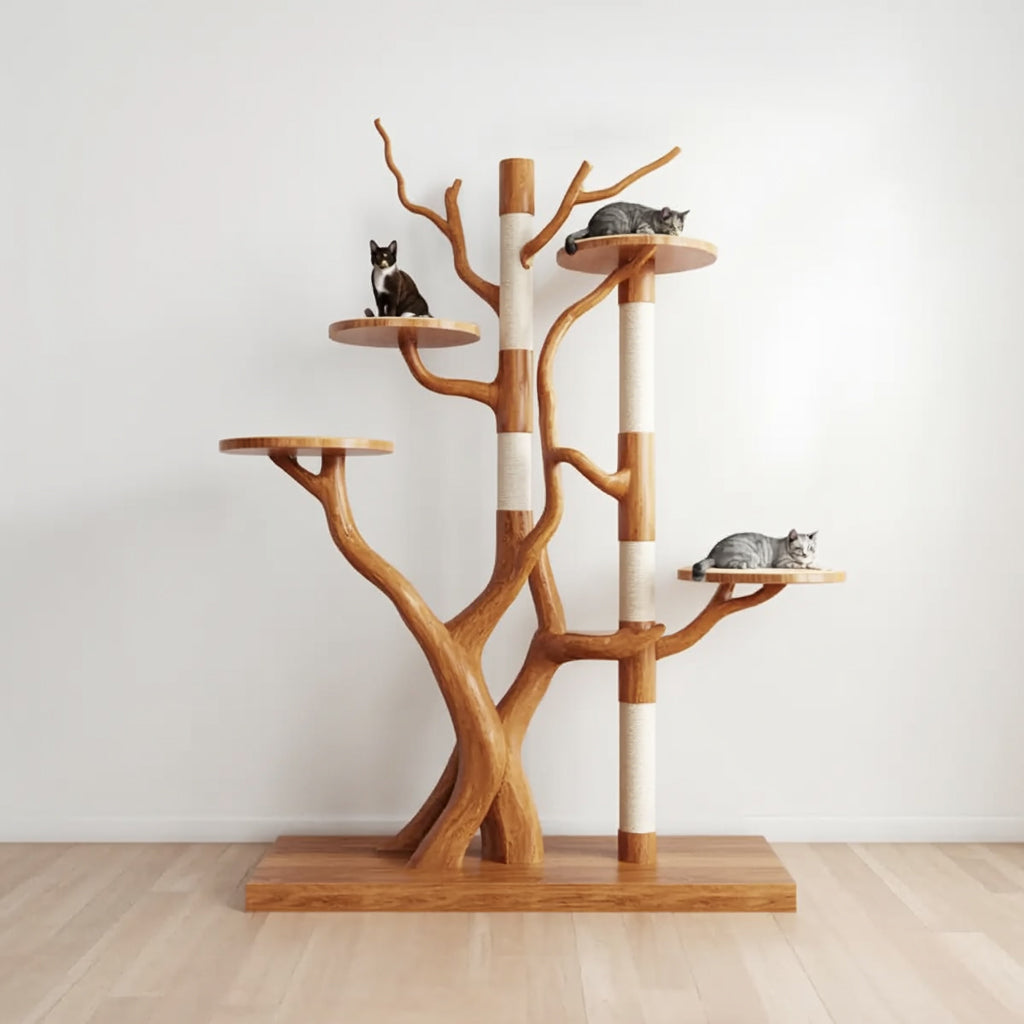
Ashdeco's approach is different: artisans carve solid hardwood into tree shapes rather than using raw branches. This gives the natural tree aesthetic with the structural reliability of engineered furniture. Every branch is carved to specific dimensions and stress-tested. See: Cat Tree vs Cat Tower Guide.

Frequently Asked Questions
What is the safest wood for cats?
Untreated hardwoods: oak, maple, birch, walnut, acacia. All are non-toxic and structurally sound. Avoid cedar (aromatic oils can irritate respiratory systems) and any pressure-treated or chemically treated wood. When in doubt, use food-grade mineral oil as a finish - it's the safest option.
Is Pine Wood Safe for Cats?
Pine itself isn't toxic to cats, but it's a poor structural choice for cat trees. The wood is too soft (Janka hardness 690) - it gouges deeply under cat claws and dents under weight within months. If you already have pine furniture your cat scratches, that's fine; just don't expect a pine cat tree to last more than a year or two.
Is Pressure-Treated Wood Safe for Cats?
No. Pressure-treated wood is chemically treated with preservatives (often copper-based compounds) designed to resist rot and insects outdoors - not meant for surfaces animals lick or chew. Never use pressure-treated lumber for any cat furniture, indoor or outdoor.
Can Cats Get Splinters from Scratching Wood?
Rarely, with hardwoods like acacia or maple - the dense grain resists splitting. Softwoods like pine are more prone to splintering once heavily scratched. This is one more reason hardness matters more than just "is it wood or not."
Is MDF safe for cat furniture?
MDF contains urea-formaldehyde resin that off-gasses, especially when new. Cats sleeping on MDF surfaces for extended periods have higher exposure than humans. While modern MDF meets emission standards, solid wood with natural finish is objectively safer. Read more: Solid Wood vs MDF.
Do cats scratch solid wood furniture?
Yes, and that's a feature, not a bug. Cats scratch trees in nature. Solid wood provides the resistance their claws need for maintenance. Hard species (acacia, maple) resist deep gouging. The light surface scratches that develop over time are considered patina - like leather that ages with use.
How often do I need to refinish a wood cat tree?
Oil-finished: re-oil once a year (15-minute wipe-on, wipe-off process). Polyurethane-finished: every 3-5 years if heavily scratched. The maintenance is minimal compared to replacing carpet, sisal rope, or entire MDF trees every 1-2 years.
Why are wood cat trees so much more expensive?
Material cost (solid hardwood vs particle board), labor (hand-carving vs factory assembly), and longevity (15-20 years vs 1-2 years). Divide the price by years of use: a $1,000 wood cat tree at 15 years = $67/year. A $100 carpet tree replaced 7 times = $700 over 15 years = $47/year. The cost difference is smaller than it appears, and the experience is dramatically different.
Shop Solid Wood Cat Trees
Handcrafted from solid hardwood by Vietnamese artisans. No carpet. No MDF. Free US shipping.