




























Wood Office Desk: How to Choose the Right Size, Style & Setup
A wood office desk can give a workspace warmth, structure, and a lasting sense of character. But choosing one involves more than picking a wood finish or desk style.
The right desk should match the way you work every day. Surface space, storage, legroom, material, and cable management can matter more than appearance alone.
This guide explains what to consider when choosing a wood office desk, from desk types and wood species to usable workspace and storage. For a deeper look at solid wood construction and long-term value, see Solid Wood Desk: Why It's Worth the Investment.
Quick Answer
- A wood office desk uses wood as its main surface and structural material. Construction can be solid wood or engineered wood.
- Choose the desk around your workflow. A laptop setup needs less space than multiple monitors and paperwork.
- Desk dimensions do not equal usable workspace. Monitor stands, lamps, drawers, and irregular edges reduce the surface you can actually use.
- Storage affects desk design. Choose drawers or open space based on what you need to keep nearby.
- Material matters for long-term use. Solid wood can usually be repaired and refinished, while engineered construction varies by core and surface.
What Is a Wood Office Desk?
A wood office desk uses wood as the main material for its desktop and structure. It can take many forms, from a simple writing desk to a larger executive desk with drawers.
Wood also gives each desk a distinct visual character. Grain, color, edge shape, and construction can make two desks with similar dimensions look completely different.
When choosing one, separate the visual decision from the functional one. First decide how the desk needs to work. Then choose the design that fits your room.

Choose a Wood Office Desk Based on How You Work
For Writing and Laptop Work
A writing-focused desk can work well if you mainly use a laptop, notebook, or a small number of accessories.
You may not need extensive drawers or a very deep desktop. A simpler design can also leave more open legroom beneath the desk.
A Solid Wood Writing Desk - Handcrafted Minimalist Workspace is one example of a simpler setup.

For a Computer-Focused Workspace
A computer setup usually needs more surface area. Monitor stands, keyboards, speakers, and other accessories can quickly fill a desktop.
Measure your equipment before choosing the desk. A surface that looks large in a product photo may feel much smaller once everything is installed.
For Storage-Heavy Work
If you keep documents, notebooks, office supplies, or other items nearby, built-in drawers can reduce clutter.
A Modern Wooden Desk With Drawers For Workspace can provide closed storage without requiring a separate cabinet.
Check the actual drawer dimensions before buying. Storage capacity matters more than the number of drawers alone.

For a Larger Executive Setup
A larger desk can make sense when you need multiple monitors, paperwork, accessories, and more open surface space.
Executive desks also tend to create a stronger visual presence. Make sure the room has enough open space around the desk before choosing a larger model.
The Mid-Century Handcrafted Solid Wood Executive Desk is designed around a larger workspace and built-in storage.

Look Beyond Desk Width
Desk width is only one part of the workspace. A 60-inch desk does not automatically provide 60 inches of usable surface.
Think about what will actually sit on the desktop.
- Monitor: A large screen or monitor stand takes up more space than a laptop.
- Keyboard: Leave enough room for comfortable use rather than pushing it against the desk edge.
- Lamp: A desk lamp can take up a meaningful part of a smaller surface.
- Paperwork: Writing or document-heavy work needs open surface area.
- Speakers and accessories: Small items add up quickly on a compact desk.
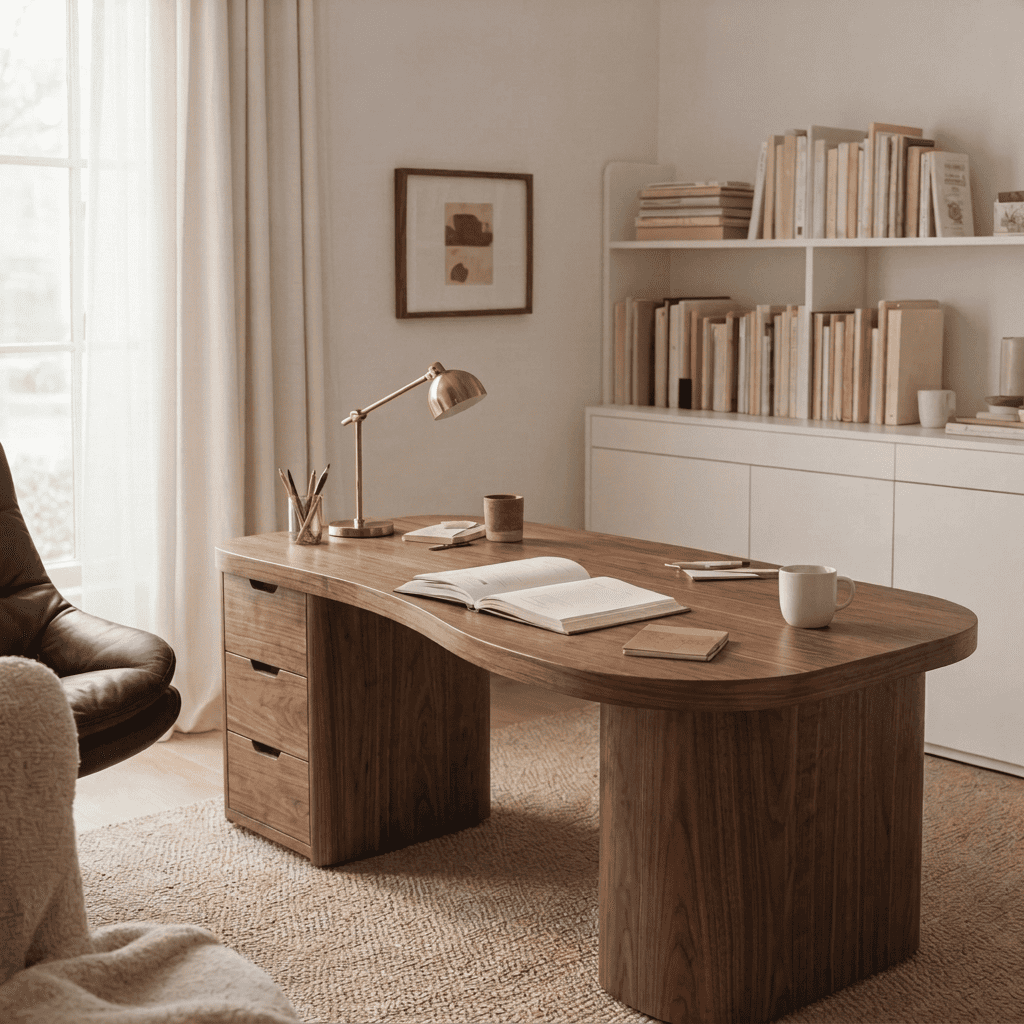
- Desk shape: Curved or irregular edges can reduce usable space compared with a simple rectangular top.
This matters even more with sculptural and live-edge desks. Their irregular edges can create visual character while changing where equipment can sit.
If you are considering a live-edge design, see the Live Edge Desk Guide for more specific considerations.

Solid Wood Office Desk vs. Engineered Wood
Material construction affects how a desk looks, ages, and can be maintained over time.
Solid wood. Solid wood desks are made from natural wood boards. They can often be sanded and refinished over time. Surface durability varies by species and finish.
Engineered wood. Engineered wood covers several constructions, including MDF, particleboard, plywood, and veneered panels. Refinishing options depend on the core and surface finish.
If long-term repairability is important to you, solid wood offers a distinct advantage. For a deeper discussion of longevity, maintenance, and value, read Solid Wood Desk: Why It's Worth the Investment.
Wood Species for an Office Desk
Wood species affect grain, color, hardness, weight, and overall appearance. There is no single species that works for every room.
Oak
Oak has a pronounced grain and a durable feel. Its visible grain works well with both traditional and contemporary desk designs.
Walnut
Walnut is known for its deeper brown tones and distinctive grain. It can suit mid-century, modern, and executive-style workspaces.
Acacia
Acacia often has noticeable color variation and an expressive grain. It can add visual warmth to a workspace without relying on heavy ornamentation.
Rubberwood
Rubberwood is a solid wood option used in some desk designs. It generally has a lighter appearance and more consistent grain than highly figured hardwoods.
Choose a species based on the room, finish, grain character, and construction you prefer rather than assuming one species is always better.

Wood Office Desk Features That Matter
Drawers
Decide what you need to store before choosing a drawer configuration. Check drawer dimensions as well as the number of drawers.
Documents, notebooks, cables, and office supplies may require different storage depths.
Desktop Hutch
A desktop hutch adds storage or display space above the main work surface. It can be useful when floor space is limited.
Keep the hutch height in mind if you plan to place a monitor on the desk. The combination should not make the workspace feel visually crowded.
Cable Management
Many wooden desks do not include extensive built-in cable routing. Check the product details if a clean computer setup matters to you.
You can also plan cable routing around the desk rather than assuming the desktop will hide everything.
Leg Design
Legs affect both appearance and usable legroom. Tapered legs can create a lighter visual profile, while trestle or heavier bases create a stronger presence.
Check where the legs sit before buying. A beautiful desk can still feel uncomfortable if the base interferes with your chair or leg position.
How to Choose the Right Wood Office Desk Size
Start with the room rather than the desk itself.
Measure the available wall or floor area. Then account for the chair and any walking path behind the desk. Around 36 inches of clearance can be a useful planning baseline, but the right amount depends on the room layout.
Measure your equipment. Note the footprint of your monitor, laptop stand, keyboard, speakers, and other items.
Consider desk depth. A deeper desktop can give you more usable space, but it also takes more room from the rest of the office.
Check the base. Make sure drawers, legs, and supports do not interfere with where you want to sit.
The goal is not simply to find the largest desk that fits. It is to find the smallest desk that comfortably supports the way you work.

Common Wood Office Desk Buying Mistakes
Choosing Appearance Before Function
A desk can look perfect online but fail your daily routine. Decide how you work before choosing the style.
Ignoring Desktop Depth
Width alone does not tell you how comfortable a desk will be. Consider the depth required for your equipment and paperwork.
Looking Only at the Number of Drawers
Three small drawers may hold less than one large drawer. Check the internal dimensions and decide what you actually need to store.
Forgetting Chair Clearance
The space behind and beneath the desk matters as much as the desktop. Measure chair movement before ordering.
Ignoring Equipment Before Buying
Monitor stands, lamps, speakers, and other accessories can change how much desktop space remains available.
Ashdeco Wood Office Desks
Ashdeco offers wood desks across traditional, minimalist, mid-century, executive, and storage-focused designs.
- Classic Solid Wood Writing Desk with Multi-Drawers & Desktop Hutch
- Traditional Solid Wood Writing Desk - Mid-Century Modern Executive Desk
- Solid Wood Writing Desk - Handcrafted Minimalist Workspace
- Modern Wooden Desk With Drawers For Workspace
- Mid-Century Handcrafted Solid Wood Executive Desk
Browse the full traditional desk collection or explore all Ashdeco desks.
FAQ
What is a wood office desk?
A wood office desk uses wood as its main desktop and structural material. It can be made from solid wood or engineered wood, depending on the construction.
What should I look for in a wood office desk?
Start with how you work. Consider desktop size, depth, storage, legroom, cable management, and material construction before choosing a style.
Is a solid wood office desk different from a wooden desk?
Yes. “Wooden desk” can describe several constructions, including solid and engineered wood. A solid wood desk is made primarily from natural wood boards.
What is the best wood for an office desk?
Oak, walnut, acacia, and rubberwood can all work for office desks. The right choice depends on grain, color, hardness, finish, and the overall room design.
How much space do I need behind a wood office desk?
Around 36 inches can be a useful planning baseline for chair movement. You may need more if the area behind the desk also functions as a walkway.
How deep should a wood office desk be?
The right depth depends on your equipment and workflow. A laptop setup needs less space than a desk with multiple monitors, speakers, and paperwork.
Do wood office desks need special maintenance?
Maintenance depends on the wood and finish. Protect the surface from prolonged moisture, follow the manufacturer's care instructions, and address spills promptly.
Choose a wood office desk based on how you will use it every day. Desk width, usable surface, storage, legroom, and construction matter more than appearance alone.