


























Quick view
- Solid Wood Desk: Why It's Worth the Investment
- The Durability Gap: Solid Wood vs. Everything Else
- Best Wood Species for Desks
- Solid Wood Desks for Different Work Styles
- What to Look for When Buying a Solid Wood Desk
- Caring for Your Solid Wood Desk
- Environmental and Ethical Considerations
- Frequently Asked Questions
- Invest in Where You Work
Shop this guide
Handcrafted Desk, made to order in solid wood.
 Christmas edit
Live Edge L-Shaped Desk – Handmade Solid Wood Corner Desk for Home Office
From $2,340.0010% off at checkout
Christmas edit
Live Edge L-Shaped Desk – Handmade Solid Wood Corner Desk for Home Office
From $2,340.0010% off at checkout
 Rustic Floating Shelf Desk – Wall Mounted Study Room Workspace
From $250.00
Rustic Floating Shelf Desk – Wall Mounted Study Room Workspace
From $250.00
 Christmas edit
Handmade Live Edge Desk – Rustic Solid Wood Office Workstation for Home or Studio
From $2,860.0010% off at checkout
Christmas edit
Handmade Live Edge Desk – Rustic Solid Wood Office Workstation for Home or Studio
From $2,860.0010% off at checkout
 Christmas edit
Rustic Live Edge Wooden Desk for Home Office – Natural Wood Desk
From $1,440.00
Christmas edit
Rustic Live Edge Wooden Desk for Home Office – Natural Wood Desk
From $1,440.00
 Christmas edit
Computer Desk Ulm – Unique Mid Century Narrow Writing Desk, Solid Oak Minimalist Scandinavian Furniture
From $1,400.00
Christmas edit
Computer Desk Ulm – Unique Mid Century Narrow Writing Desk, Solid Oak Minimalist Scandinavian Furniture
From $1,400.00
 Christmas edit
Sculptural Floating Live Edge Solid Wood Corner Desk & Wall-Mounted Workspace Slab
From $896.00
Christmas edit
Sculptural Floating Live Edge Solid Wood Corner Desk & Wall-Mounted Workspace Slab
From $896.00
Solid Wood Desk: Why It's Worth the Investment
You've probably sat at a desk that started peeling at the edges after a year. Or one that wobbled every time you typed because the joints loosened. Maybe the laminate surface bubbled from a single coffee spill, and you ended up covering the damage with a desk pad.
That desk cost less upfront. But you replaced it - maybe twice - while a solid wood desk bought at the same time would still be in perfect shape today.
This isn't an argument for spending more just because you can. It's a practical look at why solid wood desks outperform their cheaper alternatives, which wood species work best for different uses, and how to care for a wood desk so it lasts decades instead of years.

Rustic Live Edge Writing Desk For Cozy Office Or Reading Corner
The Durability Gap: Solid Wood vs. Everything Else
Let's compare the main desk materials side by side, focusing on what actually matters for daily use:
Particleboard and MDF Desks
Most budget desks use particleboard (compressed wood chips and resin) or MDF (medium-density fiberboard) as the core material, covered with a laminate or veneer surface. These desks are lightweight and affordable - typically $100-$300 - but they have significant drawbacks:
- Water vulnerability: Particleboard swells and warps when exposed to moisture. A spilled drink can cause permanent bubbling in the surface laminate.
- Joint weakness: The screw-and-cam-lock joints used in flat-pack assembly gradually loosen with use. Within 2-3 years, most particleboard desks develop wobble.
- Surface damage: Laminate surfaces scratch easily and can't be refinished. Once damaged, the desk's appearance degrades permanently.
- Lifespan: Typically 3-5 years before structural or cosmetic issues make replacement necessary.
Solid Wood Desks
A desk made from actual hardwood , walnut, oak, ash, maple, or cherry , behaves fundamentally differently:
- Water resistance: While solid wood should be wiped down (no material is waterproof), a finished hardwood surface doesn't swell or bubble from typical desk spills.
- Structural integrity: Solid wood joints , mortise-and-tenon, dovetail, or dowel , hold firm for decades. The wood itself provides grip for screws and fasteners that particleboard can't match.
- Refinishable surface: Scratches and dents in solid wood can be sanded out and refinished. The desk looks new again instead of permanently damaged.
- Lifespan: 20-50+ years with basic care. Many solid wood desks become family heirlooms passed between generations.
The Real Cost Comparison
A quality solid wood desk might cost $400-$800, while a particleboard desk runs $100-$300. But factor in replacement cycles:
- Particleboard: $200 × 3 replacements over 15 years = $600, plus the hassle and waste of disposal
- Solid wood: $600 × 1 purchase = $600, still going strong after 15 years
Over time, the "expensive" option often costs the same or less , and looks better every year of its life.


Best Wood Species for Desks
Not all wood is created equal for desk use. Here's how the most common species compare:
Walnut
A premium hardwood with rich, dark brown coloring and dramatic grain patterns. Walnut has a Janka hardness rating of 1,010 lbf , hard enough to resist dents from daily use but soft enough to work easily during manufacturing. It's the top choice for desks where appearance matters as much as function. The natural color deepens over time, developing a warmer patina.
White Oak
Extremely durable with a Janka hardness of 1,360 lbf. White oak has a tight grain structure that resists moisture penetration better than most hardwoods. Its lighter color works well in contemporary and Scandinavian-style spaces. It takes stain well if you want to adjust the color.
Ash
Often underrated, ash offers excellent strength (Janka 1,320 lbf) with a lighter, more neutral appearance than oak. Its prominent grain pattern adds visual interest, and it's more affordable than walnut while being tougher than many alternatives. A strong choice for desks that need to handle heavy daily use.
Maple
The hardest common domestic wood used for furniture (Janka 1,450 lbf). Maple's fine, subtle grain creates a smooth, clean-lined surface that works well in modern offices. It's extremely resistant to denting and scratching, making it ideal for desks used heavily every day.
Cherry
Softer than the others listed here (Janka 950 lbf) but prized for its reddish-brown color that darkens beautifully with age and light exposure. Cherry desks look more formal and traditional. The softer wood means greater care is needed to avoid dents, but the aesthetic payoff is significant.

Solid Wood Desks for Different Work Styles
The Home Office Workhorse
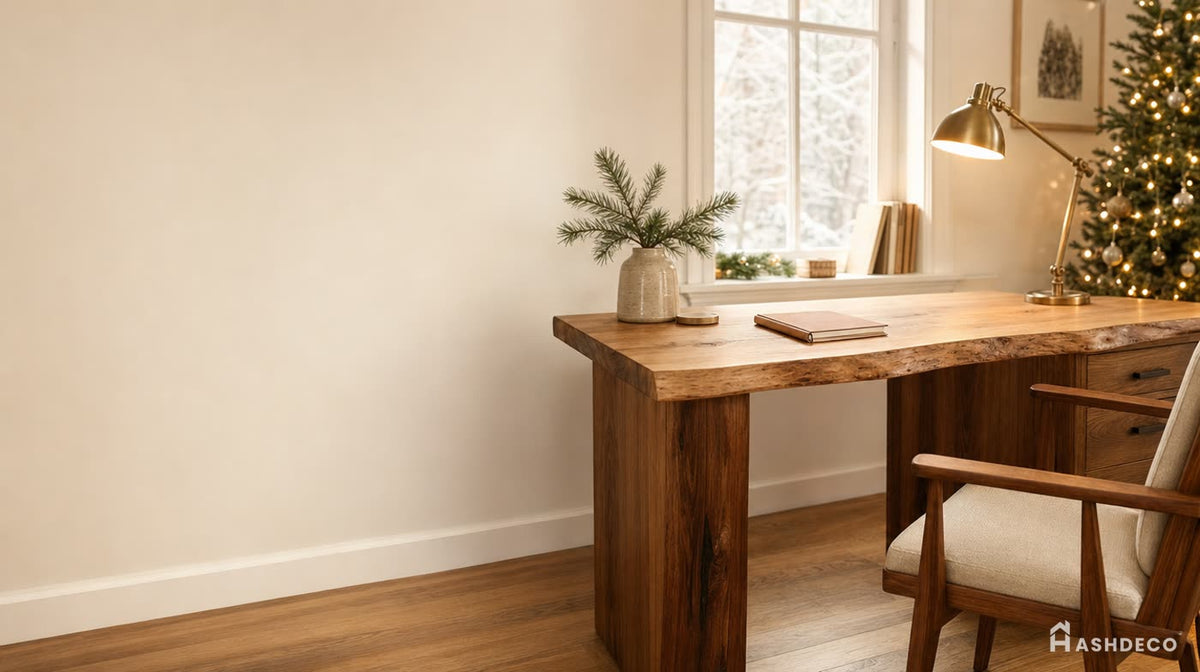
If you work from home full-time, your desk is where you spend 8+ hours daily. Prioritize a surface at least 48 inches wide and 24 inches deep , enough for a monitor, keyboard, and documents without feeling cramped. Hardwoods like oak, ash, or maple handle the daily wear of constant use without showing it.
The Creative Studio Desk
Artists, designers, and makers need desk space for spreading out materials. A wider surface (60+ inches) with a hardwood top that can take pencil pressure, X-Acto cuts (with a cutting mat), and paint spills (with a finish that wipes clean) serves creative work well. Walnut's richness provides an inspiring backdrop for creative work.
The Standing Desk Option
Solid wood tops pair beautifully with adjustable standing desk frames. The desktop sits on the motorized frame, giving you the health benefits of sit-stand work combined with the aesthetic and durability of real wood. When choosing a solid wood top for a standing frame, keep the thickness to 1-1.5 inches to stay within most frames' weight capacity (typically 150-200 lbs for the desktop alone).
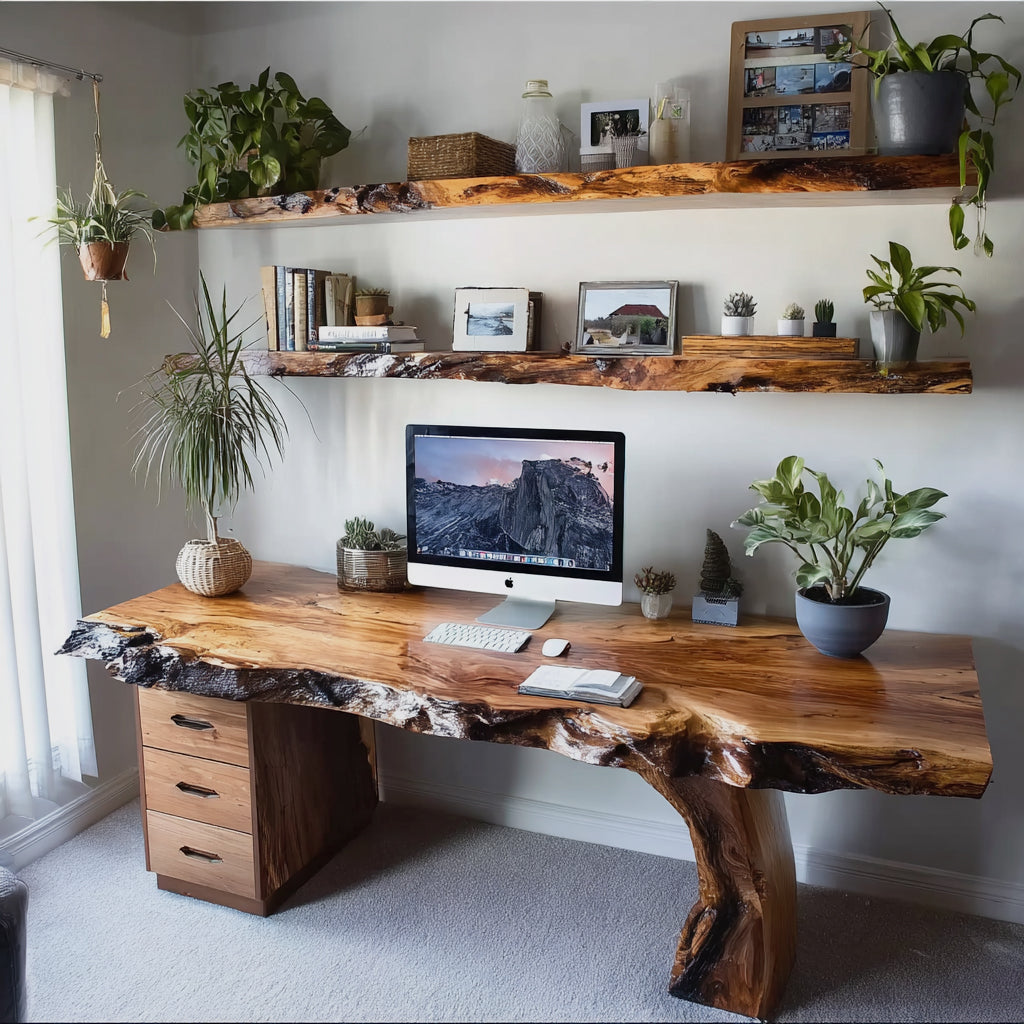
Wall-mounted floating desks are another option worth considering. They combine the beauty of solid wood with a space-saving wall-mounted design , perfect for small apartments, bedrooms, or secondary workspaces where a full standing desk would be too large.
The Student Desk
It might seem counterintuitive to invest in a quality desk for a student, but consider this: a solid wood desk bought for a high school student can last through college, a first apartment, and well into their career. It's a one-time purchase that adapts to changing life stages, while a cheap particleboard desk bought for a dorm room ends up in a dumpster within four years.

Handcrafted Floating Live Edge Wooden Desk - Solid Wood Wall-Mounted Home Office Desk
Don't miss
These pieces qualify for 10% off orders over $2,000. Applied automatically at checkout.
10% off
Live Edge L-Shaped Desk – Handmade Solid Wood Corner Desk for Home Office
From $2,340.00
10% off at checkout
10% off
Handmade Live Edge Desk – Rustic Solid Wood Office Workstation for Home or Studio
From $2,860.00
10% off at checkout
 10% off
Sculptural Organic Solid Wood Vanity Desk – Modern Japandi Makeup & Writing Table
From $2,576.00
10% off at checkout
10% off
Sculptural Organic Solid Wood Vanity Desk – Modern Japandi Makeup & Writing Table
From $2,576.00
10% off at checkout
 10% off
Modern Live Edge L Shaped Desk For Study Room
From $2,340.00
10% off at checkout
10% off
Modern Live Edge L Shaped Desk For Study Room
From $2,340.00
10% off at checkout
What to Look for When Buying a Solid Wood Desk
Not every desk labeled "solid wood" delivers on the promise. Here's what to check:
- Material transparency: The listing should specify the exact wood species . "walnut desk" or "white oak desk," "wood desk" or "wooden desk." Vague descriptions often hide engineered materials.
- Construction details: How are the legs attached? What joints are used? Mortise-and-tenon or bolt-through construction is stronger than simple glued connections.
- Finish type: Look for oil finishes (tung oil, Danish oil) or lacquer that protects the wood while letting the grain show through. Thick polyurethane coatings can obscure the natural beauty of the wood and may yellow over time.
- Thickness: A solid wood desktop should be at least 0.75 inches thick. Thicker tops (1-1.5 inches) feel more substantial and resist warping better.
- Edge treatment: Live edge, beveled, rounded, or squared , this is largely aesthetic, but check that edges are sanded smooth and finished to the same standard as the top surface.
Caring for Your Solid Wood Desk
One of the best things about a solid wood desk is that maintenance is simple. A few habits keep the surface looking great for decades:
Daily Care
- Wipe spills immediately with a dry or slightly damp cloth
- Use a desk pad or coaster under beverages , direct moisture contact is fine occasionally, but persistent exposure can leave marks
- Keep the desk out of direct sunlight for extended periods, which can cause uneven color change (though natural darkening or lightening over time adds character)
Monthly Care
- Dust with a soft, dry cloth or microfiber duster
- Clean with a slightly damp cloth followed immediately by a dry cloth
- Avoid household cleaners with ammonia or harsh chemicals , they can strip the finish
Annual Care
- For oil-finished desks, reapply a thin coat of the same oil used originally (usually tung oil or Danish oil). This refreshes the finish and deepens the color.
- For lacquered desks, inspect for wear spots and consider a professional touch-up if needed.
- Check all joints and hardware for tightness. Solid wood joints rarely loosen, but checking annually is good practice.
Dealing with Scratches and Dents
Minor scratches in an oil finish can often be rubbed out with a dab of the same oil on a soft cloth. Deeper scratches can be lightly sanded (220-grit sandpaper) and re-oiled. Small dents in solid wood can sometimes be raised by placing a damp cloth over the dent and applying a warm iron briefly , the steam swells the compressed wood fibers back to their original position.

Environmental and Ethical Considerations
Buying one desk that lasts 30 years is inherently more sustainable than buying five cheap desks that each last 5 years. The manufacturing energy, shipping footprint, and landfill waste multiply with each replacement.
Beyond longevity, consider the source of the wood. Responsibly harvested solid wood , especially from managed forests , is a renewable material. The same can't be said for the plastics, resins, and formaldehyde-based adhesives used in particleboard and MDF manufacturing.
Handcrafted solid wood furniture from skilled artisans also supports traditional craftsmanship that mass production threatens to displace. When you buy from makers who work with real wood, you're supporting woodworking skills passed down through generations.
Frequently Asked Questions
Is a solid wood desk worth the higher price?
When you factor in lifespan, a solid wood desk often costs the same as or less than replacing cheap desks every few years. A quality solid wood desk lasts 20-50+ years, while particleboard desks typically last 3-5 years. Beyond cost, solid wood desks look better, feel better to use, and can be refinished if damaged.
What wood is best for a desk?
For daily office use, white oak, ash, and maple offer the best combination of hardness and durability. For a premium appearance, walnut is the top choice , its rich color and dramatic grain make a statement. Cherry is beautiful but softer, making it better suited for desks that see lighter use.
Do solid wood desks warp?
Properly dried and finished solid wood rarely warps under normal indoor conditions. Issues arise from extreme humidity changes or unfinished surfaces that absorb moisture unevenly. A well-made desk with a proper finish , and kept in a climate-controlled environment , will stay flat for its entire lifespan.
Can I use a solid wood top with a standing desk frame?
Yes. Most standing desk frames support desktop weights of 150-200 lbs. A solid wood top typically weighs 30-60 lbs depending on size and species, well within range. Just ensure the frame's mounting holes align with the desktop or drill new ones as needed.
How do I remove scratches from a solid wood desk?
Light scratches can be rubbed with a matching wood oil or wax. Moderate scratches respond to light sanding (220-grit) followed by refinishing the area. Deep gouges may require wood filler before sanding and refinishing. The ability to repair surface damage is one of solid wood's biggest advantages over laminate or veneer surfaces.
How thick should a solid wood desk be?
A minimum of 0.75 inches is standard for desktop thickness. For larger desks (over 48 inches wide), 1-1.5 inches provides better rigidity and prevents any chance of sagging at the center. Thicker tops also feel more substantial and premium in daily use.
Invest in Where You Work
Your desk is where ideas happen. Where projects get finished. Where you spend a significant portion of your waking hours. It deserves to be something that works well, feels good, and lasts.
At Ashdeco, our solid wood desks and floating desks are handcrafted by skilled Vietnamese artisans who understand that a desk needs to be both beautiful and built to last. We use real hardwoods , no particleboard, no MDF, no shortcuts , because your workspace deserves real materials.
Whether you need a wall-mounted floating desk to save space or a full-sized work surface for your home office, explore our collection and find a desk that'll still be serving you well a decade from now.