





















Quick view
- The Material Your Bench Is Made Of Matters More Than the Design
- Solid Wood vs Engineered Wood: A Structural Comparison

- Wood Species for Entryway Benches: What Performs Best
- Weight Capacity: Why Solid Wood Holds More
- Aging and Patina: How Wood Benches Change Over Years
- Caring for a Solid Wood Entryway Bench
- Frequently Asked Questions
Shop this guide
Handcrafted Benches, made to order in solid wood.
 Christmas edit
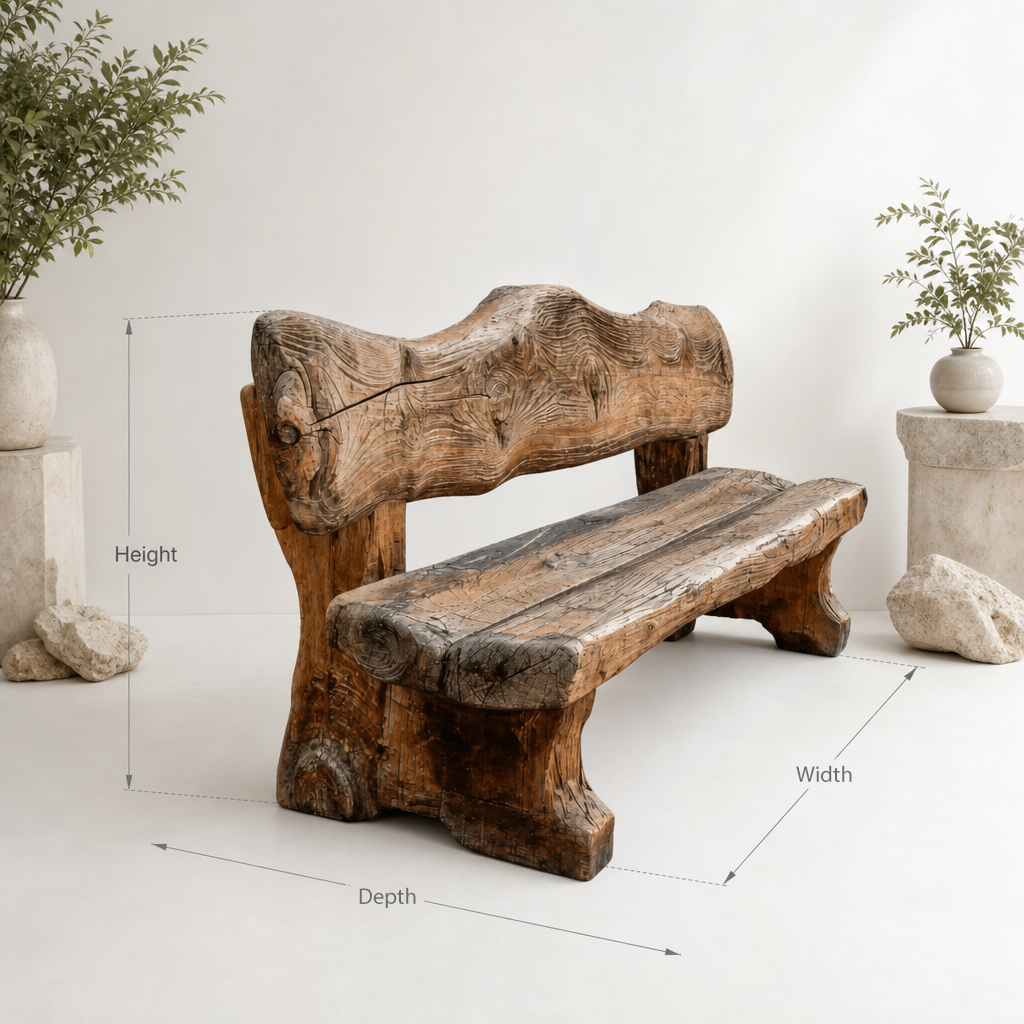
Handcrafted Rustic Solid Wood Bench - Natural Log Seating for Garden & Patio
From $1,553.00
Christmas edit
Handcrafted Rustic Solid Wood Bench - Natural Log Seating for Garden & Patio
From $1,553.00
 Christmas edit
Live Edge Wooden Entryway Bench – Solid Wood Hallway Bench with Shelf
From $1,050.00
Christmas edit
Live Edge Wooden Entryway Bench – Solid Wood Hallway Bench with Shelf
From $1,050.00
 Christmas edit
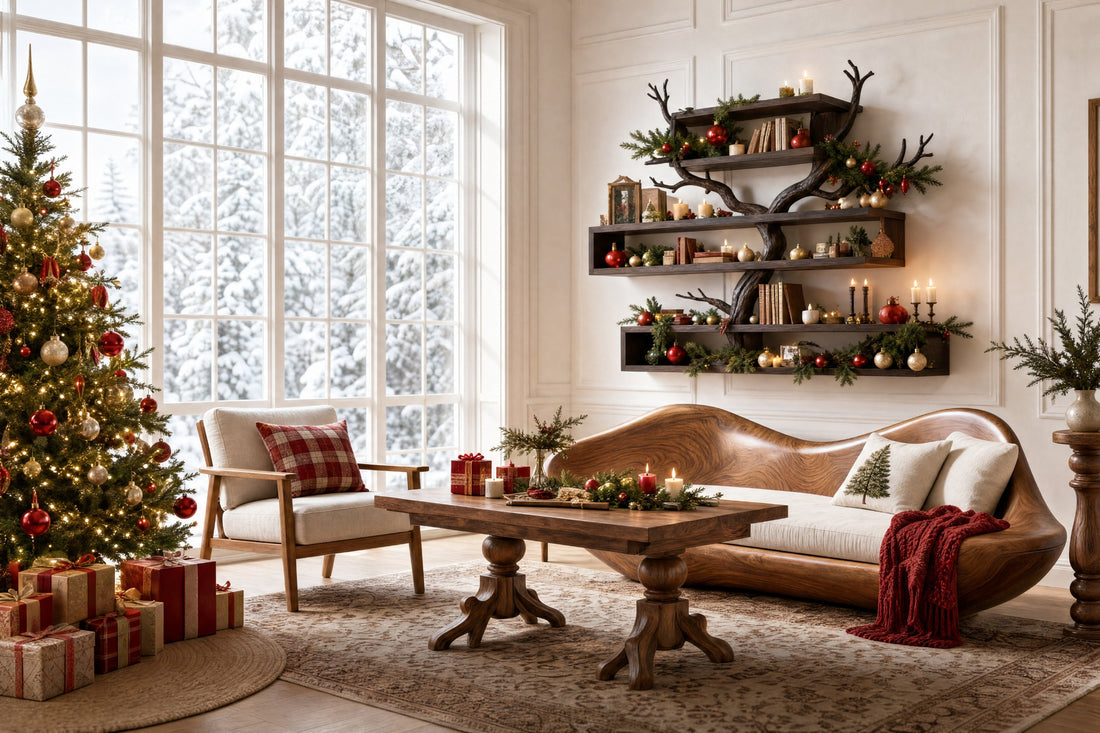
Handcrafted Walnut Bench – Organic Sculptural Mid-Century Design
From $2,327.0010% off at checkout
Christmas edit
Handcrafted Walnut Bench – Organic Sculptural Mid-Century Design
From $2,327.0010% off at checkout
 Christmas edit
Solid Walnut Sculptural Bench, Mid-Century Modern Organic Entryway Seating
From $1,876.00
Christmas edit
Solid Walnut Sculptural Bench, Mid-Century Modern Organic Entryway Seating
From $1,876.00
 Christmas edit
Handcrafted Sculptural Wood Bench – Modern Organic Curved Entryway Bench
From $2,060.0010% off at checkout
Christmas edit
Handcrafted Sculptural Wood Bench – Modern Organic Curved Entryway Bench
From $2,060.0010% off at checkout
 Christmas edit
Organic Live Edge Solid Wood Halloween Sculptural Bench
From $2,234.0010% off at checkout
Christmas edit
Organic Live Edge Solid Wood Halloween Sculptural Bench
From $2,234.0010% off at checkout
The Material Your Bench Is Made Of Matters More Than the Design
Walk through any furniture store - online or physical - and you'll see hundreds of entryway benches that look similar. Clean lines, natural wood tones, minimalist profiles. The photographs rarely reveal the critical difference: what the bench is actually made from.
A wood bench built from solid timber behaves fundamentally differently from one built from engineered wood products dressed up to look like solid wood. The weight capacity is different. The response to moisture is different. The aging process is different. And in an entryway - where furniture endures daily impact, temperature changes, and wet shoes - these differences compound over months and years until one bench is still standing strong while the other is sagging, swollen, and headed for the curb.
This guide breaks down wood species, construction methods, and real-world performance for anyone choosing a wood bench for their entryway. No marketing language , just material science applied to furniture.

Solid Wood vs Engineered Wood: A Structural Comparison
What "Solid Wood" Actually Means
Solid wood is lumber cut from a single tree, dried (kiln-dried or air-dried), and milled into boards. The grain runs continuously through the entire piece. There's no core material wrapped in something else , what you see on the surface continues all the way through.
This matters structurally because wood's strength runs along the grain. A solid board has uninterrupted grain lines from end to end, which gives it tensile strength (resistance to pulling apart) and compressive strength (resistance to crushing under weight).
What Engineered Wood Actually Is
Engineered wood products . MDF, particle board, plywood, and laminated boards , are manufactured from wood fibers, chips, or thin layers bonded with adhesives under heat and pressure. They're consistent, flat, and cheap to produce in large quantities.
But the adhesive bonds create weaknesses. MDF absorbs water readily because the compressed fibers wick moisture through the entire panel when the surface is compromised. Particle board has minimal structural cohesion when wet , the chips separate and the panel crumbles. Plywood performs better but still delaminates at edges when exposed to repeated moisture.
| Property | Solid Wood | MDF | Particle Board |
|---|---|---|---|
| Moisture resistance | High (when sealed) | Low , swells irreversibly | Very low , crumbles when wet |
| Weight capacity (bench seat) | 300-500+ lbs | 150-250 lbs | 100-150 lbs |
| Shelf sag over time | Minimal | Moderate within 1-2 years | Significant within 6-12 months |
| Repairability | Sand, refinish, repair joints | Cannot repair water damage | Not repairable |
| Lifespan (entryway use) | 15-30+ years | 3-5 years | 1-3 years |
| Aging appearance | Develops patina , improves | Chips and swells , degrades | Disintegrates , replace |


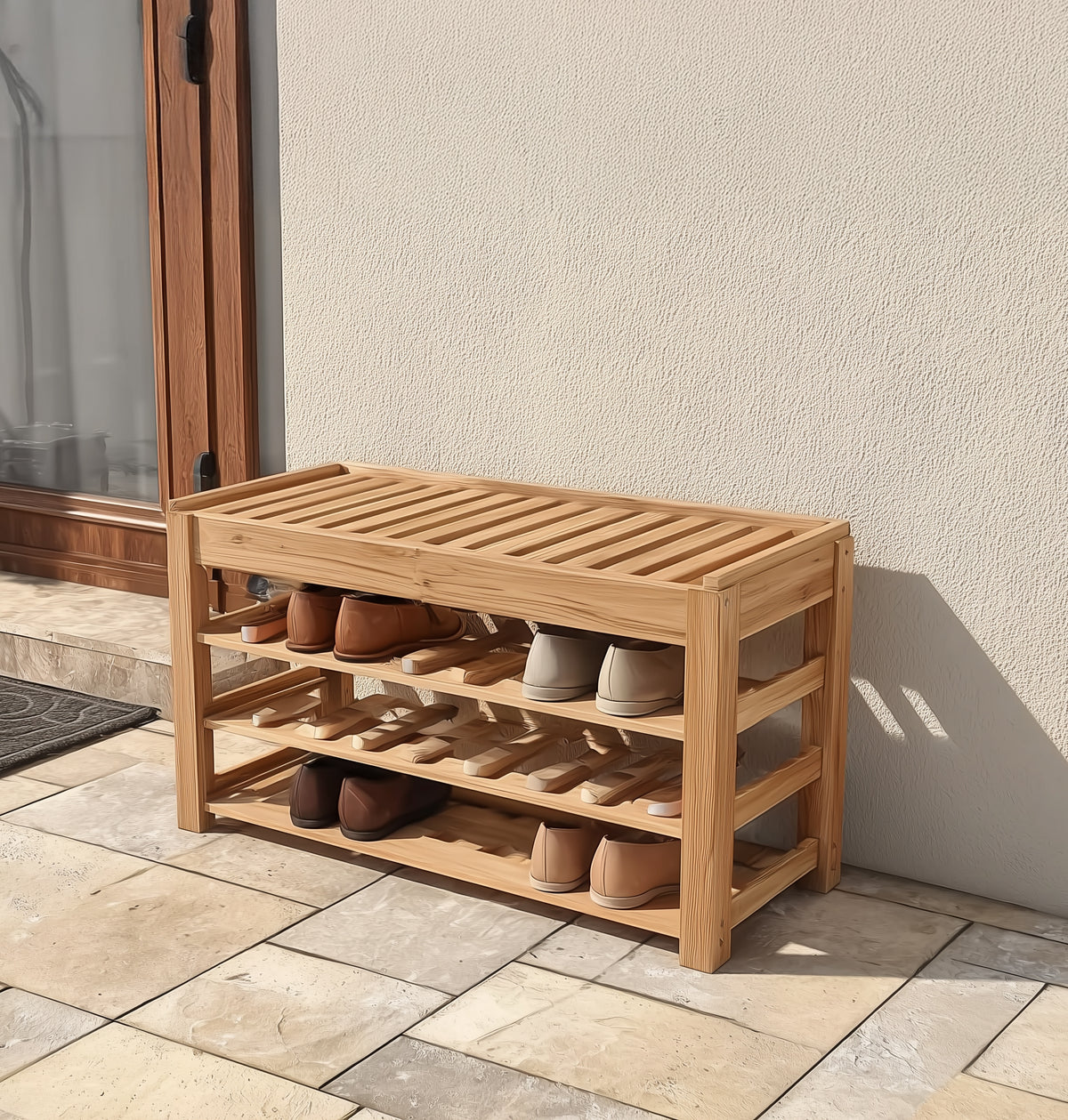
Solid Oak Shoe Bench with Storage - Handmade Entryway Rack, Custom Size & Color
Wood Species for Entryway Benches: What Performs Best
Not all solid wood is equal. Different species have different hardness, grain patterns, weight, and behavior over time. For a wood bench in an entryway, you need a species that handles impact, resists denting, and looks good as it ages.
Ash
Janka hardness: 1,320 lbf. Ash sits in the sweet spot , hard enough to resist denting from shoes and daily use, but not so hard that it's difficult to work with or prohibitively expensive. The grain is pronounced and distinctive, with a light color that brightens entryways. Ash absorbs stain well if you want a darker look, and it takes a clear finish beautifully if you prefer the natural pale tone.
Best for: High-traffic entryways where the bench gets daily use from multiple people. The hardness handles impact well.
Walnut
Janka hardness: 1,010 lbf. Slightly softer than ash, but walnut's rich dark brown color is unmatched. The grain is tight and smooth, and the wood darkens over time into a deep, warm tone that looks increasingly refined with age. Walnut is more expensive than most domestic hardwoods, which is reflected in furniture pricing.
Best for: Entryways where appearance is a priority. Walnut makes a bench look like a deliberate design choice, a practical addition.
Oak (White Oak)
Janka hardness: 1,360 lbf. White oak is among the most durable furniture woods available. It's naturally resistant to moisture , the wood's tyloses (cellular growths) block water from penetrating the grain, which is why white oak has been used for centuries in barrel-making and boat-building. For an entryway bench that handles wet shoes, this natural moisture resistance is a genuine advantage.
Best for: Mudrooms and entryways with heavy moisture exposure. If wet boots are a regular occurrence, white oak handles it.
Pine
Janka hardness: 380-690 lbf (varies by species). Pine is soft, affordable, and easy to work with. It dents noticeably , dropping a set of keys on a pine bench leaves a visible mark. The softness means pine benches show wear quickly, which can be charming in a rustic setting but frustrating if you want furniture that looks new.
Best for: Mudrooms with a rustic or farmhouse aesthetic where wear is part of the look. Not ideal for formal entryways.
Don't miss
These pieces qualify for 10% off orders over $2,000. Applied automatically at checkout.
10% off
Handcrafted Walnut Bench – Organic Sculptural Mid-Century Design
From $2,327.00
10% off at checkout
10% off
Handcrafted Sculptural Wood Bench – Modern Organic Curved Entryway Bench
From $2,060.00
10% off at checkout
10% off
Organic Live Edge Solid Wood Halloween Sculptural Bench
From $2,234.00
10% off at checkout
 10% off
Handcrafted Solid Wood Artistic Wood Bench – Soft Organic Wave Silhouette
From $2,534.00
10% off at checkout
10% off
Handcrafted Solid Wood Artistic Wood Bench – Soft Organic Wave Silhouette
From $2,534.00
10% off at checkout
Weight Capacity: Why Solid Wood Holds More
A bench seat needs to support a person sitting down , which creates momentary force exceeding static body weight , plus the weight of stored shoes on shelves below. The total load on a well-used entryway bench can reach 350-400 lbs during peak use (person sitting + shoes + dynamic impact from sitting down).
Solid wood handles this because the grain structure distributes force along the entire length of the board. When you sit on a solid wood bench, the force travels through continuous wood fibers to the joints and legs. The board flexes slightly under load and returns to shape when the load is removed.
MDF and particle board don't flex and return , they flex and stay flexed. The adhesive bonds between fibers break under sustained or repeated stress, and the deformation is permanent. This is why MDF shelves sag in the center after months of holding shoe weight.
For benches specifically, the joinery matters as much as the wood. Mortise-and-tenon joints , where a projecting piece fits into a corresponding hole , create mechanical locks reinforced by glue. These joints have been used in furniture for thousands of years because they distribute stress across a large surface area. The cam-lock and dowel connections used in flat-pack furniture concentrate stress at small contact points, which is why those joints loosen over time.
Aging and Patina: How Wood Benches Change Over Years
Solid wood doesn't just survive time , it changes in ways that most people find attractive. This process, called developing a patina, is unique to natural materials and one of the key reasons handcrafted wood furniture holds its value.
- Color deepening: Most wood species darken gradually with light exposure. Cherry is the most dramatic , shifting from pinkish to deep reddish-brown within months. Walnut darkens into richer tones. Ash and oak shift subtly, gaining warmth.
- Surface texture: Frequently touched areas develop a smooth, polished feel as skin oils and use naturally buff the surface. The seat of a well-used bench develops a soft sheen that no factory process can replicate.
- Character marks: Minor dings, scratches, and worn edges on solid wood add character rather than revealing damage. A scratch on solid ash shows more ash underneath , the same material, just a slightly different shade. A scratch on laminated MDF reveals the brown compressed fiber core , an obvious wound.
This is why Ashdeco's handcrafted benches , built by Vietnamese artisans from solid wood , are an investment that appreciates visually even as they depreciate on paper. Factory-made benches from compressed wood products look their best on day one and decline from there.


Caring for a Solid Wood Entryway Bench
Solid wood is low-maintenance, not no-maintenance. A few basic practices keep a wood bench looking good for decades:
- Wipe spills immediately. Solid wood with a proper finish (polyurethane, lacquer, or oil) resists water penetration, but standing water over time can stain or damage the finish. A quick wipe with a damp cloth is sufficient.
- Use furniture wax or oil 1-2 times per year. This refreshes the finish and provides a thin protective layer. For oil-finished benches, food-grade mineral oil or tung oil works well. For lacquered surfaces, a quality furniture wax maintains the sheen.
- Place a boot tray on or near the bench. Rather than letting wet shoes sit directly on wood shelves, use a rubber or metal boot tray to catch dripping water. This is especially important in winter when snow-covered boots enter the house.
- Avoid placing directly against heat sources. Entryway benches near radiators or heating vents can dry out and crack. If your bench is near a heat source, maintaining humidity (40-60% relative humidity) prevents wood from drying excessively.
- Sand and refinish as needed. This is the ultimate advantage of solid wood , you can completely restore the surface by sanding and applying a new finish. You can't do this with MDF or laminated products.
Frequently Asked Questions
Is solid wood too heavy for an entryway bench?
Solid wood benches are heavier than MDF alternatives , a typical 36-inch ash bench weighs 25-40 lbs compared to 15-25 lbs for an MDF bench of the same size. But this weight is an advantage: the bench doesn't slide when you sit down or bump it. Once placed, it stays put. If you need to move it occasionally for cleaning, the weight is manageable for one adult.
Which wood species is most durable for entryway use?
White oak is the most durable common furniture wood for entryway conditions, combining high hardness (1,360 lbf Janka) with natural moisture resistance. Ash is a close second and typically costs less. Walnut is slightly softer but ages beautifully. All three are far more durable than any engineered wood product in entryway conditions.
How can I tell if a bench is real solid wood?
Look at the edges and underside. Solid wood shows continuous grain through the entire thickness. MDF shows a uniform brown cross-section with no visible grain. Veneer over MDF has a paper-thin wood layer on the surface with a different material underneath. Also check the weight , solid wood is noticeably heavier than MDF of the same dimensions.
Does solid wood crack in dry environments?
Wood expands and contracts with humidity changes. In extremely dry environments (below 30% relative humidity for extended periods), solid wood can develop small cracks. Keeping indoor humidity between 40-60% prevents this. Properly kiln-dried wood from reputable manufacturers like Ashdeco is dried to stable moisture content that minimizes seasonal movement.
Can I refinish a solid wood bench myself?
Yes. Light refinishing (sanding the surface with 220-grit sandpaper and applying fresh oil or finish) is a straightforward DIY project. For deeper restoration , removing old finish completely and re-staining , a belt sander and some patience are needed, but it's doable for anyone comfortable with basic tools. This is one of solid wood's key advantages: it's endlessly renewable.
How does a handcrafted wood bench differ from a factory-made solid wood bench?
Handcrafted benches typically use traditional joinery (mortise-and-tenon, dovetail) that's stronger than factory dowel-and-cam-lock assembly. The wood selection is more careful , artisans choose boards for grain matching and consistency. Finishing is done by hand, often in multiple coats with sanding between each. Factory benches prioritize speed and cost, which means faster (less durable) joinery and less attention to individual board quality.